
Badminton shoulder pain: six common causes, warning signs, and how Tong Gia can help
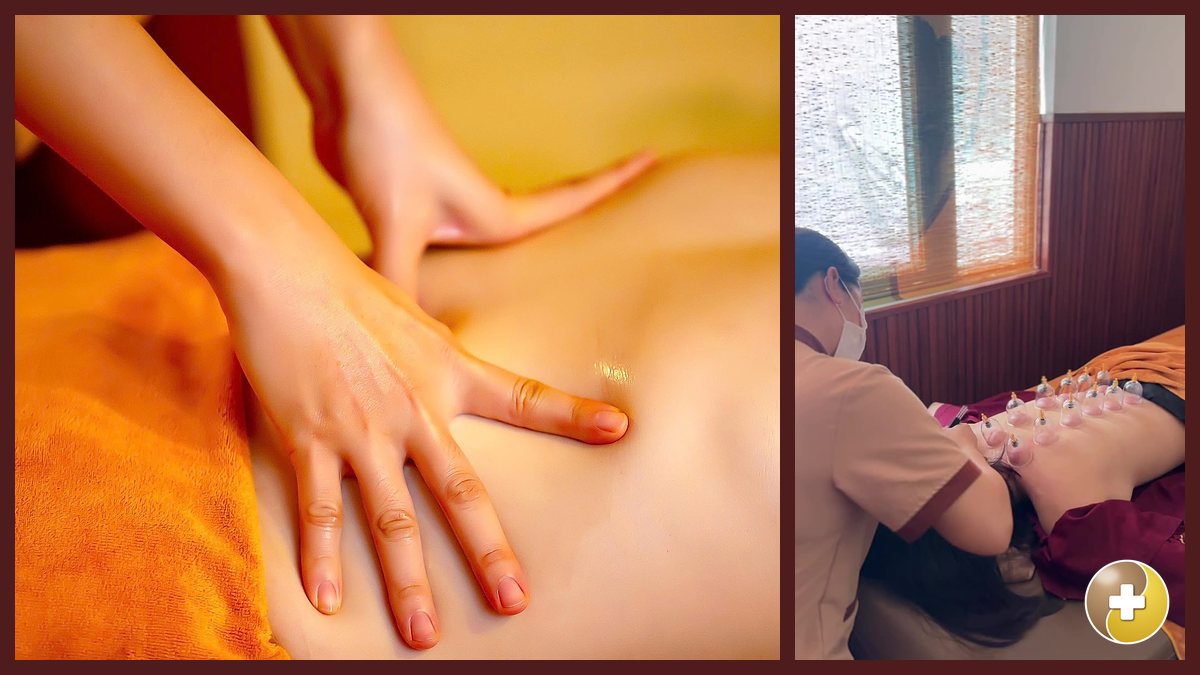
Quick answer: Shoulder pain from badminton usually comes from overloaded rotator cuff tendons and shoulder-blade muscles: repeated overhead swings, smashing with the shoulder alone, no warm-up, or shoulders already tight from desk work. Severe pain, weakness or tingling need a medical check. Tong Gia Acupoint Wellness (Huyệt Đạo Tống Gia) in District 12 and Vinhomes Grand Park, Ho Chi Minh City, cares for tight shoulders by hand.
Want Lương Y Tống Văn Huynh’s team to read your spine and posture in person?
What is shoulder pain from badminton?
Badminton keeps the racket arm working above your head almost the whole match: smashes, high clears, drops, net blocks, then a full swing again for the next shot. On every smash the shoulder rotates back hard and whips forward very fast. In Western medicine the shoulder is the most mobile joint in the body, but it is shallow and not very stable. It is held mainly by four small muscles that wrap the top of the upper arm bone (the rotator cuff), together with the joint capsule, ligaments, the deltoid and the muscles around the shoulder blade.
That is why shoulder pain from badminton is rarely about one spot. Some players feel pain at the front of the shoulder each time they lift the arm to smash; some feel it on the outside and must lower the arm for relief; some feel it at the shoulder blade, along its inner edge, rising into the neck; some cannot sleep on the racket side at night. Pain after a session can simply be tired muscle from playing too much, or a sign that a rotator cuff tendon is irritated, pinched under the bony roof of the shoulder, or that the joint rim has been injured.
So shoulder pain after badminton is a symptom, not the name of a condition. Most cases involve overloaded muscles and tendons; a smaller share needs imaging and assessment by medical staff. This guide groups the usual causes, explains when to see a doctor first, and shows how Tong Gia Acupoint Wellness (Huyệt Đạo Tống Gia) looks at the shoulder through Eastern wellness, Y Tướng Học (Vietnamese face and body reading) and spinal nerve-reflex balancing.
In Ho Chi Minh City badminton courts are everywhere: district sports halls, courts inside apartment compounds, venues in Thu Duc, Vinhomes Grand Park and District 12. Many expats join an evening group after work or play on weekends. Two patterns come up again and again: people who sit at a laptop all day, shoulders already tight, then smash at full power at night; and people returning after a long break who play two or three hours straight.
Common causes: why badminton strains the shoulder and shoulder blade
These groups follow Western medicine and what is seen on court. They help you describe the problem to medical staff; they are not for labelling yourself, and several can overlap.
- Overhead overload. A two-hour doubles session can include hundreds of overhead swings. When the cuff muscles tire, the arm bone rides higher in the socket and the tendon gets squeezed under the bony roof. Pain is usually at the front or outside of the shoulder, worst in the middle of the arm-raising arc.
- Using the shoulder instead of the whole body. A good smash takes power from the legs, hips and trunk rotation before it reaches the shoulder, elbow and wrist. Beginners often stand square and simply whip with the shoulder. Gripping too tight, hitting behind the head and strings strung too tight for your arm add load to the shoulder and elbow.
- No warm-up, cramming games. Straight from the motorbike onto the court, or no exercise all week and four matches on Sunday. Cold muscle and stiff tendon under explosive load strain easily.
- Desk posture. Hours at a screen round the shoulders forward and stiffen the upper back. When the shoulder blade cannot glide and rotate in rhythm, the space under the roof of the shoulder narrows.
- Shoulder-blade pain and pain from the neck. Aching along the inner edge of the shoulder blade is often knotted muscle, but pain spreading from the neck with tingling in the arm may come from an irritated neck nerve root.
- Age, comebacks and air conditioning. After 40, tendons are less elastic and recover more slowly. Sitting sweaty under a fan or air conditioner right after playing makes the neck and shoulder tighten further.
Other signs to watch
- Pain in a particular arc of lifting, easing once the arm is fully overhead.
- Night pain; cannot lie on the painful side.
- Clicking, or a feeling that the shoulder is loose or slips.
- Weakness: the racket feels heavy, smashes lose power.
- Tingling or numbness down the arm and into the fingers.
- A tight neck, headache at the back of the head, light sleep after late games.
- Elbow or wrist pain on the same side, a sign that technique is loading the arm.
When to see a doctor
Please see a doctor first, and do not rely on massage alone, if any of these apply:
- Severe pain right after a smash or a fall, a crack or pop, a misshapen shoulder, fast swelling, bruising, or you cannot lift the arm: this may be a dislocation, a tendon tear or a fracture.
- Left shoulder pain with chest pain, breathlessness, cold sweats, or pain spreading to the jaw or left arm, especially during effort on court: stop playing and call 115 (Vietnam's emergency number) straight away.
- Clear weakness: you cannot raise the arm yourself even though someone else can lift it for you.
- Numbness or weakness down the arm or hand, or visible muscle wasting around the shoulder.
- A hot, red, swollen shoulder with fever.
- Pain that keeps growing, night pain for weeks, unexplained weight loss or ongoing tiredness.
- No improvement after two to three weeks of rest and self-care.
If a doctor is already following you, keep to that advice and tell the practitioner before the session. This is a wellness service, not medical care.
The Y Tướng Học view: Liver sinews, the Gallbladder channel, Spleen muscles
Y Tướng Học rests on one idea: what is inside shows outside. In the Tong Gia curriculum, a shoulder that hurts with sport relates mainly to three Eastern organ systems:
- The Liver governs the sinews and stores blood. It nourishes tendons and ligaments and sends blood to the muscles during movement. A balanced Liver means supple tendons and flexible joints; a weak one shows as stiff muscles, cramps and reduced flexibility.
- The Gallbladder channel. The curriculum notes that it helps ease the head, neck and shoulders, and that imbalance often appears as headaches and shoulder pain. Stressed players who go to the court to "let off steam" often arrive with shoulders already tight.
- The Spleen governs the muscles and limbs. It turns food into the energy and blood that feed the muscles; skipped meals before a match mean muscles tire sooner and recover slower.
On the face and body, the Liver shows in the eyes, nails and tendons: bright eyes, pink nails and supple muscles are good signs, while dry tired eyes, irritability, a tight neck and cramps are signals to notice. The Spleen shows in the lips and muscle tone. Among the ten face shapes the curriculum describes, people with a wide-cheekbone shape often hold tension around the mid-back Liver and Spleen points, and people with a bony, high-cheekbone face tend toward fibrous, tight tendons. This is a traditional reference for choosing where to examine first, not a medical conclusion. Read more on face reading for wellness.
Spine segments and nerve-reflex areas involved
In the Tong Gia curriculum, the neck (C1–C7) serves the head, face, neck and arms, and the upper and mid back (T1–T12) serve circulation, breathing and digestion. The muscle–bone–joint group, which covers neck and shoulder aches and tingling arms, is worked through C5–C7 together with the lower back and sacrum. In Western medicine, the nerves that drive the deltoid and the rotator cuff come mainly from the C5–C6 roots. So for badminton shoulder, Tong Gia reads the lower neck and upper back, not only the joint.
| Segment / area | Nerves / function | Common signs | Eastern organ |
|---|---|---|---|
| C4–C6 | Mid-neck roots (Western view): deltoid, rotator cuff, biceps | Pain at the front and outside of the shoulder, weak smash | Liver (sinews) |
| C6–C7, T1 | Lower neck roots: forearm, wrist, fingers | Pain spreading to elbow and wrist, tingling fingers after long play | Liver, Spleen |
| T1–T3 | Upper back, muscles around the shoulder blade | Shoulder-blade pain, rounded upper back | Lung, Heart |
| T7–T9 (Liver point area) | Liver and gallbladder, long back muscles | Tight muscles, cramps, dry eyes, irritability | Liver, Gallbladder |
| T11–T12 (Spleen and Stomach points) | Digestion, making energy and blood | Muscles tire fast and recover slowly | Spleen (muscles) |
The curriculum uses "paired work": the practitioner works the key point on the spine and a matching point on the limb at the same time. For the shoulder, that means the shoulder blade, the top of the shoulder, the front of the chest, the upper arm and the elbow.
How Tong Gia works: spinal nerve-reflex balancing massage
The method was developed by Lương Y Tống Văn Huynh, founder of Tong Gia and a master of traditional Vietnamese wellness with over 13 years in Eastern wellness, Y Tướng Học and spinal nerve-reflex balancing. A session for a badminton player with shoulder pain follows these steps:
- Observe and ask: which side, since when, which stroke hurts, any pop, tingling or weakness, how many sessions a week, any medical check. A freshly injured, swollen or misshapen shoulder is not worked on; you will be asked to get it checked. Then eyes, nails, lips, complexion and shoulder posture are observed.
- Read the spine by hand: skin temperature, the muscle layer, the shape of each vertebra and your sensations, comparing left with right. The racket side is usually warmer and tighter.
- Locate the key area and key point: often C5–C7, T1–T3 and around the shoulder blade. Only overactive areas (warm, tight, more painful) are worked directly.
- Release the muscles: neck, upper trapezius, muscles around the shoulder blade, front of the chest, deltoid and upper arm, using a "sensation wave": a steady, tolerable ache, pressure building from one finger according to your feedback.
- Press the right points: shoulder and shoulder-blade points matched to the key point found, the Liver and Spleen points on the back, and a calming Liver point on the foot when you are stressed.
- Stop at the right time: when the skin over the key point turns from dry to slightly moist and its temperature normalises.
- Home guidance: a shoulder warm-up before court, stretches after games, and desk posture.
Suitable services (same price at both branches; see the full price list):
- Neck and shoulder care, 60 min: 550,000 VND (about 21 USD); first visit 399,000 VND (about 15 USD).
- Neck and shoulder care, 90 min: 750,000 VND (about 29 USD), when the shoulder blade, upper back and elbow all need work.
- Extra 30 minutes on one area: 199,000 VND (about 8 USD), for the racket arm, elbow and wrist.
See also sports recovery massage, neck and shoulder massage, and the guides massage after running and badminton in Thu Duc, neck and shoulder massage in Saigon: Q&A and acupressure massage in Saigon: Q&A.
A typical session
This is a composite of many sessions, not one guest's story. A woman of about 38, an accountant, plays doubles three evenings a week. Before a club tournament she went up to five evenings, and her right shoulder began to hurt at the front on every smash; at night she could not lie on her right side. She had been checked and told the tendon was irritated, with advice to cut back and stretch. The practitioner noticed her right shoulder sat further forward than the left, her eyes were dry from screen work and her nails had ridges. Reading the spine, C5–C7 and T1–T3 on the right were warm and tight, with two knotted points along the inner edge of the right shoulder blade. The session released the neck and upper back, then the shoulder blade, chest, deltoid and upper arm, and pressed points matched to those areas plus the Liver and Spleen points. Midway she said the shoulder felt lighter and lifting was easier. She was advised to drop back to three evenings for now, warm up properly, hit the shuttle in front of her head with more trunk rotation, and dry off rather than sit under a fan.
What guests feel during and after
The tender spots are usually the shoulder blade, the top of the shoulder and the chest on the racket side; many people are surprised how tight their chest and neck are. As these muscles soften, the shoulder feels warm, light and easier to lift. Many sleep more deeply afterwards; some feel mild soreness for about a day, like after training. Everyone is different. Tong Gia helps rebalance the related muscles and spine areas; it does not promise that pain will be gone after one session.
Want Lương Y Tống Văn Huynh’s team to read your spine and posture in person?
Home care and prevention
- Warm up 5–10 minutes before playing: small then large shoulder circles, gentle swings, easy rallies and slow clears before smashing.
- Reduce load while it hurts: fewer sessions and smashes, doubles instead of singles; return gradually week by week.
- Fix technique: hit in front of your head, rotate hips and trunk, relax your grip; ask an experienced player to watch your smash.
- Cool or warm at the right time: a short cool pack for a hot, sharp shoulder in the first days; warmth for 15–20 minutes once it is only stiff.
- Look after your workday shoulders: screen at eye level, stand up about every hour, gently squeeze the shoulder blades together, sleep enough and do not skip meals.
Book a session
- District 12: 225 Dương Thị Mười, Phường Tân Chánh Hiệp (Tan Chanh Hiep Ward, District 12). Open 8:00–19:00 daily.
- Vinhomes Grand Park, District 9: Căn T16-21 khu Manhattan, Phường Long Bình, TP. Thủ Đức (Unit T16-21, Manhattan zone, Long Binh Ward, Thu Duc City). Open 9:00–20:00 daily.
Book online or call, Zalo or WhatsApp +84 888 264 559. Tell us which shoulder, since when, which stroke hurts, any tingling or weakness, and whether you have had a check. Real guest reviews are on each branch's Google Maps page. Living in or visiting Ho Chi Minh City? Come and try a Vietnamese Eastern wellness method built by Lương Y Tống Văn Huynh.
Visit us
- Đông Y Huyệt Đạo Tống Gia Quận 12 (District 12)
225 Dương Thị Mười, Phường Tân Chánh Hiệp, Quận 12, HCMC · 8:00–19:00 daily · 0888 264 559 · Directions on Google Maps - Đông Y Huyệt Đạo Tống Gia Quận 9 (Vinhomes Grand Park, District 9)
Căn T16-21 khu Manhattan, Vinhomes Grand Park, Phường Long Bình, TP. Thủ Đức, HCMC · 9:00–20:00 daily · 0888 264 559 · Directions on Google Maps
Want Lương Y Tống Văn Huynh’s team to read your spine and posture in person?
FAQ
What causes shoulder pain when playing badminton? Usually overloaded shoulder muscles and rotator cuff tendons from repeated overhead swings, technique that puts the power through the shoulder, no warm-up, or shoulders already tight from desk work. Severe pain after a smash, a misshapen shoulder, weakness or tingling need a medical check.
My shoulder blade hurts after badminton. What should I do? Cut back on sessions and smashes, warm up well, stretch around the shoulder blade after games, dry off and avoid fans blowing on your neck. With tingling in the arm see a doctor; with chest pain, breathlessness or cold sweats call 115.
How long does shoulder soreness after badminton last? Muscle soreness after a heavy session usually eases within two to three days of sensible rest. If pain lasts beyond two to three weeks, wakes you at night or comes with weakness, get the tendon checked before returning to court.
Is massage helpful for sports shoulder pain? Once acute injuries such as dislocation, tendon tears or fractures are ruled out, acupressure massage helps the muscles around the shoulder, shoulder blade and neck soften, so the shoulder feels warmer and lighter. A newly injured, hot, swollen shoulder should not be massaged.
Should I use heat or ice on a strained shoulder? In the first days, if the shoulder is hot and sharp, use a short cool pack. Once it is only stiff and not swollen, warmth for 15–20 minutes helps the muscles relax. Growing swelling, spreading bruising or weakness need a check.
Do I have to stop playing badminton completely? Usually not: reduce the load, play lighter, then build up. Stop and see a doctor if pain rises during a game, you cannot lift the arm, or something felt wrong after one hard smash.
Author: Lương Y Tống Văn Huynh – founder of Huyệt Đạo Tống Gia, a master of traditional Vietnamese wellness with over 13 years in Eastern wellness care, Y Tướng Học (face reading) and spinal nerve-reflex balancing massage.
Updated: 2026-11-17
Related guides
- Lump on the back of the neck: muscle knot, lymph node or cyst, and when to get it checked
- What causes a stiff neck? Seven common groups, one side or both, and when to get help
- Common health issues for IT workers: what developers often feel and how to look after it
- Pain in both shoulder blades: six common causes, the warning signs, and how Tong Gia can help
- Wrist pain after giving birth: causes, warning signs and gentle care in Ho Chi Minh City
- Shoulder pain from carrying heavy loads: six common causes, the warning signs, and how Tong Gia can help
This is a wellness service, not medical care.