
Cupping in District 9: spine-guided Vietnamese cupping inside Vinhomes Grand Park
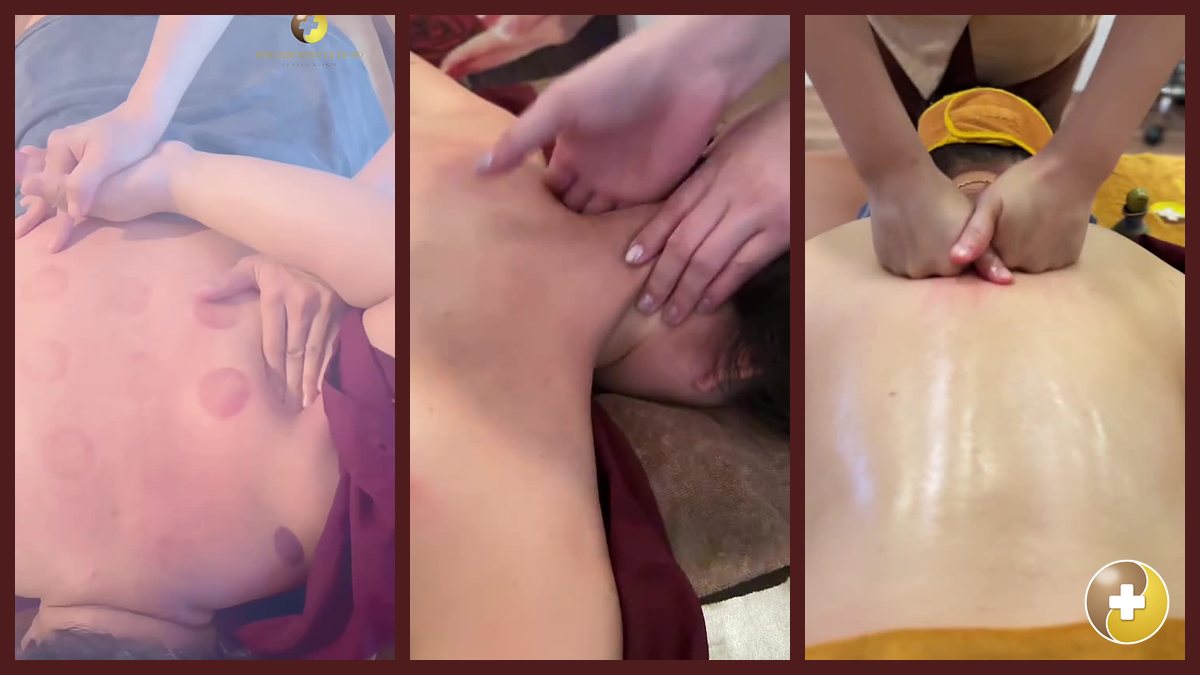
Quick answer: For cupping in District 9, Ho Chi Minh City, Tong Gia has a branch inside Vinhomes Grand Park offering 30-minute cold-releasing cupping for 85,000 VND (about 3 USD). It works well after a neck-and-shoulder or back session, so the practitioner reads your spine first and places cups where they help. Open 9:00–20:00 daily.
Want Lương Y Tống Văn Huynh’s team to read your spine and posture in person?
What cupping is, and why people in District 9 look for it
In Western terms, cupping means placing cups made of glass, plastic or bamboo on the skin and creating negative pressure inside them, either with a brief flame or a hand pump. The suction lifts the skin and the shallow layers of tissue into the cup. Small blood vessels under the skin widen and more blood flows to that area for a while, so most people feel the back warm up, the muscles loosen and a heavy, cold feeling ease off. The round red or purple marks that appear afterwards come from tiny capillaries breaking under suction. They usually fade over a few days to about one or two weeks, depending on the person. Research on cupping for pain is still mixed, so at Tong Gia Acupoint Wellness (Huyệt Đạo Tống Gia) cupping is a supporting step inside a wellness session, never a replacement for medical care when something is wrong.
In District 9 (the former district, now part of Thu Duc City), the people who search for cupping fall into fairly clear groups. Engineers, technicians and shift workers at the Saigon Hi-Tech Park stand at machines or sit in cold clean rooms for hours. Students at the campuses around Man Thien and Le Van Viet sit in air-conditioned libraries. Young families live in the Rainbow, Origami and Beverly subdivisions of Vinhomes Grand Park. And a growing number of foreigners rent apartments inside the township; many have tried cupping in China, Korea, the Middle East or at home and want to see how Vietnamese practitioners do it. The common thread is an upper back that feels cold, stiff and heavy after days of air-con, rides in the rain or hard training.
Our District 9 branch is at unit T16-21 in the Manhattan block, inside Vinhomes Grand Park. Residents can walk or take the internal electric shuttle; people in the older parts of District 9 around Le Van Viet and Do Xuan Hop roads ride roughly 5–10 km depending on the ward. This guide explains cupping from the Western angle and according to the Tong Gia curriculum, who should and should not have it, what a session at the District 9 branch includes and what it costs. Our service page cupping, gua sha and herbal steam has the overview.
| Who in District 9 | Why they look for cupping | Good to know first |
|---|---|---|
| Hi-Tech Park engineers and shift workers | Cold, stiff upper back after standing at machines or sitting in cold clean rooms | Book after your shift; avoid coming very hungry or exhausted |
| Students near Man Thien, Le Van Viet | Neck and shoulder ache from studying bent over in cold libraries | The 30-minute session is low-cost; skip it when you have a fever |
| Young families in Vinhomes Grand Park | Back ache from carrying children, housework, school runs | Tell us if you are pregnant or breastfeeding |
| Foreign residents renting in the township | Know cupping from other countries and want the Vietnamese version | Marks show in open-back clothes or at the pool for some days |
| Runners and gym-goers around the park | Tight back and shoulders after heavy training | No cupping over a fresh injury that is swollen or hot |
Common causes of a cold, stiff, heavy upper back
- Long hours in cold rooms: offices, factories and clean rooms in the Hi-Tech Park run cool. Air blowing on the neck and upper back makes the surface muscles contract again and again, blood flow drops and by evening the back feels like it is carrying a rock.
- Getting caught in the rain: in the rainy season, riding home on Le Van Viet, Do Xuan Hop or the Hanoi Highway at the end of a shift often means a soaked shirt clinging to your back for half an hour. Many people end up chilled, sniffly and achy.
- Standing at machines or bending over a workbench: holding one posture for hours keeps the spinal erectors and trapezius under constant tension.
- Hard training without stretching: a run around the park, a gym session or badminton, then straight into a chair or a car, gives muscles no time to recover.
- Long-term stress: production targets, project deadlines and exams make people raise their shoulders and breathe shallowly without noticing, so the back stays braced all day.
- Poor sleep: night shifts, daytime sleep in cold rooms, sleeping face-down or on a high pillow stop the neck and back from resting properly.
These factors feed each other: tight muscles get less blood, less blood makes them colder and stiffer, and a tired body sleeps worse. Cupping warms and loosens the surface layers, but if the deeper muscle layers and daily habits are left alone, the heaviness returns. That is why we recommend combining cupping with a session that reads the spine first.
Other signs to watch
- The area between your shoulder blades feels colder to the touch than the rest of your back.
- A stiff neck in the morning, difficulty turning your head, a heavy head.
- Sneezing, a runny or blocked nose every time you walk from the heat into an air-conditioned room.
- Feeling drained and slightly chilled after getting soaked in the rain.
- Ache spreading from the shoulders down to the low back after a shift.
- Previous cupping marks that were very dark or slow to fade, or skin that bruises easily from light knocks.
The last point matters most. Skin that bruises easily, or cupping marks that take a long time to clear, can be linked to blood conditions, blood-thinning medication or fragile vessels, and deserve a check at a medical facility before you have cupping again. Noting these signs before you book helps the practitioner choose the right zones and pressure from the first visit.
When to see a doctor, and who should skip cupping
Please see a doctor at a medical facility first, and do not have cupping yet, if you have:
- Chest pain or tightness, shortness of breath, cold sweats, or pain spreading to the jaw or left arm: call 115 immediately. This may be a heart problem, not a cold back.
- High fever, shaking chills, a heavy cough with discoloured phlegm or difficulty breathing: get checked, do not use cupping to "sweat out" a cold.
- Open wounds, inflamed or itchy skin, sunburn, or a fresh surgical scar where the cups would go.
- Easy bleeding, unexplained bruising, or blood-thinning medication prescribed by your doctor.
- Pregnancy (no cupping on the abdomen or low back), very low body weight, or an older age with health conditions that are not yet stable.
- Long-lasting fatigue and pallor, or weight loss you cannot explain: get checked at a medical facility in parallel, and do not rely on frequent cupping.
- Back pain after a fall or a blow, or pain that gets worse at night.
This is a wellness service, not medical care.
The Y Tướng Học view: the Lung governs the skin, plus skin and muscle signs
Y Tướng Học (face reading for wellness) works on the principle "the signs show outside, the organs lie inside": outward complexion and body shape guide which inner areas to examine. Cupping acts directly on the skin and the surface muscles, so according to the Tong Gia curriculum two organ systems in Eastern medicine matter most here (they are functional concepts, not statements about your actual lungs or liver):
- The Lung governs the skin and body hair and spreads the defensive qi: in the curriculum, the Lung system looks after the skin, pores and an outer protective layer called "wei qi". When Lung qi is insufficient, pores open and close unevenly and external "wind" and "cold" get in more easily, showing up as frequent colds and allergic rhinitis. This is the person who sneezes in every cold room and feels wiped out after one soaking.
- The "Đồng" face shape: the curriculum links it to the Metal element with the Lung system in charge; illness often comes from wind-cold or dryness, and the upper back tends to stiffen or show a raised vertebra around D3 (the Lung Shu point area), affecting breathing. D3 sits between the shoulder blades, exactly where many people ask for cups.
- Muscles hard as wood: the curriculum describes people under heavy mental pressure (qi and blood stagnation, Liver qi constraint) developing chronic deep contractions, especially in the trapezius and along the Bladder meridian on the back. The muscle feels hard, dry and tender, with a risk of the band becoming fibrous if it is not released deeply in time.
- Skin tone: the curriculum places very pale or sallow skin under Heart–Spleen deficiency (weak blood production, dizziness, breathlessness), and dark patches with dusky lips under Liver blood stagnation. Pale, thin people need lighter suction and shorter times, or herbal steam and herbal compresses instead of cupping.
None of this is a verdict about disease. It helps the practitioner decide where to place cups, how strong the suction should be and for how long. A healthy person with firm muscle and rosy skin tolerates moderate suction; a thin person with a cold back and soft muscle needs a very different approach.
Spine segments and nerve-reflex zones involved
According to the Tong Gia curriculum, the 33 vertebrae govern different areas: the cervical spine C1–C7 covers the head, face, neck and arms; the thoracic spine D1–D12 covers circulation, breathing and digestion; the lumbar spine L1–L5 covers digestion, kidneys, urinary system and legs. Because the back is where most cups go, reading the spine first shows where to place them and where to stay away.
| Segment | Nerves / functions | Common feeling | Related organ system (curriculum) |
|---|---|---|---|
| C5–C7 | Shoulders, arms, hands | Neck and shoulder ache, tingling hands from repetitive work | Liver (governs the sinews) |
| D1–D3 | Upper back, breathing; nervous system group | Cold between the shoulder blades, shallow breathing, poor sleep | Lung (D3, Lung Shu), Heart |
| D4–D9 | Circulation, breathing, liver and gallbladder | Tight mid-back, tiredness under stress | Heart, Liver |
| D11–D12 | Digestion (Spleen Shu, Stomach Shu) | Bloating, slow digestion, a thick stiff patch of back muscle | Spleen–Stomach |
| L1–L5 | Kidneys, urinary system, legs | Cold low back, tired legs after standing shifts | Kidney (governs the bones) |
Under the "excitation" principle of the curriculum, work focuses on excited zones (warmer skin, contracted muscle, increased tenderness) and never directly on inhibited zones. So a cold, soft or sunken area on the spine is not a place to put strong cups; the practitioner reads it by hand first.
The Tong Gia method: cold-releasing cupping inside a spinal nerve-reflex balancing session
The method was built by Lương Y (master of traditional Vietnamese wellness) Tống Văn Huynh, who has over 13 years of practice in Eastern wellness, Y Tướng Học and spinal nerve-reflex balancing. It takes the head and spine as its foundation and follows three "no" rules: no medication, no needles and no rough force. Cupping has a clear place in it: a supporting step that warms and loosens the surface layers after the spine has been read and the muscles released. A typical session at the District 9 branch goes like this:
- Observation: the practitioner looks at your complexion, posture, shoulder height and face shape to choose which part of the back to examine first.
- Reading the spine by hand: pressing, stroking and rolling to feel the four factors in the curriculum: skin temperature, the muscle layer, the shape of each vertebra (raised, shifted, sunken) and points of soreness or tingling, comparing left and right.
- Muscle release: softening the trapezius, spinal erectors and the bands on both sides of the spine at the right pressure level.
- Acupressure on the right zones: focused on the excited zones found, creating a "wave of sensation" that is sore but pleasant so the body can rebalance itself.
- Cold-releasing cupping: cups placed on suitable areas of the back, with suction and time matched to your build; damaged skin, inhibited zones and, in pregnancy, the abdomen are avoided.
- Self-care advice: keeping the back warm, drinking warm water, when to shower, and how you sit at work.
| Suggested service | Length | Price |
|---|---|---|
| Cold-releasing cupping | 30 min | 85,000 VND (about 3 USD) |
| Neck and shoulder or back and waist care | 60 min | 550,000 VND (about 21 USD); first visit 399,000 VND (about 15 USD) |
| Herbal steam | — | 120,000 VND (about 5 USD) |
Full prices are on our price page. Many District 9 guests book a 60-minute back or neck-and-shoulder session and add 30 minutes of cupping, so the cups go where the spine was read instead of covering the whole back at random.
What you feel during and after
During cupping most people feel the skin pulled and gradually warm, with a dull pressure over tight muscles rather than sharp pain. Afterwards the upper back feels warmer and lighter, the neck turns more easily and many sleep more deeply that night. Marks may be red or purple; areas with tight muscle and poor circulation are often darker. Some people feel mildly sore for a day, which is common after deep muscle layers are released. Everyone responds differently; we help the body relax and rebalance and do not promise that pain will disappear. Two earlier guides answer common questions: cupping in Saigon: questions and answers and what a cupping visit in Saigon feels like.
A typical case: an engineer working shifts at the Hi-Tech Park drops in after work, saying his upper back has felt cold and heavy all through a rainy week. The practitioner finds the area between his shoulder blades cool, the right trapezius thicker and harder than the left, and D3 slightly raised. After 60 minutes of muscle release and acupressure on the neck and upper back, cups are placed along both sides of D1–D6 for about ten minutes. He is advised to keep his back covered, skip a cold shower that evening and turn the air-con vent away from his desk.
Want Lương Y Tống Văn Huynh’s team to read your spine and posture in person?
Getting to the branch from different parts of District 9
- Vinhomes Grand Park residents (Rainbow, Origami, Beverly): the branch is at unit T16-21 in the Manhattan block, a walk or a short electric shuttle ride away. Many families come in the evening after a stroll in the 36-hectare park, or at the weekend after Vincom Mega Mall. See our Vinhomes Grand Park page.
- Around Le Van Viet, Man Thien, Do Xuan Hop: roughly 5–10 km depending on your ward. These roads are busy at rush hour, so book ahead to hold your time slot.
- Hi-Tech Park workers: stop by on the way home after your shift; the branch is open until 20:00.
- Suoi Tien, Long Binh, Long Thanh My: follow the Hanoi Highway and turn into the township; anywhere from a few km to over 10 km depending on where you live.
Foreign residents can message us on WhatsApp in English. If this is your first visit, your first massage in District 9 explains how to choose a package, and gua sha and herbal steam questions covers the services that are often combined with cupping. For family visits, see a family weekend massage in Vinhomes.
Self-care at home and prevention
- Keep the neck and upper back warm: keep a light jacket at the office or clean room and point the air-con away from your back.
- Change into dry clothes right after the rain: dry your hair and neck and drink a glass of warm water.
- No cold shower straight after cupping: give your body a while to settle, then shower warm and keep the cupped area covered.
- Stretch after training: 5–10 minutes of shoulder rolls and back stretches before you sit down.
- Do not cup too often: wait until the marks have fully faded before the next round, usually a few days to a couple of weeks.
Booking
- District 9 branch – Vinhomes Grand Park: Căn T16-21 khu Manhattan, Vinhomes Grand Park, Phường Long Bình, TP. Thủ Đức (unit T16-21, Manhattan block, Long Binh Ward, Thu Duc City). Open 9:00–20:00 daily.
- District 12 branch: 225 Dương Thị Mười, Phường Tân Chánh Hiệp (Tan Chanh Hiep Ward, District 12). Open 8:00–19:00 daily.
Book online or call, Zalo or WhatsApp +84 888 264 559. Tell us which area bothers you, whether you are pregnant or take blood thinners, and when you would like to come, and we will hold a suitable slot. You can read genuine reviews on Google Maps from each branch page. This is a Vietnamese Eastern wellness method developed by Lương Y Tống Văn Huynh, founder of Tong Gia; if you are visiting Ho Chi Minh City, you are welcome to try it.
Visit us
- Đông Y Huyệt Đạo Tống Gia Quận 9 (Vinhomes Grand Park, District 9)
Căn T16-21 khu Manhattan, Vinhomes Grand Park, Phường Long Bình, TP. Thủ Đức, HCMC · 9:00–20:00 daily · 0888 264 559 · Directions on Google Maps
Want Lương Y Tống Văn Huynh’s team to read your spine and posture in person?
FAQ
Where can I get cupping in District 9? Tong Gia has a branch inside Vinhomes Grand Park, unit T16-21 in the Manhattan block, Long Binh Ward, Thu Duc City, open 9:00–20:00 daily. Cold-releasing cupping takes 30 minutes and costs 85,000 VND (about 3 USD), on its own or after a back or neck session.
Does cupping hurt, and how long do the marks last? Most people feel the skin pulled and warm, with dull pressure over tight muscles, not sharp pain. Marks usually fade over a few days to about one or two weeks. If you bruise very easily or marks take long to clear, get checked at a medical facility.
Can I shower after cupping? Avoid a cold shower straight away. Give your body a while to settle, then shower with warm water, dry off and keep the cupped area covered and away from air-con drafts.
How often should I have cupping? Wait until the marks have fully faded, usually a few days to a couple of weeks. Cupping more often does not loosen muscles faster. Many District 9 residents book regular back or neck care and add cupping only when the back feels cold and heavy.
Who should not have cupping? People with a high fever, open wounds or inflamed skin on the area, easy bleeding or blood thinners, pregnancy (abdomen and low back), or very low body weight. Chest pain, breathlessness or cold sweats mean calling 115, not cupping.
Can staff speak English at the District 9 branch? You can message us on WhatsApp at +84 888 264 559 in English to book and describe your needs. Many foreign residents of Vinhomes Grand Park visit; tell us in advance and we will explain each step during the session.
Author: Lương Y Tống Văn Huynh – founder of Huyệt Đạo Tống Gia, a master of traditional Vietnamese wellness with over 13 years in Eastern wellness care, Y Tướng Học (face reading) and spinal nerve-reflex balancing massage.
Updated: 2026-11-16
Related guides
- What does acupressure do? Effects on muscles, nerves and the five organs, and how Tong Gia works in Ho Chi Minh City
- Acupressure in Thu Duc: pressure chosen by reading your spine, at the branch that suits your ward
- Sore after acupressure: is it normal? How to tell ordinary aching from warning signs, why it happens and how to look after yourself after a session in Ho Chi Minh City
- What are gua sha and cupping: two Vietnamese folk warming methods, the cupping points and when to skip them
- Unblocking the meridians (đả thông kinh lạc): what it really means, how a hands-on session works and what you will feel in Ho Chi Minh City
- Herbal compress: what the warmth really does, where it goes and who it suits
This is a wellness service, not medical care.