
Foot acupressure massage: what a session includes, which points are pressed and who should skip it
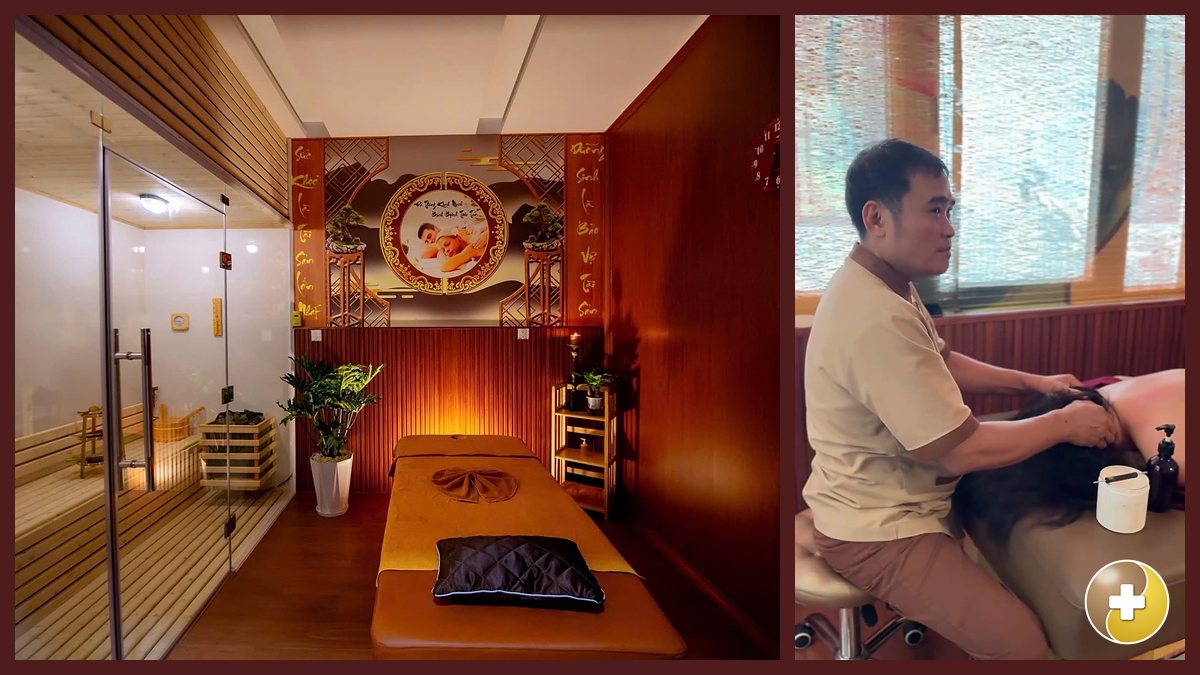
Quick answer: Foot acupressure massage releases the calves and soles, then presses Dũng tuyền, Thái khê, Túc tam lý and Tam âm giao so legs feel lighter, feet warmer and sleep easier. At Tong Gia Acupoint Wellness (District 12 and Vinhomes Grand Park, Ho Chi Minh City) the session starts at the lower back; 60 minutes costs 500,000 VND (about 19 USD).
Want Lương Y Tống Văn Huynh’s team to read your spine and posture in person?
What is foot acupressure massage?
Foot acupressure massage means massaging the soles, ankles and calves and then pressing specific points on the channels that run through the legs. Unlike a simple foot soak or a quick rub with oil, a proper session has two clear parts: muscle release for the calves, Achilles tendon and soles, and acupressure on exact points such as Dũng tuyền, Thái khê, Tam âm giao, Túc tam lý and Thái xung.
In Western terms, the feet and lower legs are packed with sensory nerve endings, especially in the soles, which take your weight all day. Massage sends signals from these receptors to the spinal cord and brain, and the autonomic nervous system shifts toward rest: breathing slows, muscles let go, and many people doze off in the chair. The calf is often called the "second heart" because each contraction pushes venous blood back toward the heart; when you stand or sit still for hours, it barely works, so legs feel heavy and ankles puff up a little by evening. Stroking the calves upward helps the legs feel lighter. Foot massage does not replace a medical check for swelling that keeps increasing or lasting pain.
In Ho Chi Minh City the people who book foot acupressure are shop and counter staff, factory line workers, teachers, nurses on long shifts, delivery riders climbing apartment stairs, weekend runners and older people with cold feet and tired knees. Visitors who walk the city all day in sandals often add it to the end of a trip. See also our acupressure massage Q&A.
How is it different from a typical spa foot massage?
Many spas work from a foot reflexology map that assigns each zone of the sole to an organ. The Tong Gia training does not use that map. It follows the channels and the spine: the Kidney channel starts at Dũng tuyền on the sole; the Spleen channel runs along the inner foot through Thái bạch and Công tôn up to Tam âm giao; the Liver channel begins at the big toe with Đại đôn, Hành gian and Thái xung; the Stomach channel passes Túc tam lý below the knee. And because tired legs often start in the lower back, the practitioner always reads the lumbar spine first.
Common reasons legs feel heavy and tired
- Standing in one spot: retail, production lines, kitchens for 8–10 hours; the calves barely contract and ankles swell slightly by evening.
- Sitting without moving: office work and driving compress vessels and nerves behind the knee; feet go numb and cold.
- Lots of walking or running: tight calves and Achilles tendons.
- Tight shoes, heels or thin flip-flops: uneven load on the sole, heel pain in the morning.
- Air-con and bare feet on tiles: cold feet and slightly tingly toes.
- Age and inactivity: cold feet, tired knees, night cramps.
In the Tong Gia training, the Liver system governs the sinews: when Liver blood is low, tendons weaken, stiffen and cramp. The Spleen system governs the muscles and limbs: when it is weak, arms and legs tire and fluid lingers in the tissues. The Kidney system is tied to the lower back and knees: when it is low, knees tire, the back feels cold, feet are cold and you wake to urinate. These are functional ideas from traditional medicine, not a statement that your organs are unwell.
Signs to watch
- Common, suited to wellness care: heavy, tired legs by evening; tight calves; aching soles after standing; cold feet; light sleep; occasional mild night cramps.
- Mild ankle puffiness in the evening that is gone by morning: usually from standing or sitting; raise your legs and move.
- Heel pain with the first steps in the morning: common in people who stand a lot in thin-soled shoes.
- Hot soles at night: the training links this to Kidney yin deficiency (hot palms and soles, dry mouth, dream-filled sleep); it needs cooling and calming rather than heat.
- Not right: swelling in one leg, a calf that is swollen, hot and red; a foot wound that is slow to close; burning numbness in both feet like wearing socks; pain after a short walk that forces you to stop.
When to see a doctor
Foot acupressure is wellness care for tired, cold, tight legs. Please see a doctor at a medical facility first if you have:
- One calf swollen, hot, red and tender, especially after a long flight or bed rest: no massage on that leg, get checked at once.
- Leg swelling that keeps increasing, rapid weight gain, or breathlessness lying down or on effort: the training lists this as a heart warning sign.
- Diabetes with numbness, ulcers or foot wounds that are slow to close.
- Back pain spreading down the leg with numbness or weakness.
- A foot that is bluish and cold on one side, or calf pain after a short walk.
- Sudden hot, red, swollen big-toe joint.
- Lasting fatigue, weight loss or very pale skin: get checked alongside any wellness care.
Chest tightness, shortness of breath or cold sweats: call 115 immediately, no massage, no acupressure. This is a wellness service, not medical care.
Face reading (Y Tướng Học): how tired legs show outside
Y Tướng Học (face reading for wellness) holds that what is inside shows outside. In the Tong Gia training the practitioner looks at complexion, ears and lips and feels the calf muscle:
- Muscle that should be soft and springy but is slack, cool and dents slowly: linked to a cold, weak Spleen (cold hands and feet) or to fluid lingering in the tissues (heavy limbs, a puffy face on waking).
- "Viên" face (圓): round, more padding than bone, linked to the Kidney system; prone to puffiness, early joint wear from cold and damp, a cold lower back.
- "Giáp" face (甲): wide forehead, pointed chin; the training calls it "full above, empty below": headaches and poor sleep above, tired knees and night urination below. Working the feet helps "draw down"; Dũng tuyền is described as guiding heat downward and calming the mind.
- "Mục" face (目): long, narrow, thin; low energy and blood, slack muscles; needs a light, tonifying touch.
- The Tong Gia organ-feature chart: the Kidney shows in ears, hair, bones and lower back (tired knees, cold back); the Spleen in lips and muscle (pale lips, tired limbs); the Liver in eyes, nails and tendons (cramps).
Features are only a hint for where to start, never a health verdict and never used to judge anyone.
Spine and nerve-reflex zones involved
The Tong Gia training maps the lumbar vertebrae L1–L5 to digestion, kidneys, urinary and reproductive function and the legs, and the sacral S1–S5 to elimination and the lower pelvis. The nerves to the legs leave from the lumbar and sacral spine, so a tight lower back or buttock can make the feet numb, cold or tired even when the feet themselves are fine. That is why our foot work starts at the lower back.
| Zone / point | Nerve / function | What you feel in the legs | Related organ system |
|---|---|---|---|
| L1–L5 (Thận du, Mệnh môn at L2) | Kidneys, urinary, legs | Tired, cold legs and knees | Kidney |
| S1–S5 (sacrum) | Elimination, lower pelvis, nerves to the legs | Numb back of thigh and calf after sitting | Kidney, Bladder |
| Ủy trung (back of the knee) | Bladder channel: "for back pain, look to Ủy trung" | Tight knee crease, back ache running down | Bladder |
| Túc tam lý (3 cun below the knee), Tam âm giao (3 cun above the inner ankle) | Stomach channel; meeting point of Spleen, Liver, Kidney | Heavy legs, sluggishness | Spleen-Stomach (no Tam âm giao in pregnancy) |
| Thái khê (between inner ankle and Achilles), Dũng tuyền (sole) | Kidney channel | Cold feet, poor sleep, tired knees | Kidney |
| Thái xung (top of foot), Thái bạch, Công tôn (inner edge) | Liver and Spleen channels | Tight tendons, cramps, stress | Liver, Spleen |
The table shows related zones for choosing where to work, not a medical finding. Points do not act directly on organs; in traditional theory they help regulate energy and blood and ease discomfort.
The Tong Gia method: spinal nerve-reflex balancing massage
Foot acupressure at Tong Gia Acupoint Wellness (Huyệt Đạo Tống Gia) follows the method of Lương Y Tống Văn Huynh, master of traditional Vietnamese wellness and founder, with over 13 years in Eastern wellness, face reading and spinal nerve-reflex balancing. No needles, no rough force, no "the more it hurts the better".
- Screening: pregnancy, diabetes, blood thinners, wounds, one-sided swelling, prominent varicose veins.
- Observation: skin colour, warmth, swelling, posture, knees; complexion, lips, ears.
- Reading the spine by hand: from mid back to lower back and sacrum; warm, tight zones are worked, cool, slack zones only warmed.
- Release of lower back, buttocks, back of thighs and knee crease: clearing the path from the root first.
- Calves, ankles and feet: upward strokes on the calves, gliding along the Achilles, kneading the soles, gentle toe pulls.
- Acupressure: Dũng tuyền, Thái khê, Tam âm giao, Túc tam lý, Thái xung, Ủy trung as the reading shows, to a pleasant ache. No Tam âm giao in pregnancy.
- Home advice: soaking correctly, rubbing Dũng tuyền, raising the legs, changing position.
Services and prices
- Tired heavy legs care 60 min: 500,000 VND (about 19 USD).
- Extra 30 min on one area: 199,000 VND (about 8 USD), added to another service.
- Herbal compress: 130,000 VND (about 5 USD) for cold knees, lower back or ankles.
Full price list; the foot massage page; more stories in acupressure massage in Saigon and massage after running.
A typical session
One evening at the District 12 branch, a market vendor who stands from dawn to afternoon says her legs feel like lead, her soles throb at night and her calves sometimes cramp. Not pregnant, not diabetic, no one-sided swelling. Both ankles are slightly puffy, the feet cooler than the calves, the lips a little pale. Reading the spine, the lower back is cool and slack, the buttocks and back of the thighs tight. The practitioner warms the lower back, releases the buttocks, hamstrings and knee crease, strokes the calves upward, glides along the Achilles, kneads the soles and presses Dũng tuyền, Thái khê, Túc tam lý, Tam âm giao and Thái xung, then lays a warm herbal compress around the ankles. She is advised to soak her feet for 15–20 minutes and raise her legs for about 10 minutes before bed.
What you feel during and after
Pressing the sole and Dũng tuyền usually brings a sharp-sweet ache that turns into warmth spreading up to the ankle; the calves lighten with each stroke and some people fall asleep. Afterwards your step feels lighter, your feet warm, your knees less achy and sleep comes more easily. The soles may feel tender for the first few hours. Everyone differs; we do not promise an end to tired legs or cramps, and frequent cramps are worth a medical check.
Want Lương Y Tống Văn Huynh’s team to read your spine and posture in person?
Self-care at home: herbal foot soak and foot massage
- Right temperature and timing: water about 38–42°C, 15–20 minutes before bed. If you are diabetic, test the water with your elbow or a thermometer, since feeling in the feet may be reduced.
- Simple, clean herbs: a few slices of ginger, crushed lemongrass, mugwort or coarse salt, boiled then cooled to warm. A soak relaxes you, warms the feet and helps sleep; it does not "detox the kidneys" or lower blood pressure on the spot.
- Massage after soaking: dry between the toes, rub the sole (Dũng tuyền) 3–5 minutes per foot, press Thái khê 1–2 minutes per side, then stroke the calves from ankle to knee 20–30 times.
- Raise and move: lie with your legs above heart level for about 10 minutes; if you stand all day, rise onto your toes 20 times an hour; if you sit, circle your ankles.
- Skip it when: right after a big meal or alcohol, with a foot wound, or with one hot, swollen calf. Wear thin socks under the air-con. More tips in our traditional Vietnamese massage experience.
How to book
Tong Gia Acupoint Wellness has two branches in Ho Chi Minh City, open every day, with real customer reviews on Google Maps:
- District 12: 225 Dương Thị Mười, Phường Tân Chánh Hiệp (Tan Chanh Hiep Ward, District 12). Open 8:00–19:00 daily.
- District 9 – Vinhomes Grand Park: Căn T16-21 khu Manhattan, Phường Long Bình, TP. Thủ Đức (unit T16-21, Manhattan zone, Long Binh Ward, Thu Duc City). Open 9:00–20:00 daily.
Call, Zalo or WhatsApp +84 888 264 559, or book online. Tell the team if you are pregnant, diabetic, on blood thinners, have a foot wound or swelling that keeps increasing, so points and pressure can be chosen safely.
Visit us
- Đông Y Huyệt Đạo Tống Gia Quận 12 (District 12)
225 Dương Thị Mười, Phường Tân Chánh Hiệp, Quận 12, HCMC · 8:00–19:00 daily · 0888 264 559 · Directions on Google Maps - Đông Y Huyệt Đạo Tống Gia Quận 9 (Vinhomes Grand Park, District 9)
Căn T16-21 khu Manhattan, Vinhomes Grand Park, Phường Long Bình, TP. Thủ Đức, HCMC · 9:00–20:00 daily · 0888 264 559 · Directions on Google Maps
Want Lương Y Tống Văn Huynh’s team to read your spine and posture in person?
FAQ
What does foot acupressure massage do? It loosens the calves and soles, warms the feet, lightens the legs and relaxes the whole body, which suits people who stand or walk a lot. Pressing Dũng tuyền, Thái khê, Túc tam lý and Tam âm giao helps regulate energy and blood in traditional theory. It does not replace a check for growing swelling.
Is this the same as foot reflexology? Not quite. Reflexology maps the sole to organs. Tong Gia reads the lower back first, releases the buttocks, thighs and knee crease, then massages the feet and presses points along the Kidney, Spleen, Liver and Stomach channels.
Does foot acupressure hurt? You feel a mild ache on the soles and Achilles at first, then warmth. Pressure builds from light to moderate according to your feedback; we never work on the idea that more pain is better.
Can I have it while pregnant? Tell us when booking. The Tong Gia training excludes Tam âm giao and Hợp cốc in pregnancy and avoids the abdomen; the practitioner keeps to gentle massage and skips those points.
Is a herbal foot soak plus foot massage good? For cold, tired feet and poor sleep, yes: soak in water around 38–42°C for 15–20 minutes, then rub each sole for 3–5 minutes. Diabetics should test the temperature; skip it with wounds or one hot, swollen calf.
How much is foot acupressure at Tong Gia? Tired heavy legs care is 500,000 VND (about 19 USD) for 60 minutes. You can add 30 minutes to another service for 199,000 VND (about 8 USD), or a herbal compress for 130,000 VND (about 5 USD).
Author: Lương Y Tống Văn Huynh – founder of Huyệt Đạo Tống Gia, a master of traditional Vietnamese wellness with over 13 years in Eastern wellness care, Y Tướng Học (face reading) and spinal nerve-reflex balancing massage.
Updated: 2026-11-16
Related guides
- What does acupressure do? Effects on muscles, nerves and the five organs, and how Tong Gia works in Ho Chi Minh City
- Acupressure in Thu Duc: pressure chosen by reading your spine, at the branch that suits your ward
- Sore after acupressure: is it normal? How to tell ordinary aching from warning signs, why it happens and how to look after yourself after a session in Ho Chi Minh City
- What are gua sha and cupping: two Vietnamese folk warming methods, the cupping points and when to skip them
- Unblocking the meridians (đả thông kinh lạc): what it really means, how a hands-on session works and what you will feel in Ho Chi Minh City
- Herbal compress: what the warmth really does, where it goes and who it suits
This is a wellness service, not medical care.