
Lower back pain from bad posture: seven common sitting, standing and sleeping habits, when to get checked, and how Tong Gia cares for it in Ho Chi Minh City
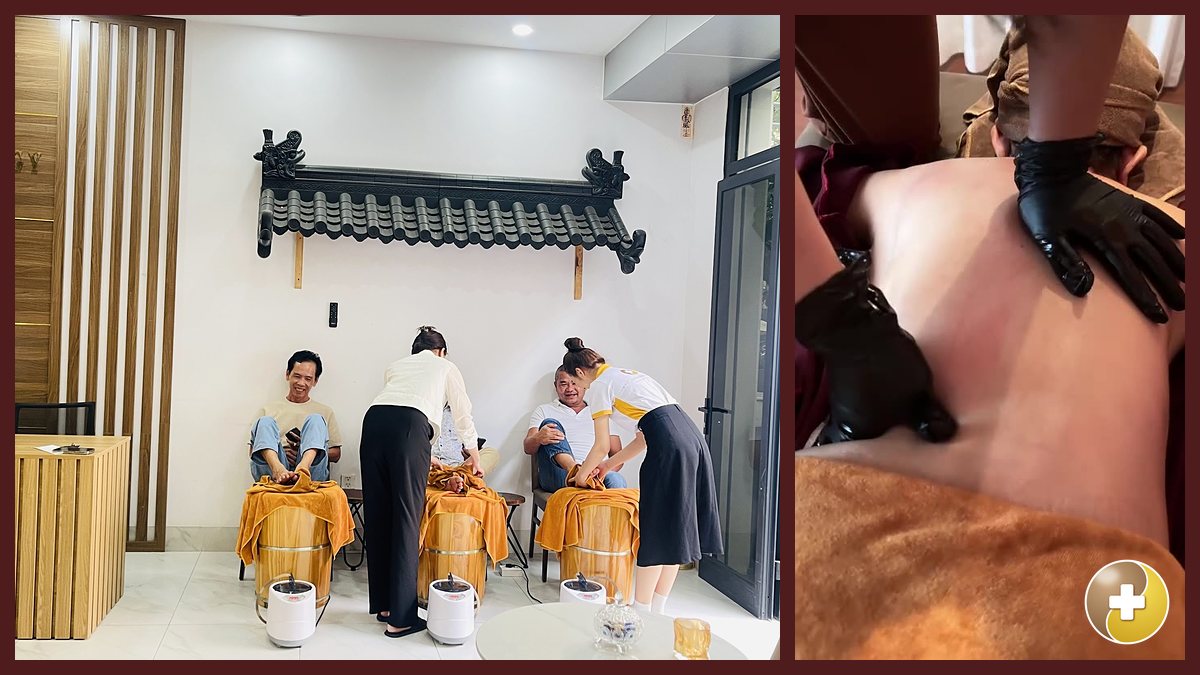
Quick answer: Lower back pain from bad posture is mechanical pain when slumping, crossed legs, standing on one leg, bending to lift or a sagging mattress load the lumbar muscles and small joints unevenly. It changes with position and eases when you move. Tong Gia in Ho Chi Minh City releases and balances both sides of the lower back.
Want Lương Y Tống Văn Huynh’s team to read your spine and posture in person?
What is lower back pain from bad posture, and who gets it?
Lower back pain from bad posture is a tired, sore, heavy or stiff feeling in the low back – from the waist down to the sacrum – caused by sitting, standing, bending or lying out of alignment, over and over. In Western medicine it belongs to common "mechanical" low back pain: no serious damage, but the spinal muscles, ligaments and small joints at the back of the vertebrae carry a lopsided load for too long and start to hurt. Its hallmark is that it changes with position: holding one posture makes it worse; moving, walking or lying down makes it better.
The lumbar spine has five vertebrae, L1–L5, carrying almost all of the upper body's weight. From the side it has a gentle forward curve; from behind it should be straight with level shoulders and hips. Bad posture bends one of these two axes: front–back (slumping flattens or reverses the curve; standing with the belly out over-arches it) or left–right (crossing one leg, standing on one leg, carrying a bag on one side tilts the hips and shoulders). Muscles on the stretched side tire; muscles on the shortened side stiffen; over time you get two uneven muscle strips. In Ho Chi Minh City we see this in desk workers and students, motorbike drivers and couriers hunched over the handlebars, factory workers bent over sewing tables or standing on lines, mothers carrying babies on one hip, shop staff on their feet all day, older adults weeding and gardening, and young people scrolling for hours on a bed or sofa. Expats add long flights, laptops in cafés and hotel mattresses.
Common causes: seven bad postures and what they do
| Bad posture | What happens in the lower back | Common in | Fix |
|---|---|---|---|
| 1. Slumping, sliding to the chair edge | Pelvis tips back, the lumbar curve reverses, back of the disc and ligaments overstretch | Office, students | Hips to the backrest, small lumbar cushion |
| 2. Crossing legs, sitting on one buttock | Hips tilt, lumbar spine bends sideways, one side shortens | Meetings, long desk work | Both feet on the floor, switch often |
| 3. Standing on one leg, belly out | Hip drops, lower back over-arches, facet joints compress | Sales, waiting staff | Weight on both feet, soft knees, one foot on a step |
| 4. Bending to lift, lifting and twisting | The low back becomes a long lever; muscle and disc take torsion | Warehouses, home, moving house | Squat, keep the load close, turn with your feet |
| 5. Hunched on a low motorbike | C-shaped back, bumps go straight into the lumbar spine | Drivers, couriers | Adjust mirrors, sit tall, break every 1–2 hours |
| 6. Sagging mattress, sleeping on the stomach, phone in bed | The lower back sags or arches all night, muscles never rest | All ages | Medium-firm mattress, side-lying with a pillow between knees |
| 7. Baby on one hip, bag on one shoulder | Hips pushed sideways, shoulders uneven, one side of the back works overtime | New mothers, commuters | Switch sides, front carrier, two-strap backpack |
Why does posture hurt? Picture the lumbar muscles as two guy ropes holding a pole. When the pole stands straight, both share the load. When it leans forward (slumping, bending) the back ropes pull hard; when it leans sideways (crossed legs, one-leg standing) one rope works double. Muscle that works too long gets less blood and forms knots; ligaments stretched too long ache; small joints squeezed too long give a sharp catch when you change position. Weak abs and glutes from little exercise remove the lower back's "belt" and make everything worse.
Accompanying signs to watch
- Worse holding one position, better when you move, walk or lie down: classic posture pain, the easiest kind to care for.
- Pain on one side matching the leg you cross, the leg you stand on or the hip you carry your child on: a left–right imbalance.
- A visible tilt: one shoulder lower, one hip higher, uneven waist creases, trousers twisting.
- Morning stiffness that eases within 10–15 minutes of moving: usually muscle tightened overnight by the mattress or sleeping position.
- Pain or numbness running into the buttock, thigh or calf: no longer simple posture pain; a nerve root may be irritated – get checked.
- Whole-body clues: a cold lower back, tired knees, night urination; cramps and tight tendons; tired limbs and slack muscles – Kidney, Liver and Spleen signals in Eastern medicine.
When to see a doctor
If pain is severe, sudden, or comes with fever, numbness, weakness, chest pain or breathing difficulty, please see a doctor first. Also:
- Leg weakness, unsteady walking, numbness in the groin or around the anus, trouble passing urine or loss of control – emergency.
- Pain after a fall or accident, or pain on the bone in older adults or people with osteoporosis.
- Fever, burning or bloody urine, colicky flank pain.
- Pain that does not change with position, or night pain that rest does not ease.
- Unexplained weight loss, night sweats, a history of cancer – please get a medical check alongside any wellness care.
- Still painful after 4–6 weeks of better posture and rest; or a clearly curved spine in a growing child.
This is a wellness service, not medical care. Tong Gia does not reshape the spine; for scoliosis or disc problems, follow your doctor's plan. We only support the muscles once warning signs are ruled out.
The Eastern face-reading view: which organs, what signs
Per the Tong Gia course book, the Kidney governs bone and marrow, and a weak Kidney shows as tired lower back and knees. The lumbar area holds Kidney-shu (below the spinous process of L2, 1.5 cun out), Mingmen (in the hollow below L2) and Zhishi (3 cun out). The Liver governs the sinews – people prone to cramps and tight tendons stiffen faster when holding a posture – and the Spleen governs muscle and limbs, so slack abs and glutes leave the lower back without support. The book also notes that shallow breathing with a hunched back means the diaphragm barely moves and the lungs never fully open, leaving you tired, short of breath and tense: slumping hurts your breath as well as your back.
Vietnamese face reading says "the sign is outside, the organ is inside." With over 2,000 years of roots, it was systematised for organ-based care by Master Tống Văn Huynh, a master of traditional Vietnamese wellness. With these face types the practitioner looks closely at the lower back: the asymmetric "Dụng" face (a tilted spinal axis, one side tight and one side slack – posture pain is often clearly one-sided); the wide-jawed "Phong" face (back muscles that twitch or tighten unevenly when changing position, with pain that moves – a "dynamic" method is used to catch the key point); the "Do" face (thick lumbar and hip muscles that congest easily); the round "Viên" face (cool lumbar skin, slack muscles, dull ache); and a crooked mouth or nasal bridge, which the school links with misalignment of the spinal axis and pelvis. This is observation for choosing where to work, never a medical verdict or a judgement.
Vertebrae and nerve reflex zones
| Vertebrae | Nerve, function | Typical posture complaint | Related organ |
|---|---|---|---|
| D11–L1 | Thoracolumbar junction | Ache across the waist after long slumping | Spleen, Stomach (below T11, T12) |
| L1–L3 | Upper lumbar; kidney, urinary, front of thigh | Stiff back when standing up after sitting, cold back | Kidney (Kidney-shu, Mingmen at L2) |
| L4–L5 | Lower lumbar; legs | One-sided ache from one-leg standing or bending to lift | Kidney, Liver |
| S1–S5, tailbone | Pelvis | Sacrum or tailbone pain from slouched sitting or motorbikes | Kidney |
Per the course book, L1–L5 govern digestion, kidneys, urinary and reproductive organs and the legs; the muscle–bone–joint group is worked through C5–C7, L1–L5 and S1–S5, always as support. People with lopsided posture usually have one warm, knotted muscle strip and the other side softer and cooler.
The Tong Gia method: spinal nerve reflex balancing massage
This Vietnamese Eastern method was developed by Master Tống Văn Huynh, founder of Tong Gia Acupoint Wellness, from the Head-and-Spine school and over 13 years of practice, with three "No"s: no ingested or injected chemicals or herbs, no needles, no brute force. A session:
- Observe and ask: your job, how you sit, stand and sleep, which leg you cross or stand on, which hip you carry on; tingling; medical check; face, shoulders, hips.
- Read the spine by hand from D11 to the sacrum: skin temperature, the spinal groove, each vertebra; survey area → key zone → key point.
- Release "excited" zones only, pressure building through five levels; push-and-rotate, plucking or vibration depending on the muscle; when the two sides differ, both are balanced together; pain that moves is tracked dynamically.
- Press Kidney-shu, Mingmen, Zhishi and open the Bladder line down to Weizhong; stop when the skin turns from dry to slightly moist; cool a hot area, warm a cold one.
- Home care: chair, standing, lifting, sleep, three small exercises.
A typical session: a designer around thirty who sits all day with his right leg crossed over his left and scrolls on the sofa at night; the left side of his lower back hurts every time he stands up and eases after a few steps; his check showed no disc problem. Left hip higher, right shoulder lower, slightly uneven face. L3–L5 on the left is warm and knotted, the right soft and cool. The practitioner releases the left strip first, works the right gently, balances both sides, then presses Kidney-shu and Weizhong. He stands up without the "catch" and walks taller; advice: stop crossing his legs, a lumbar cushion, stand every hour.
Suitable services (see the price list): Back and waist care 60 min: 550,000 VND (about US$21), first visit 399,000 VND (about US$15); 90 min: 750,000 VND (about US$29); extra 30 minutes on one area: 199,000 VND (about US$8) if your neck and shoulders also ache from the same posture; cupping to release cold, 30 min: 85,000 VND (about US$3).
What you feel: sore-but-pleasant points, a light and warm back, both sides feeling "even" when you stand; most sleep well. If you go back to the same posture, the muscle will tighten again – changing posture is the main work, and the session supports balance without promising the pain will vanish. More: back massage Q&A, a back massage experience in Saigon, neck and shoulder massage Q&A.
Want Lương Y Tống Văn Huynh’s team to read your spine and posture in person?
Self-care at home and prevention
- Sit well: hips to the backrest, lumbar cushion, both feet on the floor, no crossed legs, screen at eye level.
- The 45–60 minute rule: stand, walk a few steps, hands on hips, gently arch back five times.
- Stand on both feet, knees soft, belly in; one foot on a low step when standing long, switching sides.
- Lift with your legs, load close, turn with your feet; switch sides when carrying a child or bags.
- Sleep well: medium-firm mattress, side-lying with a pillow between the knees or on your back with a pillow under them; no phone on your stomach. Rub warm palms over the Kidney-shu area 50–100 times before bed. After air-con stiffness, see our cupping Q&A.
Book a session
- District 12: 225 Dương Thị Mười, Tân Chánh Hiệp Ward (District 12). Open 8:00–19:00 daily.
- Vinhomes Grand Park, District 9: Unit T16-21, Manhattan zone, Long Bình Ward, Thủ Đức City. Open 9:00–20:00 daily.
Both branches have genuine guest reviews on Google Maps. Book online or call / Zalo / WhatsApp +84 888 264 559; tell us about your job and your usual sitting and standing habits.
Visit us
- Đông Y Huyệt Đạo Tống Gia Quận 12 (District 12)
225 Dương Thị Mười, Phường Tân Chánh Hiệp, Quận 12, HCMC · 8:00–19:00 daily · 0888 264 559 · Directions on Google Maps - Đông Y Huyệt Đạo Tống Gia Quận 9 (Vinhomes Grand Park, District 9)
Căn T16-21 khu Manhattan, Vinhomes Grand Park, Phường Long Bình, TP. Thủ Đức, HCMC · 9:00–20:00 daily · 0888 264 559 · Directions on Google Maps
Want Lương Y Tống Văn Huynh’s team to read your spine and posture in person?
FAQ
Can bad posture cause lower back pain? Yes. Slumping, crossing one leg, standing on one leg, bending to lift and sleeping on a sagging mattress load the lumbar muscles, ligaments and small joints unevenly for hours. The pain typically changes with position and eases when you move.
How long does posture-related back pain take to ease? If it is muscular and you fix your posture, many people feel clearly better within days to a few weeks. Pain lasting over 4–6 weeks, or with leg numbness, fever or night pain, needs a medical check.
How is posture pain different from a slipped disc? Posture pain usually stays in the back, changes with how you sit or stand and eases with walking. A disc problem more often sends pain, tingling or weakness down the leg. Only a medical assessment can tell for sure.
Why does my lower back hurt when I stand up after sitting? Muscles that held a slumped or tilted position for hours are short and stiff, so the first steps pull on them. Standing up every 45–60 minutes and a lumbar cushion usually help.
Does massage help posture-related back pain? For muscular pain, releasing and balancing the two lumbar muscle strips leaves the back lighter and warmer. Changing posture is still the main work; massage supports it and does not replace a medical check when warning signs appear.
Author: Lương Y Tống Văn Huynh – founder of Huyệt Đạo Tống Gia, a master of traditional Vietnamese wellness with over 13 years in Eastern wellness care, Y Tướng Học (face reading) and spinal nerve-reflex balancing massage.
Updated: 2026-11-17
Related guides
- Hip and side cramps: six common causes, telling them from deeper pain, and how Tong Gia can help
- Pain in the middle of the back: four types to tell apart, warning signs, and how Tong Gia cares for it in Ho Chi Minh City
- Back pain and kidney failure: the signs that actually matter, the tests to ask for, and safe back care in Ho Chi Minh City
- Where is kidney back pain felt? Location, type of pain, warning signs, and how to tell it apart from a sore back muscle
- Swayback lower back pain: how an over-arched lower back causes aching, when to get checked, and how Tong Gia cares for it in Ho Chi Minh City
- Lower back pain with tired, weak knees: common causes, when to get checked, and how Tong Gia cares for the back and legs in Ho Chi Minh City
This is a wellness service, not medical care.