
Massage with cupping: what a session includes, is cupping good for you, and who it suits
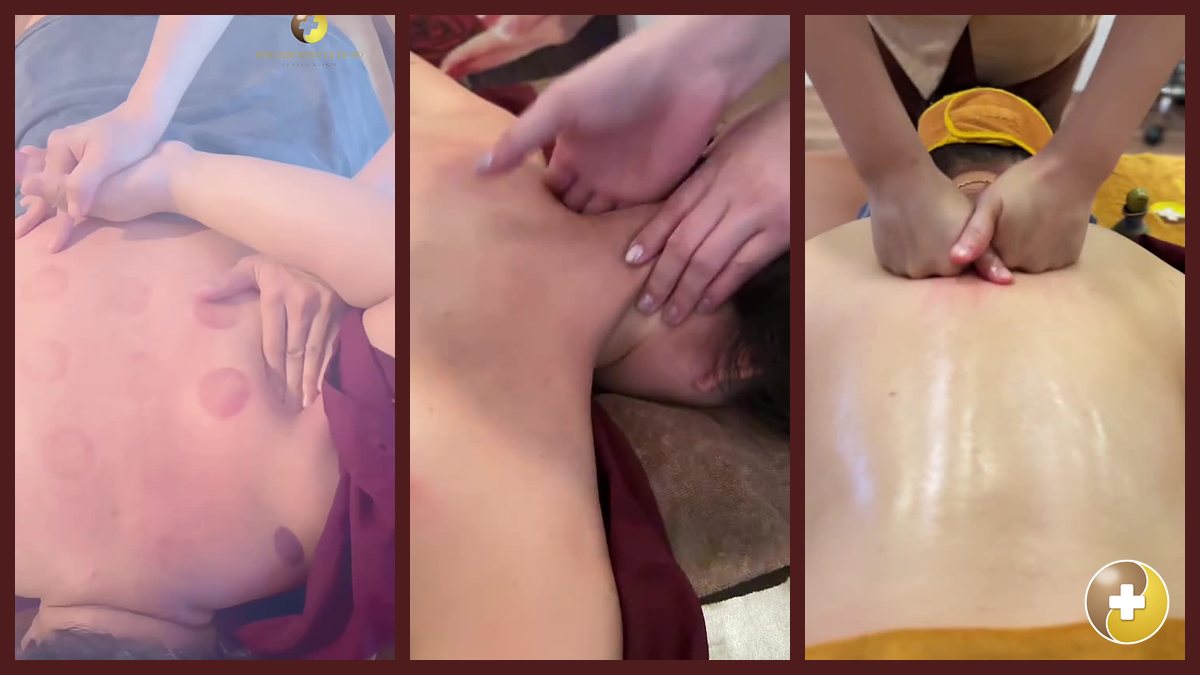
Quick answer: Massage with cupping joins hand massage and cupping in one visit: the hands soften the muscle first, then cups warm and loosen what is still tight. It suits tired, chilled backs, not medical problems. At Tong Gia Acupoint Wellness (District 12 and Vinhomes Grand Park, Ho Chi Minh City), 60-minute massage is 450,000 VND (about 17 USD), cupping 85,000 VND (about 3 USD).
Want Lương Y Tống Văn Huynh’s team to read your spine and posture in person?
What is massage with cupping, and what does it do?
Massage with cupping is one session that joins two things: hands that knead, press and glide to release muscle, and cups placed on the skin that gently lift the skin and surface muscle. Massage presses down; cupping lifts up. Done in the right order, the two opposite forces soften the back and shoulders from both directions, and most people feel warmer and lighter than after either one alone.
In Western terms, massage stimulates sensory receptors in skin and muscle, lengthens muscle that has been clenching, brings more blood to the area and nudges the autonomic nervous system toward rest: breathing slows, shoulders stop bracing. Cupping creates negative pressure inside the cup that pulls skin, the tissue beneath it and the thin fascia around the muscle upward; blood gathers, the skin turns pink and warm, and the round marks come from tiny vessels under the skin leaking a little blood. They are not toxins. Massage first lets the cups sit evenly with gentler suction; a light glide after the cups come off helps the area settle and stay warm. Research on cupping is still limited, so we only describe what people actually feel: warmth, looseness, easier breathing, easier sleep.
In Ho Chi Minh City the people who ask for massage with cupping are often office workers under air-con all day, drivers, night-shift factory workers, cold-storage staff, and older Vietnamese who grew up with cupping at home but want a proper massage first. If you are an expat or a wellness traveller, this is one of the most local experiences you can book. For cupping on its own, see our cupping Q&A.
Is cupping good for you?
Short answer: it suits people who are healthy or simply tired, chilled and stiff; it does not suit the wrong person, the wrong day or the wrong strength. Cupping warms the back, loosens surface muscle and feels good after rain or a day in air-con. It does not pull out toxins, end a fever or replace a medical check. Too much suction, cups left too long or sessions too close together can blister the skin, bruise deeply or leave you drained. If you have a high fever, are pregnant, bruise easily, take blood thinners or have broken skin, ask first or skip it.
Common reasons people book massage with cupping
- Air-con blowing on the neck and back: offices at 20–22°C make the base of the neck and the area between the shoulder blades tighten and feel cold by afternoon.
- Getting caught in the rain: monsoon storms can last an hour; by the time you ride home your shirt is stuck to a cold back.
- Long hours at a screen: the upper and middle back set like a board, shoulders rise, the head drifts forward.
- Physical work and long shifts on your feet: a tired lower back, stiffness in the morning, aches when the weather turns.
- Ongoing stress: you brace your shoulders without noticing, sleep lightly and wake up still tired.
- Sport: after badminton, running or the gym, many people want both a massage and the warmth of cups.
In Vietnamese traditional wellness, the Tong Gia training teaches that the Lung system "governs the skin and body hair" and keeps the protective energy at the surface; when it is low, wind and cold get in more easily. The Liver system governs the sinews, and stress makes the deep trapezius and back muscles clench. The Kidney system is tied to the lower back. These are functional ideas from traditional medicine, not a statement that your lungs, liver or kidneys are unwell.
Signs to watch before and after the session
- Before: a cold, shivery neck in a draught; heavy shoulders; a mild chill with sneezing; a dull lower back on cool days; light sleep.
- During: tight spots feel tender but pleasant under the hands; when a cup first grips, the skin feels tight, then you get used to it within seconds.
- Normal marks: round, pink to purple in the exact shape of the cup, not very tender, fading over several days to a little over a week.
- Normal afterwards: a warm back, lighter shoulders, deeper breathing, sleepiness; a few people feel slightly tired for the rest of the day.
- Not normal: blisters, lasting burning, bruising that spreads beyond the cup, dizziness or exhaustion.
Mark colour depends on suction, time, skin thickness and constitution. The Tong Gia training notes that the Spleen system "keeps blood in the vessels", so people who bruise easily get darker marks and need gentler suction. Do not read the colour as "lots of wind" or "lots of toxins". For spacing between sessions, see the cupping experience guide.
When to see a doctor
Massage with cupping is wellness care for people who are healthy or just tired and chilled. Please see a doctor at a medical facility first if you have:
- High fever, shaking chills, cloudy phlegm or breathlessness.
- Back pain spreading down the leg with numbness or weakness, or night pain that rest does not ease.
- Neck pain with arm numbness or weakness, strong dizziness, blurred vision or slurred speech.
- Easy bruising all over without knocks, bleeding gums or frequent nosebleeds.
- Blood thinners or a clotting disorder: ask your medical team before cupping.
- Lasting fatigue, weight loss or very pale skin: get checked alongside any wellness care.
Chest tightness, shortness of breath or cold sweats: call 115 immediately, no massage, no cups. This is a wellness service, not medical care.
Face reading (Y Tướng Học): who tends to suit massage with cupping
Y Tướng Học (face reading for wellness) rests on one line: "the face shows outside what the organs hold inside". In the Tong Gia training, the practitioner looks at face shape, skin and muscle texture first to choose which part of the back to check, then confirms with the hands on the spine. Features often noted in people who are offered massage with cupping:
- "Đồng" face (同): long but square, firm bone and muscle, linked to the Lung system. When unwell it tends to be from wind-cold or dryness; the upper back around D3 tightens or the vertebra feels raised.
- "Viên" face (圓): round, more padding than bone, linked to the Kidney system. The back picks up cold easily; the lower back skin feels cool and the muscle soft, with a dull ache.
- "Điền" face (田): square and full, linked to the Spleen and Stomach; thick back muscle that tends to tighten in a broad patch around D11–D12.
- Muscle hard as wood to the touch: described as stagnant energy and blood with a constrained Liver; deep spasm in the trapezius and long back muscles. This person needs a thorough massage before any cups.
- Soft, cool muscle that dents slowly when pressed: linked to a cold, weak Spleen; this person needs light pressure, few cups and good warmth.
Face features are only a hint for where to start, never a verdict on your health and never used to judge anyone. The hands on your spine decide whether to cup, where and how many cups.
Spine and nerve-reflex zones involved
The Tong Gia training divides the 33 vertebrae by the areas they serve: neck C1–C7 for head, face, neck and arms; thoracic D1–D12 for circulation, breathing and digestion; lumbar L1–L5 for digestion, kidneys, urinary and reproductive function and the legs. Nerve roots leave between the vertebrae, and the "Du" points of the organs run along both sides of the spine, so both massage and cups work on the muscle beside the spine, never right on the bony tips.
| Zone (vertebrae) | Nerve / function | Common feeling | Related organ system | Massage or cups |
|---|---|---|---|---|
| C5–C7, base of neck (Đại chùy, Định suyễn) | Neck, shoulders, arms | Cold nape, heavy shoulders, stiff neck | Lung (surface protection) | Massage first, a few static cups |
| D1–D3, between shoulder blades (Phế du) | Breathing | Cold, stiff upper back, shallow breath | Lung | Static or sliding cups |
| D7–D9, mid back (Can du, Tỳ du) | Circulation, digestion | Board-like mid back, irritability, light sleep | Liver (governs sinews) | Long massage strokes, light sliding cups |
| D11–D12 (Tỳ du, Vị du) | Digestion | Heavy body in humid weather | Spleen | Mostly massage |
| L1–L5 (Thận du, Mệnh môn at L2) | Kidneys, urinary, legs | Cold, tired lower back | Kidney | Warming massage, light cups or herbal compress |
The table shows "related" zones for choosing where to work; it is not a medical finding. Pressure points do not act directly on internal organs; in traditional theory they help regulate energy and blood flow and ease discomfort.
The Tong Gia method: spinal nerve-reflex balancing massage
At Tong Gia Acupoint Wellness (Huyệt Đạo Tống Gia), massage with cupping is not "oil, then cups". The session follows the method of Lương Y Tống Văn Huynh, master of traditional Vietnamese wellness and founder, with over 13 years in Eastern wellness, face reading and spinal nerve-reflex balancing. The training's "three no's": nothing to swallow or inject, no needles, no rough force. Cupping here is dry cupping only, never with skin pricking.
- Screening: fever, blood pressure, pregnancy, blood thinners, easy bruising, broken skin. Any warning sign and we do not proceed.
- Observation: complexion, breathing, shoulder line, back skin, old cup marks.
- Reading the spine by hand: pressing, gliding and rolling from neck to lower back to read skin temperature, muscle layer, vertebra shape and sensation, comparing left and right.
- Muscle release: neck, shoulders, back and lower back, pressure building from one finger to the whole palm, creating a "wave" of pleasant tenderness so muscles let go.
- Acupressure on the right zones: Định suyễn and Phế du in the upper back, Can du and Tỳ du mid back, Thận du and Mệnh môn in the lower back, as the reading shows.
- Cupping: only where tightness remains; static or sliding; suction matched to skin and age; stop when the skin responds.
- Settling and advice: a light glide around the cupped area, keep the neck warm, drink warm water.
Two training principles explain why one person gets many cups on the upper back and none on the lower back: work only on the "excited" zones (warm, tight, more tender) and only warm the "inhibited" ones (cool, soft); and "temperature balance": bring down what is hot, warm up what is cold.
Services and prices
- Eastern-style wellness massage 60 min: 450,000 VND (about 17 USD), 90 min 550,000 VND (about 21 USD), plus cold-relief cupping 30 min: 85,000 VND (about 3 USD).
- Neck-shoulder or lower-back care 60 min: 550,000 VND (about 21 USD), first visit 399,000 VND (about 15 USD), with cupping added when muscles are very tight.
- Herbal steam: 120,000 VND (about 5 USD) after getting caught in the rain.
Each service is priced separately; see the full price list, the cupping, gua sha and herbal steam page, and our traditional Vietnamese massage Q&A.
A typical session
One evening at the Vinhomes Grand Park branch, an office worker who sits right under an air-con vent says that for two weeks her neck has felt cold every afternoon, her left shoulder heavy, and sleep hard to reach. Screening is clear. Her face is long and square, her left shoulder higher. Reading the spine, the skin around C7 and D1–D3 is cooler than below, and the muscle between the shoulder blades on the left forms a tender band; the lower back is cool and soft. About 40 minutes of muscle release on neck, shoulders and back, acupressure at Định suyễn and Phế du, then six static cups at the base of the neck and upper back; the lower back only gets warming strokes. She leaves with a high collar, a warm drink and advice to redirect the vent.
What you feel during and after
During the massage, tight spots feel tender, then soften, and the shoulders seem to drop. When a cup grips, the skin feels tight for a few seconds, then warmth spreads; sliding cups feel like a deep stroke down the back. Afterwards the back is warm, the neck turns more easily and many people sleep deeply that night. Marks can feel a little tender for a day or two. Everyone responds differently; we do not promise that tiredness disappears after one visit, only that muscles loosen, warm up and rebalance.
Want Lương Y Tống Văn Huynh’s team to read your spine and posture in person?
Self-care at home and prevention
- Do not self-cup with a home kit unless shown how; never prick the skin.
- Keep the nape and lower back warm: angle the air-con away, set 26–27°C at night, wear a light jacket on evening rides.
- Warm the lower back: rub your palms until warm, place them on both sides of the lower back and rub up and down 50–100 times.
- Move every 45–60 minutes: roll the shoulders, gently tilt the head back, take a few belly breaths.
- Care for the marks: no scratching or scrubbing, avoid harsh sun, shower with warm water a few hours later. More in our neck and shoulder massage Q&A.
How to book
Tong Gia Acupoint Wellness has two branches in Ho Chi Minh City, open every day, with real customer reviews on Google Maps:
- District 12: 225 Dương Thị Mười, Phường Tân Chánh Hiệp (Tan Chanh Hiep Ward, District 12). Open 8:00–19:00 daily.
- District 9 – Vinhomes Grand Park: Căn T16-21 khu Manhattan, Phường Long Bình, TP. Thủ Đức (unit T16-21, Manhattan zone, Long Binh Ward, Thu Duc City). Open 9:00–20:00 daily.
Call, Zalo or WhatsApp +84 888 264 559, or book online. Say you want massage plus cupping so the team blocks enough time, and mention blood thinners, easy bruising, pregnancy or a heart condition.
Visit us
- Đông Y Huyệt Đạo Tống Gia Quận 12 (District 12)
225 Dương Thị Mười, Phường Tân Chánh Hiệp, Quận 12, HCMC · 8:00–19:00 daily · 0888 264 559 · Directions on Google Maps - Đông Y Huyệt Đạo Tống Gia Quận 9 (Vinhomes Grand Park, District 9)
Căn T16-21 khu Manhattan, Vinhomes Grand Park, Phường Long Bình, TP. Thủ Đức, HCMC · 9:00–20:00 daily · 0888 264 559 · Directions on Google Maps
Want Lương Y Tống Văn Huynh’s team to read your spine and posture in person?
FAQ
What is massage with cupping? A session that combines muscle-release massage with cupping. Massage softens the muscle first so the cups sit evenly with gentler suction; a light glide afterwards settles the area. Cupping alone (30 minutes) suits you if you are short on time.
Is cupping good for you? It suits people who are healthy or just tired, chilled and stiff: a warm back, looser muscles, a lighter feeling. It is not for high fever, pregnancy, easy bruising, blood thinners or broken skin, and too much suction does more harm than good.
Massage first or cups first? At Tong Gia the practitioner reads the spine, releases the muscle by hand, then cups only the areas still tight, and finishes with light strokes. Softer muscle means even contact, less stinging and no need for strong suction.
Do dark cupping marks mean toxins? No. The marks are tiny amounts of blood from small vessels under the skin, darker with stronger suction, longer time or a tendency to bruise. People who bruise easily need gentler cups.
How much does massage with cupping cost at Tong Gia? A 60-minute Eastern-style massage is 450,000 VND (about 17 USD) and 30 minutes of cupping is 85,000 VND (about 3 USD), priced separately. Neck-shoulder care is 550,000 VND, 399,000 VND on a first visit.
Will the marks show at the beach or pool? Usually yes for several days to about a week, as round pink to purple circles. If you have an event or beach trip, tell the practitioner; they can use fewer cups or sliding cups that leave lighter marks.
Author: Lương Y Tống Văn Huynh – founder of Huyệt Đạo Tống Gia, a master of traditional Vietnamese wellness with over 13 years in Eastern wellness care, Y Tướng Học (face reading) and spinal nerve-reflex balancing massage.
Updated: 2026-11-16
Related guides
- What does acupressure do? Effects on muscles, nerves and the five organs, and how Tong Gia works in Ho Chi Minh City
- Acupressure in Thu Duc: pressure chosen by reading your spine, at the branch that suits your ward
- Sore after acupressure: is it normal? How to tell ordinary aching from warning signs, why it happens and how to look after yourself after a session in Ho Chi Minh City
- What are gua sha and cupping: two Vietnamese folk warming methods, the cupping points and when to skip them
- Unblocking the meridians (đả thông kinh lạc): what it really means, how a hands-on session works and what you will feel in Ho Chi Minh City
- Herbal compress: what the warmth really does, where it goes and who it suits
This is a wellness service, not medical care.