
Neck and shoulder massage for elderly parents: a safe, relaxing Tet session in Ho Chi Minh City
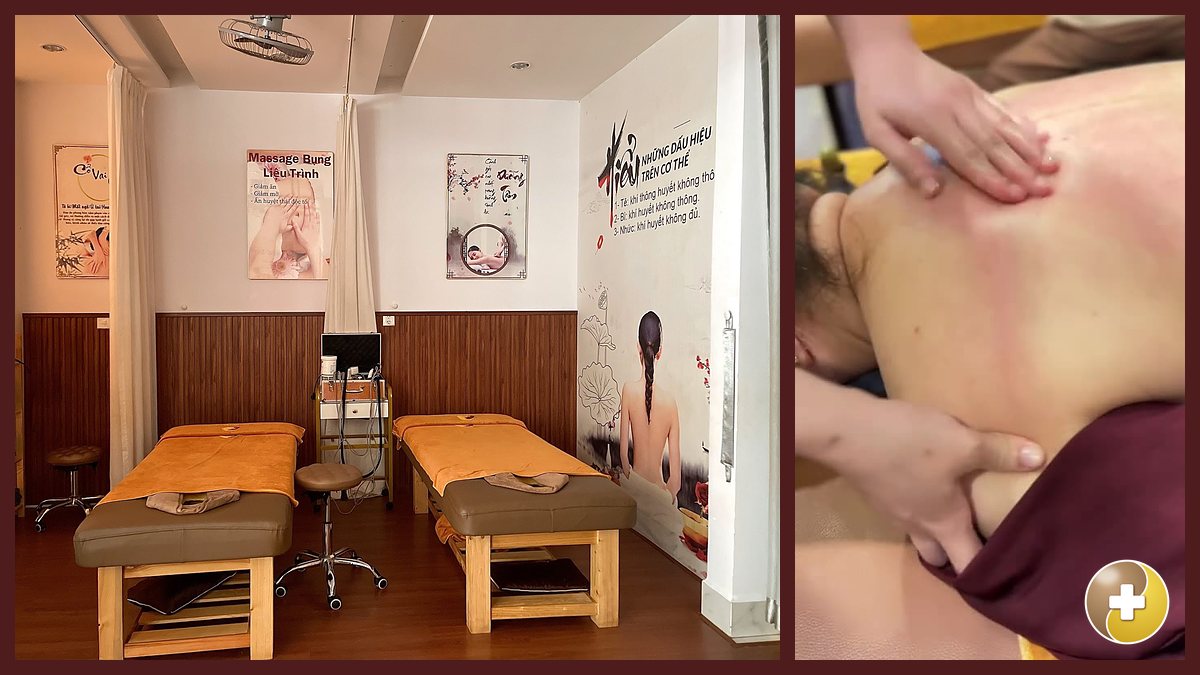
Quick answer: Neck and shoulder massage can suit elderly parents if health conditions are checked first, pressure stays light, the neck is never cracked or twisted, and the session waits when blood pressure is high or they feel dizzy. Tong Gia Acupoint Wellness (Huyệt Đạo Tống Gia), District 12 and Vinhomes Grand Park, Ho Chi Minh City, works by hand.
Want Lương Y Tống Văn Huynh’s team to read your spine and posture in person?
What neck and shoulder massage for elderly parents means, and why it differs
For an older body, a neck and shoulder massage is the same family of techniques used on anyone, muscle release along the back of the neck, the shoulders and the upper back plus acupressure, but adjusted in pressure, position and length. The neck has 7 vertebrae, from C1 just under the skull to C7, the bump at the base of the neck. These small bones hold up a head of roughly 4–5 kg, let it nod and turn, and protect the spinal cord, the nerve roots running to the shoulders and arms, and the two vertebral arteries that carry blood to the back of the brain.
After about 50, almost everyone's neck changes. Discs dry out and thin, the edges of the vertebrae grow small bone spurs, ligaments thicken, and the muscles around the neck lose bulk. This is usually called cervical spondylosis, or simply neck arthritis. Some people feel nothing; others wake up stiff, struggle to look over a shoulder, ache after an evening of television or notice tingling fingertips. Many parents also live with high blood pressure, diabetes, thin bones or heart conditions, or take blood thinners. So a firm "squeeze the shoulders" massage that suits a 30-year-old is not what Mum and Dad need: they need lighter hands, slower work, more questions first, and some areas left alone.
Every Tet you can see the same scene in Ho Chi Minh City. Children and grandchildren fly in from the US, Australia or Europe and find their parents cleaning the house, polishing the ancestor altar, wrapping bánh tét and staying up late for the year-end shows. A few days later the parents say their neck is "stuck" and their shoulders feel like they are carrying rice. A relaxing session is a lovely gift, but families worry: Dad has neck arthritis, Mum has high blood pressure, is it safe? This guide answers exactly that. If you are also stiff from the flight, read our main guide on spine care after a long-haul flight and the piece on a stiff neck after a long flight. General tips for booking for parents are in booking a massage for parents in Vietnam; here we stay with the neck and shoulders.
Common causes of a stiff neck and heavy shoulders in older parents
- Age-related wear: thinner discs, narrower joint spaces and bone spurs, most often at C5–C6 and C6–C7, the busiest part of the neck. The muscles brace to make up for less stable joints and gradually stiffen.
- Looking down for long periods: newspapers, phones, preparing vegetables, sewing, holding grandchildren. The further the head drifts forward, the harder the neck muscles pull.
- A rounding upper back: thin bones can let the upper vertebrae settle, the back curves and the chin juts forward, so the top of the neck tilts back all day to keep the eyes level.
- The wrong pillow: too high, too hard, or dozing off on the sofa with the head dropped to one side.
- Cold air: fans or air conditioning blowing straight onto the neck, late showers and going to bed with wet hair.
- Tet housework: cleaning, carrying trays, hours at the stove, heavy shopping bags at the Tet market.
- Long journeys: parents who flew back with the family, or rode a coach to the home province, sleeping upright for hours.
- Worry and short sleep: preparing for everyone's arrival, late nights and early mornings; stress lifts the shoulders without anyone noticing.
Because wear and tear is the background, the stiffness was usually there before Tet; the holiday simply makes it louder. Good massage can soften muscle and make parents more comfortable, but it does not rebuild discs or remove spurs. Knowing that keeps expectations realistic and points towards gentle, regular sessions.
Signs to check before you book
Sit with your parents for a few minutes and ask. These signs are not always dangerous, but the practitioner needs to know about them, and some mean a hospital check-up comes first:
- Tingling or numbness running into the arm or hand; weak grip, dropping things, trouble with buttons.
- Dizziness when looking up or turning the head, for example hanging washing or reversing a scooter. This is the reason an older neck should never be twisted hard.
- Unsteady walking, heavy legs, missed steps.
- Headache starting at the base of the skull, worse in the morning.
- Bruising easily, common with blood thinners or anti-platelet tablets.
- Blood pressure that swings, or light-headedness on standing up.
| Parent's condition | Why we need to know | How the session changes |
|---|---|---|
| High blood pressure | Fast position changes or hard pressure on the neck can cause light-headedness | Check it at home first if you have a monitor; postpone if it is unusually high or they feel dizzy. Light pressure, slow sit-up |
| Neck arthritis seen on a scan | Narrow joints, spurs, less stable neck | No cracking, twisting or forceful turning; soft muscle release only |
| Thin bones (osteoporosis) | Bones can compress or break | No pounding or heavy pressure on the spine; fingertip or flat-hand pressure |
| Blood thinners | Bruises easily | Light pressure, avoid bruised areas, no cupping |
| Heart condition, stent, pacemaker | Needs the view of the hospital team following them | Only with their agreement; nothing strong on the chest or over the device |
| Diabetes | Skin may not sense heat well | Warm herbal packs tested carefully first |
When to see a doctor
If any of the following applies, please see a doctor at a medical facility first and leave the neck massage for later:
- Chest pain or pressure spreading to the neck, jaw or left shoulder, shortness of breath, cold sweat: call 115 immediately. In older people a heart attack can show up mainly as neck or shoulder pain.
- A drooping face, sudden slurred speech, weakness or numbness on one side, sudden loss of vision, severe dizziness with unsteadiness: call 115 immediately.
- A sudden, severe headache, or very high blood pressure with headache and blurred vision.
- Neck pain after a fall or knock, especially with thin bones.
- Arm numbness or weakness that keeps getting worse, clumsy hands, unsteady walking, changes in bladder control.
- Fever with a stiff neck; pain at night that rest does not ease; unexplained weight loss or ongoing tiredness, which need a hospital check-up alongside any wellness care.
- Neck and shoulder pain lasting more than 4–6 weeks despite rest and better posture.
This is a wellness service, not medical care. For parents whose conditions are already being followed by a hospital, Tong Gia only offers supportive care, and they keep following the advice and prescriptions they already have.
The Y Tướng Học view: Liver, Kidney and what the face can show
In Vietnamese Đông y (traditional Eastern wellness) the neck is more than muscle and bone. According to the Tong Gia training manual, the Liver (Can) "governs the sinews": when it is in balance, tendons are supple and joints move freely; when it is weak, muscles cramp and stiffen. The Liver also stores blood and sends it to the muscles when we move. The Kidney (Thận) "governs the bones and produces marrow". With age, Kidney energy naturally declines, which is the traditional explanation for why older people stiffen even without heavy work. The Gallbladder meridian also runs over the head and shoulders, and the manual links its imbalance with headaches and shoulder ache.
Y Tướng Học (face reading for wellness) rests on one idea: "the outer form reflects the inner organs". With roots over 2,000 years old, it was systematised by Lương Y (traditional healer) Tống Văn Huynh and combined with spinal nerve-reflex balancing. For the neck and shoulders, practitioners look at the cheekbones, the brows, forehead lines and tight-looking flesh. Typical patterns in older parents:
- A flat or dented occipital bone at the back of the head: in the manual a sign of weak Kidney essence, often with deep muscle tension under the skull and early wear at C1–C3.
- A face wide at the forehead and narrow at the chin (the Giáp shape): the top of the neck, C1–C2, tends to feel warm and tight, often alongside poor sleep.
- A long, thin face with little flesh (the Mục shape): thin muscles along the spine; the manual's advice is nourishment, enough sleep and a light hand, which fits many slim older people.
- A bony face with high cheekbones (the Vương shape): fibrous muscle that clings to the joints and needs slow, deep release.
- An uneven face (the Dụng shape): one shoulder higher, one side of the neck tight and the other slack.
Practitioners also look at the ears (linked to the Kidney), the eyes (linked to the Liver), the way someone sits and the warmth of the skin at the back of the neck. This is a wellness way of choosing where to start and how gently to work, not a medical judgement, and never a judgement of character.
Neck and upper-back vertebrae, nerves and related organs
The Tong Gia spinal nerve-reflex method uses the 33 vertebrae as a map: the neck, C1–C7, supplies the head, face, neck and arms; the thoracic spine, T1–T12 (written D1–D12 in Vietnamese), relates to circulation, breathing and digestion. Neck and shoulder aches belong to the method's muscle-bone-joint group, which focuses on C5–C7.
| Vertebrae | Nerves and function (anatomy) | What older people often feel | Related organ | Outer sign (Y Tướng Học) |
|---|---|---|---|---|
| C1–C2 | Skull-neck joint and head rotation; occipital nerves; vertebral arteries rising to the brain | Stiffness at the hairline, ache at the back of the head, dizziness on looking up or turning hard | Kidney, Liver | Flat occiput; Giáp-shaped face, warm C1–C2 |
| C3–C4 | Mid-neck roots; side neck muscles, shoulder lifters; C3–C5 feed the phrenic nerve | Tight sides of the neck, hard to look sideways, shoulders creep up with worry | Liver (sinews) | Knitted brows, forehead lines, tight cheeks |
| C5–C7 | Brachial plexus to shoulder, arm, hand; the most worn segment | Heavy shoulders, tingling into the hand, weaker grip | Liver – Kidney | Thin Mục face; uneven Dụng face with one shoulder higher |
| T1–T4 | Upper thoracic roots; circulation and breathing | Heaviness between the shoulder blades, shallow breathing, frequent sighs | Lung (Phế du point at T3), Heart | Square Đồng face; furrow between the brows |
The table shows links used to choose where to work and how firmly, nothing more. Numb or weak arms and lasting dizziness still need a hospital check-up.
The Tong Gia method: a gentle spinal nerve-reflex session for older parents
This Vietnamese Đông y approach was built by Lương Y Tống Văn Huynh, founder of Tong Gia, over more than 13 years of practice: read the face to understand the organs, read the spine by hand to find the area, then work vertebra by vertebra for that person. For parents, the aim is softer neck and shoulder muscles, better balance through the neck and upper back, and a calmer night's sleep; it does not replace a hospital check-up.
- Questions and observation: how long the stiffness has lasted, tingling or dizziness, underlying conditions, prescriptions, any neck scan, meals and sleep. Parents who cannot lie face down are worked on seated against support or lying on their side with pillows.
- Reading the spine by hand: light pressing and stroking from C1 to T4 to feel skin temperature, muscle padding, the shape of each vertebra and the person's response, comparing left with right.
- Gentle muscle release: trapezius, shoulder lifters, the sides of the neck and between the shoulder blades. The manual defines five pressure levels, from one finger up to full body weight; with older clients practitioners stay mostly at the first two, increase slowly and keep asking. No cracking, no twisting, no pressure on the front of the neck.
- Acupressure in the right area: along the Gallbladder meridian on the shoulders and the Bladder meridian beside the upper spine, finishing with light pressure on Bách hội at the crown to settle the mind. Work stops once the skin at the key point turns from dry to slightly moist.
- Home advice: pillows, how to sit for television, simple shoulder circles, keeping the neck warm.
A typical session: a woman in her seventies came to the Vinhomes Grand Park branch one morning with her daughter, visiting from Australia. She had been stiff for years and the Tet baking had made it worse; her blood pressure is followed by a hospital and was steady that morning, and a scan had shown neck arthritis. She lay on her side with pillows, pressure stayed at fingertip and flat-hand level, and her neck was never turned. Afterwards she sat up slowly, had a glass of warm water and said turning her head felt lighter.
Suitable services (see prices and neck and shoulder massage):
- Neck and shoulder care, 60 min: 550,000 VND (about US$21), first visit 399,000 VND (about US$15). The right length for most older parents; 90 min (750,000 VND, about US$29) only once they are used to it.
- Hair wash with neck and shoulder massage, 60 min: 250,000 VND (about US$10). A soft first experience for shy parents.
- Herbal compress add-on: 130,000 VND (about US$5) for a cold, stiff neck.
Families often tell us their parents could turn their heads more easily afterwards and slept more deeply that night; a few feel mild muscle tiredness the next day, like after light exercise. Long-standing stiffness usually needs a few sessions 5–7 days apart. Tong Gia supports the body's own balance and promises no end to pain. You can fit a session into a 3-day wellness trip in Thu Duc.
Want Lương Y Tống Văn Huynh’s team to read your spine and posture in person?
Home care and prevention for parents
- When you rub your parents' shoulders at home, use the whole palm in slow circles; never crack the neck, never press hard on the front or sides of the neck, never pound the back of someone with thin bones.
- Choose a medium pillow that supports the neck; avoid long naps upright on the sofa.
- Keep the neck warm: no fan or air conditioning blowing straight onto it, wash hair in the morning and dry it fully.
- Raise the television, phone and reading to eye level; every 20–30 minutes look up and roll the shoulders slowly 5–10 times.
- Walk and stretch gently every day; stop any movement that brings dizziness or tingling, and avoid fast full neck circles.
How to book
- District 12: 225 Dương Thị Mười, Phường Tân Chánh Hiệp, Quận 12. Daily 8:00–19:00.
- Vinhomes Grand Park: Căn T16-21 khu Manhattan, Phường Long Bình, TP. Thủ Đức (Unit T16-21, The Manhattan, Thu Duc City, formerly District 9). Daily 9:00–20:00.
Both branches have genuine customer reviews on Google Maps. WhatsApp or Zalo +84 888 264 559 (0888 264 559 in Vietnam), or book online. Tell us your parents' ages, conditions, prescriptions, any tingling or dizziness and whether they can lie face down. Around Tet, message ahead to check hours and hold a slot; mornings or early afternoons, 1–2 hours after a meal, work well, and it helps if you come along the first time.
Visit us
- Đông Y Huyệt Đạo Tống Gia Quận 12 (District 12)
225 Dương Thị Mười, Phường Tân Chánh Hiệp, Quận 12, HCMC · 8:00–19:00 daily · 0888 264 559 · Directions on Google Maps - Đông Y Huyệt Đạo Tống Gia Quận 9 (Vinhomes Grand Park, District 9)
Căn T16-21 khu Manhattan, Vinhomes Grand Park, Phường Long Bình, TP. Thủ Đức, HCMC · 9:00–20:00 daily · 0888 264 559 · Directions on Google Maps
Want Lương Y Tống Văn Huynh’s team to read your spine and posture in person?
What guests say on Google Maps
“I brought my father here for his neck and shoulder pain… the facilities are clean and the service is caring. Thank you.” (translated from a Vietnamese review)
— Phú Quý T., Google Maps review · Vinhomes Grand Park branch (District 9) · 2025 · See on Google Maps
“Relaxing space, attentive staff, proper technique – my mum and I have been a few times and it was very good.” (translated from a Vietnamese review)
— Hà H., Google Maps review · Vinhomes Grand Park branch (District 9) · 2024 · See on Google Maps
Quoted from public reviews, shortened where marked (…). Experiences vary from person to person; reviews are not a substitute for seeing a doctor when something feels wrong.
Related guides for your trip
FAQ
Is neck and shoulder massage safe for elderly parents? It can be, when underlying conditions are checked first, pressure is light, the neck is never cracked or twisted, the front of the neck is left alone and they sit up slowly afterwards. If they are dizzy, have unusually high blood pressure, have just fallen or have worsening arm weakness, see a doctor first.
Can someone with neck arthritis have a massage? Most people with cervical spondylosis can have gentle massage to soften the muscles around the neck and shoulders. The neck should not be twisted or cracked, and any scan results should be shared. Tingling or weak arms, unsteady walking or dizziness on looking up mean checking with a medical facility first.
My mother has high blood pressure. Can she still have a neck massage? Usually yes, when her blood pressure is steady. Measure it at home first if you can, and postpone if it is unusually high or she has a headache, blurred vision or dizziness. Pressure stays light and she sits up slowly. She keeps taking what her hospital has prescribed.
How often should older people have a neck and shoulder massage? A 60-minute session is a comfortable length. For long-standing stiffness, once a week for the first few weeks, 5–7 days apart, then every 2–4 weeks to maintain. Skip a session on days they feel tired or dizzy.
Do the staff speak English? Staff mainly speak Vietnamese, so it helps if a family member comes along the first time. You can also message in English on WhatsApp or Zalo +84 888 264 559 before the visit with your parents' details.
Which service suits parents visiting over Tet? For clear neck stiffness and heavy shoulders, neck and shoulder care 60 min, 550,000 VND (first visit 399,000 VND). For a gentle first visit, the 60-minute hair wash with neck and shoulder massage, 250,000 VND. Book ahead for the days around Tet.
Author: Lương Y Tống Văn Huynh – founder of Huyệt Đạo Tống Gia, a master of traditional Vietnamese wellness with over 13 years in Eastern wellness care, Y Tướng Học (face reading) and spinal nerve-reflex balancing massage.
Updated: 2026-11-15
Related guides
- Neck and shoulder muscle strain: how it differs from everyday stiffness, what to do in the first 48 hours and when massage makes sense in Ho Chi Minh City
- Stiff neck after a long flight: why it locks up after 15–20 hours, and how to care for it in Ho Chi Minh City
- Pain below the shoulder blade in Ho Chi Minh City: six causes, the warning signs, and how Tong Gia can help
- Shoulder joint pain in Ho Chi Minh City: six common causes, the warning signs, and how Tong Gia can help
- Trigger points: why a knot in the shoulder or hip sends pain to the head or leg, and how Tong Gia finds and releases it in Ho Chi Minh City
- What is muscle release? How it feels, who it suits and when to skip it
This is a wellness service, not medical care.