
Should I get acupressure for sciatica? When it suits, when to wait and when to get checked first
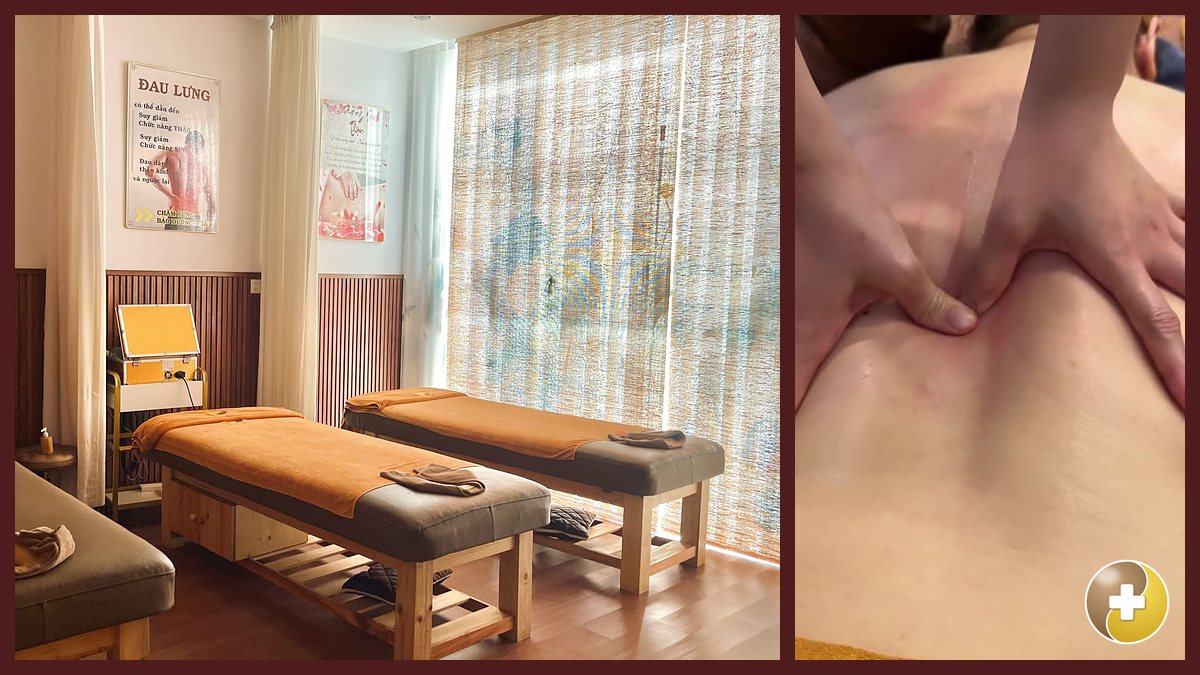
Quick answer: Yes, once you have had a medical check, know the cause, the pain has settled and there are no signs of severe nerve compression; pressure should be light and the spine never cracked or twisted. Rising leg weakness or bladder changes mean get medical help now. Tong Gia Acupoint Wellness in Ho Chi Minh City works within these limits.
Want Lương Y Tống Văn Huynh’s team to read your spine and posture in person?
What is sciatica? The Western explanation before you ask about acupressure
The sciatic nerve is the largest and longest nerve in the body. It forms from the lumbar and sacral nerve roots (roughly L4 to S3) that exit between the vertebrae, runs through the buttock, down the back of the thigh and branches into the calf and foot. Sciatica is pain, numbness or tingling along that route: from the low back or buttock down the back or outer thigh into the lower leg, usually on one side. It tends to worsen with coughing, sneezing, bending and long sitting, and ease when lying in the right position.
In Western medicine, the nerve does not hurt on its own; it hurts because a nerve root is compressed or irritated. Common causes include a lumbar disc herniation (often at L4–L5 or L5–S1), spinal degeneration, spinal stenosis in older adults, slipped vertebrae, and tight buttock muscles pressing on the nerve. Less common causes that must be ruled out are infection, tumours and injury. Because the causes differ, there is no single answer to "should I get acupressure?"
The short answer from Tong Gia Acupoint Wellness (Huyệt Đạo Tống Gia): yes, once you have been checked, know the cause and the pain has settled, with no signs of serious nerve compression. Gentle acupressure and muscle release then help the low back, buttock and leg soften and feel more comfortable. Not yet during a fresh, severe flare that nobody has examined. No if leg weakness is increasing or bladder or bowel control has changed. Acupressure does not push a disc "back in" and does not replace medical follow-up.
In Ho Chi Minh City we hear this question from expats at desks for 9–10 hours, riders on long motorbike commutes, runners and gym-goers, travellers after long flights, and older parents who have already had a scan. If you are not sure whether you have plain back pain or sciatica, our back massage Q&A is a good place to start.
Common triggers that irritate the sciatic nerve: habits, work, posture
- Long, slumped sitting: disc pressure is higher in a rounded seated posture than standing, and the buttock muscles are compressed all day.
- Poor lifting technique: bending from the waist instead of squatting, twisting while carrying.
- Long motorbike rides: constant vibration, potholes, one fixed position.
- Standing on one leg, high heels, shifting your weight to one hip.
- Low activity and extra weight: weak core and glutes leave the lumbar spine carrying more.
- Cold and damp: sleeping on cold floors, air-con on the back, getting soaked in the rainy season; cold muscle tightens and pain flares.
- Age: discs lose water, vertebrae wear, the spinal canal narrows.
Tong Gia's book on the back, hips and legs describes four Eastern patterns of sciatica: wind-cold-damp (cramping pain, worse in cold, better with warmth), damp-heat (burning, less common), blood stasis (intense pain at one spot after injury or bad posture) and liver-kidney deficiency (dull, long-lasting, weak legs, keeps coming back). Whichever pattern, the Western cause needs to be clear before anyone lays hands on you.
Signs to check before booking acupressure
- How far does the pain travel? Buttock only, behind the knee, or down to the heel or top of the foot? L5 root pain often runs down the outer shin to the top of the foot; S1 root pain to the heel and outer edge of the foot.
- Numbness, pins and needles or loss of feeling: where, and is it getting better or worse day by day?
- Weakness: can you walk on your heels and on your toes? Does the foot drag or catch?
- Does changing position help? Lying on your side with knees bent, or on your back with a pillow under the knees, easing the pain is a good sign.
- Have you been examined, and what did they find? A scan, a finding of disc herniation or stenosis, any restrictions you were given.
- History: pregnancy, osteoporosis, diabetes, bleeding disorders, blood thinners, previous spinal surgery.
When to see a doctor
If any of these apply, please see a doctor first and skip massage or acupressure for now:
- Difficulty passing urine, loss of bladder or bowel control, numbness in the saddle area (between the legs, inner thighs): this is an emergency, go to hospital now.
- Leg weakness that is getting worse, foot drop, rapid muscle wasting, spreading loss of sensation.
- Sudden severe pain, or night pain that does not ease lying down.
- Pain after a fall or accident; older adults, people with osteoporosis.
- Pain with fever, chills, unexplained weight loss, ongoing fatigue, pale skin like anaemia, or a history of tumours: get checked at a medical facility in parallel.
- Back pain with chest pain, breathlessness or cold sweats: call 115 (Vietnam emergency).
- No improvement after 4–6 weeks of rest and posture changes.
This is a wellness service, not medical care. If a medical facility is following you, keep to its advice; Tong Gia only offers supportive care within what you have been allowed to do.
The Y Tướng Học view: which organs relate, and reading the face to choose pressure
According to the Tong Gia training manual, the Kidney governs the bones and the lower back is the "house" of the Kidney; the Liver governs the tendons — a strong Liver keeps tendons supple, a weak one brings stiffness and cramps. In balance, the Liver–Spleen–Kidney axis works together: Kidney nourishes bone, Spleen nourishes flesh, Liver keeps tendons and joints moving. The sciatic pain line follows the Bladder channel (back of the leg, S1 root) and the Gallbladder channel (outer leg, L5 root), paired with the Kidney and Liver. So dull, recurring pain with weak legs is usually viewed as liver-kidney deficiency, while cramping pain that worsens in the cold is viewed as wind-cold-damp.
The core idea of Y Tướng Học (face reading for wellness) is "the signs show outside, the organs lie inside". Lương Y Tống Văn Huynh, a master of traditional Vietnamese wellness, teaches practitioners to read the face to choose which part of the back to check first and how to work. From the manual:
- Face narrow on top, wide at the jaw (由): very thick lumbar and hip muscles where circulation easily stagnates; the hip and buttock need thorough, deeper release.
- Uneven face (用): the spinal axis tends to lean, one side tight, the other slack; the manual calls for "double alignment" work on both sides to restore balance.
- Wide jaw (風): pain points that move, muscles tightening unevenly when you change position; the practitioner has you move to locate the key point.
- Long, thin face (目): thin spinal muscles, vertebrae that sink easily; only gentle techniques such as vibration and light pressing.
- Round face (圓): cool, soft lower back; warm it first, press after.
Y Tướng Học also notes that a crooked nose bridge often goes with a crooked spinal axis, so Tong Gia practitioners often glance at the nose before reading L4–L5–S1. This is a wellness lens to choose technique, not a medical finding and never a judgement.
Spine segments and nerve-reflex zones involved
In Tong Gia's spinal nerve-reflex balancing, the muscle–bone–joint group (including sciatica, disc herniation and numb limbs) is worked by combining C5–C7, L1–L5 and S1–S5; the manual states clearly that this is supportive only and does not replace medical assessment or advice.
| Zone | Nerve, function (Western view) | Common feeling | Nearby points, channel | Related organ |
|---|---|---|---|---|
| L1–L3 | Kidney, urinary; front of thigh | Aching waist, cold lower back | Kidney shu, Mingmen, Zhishi | Kidney |
| L4–L5 | L4, L5 roots: shin, top of foot | Low back pain down the outer shin | Large Intestine shu; Gallbladder channel (Yanglingquan) | Liver–Gallbladder |
| L5–S1 | S1 root: calf, heel, outer foot | Buttock and back-of-thigh pain, numb heel | Huantiao, Chengfu, Weizhong, Chengshan (Bladder channel) | Kidney–Bladder |
| S1–S5 | Pelvis, elimination | Tired sacrum, discomfort sitting | Sacral area | Kidney |
| C5–C7 | Lower neck, arms | Shoulders braced during long back pain | Lower neck | Liver |
The points come from Tong Gia's back-hip-leg book: Huantiao where the heel touches the buttock when you lie face down and bend the knee; Chengfu in the middle of the buttock crease; Weizhong in the centre of the knee crease; Yanglingquan in the hollow in front of and below the head of the fibula; Chengshan in the inverted-V hollow at the bottom of the calf when you rise on your toes. The table shows relationships for choosing where to work; it does not say which vertebra causes anything.
The Tong Gia method: spinal nerve-reflex balancing for sciatica
The method was built by Lương Y Tống Văn Huynh, founder of Tong Gia, over more than 13 years in Eastern wellness, Y Tướng Học and spinal nerve-reflex balancing. For sciatica we keep three rules: work only after a medical check and once things are stable; light to medium pressure, no cracking or twisting of the spine; and stop if the pain increases. A session:
- Observation and screening: we look at your medical results, ask how far the pain travels, about numbness, weakness, bladder function, pregnancy, diabetes, bleeding risk; we look at the face, nose bridge, stance and gait. Any warning sign and we stop and suggest a medical check.
- Reading the spine by hand: pressing, stroking and rolling from L1 to the sacrum to read skin temperature, the muscle layer and vertebra shape, comparing left and right. Only "excited" zones (warm skin, hard muscle, rising tenderness) are worked; "inhibited" zones are not pressed directly.
- Muscle release beside the low back, in the buttock and back of the thigh, with light gliding strokes along the pain line. The manual has 5 pressure levels (one finger, whole hand, bent arm, straight arm, whole body); for sciatica we usually stay within the first two or three and never press hard on the affected vertebrae.
- Acupressure on the right points: Kidney shu, Large Intestine shu, Huantiao, Chengfu, Weizhong, Yanglingquan, Chengshan, 1–2 minutes of gentle kneading each. Work stops when the skin at the key point turns from dry to moist; cool skin is warmed, warm skin is not heated further.
- Home-care coaching: sleeping positions, how to get out of bed, when to report back or get checked.
A typical session: a long-haul truck driver in his fifties, with a wide lower face and full jaw, had pain from the left buttock to the calf for over a month. He had a scan showing a bulging L5–S1 disc, the acute phase had passed and he had been told to keep moving gently. The practitioner checked he could still walk on heels and toes and that his bladder was normal. Reading the spine, the left low back and buttock were tight and slightly warm; the right side was cooler and softer. She released only around the left low back and buttock with the whole hand, never pressing hard on L5, and kneaded Huantiao, Chengfu, Weizhong and Chengshan on the left; each time he said "it's tingling down the leg" she eased off at once. Afterwards his buttock felt lighter and bending to tie his shoes was easier. He was advised to stop every 1–2 hours of driving to walk for a few minutes and to sit with a small cushion behind his waist.
Suitable services (single-session prices, see price list; 1 USD ≈ 26,000 VND), only once you have been checked and are stable:
- Back and waist care, 60 min: 550.000₫ (about 21 USD), first visit 399.000₫ (about 15 USD); 90 min: 750.000₫ (about 29 USD). The main option, with time for the low back, buttock and leg.
- Heavy, tired legs care, 60 min: 500.000₫ (about 19 USD) for lingering heaviness and mild tingling down the leg.
- Herbal compress: 130.000₫ (about 5 USD), added for cramping pain that worsens in the cold.
What does it feel like? Tight spots in the buttock and behind the knee feel sore but pleasant; the manual calls this "creating a wave of sensation". Some guests feel warmth spreading down the leg. If tingling shoots down the leg when pressed, the practitioner lightens up or moves to another point. Afterwards the low back and buttock feel lighter, walking and bending are easier, sleep is often deeper; mild muscle tiredness the next day is normal. If pain or weakness clearly increases afterwards, tell us and get checked. Tong Gia supports and helps restore balance; we do not promise the pain will vanish. More on what to expect: acupressure massage Q&A and a guest's acupressure experience in Saigon.
Want Lương Y Tống Văn Huynh’s team to read your spine and posture in person?
Self-care at home and prevention between sessions
- Rest in the right position: on your side with knees bent and a thin pillow between them, or on your back with a pillow under your knees. To get up, roll to your side and push up with your arms.
- Walk gently every day; avoid days of bed rest. After 30–45 minutes of sitting, stand and walk a few steps.
- Gently knead Weizhong 1–2 minutes each side; rub the Kidney shu area as the Tong Gia manual teaches: warm your palms, place them on both sides of the lower back and rub up and down 50–100 times until warm.
- Lift properly: squat, keep the load close, stand with your legs; never twist while carrying.
- Heat or ice and stretching: follow whoever examined you. Ask a pharmacist or medical professional about creams or anything you take by mouth. Runners can also read massage after running.
Booking
Two branches in Ho Chi Minh City, open daily; you can read genuine guest reviews on Google Maps from each branch page:
- District 12: 225 Dương Thị Mười, Phường Tân Chánh Hiệp (Tan Chanh Hiep Ward). 8:00–19:00 daily.
- Vinhomes Grand Park, District 9: Căn T16-21 khu Manhattan, Phường Long Bình, TP. Thủ Đức (Unit T16-21, Manhattan zone, Long Binh Ward, Thu Duc City). 9:00–20:00 daily.
Book online or call, Zalo or WhatsApp +84 888 264 559. Tell us how far the pain travels, any numbness or weakness, what your medical check found, pregnancy or other conditions, and bring your results so the practitioner can set the right pressure. This Vietnamese approach, developed by Lương Y Tống Văn Huynh, is worth trying while you live in or visit Ho Chi Minh City.
Visit us
- Đông Y Huyệt Đạo Tống Gia Quận 12 (District 12)
225 Dương Thị Mười, Phường Tân Chánh Hiệp, Quận 12, HCMC · 8:00–19:00 daily · 0888 264 559 · Directions on Google Maps - Đông Y Huyệt Đạo Tống Gia Quận 9 (Vinhomes Grand Park, District 9)
Căn T16-21 khu Manhattan, Vinhomes Grand Park, Phường Long Bình, TP. Thủ Đức, HCMC · 9:00–20:00 daily · 0888 264 559 · Directions on Google Maps
Want Lương Y Tống Văn Huynh’s team to read your spine and posture in person?
FAQ
Should I get acupressure for sciatica? Yes, once you have had a medical check, know the cause, the pain has settled and there are no signs of severe compression; light to medium pressure, no cracking or twisting. Not during an unexamined severe flare. Not at all if leg weakness is increasing or bladder control has changed: see a doctor now.
Which acupressure points are used for sciatica? Tong Gia's back-hip-leg book uses Huantiao, Chengfu, Weizhong, Yanglingquan and Chengshan along the pain line, plus Kidney shu and Large Intestine shu in the low back, about 1–2 minutes of gentle kneading each. The spine is read first, then the points and pressure are chosen.
Will acupressure make my sciatica go away? Do not expect that. Acupressure helps the low back, buttock and leg muscles soften and feel better, and many guests improve clearly when they also change posture and keep moving. Causes such as disc herniation or stenosis still need medical follow-up. Tong Gia supports; we do not promise the pain will vanish.
Can I have a massage with a herniated disc pressing on the sciatic nerve? Possibly, once examined, cleared and stable. The practitioner only softens the muscles on both sides, never presses hard on the vertebrae and never twists. Increasing leg weakness, trouble passing urine or loss of control means no massage: go to emergency.
Is leg numbness from sciatica dangerous? Mild numbness that eases with position changes is common. Spreading numbness with leg weakness, foot drop, muscle wasting or numbness between the legs is serious and needs a medical check right away, not acupressure.
How often should I get acupressure for sciatica? Once stable, usually one session every 5–7 days for the first few weeks, watching how you respond, then less often. If pain or numbness clearly increases after a session, stop, tell us and get checked.
Author: Lương Y Tống Văn Huynh – founder of Huyệt Đạo Tống Gia, a master of traditional Vietnamese wellness with over 13 years in Eastern wellness care, Y Tướng Học (face reading) and spinal nerve-reflex balancing massage.
Updated: 2026-11-16
Related guides
- Acupressure for back pain: what it can do, which points are used and when to skip it
- Back acupoints: where they sit along the spine, what they relate to and how to press them safely
- Should I get a massage for back pain? When it helps, when to wait and when to get checked first
- Pain between the shoulder blades: why this strip of the back burns, three types to tell apart, and how Tong Gia cares for it in Ho Chi Minh City
- Back pain from sitting too long: why your lower back tires and how to care for it
- What causes back pain? A map of four areas, warning signs and Vietnamese spinal nerve-reflex care
This is a wellness service, not medical care.