
Lower back pain in puberty: why students get tired backs and what parents can do
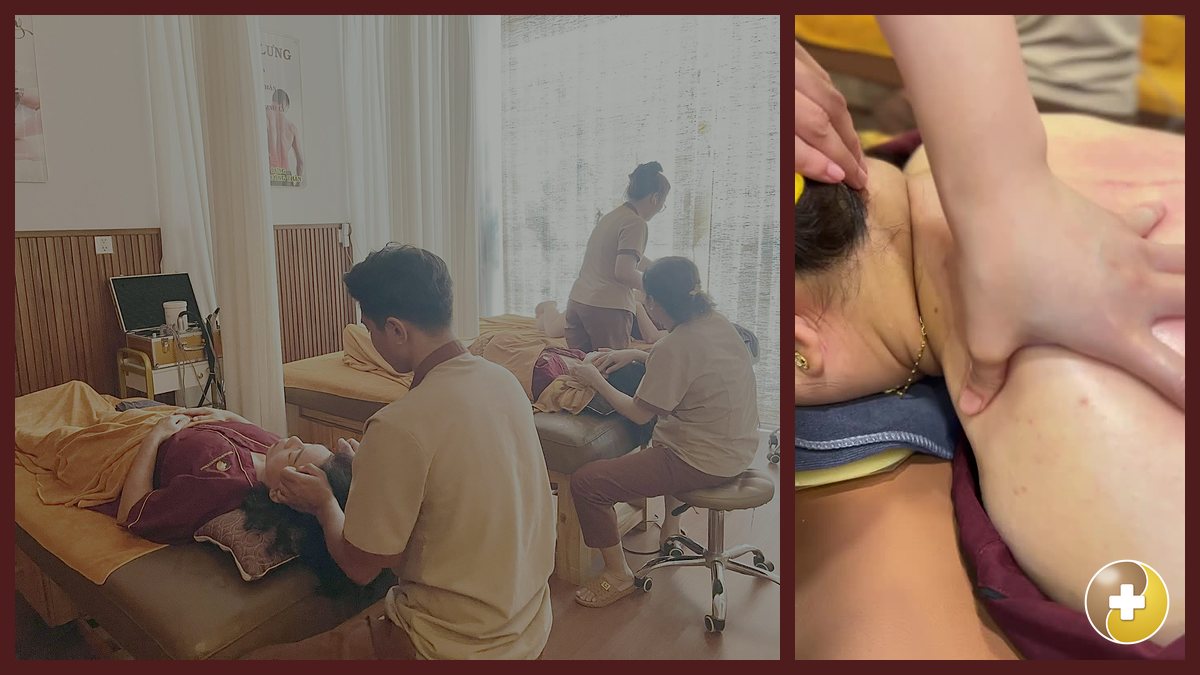
Quick answer: Lower back pain in puberty usually comes from bones growing faster than muscles, long study hours, heavy bags and little exercise. Pain over two weeks, night pain, fever or numb legs need a doctor. Tong Gia Acupoint Wellness in Districts 12 and 9, Ho Chi Minh City offers gentle care; under-16s come with a parent.
Want Lương Y Tống Văn Huynh’s team to read your spine and posture in person?
What is lower back pain in puberty?
Many parents in Ho Chi Minh City describe the same picture: a child in Grade 8 or Grade 10 sits in class all day, sits again at evening tutoring, then spends the late hours on a phone or laptop. One day the child says "my back is so tired", winces when bending to tie a shoe, and cannot sit through half an hour of homework without standing up to stretch. Parents worry: how can a teenager already have back pain like an adult? This is lower back pain in puberty, a complaint that has become common among secondary and high school students.
The Western medical view: puberty is a growth spurt. Bones lengthen quickly over a few months, while the muscles and ligaments around the spine, the hamstrings and the hip flexors have not yet caught up in length and strength. Muscles end up stretched tight, the pelvis tilts more easily, the lumbar curve changes, and the lower back has to work harder to hold the upper body. Add long hours bent over a desk, a heavy backpack slung over one shoulder and little outdoor movement. Most teenage lower back pain is mechanical: it involves muscles, ligaments and posture, and usually eases with rest and better habits.
Even so, in Western medicine back pain in children and teenagers is taken more seriously than in adults, because some causes, such as scoliosis, stress injuries of the vertebrae in sports with a lot of back arching, inflammation or injury, need assessment by medical staff. This guide helps parents and teens understand the body, and know when better habits and wellness care are enough and when to see a doctor first.
For children under 16: Tong Gia Acupoint Wellness requires a parent or guardian to stay for the whole session. If the child has an underlying condition or is being followed at a medical facility (asthma, a congenital heart condition, scoliosis under monitoring, epilepsy, a bleeding disorder), parents should ask the medical staff who follow the child before booking, and tell the practitioner at the start.
Common causes: why students get tired backs
Among the students Tong Gia sees in Ho Chi Minh City, lower back pain rarely has a single cause. It is usually several habits adding up day after day:
- Sitting too long, sitting badly: 8 to 10 hours a day at school, tutoring and the home desk; rounded back, hips sliding to the edge of the chair, legs crossed or tucked up. A child who has grown fast but still uses the desk from Grade 6 has to bend further.
- Heavy backpacks worn on one side: one strap, an oversized bag loaded with books, a laptop and a water bottle. A common Western recommendation is that a school bag should weigh no more than about 10 to 15 percent of the child's body weight and be worn on both shoulders.
- Online classes lying on the stomach: propped on elbows on the bed watching lessons on a phone keeps the lower back arched for hours.
- Fast growth, little exercise: weak core and glutes, tight hamstrings; the lower back carries the load.
- Too much or poorly coached sport: football, basketball, badminton, martial arts, dance and gymnastics involve arching, twisting and jumping, often crammed in before competitions.
- Late nights, short sleep: the body does not get time to recover.
- Irregular meals: skipping breakfast to make it to class, snacking, sweet drinks instead of water.
- Exam pressure: stress tightens muscles throughout the body, including along the spine.
If neck strain is the main problem, read our guide to neck and shoulder massage in Saigon; the neck and lower back are two ends of one spine.
Other signs to watch
Parents can watch for a few days and note the following to share with medical staff or the practitioner:
- Pain gets worse with long sitting and eases when walking around: typical of posture-related pain.
- Pain when bending forward, or when arching backwards: pain on arching in a sporty teen should be checked by a doctor.
- One shoulder higher than the other, one shoulder blade sticking out, an uneven waistline, clothes that always hang to one side.
- Runs and plays normally but tires quickly when sitting, keeps shifting, often slumps on the desk.
- Neck stiffness, afternoon headaches or tired eyes during online lessons.
- Tight hamstrings: cannot reach near the toes when bending forward.
- Waking up tired, light sleep, sleepy in class.
When to see a doctor
For children and teenagers the threshold is lower than for adults. Please take your child to see a doctor at a medical facility (paediatrics or orthopaedics) if:
- Back pain lasts more than two weeks despite rest and better posture, or keeps getting worse.
- Pain wakes the child at night or is present even when lying still.
- There is fever, unexplained weight loss, marked tiredness or night sweats: get checked at a medical facility; do not rely on massage.
- Numbness or weakness in one or both legs, an unusual gait, or changes in bladder or bowel control.
- Pain after a fall or a sports collision, or clear pain on arching in a teen who trains a lot.
- Uneven shoulders or hips, or a curve visible when the child bends forward: this needs a scoliosis check.
- Crushing chest pain, shortness of breath or cold sweats (rare at this age): call 115 (Vietnam's ambulance line) immediately.
- The child has an underlying condition or is followed by medical staff: ask them before any massage or acupressure.
This is a wellness service, not medical care. If any of these signs appear, the practitioner will ask the family to see a doctor first.
The Y Tướng Học view: Kidney governs bones, Liver governs sinews
In the Tong Gia curriculum, the Kidney is the "root of the prenatal constitution": it stores essence, governs the bones and produces marrow, and marrow nourishes bone. When this function is weak, the curriculum lists signs such as slow development, tired lower back and knees, and poor memory. Puberty is when Kidney energy is growing to build the skeleton, so it is also when the body most needs rest, regular meals and enough sleep. Late nights, cramming and irregular eating are habits the curriculum describes as draining the Kidney and Heart blood.
The curriculum also says the Liver governs the sinews (tendons and ligaments stay supple when the Liver is strong; when it is weak, muscles cramp and stiffen) and the Spleen governs the flesh and limbs. A teenager who has shot up, cramps easily, has tight hamstrings and a tired lower back is, in Eastern terms, a body whose sinews and flesh need nourishing. These are traditional concepts, not Western medical terms; the practitioner uses them to choose where to work.
What can be seen on the outside? Tong Gia's face-and-body reading follows the principle "the outer form reflects the inner organs". With teens who often have tired lower backs, practitioners notice:
- Standing and sitting posture: shoulders rolled forward, rounded upper back, belly pushed out and a deep lumbar curve; or a flat back with a tucked pelvis.
- A long, narrow, thin face: the curriculum links this to weaker qi and blood, with thin muscles along the spine that call for gentle techniques.
- A face broad on top and narrow at the chin: the curriculum describes "strong above, weak below": headaches and poor sleep above, a hollow, cool lower back below.
- Ears: the Kidney opens into the ears; thin ears are read as bones and marrow under-nourished since childhood. This is only an observation cue.
- Complexion and lips: a pale face and pale lips suggest qi and blood are not yet sufficient; in Western terms this is also a reason to check for anaemia at a medical facility.
This is reference knowledge from one school of practice, used to guide the session, not a medical assessment and never a judgement of the child's character.
Spine segments and nerve-reflex areas involved
In the Tong Gia curriculum, the neck (C1–C7) relates to the head, face, neck and arms; the thoracic spine (T1–T12) to circulation, breathing and digestion; the lumbar spine (L1–L5) to digestion, kidneys, urinary and reproductive function and the legs; the sacrum and coccyx to elimination. For muscle, bone and joint complaints such as back strain, the curriculum combines C5–C7, L1–L5 and S1–S5.
| Segment | Nerves and function | Common in students | Related organ (Eastern view) |
|---|---|---|---|
| C5–C7 | Lower neck, shoulders, arms | Neck strain over the desk, shoulder ache from a one-sided bag | Liver (sinews) |
| T10–T12 | Junction of mid and lower back | Ache across the waist after long sitting | Spleen, Kidney |
| L1–L3 | Upper lumbar, kidneys, digestion | Tired lower back after evening study | Kidney (Shenshu, Mingmen area) |
| L4–L5 | Lower lumbar, legs | Pain on bending, tight hamstrings, tired legs | Kidney, Liver |
| S1–S5, coccyx | Pelvis, tailbone | Tailbone ache on hard chairs | Kidney |
The curriculum places Shenshu (BL23) 1.5 cun lateral to the space below L2, Mingmen (GV4) in the hollow below L2, and Weizhong (BL40) at the middle of the back of the knee ("for back pain, look to Weizhong"). It also states that most back pain comes from muscles, ligaments and the spine, not the kidneys.
How Tong Gia works: spinal nerve-reflex balancing massage
The method was built by Lương Y Tống Văn Huynh, a master of traditional Vietnamese wellness with over 13 years in Eastern wellness, face reading and spinal nerve-reflex balancing. For teenagers, the aim is to help the muscles along the spine, the lower back, glutes and hamstrings let go so sitting to study feels easier, and to coach both the teen and the parents on habits at home.
- Questions and observation with the parent: when the pain started, when it hurts, sports, bag weight, bedtime, any underlying condition. If there is a warning sign, no session; the family is advised to see a doctor.
- Reading the spine by hand: skin temperature, muscle layer, shape of each vertebra and sensation, comparing left with right and top with bottom.
- Releasing muscles: along both sides of the spine from mid back to lower back, glutes and hamstrings, with light to moderate pressure for teens and frequent check-ins.
- Acupressure on the right areas: the Shenshu, Mingmen and Weizhong areas, gently and rhythmically.
- Self-care coaching: sitting, wearing a backpack, a hamstring stretch and warming the lower back before bed.
A typical session
A typical session with a Grade 10 student who comes with her mother, complaining of a tired lower back every evening after tutoring: the practitioner confirms there is no fever, no night pain, no numb legs and no recent fall. The left shoulder sits lower from carrying the bag on one side, and the upper back rounds when seated. Reading the spine, the muscles beside the upper lumbar spine feel thick and warm, and the hamstrings are tight. The practitioner works gently on the mid and lower back, glutes and hamstrings for about 60 minutes while the mother sits nearby. At the end, the student learns how to set her chair, wear the bag on both shoulders and do a two-minute hamstring stretch each night. If pain remains after two weeks of better habits, the family is advised to see a doctor.
Services and prices
- Back and waist care, 60 minutes: 550,000 VND (about 21 USD); first visit 399,000 VND (about 15 USD).
- Herbal hair wash with neck and shoulder massage, 60 minutes: 250,000 VND (about 10 USD), when neck strain from study is the main issue.
Full prices are on the price list. More background: back massage in Saigon: questions answered, acupressure massage in Saigon and booking a massage for family members.
What teens feel during and after
During the session most teens feel a mild ache beside the lower back and in the hamstrings, then warmth. Afterwards many say they shift less in their chair in the evening and bend more easily. Some feel sleepy and want an early night, a common response when the body relaxes. Responses differ from person to person; Tong Gia supports the body to rebalance and does not promise the pain will go away. Daily habits still matter most.
Want Lương Y Tống Văn Huynh’s team to read your spine and posture in person?
Home care and prevention
- Fit the desk to the new height: sit back against the chair, feet flat, knees at a right angle, screen at eye level for online classes. Stand and walk for 2–3 minutes every 30–45 minutes.
- A lighter bag on both shoulders: pack by the timetable and adjust straps so the bag sits close to the back.
- Move every day: swimming, cycling, walking or volleyball at a comfortable level; warm up well before sport.
- Warm the lower back: rub the palms together until warm, place them on both sides of the lower back and rub up and down until warm, before bed.
- Bed before 11 pm and a proper breakfast: enough water, vegetables, fish, eggs and milk, in line with general nutrition advice.
Book a session
- District 12: 225 Dương Thị Mười, Phường Tân Chánh Hiệp (Tan Chanh Hiep Ward, District 12). Open 8:00–19:00 daily.
- Vinhomes Grand Park, District 9: Căn T16-21 khu Manhattan, Phường Long Bình, TP. Thủ Đức (Unit T16-21, Manhattan zone, Long Binh Ward, Thu Duc City). Open 9:00–20:00 daily.
Book online or call, Zalo or WhatsApp +84 888 264 559. When booking for your child, please share age, when the pain started, sports and any underlying condition. Children under 16 must come with a parent or guardian. Late afternoon or weekend slots usually suit students. Real reviews are on each branch's Google Maps page. Living in Ho Chi Minh City with your family? Come and try a Vietnamese Eastern wellness method built by Lương Y Tống Văn Huynh.
Visit us
- Đông Y Huyệt Đạo Tống Gia Quận 12 (District 12)
225 Dương Thị Mười, Phường Tân Chánh Hiệp, Quận 12, HCMC · 8:00–19:00 daily · 0888 264 559 · Directions on Google Maps - Đông Y Huyệt Đạo Tống Gia Quận 9 (Vinhomes Grand Park, District 9)
Căn T16-21 khu Manhattan, Vinhomes Grand Park, Phường Long Bình, TP. Thủ Đức, HCMC · 9:00–20:00 daily · 0888 264 559 · Directions on Google Maps
Want Lương Y Tống Văn Huynh’s team to read your spine and posture in person?
FAQ
Is lower back pain in puberty serious? Most of the time it is mechanical, from fast growth, long sitting, heavy bags and little exercise, and it eases with better habits. If it lasts over two weeks, wakes the child at night, or comes with fever, weight loss, numb or weak legs, or follows a fall, see a doctor.
Why does my teenager's lower back feel tired? Bones grow faster than muscles and ligaments, so the lower back muscles work harder; long bent-over study, lying on the stomach for online classes and a one-sided bag add to it. In the Tong Gia curriculum, the Eastern view looks at the Kidney, Liver and Spleen.
Does back pain in a young person mean weak kidneys? Do not assume so. The Tong Gia curriculum notes most back pain comes from muscles, ligaments and the spine; kidney-related pain is usually in the flank with fever or urinary changes, which need a doctor.
Can children under 16 have acupressure massage? At Tong Gia, a parent or guardian must stay for the whole session, the practitioner asks about health first and keeps pressure light. If the child has an underlying condition, ask the medical staff who follow the child before booking.
What helps tailbone pain in teenagers? Use a soft cushion, stand up every 30–45 minutes and avoid slumping. Pain after a fall onto the bottom, or pain that grows or lasts over two weeks, needs a doctor.
How soon does a tired back feel better? Many teens feel lighter after the first session, but lasting change comes from better sitting, bag, sleep and exercise habits over several weeks. Results vary; Tong Gia makes no promises of pain relief.
Author: Lương Y Tống Văn Huynh – founder of Huyệt Đạo Tống Gia, a master of traditional Vietnamese wellness with over 13 years in Eastern wellness care, Y Tướng Học (face reading) and spinal nerve-reflex balancing massage.
Updated: 2026-11-17
Related guides
- Hip and side cramps: six common causes, telling them from deeper pain, and how Tong Gia can help
- Pain in the middle of the back: four types to tell apart, warning signs, and how Tong Gia cares for it in Ho Chi Minh City
- Back pain and kidney failure: the signs that actually matter, the tests to ask for, and safe back care in Ho Chi Minh City
- Where is kidney back pain felt? Location, type of pain, warning signs, and how to tell it apart from a sore back muscle
- Swayback lower back pain: how an over-arched lower back causes aching, when to get checked, and how Tong Gia cares for it in Ho Chi Minh City
- Lower back pain with tired, weak knees: common causes, when to get checked, and how Tong Gia cares for the back and legs in Ho Chi Minh City
This is a wellness service, not medical care.