
Therapeutic massage Ho Chi Minh City: how a spine-reading Vietnamese wellness session works, and how to book one
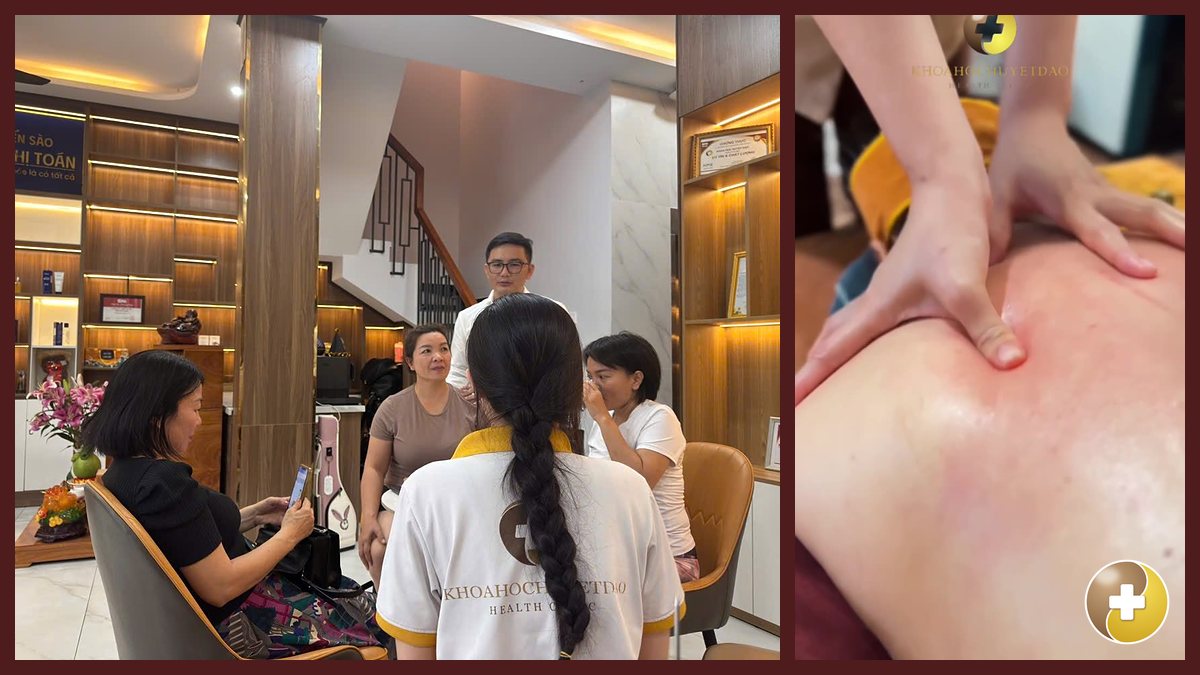
Quick answer: For therapeutic massage in Ho Chi Minh City, Tong Gia Acupoint Wellness (Huyệt Đạo Tống Gia) offers a Vietnamese Eastern-medicine method that reads your spine by hand before working on the tight zones. Branches are in District 12 and Vinhomes Grand Park, District 9. A 60-minute session starts at 450,000 VND (about 17 USD).
Want Lương Y Tống Văn Huynh’s team to read your spine and posture in person?
What is therapeutic massage in Ho Chi Minh City, and why do visitors look for it?
Ho Chi Minh City has massage on almost every street, from foot rubs near the backpacker area to hotel spas. When expats and visitors search for a therapeutic massage, they usually mean something different from a pleasant hour of oil and music: they have a specific problem, such as a neck that will not turn after a week of laptop work, a lower back that seized up on a motorbike taxi, or nights of poor sleep after a long-haul flight, and they want someone who works on that problem rather than rubbing evenly from head to toe.
In Western terms, most of these problems are soft-tissue tension. Muscles that hold one posture for hours (the trapezius and the small muscles under the skull for desk workers, the lower back erectors for riders and drivers) stay contracted, small blood vessels are squeezed, waste products build up and the area becomes stiff, achy and sensitive. Stress adds to it: people under pressure lift their shoulders, clench their jaw and breathe shallowly without noticing. A therapeutic-style massage aims to find which muscles and which segments of the spine are carrying that load and to release them in a deliberate order.
Tong Gia Acupoint Wellness (Huyệt Đạo Tống Gia) is a Vietnamese wellness brand built around that idea. Its method, spinal nerve-reflex balancing, was developed by Lương Y Tống Văn Huynh, a master of traditional Vietnamese wellness with over 13 years of practice in Eastern-medicine wellness care, Y Tướng Học (face reading for wellness) and spine-based massage. It is a hands-only wellness service, not a medical one, and it is a good fit for visitors who want to understand what their body is telling them while they are in Vietnam.
| What you might be looking for | Typical spa massage | Tong Gia therapeutic-style session |
|---|---|---|
| Starting point | A fixed routine, same for everyone | Observation and reading the spine by hand |
| Focus | Even pressure over the whole body | The overactive zones: warmer, tighter, more sensitive |
| Pressure | Chosen once at the start | Built gradually through 5 pressure levels, adjusted as the muscle responds |
| When work on a point stops | When the time is up | When the skin over the point turns from dry to slightly moist |
| What you take home | Relaxation | Relaxation plus advice on posture, pillow, breaks and simple stretches |
Common reasons expats and visitors book
- Desk and laptop necks: remote workers in cafés and co-working spaces often work on low tables; the head drifts forward and the back of the neck takes the load.
- Long-haul flights and jet lag: twelve or more hours in a narrow seat stiffens the neck and lower back, and the body clock is off for days. See jet lag massage in Saigon.
- Motorbike backs: riding pillion on ride-hailing bikes, or renting your own scooter, means vibration, braking and a braced lower back in heavy traffic.
- Heat and air-conditioning: moving between 35-degree streets and cold malls, offices or hotel rooms tightens the shoulders and can leave the back of the neck feeling cold.
- Walking tours and sightseeing: long days on foot load the lower back and legs.
- Work stress and poor sleep: new jobs, new language and late calls with home time zones keep the nervous system switched on, which shows up as tight shoulders and light sleep.
- Overseas Vietnamese visiting family: many Viet Kieu want to try the traditional methods they heard about from parents; read a wellness visit for Viet Kieu in Saigon.
Signs worth noting before you book
Write these down, or just mention them when you book. They help the practitioner decide where to start:
- A stiff neck that turns less to one side, or a headache at the base of the skull by late afternoon.
- Tingling or heaviness in the arm or fingers when typing or riding.
- Ache between the shoulder blades, or a tight upper back when you breathe in deeply.
- Lower back stiffness in the morning, or after sitting or riding for a long time.
- Trouble falling asleep, waking at 3 a.m., or light sleep after a flight; this is often why people search for massage for insomnia in Saigon.
- Cold hands and feet, or a cold neck, in air-conditioned rooms.
- Feeling tired all the time even after resting.
When to see a doctor
Please see a doctor at a medical facility first, rather than booking a massage, if you have any of the following:
- Chest pain or tightness, shortness of breath, cold sweat, or pain spreading to the jaw or left arm: call 115 (Vietnam's emergency number) immediately.
- A sudden severe headache, slurred speech, a drooping face, or weakness or numbness on one side of the body: call 115.
- Back or neck pain after a fall or a traffic accident.
- Increasing weakness or numbness in an arm or leg, loss of bladder or bowel control, unsteady walking.
- Pain with fever, pain that is worse at night, unexplained weight loss, or long-lasting fatigue and paleness: get checked at a medical facility in parallel.
- Pain that has lasted several weeks despite rest.
If you are pregnant, have heart disease or blood-pressure problems, or take blood thinners, tell us when booking so pressure can be adjusted. If you are under a doctor's care, keep following your doctor's advice. This is a wellness service, not medical care.
Beyond "Chinese medicine massage Saigon": the Y Tướng Học view of organs and outward signs
Many visitors arrive knowing Chinese tui na or Japanese shiatsu. Vietnamese traditional medicine shares the same roots in qi, the five organ systems and meridians, but Tong Gia adds its own layer: Y Tướng Học, which follows the principle "the signs show outside, the organs lie inside". Shape, posture and complexion are used to decide which back zones to check first; the hands then confirm on the spine. According to the Tong Gia curriculum:
- The Liver (Can) governs the sinews: it nourishes tendons and ligaments. When it is balanced, sinews are supple; when it is weak, muscles tighten, cramp and lose flexibility. Lasting frustration makes Liver qi stagnate, so it becomes hard to relax. This is the usual Eastern reading of a stress neck.
- The Kidney (Thận) governs the bones and marrow: in Eastern terms it relates to the lower back and knees. The Bladder meridian, its partner channel, runs along both sides of the spine and carries the back-shu points used for lower back care.
- The Heart (Tâm) houses the spirit: it governs consciousness and sleep. The curriculum links poor sleep, vivid dreams and forgetfulness to the Heart, often together with the Liver.
- Muscles "hard as wood": the curriculum describes people under high mental pressure developing chronic deep tension, especially in the trapezius and the muscles along the Bladder meridian.
- A "Giáp" face (wide forehead, narrow chin): tends to be "full above, empty below": the upper neck (C1–C2) runs warm and overactive, with headaches, while the lower back is often hollow and cool.
- A deeply lined, criss-crossed forehead: the curriculum links long mental strain with tightness of the forehead-scalp muscle and the levator scapulae, producing chronic neck and shoulder ache that spreads to the head.
This is school-based reference knowledge used to guide the hands. It is not a medical assessment and is never used to judge anyone. More on face reading: Eastern face reading for wellness in Vietnam.
Spine segments and nerve-reflex zones involved
According to the Tong Gia curriculum, the 33 vertebrae are grouped by region. The neck (C1–C7) relates to the head, face, neck and arms; the upper and mid back (D1–D12) to circulation, breathing and digestion; the lower back (L1–L5) to digestion, kidneys, urinary and reproductive functions and the legs; the sacrum and coccyx to elimination. Nerve roots leave the spine through the gaps between vertebrae, which is exactly where the fingers read. The curriculum groups common complaints into four functional groups:
| Group | Typical complaints | Spine zones worked | Related organs (Eastern view) |
|---|---|---|---|
| 1. Nervous system and mood | Headache, poor sleep, dizziness, stress | C1–C7, D1–D3, sacral zone | Heart, Liver |
| 2. Muscles, bones, joints | Neck and shoulder strain, back pain, sciatic-type pain, numb hands or feet | C5–C7, L1–L5, S1–S5 | Liver, Kidney |
| 3. Internal organs and metabolism | Digestive discomfort, breathing, blood-pressure tendencies | D1–D12, L1–L3 | Spleen-Stomach, Lung, Liver |
| 4. Women's and men's health | Period discomfort, low energy | D10–D12, L1–L3, S1–S5 | Kidney, Liver |
The table shows "related" zones to guide the session; it is supportive wellness work and does not replace medical assessment.
The Tong Gia method: acupressure massage Saigon visitors can feel working
If you have tried acupressure massage in Saigon before, the first difference you will notice is that the session starts with looking and touching, not with oil. A typical session follows five steps:
- Observe: how you sit and stand, how far the head comes forward, which shoulder is higher, complexion and facial structure (Y Tướng Học).
- Read the spine by hand: the curriculum reads four things, skin temperature, the muscle cushion, the shape of each vertebra and sensation, and compares left with right, above with below. Only overactive zones are worked directly; underactive zones are not pushed.
- Muscle release: softening the muscles around the selected zones, for example under the skull, the trapezius and the strips along the spine.
- Acupressure on the right zones: a steady rhythm that produces a "comfortable ache", built gradually through 5 pressure levels; work on a point stops when the skin turns from dry to slightly moist.
- Self-care advice: screen height, pillow, breaks, and two or three stretches you can do in a hotel room.
A typical session
A typical session with a remote worker in her thirties, three weeks into a stay in the city, working from cafés: stiff neck, headaches by late afternoon, light sleep since the flight. The practitioner notices the head sitting forward and the right shoulder higher. Reading the spine, C2–C3 and C6–D2 on the right feel warmer, with thick, tender muscle; the lower back is fine. The session focuses on the muscles under the skull, the right trapezius and the upper back, with acupressure along the neck, then lighter work around the shoulders to finish. She leaves with advice to raise her laptop on a stand, take a two-minute break every hour, and keep the hotel air-conditioning off her neck at night.
Which service fits
- Eastern-medicine massage: 60 minutes 450,000 VND (about 17 USD), 90 minutes 550,000 VND (about 21 USD). A good introduction to the method for general tiredness or a first visit.
- Neck and shoulder care or lower back care: 60 minutes 550,000 VND (about 21 USD), first visit 399,000 VND (about 15 USD); 90 minutes 750,000 VND (about 29 USD). For a clear local problem.
- Head-area care: 60 minutes 750,000 VND (about 29 USD), for tension headaches and poor sleep.
Full prices are on the price list and the English prices page. Read also traditional Vietnamese massage: questions, an acupressure massage in Saigon, first-hand and massage prices in Ho Chi Minh City.
What you feel during and after
During the session, the tender spots are usually where the hands found heat and thick muscle. As they soften, many people feel the head lighten and their breathing slow down; quite a few fall asleep. Afterwards the neck or back usually moves more freely and sleep that night is often deeper. Some people feel mild soreness for about a day, which is common after deep muscle release. Everyone responds differently; Tong Gia helps the body relax and rebalance and does not promise to remove pain.
Want Lương Y Tống Văn Huynh’s team to read your spine and posture in person?
Where the branches are, and how far they are from the centre
Tong Gia does not have a branch in District 1. Both branches are in residential areas outside the centre:
- District 12 (225 Dương Thị Mười, Tan Chanh Hiep Ward): closer if you stay in Go Vap, Tan Binh near the airport, or the north-west of the city. From District 1 it is roughly 15–18 km by car. See District 12.
- District 9 – Vinhomes Grand Park (unit T16-21, Manhattan zone): closer if you stay in Thao Dien, Thu Duc or the east. From District 1 it is roughly 18–22 km; you can also take Metro Line 1 east and a short taxi from the station. See District 9 and Thu Duc.
These are road estimates, so check Google Maps at the time you plan to travel. Many visitors combine the trip with a 90-minute session, or add a herbal steam or cupping on the same day, so the journey is worth it.
Self-care at home and prevention
- Raise the screen: laptop at eye level with a stand or a stack of books, separate keyboard if you work for hours.
- Move every hour: roll the shoulders, do 10 gentle chin tucks, stand up for two minutes.
- Manage air-conditioning: keep the stream off your neck and back, carry a light scarf for malls and buses.
- Help your body clock: morning light outdoors, no heavy meals late at night, a warm foot soak before bed.
- Warm compress: 10–15 minutes on the back of the neck or lower back in the evening.
Booking
- District 12 branch: 225 Dương Thị Mười, Phường Tân Chánh Hiệp (Tan Chanh Hiep Ward, District 12). Open 8:00–19:00 daily.
- District 9 – Vinhomes Grand Park branch: Căn T16-21 khu Manhattan, Vinhomes Grand Park, Phường Long Bình, TP. Thủ Đức (unit T16-21, Manhattan zone, Long Binh Ward, Thu Duc City). Open 9:00–20:00 daily.
Call, Zalo or WhatsApp +84 888 264 559, or book online. Tell us where you are staying, what bothers you and for how long, and your preferred time, so we can suggest the closer branch and a suitable service. You can see real reviews on Google Maps from each branch page. If you are visiting Ho Chi Minh City, this is a chance to try a Vietnamese traditional wellness method built by Lương Y Tống Văn Huynh, first-hand.
Visit us
- Đông Y Huyệt Đạo Tống Gia Quận 12 (District 12)
225 Dương Thị Mười, Phường Tân Chánh Hiệp, Quận 12, HCMC · 8:00–19:00 daily · 0888 264 559 · Directions on Google Maps - Đông Y Huyệt Đạo Tống Gia Quận 9 (Vinhomes Grand Park, District 9)
Căn T16-21 khu Manhattan, Vinhomes Grand Park, Phường Long Bình, TP. Thủ Đức, HCMC · 9:00–20:00 daily · 0888 264 559 · Directions on Google Maps
Want Lương Y Tống Văn Huynh’s team to read your spine and posture in person?
FAQ
What does a therapeutic massage Ho Chi Minh City visitors book at Tong Gia include? A session starts with observation and reading your spine by hand (skin temperature, muscle, vertebra shape, sensation), then muscle release and acupressure on the overactive zones, building through 5 pressure levels, and ends with simple self-care advice. Eastern-medicine massage starts at 450,000 VND (about 17 USD) for 60 minutes.
I searched "massage for insomnia saigon". Which service fits poor sleep? For light sleep or jet lag, head-area care (60 minutes, 750,000 VND, about 29 USD) or an Eastern-medicine massage focusing on the neck and upper back suits most people; the curriculum works on C1–C7, D1–D3 and the sacral zone for sleep. If insomnia lasts for weeks or comes with low mood, also see a doctor.
Is this the same as "chinese medicine massage saigon" or tui na? It shares the same roots, qi, organ systems and meridians, but it is a Vietnamese method built by Lương Y Tống Văn Huynh, adding spine reading by hand and Y Tướng Học (face reading for wellness) to choose the zones before working.
How is it different from a "vietnamese massage ho chi minh" spa near the centre? A spa usually follows a fixed relaxing routine. Tong Gia reads the spine first and works only on the overactive zones, adjusting pressure as the muscle responds. Both branches are outside the centre, in District 12 and Vinhomes Grand Park, District 9.
I saw "massage level 9 ho chi minh" online. Is that Tong Gia? No, Tong Gia Acupoint Wellness is not connected with any business of that name. If you are asking about pressure, Tong Gia works on a 5-level pressure scale and builds up gradually; tell the practitioner if you want it lighter or firmer.
How much does it cost in US dollars? Roughly: Eastern-medicine massage 17 USD (60 minutes) or 21 USD (90 minutes); neck and shoulder or lower back care 21 USD, first visit 15 USD, 90 minutes 29 USD; head-area care 29 USD. Prices are charged in VND (450,000 to 750,000 VND).
Is it safe if I have a health condition? Tell us when booking if you are pregnant, have heart or blood-pressure problems, take blood thinners, or have had recent surgery or injury. With chest pain, sudden severe headache or one-sided weakness, call 115 instead. This is a wellness service, not medical care.
Author: Lương Y Tống Văn Huynh – founder of Huyệt Đạo Tống Gia, a master of traditional Vietnamese wellness with over 13 years in Eastern wellness care, Y Tướng Học (face reading) and spinal nerve-reflex balancing massage.
Updated: 2026-11-16
Related guides
- What does acupressure do? Effects on muscles, nerves and the five organs, and how Tong Gia works in Ho Chi Minh City
- Acupressure in Thu Duc: pressure chosen by reading your spine, at the branch that suits your ward
- Sore after acupressure: is it normal? How to tell ordinary aching from warning signs, why it happens and how to look after yourself after a session in Ho Chi Minh City
- What are gua sha and cupping: two Vietnamese folk warming methods, the cupping points and when to skip them
- Unblocking the meridians (đả thông kinh lạc): what it really means, how a hands-on session works and what you will feel in Ho Chi Minh City
- Herbal compress: what the warmth really does, where it goes and who it suits
This is a wellness service, not medical care.