
Heavy body and fatigue in Taiwan's damp weather: humidity, digestion and what helps in Ho Chi Minh City
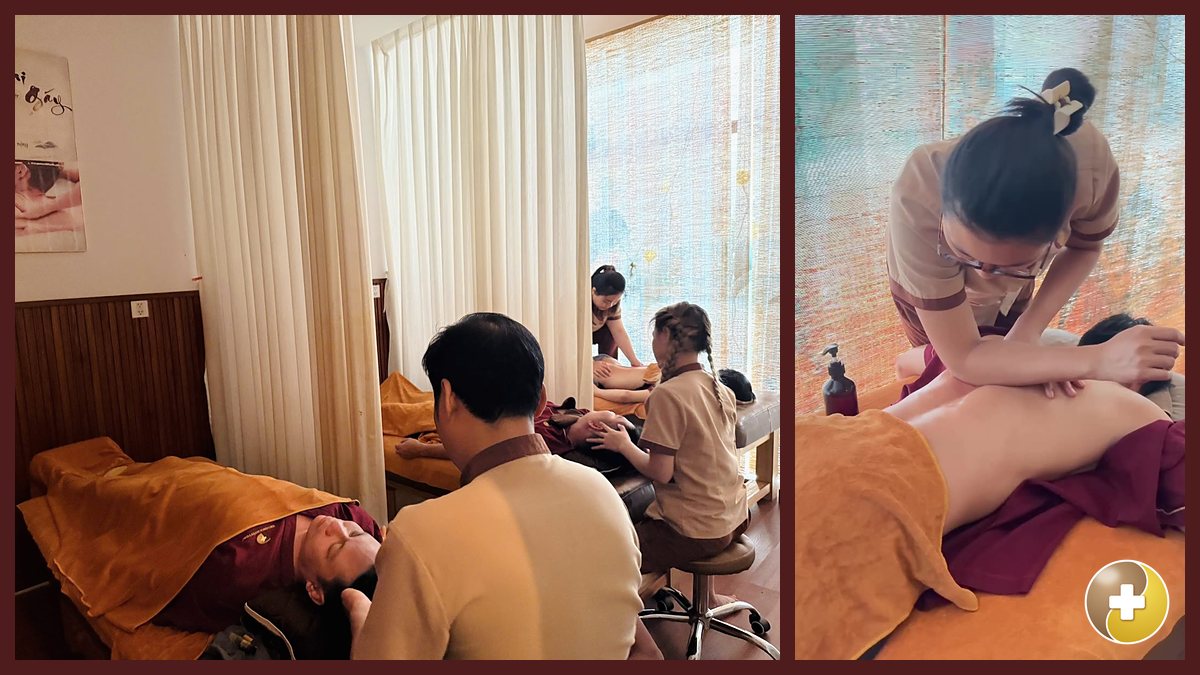
Quick answer: Taiwan's damp weather makes the body feel heavy because sweat cannot evaporate well, daylight is weak, you move less and often eat cold, rushed meals. Đông y calls this Dampness, and the Spleen prefers dryness. Tong Gia Acupoint Wellness in Ho Chi Minh City helps rebalance the mid back, belly and legs.
Want Lương Y Tống Văn Huynh’s team to read your spine and posture in person?
Why Taiwan's damp seasons leave you heavy and tired
Anyone who has lived in Taiwan for a few years knows its two wet stretches. Around May and June comes the plum rain season: a week of steady rain, grey skies, laundry that still smells damp after three days on a dormitory rack. From late autumn into winter, northern Taiwan, including Taoyuan, New Taipei and Taipei, sits under the northeast monsoon with fine drizzle and a chill that gets into your bones even when the thermometer is not very low. Taichung is drier in winter and Kaohsiung in the south is warmer, but Kaohsiung summers are hot, heavy and wet. Vietnamese factory workers, Vietnamese wives living in Taiwan and international travellers passing through describe the same thing: a head that feels wrapped in a wet towel, legs like lead, no appetite, and a wish to lie down the moment the shift ends.
In Western terms, "feeling heavy in humid weather" is not one named condition. It is the body's overall response to several pressures at once:
- Sweat that will not evaporate: the body sheds heat mainly by evaporating sweat. When the air is saturated, sweat sits on the skin, you feel sticky, and the body works harder to hold its temperature, so you feel sluggish.
- Too little daylight: light is the main signal the brain uses to set its internal clock. Weeks of overcast skies can leave you sleepy by day, restless at night and low in mood.
- Less movement: rain keeps you between dorm, bus and factory floor. Calf muscles act as a pump for blood and fluid in the legs; when they move less, legs feel heavy and ankles puff a little by evening.
- Cold, damp air: neck, shoulder and back muscles tighten to keep you warm, and that tension adds up to stiffness and fatigue.
- Damp rooms: crowded dorms, clothes dried indoors and mould on walls can bring a blocked nose, sneezing and a heavy head in sensitive people.
This kind of fatigue is common among electronics, components and textile workers in Taoyuan, Hsinchu and Taichung, shift workers on rotating rosters, Vietnamese wives juggling children and family shops, and older parents visiting during the rainy months. The main article in this series is spine care after a long-haul flight; this page focuses on heaviness, low energy and digestion in damp climates.
Common causes: humidity, dull skies, long shifts, damp dorms
- Long rainy spells: no sun for days, bedding always slightly damp, so even after sleep the body never feels light.
- Long and rotating shifts: 10–12 hours a day, sometimes weekends too, with sleep pushed around the roster.
- Cold, rushed food: boxed rice eaten lukewarm, iced bubble tea and cold drinks on the line, late heavy dinners followed straight by bed.
- Sweet, fatty, fried food: fried snacks, pastries and instant noodles instead of meals. The Tong Gia curriculum notes that overeating and greasy food overload the Spleen and Stomach and, in Đông y terms, create "dampness": heaviness and slow digestion.
- Drinking less water: cool, damp weather blunts thirst, while milk tea and coffee replace plain water.
- Standing or sitting still all shift: legs barely move, the belly is folded while you inspect parts, the mid back aches.
- Worry and homesickness: money, contracts and distance from family. The curriculum describes worry as weakening the Spleen: poor appetite, bloating, and with the Heart involved, poor sleep and forgetfulness.
- The sudden climate change of a trip home: Taoyuan or Kaohsiung to Tân Sơn Nhất is only about 3–4 hours and Vietnam is 1 hour behind Taiwan, but going from cold drizzle to warm Saigon sun, plus parties and family visits, can leave you tired for the first few days.
Some health conditions also cause lasting heaviness and fatigue: anaemia, an underactive thyroid, diabetes, sleep apnoea, depression, chronic sleep loss, pregnancy and the months after birth. These need checking by medical staff, not just massage. For a broader look, read tiredness in hot weather.
Signs that often come with it
- A heavy, foggy head on waking, worse on rainy days. See heavy head after waking.
- Poor appetite, a bland or sticky taste in the mouth; you feel full after a few bites.
- Bloating and drowsiness after lunch, burping, eyes closing on the afternoon shift. See morning bloating after waking.
- Soft, sticky stools that are different from how you are at home.
- Heavy legs and slightly puffy ankles by the end of the shift; a fingertip pressed on the inner shin leaves a dent for a moment.
- Puffy eyelids and a slightly swollen face in the morning.
- Aching mid and lower back, as if you had carried loads, even on light duties.
- Low mood and not wanting to talk during long sunless weeks.
When to see a doctor
Weather-related fatigue usually eases with enough sleep, warm food, some sun and gentle movement. Please see a doctor, and do not use massage instead, if you notice:
- Chest pain or tightness, shortness of breath, cold sweat, or pain spreading to the jaw or left arm: call 119 in Taiwan or 115 in Vietnam immediately.
- Sudden weakness or numbness on one side, a drooping mouth, slurred speech, blurred vision or loss of balance: possible stroke, call emergency services.
- Rapidly increasing swelling, or one swollen, painful, warm or red calf, especially after a flight, or with breathlessness: get checked for a blood clot at once.
- Fatigue lasting more than 2–3 weeks despite rest, with weight loss, evening fevers or night sweats.
- Pale skin and lips, dizziness on standing, a racing heart on effort: possibly anaemia, so get tested alongside any wellness care.
- Heavy thirst and frequent urination, or feeling cold, gaining weight, dry skin and lasting constipation: ask for blood sugar and thyroid tests.
- Severe abdominal pain, vomiting blood, black stools or high fever.
- Pregnancy, recent birth, or heart, kidney or liver conditions: ask medical staff before any abdominal massage.
If you already have test results from Taiwan, bring them or a photo. Tong Gia does not read X-rays or MRI scans and does not make medical plans; results only help staff know which areas to keep gentle or avoid. This is a wellness service, not medical care.
The Y Tướng Học view: the Spleen likes dryness, dislikes damp
Y Tướng Học (face reading for wellness) rests on one line: the signs show outside, the organs lie inside. Lương Y (traditional practitioner) Tống Văn Huynh organised this knowledge so staff look before they touch. For heaviness in damp weather the first organ system compared is the Spleen, followed by the Heart, Lung and Kidney.
The Spleen transforms food and fluids. In Đông y the Spleen is a functional system, not the anatomical spleen; it is closer to digestion and absorption in the pancreas and small intestine, plus water metabolism. The Tong Gia curriculum says the Spleen and Stomach are the root of post-natal energy: the Stomach receives food and the Spleen turns it into the essence that becomes energy and blood. The Spleen "likes dryness and dislikes dampness". When it struggles, the curriculum lists poor appetite, bloating, loose stools, puffiness and a heavy body. It links the Spleen with the humid late-summer season and advises keeping dry, eating easily digested food and worrying less.
Signs on the outside. The Spleen opens into the mouth and shows on the lips: rosy lips when energy and blood are ample, pale or dry lips when the Spleen is tired. A swollen tongue with tooth marks along its edges is read as fluid not being transformed: heaviness, slow digestion, lasting fatigue. Eyelids belong to the Spleen, so puffy eyelids and a swollen morning face point the same way. Muscles that turn soft, cool and hold a dent when pressed suggest water lingering in the tissues and heavy limbs.
Face shape and back. A square, full "Điền" face belongs to the Earth type, with the Spleen and Stomach at its root; when out of balance it tends towards damp stagnation, bloating and puffiness, and the back often has broad, thick muscle bands that tighten around D11–D12. A face wide at the cheekbones with a narrow forehead and pointed chin, the "Thân" type, links to Liver–Spleen disharmony, where stress goes straight to the stomach; its key back points are around D7 and D9. These observations guide wellness care only. They are not fortune telling and not a judgement about anyone's health.
Spinal segments and related reflex areas
In the Tong Gia method of balancing the spinal nerve reflex system, the thoracic segments D1–D12 relate to circulation, breathing and digestion, and the lumbar segments L1–L5 to digestion, kidneys, urinary and reproductive organs and the legs. Digestive and metabolic concerns are worked through D1–D12 and L1–L3 together.
| Segment / area | Nerves / function (Western anatomy) | Common signs | Organ (Đông y) | Outer sign (Y Tướng Học) |
|---|---|---|---|---|
| C1–C3, upper neck | Occipital nerves, suboccipital muscles; vagus nerve path in the neck | Heavy, foggy head on waking | Spleen lifts clear essence upward | Puffy eyelids, swollen morning face |
| D3–D5, upper back | Sympathetic branches to heart and lungs | Shallow breathing, phlegm in damp rooms, worry-disturbed sleep | Lung (stores phlegm), Heart–Spleen | Dull complexion; "Đồng" face checks D3 |
| D5–D9, mid back | Sympathetic supply to the stomach: movement and gastric secretion | Poor appetite, upper bloating, burping | Stomach: receives and sends food down | Thick, greasy tongue coating |
| D10–D12 (Spleen and Stomach back points below D11, D12) | Sympathetic supply to pancreas and small intestine: enzymes, absorption of nutrients and water | Drowsy after meals, heavy body, soft sticky stools | Spleen: transforms food and fluids | "Điền" face, thick back muscles, tooth-marked tongue, pale lips |
| L1–L3 and inner lower leg | Lumbar plexus to thigh and calf; calf muscle pump returns blood to the heart | Heavy legs, puffy ankles after shifts | Spleen governs the limbs; Spleen–Kidney support each other | Soft, cool muscles that hold a dent |
The table shows related areas for hands-on reading, not causes. That is why a Spleen–Stomach session works the mid and lower back and legs before the belly.
How Tong Gia helps rebalance digestion and heavy legs
Every session follows the spinal nerve reflex balancing massage developed by Lương Y Tống Văn Huynh, founder of Tong Gia Acupoint Wellness (Huyệt Đạo Tống Gia), with over 13 years in Vietnamese Đông y wellness, Y Tướng Học and spinal reflex balancing. It is a Vietnamese hands-on method, and we welcome you to try it when you are in Ho Chi Minh City.
- Questions and observation: your work in Taiwan, shift length, meals, sleep, digestion, whether you have been to see a doctor, whether you are pregnant; then complexion, lips, tongue, eyelids, posture and ankle puffiness.
- Reading the spine by hand: skin temperature, muscle padding, vertebral shape and sensation, compared left to right and top to bottom, with focus on D5–D12 and L1–L3, where many people have cool, tight bands beside D11–D12.
- Releasing muscles: mid and lower back, glutes, then thighs and calves worked upward towards the heart, in five pressure levels from light to firm.
- Acupressure: Spleen and Stomach back points; Zusanli below the knee; Yinlingquan on the inner shin; points on the inner edge of the foot; light work at Zhongwan on the upper belly. Sanyinjiao is not used in pregnancy, and the belly is not worked straight after a full meal. Each point stops when the skin turns from dry to slightly moist.
- Self-care coaching to take back to Taiwan.
You may feel tender spots beside the mid back and along the inner shin. As muscles release, people often warm up, hear the belly gurgle and breathe more deeply; some fall asleep. Afterwards many report lighter legs, a clearer head and better appetite that evening; others feel a little sore for a day. Results vary, and we do not promise the fatigue will be gone after one session.
- Spleen–Stomach wellness, 75 min: 750,000 VND (about 29 USD). For poor appetite, bloating and long-running heaviness.
- Heavy, tired legs care, 60 min: 500,000 VND (about 19 USD). For heavy legs and puffy ankles after months on your feet or a flight.
- Herbal steam: 120,000 VND (about 5 USD). An add-on if you feel cold and damp.
Reference rate 1 USD ≈ 26,000 VND; payment is in VND. Full list: prices.
From Tân Sơn Nhất airport: the District 12 branch (225 Dương Thị Mười, Phường Tân Chánh Hiệp, District 12) is north of the airport and not far by car, depending on traffic. The Vinhomes Grand Park branch (Căn T16-21 khu Manhattan, Phường Long Bình, TP. Thủ Đức, Thu Duc City) is farther and takes longer, especially in the evening rush. See massage near Tân Sơn Nhất airport.
Want Lương Y Tống Văn Huynh’s team to read your spine and posture in person?
A suggested plan for your trip and daily self-care
Roughly December to April is the dry season in Ho Chi Minh City: sunny with little rain, a good chance for a damp body to dry out.
| When | What the body needs | What to do |
|---|---|---|
| Last week before flying | Less inner dampness | Cut iced milk tea, fried food and instant noodles; eat dinner earlier; note your signs |
| Flight day | Legs that keep moving | Loose clothes, water, one walk down the aisle, ankle circles |
| Arrival day | Settle into warmth | Warm shower, hot soup or rice porridge, early night on Vietnam time |
| Days 2–3 | Rebalance digestion | A 75-minute Spleen–Stomach session, plus herbal steam if you still feel cold and damp |
| Party and visiting days | Do not overload the stomach | Eat slowly, stop when comfortably full, walk 10–15 minutes after meals; see bloating after Tết feasting |
| Mid-trip | Light legs, enough sleep | A leg session if they still feel heavy; see a doctor for any warning sign |
| 2–3 days before flying back | Prepare for the damp season | Practise belly circles and Zusanli; read booking a massage in Saigon from abroad for next time |
- Belly circles: palm clockwise around the navel 30–50 times before bed; not straight after a big meal and not in pregnancy.
- Zusanli: 3 cun below the outer knee hollow, one finger-width from the shin bone; press gently 1–2 minutes each side.
- Warm, cooked, regular meals: reheat boxed rice, add hot soup, limit raw and iced food, keep dinner light and 2–3 hours before bed.
- Walk after meals and find daylight: 10–15 slow minutes; step outside when the sun appears.
- Keep body and room dry: dry your hair after showering, run a dehumidifier when drying laundry, wash bedding often, and do slow 4–6 breathing for 5–10 minutes before sleep.
Factory workers may also find hand numbness from assembly line work in Taiwan useful.
Book from Taiwan before you fly
From Taoyuan, Taichung or Kaohsiung, message by Zalo or WhatsApp +84 888 264 559 (0888 264 559 inside Vietnam) with your landing date and time at Tân Sơn Nhất, what feels tired or heavy, and which branch you prefer. You can also book online.
- District 12 branch: 225 Dương Thị Mười, Phường Tân Chánh Hiệp, Ho Chi Minh City. Open 8:00–19:00 daily.
- District 9 branch: Căn T16-21 khu Manhattan, Vinhomes Grand Park, Phường Long Bình, TP. Thủ Đức (Thu Duc City). Open 9:00–20:00 daily.
Slots fill up before Tết, so message early. Real reviews are on Google Maps on each branch page. Family in Ho Chi Minh City can book for you.
Visit us
- Đông Y Huyệt Đạo Tống Gia Quận 12 (District 12)
225 Dương Thị Mười, Phường Tân Chánh Hiệp, Quận 12, HCMC · 8:00–19:00 daily · 0888 264 559 · Directions on Google Maps - Đông Y Huyệt Đạo Tống Gia Quận 9 (Vinhomes Grand Park, District 9)
Căn T16-21 khu Manhattan, Vinhomes Grand Park, Phường Long Bình, TP. Thủ Đức, HCMC · 9:00–20:00 daily · 0888 264 559 · Directions on Google Maps
Map of our two branches
Want Lương Y Tống Văn Huynh’s team to read your spine and posture in person?
What guests say on Google Maps
“The technician was very professional; after the session I was very satisfied! I will recommend this service to my friends!” (translated from a Vietnamese review)
— Thịnh H., Google Maps review · Vinhomes Grand Park branch (District 9) · 2024 · See on Google Maps
“Wonderful – the staff were warm and cheerful, and the technician was really good.” (translated from a Vietnamese review)
— Hoàng N., Google Maps review · Vinhomes Grand Park branch (District 9) · 11/2026 · See on Google Maps
Quoted from public reviews, shortened where marked (…). Experiences vary from person to person; reviews are not a substitute for seeing a doctor when something feels wrong.
Related guides for your trip
- Crane operators abroad: neck and back pain from looking down all shift, and care on a visit to Vietnam
- Fatigue from cleanroom suits on long shifts: heat, heavy shoulders and back, dry skin in chip plants
- Acupressure points for sleep on rotating shifts: which points to press, how to press safely, and sleep habits
FAQ
Why do I feel so heavy and tired in Taiwan's damp weather? High humidity stops sweat from evaporating, grey skies weaken your body clock, and rain means less movement, often with cold, rushed meals. In Đông y the Spleen likes dryness and dislikes damp, so heaviness and poor appetite follow. Warm food, sleep and walking usually help; chest pain, breathlessness or one swollen leg need a doctor.
I work in a Taoyuan factory and lose my appetite every rainy season. Is that normal? Many people eat less, bloat and feel drowsy after meals during the plum rains and winter drizzle. The Tong Gia curriculum compares this to the Spleen deficiency with dampness pattern: heavy body, bland taste, thick tongue coating. Eat warm food and cut iced drinks; if it lasts over 2–3 weeks or you lose weight, get checked.
Are puffy ankles and a swollen morning face in humid weather dangerous? Mild evening puffiness after standing all shift is common. Swelling that grows fast, one painful red calf, or swelling with breathlessness or little urine needs prompt medical checks for heart, kidney or a blood clot. Massage is not a substitute in those cases.
How long does the heaviness take to ease once I am in Vietnam? Many people feel lighter within a few days of warm sun, home cooking and proper sleep, though a trip full of parties and late nights can stretch it out. If fatigue lasts more than 2–3 weeks despite rest, please get checked by medical staff.
Can a Spleen–Stomach massage help with feeling heavy? The 75-minute session at Tong Gia releases the mid and lower back and uses points such as the Spleen and Stomach back points, Zusanli and Yinlingquan to support balance. Many people feel warmer, lighter in the legs and hungrier afterwards. It is wellness care and does not replace seeing a doctor for warning signs.
Can I book from Kaohsiung before my flight? Yes. Send your landing time at Tân Sơn Nhất, what feels heavy or tired and your preferred branch to +84 888 264 559 on Zalo or WhatsApp. District 12 is open 8:00–19:00 and Vinhomes Grand Park, Thu Duc City, 9:00–20:00 every day.
Author: Lương Y Tống Văn Huynh – founder of Huyệt Đạo Tống Gia, a master of traditional Vietnamese wellness with over 13 years in Eastern wellness care, Y Tướng Học (face reading) and spinal nerve-reflex balancing massage.
Updated: 2026-11-16
Related guides
This is a wellness service, not medical care.