
Bloating after Tet feasting in Ho Chi Minh City: why the holiday table weighs on you, and how Tong Gia helps
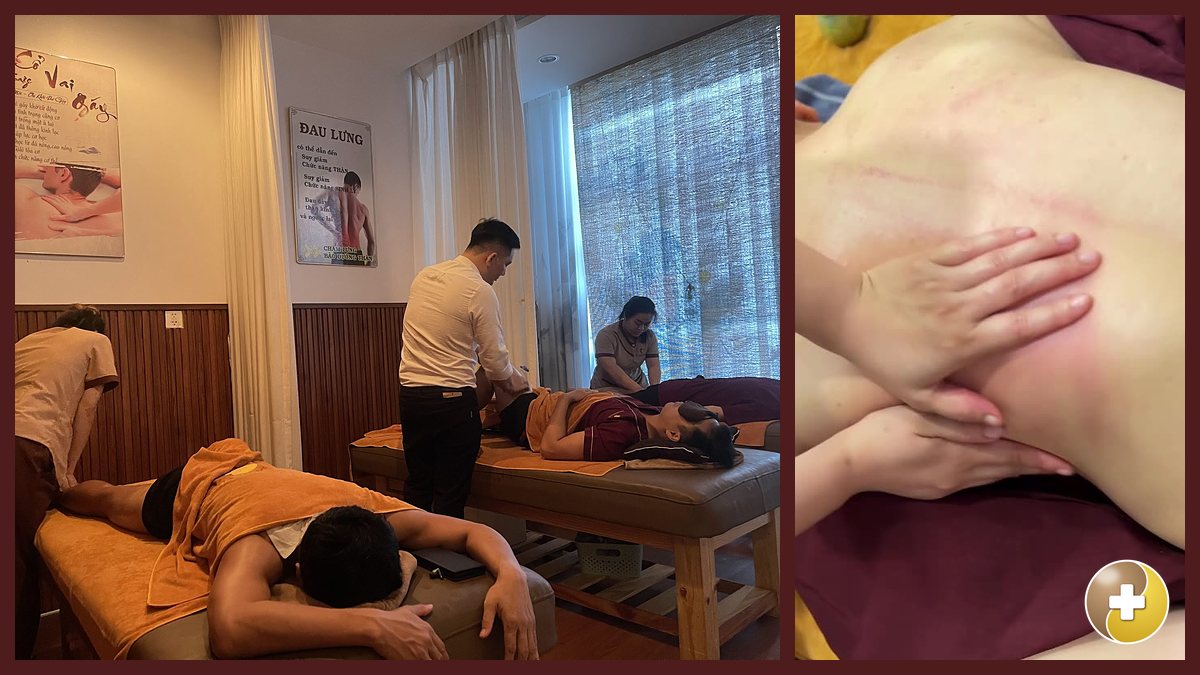
Quick answer: Bloating after Tet feasting usually comes from sticky rice cakes, fatty braises, fried food, beer, late meals, sitting all day and jet lag, which slow the stomach and create gas. Tong Gia Acupoint Wellness (Huyệt Đạo Tống Gia) in District 12 and Vinhomes Grand Park, Ho Chi Minh City, offers hands-on mid-back and acupressure care for the Spleen–Stomach.
Want Lương Y Tống Văn Huynh’s team to read your spine and posture in person?
What bloating after Tet feasting is, and why visitors from abroad get it
Day one of Tet: bánh chưng (square sticky-rice cake) with thịt kho hột vịt (pork and eggs braised in coconut water). Day two: visiting relatives on both sides of the family, and every house pours another glass. By the evening of day three, plenty of people feel the upper belly drawn tight like a drum, burp up the taste of oil, cannot get comfortable lying down, and wake with a flat taste in the mouth and no appetite. In Ho Chi Minh City this is a familiar part of the Lunar New Year.
In Western terms, bloating and indigestion describe fullness, tightness or burning in the upper abdomen (just below the breastbone), often with burping, gurgling and sometimes nausea. Over Tet it is rarely a sign that the stomach is damaged. Far more often the stomach and gut are simply overloaded: too much dense, fatty food at once, slower emptying and more gas than usual.
According to the Tong Gia course material, a full stomach holds roughly 1–1.5 litres and keeps food for about 2–4 hours, while most of the work of turning food into nutrients is done by the pancreas and small intestine. During Tet the next meal arrives before the last one has moved on, and the candied fruit and roasted seeds never leave the table, so the belly gets no rest.
It is common among:
- Overseas Vietnamese home for Tet 2027: after a long-haul flight from the US, Australia or Europe, the body is still on the other time zone, so a 7 p.m. dinner in Saigon may land in the middle of your body's night. And there are years of missed dishes to catch up on.
- Family members hosting them: cooking a lot, eating together late, then up early for the market or the pagoda.
- Older parents: weaker chewing, little walking, cold cake and pork roll straight from the fridge.
- International visitors and expats invited to their first Tet table, where refusing food feels rude.
If you have just landed and your back and neck still ache from the seat, start with our main guide on spine care after a long-haul flight; flight stiffness and holiday bloating often arrive together.
Common causes: how a Tet table overloads digestion
Holiday bloating rarely comes from a single dish. It is the sum of several habits packed into a few days:
| Tet food or habit | Why it bloats (Western view) | Eastern view (Spleen–Stomach) |
|---|---|---|
| Bánh chưng, bánh tét, xôi (sticky rice) | Dense, chewy, with pork fat and mung bean; big bites need long grinding | Sticky, rich food breeds "dampness": heaviness, slow digestion |
| Braised pork, pork roll, lạp xưởng (sweet Chinese-style sausage), fried spring rolls | Fat slows stomach emptying; deep-fried food sits longer | Eating too much oily food overloads the Spleen–Stomach |
| Beer, rice wine, fizzy drinks | Carbonation stretches the belly; alcohol irritates the lining and invites reflux | Stomach qi should move down; alcohol pushes it up |
| Candied fruit, sweets, seeds all day | The stomach is never empty; sugar ferments into gas in the gut | Sweet taste goes to the Spleen; too much tires it |
| Cold leftovers, iced beer, ice water | Cold food can trigger gurgling and cramping in sensitive people | Cold harms Spleen yang: belly ache, loose stools |
| Late nights, late snacks, sleeping in | The stomach works when the body wants rest; lying down after food invites reflux | A light dinner and no late eating protect the Spleen–Stomach |
| Sitting all day; eating fast while talking | Less movement slows the gut; talking while eating means swallowing air | Eating fast and chewing little brings gas and overeating |
Two things hit overseas Vietnamese in particular. Jet lag: digestion follows a day–night rhythm, so your stomach may be in "night mode" while the family feast is served; see jet lag and sleep after flying to Vietnam. A sudden change of diet: from small, lighter meals abroad straight to fish sauce, scallion oil and sweet-salty braises, day after day.
Stress matters too. The course material notes that in Eastern theory the Liver "restrains" the Spleen: tension and frustration easily bring bloating (Liver–Spleen disharmony), and worry "harms the Spleen". Western science also recognises a strong stress–gut link. Tet means travel, hosting and money worries, and the belly tightens along with the mind.
Signs worth noticing
Tet bloating usually settles within 1–3 days of eating lightly again. These signs tell you what the body is saying:
- Burping up the last meal: food is still sitting in the stomach; in Eastern terms, Stomach qi is not descending.
- Sour burps, burning behind the breastbone, a dry cough at night: suggests reflux, typical after beer and late eating; see acid reflux after drinking beer.
- Gurgling, lots of wind, loose or hard stools: the gut is fermenting sugar and starch; see stomach gurgling noises.
- Sleepy, heavy and limp after meals: the course material lists tiredness and sleepiness after eating among signs of a weakened Spleen–Stomach; see sleepy after eating.
- A flat, sticky or bitter taste, bad breath, thick tongue coating: common after several days of rich, sweet food.
One sign alone proves nothing. If bloating continues after the holiday is over, read bloating and gas: common causes and consider getting checked.
When to see a doctor
If bloating after Tet feasting comes with any of the following, please see a doctor at a medical facility rather than relying on massage:
- Sudden, severe belly pain or a hard belly; upper belly pain spreading to the back with vomiting.
- Vomiting blood or coffee-ground material; black or bloody stools.
- Vomiting that will not stop, unable to keep food or water down, dry lips, little urine.
- Difficulty or pain when swallowing; yellowing of the skin or eyes.
- Unexplained weight loss, pale skin, marked tiredness that looks like anaemia: get checked in parallel, do not assume it is just the food.
- New digestive symptoms after age 50.
- Fever, cramping and repeated diarrhoea after eating food left out too long.
Upper belly pain with chest tightness, shortness of breath, cold sweats, or pain spreading to the jaw or left arm: call 115 (Vietnam's emergency number) immediately. The Tong Gia course material reminds practitioners that upper belly pain can come from the stomach, gallbladder, pancreas or even the heart.
This is a wellness service, not medical care.
The Y Tướng Học view: how the Spleen–Stomach shows on the lips, tongue and body
Y Tướng Học (face reading for wellness), as taught by Lương Y Tống Văn Huynh, rests on one line: the signs show outside, the organs lie inside. In Eastern theory the Spleen–Stomach is the root of everything we build after birth: the Stomach receives food, the Spleen transforms it into essence and makes qi and blood for the whole body. The Spleen governs the muscles and limbs, opens into the mouth and shows on the lips.
So with someone bloated after days of feasting, Tong Gia practitioners look at:
- Lips: rosy and moist when the Spleen–Stomach is strong; pale, dry and dull when Spleen qi is weak.
- Taste and mouth: enjoying food is a good sign; a bland, sticky or bitter mouth and bad breath suggest a tired Spleen–Stomach.
- Tongue: swollen, tooth-marked edges and a thick greasy coating fit the "Spleen weakness with dampness" pattern: heaviness, fullness, sticky mouth.
- Complexion and energy: a sallow, yellowish face and post-meal drowsiness often go with weak Spleen qi.
- Face shape: in Tong Gia face reading, the square, full "Điền" face (pure Earth type) and the "Do" face (narrow top, full cheeks and jaw) are linked to the Spleen, and do well with regular meals, steady movement and a relaxed belly and mid-back (T11–T12). The "Thân" face (wide cheekbones, narrower top and chin) links to the Liver and Spleen and tends to hold tension around the ribs and mid-back (T7–T9).
The course material describes four common Spleen–Stomach patterns: weak Spleen qi, weak Spleen yang (cold belly, likes warmth), Spleen weakness with dampness, and Stomach yin deficiency (hungry but no appetite, dry mouth). Rich food and iced beer tend to push people towards "damp" and "cold". These are Eastern concepts, not disease names. Note too that the Eastern "Spleen" is not the anatomical spleen: it is a digestive and absorptive function system, closer to the work of the pancreas and small intestine.
Spine segments and nerve-reflex zones linked to digestion
Anatomically the spine has 7 cervical, 12 thoracic (T1–T12) and 5 lumbar vertebrae. The stomach, liver and gallbladder, pancreas and small intestine receive sympathetic nerve branches from the middle and lower thoracic spine, while the vagus nerve (parasympathetic) runs down from the brainstem through the neck and supports stomach movement and secretion when you are relaxed. Stress and rushed eating tilt the balance towards the sympathetic side and digestion slows. In the Tong Gia framework the Spleen–Stomach reflex zone lies along the mid-back, T5–T12; Tỳ du (BL20, 脾俞) sits beside T11 and Vị du (BL21, 胃俞) beside T12, 1.5 cun out from the midline.
| Vertebrae / area | Nerves / function (Western anatomy) | What often shows up after Tet | Organ (Eastern view) | Outward sign (Y Tướng Học) |
|---|---|---|---|---|
| T5–T9, mid-back behind the upper belly | Sympathetic branches to the stomach: movement and gastric secretion | Tight upper belly, burping, aching mid-back | Stomach: receives, ripens, sends down | Bad breath, bitter mouth, thick coating; slumped sitting posture |
| T7–T9, level with the lower ribs | Branches to the liver and gallbladder: bile for digesting fat | Fullness under the right ribs after fried food or alcohol | Liver: keeps qi flowing, helps digestion | "Thân" face, wide cheekbones; tense, dull complexion after late nights |
| T10–T12 (BL20 at T11, BL21 at T12) | Branches to the pancreas and small intestine: enzymes and absorption | Drowsy and heavy after meals, loose stools | Spleen: transforms food, lifts the clear | "Điền" or "Do" face; pale lips, tooth-marked tongue, sallow skin |
| Neck (path of the vagus nerve) and belly around Trung quản (CV12) | Vagus nerve: rest-and-digest stomach activity | Fullness and no appetite when eating under stress | Spleen–Liver: worry harms the Spleen | Furrowed brow, raised, tight shoulders |
These are related areas, not a statement of cause. In practice, people who have feasted for days often have a stiff, aching mid-back from sitting and from these reflex zones; softening it while pressing the Spleen–Stomach points helps the body shift into rest-and-digest mode.
The Tong Gia method: spinal nerve-reflex balancing for the Spleen–Stomach
Tong Gia Acupoint Wellness (Huyệt Đạo Tống Gia) is a Vietnamese Eastern wellness method built by Lương Y Tống Văn Huynh, a traditional Vietnamese wellness master with more than 13 years in Eastern wellness, Y Tướng Học and spinal nerve-reflex balancing. Tong Gia does not work on the stomach itself and does not replace a medical check; a session supports the back and points related to the Spleen–Stomach and helps the body relax so digestion can run more smoothly.
- Questions and observation: what you have eaten, alcohol, dinner time, where you flew in from, bowel habits; then lips, tongue, complexion and posture. If a warning sign applies, the practitioner will not start and will advise a medical check first. Women are asked whether they are pregnant.
- Reading the spine by hand along T5–T12, left against right, feeling for tight muscle, cooler skin and tender spots.
- Muscle release of the mid-back, shoulder blades and neck at a slow pace so the nervous system can settle; after a long flight the lower back is added.
- Acupressure on Tỳ du (BL20, 脾俞), Vị du (BL21, 胃俞), Túc tam lý (ST36, 足三里) below the knee, Công tôn (SP4, 公孙) and Thái bạch (SP3, 太白) on the inner foot, and Nội quan (PC6, 内关) for nausea. The belly gets only light circles around the navel and CV12, never deep pressure, never right after a big meal, and not during pregnancy (SP6 is also avoided in pregnancy).
- Self-care coaching: navel circles, pressing ST36 and meal timing for the rest of the holiday.
Come 1–2 hours after eating, not on a full stomach. Suitable sessions (full price list):
- Spleen–Stomach wellness care, 75 min: 750,000 VND (about 29 USD). Observation, spine reading, mid-back release, the Spleen–Stomach point group and gentle belly work; for bloating, burping and heaviness after feasting.
- Eastern-style massage, 60 min: 450,000 VND (about 17 USD); 90 min: 550,000 VND (about 21 USD). Whole-body relaxation for the family members who did all the Tet cooking.
A typical session for post-Tet bloating starts with the neck and shoulders so the body calms down, moves to the mid-back (often stiffer and cooler around T7–T11 after days of rich food), then BL20, BL21 and ST36, and ends with slow clockwise circles around the navel. Clients often say the mid-back warms up, some burp or hear the belly gurgle softly and breathe more deeply, and afterwards the belly feels lighter and sleep comes more easily. Everyone responds differently; Tong Gia does not promise the bloating will be gone after one session, and lighter eating over the next days still matters most.
Want Lương Y Tống Văn Huynh’s team to read your spine and posture in person?
Self-care at home during the holiday
The course material puts it simply: what counts is not how much you eat, but how much your Spleen–Stomach can absorb.
- Smaller portions, slower meals, chew well: 20–30 minutes per meal; halve that slice of bánh chưng and eat it with pickled vegetables.
- Light dinner, 2–3 hours before bed: in the first days back, make lunch the main meal and keep dinner warm and light while your body clock adjusts.
- Warm and cooked over cold and raw: reheat cake and pork roll from the fridge, sip warm water, go easy on iced beer and fizzy drinks.
- Walk gently for 10–15 minutes after meals: the flower streets, the pagoda; no lying down straight after eating.
- Navel circles and ST36: palm circles clockwise around the navel 30–50 times once the belly has settled (not on a full stomach, not in pregnancy); press ST36 for 1–2 minutes each side, mild ache is enough.
Avoid taking painkillers or anti-inflammatories for belly pain on your own; the course material notes they can irritate the stomach lining. Bringing older parents along? See booking a massage for parents in Vietnam and our page for overseas Vietnamese.
How to book
- District 12: 225 Dương Thị Mười, Phường Tân Chánh Hiệp, Quận 12 (District 12). Daily 8:00–19:00.
- Vinhomes Grand Park: Căn T16-21 khu Manhattan, Phường Long Bình, TP. Thủ Đức (Unit T16-21, The Manhattan, Thu Duc City, formerly District 9). Daily 9:00–20:00.
Both branches have genuine client reviews on Google Maps. WhatsApp or Zalo +84 888 264 559 (0888 264 559 inside Vietnam), or book online. Overseas Vietnamese can message before flying to hold a time for the whole family; tell us how long the bloating has lasted, whether there is reflux or nausea, and whether you have already been checked.
Visit us
- Đông Y Huyệt Đạo Tống Gia Quận 12 (District 12)
225 Dương Thị Mười, Phường Tân Chánh Hiệp, Quận 12, HCMC · 8:00–19:00 daily · 0888 264 559 · Directions on Google Maps - Đông Y Huyệt Đạo Tống Gia Quận 9 (Vinhomes Grand Park, District 9)
Căn T16-21 khu Manhattan, Vinhomes Grand Park, Phường Long Bình, TP. Thủ Đức, HCMC · 9:00–20:00 daily · 0888 264 559 · Directions on Google Maps
Want Lương Y Tống Văn Huynh’s team to read your spine and posture in person?
What guests say on Google Maps
“The technician had firm, careful hands with a deep, steady pressure. I had the neck and shoulders plus the Spleen–Stomach care and felt much lighter afterwards, my shoulders less tired… A pretty solid experience during my trip back to Vin to visit family.” (translated from a Vietnamese review)
— Phạm L., Google Maps review · Vinhomes Grand Park branch (District 9) · 09/2026 · See on Google Maps
“I had been achy and tired for a long time. After the session I felt very comfortable.” (translated from a Vietnamese review)
— Nghĩa H., Google Maps review · District 12 branch · 2025 · See on Google Maps
Quoted from public reviews, shortened where marked (…). Experiences vary from person to person; reviews are not a substitute for seeing a doctor when something feels wrong.
Related guides for your trip
- Massage with osteoporosis: is it safe on a trip to Vietnam, what pressure is right and what to avoid
- Morning or evening massage on your trip home to Vietnam: choosing by jet lag, sleep and the Saigon heat
- Booking a massage for a group during Tet: how to plan sessions for family, relatives and friends in Saigon
FAQ
What should I do about bloating after Tet feasting? Eat lightly for a day or two: small warm meals, chew well, cut back on sticky rice, fried food, beer and fizzy drinks, eat dinner early and walk 10–15 minutes after meals. Once the belly settles, try clockwise circles around the navel and pressing ST36. Severe pain, vomiting blood, black stools, or chest pain with breathlessness means getting medical help now and calling 115 if needed.
What can I drink for bloating and indigestion in Vietnam? Warm water in small sips through the day is the simplest choice. Go easy on iced beer and fizzy drinks, since the gas stretches the belly further, and on ice water, which in Eastern theory weakens Spleen yang. Avoid gulping large amounts right after a heavy meal.
I flew in from the US for Tet and feel bloated every evening. Why? Usually three things at once: jet lag puts dinner in your body's night, a sudden switch to braised, fried and sticky-rice dishes, and catching up on years of favourite food in a few days. Make lunch the main meal, keep dinner light, sleep on Vietnam time and walk after eating.
Is bloating with nausea after Tet dangerous? Most of the time it reflects overloaded digestion and eases as you eat lightly. But persistent vomiting, vomiting blood or coffee-ground material, severe belly pain, fever, yellow skin or weight loss need a medical check. Upper belly pain with chest tightness, breathlessness or sweating means calling 115 immediately.
Can massage or acupressure help with bloating? Massage and acupressure do not work on the stomach itself, but they can help the body relax and soften the mid-back zone (T5–T12) linked to the Spleen–Stomach, and many people feel lighter and sleep better afterwards. At Tong Gia, Spleen–Stomach wellness care is 75 minutes for 750,000 VND (about 29 USD); come 1–2 hours after eating.
How long does holiday bloating usually last? Many people feel it settle within 1–3 days of lighter, regular meals and more walking. If it continues for weeks after the holiday, or comes with warning signs such as black stools, weight loss or trouble swallowing, see a doctor at a medical facility.
Author: Lương Y Tống Văn Huynh – founder of Huyệt Đạo Tống Gia, a master of traditional Vietnamese wellness with over 13 years in Eastern wellness care, Y Tướng Học (face reading) and spinal nerve-reflex balancing massage.
Updated: 2026-11-15
Related guides
- Upper-belly pain after eating: reading the timing, warning signs and the Eastern view of digestion
- Bloating with shortness of breath: why a full belly steals your breath and when to get checked
- Bloating after Tet feasting in Ho Chi Minh City: why the holiday table weighs on you, and how Tong Gia helps
- Bloating and a distended belly: the main causes, reading it by place and time, and the Eastern view of digestion
- Anemia fatigue in Ho Chi Minh City: what is happening in your blood, the Spleen–Stomach link, and how Tong Gia supports you
- General body weakness in Ho Chi Minh City: why rest doesn't bring your energy back, and how Tong Gia works with qi, blood, Spleen and Kidney
This is a wellness service, not medical care.