
Acupressure points for sleep on rotating shifts: which points to press, how to press safely, and sleep habits
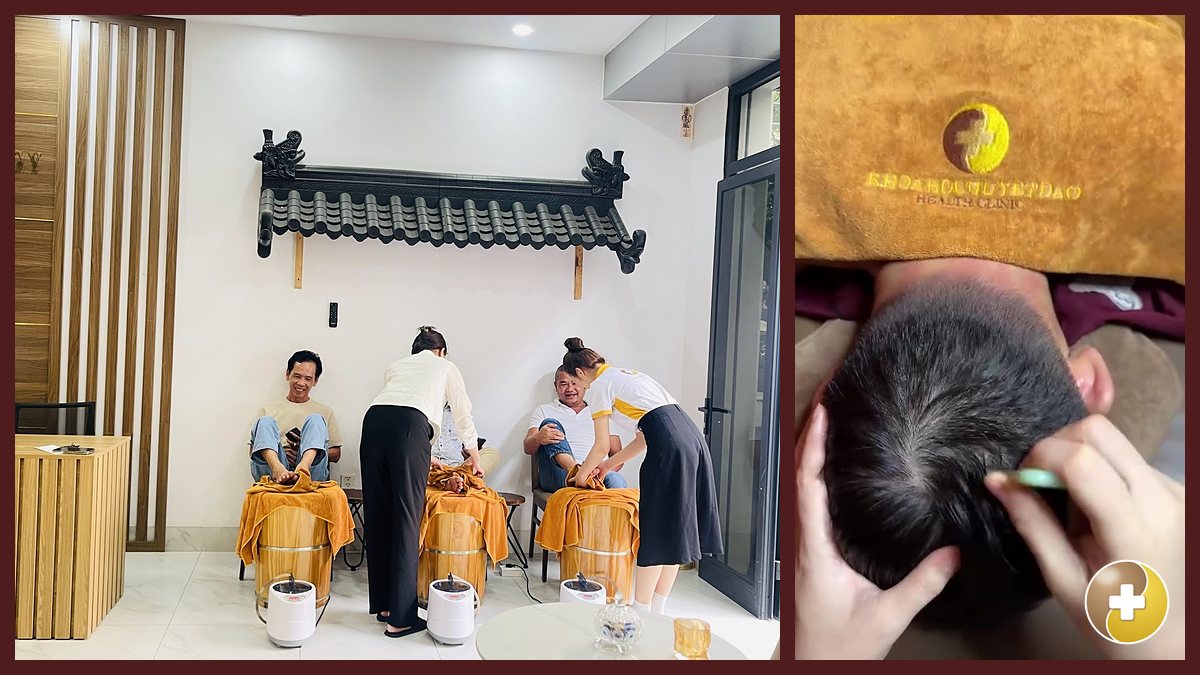
Quick answer: For sleep on rotating shifts, Tong Gia's course material uses Shenmen (HT7) and Neiguan (PC6) on the wrist, Baihui (GV20) on the crown and Yongquan (KI1) on the sole, pressed gently for 1–2 minutes with slow breathing. Skip Sanyinjiao (SP6) in pregnancy. Tong Gia Acupoint Wellness has two branches in Ho Chi Minh City.
Want Lương Y Tống Văn Huynh’s team to read your spine and posture in person?
Which acupressure points help you sleep on rotating shifts, and why is sleep so hard?
In Taoyuan, Hsinchu and Taichung, many electronics plants run three shifts: morning (早班), evening (中班) and the long night shift (大夜班) from midnight to morning. In Aichi, Shizuoka and Gunma, technical trainees and engineers work two- or three-shift rotations (交代勤務) that change every week or two. In Ansan, Gumi and Cheongju, factories often alternate day and night crews (주야 맞교대). From November the evenings in Japan and Korea get dark and cold early, and northern Taiwan turns damp and chilly with the winter monsoon. You switch from nights to days and lie awake at 11 p.m.; you switch back to nights and get home at 8 a.m. into bright sunshine, sleep two or three hours and wake up.
In Western terms this is about your body clock. A small cluster of cells in the brain, just above where the optic nerves cross (the suprachiasmatic nucleus), reads light from the eyes and sets the day and night rhythm for the whole body. As darkness falls, the pineal gland releases more melatonin, body temperature drops and you feel sleepy; towards morning cortisol rises to wake you. Rotating shifts ask the body to sleep when it is programmed to be awake and to stay alert when it wants rest. When trouble sleeping at sleep time and sleepiness at work time persist with a shift schedule, sleep specialists call it shift work sleep disorder. Daytime sleep after a night shift tends to be shorter, lighter and more broken.
So the honest answer to "which points should I press" has two parts. According to the Tong Gia course material, the points used to calm the mind and support sleep are Shenmen and Neiguan on the wrist, Baihui on the crown of the head and Yongquan on the sole; Taichong on the top of the foot is added when you feel tense and irritable, and Sanyinjiao on the lower leg when you are worn out (not in pregnancy). Pressing them helps you let go, slow your breathing and drift off more easily. Acupressure does not replace sleep or reset your body clock for you; it is one step in a wind-down routine that also covers light, timing and food, as explained below.
This guide is for Vietnamese working rotating shifts in Taiwan, Japan and Korea, and for anyone flying long-haul into Ho Chi Minh City with a body clock in pieces. If your main problem on night shifts is headache and tired eyes, read headache and eye strain from night shift work; this article is about sleep. For the bigger picture of the spine after a long flight, see our main guide on spine care after a long-haul flight.
Common causes: a body clock pulled back and forth
- Backward or fast rotations: jumping from nights straight to mornings with one day off in between. Sleep research suggests people adapt more easily when shifts rotate forward (morning → evening → night) and each block lasts long enough.
- Light at the wrong time: cycling home in morning sun after a night shift tells your brain it is daytime, just when you need to sleep. Bright white factory lights keep you alert at night.
- A noisy dorm: roommates on other shifts, traffic, washing machines, thin curtains.
- Coffee, energy drinks and milk tea late in the shift: caffeine is still in your blood for hours after you clock off.
- Alcohol as a sleep aid: soju in Korea, canned beer in Japan and Taiwan. It makes you drowsy at first but breaks up the second half of the night.
- Heavy late meals: instant noodles or fried food at 2 or 3 a.m. Tong Gia's material notes that a stomach working when the body needs rest makes reflux and poor sleep more likely.
- Phones in bed: video calls home and scrolling keep the brain switched on.
- Worry: money to send home, contracts, language, missing your children. Worry tightens the neck and shoulders and keeps the breath shallow.
- Catch-up sleep on days off that shifts the clock again before the next shift.
- The trip home: a 1–2 hour time difference, Saigon heat, family visits and late Tết nights. See also jet lag and sleep after flying to Vietnam.
Related signs worth noticing
- Lying awake for a long time with a racing mind, a pounding heart as you lie down, or jumping at small noises.
- Light sleep with many dreams, waking mid-sleep and struggling to get back to sleep, waking more tired than before.
- Heavy sleepiness mid-shift, nodding off at a machine or on the ride home.
- A stiff neck and tight hairline at the back of the head, teeth grinding at night, a sore jaw in the morning.
- Irritability, restlessness, a full feeling under the ribs, a bitter taste in the morning.
- Hot palms and soles at night, night sweats, a dry mouth.
- Poor appetite, bloating, forgetfulness, a pale face and lips.
- A tired lower back and knees, or getting up to pass urine at night.
For other reasons sleep goes wrong, see frequent insomnia: common causes.
When to see a doctor
Most shift-related sleep trouble eases as your schedule settles. With any of the following, please see a doctor at a medical facility and do not rely on acupressure or massage. The emergency number is 119 in Taiwan, Japan and Korea, and 115 in Vietnam.
- Chest pain or tightness spreading to the left arm, shoulder or jaw, breathlessness, cold sweats, or a racing heart with dizziness or fainting: call 119 or 115 now and do not massage.
- A drooping face, slurred speech, weakness or numbness on one side, loss of balance or sudden blurred vision: call an ambulance.
- Very loud snoring, pauses in breathing that someone else notices, waking up choking, morning headaches: get checked for sleep apnoea.
- Falling asleep while driving or operating machinery, or near misses: tell your supervisor and get checked rather than pushing on.
- Trouble sleeping most nights for more than three months that affects work and health.
- Low mood that will not lift, loss of interest, or thoughts of harming yourself: contact a health professional now or ask someone to take you.
- Unexplained weight loss, fevers or heavy sweats at night, a fast heartbeat at rest or shaky hands: get checked alongside any wellness care.
- If you take sleeping tablets or are followed for heart, blood pressure, thyroid or mood conditions, keep to what your health professional has advised.
- After the flight home, one calf swollen, warm and painful, or sudden breathlessness: this can be a clot; get checked and do not have your legs massaged.
In Japan, sleep problems usually go to 精神科 or 心療内科, or the company health office; in Korea to 정신건강의학과 or 신경과; in Taiwan to 身心科 or 精神科. Tong Gia does not read X-rays, CT or MRI scans and does not make medical plans; bring any results so staff know which areas to keep gentle. This is a wellness service, not medical care.
The Y Tướng Học view: the Heart houses the mind, the Liver stores blood
Y Tướng Học, the Vietnamese art of reading the body and face, rests on the idea that what is inside shows outside. Lương Y (traditional practitioner) Tống Văn Huynh, founder of Tong Gia Acupoint Wellness, organised this knowledge so staff look before they touch. For sleep, the course material checks the Heart (Tâm) and Liver (Can) first, then the Kidneys (Thận) and Spleen (Tỳ). These are concepts of traditional Eastern wellness, not Western disease names: "Heart" here does not mean you have heart disease.
The Heart houses the mind. The material describes the Heart as governing spirit, awareness, thinking and sleep; when it is weak, sleep is poor, dreams are many and memory slips. The Heart shows on the tongue and the face, so complexion and tongue colour are the first things to look at. With "Heart blood deficiency" people feel palpitations, startle easily, dream a lot and look pale; with "Heart yin deficiency" they feel restless, sweat at night and have hot palms and soles.
The Liver stores blood and keeps energy flowing. It is tied to anger and frustration. When it is out of balance the material lists irritability, muscle tension, cramps and poor sleep; Liver heat can stir Heart heat and make you restless. Shift workers pushed around by schedules often fit this picture.
Heart with Kidneys, Heart with Spleen. In this view, Heart fire should warm the Kidneys and Kidney water should cool the Heart; when they "do not meet", people sleep badly, feel palpitations and have tired lower backs and knees. Too much worry drains the Spleen and Heart blood, bringing palpitations, poor sleep and poor appetite.
Signs staff look for (for wellness care only, never fortune-telling): a pale face and lips; a red tongue tip or mouth ulcers; vertical lines and tight muscle between the eyebrows (the Ấn Đường area), linked in the material with sighing, worry and deep stress; a face broad at the forehead and narrow at the chin (the 甲 shape), described as "full above, empty below", with heat around C1–C2 and a cool, hollow lower back; a forehead corner that suddenly turns dull and grey, linked with Liver and Gallbladder heat, nightmares and dry eyes, and difficulty sleeping around 11 p.m.–1 a.m.; and a flat back of the skull, linked with very light sleep and deep tension at the base of the skull.
Spinal segments and nerve reflex areas linked to sleep
The Tong Gia material places long-term poor sleep in its nervous system group, worked through the neck (C1–C7), upper back (T1–T3) and sacral area, while the back points for the Heart, Liver and Kidneys lie along both sides of the spine.
| Segment | Nerves / function (anatomy) | What you feel when it is tense | Organ (Eastern view) | Typical outer sign |
|---|---|---|---|---|
| C1–C3 (base of skull) | Next to the brainstem; C2–C3 roots form the greater and lesser occipital nerves; suboccipital muscles hold the head | Tight back of the head, heavy head in bed, hard to relax into sleep | Kidney, Liver | Flat back of the skull; 甲-shaped face with warm C1–C2 |
| C4–C7 | Cervical and brachial plexus; the phrenic nerve (C3–C5) drives breathing | Stiff shoulders, shallow breathing, numb arm when lying on your side | Liver (tendons) | Knitted brows, hard shoulder muscles |
| T1–T3 | Upper thoracic nerves; upper sympathetic chain linked with heart and lungs | Palpitations when lying down, mild chest tightness, sighing | Heart, Lung | Vertical lines between the brows |
| T4–T5 (Jueyinshu, Xinshu) | Intercostal nerves 4–5; sympathetic fibres to the heart | Restlessness, startling, vivid dreams | Heart, Pericardium | Pale or flushed face, red tongue tip |
| T9 (Ganshu area) | Mid thoracic sympathetic chain and splanchnic nerves to liver, gallbladder, stomach | Irritability, fullness under the ribs, bitter mouth, waking around midnight | Liver, Gallbladder | Dull forehead corners |
| L2 (Shenshu, Mingmen) | Lumbar sympathetic chain; area near the kidneys | Tired lower back and knees, night urination breaking sleep | Kidney | Thin ears, cool hollow lower back |
| Sacral (S2–S4) | Sacral parasympathetic outflow to bladder and lower bowel | Night urination, heavy lower belly, whole body slow to relax | Kidney | Soft, cool tissue over the lower back and hips |
The autonomic nervous system has two branches: the sympathetic side (leaving the spinal cord in the chest and lumbar segments) speeds the heart and tenses muscles, while the parasympathetic side (from the brainstem and sacrum) slows the heart and supports digestion and rest. When the muscles along the spine stay tight for weeks, many people find it hard to "power down". When those areas are released, people often breathe more deeply, feel warmer and get sleepy, though this varies from person to person.
Points to press before sleep, from the Tong Gia course
Only points listed in the Tong Gia material with calming, sleep-supporting effects are included. Sit or lie comfortably, breathe slowly in a 4–6 pattern (in through the nose for about 4 seconds, out slowly for about 6), and use the pad of your thumb in small slow circles with light to medium pressure. A mild ache is enough; it does not need to hurt.
| Point | Location (course material) | Traditional use | How long | Caution |
|---|---|---|---|---|
| Shenmen (HT7) | On the wrist crease, in the hollow beside the tendon on the little-finger side | Calms the mind, supports sleep, eases palpitations | 1–2 minutes each side before bed, with slow breathing | Keep the wrist relaxed |
| Neiguan (PC6) | 2 cun above the wrist crease, between the two central tendons | Tension, mild palpitations, nausea | 1–2 minutes each side when restless or after a shift | Chest pain needs a check-up, not pressing |
| Baihui (GV20) | Top of the head, where the midline meets the line joining the tops of the ears | Clears the head, calms, eases tension | About 1 minute, very light circles | Not during a severe headache |
| Yongquan (KI1) | The hollow in the front third of the sole when you curl your toes | Draws heat downward, calms, eases sleep | Rub each sole 3–5 minutes in the evening | Nice after a warm foot soak |
| Taichong (LR3) | Top of the foot, in the groove between the big and second toes, towards the ankle | Eases tension, irritability, poor sleep | About 1 minute each side | Often tender, keep pressure moderate |
| Sanyinjiao (SP6) | 3 cun above the tip of the inner ankle bone, just behind the shin bone | Meeting point of Spleen, Liver and Kidney channels: fatigue, poor sleep | About 1 minute each side | Not in pregnancy |
A "cun" is a body-relative measure: roughly the width of your own thumb joint, while four fingers held together are about 3 cun. The right spot usually feels slightly hollow and a little tender.
A 10-minute routine after your shift
- A warm shower or a 15–20 minute warm foot soak (the material suggests about 38–42°C; people with diabetes should test the water carefully).
- Sit on the bed and breathe 4–6 for 2–3 minutes.
- Press Neiguan, then Shenmen, 1–2 minutes each side.
- Rub Yongquan 3–5 minutes per foot; add Taichong if you feel wound up.
- Lie down, circle Baihui very lightly for a minute, switch off the light and put the phone away from the bed.
For more self-care, read self-acupressure at home for Vietnamese living abroad and the Q&A on acupressure for sleep in Saigon.
Want Lương Y Tống Văn Huynh’s team to read your spine and posture in person?
Who should not press, and how to stay safe
- Pregnancy, or possible pregnancy: skip Sanyinjiao; the material also says Hegu (LI4, on the back of the hand between thumb and index finger) is not used in pregnancy, and the belly is not pressed. Keep to slow breathing and light wrist work, and ask your antenatal team first.
- Blood thinners: you bruise easily; use light pressure only and avoid bruised areas.
- Heart disease, stents or a pacemaker: ask the people who follow your heart before pressing points or having massage.
- High blood pressure: acupressure is for relaxation only and never a reason to change what you have been prescribed; see massage with high blood pressure.
- Broken, inflamed or rashy skin, varicose veins, or a hot swollen area over a point: leave that point out.
- Fever, straight after alcohol or a big meal: rest first.
- Diabetes: test foot-soak water by hand or thermometer, as feet may not sense heat well.
Do not press until it bruises; 1–2 minutes per point is enough; stop if you feel dizzy, chest tightness or discomfort.
How Tong Gia helps rebalance sleep when you are in Ho Chi Minh City
Every session follows the spinal nerve reflex balancing massage developed by Lương Y Tống Văn Huynh, a Vietnamese Đông y method built over more than 13 years of practice in traditional wellness, Y Tướng Học and spinal reflex balancing. The aim is to help rebalance the neck, upper back and, in Eastern terms, the Heart and Liver, using the hands only.
- Talk and observe: your shift pattern, how often it rotates, how long you sleep, coffee, snoring, night urination, palpitations; pregnancy and blood thinners. Then face, tongue, the area between the brows, forehead corners and back of the skull.
- Reading the spine by hand: C1–C7, T1–T12 down to the sacrum, checking skin temperature, muscle padding, vertebral shape and sensation, comparing left with right and top with bottom; warm, tight, sore areas get the work.
- Muscle release: suboccipitals, trapezius and the muscles along T1–T5 and the Ganshu area, building pressure gradually through five levels; for poor sleep the material describes a vibration technique that creates relaxing waves.
- Targeted acupressure: Jueyinshu and Xinshu on the back; Neiguan, Jianshi and Shenmen on the wrist; Taichong for tension, Sanyinjiao for fatigue (not in pregnancy); finishing with Baihui.
- Self-care coaching: the exact points from the table above, slow breathing and planning sleep for your next rotation.
Many people feel tenderness at the back of the head and along the upper back, where muscles are tight. As they soften, breathing slows and some guests fall asleep on the table. Some sleep a long night afterwards; others need a few sessions to feel lighter. Results vary with each body and years of shift work; Tong Gia does not promise better sleep after one session.
Suitable services and prices
- Head care, 60 minutes: 750,000 VND (about 29 USD). For trouble falling asleep, a tight back of the head, a mind that will not switch off.
- Heart nourishing care, 75 minutes: 750,000 VND (about 29 USD). Follows the material's calming approach; for vivid dreams, palpitations and startling once warning signs have been ruled out.
- Hair wash with neck and shoulder massage, 60 minutes: 250,000 VND (about 10 USD). A light option the day after landing or between family visits.
Prices use a reference rate of 1 USD ≈ 26,000 VND; payment is in VND. See the full price list or the sleep acupressure page.
From Tân Sơn Nhất Airport to a branch
The District 12 branch (225 Dương Thị Mười, Phường Tân Chánh Hiệp) is north of the airport and usually a short ride, depending on traffic. The Vinhomes Grand Park branch (Căn T16-21 khu Manhattan, Phường Long Bình, TP. Thủ Đức) is further and takes longer, especially in the evening rush. See massage near Tân Sơn Nhất Airport.
A suggested plan for your trip home, and sleep habits for rotating shifts
Direct flights to Tân Sơn Nhất take about 3–4 hours from Taiwan, about 6 hours from Japan and 5–6 hours from Korea. Vietnam is 1 hour behind Taiwan and 2 hours behind Japan and Korea, so the real challenge is a body clock that may still be on nights.
| When | What sleep needs | What to do |
|---|---|---|
| 1–2 weeks before | No build-up of fatigue | Message to book; ask for a few day shifts if possible |
| Last night shift | Shift toward daytime | Short 3–4 hour sleep after work, up in the afternoon, early night |
| Flight day | Sleep on Vietnam time | Sip water, less coffee, press Shenmen when you want to doze |
| Arrival day | Re-anchor day and night | Morning daylight the next day, a light dinner, bed before 11 p.m. |
| Day 2–3 | Release head, neck and upper back | Head care 60 minutes or heart nourishing care 75 minutes |
| Family visits and Tết | No run of late nights | Less alcohol, regular bedtime, 15–30 minute naps |
| 2–3 days before flying back | Ready for the first rotation | If nights come first, go to bed about an hour later each night; read preparing your body before the long flight back |
- Keep an anchor sleep: a fixed block of about 4 hours you sleep on every type of shift, topping up the rest flexibly.
- Manage light: sunglasses on the way home after nights, blackout curtains or an eye mask, bright light when you get up.
- A dark, cool, quiet room: earplugs, notifications off, your sleep times on the door for roommates.
- Coffee only in the first half of the shift; no alcohol to get to sleep.
- A light meal mid-shift, not a heavy one right before bed.
- A 20–30 minute nap before a night shift if you can.
- About 30 minutes of walking or stretching a day, not hard exercise right before sleep.
- Ask about forward rotation (morning → evening → night) if your team can choose.
Book from Taiwan, Japan or Korea before you fly
Call, Zalo or WhatsApp +84 888 264 559 (0888 264 559 in Vietnam) with your landing date and time at Tân Sơn Nhất, what bothers you (back of the head, neck, upper back, trouble falling asleep, vivid dreams) and which branch you prefer. Mention your shift pattern so staff can suggest the right session. You can also book online or read how to book a massage in Saigon from abroad.
- District 12 branch: 225 Dương Thị Mười, Phường Tân Chánh Hiệp (Tan Chanh Hiep Ward), Ho Chi Minh City. Open 8:00–19:00 daily (9:00–20:00 Taiwan time, 10:00–21:00 Japan and Korea time).
- Vinhomes Grand Park branch: Căn T16-21 khu Manhattan, Vinhomes Grand Park, Phường Long Bình, TP. Thủ Đức (Thu Duc City). Open 9:00–20:00 daily (10:00–21:00 Taiwan time, 11:00–22:00 Japan and Korea time).
Slots fill up before Tết, so message early. Real customer reviews are on Google Maps on each branch page.
Visit us
- Đông Y Huyệt Đạo Tống Gia Quận 12 (District 12)
225 Dương Thị Mười, Phường Tân Chánh Hiệp, Quận 12, HCMC · 8:00–19:00 daily · 0888 264 559 · Directions on Google Maps - Đông Y Huyệt Đạo Tống Gia Quận 9 (Vinhomes Grand Park, District 9)
Căn T16-21 khu Manhattan, Vinhomes Grand Park, Phường Long Bình, TP. Thủ Đức, HCMC · 9:00–20:00 daily · 0888 264 559 · Directions on Google Maps
Map of our two branches
Want Lương Y Tống Văn Huynh’s team to read your spine and posture in person?
Related guides for your trip
- Fatigue from cleanroom suits on long shifts: heat, heavy shoulders and back, dry skin in chip plants
- How to describe back pain in Japanese, Korean and Chinese: hospital phrases, warning signs and care in Saigon
- Massage chair at home vs hands-on massage: an honest comparison for long-haul visitors in Saigon
FAQ
Which acupressure points help you sleep on rotating shifts? The Tong Gia course material uses Shenmen and Neiguan on the wrist, Baihui on the crown and Yongquan on the sole; Taichong when you feel tense and Sanyinjiao when worn out (not in pregnancy). Press each gently for 1–2 minutes with slow breathing, after dimming the lights and putting your phone away.
I work nights in Taoyuan or Taichung and cannot sleep in the morning. What helps? Wear sunglasses on the way home, eat lightly, take a warm shower, use blackout curtains, an eye mask and earplugs. Aim for one long sleep rather than several short ones, at the same time every night-shift week. Press Shenmen and rub Yongquan before lying down, and keep coffee to the first half of your shift.
Is it safe to press acupoints for sleep by yourself? Gentle pressure on these points is generally fine for healthy adults. Take care if you are pregnant (skip Sanyinjiao and Hegu), take blood thinners, have heart disease, a stent or pacemaker, or broken skin over the point. Never press until it bruises, and stop if you feel dizzy or chest tightness.
How long does it take to adjust to rotating shifts in Aichi or Ansan? It depends on the person and the rotation. Forward rotations (morning, evening, night) with longer blocks are usually easier than backward or constant changes. Many people never sleep deeply on shifts; an anchor sleep, managing light and regular meals help. If poor sleep lasts more than three months, see a doctor.
Does alcohol help you sleep after a night shift? No. Alcohol makes you drowsy at first but breaks up the second half of sleep, so you wake thirsty and more tired. A warm foot soak, 4–6 breathing and pressing Shenmen are kinder options. Use sleeping tablets only on a health professional's advice.
Can massage help me sleep better while I am in Vietnam? Massage relaxes the neck, shoulders and upper back and slows your breathing, so many people sleep more easily afterwards, but responses vary and it does not replace fixing your schedule. At Tong Gia Acupoint Wellness in District 12 or Vinhomes Grand Park you can book 60 minute head care for 750,000 VND (about 29 USD).
Author: Lương Y Tống Văn Huynh – founder of Huyệt Đạo Tống Gia, a master of traditional Vietnamese wellness with over 13 years in Eastern wellness care, Y Tướng Học (face reading) and spinal nerve-reflex balancing massage.
Updated: 2026-11-16
Related guides
- Acupressure points for sleep on rotating shifts: which points to press, how to press safely, and sleep habits
- Red-eye flight from Vietnam to Australia: why a small time difference still drains you, and how to prepare
- US–Vietnam time difference: hours by time zone and a 5–7 day jet lag plan for Texas and Florida
- Poor sleep and back ache caring for grandchildren: a guide for grandmothers in Australia and their families
This is a wellness service, not medical care.