
Massage after knee replacement: is it safe on a trip to Vietnam, which areas can be worked and what to avoid
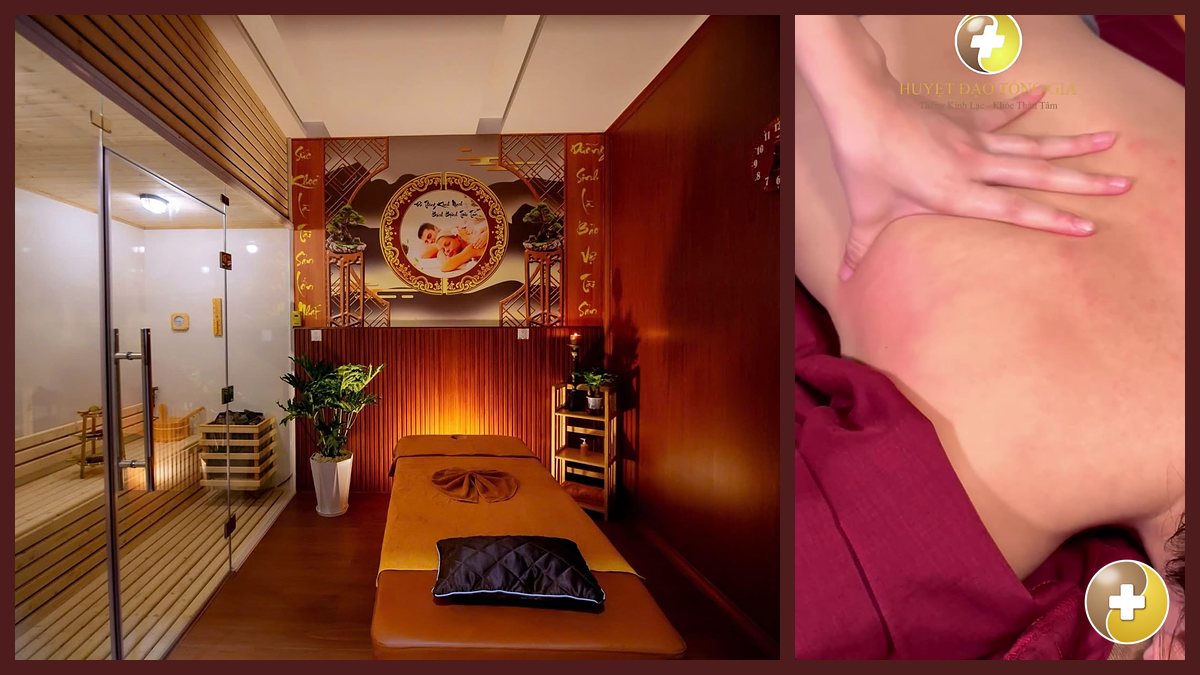
Quick answer: After a knee replacement, massage on a trip to Vietnam is usually possible, but never on the operated knee or the scar, and how soon after surgery is a question for your surgical team. Tong Gia Acupoint Wellness in District 12 and Vinhomes Grand Park, Ho Chi Minh City, gently works only the back, neck and the other leg.
Want Lương Y Tống Văn Huynh’s team to read your spine and posture in person?
Massage after knee replacement: is it safe?
The short answer: usually yes, with conditions. The operated knee and its scar are left alone, and the timing is not ours to decide. How many weeks or months after surgery you can have massage, and on which areas, is a question for the surgeon and team who operated on you and are following your new joint, because every operation, every wound and every body is different. What a safe wellness session can do is look after the parts that have been working overtime for the knee: the lower back, the neck and shoulders, the arms, and the other leg, with light pressure and a comfortable position.
In Western medical terms, a knee replacement (total or partial) swaps the worn joint surfaces at the lower end of the thigh bone and the top of the shin bone for metal components with a medical-grade plastic spacer between them; sometimes the back of the kneecap is resurfaced too. The new joint has no natural cartilage, but everything around it is still yours: the skin and the scar down the front of the knee, the joint capsule, the quadriceps, and the tendons and ligaments that were kept. After surgery these tissues need time for the wound to close, for swelling to settle and for the thigh muscles to regain strength through the exercises your rehabilitation team prescribes. A hip replacement follows the same logic, with a different site and its own list of positions to avoid.
The people asking are often Vietnamese families in the United States, Australia and Canada, in San Jose, Houston or Orange County, in Sydney or Melbourne, in Toronto, Montreal or Vancouver, and plenty of other long-haul visitors in their sixties and seventies. One knee, both knees, sometimes a hip as well, and now a trip to Ho Chi Minh City for Tet, family or a whole winter in the sun. From North America the journey almost always involves a connection and can take close to a full day; from Sydney and Melbourne there are direct flights of roughly 8–9 hours. Just as the northern winter sets in, Saigon enters its dry season at 32–34°C.
On arrival, what aches most is rarely the new knee. It is the lower back after hours in an airline seat with one leg stretched awkwardly, a stiff neck and shoulders from pulling a suitcase and using a cane, and the other leg, which carried most of the weight for months before and after surgery. Family members in the city want to take their parents for a massage, and everyone worries about the same things: will anyone touch the implant, is it safe, what should we tell them first. This guide goes through it in that order, safety first, comfort second.
It is part of the Tong Gia Acupoint Wellness (Huyệt Đạo Tống Gia) programme for overseas Vietnamese and long-haul visitors. For the neck and back after a long flight, see the main guide, spine care after a long-haul flight; if you are planning the trip with your parents, read taking elderly parents back to Vietnam.
Why the back and legs ache after a knee replacement trip
- A long flight with a knee that does not bend fully. Many people sit with the leg pushed into the aisle, twisted at the hip. The lower back and the opposite hip brace for the whole flight.
- The other leg doing the work. In the painful months before surgery and the first weeks after, weight shifts to the good leg. Its thigh, calf, knee and hip often ache, and sometimes that knee starts to complain too; see knee pain from cold winters to tropical heat.
- A changed walk. A slight limp, a cane, crutches or a walker load one shoulder, wrist and side of the back.
- A weaker thigh on the operated side. The quadriceps usually lose strength after surgery, so long walks tire the knee. Rebuilding that strength is the job of your prescribed exercises; massage does not replace it.
- Climate and jet lag. Short sleep, heavy sweating, too little water and long hours in air-conditioning make muscles tighten and cramp at night.
- Vietnamese homes and habits. Steep, narrow stairs in tube houses, low plastic stools, family meals on a floor mat, climbing onto a motorbike: deep knee bends that many people with a new joint are told to avoid or do very carefully.
- A busy holiday calendar. Several family visits a day, long hours standing in the kitchen, long sit-down meals, little time with the legs up.
- Clot risk. Lower-limb surgery and long-haul flights both raise the risk of deep vein thrombosis, which is why many people are given blood thinners for a while after surgery, or compression stockings and advice to walk the aisle. It is also why anyone touching the legs of a recently operated person must ask first.
Signs worth noting
| Area / sign | Common, other areas can be cared for | Check with your surgical team first | Get checked straight away |
|---|---|---|---|
| Replaced knee | Some morning stiffness, aching after walking, mild swelling by evening that settles with the leg raised | Clearly more swelling than at home, less bend, pain slowly increasing | Large, hot, red swelling, pain rising fast, cannot bear weight |
| Scar | Closed, dry, not red; skin around it a little numb | Still dressed, stitches or staples in place, scabs, a red margin | Oozing, pus, edges opening, spreading redness |
| Whole body | Tired after the flight, jet lag, poor sleep for a few nights | On blood thinners, bruising easily, dose recently changed | Fever, chills, unusual drowsiness |
| Calves and feet | Both calves a little tight after the flight, easing with walking; mild ankle puffiness by evening | Ankle swelling lasting days and not settling with the legs up | One calf swollen, warm, red and painful, worse on walking |
| Breathing, chest | Normal | More breathless on stairs than usual | Sudden breathlessness, chest pain, coughing blood: call 115 |
Alongside the knee, people often notice a one-sided lower-back ache after sitting with the leg stretched out, a tight shoulder and wrist on the cane side, an aching knee or hip on the good side, night calf cramps in the heat, and puffy feet after the flight, covered in swollen legs after a long flight.
When to see a doctor
With a replaced knee or hip, any of the following means no massage: see a doctor at a medical facility or call the hospital that operated on you.
- The replaced knee or hip becomes swollen, hot and red, with rising pain, especially with fever or chills. Joint implants can become infected, even months after surgery. Get checked the same day; no massage, no heat.
- The wound oozes, discharges pus or opens, or redness around the scar spreads.
- One calf is swollen, warm, red and painful, worse when walking or pulling the toes up, especially in the weeks after surgery and after a long flight: think of deep vein thrombosis. Get checked immediately and do not massage that leg.
- Sudden breathlessness, chest pain, coughing blood, a racing heart or fainting, or crushing chest pain with shortness of breath and cold sweats: call 115 (Vietnam's ambulance number) at once.
- A fall on the stairs, in the bathroom or getting out of a car, followed by pain, swelling, a leg that looks shorter or turned, or not being able to stand.
- Clunking, a loose or dislocated feeling, or a knee that suddenly will not bend as before.
- Numbness or weakness of the whole leg, bladder changes, or pain running from the lower back into the leg with weakness.
- Unusual bruising, bleeding gums or nosebleeds while on blood thinners.
When booking, tell reception which joint was replaced and on which side, the date of surgery, any positions you were told to avoid, whether you take blood thinners, and other conditions. At Tong Gia, practitioners go through these signs again before touching you and stop if any are present. Tong Gia does not read X-rays, MRI scans or surgical reports and does not draw up medical plans; when each area may be massaged after surgery is decided by the team that operated.
This is a wellness service, not medical care.
The Y Tướng Học view: Kidney governs bone, Liver the sinews, Spleen the muscles
The implant is the business of your surgeon and Western surgical care. The person carrying it still has their own constitution, and Eastern wellness reads bone, tendon and muscle health through three organ systems. In the Tong Gia curriculum the Kidney (Thận) is a functional system linked to essence, bone and marrow, water, ears, hair, teeth and the lower back and knees; it belongs to Water and to winter. The curriculum says "the Kidney governs the bones and produces marrow", and lists an aching lower back and tired, weak knees that tire quickly when standing among the signs of reduced Kidney function. The "Kidney Yang deficiency" pattern adds feeling the cold, cold hands and feet and a cold, achy back and knees.
The Liver (Can) is summed up as "the Liver governs the sinews": it nourishes tendons and ligaments; when strong, tendons stay supple and joints mobile, and when weak there is stiffness, cramping and lost flexibility. The Spleen (Tỳ) governs muscle and the limbs: weak thighs and heavy, tired legs after weeks of little walking are its signal. This is the functional language of Eastern wellness, not a statement that your kidneys or liver are ill, and not an explanation of why a joint needed replacing.
Y Tướng Học, the Vietnamese art of reading face and body for wellness, says "signs show outside, organs live inside". Lương Y Tống Văn Huynh, a Vietnamese master of traditional wellness and founder of Tong Gia, systematised it so practitioners look first and then decide whether to work gently or deeper and where to bring warmth. For older people after joint surgery the curriculum notes:
- Kidney signs: ears, hair, bones, lower back. Signals: tired knees, a cold lower back, ringing ears, thinning hair, forgetfulness.
- Thin, soft ear rims and a flat bone behind the ear: linked with an aching back and weak knees, feeling the cold, early ageing of bones and joints and deep aches when seasons change.
- "More bone than flesh" (very lean, prominent cheekbones): a pattern of Liver–Kidney Yin deficiency, with early joint wear and tight tendons.
- The "Mục" face (long, narrow, lean): weak energy and blood, slack muscles, thin muscles along the spine. For this kind of back the curriculum prescribes the "tonifying" techniques, gentle vibration and light kneading, exactly the light touch an older person after surgery needs.
These are hints about where and how gently to work, never conclusions about health or judgements of anyone.
Spine segments and nerve-reflex zones involved
Tong Gia's course on balancing the spinal nerve-reflex system places the muscle–bone–joint group in zones C5–C7, L1–L5 and S1–S5. In Western anatomy, roots L2–L4 form the femoral nerve (quadriceps, front of the thigh, inner knee and shin) and L4–S3 join the sciatic nerve (hamstrings, calves); C5–C7 feed the brachial plexus to the shoulder, arm and wrist, which work hard on a cane. With a replaced joint, reading the spine is never about the implant; it is about releasing the back, buttock and shoulder muscles that have been compensating.
| Vertebrae | Nerve / function (Western anatomy) | What shows up after surgery and the flight | Organ | Outer signs (Y Tướng Học) |
|---|---|---|---|---|
| C5–C7 | Brachial plexus roots; shoulder, arm, wrist | Tight shoulder and wrist on the cane side, stiff neck from luggage | Liver (sinews) | Tight neck, thin brittle nails, cramps |
| D9–D10 | Mid to lower thoracic roots; long back muscles; Can du (BL18) | Mid-back braced from an uneven walk, tight leg tendons | Liver | Dry tired eyes, tight tendons |
| D11–D12, L1 | Lower thoracic and upper lumbar roots; lower back, abdominal wall; Tỳ du (BL20) | Weak thighs, heavy legs, low appetite, sluggishness | Spleen (muscle, limbs) | Pale lips, slack muscles |
| L2–L4 | Femoral and obturator nerve roots; Thận du (BL23), Mệnh môn (GV4) at L2 | Cold, achy lower back, tired front thighs, one-sided ache after sitting with a leg stretched out | Kidney (bone, back and knees) | Thin soft ear rims, cold lower back |
| L5–S1 | Sciatic nerve roots; buttocks, hamstrings, calves | Tight buttock, thigh and calf on the good side; night cramps | Kidney–Bladder, Liver | Cold skin on the lower back, hard calves |
The table shows related zones to guide care, not to label illness. Questions about the implant or your post-operative scans belong with your surgical team.
The Tong Gia method: other areas, light pressure, hands off the surgical site
The method was developed by Lương Y Tống Văn Huynh over more than 13 years of Vietnamese Eastern wellness, Y Tướng Học and spinal nerve-reflex balancing, a Vietnamese traditional approach worth experiencing while you are in Ho Chi Minh City. A core rule of the Tong Gia curriculum is that this knowledge is for care and relaxation, never a substitute for a medical check, and that practitioners stop at any warning sign. A session for someone with a replaced joint runs like this:
- Safety screening: which joint and side, the surgery date, which areas your surgical team has cleared, whether the wound has closed, blood thinners and bruising, blood pressure, diabetes, heart conditions, positions to avoid. The curriculum requires asking about clotting problems and blood thinners before any work.
- Observation by Y Tướng Học: complexion, ear rims, lips, nails, posture, gait and how you use the cane, to see which side is carrying the load.
- A safe position: nobody is pushed to lie face down if it is awkward; side-lying on the good side, lying on the back with a cushion, or sitting all work. The operated knee or hip is never bent, twisted or stretched, and hip precautions are respected.
- Reading the spine by hand: light pressing, stroking and rolling to sense skin temperature, the muscle layer, the shape of the spine and your feedback, comparing both sides.
- Light release of other areas: neck, shoulders and the cane-side arm and wrist; mid and lower back, buttocks; thigh and calf of the good leg. The curriculum notes that people on blood thinners bruise and bleed easily, so pressure stays light and bruised areas are avoided. For thin, slack muscles the "tonifying" techniques are used: gentle vibration and light kneading. On the operated leg: nothing on the scar or around the knee; the "screw compression" technique the course uses for knees and hips is not applied to replaced joints.
- Acupressure, moderate pressure: Can du (BL18), Tỳ du (BL20), Thận du (BL23, described as strengthening the back and knees) and Mệnh môn (GV4, warming a cold, tired back) on the back; Túc tam lý (ST36), Thái khê (KI3) and Dũng tuyền (KI1) on the good leg and foot only. No points and no heat on the operated leg.
- Self-care tips: sitting and standing in a Vietnamese home, keeping the back warm under the air-con, a few points to press yourself, and a reminder to keep up your prescribed exercises.
What a typical session looks like: usually a family member messages first with the side and date of surgery. At the branch, the practitioner repeats the safety questions, looks at the scar from a distance without touching it, and lets you choose a comfortable position. Work starts at the neck and upper back, moves to the lower back and the buttock of the good side, then to the thigh, calf and sole of the good leg. The operated leg stays covered with a towel. At the end you are helped to sit up slowly and stand without hurrying.
Suitable services (prices in VND; approximate conversions at a reference rate of 1 USD ≈ 26,000₫, 1 AUD ≈ 17,000₫, 1 CAD ≈ 19,000₫; payment in VND; see prices):
- Lower back care, 60 min: 550,000₫, first visit 399,000₫ (about 21 USD, 32 AUD or 29 CAD; first visit about 15 USD, 23 AUD or 21 CAD). For a one-sided ache after the flight and a tight buttock and hip on the good side.
- Vietnamese traditional massage, 60 min: 450,000₫ (about 17 USD, 26 AUD or 24 CAD). Gentle whole-body work that skips the surgical area: neck, arms, back and the good leg.
- Herbal hair wash with neck and shoulder massage, 60 min: 250,000₫ (about 10 USD, 15 AUD or 13 CAD). Head, neck and shoulders only; ideal if your legs have not yet been cleared for massage.
From the airport: the District 12 branch is in the same northern part of the city as Tan Son Nhat (Tân Sơn Nhất) airport, not a long drive, though timing depends on traffic. The Vinhomes Grand Park branch in Thu Duc City is further and takes longer, especially at rush hour; it suits families staying in Thu Duc or the east of the city. With a new joint, take a car rather than a motorbike so you can stretch the leg, and rest on arrival day.
What you will feel: the neck and lower back warm up and the overworked muscles of the good side let go; at a few tight points there is a mild, pleasant ache, which the course calls a "sensation wave". Many older guests doze off. Afterwards the back often feels lighter, standing up is easier and sleep comes more readily, though this varies from person to person. Tong Gia makes no promise that pain will go and does nothing to the implant; your rehabilitation exercises still do the main work.
Want Lương Y Tống Văn Huynh’s team to read your spine and posture in person?
A suggested plan for the trip, plus self-care
A rough plan for 2–4 weeks in Ho Chi Minh City with a replaced knee or hip; anything involving the operated joint follows your surgical team's advice. Before flying home, read preparing your body before a long flight.
| When | What to do | Notes |
|---|---|---|
| Before booking flights | Ask your surgical team: are you cleared for long-haul, do you need blood thinners or compression stockings, when can which areas be massaged | Carry your surgical paperwork; implants can set off airport security scanners |
| On the plane | An aisle seat; stand and walk every 1–2 hours; flex the feet while seated | Drink water steadily; keep the legroom clear |
| Arrival day | Rest, short walks indoors, a warm shower, sleep on local time | No massage yet; check both calves and the scar |
| Days 2–3 | One lower back session or a hair wash with neck massage, light pressure, operated leg left alone | Remind the practitioner of the surgery date and blood thinners |
| Weeks 1–2 | Keep up the daily exercises; short walks early morning or late afternoon | Avoid very low stools, squatting, floor mats and motorbikes |
| Weeks 2–4 | One session a week if the back, shoulders or good leg still ache | Fewer long hours standing at Tet; put your feet up between visits |
| 1–2 days before flying home | A gentle back and shoulder session; sleep and water | Recheck your advice on blood thinners and stockings for the return flight |
- Keep your exercises going: the knee-bending and thigh exercises from your rehabilitation team matter more than anything else; a holiday is no reason to stop.
- Ask for a proper chair: a chair with armrests rather than a low plastic stool; push up through the armrests and the good leg.
- Stairs: follow the method you were taught, commonly up with the good leg first and down with the operated leg first, holding the rail; if unsure, ask your surgical team.
- Warm back under the air-con: around 26–27°C with the airflow away from you.
- Gentle self-pressure on the good foot only: rub Dũng tuyền on the sole and press Thái khê by the inner ankle for 1–2 minutes each; no pressing or heat on the operated leg.
If your parent also has high blood pressure, see massage with high blood pressure.
Booking from abroad before you fly
- District 12: 225 Dương Thị Mười, Phường Tân Chánh Hiệp (Tan Chanh Hiep ward, District 12), 8:00–19:00 daily.
- Vinhomes Grand Park: Căn T16-21 khu Manhattan, Phường Long Bình, TP. Thủ Đức (unit T16-21, Manhattan area, Long Binh ward, Thu Duc City, formerly District 9), 9:00–20:00 daily.
You can book from San Jose, Houston, Sydney, Melbourne or Toronto before you travel: WhatsApp or Zalo +84 888 264 559 (0888 264 559 in Vietnam), or use online booking. Send your landing date and time, which joint was replaced and on which side, the surgery date, positions you must avoid, whether you take blood thinners, where you ache, and your preferred branch. Reception notes it all so the practitioner can prepare. Family in Ho Chi Minh City can book for you; slots fill quickly before Tet.
Visit us
- Đông Y Huyệt Đạo Tống Gia Quận 12 (District 12)
225 Dương Thị Mười, Phường Tân Chánh Hiệp, Quận 12, HCMC · 8:00–19:00 daily · 0888 264 559 · Directions on Google Maps - Đông Y Huyệt Đạo Tống Gia Quận 9 (Vinhomes Grand Park, District 9)
Căn T16-21 khu Manhattan, Vinhomes Grand Park, Phường Long Bình, TP. Thủ Đức, HCMC · 9:00–20:00 daily · 0888 264 559 · Directions on Google Maps
Map of our two branches
Want Lương Y Tống Văn Huynh’s team to read your spine and posture in person?
What guests say on Google Maps
“…stopped by to try it: nice rooms, the master gave a very in-depth and detailed consultation, and the technicians are highly skilled…” (translated from a Vietnamese review)
— Quang H., Google Maps review · District 12 branch · 07/2026 · See on Google Maps
“I came and tried it, and the staff cared for me wholeheartedly… I will recommend this place to friends.” (translated from a Vietnamese review)
— Nhung N., Google Maps review · District 12 branch · 2023 · See on Google Maps
Quoted from public reviews, shortened where marked (…). Experiences vary from person to person; reviews are not a substitute for seeing a doctor when something feels wrong.
Related guides for your trip
- Can you get a massage after a heart stent? Who to ask first, how gentle it should be and when to call 115
- Sonographers abroad with shoulder and wrist pain: shoulder, forearm and neck care in Ho Chi Minh City
- Supermarket cashiers abroad, scanning all shift: wrist and one-sided shoulder pain, and care in Vietnam
FAQ
Is massage after knee replacement safe when visiting Vietnam? Usually, provided the operated knee and scar are left alone and your surgical team has said when massage is fine. Tong Gia works only the back, neck, arms and the other leg with light pressure, after safety questions. Warning signs such as a hot, swollen knee or a painful calf mean a medical check, not massage.
How long after knee replacement surgery can I have a massage? There is no single number. It depends on whether the wound has closed, how much swelling is left, blood thinners and the type of surgery. Ask the team that operated: which areas, from when. Until then a head, neck and shoulder session may still be possible if they agree.
Can massage loosen or damage the implant? At Tong Gia the replaced knee or hip is never massaged, bent or stretched; that leg is left alone and covered. Only the compensating areas are worked. Questions about the implant itself belong with your surgeon; Tong Gia does not read X-rays or scans.
I am on blood thinners after surgery. Can I still book? Tell reception when booking. The Tong Gia curriculum notes that people on blood thinners bruise and bleed easily, so only light pressure is used and bruised areas are avoided. Unusual bruising, bleeding gums or nosebleeds mean no massage and a medical check.
My mother flew in from Toronto after a knee replacement and one calf is swollen and sore. What now? A swollen, warm, red, painful calf after surgery and a long flight can be deep vein thrombosis. Take her to be checked straight away and do not massage that leg. If she is short of breath or has chest pain, call 115.
What should I tell you when booking for my father, who had a hip replacement in Houston? Message +84 888 264 559 on WhatsApp or Zalo with the landing date, which hip and when it was operated, positions he must avoid, blood thinners, other conditions, where he aches and the branch you prefer. Reception notes it so the practitioner can choose a safe position.
Author: Lương Y Tống Văn Huynh – founder of Huyệt Đạo Tống Gia, a master of traditional Vietnamese wellness with over 13 years in Eastern wellness care, Y Tướng Học (face reading) and spinal nerve-reflex balancing massage.
Updated: 2026-11-16
Related guides
- Massage after knee replacement: is it safe on a trip to Vietnam, which areas can be worked and what to avoid
- Knee pain from cold winters to tropical heat: why stiff knees still ache in Saigon and how to care for them
- Back of knee pain after a long flight from Australia or the US: causes, warning signs and care in Saigon
This is a wellness service, not medical care.