
Preparing your body before the long flight home after Tet: a 3–5 day plan for Viet Kieu returning to Australia
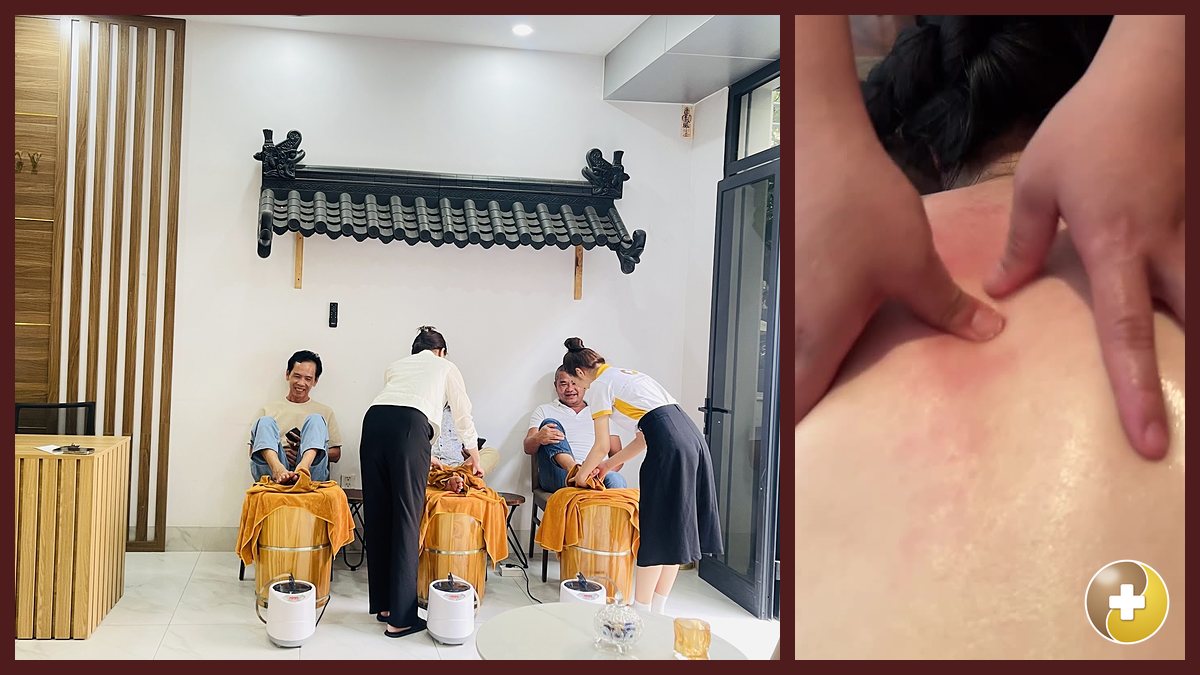
Quick answer: Start 3–5 days before the long flight home after Tet: shift sleep towards destination time, eat lighter, walk daily, and book a back and neck muscle release 1–2 days before flying. Chest pain, breathlessness or one swollen leg: get checked first. Tong Gia Acupoint Wellness in Ho Chi Minh City can help.
Want Lương Y Tống Văn Huynh’s team to read your spine and posture in person?
Why preparing your body before the flight home matters
Preparing your body before a long flight home means using the last 3–5 days of your trip to bring sleep, digestion, your spine and your legs back to a steady state before you sit in a plane seat for another 8 to 20 hours. Most people plan the arrival carefully and forget the departure. The final days of a Tết visit are usually spent on gifts, packing, last family meals and the work emails piling up at home, and the body gets whatever is left.
If you live in Sydney, Melbourne, Brisbane, Adelaide or Perth, the flight back is often an overnight departure from Tan Son Nhat airport, roughly 8–9 hours non-stop to the east coast, a little less to Perth, and much longer if you connect through another hub. You land in the morning, and many people drive straight from the airport to work. In January and February it is high summer in Australia: bright, hot and long days with little chance to rest. Travellers heading to Europe, North America or Canada face even longer flights, and a jump from 33°C in Saigon into a northern winter.
In Western terms, after two or three weeks of Tết the body usually carries several loads at once: accumulated sleep debt, a body clock that has only just adjusted to Vietnam time and must now flip again, stiff back and neck muscles from long car rides to the countryside, low plastic stools at family feasts and lifting heavy boxes, and a digestive system tired from bánh chưng, braised pork, sausage and beer. Add many hours of sitting still in dry cabin air and you get the familiar feeling of arriving home but not really being back: a stiff back, heavy legs, a foggy head and several days before you work normally.
Preparation will not shorten the flight, but it lets you board lighter: muscles already released, sleep in better shape, stomach settled, and a clear idea of which signs mean you should get checked before flying at all. Family members in Ho Chi Minh City can use this guide too, especially when elderly parents are flying out to visit children in Australia.
This guide is part of our overseas Vietnamese and wellness travel series. For the overview of the neck, mid-back and lower back after a long day in a plane seat, start with our main guide, spine care after a long-haul flight. Here we focus only on the days before you fly out.
Why the flight back often feels harder than the flight in
- Sleep debt from the whole holiday. Late nights for New Year's Eve, early visits to relatives, sleeping in unfamiliar beds, motorbikes and karaoke next door. Short sleep lowers your tolerance to fatigue and makes muscles tighten faster.
- Back muscles already tired before boarding. Hours in the car, bending over to cook, carrying grandchildren and gift boxes. The lower back around L4–L5 and the upper back between the shoulder blades usually take most of this.
- Heavy luggage at the last minute. Suitcases full of dried food, sauces and gifts, lifted onto scales and belts with a twist of the back. A tired lower back "locks" easily at this moment.
- A second body-clock shift. The east coast of Australia in summer is about 3–4 hours ahead of Vietnam; Europe and North America are behind, and by more. Our guide to jet lag and sleep after flying to Vietnam explains why the shift leaves you sluggish.
- An overloaded stomach. Rich, salty and sweet Tết food plus several days of alcohol leave the belly full and the mid-back tense, and sitting for hours makes it worse.
- Too little water in the heat. Saigon's dry season means sweating, iced coffee and soft drinks instead of water. Dry cabin air on top of that makes legs swell and heads feel heavy.
- The emotional side. Saying goodbye to parents, worrying about overweight bags and work. Stress tightens the neck and shoulders and makes sleep lighter.
Some factors raise the risk of a blood clot on long flights: a previous clot, recent surgery or a leg injury or cast, pregnancy or recent childbirth, the contraceptive pill or hormones, obesity, older age, severe varicose veins, heart disease and cancer. If any apply, ask a health professional before flying about the right prevention for you.
Signs worth noticing in the last days of your trip
- A stiff lower back in the morning, needing your hands to get up, trouble bending to tie your shoes, easing as you move.
- Aching between the shoulder blades or a burning upper back after a day in the car or at the table.
- A tight neck that catches when you turn, with ache spreading to the back of the head; see stiff neck after a long flight.
- Heavy legs, tight calves and slightly puffy ankles in the evening after days of standing to cook or walking the Tết markets.
- Bloating, burping, irregular bowels after a run of big meals.
- Broken sleep, waking at 3 or 4 a.m., drowsy at lunchtime.
- A dry nose and throat, sneezing when moving in and out of air-conditioned rooms.
If these are mild and ease with rest, they are a normal response to a long holiday. If they get worse, or come with the signs below, the right step is a medical check, not just home preparation.
When to see a doctor before you fly
Some symptoms should not travel with you. If any of the following appear in the days before your flight, see a doctor at a medical facility and ask whether you should fly as planned:
- Chest tightness, breathlessness, cold sweats, an unusually fast heartbeat, dizziness or fainting: call 115 (Vietnam's emergency number) immediately; do not ride a motorbike yourself and do not have a massage.
- Swelling in one leg, calf pain or tenderness, warm, red or purple skin: possible deep vein thrombosis. Get checked straight away, no leg massage, and do not board before you have been assessed.
- Back pain with numbness or weakness in the legs, numbness in the buttocks or groin, or changes in bladder or bowel control.
- Back pain after a fall or knock, pain that keeps getting worse, or pain at night and at rest.
- Back pain with fever or unexplained weight loss, or flank pain with burning or bloody urine.
- Fever, a heavy cough, a sore throat, badly blocked sinuses or ear pain: pressure changes during descent can make ears and sinuses hurt more.
- Severe stomach pain, repeated vomiting or ongoing diarrhoea after the feasting.
- Pregnancy, recent surgery, a previous clot, blood thinners, heart or lung disease: ask a health professional about flying and prevention, for example properly fitted compression stockings.
At Tong Gia, practitioners ask about these signs before touching you; if any apply, they will not start and will ask you to get checked first. Tong Gia does not read X-rays or MRI scans and does not make medical plans. This is a wellness service, not medical care.
The Y Tướng Học view: Kidney, Liver and Spleen after Tết
Y Tướng Học (Vietnamese face and body reading for wellness) rests on the phrase "the signs show outside, the organs lie inside". Lương Y (traditional healer) Tống Văn Huynh organised this knowledge so practitioners read the outside first and know which part of the spine to check. Before a long flight after Tết, the Tong Gia course material points to three organ systems. These are functional ideas from Eastern wellness, not a statement that any organ is diseased.
The Kidney governs the bones and marrow. In Eastern terms the Kidney system links bones, marrow, water, ears, hair, the lower back and the knees. Late nights, heavy lifting and long sitting drain this "root": a tired lower back and knees, blocked ears when the plane descends. The material describes people leaning towards Kidney yang weakness as feeling the cold, with a cold, tired lower back and knees, night urination, fatigue and mild swelling. The Kidney shows in the ears: thick, rosy ears suggest a steady root; thin, dull ears are a reminder to keep the lower back warm.
The Liver governs the sinews. It nourishes tendons and ligaments and keeps joints supple. Pre-trip stress, short sleep and alcohol let Liver energy stagnate: tight shoulders, dry red eyes, irritability, cramping muscles. Its signs are in the eyes, nails and tendons: dry red eyes, a frown line between the brows, shoulder muscles hard as wood.
The Spleen governs the muscles and limbs. It turns food into the energy that feeds the flesh. After days of feasting it is easily overloaded: bloating, heaviness, sluggish limbs, a soft back. Its signs are pale lips, a swollen tongue with tooth marks and puffy eyelids in the morning.
Y Tướng Học also reads the bridge of the nose as a small map of the spine: a crooked nose bridge often goes with an uneven back, so the practitioner checks it by hand. These observations guide wellness care only; they are not fortune telling and never a health verdict.
Spine segments and nerve-reflex zones involved
In the Tong Gia material on spinal nerve-reflex balancing, the neck (C1–C7) serves the head, face, neck and arms; the thoracic spine (D1–D12) relates to circulation, breathing and digestion; the lumbar spine (L1–L5) to digestion, kidneys, urinary and reproductive function and the legs; the sacrum and coccyx to elimination and the pelvis. Nerve roots leave between the vertebrae, where the practitioner's fingers search.
| Vertebrae | Nerves / function (Western anatomy) | What shows up before the flight home | Organ (Eastern view) | Outer signs (Y Tướng Học) |
|---|---|---|---|---|
| C1–C3 | Suboccipital muscles, upper cervical roots to the back of the head | Stiff nape from a strange pillow, ache rising to the crown | Kidney, Liver | Thin, dull ears; dry red eyes |
| C4–C7 | Roots to the shoulders, arms and hands | Heavy shoulders after carrying bags and children; mild arm tingling | Liver | Hard shoulder muscles, frown line between the brows |
| D4–D9 | Intercostal nerves; area of Tâm du and Can du points | Ache between the shoulder blades after long car rides | Heart, Liver | Dull complexion |
| D10–D12 | Nerves to the upper abdomen and digestion; Tỳ du below D11, Vị du below D12 | Bloating, heavy mid-back after feasting | Spleen–Stomach | Pale lips, tooth-marked tongue, square full face |
| L1–L3 | Upper lumbar roots; Thận du (BL23) and Chí thất (BL52) beside L2, Mệnh môn (GV4) below L2 | Cold, tired lower back, needing hands to stand, night urination | Kidney | Dull ears, cool lower-back skin, round face |
| L4–S1 | Roots forming the sciatic nerve; buttocks, thighs, calves | Lower-back ache when lifting suitcases, numb buttocks, heavy legs | Kidney–Bladder, Liver | Crooked nose bridge, uneven hips |
To be clear in Western terms: a tired back before and after flying is mostly about muscle fatigue, posture, poor sleep and inactivity, not a "misaligned" vertebra. The spine is read because the nerves to these muscles exit there; relaxed muscles brace less during hours of sitting.
How Tong Gia helps you rebalance before flying
Tong Gia Acupoint Wellness (Huyệt Đạo Tống Gia) is a Vietnamese Eastern wellness method built by its founder, Lương Y Tống Văn Huynh, from more than 13 years in Eastern wellness, Y Tướng Học and spinal nerve-reflex balancing. The aim is to help each spinal zone and the related organ functions rebalance with the hands, so you board with a released back and neck. The ideal timing is 1–2 days before your flight, not the morning you fly.
- Questions and safety check: flight date and time, direct or connecting, lifting and long car rides during the trip; chest pain, breathlessness, one swollen leg, fever, health conditions, pregnancy. Any warning sign and the session stops here.
- Observation: complexion, ears, nose bridge, lips, tongue, neck and shoulder posture, level of the shoulders and hips.
- Reading the spine by hand: four factors, namely skin temperature, the muscle layer, the shape of each vertebra and your sensation at each point, comparing left with right and above with below to find the reactive zones.
- Muscle release of the suboccipitals, trapezius, the long muscles beside the spine, lower back, buttocks, back of the thighs and calves, moving through 5 pressure levels from light to firm and always asking how it feels; older guests get light pressure only.
- Acupressure: Phong trì (GB20) at the nape; Tỳ du (BL20) and Vị du (BL21) mid-back; Thận du (BL23), Chí thất (BL52) and Mệnh môn (GV4) on the lower back, which the material describes as strengthening the lower back and knees and warming a cold back; Ủy trung (BL40) behind the knee for back pain; and Dũng tuyền (KI1) on the sole at the end, described as calming and helping sleep. Each point stops once the skin turns from dry to slightly moist.
- Self-care coaching for sitting on the plane, seat exercises, lifting luggage and warming the lower back before bed.
What it feels like. Tight spots feel achy in a pleasant way, which the material calls "creating a sensation wave" that lets the body adjust itself; the lower back warms up and many people doze off. Some feel lighter straight after, others slightly sore for a day before feeling lighter, which is why 1–2 days before the flight works well. Results vary, and Tong Gia does not promise pain will be gone after one session.
Services that fit (paid in VND; conversions are approximate reference rates, 1 USD ≈ 26,000 VND, 1 AUD ≈ 17,000 VND; full price list):
- Neck-shoulder or back-waist care, 60 min: 550,000 VND (about 21 USD / 32 AUD; first visit 399,000 VND, about 15 USD / 23 AUD); 90 min: 750,000 VND (about 29 USD / 44 AUD).
- Full-body care, 120 min: 950,000 VND (about 37 USD / 56 AUD), head to feet, for whole-body fatigue before a long flight.
- Tired, heavy legs care, 60 min: 500,000 VND (about 19 USD / 29 AUD), when the legs feel heavy with no one-sided swelling; see also swollen legs after a long flight.
Getting to the airport. The District 12 branch (225 Dương Thị Mười, Phường Tân Chánh Hiệp, Quận 12; Tan Chanh Hiep Ward, District 12) is the closer one to Tan Son Nhat airport, usually around 30–45 minutes by car depending on traffic. The Vinhomes Grand Park branch (Căn T16-21 khu Manhattan, Phường Long Bình, TP. Thủ Đức; Unit T16-21, The Manhattan, Long Binh Ward, Thu Duc City) is further away and the drive takes longer, especially at rush hour. Either way, do not book right before you leave for the airport.
Want Lương Y Tống Văn Huynh’s team to read your spine and posture in person?
A 5-day plan before the flight, plus self-care
This plan suits an overnight flight to Sydney, Melbourne or Brisbane; for Europe or North America, shift sleep in the opposite direction. For a full one-week Tết visit, see our 7-day wellness plan for a Tet visit.
| Day | Focus | What to do |
|---|---|---|
| 5 days before | Stop the sleep debt | Bed before 11 p.m., less alcohol, more vegetables, soup and rice porridge, water through the day. |
| 4 days before | Move every day | Walk 20–30 minutes early in the morning, gentle back and shoulder stretches, never sit more than an hour at a time. |
| 3 days before | Pack early and light | Split gifts into two moderate suitcases instead of one very heavy one; bend your knees and keep your back straight when lifting. |
| 2 days before | One back and neck session | Book back-waist or full-body care; early night. Heading to Australia, go to bed and get up about an hour earlier. |
| 1 day before | Rest, eat light | A light, low-salt dinner; pack a U-shaped neck pillow, a small lumbar cushion, a light jacket and socks without tight elastic. |
| Flight day | Unhurried | A moderate meal, leave early for the airport so you never rush with heavy bags, loose trousers. |
| On board | Change position often | Walk every 1–2 hours; ankle circles and foot pumps in your seat; sip water, go easy on alcohol and coffee. |
| Arrival day | Live on local time | Morning daylight, a gentle walk, a short nap at most; break up any long drive home from the airport. |
- Warm the lower back: rub your palms until warm, place them on both sides of the lower back and rub up and down 50–100 times each evening.
- Belly breathing: in through the nose for about 4 seconds, out slowly for about 6, for 5–10 minutes a day.
- Gentle stretches: lying on your back, hug both knees for 20–30 seconds; seated twists to each side, never into pain.
- A warm (not hot) foot soak for 15–20 minutes, then rub the sole; skip it if one leg is swollen, painful or red.
- Keep the nape and lower back warm: no fan or air-conditioning blowing on your back at night, and a light jacket for the cold cabin.
If your back is still sore after landing, see back pain after a long flight from the US to Vietnam; for a tight ache behind the knee after the flight, see back of knee pain after a long flight.
How to book, from abroad or during your stay
The days after Tết are busy, with many families booking before their flights, so book early. You can message from Australia or as soon as your return date is fixed; our guide to booking a massage in Saigon from abroad explains the steps.
- District 12: 225 Dương Thị Mười, Phường Tân Chánh Hiệp, Quận 12 (Tan Chanh Hiep Ward, District 12). Daily 8:00–19:00.
- Vinhomes Grand Park: Căn T16-21 khu Manhattan, Phường Long Bình, TP. Thủ Đức (Unit T16-21, The Manhattan, Long Binh Ward, Thu Duc City, formerly District 9). Daily 9:00–20:00.
WhatsApp or Zalo +84 888 264 559 (0888 264 559 in Vietnam), or book online. Tell us your departure date and time, direct or connecting, where you feel tired (neck, back, lower back, legs), any health conditions and which branch you prefer, so the practitioner can pick the right session and a time that fits your trip to the airport.
Visit us
- Đông Y Huyệt Đạo Tống Gia Quận 12 (District 12)
225 Dương Thị Mười, Phường Tân Chánh Hiệp, Quận 12, HCMC · 8:00–19:00 daily · 0888 264 559 · Directions on Google Maps - Đông Y Huyệt Đạo Tống Gia Quận 9 (Vinhomes Grand Park, District 9)
Căn T16-21 khu Manhattan, Vinhomes Grand Park, Phường Long Bình, TP. Thủ Đức, HCMC · 9:00–20:00 daily · 0888 264 559 · Directions on Google Maps
Map of our two branches
Want Lương Y Tống Văn Huynh’s team to read your spine and posture in person?
What guests say on Google Maps
“Worth a visit, skilled technicians. My neck and shoulders had been tired for a long time, and after the first session I felt lighter right away.” (translated from a Vietnamese review)
— Quyên P., Google Maps review · District 12 branch · 2025 · See on Google Maps
“I had shoulder pain and numbness from sitting at the computer a lot, and after sessions at Khoa Học Huyệt Đạo I feel much better.” (translated from a Vietnamese review)
— Loan N., Google Maps review · Vinhomes Grand Park branch (District 9) · 2025 · See on Google Maps
Quoted from public reviews, shortened where marked (…). Experiences vary from person to person; reviews are not a substitute for seeing a doctor when something feels wrong.
Related guides for your trip
- Parents' back pain after a long flight with young kids: lower back, shoulders and wrists
- Can you get a massage after a heart stent? Who to ask first, how gentle it should be and when to call 115
- Midlife hot flashes in Vietnam's heat: why sleep and energy dip on a Tết visit, and how to stay comfortable
FAQ
How should I prepare my body before a long flight home after Tet? Start 3–5 days before: bed before 11 p.m., fewer feasts and less alcohol, a daily walk, early and lighter packing, and a back and neck muscle release 1–2 days before flying. On board, walk every 1–2 hours, circle your ankles and sip water steadily.
I fly overnight from Saigon to Sydney or Melbourne. How do I protect my back? Bring a U-shaped neck pillow and a small cushion for your lower back, choose an aisle seat if possible, stand and walk every 1–2 hours and do ankle circles in your seat. For a few days before, go to bed and get up about an hour earlier to edge towards Australian time.
Is it a good idea to get a massage the day before flying? One to two days before works well; avoid the morning you fly, because some people feel slightly sore for a day before feeling lighter. With chest pain, breathlessness, one swollen leg, fever or back pain with leg numbness, skip the massage and get checked first.
My back hurts a few days before my flight. Should I postpone? Aching from lifting, long car rides and short sleep usually eases with rest and gentle movement. Back pain after a fall, pain with leg numbness or weakness, bladder changes, fever, or pain that worsens at rest needs a medical check, and you should ask whether to fly as planned.
What should elderly parents do before flying to Australia with us? Help them sleep enough, eat light and drink water in the days before. Ask a health professional first if they have heart disease, a previous clot or take blood thinners. On board, remind them to stand and walk. For a session, tell us their conditions so practitioners use light pressure.
How much is a back session before my flight, and can I book from Australia? Back-waist care is 550,000 VND for 60 minutes (about 32 AUD; first visit 399,000 VND), 750,000 VND for 90 minutes, and full-body care 950,000 VND for 120 minutes. Book by WhatsApp or Zalo on +84 888 264 559 or online, with your flight date and preferred branch.
Author: Lương Y Tống Văn Huynh – founder of Huyệt Đạo Tống Gia, a master of traditional Vietnamese wellness with over 13 years in Eastern wellness care, Y Tướng Học (face reading) and spinal nerve-reflex balancing massage.
Updated: 2026-11-15
Related guides
- Preparing your body before the long flight home after Tet: a 3–5 day plan for Viet Kieu returning to Australia
- Back pain after a long flight from the US to Vietnam: upper back, lower back and what helps
This is a wellness service, not medical care.