
Back of knee pain after a long flight from Australia or the US: causes, warning signs and care in Saigon
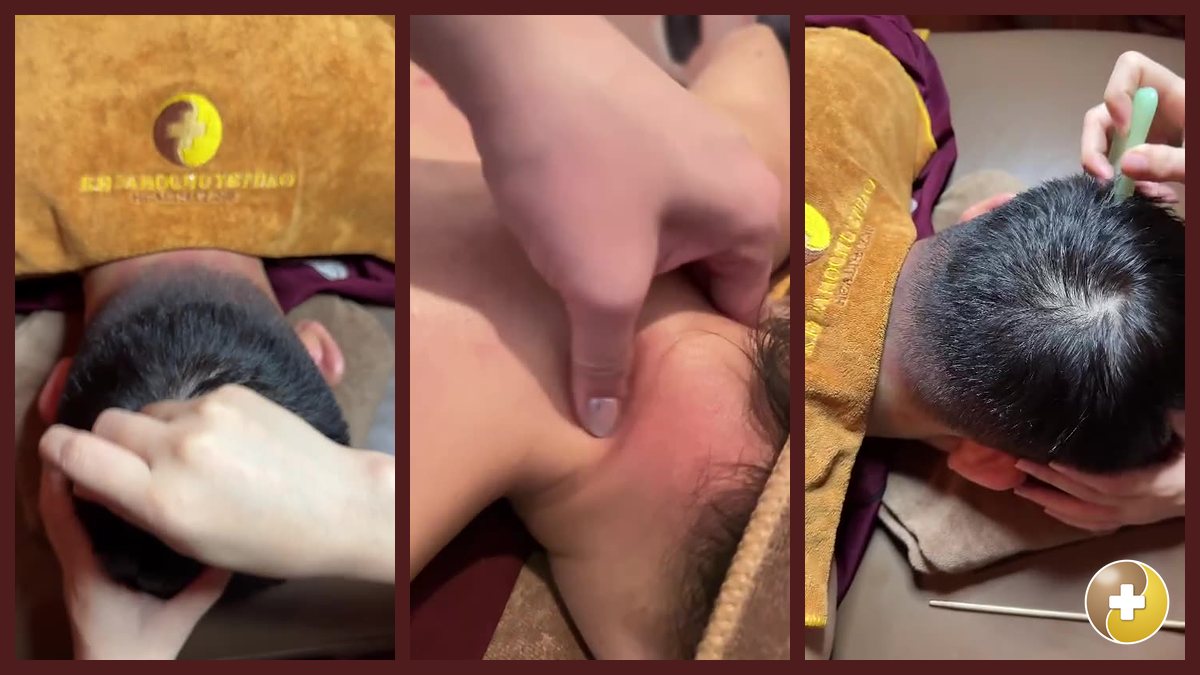
Quick answer: Back of knee pain after a long flight usually comes from hours of sitting with bent knees that leave hamstring and calf tendons tight; it often eases within a day or two. Pain behind one knee with a swollen, warm calf needs urgent checking. Tong Gia Acupoint Wellness in District 12 and Thu Duc, Ho Chi Minh City, offers gentle leg care.
Want Lương Y Tống Văn Huynh’s team to read your spine and posture in person?
Back of knee pain after a long flight: what is going on, and who gets it
Back of knee pain after a long flight is a tight, pulling or aching feeling in the hollow behind the knee, the area anatomists call the popliteal fossa. It shows up the moment you stand up from your seat, walk down the jet bridge or wait at the baggage belt. People describe it as "I can't straighten my leg all the way" or "there's a cord pulled tight behind my knee". In most cases it is simple muscle and tendon tightness from sitting with bent knees for hours, and it settles within a day or two. But the back of the knee is also where the main vein of the lower leg runs, so pain behind one knee or in one calf, with swelling, warmth or redness, must be taken seriously as a possible deep vein clot until a medical professional says otherwise.
A quick look at the anatomy explains why. The hollow behind the knee is diamond-shaped. Its upper edges are the hamstring tendons: biceps femoris on the outside, semitendinosus and semimembranosus on the inside. Its lower edges are the two heads of the gastrocnemius, the big calf muscle. Deep inside run the popliteal artery, the popliteal vein and the tibial nerve, a branch of the sciatic nerve, and at the floor sits the small popliteus muscle that "unlocks" the knee when it starts to bend. Tendons, blood vessels and a major nerve share a space the size of your palm, which is why this kind of pain deserves more attention than ordinary leg fatigue.
This is a familiar picture in the weeks around Tết. From Sydney, Melbourne, Brisbane or Perth, the flight to Ho Chi Minh City is usually around 8–9 hours. From Los Angeles, San Jose, Houston or Seattle, with a connection in Taipei, Seoul, Tokyo or Hong Kong, the whole trip often takes 15–20 hours. Australians leave summer, Americans leave winter, and everyone lands at Tân Sơn Nhất airport into Saigon's heat and humidity. The days that follow bring long car rides to the Mekong Delta, meals sitting on a mat, squatting to clean the family altar and long walks around the flower markets. The knees rarely get a break.
People most likely to feel it after a flight of more than 8 hours:
- Tall travellers in economy whose knees press into the seat in front, so the legs never straighten.
- Middle and window seat passengers who don't like to disturb their neighbours.
- Anyone who sleeps deeply with legs tucked, crossed, or resting on a bag under the seat.
- Older parents with knee arthritis, an old meniscus or ligament injury, or a long history of pain behind the knee after sitting.
- People whose calves are already tight; see calf tightness after walking.
This article is part of the Tong Gia Acupoint Wellness (Huyệt Đạo Tống Gia) program for overseas Vietnamese and long-haul visitors. For the big picture on neck, back and lower back after 12–20 hours in a plane seat, read the main guide spine care after a long-haul flight. Puffy ankles are covered in swollen legs after a long flight. Here we focus only on the back of the knee.
Common causes: bent knees for hours, a seat edge pressing on the thigh, too little walking
It is rarely one thing. Several small loads add up between your home airport and your first days in Saigon:
- Knees bent for hours. In an economy seat the knee sits at a right angle or tighter for most of the flight. The hamstrings and calf muscles stay in a shortened position. When you finally stand and straighten the leg, those tendons are stretched suddenly, and you feel it right behind the knee.
- The seat edge. Shorter travellers whose feet don't reach the floor have the front edge of the seat pressing into the back of the thigh, close to the knee crease. The vein there is kinked, blood returns slowly, and some people feel pins and needles down to the foot.
- No room to stretch. Cabin bags, blankets and boxes of Tết gifts take over the footwell.
- Dry cabin air and too little water. Wine, beer or coffee make it worse, and dehydrated calf muscles cramp more easily.
- Heavy luggage. Pulling suitcases and lifting boxes into a car straight after hours of sitting, while the tendons are still stiff.
- Climate and body-clock change. Coming from an American winter, muscles tend to stay tight; coming from an Australian summer the temperature jump is smaller, but jet lag and short sleep still slow recovery. Tips for resetting sleep are in jet lag and sleep after flying to Vietnam.
- Tết habits. Long rides on a motorbike or in a car, sitting on the floor, squatting, kneeling to pray: deep knee bends that people used to chairs abroad rarely do.
- Existing knee problems. Arthritis, a Baker's cyst (a fluid-filled swelling behind the knee) or an old meniscus tear. The flight doesn't create them, but it can make them show.
Some factors raise the risk of a clot in the deep leg veins on long flights: a previous clot, recent surgery or leg injury, pregnancy or the weeks after giving birth, hormonal contraception or hormone replacement, cancer, obesity, older age, severe varicose veins, heart disease. If any of these apply to you, ask a medical professional before you fly about the right precautions.
Signs worth noting
The key is telling simple tightness, which settles by itself, apart from signs of a clot or a problem inside the knee joint:
| Feature | Tightness from sitting (common) | Think of a deep vein clot | Think of a knee joint problem |
|---|---|---|---|
| Where | Behind both knees, spreading into the calves or back of the thighs | Usually one leg; calf, back of knee, sometimes thigh | One knee; sometimes a lump you can feel at the back |
| When it hurts | On standing up and the first steps; easier as you walk | Worse when walking or pulling the toes up toward you | When bending deeply, squatting, on stairs; may lock or catch |
| Swelling, skin | None, or mild puffiness of both ankles | Swollen calf, warm, red or purplish skin, visible veins | Swollen knee, tight at the back; warm if inflamed |
| Course | Eases over 1–2 days with walking and gentle stretching | Doesn't ease, gets worse; can appear days to weeks after the flight | Lingers, returns whenever you bend a lot |
| What to do | Walk, drink water, stretch gently; light massage is fine | Get checked urgently; no massage, no pressing the calf or knee hollow | Have the joint checked at a medical facility |
Other things you may notice after the flight: a pull along the back of the thigh when you bend forward; stiff calves and night cramps, especially on the first jet-lagged night; tingling or numb feet (see numb feet from sitting); an aching lower back and buttocks; and mild puffiness of both ankles. If you flew in from the US, back pain after a long flight from the US to Vietnam covers the back side of the story. Mild symptoms that fade day by day are usually just your body reacting to the trip.
When to see a doctor
If back of knee pain after a long flight comes with any of the following, please see a doctor or go to a medical facility. Massage is not a substitute:
- Pain behind one knee or in one calf with swelling, warmth, redness or a purplish colour, one leg clearly bigger than the other. These suggest a deep vein clot: get checked the same day, and do not massage, press or apply heat to that leg.
- Sudden shortness of breath, chest pain that is sharper on breathing in, coughing blood, a racing heart, dizziness or fainting in the days after the flight: call 115 (Vietnam's ambulance number). A clot may have travelled to the lungs.
- Crushing chest pain, breathlessness, cold sweat: call 115; don't ride a motorbike to hospital yourself.
- A lump behind the knee that grows quickly or becomes painful, or a sudden swollen, painful calf after such a lump.
- A hot, red, swollen knee with fever, or a knee that locks, won't straighten or can't take your weight.
- Clear leg weakness, a cold, pale foot, or numbness in the buttocks with bladder changes.
- Pain after a fall, a slip on the stairs or a twist while handling luggage.
- A past clot, recent surgery, pregnancy, blood thinners or heart disease: get checked first and don't massage a painful leg yourself.
Clot symptoms can appear days or even weeks after landing, so don't dismiss them because the flight was "a while ago". At Tong Gia, practitioners ask about these signs before touching the legs; if any are present, they stop and recommend a medical check. Tong Gia does not read X-rays or MRI scans and does not give medical plans; if you are under medical care, wellness work is only done with your care team's agreement.
This is a wellness service, not medical care.
The Y Tướng Học view: Liver governs the sinews, Kidney governs the bones
Tong Gia's training manual describes the Liver (Can) in the Eastern wellness tradition not as the physical organ but as a functional system linked to qi, blood, sinews, eyes, nails, emotions and movement. The manual says the Liver governs the sinews: it nourishes tendons and ligaments and supports movement; when it is strong, tendons are supple and joints move freely, and when it is weak there is muscle tightness, cramps, trembling and reduced flexibility. The Liver also stores blood: at rest blood returns to it, and during movement it sends blood to muscles and tendons. The hollow behind the knee, where the hamstring and calf tendons meet, is therefore read first through the Liver.
The Kidney (Thận) is linked to essence, bones and marrow, water, ears, hair, teeth and the lower back and knees; weak Kidney signs include an aching lower back and weak knees that tire from standing. The Bladder channel, paired with the Kidney, runs down both sides of the spine and the back of the thigh and crosses the middle of the knee crease at Ủy trung (BL40, 委中), noted in the manual as "the midpoint of the knee crease" with the saying "for back pain, look to Ủy trung". The Spleen (Tỳ) governs muscle and the limbs: when it is drained, the body feels heavy and the legs tired. This is functional language, not a statement that your liver or kidneys are diseased.
Y Tướng Học (face reading for wellness) teaches that "the signs show outside, the organs lie inside", and that "the organs are the cause, the signs are the effect". Lương Y (traditional healer) Tống Văn Huynh systematised it so practitioners look first, then know where on the spine to read carefully. For people whose knee crease tightens easily, the manual notes:
- Liver signs: shown in the eyes, nails and tendons. Good: bright eyes, pink nails, supple muscles. Watch for dry tired eyes, thin brittle or ridged nails, frequent cramps, a tight neck.
- Kidney signs: shown in the ears, hair, bones and lower back. Good: thick rosy ears, a strong back. Watch for tired knees, a cold lower back, ringing ears; thin, soft ear rims go with an aching back, weak knees and cold hands and feet.
- Spleen signs: pale lips, soft slack calf muscles, heavy tired limbs.
- The "Dụng" face (asymmetrical, one side fuller): linked to Liver and Kidney, with an uneven spinal axis and unequal muscles on the two sides; such people often stand on one leg, so one knee crease is tighter.
- The "Mục" face (long, narrow, lean): linked to Liver and Spleen, with thin muscles along the spine; the manual advises a light touch.
These are hints for where to look, not conclusions about health and never judgements about a person.
Spine segments and nerve-reflex zones involved
According to Tong Gia's spinal nerve-reflex balancing manual, the spine has 33 vertebrae: 7 cervical, 12 thoracic (D1–D12), 5 lumbar (L1–L5), the sacrum and coccyx. The lumbar segments relate to digestion, kidneys, urinary and reproductive function and the legs. Nerve roots from the lower back join into the femoral and sciatic nerves; the sciatic nerve splits just above the knee, and its tibial branch runs straight through the knee hollow. So for back of knee pain, the area to read runs from D11 to the sacrum:
| Segment | Nerves / function (Western anatomy) | Typical after the flight | Organ system | Outward signs (Y Tướng Học) |
|---|---|---|---|---|
| D11–D12, L1 | Lower thoracic and upper lumbar roots; lower back muscles, abdominal wall | Heavy body, tired limbs after many in-flight meals | Spleen (muscle, limbs) | Pale lips, soft calves |
| L2–L4 | Femoral nerve: quadriceps straighten the knee, hip flexors; L4 in the knee-jerk reflex | Tired front thighs, "wobbly" knees on stairs after market walks | Kidney (bones, lower back and knees) | Thin or dull ear rims, cold lower back |
| L4–L5 | Roots of the sciatic nerve; most hamstrings, outer shin, top of the foot | Pull from the back of the thigh into the knee, numb top of foot | Liver (sinews) and Kidney | "Dụng" face, tilted hips, uneven lower back muscles |
| L5–S2 | Sciatic and tibial nerve through the knee hollow; calf, soleus, popliteus, sole | Tight knee hollow, hard calves, night cramps, numb soles | Liver; Kidney–Bladder (Bladder channel, BL40) | Ridged nails, dry eyes, frequent cramps |
| S1–S5, coccyx | Pelvis, deep buttock muscles; sciatic nerve exits below piriformis | Numb, heavy buttocks pulling down the back of the thigh | Kidney–Bladder | Hollow, cool lower back |
The table shows related areas to guide care, nothing more. In Western terms, knee-crease tightness after flying is mostly about shortened muscles and slow circulation, not a vertebra "out of place". The spine is read because that is where the nerves to the lower back, buttocks, hamstrings and calves exit; when those muscles relax, the hamstrings lengthen more easily once you start walking again.
How Tong Gia helps rebalance the lower back, knee hollow and calves
The method was built by Lương Y Tống Văn Huynh, founder of Tong Gia, over more than 13 years of Vietnamese Eastern wellness practice, Y Tướng Học and spinal nerve-reflex balancing. It is a Vietnamese traditional approach worth trying when you are in Ho Chi Minh City. The aim is to help rebalance and support lighter, more flexible legs, never to replace a medical check. A session for someone just off a long flight goes like this:
- Safety questions: where you flew from, how long, which seat, when you landed; one leg or both, any swelling, warmth or redness, breathlessness, a lump behind the knee; heart disease, pregnancy, a past clot, blood thinners. Any warning sign and the session stops here.
- Observation (Y Tướng Học): complexion, eyes, nails, ears, lips, posture; comparing both legs and how well each knee straightens.
- Reading the spine by hand: pressing, stroking and kneading to feel the four objective factors in the manual: skin temperature, muscle layer, vertebral shape and your own sensation, segment by segment from D11 to the sacrum.
- Muscle release: lower back, buttocks, back of thighs, then calves, using the manual's 5 pressure levels; around the knee hollow only the lightest level, along the edges of the tendons, never deep into the centre where vessels and nerves run.
- Acupressure on the right points: Can du (BL18, 肝俞), Tỳ du (BL20, 脾俞) and Thận du (BL23, 肾俞) on the back; on the legs Ủy trung (BL40, 委中) very lightly once warning signs are ruled out, Khúc tuyền (LR8, 曲泉) at the inner end of the knee crease, which the manual uses for tight sinews and cramps, Âm lăng tuyền (SP9, 阴陵泉), Túc tam lý (ST36, 足三里) and Thái khê (KI3, 太溪). Tam âm giao (SP6, 三阴交) is not used in pregnancy. Warm skin is cooled, cool skin is warmed, and work on a point stops once the skin turns from dry to slightly moist.
- Self-care coaching for the rest of your stay and the flight home.
Services that suit travellers (prices in VND, USD and AUD at a reference rate, payment in VND; see prices):
- Heavy, tired legs care, 60 minutes: 500,000₫ (about 19 USD / 29 AUD). Lower back, buttocks, hamstrings, knee hollow, calves and feet.
- Lower back care, 60 minutes: 550,000₫, first visit 399,000₫ (about 21 USD / 32 AUD; first visit about 15 USD / 23 AUD). For knee pain that comes with an aching lower back or numb buttocks.
- Full-body care, 120 minutes: 950,000₫ (about 37 USD / 56 AUD). Head to feet, for when the whole body aches after 15–20 hours of travel from the US.
From the airport: the District 12 branch is on the same north side of the city as Tân Sơn Nhất airport, usually around 30–45 minutes by car depending on traffic. The Vinhomes Grand Park branch in Thu Duc is further and takes longer, especially at rush hour. If you are carrying a lot of luggage, message first to ask.
What you will feel: a mild, pleasant ache at tight spots in the buttocks, thighs and calves, which the manual calls "creating a sensation wave" so the body can readjust; warmth in the lower back and feet; often drowsiness. Afterwards many legs straighten more easily, but results vary from person to person, and Tong Gia promises no pain-free outcome. Walking, water and daily stretching still do most of the work.
Want Lương Y Tống Văn Huynh’s team to read your spine and posture in person?
A suggested plan for your trip home, plus self-care
For a 10–14 day Tết visit from Australia or the US (for a longer plan see a 7-day wellness plan for a Tết visit to Saigon):
| When | What to do for the back of the knee | Note |
|---|---|---|
| On the flight | Stand and walk every 1–2 hours; in your seat, straighten the legs and point and flex the feet 10–20 times | Pick an aisle seat if you can; keep the footwell clear |
| Landing day | Easy walking, steady water, legs up 15–20 minutes in the evening | No hard stretching yet; check whether one leg is swollen or warm |
| Days 2–3 | Gentle hamstring and calf stretches morning and night; one legs or lower back session | Muscles are less stiff and the body clock is adjusting |
| Family visits, trips to the countryside | Stop every 1–2 hours on long rides; limit long squatting and floor sitting | Use a low stool with a back for chores |
| 1–2 days before flying out | A light back and leg session, enough sleep and water | See preparing your body before the long flight home |
| Flight back to Australia or the US | Repeat the standing, foot pumps and water routine | One swollen, painful leg after you get home: get checked urgently |
- Hamstring stretch: sit on the edge of a chair, one leg straight out with the heel down and toes up, hinge forward from the hips with a straight back until you feel a mild pull; hold 20–30 seconds, 2–3 times each side, no bouncing.
- Calf stretch: hands on a wall, front knee bent, back leg straight with the heel down; hold 20–30 seconds each side.
- Legs up: lie down with a pillow under your shins for 15–20 minutes while slowly pumping your ankles.
- Warmth and self-acupressure: a warm (not hot) pack on the back of the thighs and calves for 10–15 minutes; gentle pressure on Khúc tuyền and Thái khê for 1–2 minutes each, and rubbing Dũng tuyền (KI1, 涌泉) on the sole for 3–5 minutes at bedtime. Never press deep into the knee hollow.
Skip heat, rubbing and stretching completely if one leg is swollen, the calf hurts, or the skin is warm and red: get checked instead.
Booking from abroad before you fly
- District 12: 225 Dương Thị Mười, Phường Tân Chánh Hiệp, Quận 12 (Tan Chanh Hiep Ward, District 12). Daily 8:00–19:00.
- Vinhomes Grand Park: Căn T16-21 khu Manhattan, Phường Long Bình, TP. Thủ Đức (Unit T16-21, The Manhattan, Long Binh Ward, Thu Duc City, formerly District 9). Daily 9:00–20:00, handy after an afternoon arrival.
Whether you live in Sydney, Melbourne, Los Angeles or Houston, you can book before you fly: WhatsApp or Zalo +84 888 264 559 (0888 264 559 inside Vietnam), or book online. Send your landing date and time, how long the flight is, where you feel tight (behind one knee or both, any back pain), any health conditions and which branch you prefer. Family in Saigon can book for you too. Slots fill quickly in the days before Tết, so message early.
Visit us
- Đông Y Huyệt Đạo Tống Gia Quận 12 (District 12)
225 Dương Thị Mười, Phường Tân Chánh Hiệp, Quận 12, HCMC · 8:00–19:00 daily · 0888 264 559 · Directions on Google Maps - Đông Y Huyệt Đạo Tống Gia Quận 9 (Vinhomes Grand Park, District 9)
Căn T16-21 khu Manhattan, Vinhomes Grand Park, Phường Long Bình, TP. Thủ Đức, HCMC · 9:00–20:00 daily · 0888 264 559 · Directions on Google Maps
Map of our two branches
Want Lương Y Tống Văn Huynh’s team to read your spine and posture in person?
What guests say on Google Maps
“I do a lot of high-intensity exercise – running, hiking – and my leg muscles are often overloaded… After the session, following a day of overdoing it, my body felt light and comfortable.” (translated from a Vietnamese review)
— Lộc N., Google Maps review · Vinhomes Grand Park branch (District 9) · 10/2026 · See on Google Maps
“The Truy Phong Thang herbal foot steam leaves the whole body at ease after a tiring workday.” (translated from a Vietnamese review)
— Linh T., Google Maps review · District 12 branch · 2025 · See on Google Maps
Quoted from public reviews, shortened where marked (…). Experiences vary from person to person; reviews are not a substitute for seeing a doctor when something feels wrong.
Related guides for your trip
- Massage after knee replacement: is it safe on a trip to Vietnam, which areas can be worked and what to avoid
- Can you get a massage after a heart stent? Who to ask first, how gentle it should be and when to call 115
- Sonographers abroad with shoulder and wrist pain: shoulder, forearm and neck care in Ho Chi Minh City
FAQ
Is back of knee pain after a long flight something to worry about? Usually not: it is mostly tight hamstring and calf tendons from sitting with bent knees, felt behind both knees when you stand up and easing within 1–2 days of walking. Pain behind one knee or in one calf with swelling, warmth or redness needs urgent checking; breathlessness or chest pain after the flight means calling 115.
How can I tell if pain behind my knee after flying from the US is a blood clot? Warning signs are pain in one calf or knee hollow, that leg more swollen, skin warm, red or purplish, pain worse when walking. They can appear days to weeks after the flight. If you notice them, get checked the same day and do not massage or press the calf.
Why does the back of my knee hurt after only an 8–9 hour flight from Sydney? A few hours with knees bent and no walking is enough to shorten the hamstrings and calves. On overnight flights from Australia many people sleep curled up the whole way, so the knee crease feels tight the moment they stand. It is not only 20-hour trips that cause it.
Can massage help back of knee tightness after a flight? When both knees feel tight and there are no warning signs, light muscle release on the lower back, buttocks, hamstrings and calves can support easier knee straightening and lighter steps. Tong Gia asks safety questions first, never presses deep into the knee hollow, and refers you to a medical check if warning signs appear.
Can I get a leg massage straight after landing at Tan Son Nhat? Yes, if both legs simply feel tight and there is no one-sided swelling, calf pain or breathlessness. The District 12 branch is usually about 30–45 minutes by car from the airport; the Vinhomes Grand Park branch is open until 20:00. Heavy, tired legs care is 500,000₫ (about 19 USD) for 60 minutes.
How long does knee crease tightness last after a long-haul flight? Tightness from sitting usually eases within 1–2 days if you walk regularly, stretch gently and drink enough water. If it still hurts after 3–4 days, gets worse, or affects one leg with swelling or warmth, see a doctor rather than continuing to rub it yourself.
Author: Lương Y Tống Văn Huynh – founder of Huyệt Đạo Tống Gia, a master of traditional Vietnamese wellness with over 13 years in Eastern wellness care, Y Tướng Học (face reading) and spinal nerve-reflex balancing massage.
Updated: 2026-11-15
Related guides
This is a wellness service, not medical care.