
Back and shoulder strain from shrimping and offshore work: nets, deck vibration, shift sleep, care at home
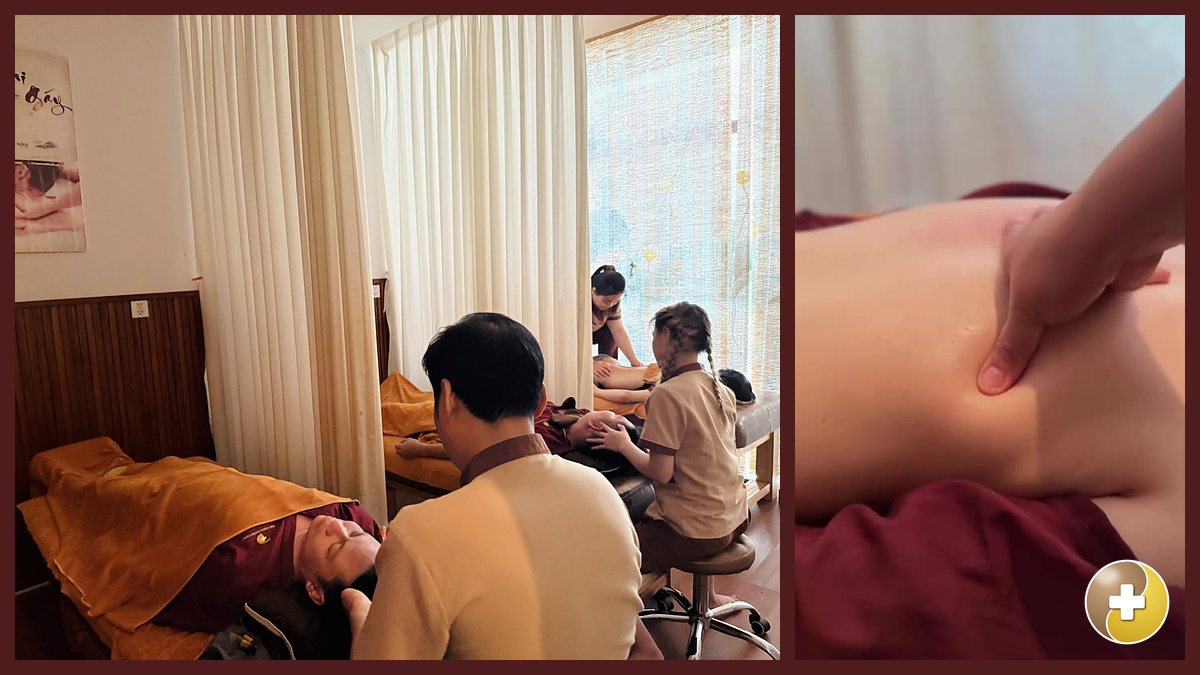
Quick answer: Back and shoulder strain from shrimping and offshore work is usually overuse: hauling nets, lifting on a moving, vibrating deck, gripping heavy tools and sleeping on rotating shifts. Rest, warmth and lifting with your legs help. On a trip home, Tong Gia Acupoint Wellness in Ho Chi Minh City reads the spine by hand and applies acupressure.
Want Lương Y Tống Văn Huynh’s team to read your spine and posture in person?
Why shrimping and offshore work are so hard on your back and shoulders
Along the Gulf Coast, in Biloxi, Gulfport, Pascagoula, Bayou La Batre, New Orleans East, Houma, Morgan City and the Texas bays from Galveston and Port Arthur down to Seadrift and Palacios, many Vietnamese American families have worked the shrimp boats for two or three generations. In season, boats leave before dawn and some trips last days or weeks. Summers are hot and humid with glare off the water; June to November is hurricane season, with nights spent running from storms or checking lines. Winters are mild compared with the northern states, but north winds over wet decks and clothes soaked in salt water leave your back cold all day. Offshore, on Gulf of Mexico platforms, supply vessels and at refineries around Houston, Baytown and Lake Charles, work runs in long hitches: many people do 14 days on and 14 days off, depending on the company, sometimes on nights for the whole hitch.
This article is for those workers and their families, and also for anyone who does heavy, repetitive work at sea, including international offshore crews who pass through Ho Chi Minh City. From a Western medical point of view, most of this pain is overuse musculoskeletal strain: muscles, tendons, ligaments and small spinal joints doing the same movement hundreds of times a day, plus engine vibration. It is rarely a problem with an internal organ. Three areas take most of the load:
- Lower back (L4–L5, L5–S1): the segment that carries the most force when you bend and lift. Pulling nets onto the deck, carrying shrimp baskets, shovelling ice into the hold or lifting tool boxes on a platform all load the discs and the long muscles beside the spine. Bending plus twisting on a rolling deck is a classic way to strain them.
- Shoulders and shoulder blades: the rotator cuff keeps the shoulder joint stable. Reaching overhead to pull lines, hang gear or tighten bolts can pinch the supraspinatus tendon under the bony tip of the shoulder, leading to pain when you raise the arm and pain at night when you lie on that side.
- Wrists and hands: sorting and heading shrimp, twisting lines, gripping large wrenches, drills and grinders. Tendons on the thumb side of the wrist get sore with wringing and twisting; a hard, long grip and vibrating tools can compress the median nerve in the carpal tunnel, causing numb thumb, index and middle fingers at night.
To see how neck, mid back and lower back connect after the long flight home, read the main guide on spine care after a long-haul flight.
Common causes: nets, vibrating decks and broken sleep
- Hauling and sorting: even with a winch, hands still pull lines, clear nets, dump the catch and bend over the sorting table for hours. A rounded back stretches the ligaments behind the spine while the wrists repeat one movement.
- Lifting on a wet, moving surface: baskets, ice chests, salt, fuel cans, coils of rope. Your legs, belly and back all brace to keep balance while your arms hold the load.
- Whole-body vibration: hours standing or sitting above a running engine make the muscles around the spine contract nonstop to hold you upright; long-term vibration is recognised as a factor that can make low back pain worse. On rigs, drills, grinders and impact tools send vibration into the hands, wrists and elbows.
- Heavy rig tasks: many flights of stairs, pipe handling, big wrenches, tight spaces that force awkward twisting, and heavy safety gear all shift long.
- Rotating shifts: night work, light sleep on a rolling boat, shared bunk rooms full of engine noise. The body never fully recovers between shifts. In Tong Gia's course material, the Liver stores the blood: at rest, blood returns to the Liver to be nourished, and in movement the Liver sends it to the muscles and tendons. Long-term short sleep leaves the tendons poorly nourished and prone to cramps.
- Damp, wind and sun: wet clothes and sweat in the wind make cold muscles tighten; lifting at the start of a chilly morning shift before you are warm is an easy way to pull something.
- "Push through to the end of the season": a heat patch and back to work, until mild soreness turns into stubborn pain.
A trip home for Tết is often the only real rest of the year. But Houston, New Orleans or Gulfport to Tân Sơn Nhất usually means a connection through Taipei, Tokyo, Seoul or a Middle East hub, sometimes more than 20 hours in a tight seat. Many people say the soreness only shows up once they stop: while working the body braces; when it lets go, the back, shoulders and wrists finally complain. There is a separate guide on back pain after the long flight from the US to Vietnam, and one on back pain after lifting something heavy.
Related signs to notice
- A stiff back in the morning that eases after a few minutes of walking.
- Shoulder pain when reaching overhead or behind your back, or at night when lying on that side.
- Pain on the thumb side of the wrist when wringing a towel, opening a lid or using a wrench; see wrist pain when putting weight on your hands.
- Numb thumb, index and middle fingers at night, needing to shake your hand in the morning.
- Pain spreading into the buttock or back of the thigh.
- Heavy calves, night cramps, tired knees after long hours bracing on deck.
- A cold lower back, sensitivity to wind, more ache in damp cold weather, waking at night to pass urine: in Eastern wellness this is often linked with weak Kidney yang.
- Poor sleep even on days off, waking tired: your body clock is still on shift time.
Tong Gia's course notes say pain shows in one place while its source is often somewhere else: a sore shoulder may start in the lower neck and upper back; a sore lower back may start at the hip or from bracing on one leg on a tilted deck. That is why the practitioner reads the whole spine, not just the painful spot.
When to see a doctor
Please see a doctor or go to a medical facility, and do not rely on massage, if you have any of the following:
- Pain right after a fall on deck or on rig stairs, being hit by a line, cable, hook or load, or a "snap" while lifting followed by being unable to stand straight.
- A hard jerk on the arm (line or net) and then you cannot raise it, or the shoulder is swollen, bruised or misshapen; a swollen, bruised, very painful wrist after a fall onto your hand.
- Pain shooting below the knee, numbness in the calf or foot, leg weakness, or a foot that drags.
- Numbness in the buttocks, groin or around the anus, trouble passing urine, or loss of bladder or bowel control: go to emergency now.
- Lasting finger numbness, weak grip, dropping things; or fingers turning white and numb in the cold after years of vibrating tools.
- A puncture from a shrimp spine, fin or hook that becomes red, hot, swollen or spreading, especially with fever: wounds exposed to seawater can become seriously infected.
- Back pain with fever, unexplained weight loss, lasting fatigue, or pain that gets worse at night even at rest.
- Back, left shoulder or chest pain with chest tightness, shortness of breath, sweating, or pain spreading to the jaw or left arm: call 911 in the US or 115 in Vietnam, no massage.
- A swollen, painful, warm calf on one side after a flight or days of little movement: this can be a deep vein clot. Get checked now and do not have the leg massaged.
- Pain lasting more than 4–6 weeks despite rest, or getting worse; pregnancy, recent surgery or osteoporosis: ask your doctor before any massage.
If you are hurt on the boat or the platform, tell the captain or your supervisor and get checked early so there is a record. Tong Gia does not read X-rays or MRI scans and does not make medical plans. If you have results from a medical facility, simply tell the practitioner which areas to keep gentle or avoid. This is a wellness service, not medical care.
The Y Tướng Học view: the back and the Kidney, tendons and the Liver, limbs and the Spleen
Y Tướng Học (face reading for wellness) rests on one line: the signs show outside, the organs lie inside. Lương Y (traditional healer) Tống Văn Huynh organised this knowledge so practitioners read the face and body before touching the spine. For people who have worked at sea for years, three organ systems are usually compared:
Kidney and the lower back. In the course material the Kidney governs the bones and marrow, opens into the ears, shows in the hair, relates to the lower back and knees and corresponds to winter. Thick, rosy ears, healthy hair and a steady back are good signs; tired knees, a cold back, ringing ears and hair loss suggest the Kidney needs support and the lower back needs warmth. Weak Kidney yang shows as feeling cold, cold hands and feet, a cold aching back and knees, and night urination, which is very familiar to anyone soaked in seawater all day. The Kidney is called the root of what you are born with: spend that capital too fast and you pay it back later in money and time.
Liver and the tendons. The Liver governs the tendons and ligaments. Rotating shifts, storm nights and worry about a poor season leave Liver qi stuck: tight muscles along the spine, stiff neck, dry red eyes, irritability, cramps. People with a Thân-shaped face (wide cheekbones, narrower forehead and chin) tend to tighten at T7 and T9 (Liver and Spleen back points).
Spleen, muscle and the four limbs. The Spleen and Stomach are the root of what you build after birth; the Spleen governs the flesh and the four limbs. Arms and wrists that haul and grip all day are exactly those limbs; rushed meals between hauls and late meals after night shifts tire the Spleen and Stomach, so muscles fatigue quickly. People with a square Điền-shaped face carry thick back muscles that, when blocked, tighten in large plates at T11–T12, and the course notes link them with damp, which matters in a sea climate.
Other faces worth a closer look at the lower back: the Do shape (narrow top, wide jaw) with thick, congested lower back and hip muscles; the round Viên face with a cold, soft lower back; the Giáp face (wide forehead, pointed chin) with a hollow, cold lower back. The bridge of the nose is read as a small map of the spine, so a crooked bridge prompts a careful check of spinal alignment by hand. This is observation for wellness care, not fortune telling and not a medical conclusion.
Vertebrae and nerve-reflex areas involved
In Tong Gia's spinal nerve-reflex balancing material, the neck (C1–C7) relates to the head, face, neck and arms; the thoracic spine (T1–T12) to circulation, breathing and digestion; the lumbar spine (L1–L5) to digestion, kidneys, urinary and reproductive function and the legs; the sacrum (S1–S5) to elimination and the pelvis. The muscle, bone and joint group is worked through C5–C7, L1–L5 and S1–S5 together.
| Vertebrae | Nerves / function (Western anatomy) | Common signs in boat and rig workers | Organ (Eastern view) | Signs (Y Tướng Học) |
|---|---|---|---|---|
| C5–C7 (lower neck) | Roots of the brachial plexus to shoulder, arm, wrist and hand | Heavy shoulders, numb hands at night, tired wrists after hauling or vibrating tools | Liver (tendons); Spleen (limbs) | Bunched shoulder muscles, dry red eyes, knitted brows |
| T1–T4 (between the shoulder blades) | Upper intercostal nerves; attachment of trapezius and rhomboids | Burning ache between the shoulder blades, pain lifting the arm to pull nets | Lung (T3) | Đồng-shaped face, rounded shoulders |
| T7–T9 (mid back) | Mid intercostal nerves; Liver back point area | Long back muscles tight from bracing on deck | Liver | Wide cheekbones (Thân face), irritability |
| T11–T12 | Nerves to the lower abdominal wall; Spleen and Stomach back points | Heavy mid back, bloating from rushed meals and night shifts | Spleen–Stomach | Square Điền face, pale lips |
| L1–L3 | Roots to groin and front thigh; kidneys sit at T12–L3; Kidney back point at L2 | Stiff when standing up, cold back, dull ache in damp cold | Kidney | Thin dull ears, dry hair; round Viên face |
| L4–L5 | Roots that help form the sciatic nerve; discs under the most load when lifting | Low back pain after baskets, ice chests, pipe handling | Kidney–Bladder | Thick lower back and hips (Do face), crooked nose bridge |
| S1–S5 | Roots to buttocks, back of thigh and calf; pelvic nerves | Sore buttocks, tired hamstrings, heavy calves after long hours on deck | Kidney–Bladder | Hollow, cold lower back (Giáp face) |
The table lists related areas so the practitioner knows where to read carefully by hand. It is not a statement of cause.
How Tong Gia helps rebalance your back and shoulders on a trip home
Every session follows the spinal nerve-reflex balancing method of Lương Y Tống Văn Huynh, founder of Tong Gia Acupoint Wellness (Huyệt Đạo Tống Gia), with over 13 years in Vietnamese Eastern wellness, face reading and spinal nerve-reflex balancing. It is a Vietnamese Eastern method done by hand, aimed at helping each spinal area and the related organ function come back into balance.
- Questions and observation: boat or rig, your main tasks, how many seasons, where it hurts, any numbness, falls or injuries at work, any results from a US medical facility. Then complexion, ears, nose bridge, posture, shoulder and hip height.
- Reading the spine by hand: skin temperature, the muscle layer, the shape of the spine and sensation at each point, left against right, top against bottom, from neck to sacrum, narrowing from the survey area to the key zone and key point. People who have hauled lines for years often have one shoulder and one side of the lower back thicker and harder.
- Muscle release: the long muscles beside the spine, the quadratus lumborum at the waist, the glutes; trapezius, rhomboids and around the shoulder blades; forearms and wrists for sorters and tool users. Pressure builds through 5 pressure levels and the practitioner keeps checking with you.
- Acupressure on the right points: Kidney back point and Mingmen at the lower back, Liver and Spleen back points at mid back, Weizhong behind the knee, and Lieque at the wrist ("for head and neck, look to Lieque") when the neck is stiff. Work stops when the skin at the point turns from dry to slightly moist.
- Self-care guidance: lifting on deck, 5-minute shoulder and wrist stretches before and after a shift, warming the lower back before sleep.
In a typical session for someone who works at sea, the practitioner often finds one side of the lower back cold and thick, the working shoulder bunched and the forearm muscles tight like cords, so the first part goes slowly before working deeper. You may feel tender points at the lower back, between the shoulder blades and along the forearm; as the muscle lets go the tenderness fades and the back warms. Afterwards many people bend and reach more easily and sleep deeply that night; some feel a little sore for a day first. Everyone responds differently, and Tong Gia does not promise the pain will be gone after one session.
Suitable services and prices
- Neck-shoulder / back-waist care, 60 min: 550,000₫ (about 21 USD), first visit 399,000₫ (about 15 USD); 90 min: 750,000₫ (about 29 USD). Choose 90 minutes if both back and shoulders are sore.
- Extra 30 minutes on one area: 199,000₫ (about 8 USD) for forearms and wrists.
- Kidney wellness session, 75 min: 750,000₫ (about 29 USD) for a cold, aching back, tired knees and night urination.
Approximate rate 1 USD ≈ 26,000₫, reference only; payment is in VND. Full list on the price page.
From Tân Sơn Nhất airport
The District 12 branch (225 Dương Thị Mười, Phường Tân Chánh Hiệp, north of the airport) is usually around 30–45 minutes by car depending on traffic. The Vinhomes Grand Park branch (Căn T16-21 khu Manhattan, Phường Long Bình, TP. Thủ Đức, in Thu Duc City) is farther and takes longer, especially in the evening rush. Connections from the US often land late at night or early morning, so most people sleep first and book the next day; for a stop on the way from the airport see massage near Tân Sơn Nhất airport.
Want Lương Y Tống Văn Huynh’s team to read your spine and posture in person?
A suggested plan for your trip home, and self-care
| When | What your body needs | What to do |
|---|---|---|
| Last trip or hitch before flying | No extra load | Share heavy lifts, sleep enough the last nights, pack bags you can carry |
| On a 20-plus-hour connection | Change position, keep blood moving | Rolled jacket behind the lower back; stand and walk every hour, rise on your toes, circle your wrists; sip water |
| Landing day | Let go, sleep on local time | Let family lift the bags; warm shower; easy walk; Vietnam is 13 hours ahead of Houston in winter, so get morning light |
| Days 2–3 | Release a whole season of work | A 90-minute back session, plus 30 minutes for wrists if needed; warm the lower back at night |
| Tết shopping and family visits | No solo heavy lifting | Do not carry crates or rice sacks alone; sit with back support; take breaks on long rides |
| Mid-stay | Keep fatigue from building | A Kidney wellness session if your back feels cold; sleep before 11 pm |
| 3–4 days before flying back | Prepare for the new season or hitch | A lighter session; practise shoulder and wrist stretches |
For sleep and body clock, see the US–Vietnam time difference and jet lag. At home: keep regular sleep times rather than long afternoon naps; rub your palms warm and rub the lower back 50–100 times before bed; walk the fingers up a wall to stretch the shoulder without pushing through sharp pain; stretch the forearm by gently pulling the fingers back for 15–20 seconds each way; walk outdoors for 20–30 minutes in the morning.
Self-care on the boat and the platform
- Warm up 3–5 minutes before hauling or lifting: hip circles, side bends, shoulder rolls, wrist circles, especially on damp cold mornings.
- Lift with your legs: stand close, feet shoulder-width, bend knees and hips, hold the load against your belly, and turn by stepping, not by twisting at the waist on a tilted deck. Use the winch, a trolley or a second person for heavy loads.
- Switch hands and positions when sorting; raise the sorting surface to waist height if possible and rest one foot on a low step, swapping often.
- Vibrating tools: wear anti-vibration gloves if your workplace provides them, grip only as hard as needed, take hand breaks, keep hands warm and dry.
- Dry clothes after every shift, and keep your waist covered in north winds.
- Protect short sleep: eye mask and earplugs in shared bunks, less coffee and energy drinks in the second half of a night shift.
If wrist or shoulder pain keeps growing, or numbness lasts, get it checked at a medical facility when you are back on shore. For a related read on heavy repetitive work abroad, see back pain from factory work in Korea.
Book from Houston, Louisiana or Mississippi before you fly
You can book while still in Houston, New Orleans or Biloxi, even the day the boat comes in. Call, Zalo or WhatsApp +84 888 264 559 (0888 264 559 in Vietnam) with three details: your landing date and time at Tân Sơn Nhất, where it hurts (lower back, shoulder, wrist or all of them) and which branch you prefer. The team will suggest a day and hold the time, for your family too. You can also book online; tips on messaging across time zones are in booking a massage in Saigon from abroad.
- District 12 branch: 225 Dương Thị Mười, Phường Tân Chánh Hiệp, Ho Chi Minh City. Open 8:00–19:00 daily.
- District 9 branch: Căn T16-21 khu Manhattan, Vinhomes Grand Park, Phường Long Bình, TP. Thủ Đức (Thu Duc City). Open 9:00–20:00 daily.
The days before Tết fill up fast, so message early. Real customer reviews are on Google Maps on each branch page.
Visit us
- Đông Y Huyệt Đạo Tống Gia Quận 12 (District 12)
225 Dương Thị Mười, Phường Tân Chánh Hiệp, Quận 12, HCMC · 8:00–19:00 daily · 0888 264 559 · Directions on Google Maps - Đông Y Huyệt Đạo Tống Gia Quận 9 (Vinhomes Grand Park, District 9)
Căn T16-21 khu Manhattan, Vinhomes Grand Park, Phường Long Bình, TP. Thủ Đức, HCMC · 9:00–20:00 daily · 0888 264 559 · Directions on Google Maps
Map of our two branches
Want Lương Y Tống Văn Huynh’s team to read your spine and posture in person?
Related guides for your trip
- Gulf Coast shipyard workers heading home: why the back and shoulders ache and how to care for them
- Back pain and heat fatigue after working in the Gulf: site work at 45°C and caring for your back on home leave
- Plumber in Australia, crawling and kneeling all day: knee and back pain and how to care for it on a trip home
FAQ
Is back and shoulder strain from shrimping and offshore work serious? Usually it is overuse strain from hauling nets, lifting on a vibrating deck, gripping heavy tools and broken shift sleep, and it tends to ease with rest, sleep, warmth and stretching. Get checked right away after a fall or being hit by a line or load, or with numb or weak limbs, fever, or chest pain and breathlessness.
I work a shrimp boat out of Biloxi and wake up with a stiff back. Why? Hours of bending over the sorting table, lifting and bracing on a moving deck tighten the lower back muscles, and sleeping somewhere cold and damp adds to it. This kind of stiffness usually eases after a few minutes of walking or a warm shower. If it lasts all morning, worsens at night or comes with fever or weight loss, get checked.
My shoulder hurts when I reach overhead after pulling lines. Do I need to get it checked? Overhead pulling can pinch rotator cuff tendons and tighten the muscles around the shoulder, causing pain when lifting the arm and at night. Get it checked if you cannot raise the arm after a hard jerk, the shoulder is swollen or bruised, the arm is weak, or the pain does not settle after a few weeks of rest.
Why do my fingers go numb at night after heading shrimp or using vibrating tools? Repeated squeezing and twisting overload the wrist tendons, and a hard grip or vibration can compress the median nerve in the carpal tunnel, numbing the thumb, index and middle fingers at night. Hand breaks, forearm stretches and warm soaks help. Lasting numbness, a weak grip or white fingers in the cold need a medical check.
I am flying home from Houston for Tết, over 20 hours. Should I get a massage right after landing? Most connections from Houston land late at night or early morning, so most people sleep first and come the next day or the day after. Before the session the Tong Gia practitioner asks about your work at sea, where it hurts, any falls or numbness, and suggests a medical check first if anything looks unusual.
How much is a back and shoulder session at Tong Gia in Ho Chi Minh City? Neck-shoulder / back-waist care is 550,000₫ for 60 minutes (399,000₫ first visit) and 750,000₫ for 90 minutes; an extra 30 minutes on wrists is 199,000₫; the Kidney wellness session is 750,000₫ for 75 minutes. That is roughly 15–29 USD at about 26,000₫ per USD, paid in VND. This is wellness care, not a substitute for a medical check.
Author: Lương Y Tống Văn Huynh – founder of Huyệt Đạo Tống Gia, a master of traditional Vietnamese wellness with over 13 years in Eastern wellness care, Y Tướng Học (face reading) and spinal nerve-reflex balancing massage.
Updated: 2026-11-16
Related guides
- Parents' back pain after a long flight with young kids: lower back, shoulders and wrists
- How to describe back pain in Japanese, Korean and Chinese: hospital phrases, warning signs and care in Saigon
- Long car rides home during Tet: lower back pain, numb buttocks and heavy legs, and how to care for them
- Back and shoulder strain from shrimping and offshore work: nets, deck vibration, shift sleep, care at home
- Preparing your body before the long flight home after Tet: a 3–5 day plan for Viet Kieu returning to Australia
- Back pain from factory work in Korea: lifting, bending, machine shifts and caring for your back on home leave
This is a wellness service, not medical care.