
Back pain after a long flight from the US to Vietnam: upper back, lower back and what helps
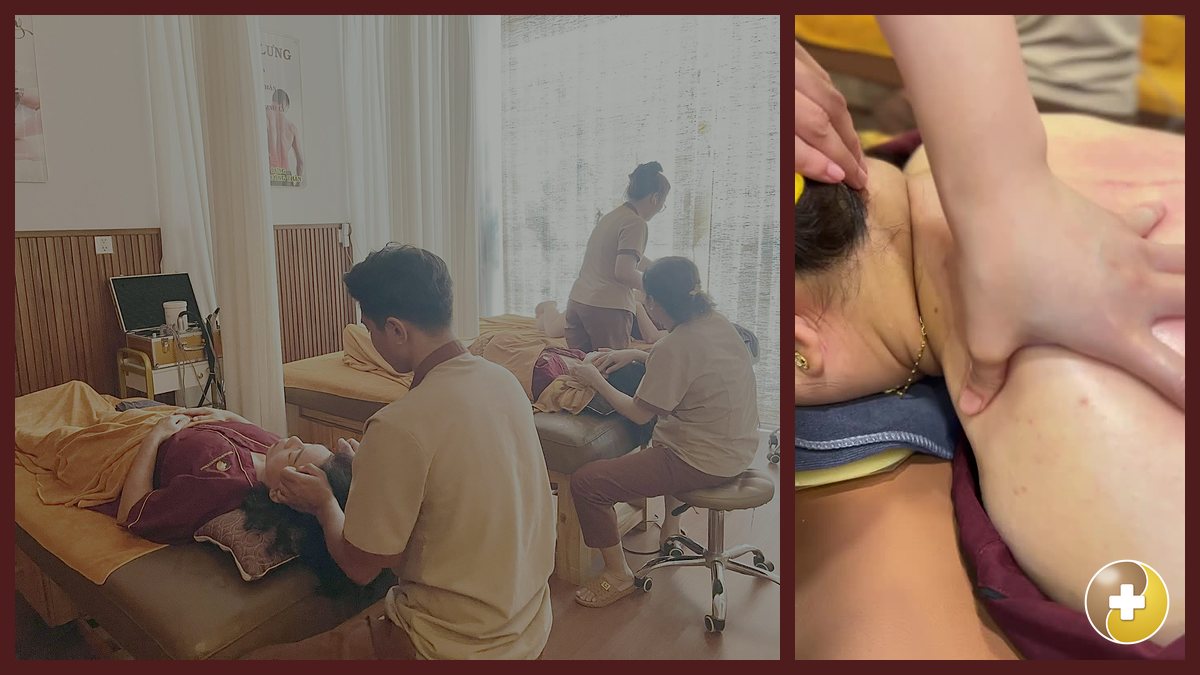
Quick answer: Back pain after a 15–20 hour flight from the US to Vietnam usually comes from sitting hunched for hours, which keeps the muscles between the shoulder blades and in the lower back tense. Walking, water and sleeping on Vietnam time help. Tong Gia Acupoint Wellness in Ho Chi Minh City reads the spine by hand, then relaxes the muscles and applies acupressure.
Want Lương Y Tống Văn Huynh’s team to read your spine and posture in person?
Why your back hurts after flying from the US West Coast to Vietnam
In December and January the US West Coast is cold and wet. San Jose and Sacramento wake up to fog, Seattle sits under steady rain, and even Orange County, Los Angeles and San Diego need a jacket at night. From there, many Viet Kieu families head to SFO or LAX with suitcases full of gifts. A nonstop flight to Saigon usually takes around 15–17 hours; most itineraries connect through Taipei, Seoul, Tokyo or Hong Kong, and with layovers the whole trip often runs 18–24 hours. You land at Tan Son Nhat (Tân Sơn Nhất) airport into 30°C humidity, stand up for your bags, and your back tells you exactly how long you sat: a burning ache between the shoulder blades and a lower back that feels like a plank.
In Western terms this is mostly mechanical back pain. Muscles, tendons, ligaments and discs have been loaded in one position for too long; it does not usually mean an injury. Two areas complain the most:
- The upper back, between the shoulder blades. The rhomboid muscles link the inner edge of each shoulder blade to the thoracic spine, with the middle trapezius on top and the spinal erectors underneath. In a narrow seat with your shoulders rolled in and your head bent toward a screen, these muscles are stretched and working at the same time, which creates that hot, knotted feeling under the shoulder blade.
- The lower back. The five lumbar vertebrae (L1–L5) carry most of the upper body's weight, and the L4–L5 and L5–S1 levels take the most load. Hours with your hips bent shorten the hip flexors in front, switch off the glutes, and leave the spinal erectors bracing the trunk. When you finally stand, these muscles have not let go yet.
It is common among office and tech workers from the Bay Area or Seattle who already sit all day, salon and shop workers who stand bent over, older parents flying economy, and anyone hauling heavy luggage. This article focuses on the back; for the full picture of neck, back and lower back across a Tet trip, read our main guide on spine care after a long-haul flight.
Common causes: the Pacific crossing, connections and a climate switch
- One posture for too long: 15–20 hours in economy, little legroom, a seat back that does not support the curve of your lower back. You slide your hips forward, round your back and push your head forward.
- Connections: fast walks between gates in Taipei, Seoul, Tokyo or Hong Kong with a heavy backpack on one shoulder, then more hours on hard terminal seats.
- Sleeping upright: flights leaving the US late at night mean dozing with your head tilted, so one side of the upper back is pulled for hours.
- Jet lag: in Tet season Vietnam is about 15 hours ahead of Pacific time, so your body struggles to relax at night. Exact numbers for every US time zone are in our post on the US–Vietnam time difference.
- Dry cabin air and little water: many people drink less to avoid the bathroom and add coffee or wine to sleep; dehydrated muscles cramp and stiffen more easily.
- Heavy bags: lifting a suitcase into the overhead bin or off the belt while twisting strains the lower back, especially right after sitting all day.
- Sudden climate change and a packed trip: from a cold winter into Saigon heat and air conditioning, then long car rides to the Mekong Delta, sitting on the floor at family meals and late nights, often within a two- or three-week leave.
If you already sit long hours at a desk or drive the freeway daily, the mid-back tends to ache more; see mid-back pain from sitting.
Related signs to notice after landing
- Burning or heaviness between the shoulder blades, worse when sitting or taking a deep breath.
- A tight chest, shallow breathing, frequent sighing.
- A stiff neck and heavy shoulders; see stiff neck after a long flight.
- A stiff lower back in the morning; bending over the sink is hard and you push up with your hands.
- Buttock ache, mild tingling down the back of the thigh, or an ache behind the knee; see back of knee pain after a long flight.
- Heavy legs and mildly puffy ankles on both sides; see swollen legs after a long flight.
- Waking at 2–3 a.m. and fading in the afternoon; see jet lag and sleep after flying to Vietnam.
As the Tong Gia training material puts it, pain shows up in one place while its source often lies somewhere else: upper back pain may come from how you slept and held your head, lower back pain from shortened hip muscles.
When to see a doctor
Most post-flight back stiffness eases with walking, sleep and relaxed muscles. With any of the following, please see a doctor at a medical facility and do not rely on massage:
- Back or between-the-shoulder-blade pain with chest pain or tightness, shortness of breath, cold sweats, or pain spreading to the jaw or left arm: call 115 (Vietnam emergency) right away.
- Sudden tearing pain between the shoulder blades: call 115.
- Breathlessness, chest pain on breathing in, coughing blood or fainting after the flight: call 115.
- One calf swollen, painful, warm or red: this can be a deep vein clot after a long flight; get checked now and do not have your legs massaged.
- Back pain with weakness or numbness in one or both legs, or a dragging foot.
- Numbness around the buttocks or groin, or new bladder or bowel problems.
- One-sided flank pain with fever, burning urine or blood in the urine.
- Back pain with fever, unexplained weight loss, lasting fatigue or pain that worsens at night at rest.
- Pain after a fall or knock while handling luggage; sudden back pain with osteoporosis.
- Pregnancy or recent surgery: check with your own care team before any massage.
Tong Gia does not read X-rays or MRI scans and does not make medical plans; if you have results from a medical facility, tell us so the staff know which areas to keep gentle. This is a wellness service, not medical care.
The Y Tướng Học view: upper back with Lung, Heart and Liver; lower back with Kidney
Y Tướng Học (face reading for wellness) is a tradition over 2,000 years old built on one line: the signs show outside, the organs lie inside. Lương Y (traditional practitioner) Tống Văn Huynh organised this knowledge so staff can read the face before they touch the back.
Lung and the upper back. In the Tong Gia curriculum the Lung back point (Phế du) sits below the third thoracic vertebra, 1.5 cun to each side. The Lung shows in the nose, skin and breath: healthy means smooth skin and deep breathing; out of balance means dry skin, a blocked nose, shallow breathing and sighing. Long hours of dry cabin air and a rounded posture press on exactly this picture. People with a long, squarish "Đồng" face are noted as prone to tightness around D3.
Heart and sleep. The Heart back point (Tâm du) lies below T5 and Quyết âm du below T4, right between the shoulder blades. The Heart shows in the tongue and complexion: a rosy face and deep sleep versus a pale or flushed face, poor sleep and palpitations. A 14–15 hour time shift often brings a warm, tight upper back together with broken sleep.
Liver and the tendons. The Liver governs the sinews; when its energy is stuck, shoulders tighten, eyes feel dry and tempers shorten. A broad-cheekbone "Thân" face is linked to the D7–D9 area.
Kidney and the lower back. The Kidney shows in the ears, hair, bones and lower back. Warm thick ears and a steady back are a good base; tired knees, a cold lower back, ringing ears and thinning hair suggest the lower back needs warmth. The Kidney corresponds to winter, so leaving a West Coast winter is worth noting. The bridge of the nose is read as a miniature of the spine, so a crooked nose bridge prompts staff to check the spine's alignment by hand. These are wellness observations, not fortune telling and not a medical finding.
Vertebrae and nerve-reflex areas involved
| Vertebrae | Nerves / function (anatomy) | Typical after the flight | Organ (Eastern view) | Outer signs (Y Tướng Học) |
|---|---|---|---|---|
| C6–C7, D1 | Nerve roots to shoulder and arm; levator scapulae and rhomboids attach here | Heavy shoulders after sleeping upright | Liver (sinews) | Rock-hard shoulder muscles, dry red eyes |
| D2–D4 | Upper intercostal nerves, chest wall; Lung point below T3 | Tight chest, shallow breathing | Lung | Dry skin, dry nose, sighing; "Đồng" face |
| D4–D6 | Intercostal nerves; Heart points at T4–T5 | Burning knot between the shoulder blades, light sleep | Heart | Pale or flushed face, palpitations |
| D7–D9 | Mid intercostal nerves, upper abdominal wall | Aching strip along the spine, tight flanks | Liver | Broad cheekbones ("Thân" face), irritability |
| D10–D12 | Lower abdominal wall, digestion; Spleen and Stomach points at T11–T12 | Heavy mid-back after plane meals | Spleen–Stomach | Pale lips, puffy tongue |
| L1–L3 | Nerves to groin, hip, front of thigh; hip flexors attach; Kidney point at L2 | Stiff when standing up, cold lower back | Kidney | Thin dull ears, dry hair |
| L4–L5, S1 | Roots forming the sciatic nerve to buttock and back of the leg | Buttock ache, tingling down the thigh, ache behind the knee | Kidney–Bladder | Hollow cold lower back, crooked nose bridge |
The table shows related areas for hands-on reading, not a cause.
How Tong Gia helps rebalance your back
Every session follows the spinal nerve-reflex balancing massage developed by Lương Y Tống Văn Huynh, founder of Tong Gia, with over 13 years in Vietnamese Eastern wellness, face reading and spinal reflex work.
- Questions and observation: where you flew from, how many legs and hours, sleep, heavy lifting, one-sided leg swelling, blood pressure, health conditions; then complexion, ears, nose bridge and shoulder level.
- Reading the spine by hand: skin temperature, muscle padding, vertebral shape and sensitivity, comparing left with right from the base of the neck to the sacrum.
- Muscle release: trapezius, rhomboids, spinal erectors, lower back and glutes, with pressure built up in five levels and checked with you.
- Acupressure in the right areas: Lung and Heart points in the upper back, Liver and Spleen points mid-back, Kidney point, Mệnh môn and Chí thất in the lower back, and Ủy trung behind the knee; each point is held until the skin turns from dry to slightly moist.
- Self-care tips: chest openers, warming the lower back, lifting luggage safely.
You may feel tender spots between the shoulder blades and beside the lower spine that ease as the muscles let go. Afterwards some people feel lighter and breathe more easily; others are a little sore for a day. Everyone responds differently, and no session promises the pain will be gone.
Suggested services (approximate rate 1 USD ≈ 26,000 VND, payment in VND; full list on our price page):
- Neck–shoulder / back–waist care, 60 min: 550,000 VND (about US$21), first visit 399,000 VND (about US$15); 90 min: 750,000 VND (about US$29).
- Full-body care, 120 min: 950,000 VND (about US$37) when you ache all over after the trip.
- Cupping to dispel cold, 30 min: 85,000 VND (about US$3), an add-on for a cold, heavy back.
From the airport: the District 12 branch lies north of Tan Son Nhat, usually around 30–45 minutes by car depending on traffic; Vinhomes Grand Park in Thu Duc City is farther and takes longer, especially at evening rush hour. To stop on the way from the airport, read massage near Tan Son Nhat airport.
Want Lương Y Tống Văn Huynh’s team to read your spine and posture in person?
A suggested plan for your trip, and self-care
| When | What your back needs | What to do |
|---|---|---|
| On the plane | Frequent position changes | Walk every 1–2 hours, heel raises, shoulder rolls, a small cushion behind the lower back, sip water |
| During the connection | Stretch after the first leg | Walk the terminal, wear the backpack on both shoulders, open the chest a few times |
| Landing day | Relax, sleep on Vietnam time | Warm shower, short walk, light meal, let someone else lift the bags |
| Days 2–3 | Release after the flight | A 60–90 minute back session or 120 minute full-body session |
| Family visits and Tet | Avoid one posture | Chairs with a backrest, breaks on long drives, go easy on alcohol |
| 2–3 days before flying back | Prepare for the return | A gentle session, good sleep; see preparing your body before the long flight home |
Daily: clasp your hands behind you and draw the shoulders back for 10–15 seconds, five times; rub your palms warm and rub both sides of the lower back 50–100 times before bed; breathe in for about 4 seconds and out for about 6 seconds for 5–10 minutes; walk 15–20 minutes in the morning sun; and lift with bent knees, never twisting. Keep fans and air conditioning off your back.
Book from abroad before you fly
Message us on WhatsApp or Zalo at +84 888 264 559 (0888 264 559 inside Vietnam) with three details: your landing date and time at Tan Son Nhat, where it aches (between the shoulder blades, lower back or everywhere), and which branch you prefer. You can also book online; tips are in booking a massage in Saigon from abroad.
- District 12 branch: 225 Dương Thị Mười, Phường Tân Chánh Hiệp (Tan Chanh Hiep Ward, District 12). Daily 8:00–19:00.
- Vinhomes Grand Park branch: Căn T16-21 khu Manhattan, Vinhomes Grand Park, Phường Long Bình, TP. Thủ Đức (Unit T16-21, The Manhattan, Thu Duc City). Daily 9:00–20:00.
Slots before Tet fill quickly, so write early. Genuine guest reviews are on each branch's Google Maps listing. For families, see our page for overseas Vietnamese.
Visit us
- Đông Y Huyệt Đạo Tống Gia Quận 12 (District 12)
225 Dương Thị Mười, Phường Tân Chánh Hiệp, Quận 12, HCMC · 8:00–19:00 daily · 0888 264 559 · Directions on Google Maps - Đông Y Huyệt Đạo Tống Gia Quận 9 (Vinhomes Grand Park, District 9)
Căn T16-21 khu Manhattan, Vinhomes Grand Park, Phường Long Bình, TP. Thủ Đức, HCMC · 9:00–20:00 daily · 0888 264 559 · Directions on Google Maps
Map of our two branches
Want Lương Y Tống Văn Huynh’s team to read your spine and posture in person?
What guests say on Google Maps
“I came to Khoa Học Huyệt Đạo hoping to find knowledgeable staff who could help me recover after a lot of travelling and intense exercise… The facilities were very clean, which made the whole experience even more comfortable… I am from Canada, and the level of body knowledge and care I received here goes far beyond anything I have experienced back home.”
— Theresa B., Google Maps review · District 12 branch · 2025 · See on Google Maps
“I came in with very bad back pain – turning my motorbike around was so hard it brought me to tears. After one session my back had settled again.” (translated from a Vietnamese review)
— Trang T., Google Maps review · District 12 branch · 2024 · See on Google Maps
“I had shoulder pain and numbness from sitting at the computer a lot, and after sessions at Khoa Học Huyệt Đạo I feel much better.” (translated from a Vietnamese review)
— Loan N., Google Maps review · Vinhomes Grand Park branch (District 9) · 2025 · See on Google Maps
Quoted from public reviews, shortened where marked (…). Experiences vary from person to person; reviews are not a substitute for seeing a doctor when something feels wrong.
Related guides for your trip
- Plumber in Australia, crawling and kneeling all day: knee and back pain and how to care for it on a trip home
- Back and shoulder strain from shrimping and offshore work: nets, deck vibration, shift sleep, care at home
- Poultry farm work in the US: back pain and tired hands from egg collecting and catching birds
FAQ
Is back pain after a long flight from the US to Vietnam serious? Usually it is mechanical: 15–20 hours hunched in a seat tightens the muscles between the shoulder blades and in the lower back, made worse by dehydration and sleeping upright. It tends to ease within a few days of walking and sleeping on Vietnam time. With chest pain, breathlessness, leg weakness, bladder problems, fever or one swollen painful calf, see a doctor right away or call 115.
Why does my upper back burn between the shoulder blades after flying from San Jose or LA? With your shoulders rolled in and your head bent toward a screen, the rhomboids and middle trapezius are stretched and working for hours, which feels hot and knotted. Sleeping with your head tilted and carrying a backpack on one shoulder during the connection add to it. Chest openers, shoulder rolls and regular walks help.
How long does lower back pain last after a long flight? Many people feel better within 2–3 days of walking, sleeping on local time and keeping the lower back warm. Desk workers and older travellers may take longer. If it is still painful after about a week, keeps getting worse or worsens at night at rest, see a doctor.
Should I get a massage right after landing at Tan Son Nhat? If you only feel stiff and have no warning signs, a gentle session is fine, but most people do well with a shower and a night's sleep first, then a session on day two or three. Tong Gia staff ask about your flight and check for one-sided leg swelling before starting.
What can I do on a Seattle to Saigon flight with a connection to protect my back? Pick an aisle seat, walk every 1–2 hours, put a small cushion behind your lower back, sip water and limit alcohol. During the layover in Taipei or Seoul, walk instead of sitting, wear your backpack on both shoulders and stretch your chest before boarding again.
How much is a back massage at Tong Gia in Ho Chi Minh City? Back–waist care is 550,000 VND for 60 minutes (about US$21; 399,000 VND on your first visit) and 750,000 VND for 90 minutes. Full-body care is 950,000 VND for 120 minutes. Payment is in VND; USD figures are approximate. This is a wellness service, not medical care.
Author: Lương Y Tống Văn Huynh – founder of Huyệt Đạo Tống Gia, a master of traditional Vietnamese wellness with over 13 years in Eastern wellness care, Y Tướng Học (face reading) and spinal nerve-reflex balancing massage.
Updated: 2026-11-15
Related guides
- Preparing your body before the long flight home after Tet: a 3–5 day plan for Viet Kieu returning to Australia
- Back pain after a long flight from the US to Vietnam: upper back, lower back and what helps
This is a wellness service, not medical care.