
How to describe back pain in Japanese, Korean and Chinese: hospital phrases, warning signs and care in Saigon
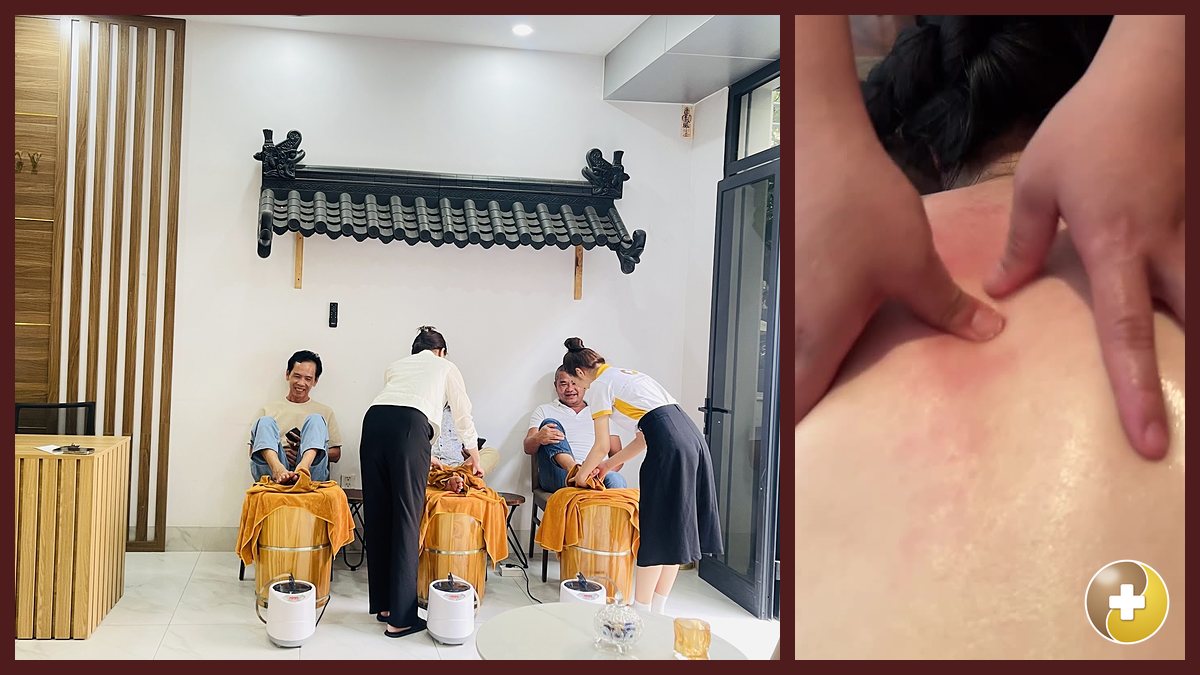
Quick answer: In Japanese, low back pain is 腰痛 (yōtsū); say "腰が痛いです" (koshi ga itai desu). In Korean it is 요통; say "허리가 아파요" (heo-ri-ga a-pa-yo). In Chinese it is 腰痛 (yāotòng); say "我腰很痛". Add where, what kind and since when. In Ho Chi Minh City, Tong Gia Acupoint Wellness offers hands-on back care.
Want Lương Y Tống Văn Huynh’s team to read your spine and posture in person?
Why a few words about your back matter so much abroad
Many Vietnamese living in Japan, Korea and Taiwan know the feeling: the lower back has hurt for weeks, but going to a hospital feels hard because you cannot explain it. Trainees in Aichi, Saitama and Osaka stand on car and food-packing lines; EPS workers in Ansan, Hwaseong and Gimhae run presses and carry boxes; workers in Taoyuan, Taichung and Kaohsiung do long shifts in electronics and textile plants. Winters in Japan and Korea are cold and dry, with snow in many areas; Taiwan rarely sees snow but its monsoon winters are damp and chilly. Travellers flying long-haul through Tokyo, Seoul or Taipei on the way to Ho Chi Minh City face the same problem if their back flares up mid-trip.
Start with three key expressions. Japanese: 腰痛 (yōtsū) for low back pain, and in everyday speech 腰が痛いです (koshi ga itai desu), "my lower back hurts". Korean: 요통 (yo-tong), and 허리가 아파요 (heo-ri-ga a-pa-yo). Mandarin Chinese: 腰痛 (yāotòng), and 我腰很痛 (wǒ yāo hěn tòng). All three share the same Sino root as the Vietnamese term "yêu thống". Taiwan uses traditional characters, so some words below are written that way (腳, 痠).
From a Western medical point of view, most back pain in factory and warehouse workers is mechanical back pain: muscles, tendons, ligaments, small spinal joints and discs under repeated load. In any country, hospital staff need three facts: where it hurts (lower back, upper back, neck and shoulders, spreading into the leg or not), what it feels like (dull, sharp, numb, electric) and since when, after what (lifting, a fall, no clear reason). One short sentence with those three points, plus pointing at the spot, makes the visit faster and clearer. For how the neck, mid-back and lower back connect, read our main guide on spine care after a long-haul flight.
Common causes of back pain for workers in Japan, Korea and Taiwan
- Repeated lifting and bending: boxes from conveyors to pallets, materials on building sites. Bending at the waist with straight legs, holding the load far from the body and twisting to put it down strains the lower back. The Korean factory side is covered in back pain from factory work in Korea.
- Standing on hard floors: a whole shift at a machine, weight shifted onto one leg, the spinal erectors and quadratus lumborum working nonstop.
- Arms raised, head bent: assembly, inspection, sewing and welding load the trapezius and shoulder muscles, producing the stiffness the Japanese call 肩こり (katakori). See neck and shoulder pain on factory shifts in Japan.
- Fast, repetitive hand work: on Taiwanese electronics lines the wrist, forearm and shoulder tire and may tingle; see hand numbness on assembly lines in Taiwan.
- Cold and damp: cold muscles contract and lose elasticity; lifting at the start of a winter morning shift before muscles warm up invites strain.
- Short sleep, night shifts, rushed meals: too little recovery time between shifts.
- Worry and reluctance to speak up: fear of losing work or bothering a supervisor keeps people quiet; stress tightens the shoulders and back and disturbs sleep.
Then comes the flight home: roughly 5–6 hours from Japan, about 5 from Korea and 3–4 from Taiwan to Tan Son Nhat airport, in a narrow seat after months of shifts, followed by heavy suitcases and long car rides.
Related signs to mention to hospital staff
- Whether the pain spreads to the buttock, back of the thigh, calf or foot; pain below the knee with numbness is important.
- Numbness or weakness in the legs, trouble lifting the front of the foot.
- Whether bending, sitting or lying down makes it worse.
- Morning stiffness that eases after a few steps.
- Fever, burning or blood when urinating, weight loss: say these first.
- Neck and shoulder stiffness, headaches or tired eyes from bent-head work.
- Poor sleep, a cold lower back, getting up at night to urinate, which in Eastern wellness is often linked to the Kidney.
Key words: body parts and types of pain
Only common, everyday words are used here. Romanisation is approximate; speak slowly and point.
| English | Japanese | Korean | Chinese (Taiwan) |
|---|---|---|---|
| Lower back, waist | 腰 (koshi) | 허리 (heo-ri) | 腰 (yāo) |
| Upper back | 背中 (senaka) | 등 (deung) | 背 (bèi) |
| Neck | 首 (kubi) | 목 (mok); back of the neck: 뒷목 (dwit-mok) | 脖子 (bózi) |
| Shoulder | 肩 (kata) | 어깨 (eo-kkae) | 肩膀 (jiānbǎng) |
| Leg | 足 (ashi) | 다리 (da-ri) | 腿 (tuǐ) |
| Low back pain (general term) | 腰痛 (yōtsū) | 요통 (yo-tong) | 腰痛 (yāotòng) |
| Stiff neck and shoulders | 肩こり (katakori) | 어깨 결림 (eo-kkae gyeol-lim) | 肩頸痠痛 (jiānjǐng suāntòng) |
| Dull, heavy ache | 鈍い痛みです (nibui itami desu) | 뻐근해요 (ppeo-geun-hae-yo) | 痠痛 (suāntòng) |
| Sharp, stabbing pain | 鋭い痛みです (surudoi itami desu) | 찌르는 듯이 아파요 (jji-reu-neun deu-si a-pa-yo) | 刺痛 (cìtòng) |
| Throbbing pain | ズキズキします (zukizuki shimasu) | 욱신거려요 (uk-sin-geo-ryeo-yo) | 抽痛 (chōutòng) |
| Hospital | 病院 (byōin) | 병원 (byeong-won) | 醫院 (yīyuàn) |
| Orthopaedics department | 整形外科 (seikei geka) | 정형외과 (jeong-hyeong-oe-gwa) | 骨科 (gǔkē) |
A common mix-up: Korean 목 means both neck and throat, so say 뒷목 for the back of the neck. In Japanese, 腰 (koshi) is the lower back and 背中 (senaka) the upper back.
Phrase table: where it hurts, what kind, since when
Build your sentence in this order: place → type → since when, after what → other signs. Save the table on your phone and show it at reception.
| You want to say | Japanese | Korean | Chinese (Taiwan) |
|---|---|---|---|
| My lower back hurts. | 腰が痛いです。(koshi ga itai desu) | 허리가 아파요. (heo-ri-ga a-pa-yo) | 我腰很痛。(wǒ yāo hěn tòng) |
| My neck and shoulders hurt. | 首と肩が痛いです。(kubi to kata ga itai desu) | 목하고 어깨가 아파요. (mok-ha-go eo-kkae-ga a-pa-yo) | 脖子和肩膀很痠。(bózi hé jiānbǎng hěn suān) |
| It hurts here. | ここが痛いです。(koko ga itai desu) | 여기가 아파요. (yeo-gi-ga a-pa-yo) | 這裡痛。(zhèlǐ tòng) |
| It started 3 days ago. | 三日前から痛いです。(mikka mae kara itai desu) | 3일 전부터 아파요. (sa-mil jeon-bu-teo a-pa-yo) | 三天前開始痛。(sān tiān qián kāishǐ tòng) |
| It started when I lifted something heavy. | 重い物を持ったときに痛くなりました。 | 무거운 걸 들다가 허리를 다쳤어요. | 搬重物的時候開始痛。 |
| It started after a fall. | 転んでから痛いです。(koronde kara itai desu) | 넘어진 후부터 아파요. (neo-meo-jin hu-bu-teo a-pa-yo) | 跌倒以後開始痛。(diédǎo yǐhòu kāishǐ tòng) |
| It hurts when I move / bend. | 動くと痛いです / かがむと痛いです。 | 움직이면 아파요 / 허리를 숙이면 아파요. | 一動就痛 / 彎腰會痛。 |
| It hurts at night too. | 夜も痛いです。(yoru mo itai desu) | 밤에도 아파요. (bam-e-do a-pa-yo) | 晚上也痛。(wǎnshang yě tòng) |
| My legs are numb. | 足がしびれます。(ashi ga shibiremasu) | 다리가 저려요. (da-ri-ga jeo-ryeo-yo) | 腿會麻。(tuǐ huì má) |
| My legs feel weak. | 足に力が入りません。 | 다리에 힘이 없어요. | 腿沒有力氣。 |
| I have a fever. | 熱があります。(netsu ga arimasu) | 열이 나요. (yeo-ri na-yo) | 我發燒了。(wǒ fāshāo le) |
| I need an interpreter. | 通訳をお願いします。 | 통역이 필요해요. | 我需要翻譯。 |
| Please call an ambulance. | 救急車を呼んでください。 | 구급차 불러 주세요. | 請叫救護車。 |
Bring your insurance card and residence card (在留カード in Japan, 외국인등록증 in Korea, 居留證 in Taiwan), and note when the pain began and what you were doing. Japan, Korea and Taiwan all use 119 for an ambulance. In Vietnam the number is 115, and a few Vietnamese phrases help too: "Tôi bị đau lưng" (I have back pain), "Đau ở đây" (it hurts here), "Tôi bị tê chân" (my legs are numb).
When to see a doctor
Most shift-work back pain eases with rest, sleep, warmth and stretching. Please see a doctor or go to a hospital, rather than relying on massage, if:
- The pain began right after a fall, a heavy object hitting you, or a "snap" while lifting, and you cannot stand straight.
- Pain runs below the knee with numbness or weakness, or you cannot lift the front of your foot.
- You feel numbness in the groin or buttocks, or lose bladder or bowel control: go to emergency now.
- One-sided flank pain comes with fever, chills, burning or blood in the urine.
- There is unexplained weight loss, lasting fatigue, or pain that worsens at night despite rest.
- Back pain comes with chest tightness, shortness of breath, sweating, or pain spreading to the jaw or left arm: call 119 in Japan, Korea or Taiwan and 115 in Vietnam, and do not have a massage.
- One calf is swollen, painful, warm or red after a flight or days of little walking: this can be deep vein thrombosis; get checked immediately and do not massage the leg.
- Pain lasts longer than 4–6 weeks or keeps getting worse.
- You are pregnant, recently had surgery or have osteoporosis: ask medical staff before any massage.
Report a workplace injury to your supervisor and get checked early so there is a record. Tong Gia does not read X-ray or MRI images or make medical judgements; if you have results from abroad, simply tell the practitioner which areas to keep gentle. This is a wellness service, not medical care. More in what causes lower back pain.
The Y Tướng Học view: the lower back and the Kidney, tendons and the Liver
Y Tướng Học (face reading for wellness) rests on the idea "what is inside shows outside". Lương Y (traditional healer) Tống Văn Huynh organised this knowledge so practitioners can read the face and posture before touching the spine. For people working long shifts in cold countries, three organ systems are usually compared.
Kidney and the lower back. In the Tong Gia curriculum, the Kidney governs bones and marrow, opens into the ears, shows in the hair, relates to the lower back and knees, belongs to Water and to winter, and its emotion is fear. Weak Kidney yang shows as feeling cold, cold hands and feet, a cold and tired lower back and knees, and night-time urination. Fear is also easy to recognise abroad: pain you cannot explain, worry about work and money. Knowing a few phrases is one way to reduce that fear.
Liver and the tendons. The Liver governs the sinews; when it is weak the muscles cramp and stiffen, and it opens into the eyes. Night shifts, short sleep and stress tighten the long back muscles and the neck, and dry the eyes. The curriculum notes that people with a "Thân" face shape (wide cheekbones, narrow forehead and chin) tend to hold tension around D7 and D9.
Spleen and the muscles. Rushed meals and late-night eating tire digestion, and muscles fatigue faster. A square, fleshy "Điền" face often comes with a thick back that can stiffen in large areas around D11–D12.
Faces linked to the lower back. A "Do" face (narrow forehead, full jaw) tends to have very thick lumbar and hip muscles; a round "Viên" face a cold, soft lower back with dull aches; a "Giáp" face (wide forehead, pointed chin) a hollow, cold lower back. A crooked nose bridge often goes with an uneven spinal axis around L4–L5–S1. These are wellness observations, not fortune-telling and not a judgement about any disease.
Want Lương Y Tống Văn Huynh’s team to read your spine and posture in person?
Vertebrae and nerve-reflex areas involved
In the Tong Gia curriculum on spinal nerve-reflex balancing, the neck C1–C7 relates to the head, face, neck and arms; the lumbar L1–L5 to digestion, kidneys, urinary and reproductive function and the legs; the sacrum S1–S5 to elimination and the pelvis. The musculoskeletal group combines C5–C7, L1–L5 and S1–S5.
| Vertebrae | Nerves / function (anatomy) | Typical complaint | Organ (Eastern view) | Outer signs (Y Tướng Học) |
|---|---|---|---|---|
| C5–C7 | Roots forming the brachial plexus to shoulder, arm, hand | Katakori, tired or tingling hands on assembly lines | Liver governs sinews | Tight shoulders, dry red eyes, knitted brows |
| D7–D9 | Mid intercostal nerves; Liver shu area | Tight long back muscles when pushing and pulling | Liver | Wide cheekbones ("Thân" face), irritability |
| D10–D12 | Nerves to the lower abdominal wall; Spleen and Stomach shu | Heavy mid-back, bloating after rushed meals | Spleen–Stomach | Pale lips, thick back ("Điền" face) |
| L1–L3 | Roots to groin and front thigh; kidneys lie around D12–L3; Kidney shu and Ming Men near L2 | Stiff when standing up, cold aching back in winter | Kidney | Thin dull ears, dry hair, cold lower back ("Viên" face) |
| L4–L5 | Roots contributing to the sciatic nerve; discs under the most load when bending and lifting | Low back pain after lifting (腰痛, 요통) | Kidney–Bladder | Thick lumbar and hip muscles ("Do" face), crooked nose bridge |
| S1–S5 | Roots to buttock, back of thigh and calf; pelvic and bladder nerves | Sore buttocks, tired thighs and knees after standing | Kidney–Bladder | Hollow cold lower back ("Giáp" face) |
The table shows related areas the practitioner checks carefully by hand; it does not name a cause.
How Tong Gia helps rebalance your back in Ho Chi Minh City
Each session follows the spinal nerve-reflex balancing method of Lương Y Tống Văn Huynh, founder of Tong Gia Acupoint Wellness (Huyệt Đạo Tống Gia), with over 13 years in Vietnamese Eastern wellness, Y Tướng Học and spinal nerve-reflex balancing. It is a Vietnamese Eastern wellness method, done by hand, and you are welcome to try it when you are in Ho Chi Minh City.
- Questions and observation: your work, posture, loads, where it hurts, whether it spreads to the leg, any check-ups abroad; then complexion, ears, nose bridge, posture, shoulder and hip levels.
- Reading the spine by hand: skin temperature, the muscle layer, the shape of the spine and sensation at each point, comparing left and right, top and bottom, from neck to sacrum.
- Muscle release: spinal erectors, quadratus lumborum, glutes and hamstrings, plus neck and shoulders, with pressure built up gently across 5 levels while checking how you feel.
- Acupressure on the right areas: Thận du (Kidney shu), Mệnh môn and Chí thất on the lower back, Can du and Tỳ du mid-back, Ủy trung behind the knee.
- Self-care to take back: lifting technique, shifting weight while standing, a 5-minute stretch before and after shifts, warming the lower back before sleep.
During the session a few points may feel tender where muscles are tight; as they loosen the tenderness fades and the back feels warmer. Afterwards many people find bending and standing easier and sleep more deeply; some feel a little sore for a day first. Everyone responds differently, and no result is promised from one session.
- Neck-shoulder / back-waist care, 60 min: 550,000 VND (about 21 USD), first visit 399,000 VND (about 15 USD); 90 min: 750,000 VND (about 29 USD).
- Kidney wellness session, 75 min: 750,000 VND (about 29 USD) for a cold, dull-aching lower back after many winters.
- Cupping to dispel cold, 30 min: 85,000 VND (about 3 USD) as an add-on.
Reference rate 1 USD ≈ 26,000 VND; payment in VND. Full list on the price page.
From Tan Son Nhat airport: the District 12 branch (225 Dương Thị Mười, Phường Tân Chánh Hiệp, north of the airport) is a fairly short drive depending on traffic. The Vinhomes Grand Park branch (Căn T16-21 khu Manhattan, Phường Long Bình, TP. Thủ Đức, in Thu Duc City) is farther and takes noticeably longer at rush hour. If you want to stop on the way from the airport, see massage near Tan Son Nhat airport.
A suggested plan for your trip home, and self-care
| When | What your back needs | What to do |
|---|---|---|
| Last week abroad | No extra load | Ask roommates to help carry, split gifts into lighter bags; if pain is strong, get checked there first using the phrases above |
| On the 3–6 hour flight | Change position | Roll a jacket behind your lower back; stand and walk each hour; sip water |
| Arrival day | Relax and sleep | Let family lift the bags; warm shower; light walk; Vietnam is 2 hours behind Japan and Korea, 1 hour behind Taiwan |
| Days 2–3 | Release months of tension | A 90-minute back session or the 75-minute Kidney session |
| Family visits | Avoid long floor sitting | Use chairs with a backrest, take breaks on long car rides |
| Mid-stay | Keep fatigue from building | One more session, with cupping if the back feels cold |
| 2–3 days before flying back | Prepare for the next work period | A light session, review your stretches, keep the phrase table saved |
Daily habits: lift with your legs and keep loads close; warm up for 3–5 minutes before a shift; shift weight or rest one foot on a low step while standing; roll your shoulders and stretch your neck at each break; rub your palms warm and massage the lower back before sleep.
Book from abroad before you fly
Message Zalo or WhatsApp +84 888 264 559 (0888 264 559 inside Vietnam) with your landing date and time, where it aches, any check-ups abroad, and your preferred branch. Step-by-step help is in booking a massage in Saigon from abroad.
- District 12: 225 Dương Thị Mười, Phường Tân Chánh Hiệp; open 8:00–19:00 daily.
- Vinhomes Grand Park: Căn T16-21 khu Manhattan, Phường Long Bình, TP. Thủ Đức; open 9:00–20:00 daily.
Or book on the booking page.
Visit us
- Đông Y Huyệt Đạo Tống Gia Quận 12 (District 12)
225 Dương Thị Mười, Phường Tân Chánh Hiệp, Quận 12, HCMC · 8:00–19:00 daily · 0888 264 559 · Directions on Google Maps - Đông Y Huyệt Đạo Tống Gia Quận 9 (Vinhomes Grand Park, District 9)
Căn T16-21 khu Manhattan, Vinhomes Grand Park, Phường Long Bình, TP. Thủ Đức, HCMC · 9:00–20:00 daily · 0888 264 559 · Directions on Google Maps
Map of our two branches
Want Lương Y Tống Văn Huynh’s team to read your spine and posture in person?
Related guides for your trip
- Fatigue from cleanroom suits on long shifts: heat, heavy shoulders and back, dry skin in chip plants
- Where is kidney-related back pain felt? A calm guide for young shift workers in Japan, Korea and Taiwan
- Acupressure points for sleep on rotating shifts: which points to press, how to press safely, and sleep habits
FAQ
How do you say back pain in Korean? Low back pain in Korean is 요통 (yo-tong). In daily speech say 허리가 아파요 (heo-ri-ga a-pa-yo), "my lower back hurts". For the upper back say 등이 아파요 (deung-i a-pa-yo), and "since 3 days ago" is 3일 전부터 아파요. Whether you are in Ansan, Busan or Seoul, the ambulance number is 119.
How do you say stiff neck and shoulders in Japanese? Stiff neck and shoulders is 肩こり (katakori). To say your neck and shoulders hurt, use 首と肩が痛いです (kubi to kata ga itai desu); for the lower back, 腰が痛いです (koshi ga itai desu). Trainees in Aichi or Osaka can save these on their phone and show them at reception.
How do I describe back pain in Chinese at a hospital in Taiwan? Low back pain is 腰痛 (yāotòng); say 我腰很痛 (wǒ yāo hěn tòng). "It hurts here" is 這裡痛, "my legs are numb" is 腿會麻, and stiff neck and shoulders is 肩頸痠痛. Taiwan uses traditional characters, so show text written that way.
How to describe back pain in Japanese, Korean, Chinese quickly? Japanese: 腰が痛いです (koshi ga itai desu). Korean: 허리가 아파요 (heo-ri-ga a-pa-yo). Chinese: 我腰很痛 (wǒ yāo hěn tòng). Then add where it hurts, the type of pain (dull, sharp, numb) and since when or after what, and point to the spot.
When is back pain an emergency in Japan, Korea or Taiwan? Go to emergency or call 119 if pain follows a fall, spreads below the knee with numbness or weakness, comes with groin numbness or loss of bladder control, fever or blood in the urine, or with chest pain and shortness of breath. In Vietnam call 115.
Can massage help my back when I visit Ho Chi Minh City? A wellness massage relaxes tight muscles and warms the back, and many people bend and sleep more easily afterwards, but responses vary and nothing is promised. For a 1–3 week stay, 2–3 sessions a few days apart plus self-care at home is a common plan.
Author: Lương Y Tống Văn Huynh – founder of Huyệt Đạo Tống Gia, a master of traditional Vietnamese wellness with over 13 years in Eastern wellness care, Y Tướng Học (face reading) and spinal nerve-reflex balancing massage.
Updated: 2026-11-16
Related guides
- Parents' back pain after a long flight with young kids: lower back, shoulders and wrists
- How to describe back pain in Japanese, Korean and Chinese: hospital phrases, warning signs and care in Saigon
- Long car rides home during Tet: lower back pain, numb buttocks and heavy legs, and how to care for them
- Back and shoulder strain from shrimping and offshore work: nets, deck vibration, shift sleep, care at home
- Preparing your body before the long flight home after Tet: a 3–5 day plan for Viet Kieu returning to Australia
- Back pain from factory work in Korea: lifting, bending, machine shifts and caring for your back on home leave
This is a wellness service, not medical care.