
Sore legs after the HCMC Marathon: why calves, thighs and heels ache and how to look after them
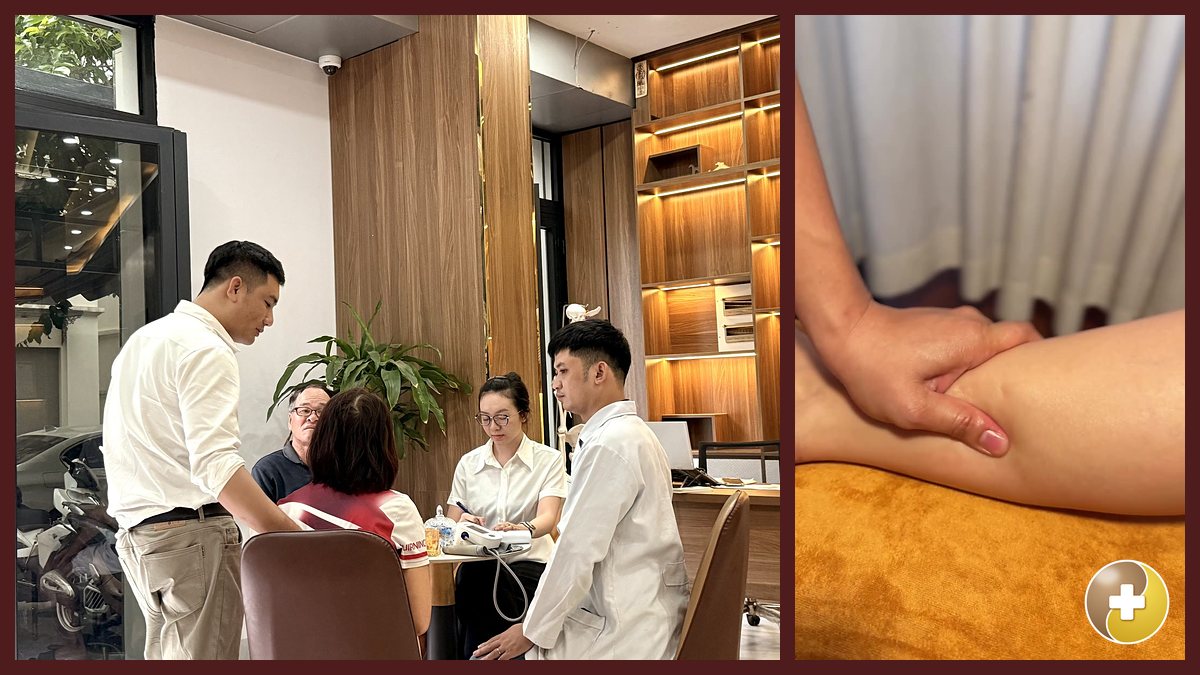
Quick answer: Sore legs after the HCMC Marathon mostly come from calves, thighs and heels overloaded on a hot, humid early morning, on top of a long flight and jet lag. Rest and drink for the first 24–48 hours; from day two, gentle leg massage at Tong Gia Acupoint Wellness in District 12 or Thu Duc can help.
Want Lương Y Tống Văn Huynh’s team to read your spine and posture in person?
Sore legs after the HCMC Marathon: what is going on
Every early-year race in Ho Chi Minh City starts in the dark, and in the crowd at the start line there are plenty of overseas Vietnamese and long-haul visitors. Runners fly in from San Jose, Houston and Toronto, from Paris and Berlin, from Sydney, Melbourne, Tokyo and Seoul, combining a family visit with a full marathon, a half or a 10K in the city where many of them grew up. Running past familiar streets with people cheering in Vietnamese is something they talk about all year.
The catch is that most of them trained in a very different climate. December and January in North America, Europe, Japan or Korea mean winter: treadmill sessions, runs at a few degrees above zero in gloves and a windbreaker. In Australia it is summer, but the air is usually drier than in Saigon. A few days after landing, they line up on a warm, humid morning and run for two, three or even five or six hours as the sun climbs. Crossing the finish line feels great; by the afternoon, stairs are hard work, the next morning the front thighs ache and the first steps out of bed hurt the heels.
In Western physiology, post-marathon soreness is several things happening at once. With every stride the thigh and calf muscles contract while being lengthened to absorb landing forces. After tens of thousands of strides, tiny injuries appear in the muscle fibres, followed by local inflammation. This is delayed-onset muscle soreness: it builds after about 24 hours, peaks somewhere between 24 and 72 hours and then fades. Meanwhile the muscles' energy stores are almost empty, you have lost a lot of water and salt through sweat, and the Achilles tendon and the plantar fascia under the foot have taken a repetitive load. Downhill stretches, such as bridge ramps if your course has them, make the front thighs brake even harder, which is why sitting down on a low chair can feel like a challenge the next day.
Who tends to feel it most:
- runners who land only a few days before the race and have not adjusted to the time zone or the heat;
- people who trained all winter on a treadmill or flat routes with few hills;
- first-time marathon or half-marathon runners, and anyone who went out faster than planned;
- runners over 40, or anyone with a history of heel, knee or calf trouble when increasing distance;
- anyone wearing new shoes or new socks for the first time on race day.
This article is part of the Tong Gia Acupoint Wellness (Huyệt Đạo Tống Gia) programme for overseas Vietnamese and long-haul visitors to Ho Chi Minh City. What a post-run session feels like at our Thu Duc branch is described in massage after running in Thu Duc; the overview of the spine after a flight is in the main guide, spine care after a long-haul flight. Here we focus on flying in for a race and looking after your legs afterwards.
Common causes: early-morning heat, a long flight, jet lag and pacing
- Humid heat before your body is used to it. Early mornings in Saigon are cooler than midday, but humidity is high, so sweat does not evaporate well and the body struggles to shed heat. Losing water and salt makes muscles cramp and tire sooner, and your heart beats faster at the same pace. Getting used to heat usually takes one to two weeks, which a runner who lands just before race day does not have. See heat fatigue when visiting Vietnam in the dry season.
- A long flight right before the race. From the US West Coast or Canada, with connections, the trip can take close to a full day; from Europe around half a day; even from Australia it is eight to nine hours. Sitting with bent knees and little movement slows the return of blood from the legs, ankles swell and calves feel heavy, so your legs start the race before they have recovered from the flight. See swollen legs after a long flight.
- Jet lag and short sleep. Races start before dawn, which means a very early alarm by Vietnam time while your body clock is still on home time. A restless night leaves the muscles less time to recover. Our guide to the US–Vietnam time difference and jet lag has tips for shifting your sleep.
- A change of surface and training pattern. After a winter on treadmills and flat paths, hard asphalt, bridge ramps and tight corners load the calves, Achilles tendons and front thighs in ways they are not used to.
- Pacing with the crowd. The start-line atmosphere pushes many runners faster than planned in the first ten kilometres; in the second half the muscles run out of energy, the stride shortens and the feet strike harder.
- Drinking the wrong way. Too little water means dehydration, but drinking a lot of plain water without replacing salt can also cause trouble. After the finish come iced coffee, beer, family feasts and late nights.
- Sightseeing the next day. Ben Thanh market, the walking street, a trip to the home village, the stairs of a narrow tube house: muscles that have not rested are put straight back to work.
Signs worth noting
The key is telling normal post-race soreness, which settles within a few days of rest, from cramps caused by water and salt loss, and both from signs that need a medical check:
| Feature | Post-race soreness (common) | Cramps from water and salt loss | Get checked now |
|---|---|---|---|
| Where | Calves, front and back of both thighs; heels, soles | Calves, hamstrings, feet; sometimes several muscle groups | One swollen, hot, red calf; one sharply painful spot on a bone |
| When | Builds after 24 hours, worst on days 1–3 | During the race, near the finish or at night afterwards | Any time, worsening quickly |
| Feels like | Aching, tight, hard to go downstairs or squat | Muscle knots into a hard lump, intense pain, eases with stretching | Severe pain even at rest, dizziness, breathlessness |
| Urine | Normal once you drink enough | Dark yellow, little of it | Tea- or cola-coloured; very little urine |
| What to do | Rest, walk gently, drink; light massage from day two | Stop, stretch gently, drink fluids with electrolytes | Get checked or call 115; no massage |
Besides sore legs, runners in Ho Chi Minh City often notice heel pain with the first steps in the morning, usually linked to the plantar fascia; pain on the outer knee or around the kneecap in the second half of the race, covered in knee pain when running; rock-hard calves and night cramps; blisters and bruised toenails from shoes that got tight as feet swelled in the heat; a stiff lower back and hips after the flight plus the run; and a heavy, sleepy tiredness with a poor appetite for a day or two.
When to see a doctor
If sore legs after a marathon in Ho Chi Minh City come with any of the following, please see a doctor at a medical facility or call 115 (Vietnam's ambulance number) rather than relying on massage:
- Chest pain, crushing chest pressure, shortness of breath, cold sweats or an irregular heartbeat during or after the race: call 115 immediately; do not ride a motorbike to hospital.
- Dizziness, fainting, confusion or slurred speech, hot skin with less sweating: this can be heat illness. Call 115 and move the person somewhere cool.
- Tea- or cola-coloured urine with severe, swollen, hard thigh or calf muscles and very little urine: get checked the same day, no massage.
- Headache, nausea, vomiting or confusion after drinking large amounts of plain water during and after the race: get checked straight away.
- Severe cramps that will not stop despite stopping, stretching and drinking, or cramps in several muscle groups at once.
- One calf swollen, warm and red, more painful when walking, especially soon after a long flight: this can be deep vein thrombosis. Get checked and do not massage that leg.
- Sudden breathlessness, chest pain or coughing blood in the days after the flight: call 115.
- Sharp pain at one spot on the shin or top of the foot that keeps increasing and hurts at rest: possibly a stress injury to the bone, so have it checked.
- A "pop" at the heel and you cannot rise onto your toes, or an ankle that swells badly after rolling on the road.
At Tong Gia, practitioners ask about these signs before touching your legs; if any are present, they stop and recommend a medical check. Tong Gia does not read X-rays or MRI scans and does not draw up medical plans. If you have a heart condition or take blood thinners, wellness work is only done with the agreement of the specialist who follows you.
This is a wellness service, not medical care.
The Y Tướng Học view: the Liver stores blood and governs the sinews, the Spleen governs the muscles
The Tong Gia curriculum describes the Liver (Can) as "storing the blood": it holds and regulates blood volume. At rest, blood returns to the Liver to be replenished; during activity, the Liver sends blood out to the muscles and tendons. A run lasting several hours pushes this function to its limit. The curriculum also says "the Liver governs the sinews": a strong Liver means supple tendons and mobile joints, a weak one shows as stiffness, cramps, trembling muscles and lost flexibility. When Liver blood runs low, it lists blurred vision, dry eyes, brittle nails and cramps. In this functional language, a calf that cramps in the last kilometres or at night after the race is a sinew that is "under-nourished".
The Spleen (Tỳ) governs the muscles and the four limbs: it turns food into the essence that builds qi and blood for the muscles. When it is out of balance, muscles feel slack and the limbs tired and weak. The Spleen also moves fluids; when that slows, there is puffiness and heaviness. Legs that feel like lead after a long flight, plus a week of irregular meals and celebrations, are where the Spleen is carrying a heavy load.
The Kidney (Thận) relates to bones, water and the lower back and knees; "the Kidney governs the bones", and when it weakens the back and knees tire quickly. The Kidney also "governs water". In Western terms, the curriculum notes that the kidneys filter about 180 litres of fluid from the blood each day and make only one to two litres of urine. Scanty, dark urine after a hot run is a sign you are short of water; urine as dark as tea is a reason to get checked.
This is the functional language of Eastern wellness, not a statement that your liver, spleen or kidneys are ill. Long running in humid heat, short sleep and too little water strain the functions that feed the tendons and muscles and keep fluids in balance, and the legs are where it shows first.
Y Tướng Học, the Vietnamese art of reading face and body for wellness, says "signs show outside, organs live inside". Lương Y Tống Văn Huynh, a Vietnamese master of traditional wellness and founder of Tong Gia, systematised it so practitioners look first and then know which part of the spine to read closely. For runners, the curriculum points to:
- Liver signs: eyes, nails, tendons. Signals: dry, tired eyes, thin brittle nails, frequent cramps, a tight neck, irritability when tired.
- "Flesh soft as cotton": calves that feel soft, warm and springy, bouncing back at once when pressed, are a healthy state in which the Liver nourishes the tendons well and the muscles do not knot.
- When that sign turns: muscle that becomes slack, cool and keeps a dent when pressed is linked in the curriculum with sluggish fluid metabolism: heavy limbs and a puffy face on waking. Very common in legs that have just come off a plane.
- Spleen signs: pale lips, soft slack muscles, a heavy body and tired limbs.
- Kidney signs: ears, hair, bones, lower back. Signals: tired knees, a cold lower back, ringing ears.
These are hints about where to look, not conclusions about health and never a judgement of anyone. A very fit runner will still have sore legs after 42 kilometres in humid heat; that is a normal response.
Spine segments and nerve-reflex zones linked to the calves, thighs and heels
According to Tong Gia's course on balancing the spinal nerve-reflex system, the spine has 7 cervical, 12 thoracic (D1–D12) and 5 lumbar (L1–L5) vertebrae plus the sacrum and coccyx; the lumbar region relates to the kidneys, urinary function and the legs, and the muscle–bone–joint group sits in zones C5–C7, L1–L5 and S1–S5. In Western anatomy, the L2–L4 roots form the femoral nerve, which drives the quadriceps that brake each landing. Roots L4–S3 join the sciatic nerve, which divides into the tibial branch for the calf muscles (gastrocnemius and soleus) and the peroneal branch for the muscles at the front of the shin that lift the foot. S1 relates to sensation at the heel and outer foot and to the ankle reflex. So after a marathon the closest reading is at L2–L4 and L5–S2, plus the Liver and Spleen zones of the mid-back:
| Vertebrae | Nerve / function (Western anatomy) | What shows up after a race | Organ | Outer signs (Y Tướng Học) |
|---|---|---|---|---|
| D9–D10 | Mid to lower thoracic roots; long back muscles; area of Can du (BL18) | Night calf cramps, a tight Achilles, irritability when tired | Liver (stores blood, sinews) | Dry tired eyes, thin brittle nails, frequent cramps |
| D11–D12, L1 | Lower thoracic and upper lumbar roots; lower back muscles, abdominal wall; area of Tỳ du (BL20) | Heavy thighs sore for days, mild leg puffiness after the flight | Spleen (muscles, limbs) | Pale lips, slack muscle that keeps a dent |
| L2–L4 | Femoral nerve; quadriceps, feeling over the front thigh; L4 knee-jerk reflex; Thận du (BL23) and Mệnh môn (GV4) at L2 level | Aching front thighs, hard to go downstairs or sit on low chairs | Kidney (bones, back and knees) | Thin soft ear rims, a cool lower back |
| L4–L5 | Peroneal branch of the sciatic nerve; front-of-shin muscles that lift the foot | Ache along the front of the shin, tired ankles on bridge ramps | Spleen–Stomach (the Stomach meridian runs down the front of the shin) | Tight front shin, heavy steps |
| S1–S2 | Tibial branch of the sciatic nerve; calf muscles, soles; S1 ankle reflex; the Bladder meridian crosses the back of the knee (Ủy trung, BL40) | Calves hard as wood, morning heel pain, tightness behind the knee | Kidney–Bladder, Liver | Knotted calves, cool skin on the lower back |
The table shows related zones to guide care, not to label illness. In Western terms, post-marathon soreness is mostly overloaded muscles, tendons and plantar fascia, plus dehydration and too little rest, not a "slipped" vertebra. The lower back and sacrum are read because the nerves to the thigh and calf muscles leave the spine there; once the lower back and buttocks let go, the legs are no longer pulled from above.
How Tong Gia helps your legs rebalance after a race
The method was developed by Lương Y Tống Văn Huynh over more than 13 years of Vietnamese Eastern wellness, Y Tướng Học and spinal nerve-reflex balancing. It is a Vietnamese traditional approach worth experiencing while you are in Ho Chi Minh City. Three core steps: read outer signs to see which organ is signalling, read the spine by hand to find the zone, then work each spinal zone and organ function. The aim is to help the body rebalance so the legs feel lighter, never to replace a medical check. The right time is from day two after the race; in the first 24–48 hours the muscles are reacting strongly, so rest, drink and walk gently first. A session goes like this:
- Safety questions: which distance, when you finished, any cramps, dizziness or vomiting during the race, whether your urine is clear again; where you flew from and when you landed; heart or blood pressure conditions, diabetes, pregnancy, blood thinners. Any warning sign ends the session here.
- Observation by Y Tướng Học: complexion, lips, eyes, nails, ear rims; whether the ankles are puffy, whether one calf looks bigger than the other, how you step down from a stair.
- Reading the spine by hand: pressing, stroking, pushing and rolling to sense the course's four objective factors: skin temperature, the muscle layer, the shape of the spine and your own sensations, segment by segment from D9 to the sacrum, separating "excited" areas (warmer, knotted, tender) from "suppressed" ones (cooler, slack).
- Light to moderate muscle release: lower back, buttocks and outer hips; then hamstrings, calves, Achilles and soles; then the front thighs and around the knees. After a marathon the pressure is always lighter than usual, stroking from the feet up towards the thighs, never digging into an aching muscle, and avoiding blisters and bruised nails.
- Acupressure on the right points: on the back Can du (BL18), Tỳ du (BL20), Thận du (BL23) and Mệnh môn (GV4); on the legs Ủy trung behind the knee, Túc tam lý (ST36), Âm lăng tuyền (SP9), Khúc tuyền (LR8), which the curriculum uses to nourish Liver blood when tendons stiffen and cramp, Thái khê (KI3) and Thái xung (LR3). Tam âm giao (SP6) is not used in pregnancy. Cool skin is warmed and hot skin is cooled, and work on a point stops once the skin turns from dry to slightly moist.
- Self-care tips: how to raise your legs, gentle calf and thigh stretches, self-pressing Túc tam lý and Thái khê, a comfortably warm foot soak, and how to pace the rest of your trip.
What a typical session looks like: runners usually come on the second or third day after the race, when they still hold the rail on the stairs. After the safety questions, the practitioner checks the ankles and calves and watches you step down. Lying face down, the practitioner's hands travel along the spine; the lower back is often tight from the flight plus the run, and the two calves feel unevenly hard. The lower back and buttocks come first, then the hamstrings, calves, heels and soles with light, even pressure; you then turn over for the front thighs, knees and shins. Points on the back and legs come last, followed by two or three stretches to do in your hotel or at home.
Suitable services (prices in VND, approximate conversions at a reference rate, payment in VND; see prices):
- Heavy, tired legs care, 60 min: 500,000₫ (about 19 USD, 29 AUD, 26 CAD or 17 EUR). Lower back, buttocks, thighs, calves, heels and feet; for runners whose main complaint is sore legs.
- Extra 30 minutes on one area: 199,000₫ (about 8 USD), for a lower back or neck stiff from the long flight.
- Vietnamese Eastern massage, 90 min: 550,000₫ (about 21 USD), for when the whole body feels drained after the race and the flight and you want light full-body work.
From the airport: the District 12 branch is in the same northern part of the city as Tan Son Nhat (Tân Sơn Nhất) airport, not a long drive, though timing depends on traffic. The Vinhomes Grand Park branch in Thu Duc City is further away and takes longer by car, especially at rush hour; it suits families staying in Thu Duc or the east of the city. On race day many central roads are closed in the morning, so an afternoon slot or the following day is easier to reach.
What you will feel: the calves and thighs warm up gradually; at tight spots there is a mild, pleasant ache, which the course calls "creating a sensation wave": an even rhythm of pressure lets the muscle tighten and release so the body can readjust. Many runners, short on sleep, doze off in the second half. Afterwards, stairs often feel easier and the calves less hard, though results vary from person to person, and Tong Gia does not promise the soreness will be gone after one session. Rest, fluids and sleep still do the main work.
Want Lương Y Tống Văn Huynh’s team to read your spine and posture in person?
A suggested plan for a race trip, plus self-care
A rough plan for an early-year race in Ho Chi Minh City, whether you fly in from the US, Canada, Europe, Australia or elsewhere in Asia; adjust it to your health, distance and family schedule. For what to do on landing, see massage near Tan Son Nhat airport; if you got sunburnt shoulders on the course, read can you get a massage with sunburn.
| When | What to do for your legs | Notes |
|---|---|---|
| 1–2 weeks before flying | Taper your mileage; if possible, a few sessions in a warm room to start adapting to heat | No new shoes or socks |
| On the plane | Stand and walk every few hours; in the seat, flex the feet and circle the ankles | Drink water steadily, go easy on alcohol |
| Arrival day | Rest, warm shower, gentle walk, sleep on Vietnam time | No hard run on the day you land |
| Days before the race | Short, easy runs early in the morning to get used to the heat; familiar food | No deep massage right before race day |
| Race day, after the finish | Walk slowly for a few minutes, drink fluids with electrolytes, get into the shade, eat lightly | Watch your urine; warning signs mean a medical check |
| First 24–48 hours | Rest, gentle walks, legs raised when lying down, plenty of sleep | No deep massage, no all-day sightseeing yet |
| Days 2–4 after the race | One light heavy-legs session; gentle stretches each evening | Skip it if any warning sign appears |
| 1–2 days before flying home | A gentle back and legs session; good sleep | Keep moving on the flight home too |
- Drink steadily: sip through the day, with an electrolyte drink or coconut water after the race; use the colour of your urine as a guide. Do not force down large amounts of plain water at once.
- Walk rather than lie still all day: 15–20 minutes of easy walking morning and afternoon keeps blood moving and the muscles less stiff.
- Raise your legs for about 15 minutes when resting, especially on days when you have both flown and run.
- Gentle stretching from day two: hands on a wall, back leg straight for the calf; holding a rail, heel towards the buttock for the front thigh; 20–30 seconds each, no bouncing.
- A comfortably warm foot soak for 10–15 minutes in the evening, then press Túc tam lý below the knee and Thái khê by the inner ankle for 1–2 minutes each, until you feel a mild ache.
- Eat and sleep enough: rice, noodles or pho after the race to refill energy, some protein for the muscles, and little alcohol for the first two days.
If a calf is swollen, hot and red, a heel hurts after a "pop", or your urine is dark, skip the warm soaks and rubbing and get checked at a medical facility. If your legs stay heavy after days of walking around the city, see calf tightness after walking.
Booking from abroad before you fly in for the race
- District 12: 225 Dương Thị Mười, Phường Tân Chánh Hiệp (Tan Chanh Hiep ward, District 12), 8:00–19:00 daily.
- Vinhomes Grand Park: Căn T16-21 khu Manhattan, Phường Long Bình, TP. Thủ Đức (unit T16-21, Manhattan area, Long Binh ward, Thu Duc City, formerly District 9), 9:00–20:00 daily.
You can book from Houston, Toronto, Paris or Sydney before you travel: WhatsApp or Zalo +84 888 264 559 (0888 264 559 in Vietnam), or use online booking. Send your landing date and time, race date and distance, where your legs ache (calves, thighs, heels, knees, lower back), any cramps or past heel or knee trouble, any health conditions, and your preferred branch. Family in Ho Chi Minh City can book for you. The early-year race season overlaps with many families coming home for Tet, so message early to hold a slot for day two or three after the race.
Visit us
- Đông Y Huyệt Đạo Tống Gia Quận 12 (District 12)
225 Dương Thị Mười, Phường Tân Chánh Hiệp, Quận 12, HCMC · 8:00–19:00 daily · 0888 264 559 · Directions on Google Maps - Đông Y Huyệt Đạo Tống Gia Quận 9 (Vinhomes Grand Park, District 9)
Căn T16-21 khu Manhattan, Vinhomes Grand Park, Phường Long Bình, TP. Thủ Đức, HCMC · 9:00–20:00 daily · 0888 264 559 · Directions on Google Maps
Map of our two branches
Want Lương Y Tống Văn Huynh’s team to read your spine and posture in person?
What guests say on Google Maps
“Warm staff and a wonderful experience.” (translated from a Vietnamese review)
— Quỳnh N., Google Maps review · Vinhomes Grand Park branch (District 9) · 2025 · See on Google Maps
“A good experience at a fair price. The staff are very professional and know their work. I will definitely be back and recommend it to everyone.” (translated from a Vietnamese review)
— Nhật P., Google Maps review · Vinhomes Grand Park branch (District 9) · 2025 · See on Google Maps
Quoted from public reviews, shortened where marked (…). Experiences vary from person to person; reviews are not a substitute for seeing a doctor when something feels wrong.
Related guides for your trip
- Night leg cramps in Vietnam's heat: why your calves seize up, how to stretch and how to care for your legs
- Standing long shifts in Macau: lower back pain, tired calves and sore heels on leave in Saigon
- Shopping trip to Saigon left you with tired legs and a sore back: how to recover before you head home
FAQ
How should I look after sore legs after running the HCMC Marathon? For the first 24–48 hours rest, drink fluids with electrolytes, walk gently, raise your legs and sleep. From day two, add light stretches, a warm foot soak and gentle leg massage. Dark urine, cramps that will not stop, dizziness or chest pain mean a medical check or a call to 115.
How soon after a marathon can I get a leg massage? Wait until the first 24–48 hours have passed, while the muscles are reacting most. From day two, if there are no warning signs, light massage stroking from the feet towards the thighs helps the legs feel easier. No deep pressure on aching muscles and nothing on swollen, hot or blistered areas.
Flying in from Houston or Paris for the Ho Chi Minh City marathon, how early should I arrive? Extra days help you adjust to the time zone and the heat, which usually takes one to two weeks. If you can only arrive close to race day, sleep on Vietnam time, do short easy runs early in the morning, drink steadily and start slower than your target pace.
Are night calf cramps after the race a problem? Usually they come from tired muscles plus water and salt loss after hours of running in humid heat. Straighten the leg, pull your toes towards you and drink fluids with electrolytes. Severe cramps that will not stop, cramps in several muscles, or dark urine need a medical check.
Is dark urine after a marathon dangerous? Dark yellow and scanty usually means you are short of water, so rehydrate gradually. If urine is as dark as tea or cola, with severe, swollen, hard thigh or calf muscles and very little urine, get checked the same day and do not massage the legs.
How much is a post-marathon leg session at Tong Gia, and can I book from Sydney? Heavy, tired legs care for 60 minutes is 500,000₫ (about 19 USD or 29 AUD), with an extra 30 minutes on one area for 199,000₫. Message WhatsApp or Zalo +84 888 264 559 from Sydney or anywhere with your landing date, race date and preferred branch, District 12 or Vinhomes Grand Park.
Author: Lương Y Tống Văn Huynh – founder of Huyệt Đạo Tống Gia, a master of traditional Vietnamese wellness with over 13 years in Eastern wellness care, Y Tướng Học (face reading) and spinal nerve-reflex balancing massage.
Updated: 2026-11-17
Related guides
- Sore legs after the HCMC Marathon: why calves, thighs and heels ache and how to look after them
- Tired legs and a stiff back from rush-hour trains in Japan: care for commuters in Tokyo, Osaka, Nagoya
- Sore, burning feet from safety boots on long shifts: care for factory workers from Taiwan, Korea and Japan
- Foot soaks and foot massage with diabetes: is it safe on a trip to Vietnam, and how to do it carefully
- Tired after family weddings on trips home: sore feet, lower back and shoulders, and how to recover
This is a wellness service, not medical care.