
Stiff neck from unfamiliar beds on trips home: why it happens, how to fix the pillow and when to get checked
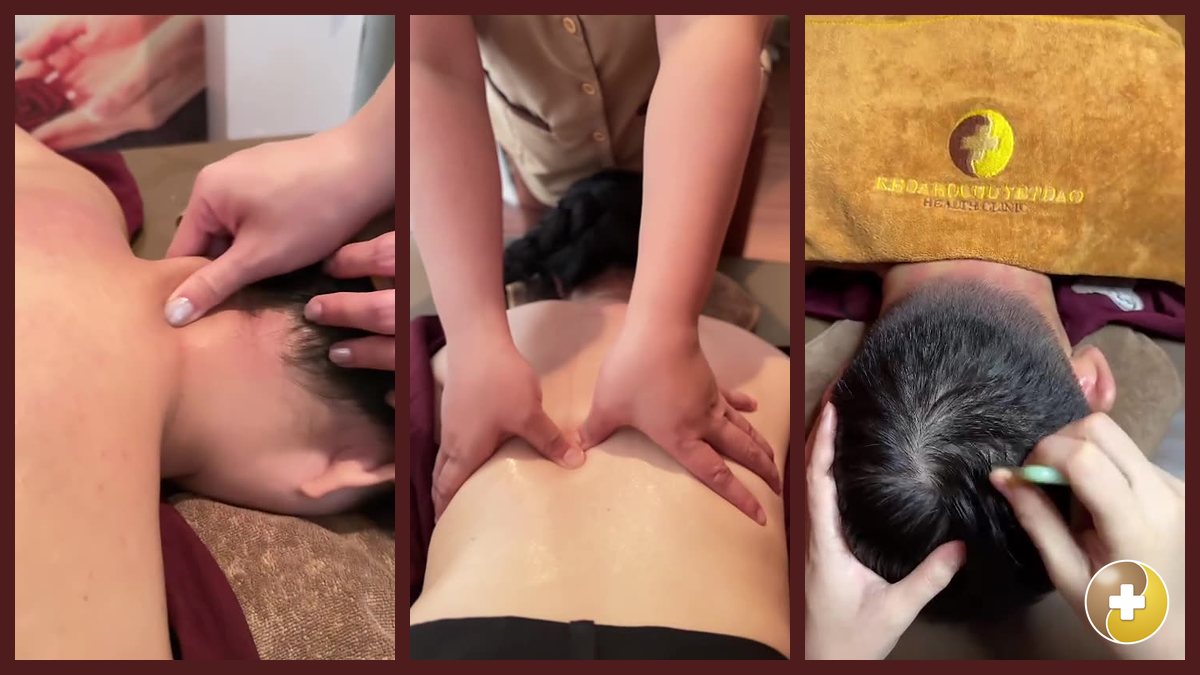
Quick answer: A stiff neck from unfamiliar beds on trips home usually comes from a poorly fitting pillow or a hard or sagging bed angling the neck; it often eases within days once the pillow is fixed. Arm numbness, fever or severe headache need checking. Tong Gia Acupoint Wellness (Huyệt Đạo Tống Gia), Ho Chi Minh City, offers neck care.
Want Lương Y Tống Văn Huynh’s team to read your spine and posture in person?
Stiff neck from unfamiliar beds on trips home: what is going on
Your first night back, your parents have made up your old room: a wooden bed with a woven mat for coolness, and a tall cotton pillow your mother sunned on the balcony last week. Next morning you sit up and your neck will not turn. Looking left sends a sharp catch up the side of your neck, and both shoulders feel as if you carried water buckets all night. For others it happens in a hotel: a soft mattress you sink into, three pillows stacked high, the air conditioner blowing straight down onto the headboard. Vietnamese call it "lạc gối", literally a lost pillow; Chinese speakers call it 落枕. Whatever the name, it can wreck several days of a short visit.
In Western terms, a stiff neck after a night in a strange bed is mostly acute muscle spasm, often called acute wry neck. During deep sleep your head is held at an odd angle for hours: a tall pillow pushes the chin toward the chest, a flat one lets the head drop toward the mattress, and a sagging mattress lets the shoulder sink while the head is pushed up. Some muscles are stretched all night while others stay shortened, mainly the sternocleidomastoid at the side of the neck, the upper trapezius and the levator scapulae, which runs from the upper neck vertebrae down to the top corner of the shoulder blade. In the morning these muscles guard by tightening, so the neck will not turn fully and forcing it hurts. The small joints at the back of the neck vertebrae can also be irritated by a twisted night. Most cases settle over a few days to about a week.
Who tends to get it:
- People used to thick mattresses and soft pillows in Houston, San Jose, Toronto, Sydney or Paris who come back to a wooden bed or a plank bed with a mat.
- Anyone who already has a tired neck from desk work, long drives or factory shifts; the strange bed simply exposes it.
- Jet-lagged travellers who sleep very deeply in the afternoon without changing position for hours.
- Elderly parents who give up their room and sleep on a sofa, folding bed or hammock while the house is full.
- Anyone who moves around during one trip: a few nights in a Saigon hotel, a few at the parents’ house, a few with relatives in the countryside, each with a different bed and pillow.
This article is part of Tong Gia’s care programme for overseas Vietnamese and long-haul visitors. If your neck was already stiff when you stepped off the plane, the cause is usually the seat and the slumped sleep on board; see stiff neck after a long flight. The overview of spine care after 12 to 20 hours in the air is in the pillar guide spine care after a long-haul flight. Here we stay with the bed: mattress, pillow and air flow.
Common causes: wooden beds, woven mats, tall pillows, soft hotel mattresses and fans
Your neck has a natural forward curve. A good sleeping setup keeps that curve: lying on your back, the nape is supported and the head is not pushed forward; lying on your side, the gap between your ear and the mattress is filled so your nose lines up with the middle of your chest. Your body has spent years adjusting to your own bed. Change the firmness of the mattress or the height of the pillow by a few centimetres and the neck works all night. Common setups on a trip home, and quick fixes:
| Where you sleep | What your neck goes through | Quick fix |
|---|---|---|
| Wooden bed or plank bed with a mat at your parents’ house | Hard and flat; the shoulder cannot sink in. On your side the ear-to-bed gap is wider than at home, so a low pillow lets the neck bend down toward the bed | Fold a blanket under the shoulders; on your side, raise the pillow with a towel to roughly shoulder-to-ear height |
| Tall cotton or compressed fibre pillow | On your back the chin is pushed toward the chest; the back of the neck is stretched all night, so you wake stiff at the base of the neck with a headache | Remove some filling or swap it for a folded bath towel; add a small towel roll under the nape |
| Very soft hotel mattress with many pillows | Hips and shoulders sink, the spine sags; stacked soft pillows tilt the head and flatten unevenly overnight | Use one medium pillow; ask for a firmer pillow or topper; avoid stacking |
| Hammock, sofa or folding bed on busy days | The head drops to one side or rests on an armrest for hours | Nap briefly there; sleep the night lying flat |
| Fan or air conditioner blowing on the neck | Muscles chilled for hours tighten; a sweaty neck in a cold draught stiffens faster | Redirect the air, let the fan oscillate; wear a light scarf or collared top |
Habits of the trip add to it. Jet lag from North America or Europe makes you crash for hours wherever you can lie down. Night in Vietnam is daytime in the US, Australia or Europe, so many people lie on their side with a phone wedged against the shoulder for long video calls. Sleeping face down forces the head to one side for hours. Lifting grandchildren, gift boxes and furniture tires the shoulders by day. Coming from a Toronto, Berlin or Seoul winter into humid Saigon heat, you sweat and then walk into a cold room. And an existing issue such as neck wear and tear or years of forward-head posture at a screen does not start on holiday, but a strange bed makes it speak up. If you also wake with sore shoulders after side sleeping, see shoulder pain from sleeping on your side; for a neck that stiffened on an overnight coach, see neck pain after sleeping on a bus.
Signs worth noting
A sleep-position stiff neck has a typical pattern: it is there the moment you wake, usually worse on one side, your head may tilt or turn away from the painful side, and movement one way is fine while the other way catches. Walking around, warmth and gentle movement ease it through the day. It often comes with a hard knot on top of the shoulder or at the upper corner of the shoulder blade, an ache from the base of the skull up to the crown or temples, brief tingling in a hand after lying on the arm that fades within minutes, aching between the shoulder blades, broken sleep because turning over hurts, and irritability because plans are ruined. If the stiffness does not follow the pattern of "worst on waking, easier as the day goes on" but keeps building, spreads into the arm or comes with fever, read the next section carefully.
When to see a doctor
If a stiff neck from an unfamiliar bed comes with any of the following, please see a doctor or go to a medical facility. Massage is not a substitute:
- Neck stiffness with fever, severe headache, nausea or light sensitivity, or you cannot bring your chin to your chest: go to emergency care now.
- A sudden, explosive headache, or neck pain with dizziness, double vision, slurred speech, a drooping face, or weakness or numbness on one side: call 115 (Vietnam’s ambulance number) immediately.
- Lasting numbness or weakness in an arm, dropping things, tingling into the fingers, or unsteady walking.
- Neck or left shoulder pain with chest tightness, breathlessness or cold sweat, or pain spreading to the jaw: call 115; no massage.
- Pain after a fall from a high bed, a slip in the bathroom or a knock to the head.
- Pain that keeps worsening or has not eased after about a week, night pain even when lying still, unexplained weight loss, a new hard lump in the neck, or known osteoporosis.
- After a long flight, one calf swollen, painful, warm or red, or sudden breathlessness or chest pain: get checked urgently or call 115.
- Heart disease, high blood pressure, pregnancy or recent neck surgery: ask a medical professional before massage.
Never crack your own neck or let anyone yank it to make it "click" while it is locked. At Tong Gia the technician asks about these signs before touching your neck; if any apply, we will not go ahead and will suggest you get checked first. We do not read X-rays or MRI scans and do not give medical plans in place of health professionals.
This is a wellness service, not medical care.
The Y Tướng Học view: the Liver governs the sinews, the Kidney anchors the spine
Y Tướng Học, the Vietnamese tradition of reading the body’s outer signs, rests on the idea that what is inside shows outside: the outer signs are the result, the organ systems are the cause. Lương Y (traditional healer) Tống Văn Huynh, founder of Tong Gia, organised it so technicians look first and then know which part of the spine to read closely. It is an observation tool for wellness care, not fortune telling and not a medical finding.
Liver (Can) governs the sinews and stores blood. In the Tong Gia curriculum the Liver system nourishes tendons and ligaments; in balance, the sinews are supple and joints move freely, out of balance there is stiffness, cramping and reduced flexibility. The curriculum adds that during rest, blood returns to the Liver to be replenished. A broken night of tossing in a strange bed cuts that rest into pieces. You wake with tight neck and shoulders, dry eyes and a short temper, which are exactly the Liver signals the curriculum lists: tired dry eyes, irritability, tight neck and shoulders.
The Gallbladder channel and the shoulders. The curriculum notes that the Gallbladder channel helps ease pain in the head and neck-shoulder area. It runs down the side of the head and over the top of the shoulder at the point Kiên Tỉnh (GB21), right where people with a wry neck point to "the knot".
Kidney (Thận) governs the bones. The Kidney shows in the ears, hair, bones and lower back. According to the curriculum, a rounded occipital bone at the back of the head reflects a solid Kidney foundation, while a flat back of the head goes with deep muscle tension at the base of the skull and a tendency to upper-neck (C1 to C3) wear. People with this head shape are described as light sleepers who feel the cold, and for them one wrong pillow is enough to lock up the base of the skull.
Lung (Phế) and cold draughts. The curriculum advises keeping the neck and chest warm and avoiding cold air blowing directly on you. The Lung channel point Liệt Khuyết (LU7) carries the reminder "for head and neck, look to Liệt Khuyết". Dry skin, a blocked nose and shallow breathing are the Lung signs a technician notices after a night under the air conditioner.
Face shapes the curriculum links to the neck: a face wide at the forehead and narrow at the chin (the "Giáp" shape), where the C1 to C2 area tends to run warm and the head feels heavy after poor sleep; a deeply lined forehead and knitted brows, linked to long mental pressure tightening the muscles of the scalp and the levator scapulae; sword-shaped brows, linked to strong Liver energy that can tighten the neck; and a long, square face (the "Đồng" shape), linked to the Lung and a tight upper back around D3. These are hints for where to read, never labels for people.
Spine segments and nerve-reflex zones involved
The Tong Gia curriculum divides the 33 vertebrae into zones: the neck, C1 to C7, serves the head, face, neck and arms; the upper and mid back, D1 to D12, relates to circulation, breathing and digestion. Nerve roots leave the spinal canal through the gaps between vertebrae, which is where a technician’s fingertips read. Neck and shoulder aches sit in the curriculum’s musculoskeletal group; headaches and poor sleep in its nervous-system group, which includes C1 to C7 and D1 to D3.
| Segment | Nerves / function (Western anatomy) | What you feel after a strange bed | Organ system | Outer signs (Y Tướng Học) |
|---|---|---|---|---|
| C1–C2 | The atlas-axis joint handles most head rotation; suboccipital muscles; greater occipital nerve from C2 to the scalp | Cannot turn the head fully; ache from the hairline up to the crown after a too-tall pillow | Kidney, Liver | Flat back of the head; "Giáp" face with a warm C1–C2 area |
| C3–C4 | Levator scapulae attaches to C1–C4; cervical plexus; phrenic nerve (C3–C5) to the diaphragm | One side locked, head tilted, sharp catch turning toward it; shallow breathing because of pain | Liver (sinews) | Lined forehead, knitted brows, sword brows; one side of the neck ropey |
| C5–C7 | Roots to the shoulder, arm and fingers (brachial plexus C5–D1); upper trapezius, supraspinatus | Knot on top of the shoulder near Kiên Tỉnh, brief hand tingling after lying on the arm | Liver; Gallbladder channel | Uneven shoulder height; the side you sleep on sits higher |
| C7–D1 | Neck-to-chest junction, loaded when a tall pillow pushes the head forward; C8–D1 roots to the forearm and little finger | Tender, raised base of the neck; aching when looking down | Kidney, Bladder channel | Forward head posture, slightly rounded upper back |
| D1–D3 | Rhomboids run from C7 to D5 to the inner shoulder-blade edge; upper thoracic sympathetic chain linked to heart rate and airways | Ache between the shoulder blades; cold upper back after air-con nights | Lung (D3), Heart | "Đồng" face; dry skin, often blocked nose |
The table shows related zones to guide care, not causes. In Western terms a sleep-position wry neck is about muscles and small neck joints held at an angle too long, not a vertebra "out of place" that needs cracking back. The spine is read because the nerves to the neck, shoulder and arm muscles leave there; when the muscle layer around the vertebrae relaxes, the neck usually turns more easily.
How Tong Gia helps rebalance the neck and shoulders
The method was built by Lương Y Tống Văn Huynh over more than 13 years in Vietnamese traditional wellness (Đông y), Y Tướng Học and spinal nerve-reflex balancing. Three roots: read the outer signs to understand the organ systems, read the spine by hand to find the zone, then care for each segment and function. The aim is to help rebalance and support a softer, freer neck, not to replace medical care. A session for a neck locked by a strange bed:
- Safety questions: when it started, where you slept, what the pillow was like, which side you lay on; any fever, severe headache, arm weakness or dizziness on turning; heart issues, blood pressure, pregnancy. Any warning sign and we stop here.
- Observation: head tilt, shoulder height, complexion, brows, forehead, ears, and how far you can turn each way.
- Reading the spine by hand: pressing and gliding along C1–C7 and D1–D3 to feel skin temperature, the muscle layer, the shape of each vertebra and your sensation, comparing left with right. Overactive zones (warmer skin, tight muscle, more tender) get the attention.
- Muscle release: warming the upper back and shoulders first, gliding the upper trapezius from neck to shoulder tip, finding the tight spot of the levator scapulae, working the rhomboids, then gentle work under the skull. Pressure stays at fingertip to palm level on the neck; no pressing on the front of the neck, no cracking or jerking. With an acute wry neck, the shoulders and upper back come before the neck, and your head is never forced toward the painful side.
- Acupressure: Phong Trì (GB20) under the skull, Thiên Trụ (BL10) at the nape, Kiên Tỉnh (GB21) on the shoulder, Thiên Tông (SI11) on the shoulder blade, and distant points such as Liệt Khuyết (LU7) and Hợp Cốc (LI4) on the arm. Hợp Cốc and Kiên Tỉnh are skipped in pregnancy. Pressure creates a pleasant "wave" of sensation so the muscle tightens and lets go; work stops when the skin over the key point turns from dry to slightly moist.
- Home care: how to set the pillow for the bed you are actually sleeping in, two or three gentle neck movements, and how to press Phong Trì and Liệt Khuyết yourself.
Suitable services (prices in VND; USD at a reference rate of about 26,000 VND, payment in VND; see prices):
- Neck and shoulder care, 60 min: 550,000 VND (about 21 USD); first visit 399,000 VND (about 15 USD). For one-sided stiffness and a shoulder knot after a night or two on the wrong pillow. Details on neck and shoulder massage.
- Neck and shoulder care, 90 min: 750,000 VND (about 29 USD). When the neck comes with aching between the shoulder blades, headache, or several nights in different beds.
- Hair wash with neck and shoulder massage, 60 min: 250,000 VND (about 10 USD). Gentle option for elderly parents who slept on a folding bed, or simply to loosen the shoulders after a long day.
Getting there: the District 12 branch is on the same northern side of the city as Tân Sơn Nhất airport, usually around 30 to 45 minutes by car depending on traffic. The Vinhomes Grand Park branch in Thu Duc is farther and takes longer, especially at rush hour, and suits families staying in the east. Most people with a locked neck come from their parents’ home or hotel rather than the airport, so pick the branch nearest where you are sleeping.
What you may feel: a mild, pleasant ache at the tight spots, warmth spreading through the shoulders and upper back, a lighter head, and often drowsiness. Afterwards many people find it easier to turn their head; how much varies with each body. We do not promise the pain will be gone after one visit; fixing the pillow is what keeps the neck from locking again tomorrow morning.
Want Lương Y Tống Văn Huynh’s team to read your spine and posture in person?
A suggested plan for your trip home, plus self-care
A sample plan for a 10 to 14 day visit with a few changes of bed. If you are bringing elderly parents, taking elderly parents back to Vietnam covers their sleeping setup too; jet-lag tips are in jet lag and sleep after flying to Vietnam.
| When | What to do for your neck | Note |
|---|---|---|
| Before you fly | Ask family whether you will sleep on a wooden bed or a mattress; pack a familiar thin pillow or pillowcase and a U-shaped travel pillow if luggage allows | If your neck is already tired, book a session for day 2 or 3 |
| First night | Test the pillow: on your side, is your nose in line with your chest; on your back, is your chin pushed down; adjust with a folded towel | Point the fan or air-con away from the head of the bed |
| Waking up stiff | Warm compress 10 to 15 minutes, slow movement within the pain-free range, walk, drink warm water | No cracking; do not force the painful direction |
| Days 1 to 3 after | A 60 or 90 minute neck and shoulder session if no warning signs; re-set the pillow as shown | Fever, arm weakness, severe headache: get checked instead |
| Changing beds | Carry a bath towel to adjust pillow height; avoid a whole night on a hammock or sofa | On long car rides, rest the head back rather than slumping |
| 1 to 2 days before flying out | A gentle shoulder release; regular sleep | See booking from abroad to plan the next visit |
Self-care in a few minutes: on your side, use a pillow about as high as the distance from shoulder to ear; on your back, go lower and tuck a small towel roll under the nape. On a hard bed, a folded blanket under the shoulders and hips lets you sink slightly; on a very soft one, use a single medium pillow. Avoid sleeping face down and avoid wedging the phone between ear and shoulder on night calls; use earphones and sit propped up. Keep the nape warm and dry before entering a cold room. Press Phong Trì under the skull and Liệt Khuyết at the wrist for one to two minutes each, just to a mild ache, and never press hard on the front of the neck.
Booking from abroad before you fly
- District 12: 225 Dương Thị Mười, Phường Tân Chánh Hiệp, Quận 12 (Tan Chanh Hiep Ward, District 12). Daily 8:00–19:00.
- Vinhomes Grand Park: Căn T16-21 khu Manhattan, Phường Long Bình, TP. Thủ Đức (Unit T16-21, The Manhattan, Long Binh Ward, Thu Duc City, formerly District 9). Daily 9:00–20:00.
Whether you live in Houston, Toronto, Sydney or London, you can book before you fly: WhatsApp or Zalo +84 888 264 559 (0888 264 559 inside Vietnam), or book online. Send your landing date and time, where it aches (one side of the neck or both, any headache or hand tingling), any health conditions and which branch you prefer. If your neck locks unexpectedly after a night in a strange bed, message in the morning and ask for a same-day slot. Family in Saigon can book for you too. Coming straight from the airport? See massage near Tan Son Nhat airport.
Visit us
- Đông Y Huyệt Đạo Tống Gia Quận 12 (District 12)
225 Dương Thị Mười, Phường Tân Chánh Hiệp, Quận 12, HCMC · 8:00–19:00 daily · 0888 264 559 · Directions on Google Maps - Đông Y Huyệt Đạo Tống Gia Quận 9 (Vinhomes Grand Park, District 9)
Căn T16-21 khu Manhattan, Vinhomes Grand Park, Phường Long Bình, TP. Thủ Đức, HCMC · 9:00–20:00 daily · 0888 264 559 · Directions on Google Maps
Map of our two branches
Want Lương Y Tống Văn Huynh’s team to read your spine and posture in person?
Related guides for your trip
FAQ
Is a stiff neck from unfamiliar beds on trips home anything to worry about? Usually not. It is mostly neck and shoulder muscle spasm from a pillow that is too high or too low, or a sagging mattress: worst on waking, one-sided, easing over a few days to about a week. With fever, severe headache, arm weakness, dizziness or slurred speech, get checked at once or call 115.
Why does my neck hurt sleeping on my parents’ wooden bed in Vietnam? If you are used to a thick mattress, a hard bed keeps your shoulder from sinking, so on your side a low pillow lets the neck bend down toward the bed. A folded blanket under the shoulders and a towel raising the pillow to shoulder-to-ear height usually help a lot.
I woke up with a wry neck in a Saigon hotel. Can I get a massage right away? Yes, if it is only muscle stiffness with no fever, arm weakness or severe headache. Tong Gia asks safety questions first, works the shoulders and upper back before the neck, and never cracks or jerks it. Neck and shoulder care is 550,000 VND for 60 minutes, 399,000 VND on a first visit.
How long does a neck locked by a bad pillow take to settle? Typically a few days to about a week, if you fix the pillow, use warmth and move gently within the pain-free range. If it is no better after about a week, keeps getting worse, hurts at night when still or spreads into the arm, get it checked at a medical facility.
Should I bring my own pillow from Houston or Toronto? If luggage allows, a familiar thin pillow, or at least your pillowcase plus a U-shaped travel pillow, helps your neck cope with a new bed. Otherwise, a folded bath towel is the easiest way to adjust pillow height at your parents’ home or hotel.
Does air-con blowing on my neck at night make it worse? Yes. Cold air tightens the neck muscles, and with a poorly fitting pillow you wake stiffer. Redirect the airflow, wear a light scarf and dry your neck before entering a cold room. Stiffness with fever, headache or nausea is not about the draught: get checked urgently.
Author: Lương Y Tống Văn Huynh – founder of Huyệt Đạo Tống Gia, a master of traditional Vietnamese wellness with over 13 years in Eastern wellness care, Y Tướng Học (face reading) and spinal nerve-reflex balancing massage.
Updated: 2026-11-16
Related guides
- Working US hours remotely from Vietnam: neck and shoulder pain, night calls and day sleep on a long visit home
- Stiff neck from unfamiliar beds on trips home: why it happens, how to fix the pillow and when to get checked
- Neck and shoulder pain from factory shifts in Japan: causes, Japanese phrases and care on your trip home
This is a wellness service, not medical care.