
Cupping in Thu Duc: dry warming cupping guided by the spine, and which branch to choose
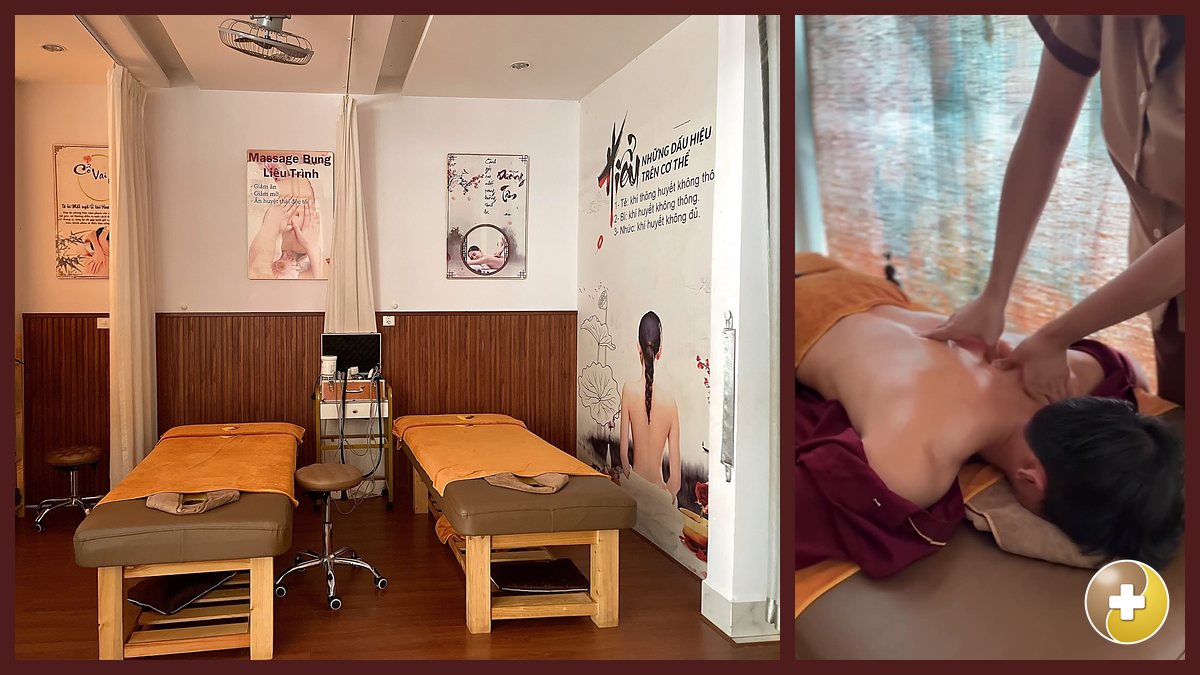
Quick answer: Tong Gia has no branch in the old Thu Duc core. From the University Village and Võ Văn Ngân side, go to Vinhomes Grand Park; from Linh Xuân and Tam Bình, go to District 12, Ho Chi Minh City, roughly 10–15 km. Dry cupping after a spine reading, 30 minutes for 85,000 VND (about 3.3 USD).
Want Lương Y Tống Văn Huynh’s team to read your spine and posture in person?
Cupping in Thu Duc: why people here book a session
Cupping places cups on the skin and draws out some air to create negative pressure, lifting the skin and the surface muscle layer. In Western terms, suction brings blood to the area so the skin warms and turns pink; the fascia around the muscle is gently separated so a tight band softens; and the nerve endings under the skin receive a new signal, so dull aching fades and the body relaxes. The round marks are a little blood from tiny capillaries under the skin, not "toxins". See cupping in Saigon: questions and answers.
Old Thu Duc, now part of Thủ Đức City in the north-east of Ho Chi Minh City, has its own mix of people. Workers at the Linh Trung Export Processing Zone stand on lines or sit at machines in shifts, then ride back to rented rooms. Students in the University Village dormitories study late, sleep with fans on and walk between buildings in the rain. Lecturers and researchers read and mark papers for hours in cold rooms. Stallholders around Thủ Đức market start before dawn and stand all morning. Commuters on Võ Văn Ngân, Kha Vạn Cân, Phạm Văn Đồng, the Hanoi Highway and National Road 1A meet the afternoon rain almost daily in the wet season. Many expats, visiting academics and engineers live here too. The shared complaint: a cold back, a tired lower back, heavy shoulders and chills whenever the weather turns.
Tong Gia Acupoint Wellness (Huyệt Đạo Tống Gia) has no branch in the old Thu Duc core. Its two branches are District 9 – Vinhomes Grand Park and District 12 – 225 Dương Thị Mười; depending on your ward, one of them is nearer, roughly 10–15 km. This guide shows which ward suits which branch, and explains, following the Tong Gia curriculum, why these back patterns are common and how cupping fits into a spine-reading session.
| Group in Thu Duc | Why they book cupping | What is going on (Western view) |
|---|---|---|
| Linh Trung EPZ workers | Tired lower back, heavy legs, one stiff shoulder | One posture for a whole shift, repeated movements with one hand |
| University Village students | Stiff upper back, frequent mild colds | Studying with the head down, late nights, fans, rain |
| Lecturers, researchers | Tight neck and mid-back | Hours of reading and typing in air-conditioned rooms |
| Thủ Đức market stallholders | Cold, tired lower back from early morning | Early starts, long standing, lifting, damp floors |
| Riders on the Hanoi Highway, NR1A | Heavy shoulders, chills after rain | Braced shoulders, vibration, strong wind and rain on wide roads |
Common causes of a cold, tired back in Thu Duc
- Standing on a line or sitting at a machine all shift: the long muscles beside the spine hold one position for hours, blood flow to them drops, and by the end of the shift the lower back is tight and tired.
- Repeating a task with one hand: assembling, checking or packing makes one shoulder and one side of the upper back thicker and stiffer.
- Afternoon rain on wide, windy roads: the Hanoi Highway, Phạm Văn Đồng and NR1A are open to the wind; a wet shirt in that wind chills the back fast.
- Crowded dorms and rented rooms: fans aimed at the bed, damp rooms, laundry drying indoors; you wake with a stiff back and blocked nose.
- Studying or reading in cold rooms: the neck and upper back chill while the head is bent forward for hours.
- Late nights, exams, shift targets: ongoing stress keeps the shoulders raised and breathing shallow, and muscles do not get time to recover.
From the Eastern view, according to the Tong Gia curriculum, the Lung (Phế) governs the skin and holds the protective energy; when it is weak, wind and cold get in and people catch chills. The Spleen (Tỳ) governs the flesh and the limbs and dislikes damp, so damp rooms, heavy work and irregular meals leave muscles soft, limbs tired and the body heavy. The Kidney (Thận) is linked with the lower back and knees: an aching lower back, weak knees and tiring quickly when standing are listed in the curriculum's Kidney section. The Liver (Can) governs the sinews, so stress shows as tight muscle. These are functional ideas from traditional medicine; they do not mean any organ is ill.
Other signs to watch
- A cold, prickly upper back and neck in a draught; heavy shoulders.
- A tired, cold lower back after standing; stiffness when getting up from a chair.
- Chills, sneezing or a runny nose after riding home in the rain.
- Feeling heavy and sluggish on long rainy days.
- One shoulder or one side of the back stiffer than the other.
- Easy bruising, or dark cupping marks last time: tell the technician so suction can be lighter.
When to see a doctor
Cupping is wellness care for people who are well or only mildly tired and chilled. If any of the following applies, please see a doctor at a medical facility first:
- Chest pain or tightness, shortness of breath, cold sweats, or pain spreading to the jaw or left arm: call 115 at once.
- High fever, shaking chills, a heavy cough with phlegm, difficulty breathing.
- Back pain running down a leg with numbness or weakness; painful urination or blood in the urine with flank pain.
- Back pain after a fall, a traffic accident or a sudden wrench while lifting.
- Unexplained bruising, bleeding gums or frequent nosebleeds; taking blood thinners or having a clotting disorder.
- Ongoing tiredness, weight loss, pale skin or dizziness on shift: have a check-up at a medical facility in parallel.
Tell us beforehand if you are pregnant, have heart disease or high blood pressure, or have broken or irritated skin on your back. This is a wellness service, not medical care.
The Y Tướng Học view: face shapes and the back zones to cup
Y Tướng Học (face reading for wellness) holds that "the face shows outside what the organs hold inside". The Tong Gia curriculum has a table of ten face shapes, each linked to a key back zone. In Thu Duc, technicians often see:
- The "Mục" (目) face: long, narrow and thin, more bone than flesh; energy and blood are both on the low side. The muscles beside the spine are thin and vertebrae may sit deep. This person needs light suction, few cups and gentle work. Many thin students who stay up late have this look.
- The "Giáp" (甲) face: wide forehead, pointed chin; "hot above, cold below": the top of the neck (C1–C2) tends to be warm while the lower back is hollow and cold. The technician releases the neck carefully and warms the lower back.
- The "Do" (由) face: narrow forehead, broad cheeks and jaw; the lower back and hips carry thick muscle that tends to congest. Common in people doing manual, standing work.
- The "Viên" (圓) face: round and soft; the back chills easily and the lower back feels cold and achy.
- The "Đồng" (同) face: long and square, Lung-dominant; catches wind-cold easily, with tightness around D3.
This is reference knowledge from the school, used only to decide where to feel first; it is always checked by hand on the spine, is not a conclusion about health and is never used to judge anyone.
Spine segments and nerve-reflex zones under the cups
According to the Tong Gia curriculum, C1–C7 serve the head, face, neck and arms; D1–D12 relate to circulation, breathing and digestion; L1–L5 relate to digestion, kidneys, urinary and reproductive function and the legs; the sacrum and coccyx relate to elimination. Nerve roots exit on both sides between vertebrae, so cups sit on the muscle beside the spine, never on the bony points.
| Cup zone (segment) | Nerve / function | Typical complaint in Thu Duc | Related organ (Eastern view) |
|---|---|---|---|
| C7, base of the neck | Neck, shoulders, arms | Cold neck after hours in a lecture hall | Lung (protective energy) |
| D1–D3 | Breathing | Cold upper back and sneezing after rain on the Hanoi Highway | Lung |
| D4–D9 | Circulation, breathing, digestion | One-sided stiffness from repeated line work | Liver |
| D11–D12 | Digestion | Heavy limbs on rainy days | Spleen |
| L1–L5 | Kidneys, urinary, legs | Cold, tired lower back after a standing shift | Kidney |
The table shows "related" zones to guide the work, not a finding about any organ.
The Tong Gia method: spinal nerve-reflex balancing
Tong Gia was founded by Lương Y Tống Văn Huynh, a master of traditional Vietnamese wellness with over 13 years in Eastern wellness care, Y Tướng Học and spinal nerve-reflex balancing; it is a Vietnamese method he built, and visitors to Ho Chi Minh City are welcome to try it. Under the curriculum's "three nos" (no chemicals or herbs injected or swallowed, no needles, no rough force), cupping here is dry, with no skin pricking, and follows a sequence:
- Screening: fever, blood pressure, pregnancy, blood thinners, easy bruising, broken skin. Warning signs mean no cupping.
- Observation: complexion, posture, which shoulder sits higher, the skin of the back, the face shape.
- Reading the spine by hand: skin temperature, muscle cushion, the shape of each vertebra and sensation, comparing left with right, working only on "excited" zones and never directly on "inhibited" ones.
- Muscle release: softening the shoulders, back and lower back so cups sit evenly without strong suction.
- Acupressure: Định suyễn and the Lung point on the upper back, the Spleen point below the ribs, the Kidney point and Mệnh môn on the lower back, and Ủy trung behind the knee when the lower back is tired, following the curriculum's saying "for back pain, look to Ủy trung".
- Cupping: fixed or sliding; following the temperature rule, the technician watches the skin, cooling what runs hot and warming what runs cold, and stops at the target.
- Aftercare: stay warm, drink warm water and wait before showering.
A typical session
One rainy afternoon a packing-line worker from the Linh Trung EPZ rode down NR1A to the District 12 branch after her shift. She had stood most of the day, her lower back ached, her right shoulder was stiff from doing most of the work with her right hand, and she had been chilled after several wet rides home. Screening was clear: no fever, not pregnant, no blood thinners. Her right shoulder sat higher than the left. On the spine, the right mid-back muscle was thicker and warmer than the left, while the skin around L2–L4 was cool and the muscle tired. The technician released the right shoulder and mid-back, pressed the Kidney point, Mệnh môn and Ủy trung, then placed fixed cups at the base of the neck, the upper back and the lower back with light suction because her skin was thin. She was advised to use a one-piece raincoat, switch her standing leg at each short break and warm her lower back with her palms at night.
Services and prices
- Warming cupping, 30 minutes: 85,000 VND (about 3.3 USD). For a cold back and mild chills when time is short.
- Herbal compress: 130,000 VND (about 5 USD). The curriculum notes that herbs act mainly locally through the skin, helping keep warm and relax; good for a cold, tired lower back.
- Neck-shoulder or lower-back care, 60 minutes: 550,000 VND (about 21 USD), 399,000 VND (about 15 USD) on a first visit. For one-sided stiffness and a tired lower back after shifts; each service is priced separately.
Full price list; our page on cupping, gua sha and herbal steam; and a first-hand account in cupping in Saigon: a session.
What you feel during and after
At first the skin feels tight and full; within seconds that settles and warmth spreads, and the back feels as if it has been loosened. Afterwards the lower back is warm, standing up feels lighter and the shoulders less heavy; many sleep more deeply that night. Marks may be slightly tender for a day or two. Everyone responds differently; Tong Gia makes no promise that tiredness will be gone after one session, only that the body warms, muscles relax and balance returns.
Want Lương Y Tống Văn Huynh’s team to read your spine and posture in person?
Which branch from which part of Thu Duc?
Thu Duc is large, so one answer does not fit everyone. The suggestions below use the old ward names most residents still use; distances are rough estimates by main road, so check Google Maps at your planned departure time.
- Linh Xuân, Linh Trung on the NR1A side, Linh Tây, Tam Bình, Tam Phú: ride NR1A to District 12 and 225 Dương Thị Mười, roughly 10–15 km. The District 12 branch opens 8:00–19:00, which suits EPZ workers finishing in the afternoon.
- Hiệp Bình Chánh, Hiệp Bình Phước (along Phạm Văn Đồng): both branches are roughly 10–15 km; compare both routes at rush hour before choosing.
- University Village, Bình Thọ, Linh Chiểu, Trường Thọ (Võ Văn Ngân, Kha Vạn Cân, Hanoi Highway side): take the Hanoi Highway towards Suối Tiên and into Vinhomes Grand Park, roughly 10–15 km. The District 9 branch opens 9:00–20:00, which suits students and lecturers who finish late.
Because neither branch is a quick hop, many Thu Duc residents combine 30 minutes of cupping with lower-back care or a herbal compress. In the wet season, book early and get home before the afternoon storm. More local reading: massage in Thu Duc City: questions and answers and massage after running in Thu Duc.
Self-care at home and prevention
- No home cupping or skin pricking in dorms or rented rooms: home kits easily over-suck and blister the skin.
- Switch your standing leg and hand on the line: at each short break, stretch, turn your hips and rise onto your toes 10–15 times.
- After getting wet: dry off and change straight away; rub your palms warm and rub both sides of the lower back up and down 50–100 times, as the Tong Gia curriculum suggests.
- Keep the bedroom dry and airy: do not aim the fan at your back, and avoid drying laundry in the room.
- Look after the marks: no scratching or scrubbing; do not cup the same spot again until old marks fade.
Booking
- District 9 – Vinhomes Grand Park branch (for University Village, Võ Văn Ngân, Hanoi Highway): Căn T16-21 khu Manhattan, Vinhomes Grand Park, Phường Long Bình, TP. Thủ Đức (unit T16-21, Manhattan zone, Long Bình Ward). Open 9:00–20:00 daily.
- District 12 branch (for Linh Xuân, Tam Bình, the NR1A side): 225 Dương Thị Mười, Phường Tân Chánh Hiệp (Tân Chánh Hiệp Ward). Open 8:00–19:00 daily.
Book online or call, Zalo or WhatsApp +84 888 264 559. Mention "cupping", your ward and preferred time so we can suggest the right branch, and tell us about blood thinners, easy bruising, pregnancy or heart conditions. You can read real ratings and reviews on each branch's Google Maps profile.
Visit us
- Đông Y Huyệt Đạo Tống Gia Quận 9 (Vinhomes Grand Park, District 9)
Căn T16-21 khu Manhattan, Vinhomes Grand Park, Phường Long Bình, TP. Thủ Đức, HCMC · 9:00–20:00 daily · 0888 264 559 · Directions on Google Maps
Want Lương Y Tống Văn Huynh’s team to read your spine and posture in person?
FAQ
Which branch should I use for cupping in Thu Duc? From the University Village, Võ Văn Ngân, Bình Thọ or Linh Chiểu, go to Vinhomes Grand Park (9:00–20:00). From Linh Xuân, Tam Bình or Tam Phú on the NR1A side, go to District 12 at 225 Dương Thị Mười (8:00–19:00). Both are roughly 10–15 km.
How much is cupping? Warming cupping for 30 minutes is 85,000 VND (about 3.3 USD); a herbal compress is 130,000 VND (about 5 USD); 60 minutes of neck-shoulder or lower-back care is 550,000 VND (about 21 USD), 399,000 VND on a first visit.
Do you offer gua sha (scraping) on the back? Back scraping is not on the Tong Gia price list. A cold, tired back is cared for with dry cupping, hand release, herbal steam or a herbal compress, depending on what the spine reading shows.
Is wet cupping or skin pricking available? No. Only dry cupping is used, with no pricking and no needles.
Are dark cupping marks a concern? They come from tiny capillaries and usually fade within days. If a mark blisters, weeps or becomes hot and swollen, or you bruise easily for no reason, see a doctor.
I stand on a production line all day. Is cupping a good idea? Long standing often leaves the lower back cold and tired, and cupping with lower-back release helps the muscle warm up and loosen. If pain runs down a leg, comes with numbness or weakness, or worsens at night, see a doctor first.
Author: Lương Y Tống Văn Huynh – founder of Huyệt Đạo Tống Gia, a master of traditional Vietnamese wellness with over 13 years in Eastern wellness care, Y Tướng Học (face reading) and spinal nerve-reflex balancing massage.
Updated: 2026-11-16
Related guides
- What does acupressure do? Effects on muscles, nerves and the five organs, and how Tong Gia works in Ho Chi Minh City
- Acupressure in Thu Duc: pressure chosen by reading your spine, at the branch that suits your ward
- Sore after acupressure: is it normal? How to tell ordinary aching from warning signs, why it happens and how to look after yourself after a session in Ho Chi Minh City
- What are gua sha and cupping: two Vietnamese folk warming methods, the cupping points and when to skip them
- Unblocking the meridians (đả thông kinh lạc): what it really means, how a hands-on session works and what you will feel in Ho Chi Minh City
- Herbal compress: what the warmth really does, where it goes and who it suits
This is a wellness service, not medical care.