
Foot cramps: six common causes, what to do during one, and how Tong Gia can help
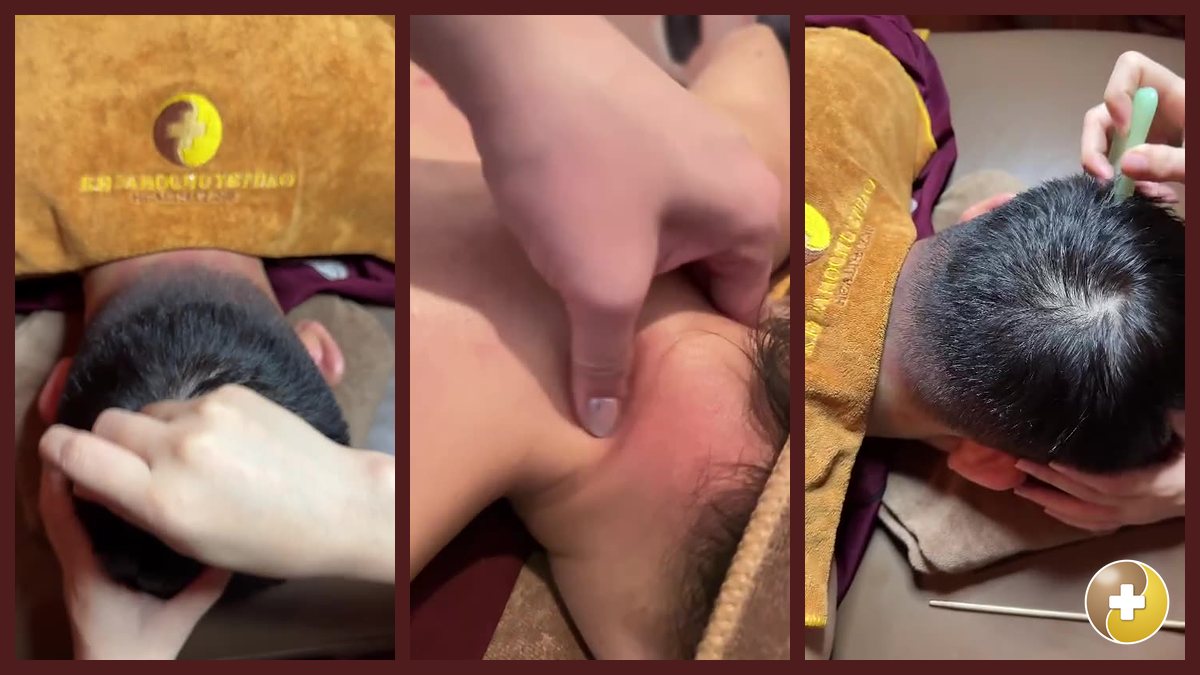
Quick answer: Foot cramps usually come from tired foot muscles after long standing or walking, fluid and electrolyte loss through heavy sweating, tight or high-heeled shoes, cold, pregnancy or older age, and sometimes diabetes, kidney or thyroid problems. Frequent cramps need a medical check. Tong Gia Acupoint Wellness (Huyệt Đạo Tống Gia) in District 12 and Vinhomes Grand Park, Ho Chi Minh City, cares for tired, tight feet by hand.
Want Lương Y Tống Văn Huynh’s team to read your spine and posture in person?
What is a foot cramp?
A foot cramp is a sudden, strong, involuntary tightening of the muscles in the sole or top of the foot. The foot locks, the toes curl down or are pulled up, a hard knot appears in the arch and it hurts sharply; it lasts seconds to minutes and may leave the foot sore for the day. Many people get it in the middle of the night, some while swimming or playing football, some after a long sightseeing day, or right after taking off high heels.
In Western medical terms, the foot has many small muscles of its own that hold the arch, move the toes and keep you balanced, plus tendons from the calf and shin muscles that attach to it. Each muscle contracts on a nerve signal, and smooth contraction and relaxation need enough water, enough electrolytes such as sodium, potassium, calcium and magnesium, and good blood supply. When a muscle is very tired, short of fluid or electrolytes, cold, or when its nerve is irritated, it can "contract and refuse to let go" — a cramp.
So there is no single answer to "what does a foot cramp mean". It is a symptom, not the name of a condition. Most occasional cramps are harmless and linked to fatigue, dehydration or posture; cramps that happen often, every night, or with numbness or weakness deserve a medical check.
In Ho Chi Minh City, Tong Gia sees foot cramps in runners, footballers and pickleball players sweating heavily in the heat; people who stand through long shifts such as shop staff, factory workers and cooks; women in heels or pointed shoes; visitors walking all day; less active older adults; pregnant women; and anyone sleeping under very cold air-conditioning.
Common causes: habits, work, posture and environment
These groups follow Western medicine and are here to help you describe what happens, not to label it yourself; if cramps are frequent, only a medical facility can find the cause with an exam and blood tests.
- Tired, overloaded foot muscles. Long standing or walking, hiking, a new sport, a longer run. The small foot muscles work constantly and cramp when exhausted, often that evening or night.
- Fluid and electrolyte loss. Saigon heat, midday sport, a hot kitchen, heavy sweating with too little to drink; diarrhoea or vomiting; plenty of beer or coffee. This is why footballers often cramp late in a match.
- Shoes and posture. Tight, high-heeled or pointed shoes squeeze the toes and keep the foot bent; long sitting; sleeping with the toes pointed or the blanket pressing them down; flat feet or high arches.
- Cold. Air-conditioning blowing on the feet, cold pools, cold tiled floors, wet feet in the rain.
- Special life stages. Pregnancy, especially mid to late, and older age with shorter muscles and less activity; also office workers who suddenly exercise hard.
- Health conditions and prescribed drugs. Diabetes affecting nerves, an underactive thyroid, kidney disease upsetting electrolytes, poor leg circulation and pinched lumbar nerve roots can all cause frequent cramps. Some prescribed medicines, for example diuretics, can lower electrolytes; if cramps start after a new prescription, ask the prescriber rather than stopping it yourself.
| When it happens | Often linked to | What to look at |
|---|---|---|
| At night after a long day on your feet | Muscle fatigue | Stretch before bed, warm foot soak |
| Late in a match, running in the sun | Fluid and electrolyte loss | Drink enough, replace electrolytes |
| While swimming | Cold, pointed foot, fatigue | Warm up, swim near the edge |
| In tight shoes or heels | Squeezed toes, bent foot | Roomier toe box, lower heel |
| Pregnancy, older age | Circulation, shorter muscles | Ask about minerals |
| Frequent, with numbness or weakness | Diabetes, kidney, thyroid, nerve roots | Needs a medical check |
During a cramp
Sit or stand steadily and gently pull the toes and front of the foot towards your shin, or stand with weight on the cramping foot, heel down. Once it eases, rub the sole lightly, then use warmth. Do not squeeze the hard knot. If it happens while swimming, stay calm, float on your back, call for help and get to the side first.
Runners and players may find our massage after running Q&A useful.
Other signs to watch
- Cramps several times a week or every night, disturbing sleep.
- Numbness, tingling or burning in both feet, creeping upward.
- Weakness or shrinking muscles in the foot or calf, frequent tripping.
- Back or buttock pain running down the same leg.
- Cold, pale feet, calf pain that forces you to stop walking.
- Thirst, frequent urination, tiredness, weight loss; or swollen legs with little urine.
- One calf swollen, red and warm.
When to see a doctor
Please see a doctor, and do not rely on massage alone, if any of these apply:
- Cramps are frequent, long or very painful, or disturb your sleep.
- Cramps come with numbness, weakness or muscle wasting, or back pain running down the leg.
- One calf swollen, painful, warm and red: get checked at once, as this can be a blood clot; with chest pain, breathlessness or cold sweats, call 115 (Vietnam's emergency number) straight away.
- Cramps with seizures, confusion, an irregular heartbeat, heavy vomiting or diarrhoea: go to emergency care.
- Cramps with thirst, frequent urination, unexplained weight loss or tiredness, or swollen legs and little urine.
- Cramps that began after a new prescription.
- Pregnancy with frequent cramps plus swelling, headache or blurred vision.
- Feet that are cold, pale or blue, or wounds that close slowly.
If a doctor is already following you for diabetes, kidney or thyroid problems, or you are pregnant, keep to that advice and tell the practitioner. This is a wellness service, not medical care.
The Y Tướng Học view: the Liver governs the sinews, the Kidney keeps balance
Y Tướng Học (face reading for wellness) rests on one idea: what is inside shows outside. Cramps are mentioned directly in several places in the Tong Gia curriculum, mostly linked to the Liver and Kidney systems:
- Liver governs the sinews. When it is strong, tendons are supple; when weak, muscles stiffen, cramp and tremble.
- Liver stores blood. At rest, blood returns to the Liver; in movement, the Liver sends it to muscles. The curriculum lists Liver blood deficiency as dizziness, dry eyes, brittle nails and cramps — one way of seeing why cramps come at night, when blood "returns" and the extremities receive less.
- Liver and emotion. Long-held anger and stress make Liver qi stagnate, with tense muscles, cramps and poor sleep.
- Kidney. In its Western–Eastern comparison, the curriculum notes the kidneys keep electrolytes in balance (sodium, potassium, calcium, phosphate), called Kidney yin–yang balance in Eastern terms; when this weakens, cramps and heart-rhythm changes can appear. Kidney yang deficiency brings cold hands and feet, so cold feet cramp more easily.
- Spleen governs the muscles and limbs; when weak, limbs tire and cramp.
Outside signs: thin, ridged, brittle nails and dry eyes (Liver); prominent cheekbones, which the curriculum links to tight, fibrous deep muscles prone to cramping; thin, soft ear rims (Kidney); cold feet with hard arches and curling toes. These are cues for tailored care, never judgements. More on face reading for wellness.
Spine segments and nerve-reflex areas involved
The curriculum maps 33 vertebrae: neck C1–C7, thoracic D1–D12, lumbar L1–L5 and sacrum S1–S5. Its muscle, bone and joint group works C5–C7, L1–L5 and S1–S5; its organ and metabolism group works D1–D12 and L1–L3. For foot cramps the focus is L4–S2, which drives the calf and foot muscles, plus the mid-back Liver point and the lumbar Kidney point.
| Segment | Nerve / function | Typical signs | Organ system |
|---|---|---|---|
| D9–D10 (Liver, Gallbladder points) | Liver and gallbladder area | Tight back, dry eyes, cramps | Liver |
| D11–D12 | Digestion, qi and blood | Tired limbs, soft muscles | Spleen |
| L1–L2 | Kidney, urinary, lower back | Cold feet, night urination | Kidney |
| L4–L5 | Shin and top-of-foot muscles | Toes pulled up | Liver |
| L5–S2 | Sciatic and tibial nerve: calf, sole muscles | Arch cramps, curled toes, hard calves | Liver, Kidney |
How Tong Gia works: spinal nerve-reflex balancing massage
This is a Vietnamese Eastern wellness method built by Lương Y Tống Văn Huynh, a master of traditional Vietnamese wellness with over 13 years in Eastern wellness care, Y Tướng Học and spinal nerve-reflex balancing. A session for frequent foot cramps:
- Observe and ask: when, how often, which foot, fluids, shoes, diabetes, kidney or thyroid issues, pregnancy, prescriptions, medical checks; nails, eyes, cheekbones, ears and feet.
- Read the spine by hand: skin temperature, muscle padding, vertebra shape and your sensations, left against right.
- Find the key zone: usually around the mid-back Liver point and L4–S2, working only overactive areas.
- Muscle release: back, lower back, buttocks, back thigh, knee crease, calf, shin, sole and between the toes, in a "wave" rhythm built from one finger; deep and slow on hard arches, gentle on cold, soft muscle.
- Acupressure: Liver and Spleen back points, Kidney point and Ming Men, Wei Zhong, Qu Quan at the inner knee crease (which the curriculum uses for tight sinews and cramps), San Yin Jiao (not during pregnancy), Tai Xi, Tai Chong on the top of the foot and Yong Quan on the sole.
- Stop at the right moment when the skin at the key point turns from dry to slightly moist.
- Home advice: bedtime stretches, drinking during sport, shoes and warmth.
Suitable services (same at both branches, see prices):
- Tired, heavy legs care, 60 min: 500,000 VND (about 19 USD).
- Liver wellness care, 75 min: 750,000 VND (about 29 USD), when cramps come with dry eyes, brittle nails, stress or poor sleep.
- Herbal compress add-on: 130,000 VND (about 5 USD) for cold feet.
See also foot massage and sports recovery massage.
A typical session
This is a composite of many sessions, not one guest's story. A shop owner of about 50 in Thu Duc, on her feet most of the day, had months of night-time arch cramps with curled toes; she slept under air-conditioning and drank little during the day. A medical check found normal blood sugar and kidney tests and advised more fluids and stretching. The practitioner noticed thin, ridged nails, dry eyes, slightly prominent cheekbones, cold feet and hard arches and calves. The mid-back around the Liver point was tight and L5–S1 cooler than above. The session released the back with the Liver, Spleen and Kidney points and Ming Men, then the buttocks, back thigh, Wei Zhong and Qu Quan, then the calves, arches and toes with Tai Xi, Tai Chong and Yong Quan, finishing with a warm herbal compress on the feet. Her feet ended clearly warmer; she left with advice to sip water through the day, stretch before bed and wear thin socks under the air-conditioning.
What guests feel
The tender spots are usually the arches, calves and mid-back; many are surprised how hard their soles are. As they soften, the feet warm up and the toes relax; some feel mild soreness for a day. Everyone is different, and Tong Gia does not promise the cramps will stop after one visit.
Want Lương Y Tống Văn Huynh’s team to read your spine and posture in person?
Home care and prevention
- Drink steadily through the day, add electrolytes when sweating heavily, and go easy on evening beer.
- Stretch before bed: sit with legs straight and pull the front of the foot towards you with a towel for 20–30 seconds; roll the sole over a bottle or small ball for 1–2 minutes; stretch the calves against a wall.
- Keep feet warm at night: no air-conditioning blowing on the feet, thin socks, a loose blanket over the toes, and a warm foot soak for 15–20 minutes (people with diabetes should check the temperature carefully).
- Choose shoes well: a roomy toe box and a modest heel; on long shifts use a soft mat and rotate your ankles during breaks.
- Eat and rest well: vegetables, fruit, beans and nuts, enough sleep and less stress; pregnant women and older adults should ask a medical professional before taking minerals long term. More in our traditional Vietnamese massage Q&A and massage for parents Q&A.
Book a session
- District 12: 225 Dương Thị Mười, Phường Tân Chánh Hiệp (Tan Chanh Hiep Ward, District 12). Open 8:00–19:00 daily.
- Vinhomes Grand Park, District 9: Căn T16-21 khu Manhattan, Phường Long Bình, TP. Thủ Đức (Unit T16-21, Manhattan zone, Long Binh Ward, Thu Duc City). Open 9:00–20:00 daily.
Book online or call, Zalo or WhatsApp +84 888 264 559. Tell us which foot, how often, when it happens, any diabetes, kidney problems or pregnancy, and whether you have had a check. Real guest reviews are on each branch's Google Maps page. Living in or visiting Ho Chi Minh City? Come and try a Vietnamese Eastern wellness method built by Lương Y Tống Văn Huynh.
Visit us
- Đông Y Huyệt Đạo Tống Gia Quận 12 (District 12)
225 Dương Thị Mười, Phường Tân Chánh Hiệp, Quận 12, HCMC · 8:00–19:00 daily · 0888 264 559 · Directions on Google Maps - Đông Y Huyệt Đạo Tống Gia Quận 9 (Vinhomes Grand Park, District 9)
Căn T16-21 khu Manhattan, Vinhomes Grand Park, Phường Long Bình, TP. Thủ Đức, HCMC · 9:00–20:00 daily · 0888 264 559 · Directions on Google Maps
Want Lương Y Tống Văn Huynh’s team to read your spine and posture in person?
FAQ
What causes foot cramps? Most often tired foot muscles after standing or walking, fluid and electrolyte loss from sweating, tight or high-heeled shoes, cold, pregnancy or older age. Frequent cramps with numbness or weakness can relate to diabetes, kidney or thyroid problems or a pinched nerve root and need a medical check.
Why do I get cramps at night? Common after a long day on your feet, drinking too little, cold air on the feet, sleeping with toes pointed, in older age and in pregnancy. Bedtime stretches, steady drinking and warm feet help; cramps every night deserve a check.
What do frequent cramps mean? Cramps several times a week can come from dehydration, electrolyte imbalance, prescribed drugs such as diuretics, diabetes, kidney disease, an underactive thyroid, circulation problems or nerve compression. It is a reason to get tested.
What should I do if I cramp while swimming? Stay calm, breathe, float on your back, call for help and get to the side. Then pull the front of the foot towards your shin, rub gently and keep warm. Next time warm up, avoid swimming when exhausted, hungry or in very cold water, and stay near the edge.
What should I do for a cramp during football? Stop, sit, have someone gently push the front of your foot towards you, drink something with electrolytes and rest until it has fully passed. Before matches drink enough, warm up and avoid long play in the midday sun.
Does massage help foot cramps? During a cramp, stretch against it first and do not squeeze the knot. Between cramps, releasing the arches and calves with acupressure softens the muscles and warms the feet, and many guests cramp less at night. Tong Gia does not promise cramps will stop; frequent cramps with numbness or weakness need a check first.
Author: Lương Y Tống Văn Huynh – founder of Huyệt Đạo Tống Gia, a master of traditional Vietnamese wellness with over 13 years in Eastern wellness care, Y Tướng Học (face reading) and spinal nerve-reflex balancing massage.
Updated: 2026-11-16
Related guides
- Cramp while swimming: six steps in the water, common causes, and how Tong Gia can help
- Calf pain: seven common causes, warning signs, and how Tong Gia can help
- Calf pain after running: seven common causes, warning signs, and how Tong Gia can help
- Knee pain from standing all day: why standing jobs strain the knees and how to look after them
- Knee pain in older adults: common causes, when to get checked and safe wellness care
- Tired legs from varicose veins: why legs feel heavy, when to get checked, and how Tong Gia cares for them safely
This is a wellness service, not medical care.