
Headache and eye strain from night shift work: why the back of the head and temples ache and what helps
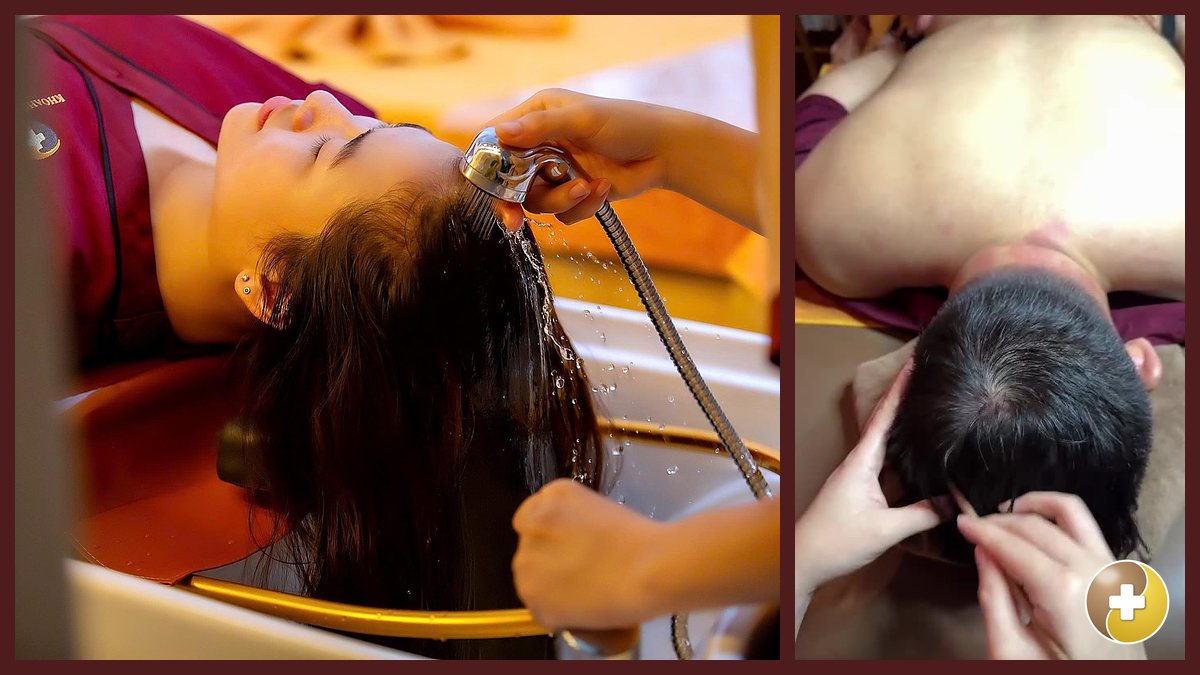
Quick answer: Headache and eye strain on night shifts usually come from hours of close focus under bright inspection lights, neck muscles holding a bent head, and light, broken day sleep. Rest your eyes, blink, and sleep once in a dark room. In Ho Chi Minh City, Tong Gia Acupoint Wellness releases the upper neck and applies head acupressure.
Want Lương Y Tống Văn Huynh’s team to read your spine and posture in person?
Why night shift work brings on headaches and tired eyes
It is 2 a.m. in an electronics plant in Taoyuan or Taichung, and the white LED strip over the inspection bench is as bright as noon. In Ansan or Hwaseong in Gyeonggi province, the night line runs 10 to 12 hours. In Aichi or Saitama, a trainee checks surfaces under a magnifier, counting defects as parts roll past. Toward dawn it starts: a tight band at the back of the head, a throb at the temples, eyes that feel full of sand, screen text that blurs. You cycle home into the morning sun, lie down when the day is already bright, and wake at noon with a heavy head.
In Western terms this is usually three things stacked together. First, tension-type headache: the suboccipital muscles, upper trapezius, sternocleidomastoid, temporalis and forehead muscles stay contracted for hours and the head feels squeezed. Second, headache that starts in the neck: the greater, lesser and third occipital nerves come from the C2–C3 roots and pass through the muscles at the back of the neck to the scalp; tight muscle can irritate them, so pain runs from the base of the skull to the crown, behind the eyes or out to the temples. In the brainstem, pain signals from the upper neck and from the face converge on the same nucleus, which is why a neck problem can be felt around the eyes. Third, eye strain from focusing: close work keeps the ciliary muscle inside the eye contracted, and concentration makes you blink far less, so the tear film evaporates and the eyes turn dry, gritty and briefly blurred. Glare off metal, glass and circuit boards makes you squint and brace the muscles around the eyes.
On top of that sits a reversed body clock. The body expects to be awake by day and asleep by night; a night shift asks it to stay alert exactly when it wants to rest. Day sleep tends to be shorter and lighter, and long-term short sleep lowers the pain threshold, so the same muscle tension simply hurts more. It is common among:
- Quality inspectors checking boards, fabric or packaging under white light or magnification.
- Machine operators watching control screens all night.
- Workers on rotating day and night weeks (夜勤 yakin in Japan, 주야 맞교대 in Korea, 大夜班 in Taiwan).
- Students who study by day and take night jobs in food plants, warehouses and convenience stores.
This guide is for Vietnamese workers on night shifts in Japan, Korea and Taiwan, for their families in Ho Chi Minh City, and for anyone flying into Saigon after a run of night work. If your main problem is a stiff neck and shoulders, read neck and shoulder pain from factory shifts in Japan; for the whole spine after the flight, see our pillar guide spine care after a long-haul flight.
Common causes: inspection lights, a bent head and day sleep
- Bright lights and nonstop close focus: hunting for defects a few dozen centimetres from your eyes for hours without changing distance. The focusing muscles never rest; glare makes you squint and frown.
- Head forward, chin out: the head weighs roughly 4.5–5.5 kg, and the further it tips forward, the harder the back of the neck works, right where the occipital nerves pass.
- Broken day sleep: a bright dorm room, traffic, roommates leaving for day shift, phone messages from home. Two or three short naps instead of one long sleep.
- Rotating shifts: nights this week, days next week, and days off spent awake in daylight. The body never settles.
- Coffee and energy drinks: heavy use to stay alert, then a withdrawal headache on days off; a late cup also makes the following sleep lighter.
- Too little water, skipped meals: hot or dry, cold plants, fewer toilet breaks, instant noodles at 3 a.m. Mild dehydration and hunger both trigger headaches.
- Plant air: dry clean rooms and strong air conditioning dry the eyes; glue, paint or solvents with poor ventilation cause headache and nausea.
- Stress and homesickness: fear of slowing the line, language worries, money to send home. You clench your jaw and lift your shoulders without noticing.
- Old glasses: an outdated prescription makes the eyes work even harder under inspection lights.
Days off can bring their own version; see headache after a weekend sleep-in.
Related signs to watch for
- Aching at the base of the skull, tender at the hairline, sometimes spreading to the crown: suboccipital muscles and C1–C3.
- Throbbing or tight temples, a tired jaw when chewing: temporalis and masseter tension, night-time teeth grinding.
- Dry, red, watering eyes and blurring that clears when you blink.
- Eyelid twitching after several nights in a row.
- Light, dream-filled sleep, waking more tired than you lay down.
- Irritability, a bitter taste in the morning, fullness under the ribs after greasy meals mid-shift.
- Stiff neck and shoulders, brief tingling in the fingers when holding tools: C5–C7; see hand numbness on an assembly line in Taiwan.
A headache that feels like a tight band has its own guide: tension headache that feels like a tight band.
When to see a doctor
Most tension headaches and tired eyes ease with rest, sleep and eye breaks. With any of the following, please see a doctor at a medical facility and do not rely on massage. The ambulance number is 119 in Japan, Korea and Taiwan, and 115 in Vietnam.
- A sudden, severe "thunderclap" headache that peaks within a minute: call an ambulance.
- Headache with blurred or double vision, loss of part of your vision, or repeated vomiting.
- A painful red eye with halos around lights, headache and nausea: get your eyes checked the same day.
- A drooping face, slurred speech, weakness or numbness on one side, unsteady walking, confusion or a seizure.
- Headache with high fever, a neck too stiff to bring your chin to your chest, or a rash.
- Chest pain, breathlessness, cold sweats, pain spreading to the left arm or jaw: call 119 or 115 now.
- Headache after a knock to the head at work, even if you felt fine at first: get checked and tell your company.
- Several people in the same area with headache, dizziness or nausea: leave, get fresh air and alert safety staff, as fumes or solvents may be involved.
- A new kind of headache after 50, headaches that worsen week by week, wake you, or flare with coughing; known high blood pressure with a severe headache and blurred vision; pregnancy.
- After the flight home, one calf swollen, warm and painful, or sudden breathlessness: this can be a clot; get checked and do not have your legs massaged.
In Japan, headaches usually go to neurology (脳神経外科 or 神経内科) and eyes to 眼科; in Korea, 신경과 and 안과; in Taiwan, 神經內科 and 眼科. Tong Gia does not read X-rays, CT or MRI scans and does not make medical plans; bring any results so staff know which areas to keep gentle. This is a wellness service, not medical care.
The Y Tướng Học view: the Liver opens into the eyes
Y Tướng Học (face reading for wellness) rests on one line: the signs show outside, the organs lie inside. Lương Y (traditional practitioner) Tống Văn Huynh organised this knowledge so staff read the face before they touch the head. For night-shift headaches and tired eyes, the Liver and Gallbladder pair is checked first, then the Kidney and Heart.
The Liver opens into the eyes and stores blood. In the Tong Gia curriculum the eyes reflect the Liver: weak Liver blood brings dry eyes and blurred vision, Liver fire brings red eyes, Liver wind brings eyelid twitching. At rest, blood returns to the Liver to be replenished. Staying up all night and sleeping in fragments by day means, in this framework, that blood does not return at the right time, so eyes dry out, tendons tighten and nails turn pale and brittle. The Liver is also tied to frustration: long stress leaves you irritable and unable to switch off.
The Gallbladder channel and the sides of the head. The Gallbladder is paired with the Liver. The curriculum describes its channel as helping ease pain in the head and neck-shoulder area; out of balance it shows as headache, shoulder ache, a bitter taste and fullness under the ribs. It also notes 11 p.m. to 1 a.m. as the Gallbladder hours, when an overactive mind struggles to sleep. Night workers are straining their eyes exactly then.
Faces and complexion often seen: a "Thân" face (narrow forehead, pointed chin, wide cheekbones), noted for one-sided headache along the Gallbladder channel under stress; a "Giáp" face (wide forehead, pointed chin), noted for heat at C1–C2 and headache with poor sleep; a flat back of the skull, read as weak Kidney essence with deep spasm around C1–C3; sudden dullness or cystic spots at the upper corners of the forehead, read as Liver-Gallbladder heat with poor sleep and dry eyes; a creased forehead and knitted brows from long mental pressure; dull skin, dark circles, persistently red whites of the eyes. This is observation for wellness, not fortune-telling or a medical finding. The curriculum groups chronic headache and long-term poor sleep with the zones C1–C7, D1–D3 and the sacrum.
Vertebrae and nerve-reflex areas involved
| Vertebrae | Nerves / function (anatomy) | Typical night-shift signs | Organ (Eastern view) | Facial sign (Y Tướng Học) |
|---|---|---|---|---|
| C1–C2 | Suboccipital muscles; greater occipital nerve from C2 to the scalp | Ache at the base of the skull, to the crown or behind the eyes | Kidney, Liver | Flat back of the skull; "Giáp" face, heat at C1–C2 |
| C2–C3 | Lesser and third occipital nerves; neck and face pain signals converge | Pain behind the ears, tight temples, ache around the eye sockets | Liver–Gallbladder | "Thân" face; dull upper forehead corners |
| C3–C4 | Cervical plexus; sternocleidomastoid and upper trapezius (tight spots can refer pain to forehead and temples) | Tight sides of the neck, a band around the head | Liver governs tendons | Creased forehead, knitted brows |
| C5–C7 | Nerve roots to shoulders, arms, hands | Tired shoulders, brief finger tingling | Liver, Spleen | Uneven shoulders, head forward |
| D1–D3 | Origin of sympathetic fibres to the head and eyes; breathing, heart rhythm | Shallow breathing, stinging eyes, hard to relax for sleep | Heart, Lung | Pale or flushed face, frequent sighing |
| D9–D10 | Intercostal nerves, upper abdomen and ribs (level of Can du, Đởm du) | Fullness under the ribs, bitter taste, irritability | Liver–Gallbladder | Red dry eyes, brittle nails |
The table lists related areas for staff to examine, not causes. Because the curriculum pairs headache with the neck, upper back and sacrum, your session covers far more than the head. For a general overview of this approach, see headache and dizziness acupressure.
How Tong Gia helps rebalance the head, neck and sleep
Every session follows the spinal nerve-reflex balancing massage developed by Lương Y Tống Văn Huynh, founder of Tong Gia Acupoint Wellness (Huyệt Đạo Tống Gia), with over 13 years in Vietnamese traditional wellness, Y Tướng Học and spinal nerve-reflex balancing. It is a Vietnamese hands-on method, and the aim is to help rebalance the upper neck and upper back and support Liver–Gallbladder function in Eastern terms.
- Questions and observation: type of shift, how many nights in a row, hours of day sleep, coffee, where it aches, any blurred vision, vomiting or dizziness; then posture, complexion, eyes, brows, cheekbones and the back of the skull.
- Reading the spine by hand: from C1 down to the sacrum, staff read four signs from the Tong Gia curriculum: skin temperature, the muscle layer, vertebral shape (raised, raised-shifted, shifted, sunken-shifted, sunken) and sensation. Overactive zones (warmer skin, tight muscle, more pain) get the focus; underactive zones are not worked directly.
- Muscle release: suboccipitals, upper trapezius, a very light touch on the sternocleidomastoid, temples, forehead and around the eyes, then the upper back, with five pressure levels from light to firm.
- Acupressure: Bách hội at the crown, described in the curriculum as clearing the head and calming the mind; Can du then Đởm du on the back; on the feet, Thái Xung for stress, Hành Gian for red eyes, Khúc Tuyền for dry eyes, Tam Âm Giao for fatigue and poor sleep (not in pregnancy). Work stops once the skin at the key point turns from dry to slightly moist.
- Self-care: two or three moves for eyes and neck you can do on a break back at work.
During the session you will usually feel tender spots at the hairline and temples. As the muscles let go, the head feels lighter, the eyes warm, and many people drift off on the table. Some sleep long that night; some feel mild soreness for a day first. Everyone responds differently, and we do not promise the pain will be gone after one session.
Suitable services:
- Head care, 60 minutes: 750,000 VND (about 29 USD).
- Neck and shoulder care, 60 minutes: 550,000 VND (about 21 USD), first visit 399,000 VND (about 15 USD).
- Hair wash with neck and shoulder massage, 60 minutes: 250,000 VND (about 10 USD).
Reference rate 1 USD ≈ 26,000 VND; payment is in VND. Full list on the price page; the hair wash is described on Vietnamese head spa.
From Tân Sơn Nhất airport: the District 12 branch (225 Dương Thị Mười, Phường Tân Chánh Hiệp) lies north of the airport and is usually a short drive, depending on traffic. The Vinhomes Grand Park branch (Căn T16-21 khu Manhattan, Phường Long Bình, TP. Thủ Đức) is farther and takes longer, especially in the evening rush. See massage near Tân Sơn Nhất airport.
Want Lương Y Tống Văn Huynh’s team to read your spine and posture in person?
Self-care on shift and better day sleep
- Look far: about every 20 minutes of inspection, look at something several metres away for 20 seconds and blink slowly ten times.
- Palming: rub your hands warm and cup them over closed eyes for 30 seconds without pressing the eyeballs.
- Chin tucks: draw the chin back, hold 5 seconds, 8–10 times, then tilt the head gently to each side for 15 seconds.
- Circle the hairline and temples slowly with your fingertips, about 30 seconds each.
- Slow breathing: the Tong Gia curriculum suggests a 4–6 rhythm, in through the nose for about 4 seconds and out for about 6, for a few minutes.
Ask your team leader if the bench light glares into your eyes; get your eyes tested if your glasses are old; sip water through the shift; eat a light meal mid-shift; keep coffee to the first half. For day sleep: blackout curtains, an eye mask, earplugs, notifications off; sunglasses on the way home in the morning; one long sleep of 7–8 hours at the same time each day. Skip alcohol as a sleep aid. The curriculum also suggests a warm foot soak before bed. For resetting your clock after the flight, read jet lag and sleep after flying to Vietnam.
A suggested plan for your trip home
Direct flights to Tân Sơn Nhất take about 6 hours from Japan, 5–6 hours from Korea and 3–4 hours from Taiwan. Vietnam is 2 hours behind Japan and Korea and 1 hour behind Taiwan, so the real challenge is a body clock still set to night work.
| When | What the head and eyes need | What to do |
|---|---|---|
| 1–2 weeks before | No build-up of fatigue | Message to book; ask for a few day shifts if possible |
| Last night shift | Shift toward daytime | Short 3–4 hour sleep after work, up in the afternoon, early night |
| Flight day | No extra eye dryness | Sip water, less coffee, less screen time, sleep on Vietnam time |
| Arrival day | Rest, adjust to the heat | Morning daylight, light meal, bed before 11 p.m. |
| Day 2–3 | Release head and neck | A 60 minute head care or neck and shoulder session |
| Family visits and Tết | No run of late nights | Less alcohol, regular bedtime, breaks on long drives |
| 2–3 days before flying back | Ready for the first night shift | A gentle hair wash and neck massage; go to bed about an hour later each night |
Factory workers in Korea with lower back fatigue can also read back pain from factory work in Korea.
Book from Japan, Korea or Taiwan before you fly
Call, Zalo or WhatsApp +84 888 264 559 (0888 264 559 in Vietnam) with your landing date and time, where it aches (back of the head, temples, around the eyes, neck or shoulders) and which branch you prefer. Mention how long you have worked nights so staff can suggest the right session. You can also book online or read how to book a massage in Saigon from abroad.
- District 12 branch: 225 Dương Thị Mười, Phường Tân Chánh Hiệp (Tan Chanh Hiep Ward), Ho Chi Minh City. Open 8:00–19:00 daily (10:00–21:00 Japan and Korea time, 9:00–20:00 Taiwan time).
- Vinhomes Grand Park branch: Căn T16-21 khu Manhattan, Vinhomes Grand Park, Phường Long Bình, TP. Thủ Đức (Thu Duc City). Open 9:00–20:00 daily (11:00–22:00 Japan and Korea time, 10:00–21:00 Taiwan time).
Slots fill up before Tết, so message early. Real customer reviews are on Google Maps on each branch page.
Visit us
- Đông Y Huyệt Đạo Tống Gia Quận 12 (District 12)
225 Dương Thị Mười, Phường Tân Chánh Hiệp, Quận 12, HCMC · 8:00–19:00 daily · 0888 264 559 · Directions on Google Maps - Đông Y Huyệt Đạo Tống Gia Quận 9 (Vinhomes Grand Park, District 9)
Căn T16-21 khu Manhattan, Vinhomes Grand Park, Phường Long Bình, TP. Thủ Đức, HCMC · 9:00–20:00 daily · 0888 264 559 · Directions on Google Maps
Map of our two branches
Want Lương Y Tống Văn Huynh’s team to read your spine and posture in person?
Related guides for your trip
- Migraine sufferer: can I get a Vietnamese head spa in Ho Chi Minh City, and when is the right time?
- Massage when you get dizzy turning your head: what to know before a neck session in Ho Chi Minh City
- Fine dust season in Korea: why you feel tired with a heavy head, and how to care for your neck in Saigon
FAQ
Is headache and eye strain from night shift work serious? Usually it is tension headache and focusing fatigue from hours under bright inspection lights, a bent head and short day sleep, and it eases with eye breaks, one long sleep and enough water. A sudden severe headache, blurred or double vision, repeated vomiting, one-sided weakness or fever with a stiff neck needs urgent care: call 119 in Japan, Korea or Taiwan.
Why does the back of my head hurt after night shifts in Aichi or Ansan? Most often the suboccipital and neck muscles stay tight while you look down at parts, irritating the occipital nerves from C2–C3, so pain runs to the crown or behind the eyes. Short sleep makes it worse. Gentle hairline massage, chin tucks and a dark room for sleep help; worsening pain or arm weakness needs a check.
What should I do about a headache when I wake from day sleep? Drink a glass of water, eat something light, rinse your face with cool water and get fresh air. Next time use blackout curtains, an eye mask and earplugs, switch off notifications and sleep once for 7–8 hours instead of several naps. Cut coffee in the second half of the shift. Daily, worsening headaches need a check.
Which department should I see for headaches in Taiwan or Korea? In Taiwan, headaches usually go to 神經內科 (neurology) and eye problems to 眼科. In Korea it is 신경과 and 안과; in Japan 脳神経外科 or 神経内科 and 眼科. Bring your residence and insurance cards and ask your company or school about an interpreter. The emergency number in all three is 119.
Can massage help night shift headaches and tired eyes? Wellness massage can relax the suboccipital, temple, forehead and upper back muscles, and many people feel a lighter head and sleep more easily afterwards. At Tong Gia Acupoint Wellness staff read the spine by hand before muscle release and acupressure. It is wellness care and does not replace a medical check when warning signs appear.
How long until headaches settle after switching from nights to days? It varies; many people need a few days to about a week for sleep to settle. Morning daylight, the same bedtime every night, less coffee after lunch and regular meals help. Headaches that continue for weeks after your sleep is back to normal should be checked.
Author: Lương Y Tống Văn Huynh – founder of Huyệt Đạo Tống Gia, a master of traditional Vietnamese wellness with over 13 years in Eastern wellness care, Y Tướng Học (face reading) and spinal nerve-reflex balancing massage.
Updated: 2026-11-15
Related guides
This is a wellness service, not medical care.