
Massage after dental work in Vietnam: what can be worked, what has to wait, and when to call your dentist
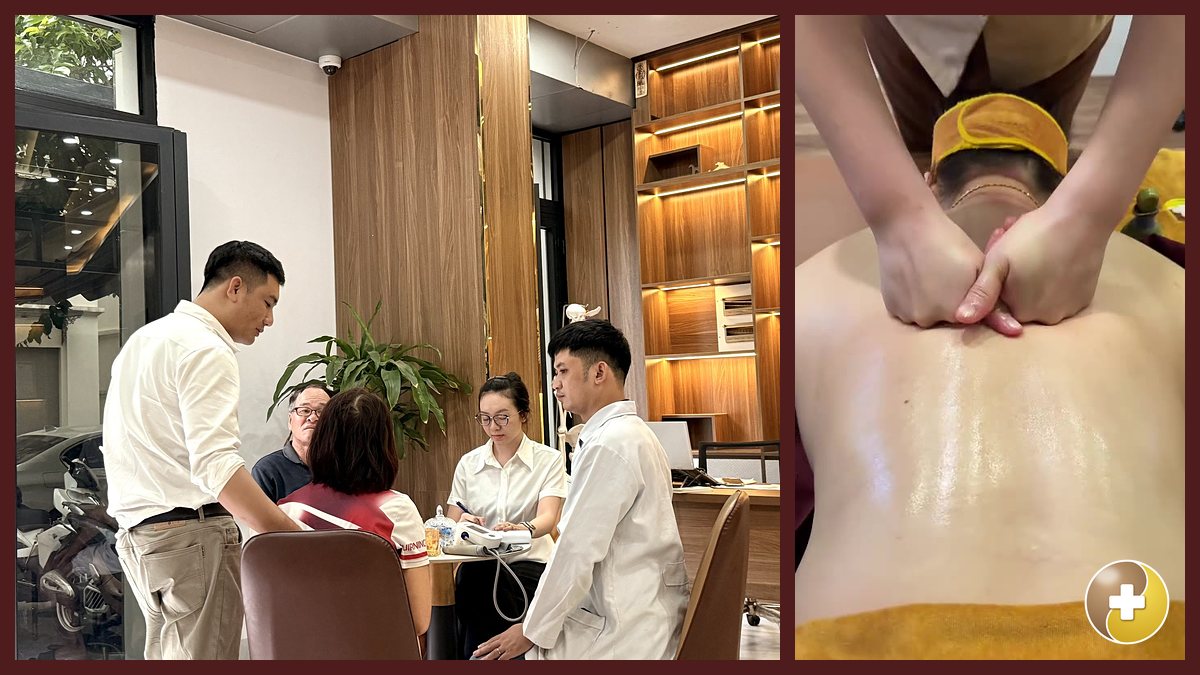
Quick answer: After dental work in Vietnam a massage is usually fine, but only for the neck, shoulders and back, gently; the face and jaw near the work are left alone, and heat is avoided right after extractions or implants. Tong Gia Acupoint Wellness in District 12 and Vinhomes Grand Park, Ho Chi Minh City, checks your dentist's instructions first.
Want Lương Y Tống Văn Huynh’s team to read your spine and posture in person?
Massage after dental work in Vietnam: is it OK?
The short answer: usually yes, as long as the massage stays away from the work that was just done. The neck, shoulders, upper and mid back, lower back and arms can be looked after with light pressure. The face, jaw, cheeks, temples and the area around the mouth are left alone until your dentist says they can be touched. How soon after an extraction or an implant you can have a steam session, lie face down or have a warm hair wash is a question for the dentist in charge of your case, because every procedure, every gum and every body is different.
"Dental work" covers a lot of different jobs: scaling, fillings, root canals, preparing teeth for crowns, veneers, wisdom tooth extraction and implants (a titanium post placed in the jawbone, sometimes with a bone graft or a sinus lift in the upper jaw). Most of them need local anaesthetic and a mouth held wide open for a long time. When you open wide, the temporomandibular joint just in front of the ear slides forward, and the masseter in the cheek, the temporalis at the side of the head and the deeper pterygoid muscles are held on stretch for the whole appointment. That is why a long session often leaves the jaw tired, chewing sore and the temples aching. At the same time your head is tipped back on the headrest, the shoulders creep up with nerves and the hands grip the armrests, so the trapezius, levator scapulae, sternocleidomastoid and the small muscles under the skull work almost non-stop.
Many of the people asking are Vietnamese families from the United States, Australia and Canada who fit dental work into a trip home: from San Jose, Houston and Orange County, from Sydney and Melbourne, from Toronto, Montreal and Vancouver. Plenty of other long-haul visitors do the same in Ho Chi Minh City. A dozen appointments can be squeezed into two to four weeks; crowns usually need several visits a few days apart, and some implant cases need two trips months apart. From North America the journey almost always involves a connection and can take close to a full day; from Sydney and Melbourne there are direct flights of roughly 8–9 hours. As the northern winter sets in, Saigon enters its dry season at 32–34°C, while visitors from Australia swap a dry summer for tropical humidity.
A typical picture: you land in the evening and are in the dental chair for two hours the next morning. By the afternoon the neck is stiff, the shoulders heavy, the jaw tired and the head a little thick from jet lag. Family suggests a massage, and the questions start: will it affect the extraction site, will it make the swelling worse, what should I tell the practitioner. This guide answers them in that order, safety first, comfort second.
It is part of the Tong Gia Acupoint Wellness (Huyệt Đạo Tống Gia) programme for overseas Vietnamese and long-haul visitors. For the neck and back after a long flight, see the main guide, spine care after a long-haul flight; if this is your first massage in Vietnam, read first massage in Vietnam: what to know.
Why dental work leaves the neck, shoulders and jaw tired
- A mouth held open for a long time. A root canal, crown preparation or implant placement can take one to two hours. The chewing muscles stay stretched and the jaw joint sits forward; afterwards the jaw feels tired and some people notice a soft click in front of the ear.
- A neck tipped back. To give the dentist a clear view, especially of upper back teeth, the chin points up. The muscles under the skull and the sternocleidomastoid stay shortened, so the back of the neck is stiff when you sit up.
- Bracing with nerves. The sound of the drill and the strange feeling in the mouth make people lift their shoulders, clench their hands, arch the back and hold their breath.
- Local anaesthetic. Lips, cheek and tongue stay numb for a few hours, so people bite their lip, chew on one side and hold the mouth tensely when they talk.
- A packed schedule. Dentist in the morning, relatives in the afternoon, a family dinner at night, and no real rest day.
- The flight and jet lag. Hours folded into a seat and short sleep make muscles tighten faster; see stiff neck after a long flight.
- Heat and soft food. Sweating without drinking enough, and days of rice porridge and cool soft meals, leave you flat and low on energy.
- Sleeping on one side. Avoiding the worked side and sleeping propped up as advised keeps the neck tilted all night.
Added together, these explain why the neck and shoulders often feel worse than the jaw itself, and why a gentle, well-timed neck and back session helps many people feel better without going anywhere near the mouth.
Signs worth noting
| Area / sign | Common, neck and back care is fine | Ask your dentist before a massage | Go back to the dentist or get checked now |
|---|---|---|---|
| Jaw, joint in front of the ear | Tired jaw, sore chewing for a day or two after a long appointment | Opening gets harder, clicking with pain | Jaw locks, cannot open or close |
| Extraction or implant site | A little pink oozing on day one, mild soreness that eases | Stitches still in, recent bone graft or sinus lift | Bleeding that will not stop, pain rising after a few days, bad smell, pus |
| Cheek, face | Mild swelling on the worked side, easing after 2–3 days | Bruising on the cheek or around the eye | Swelling spreading under the jaw, down the neck or to the eyelid; hot, red skin |
| Lip, chin, tongue | Numb for a few hours, then normal | Mild numbness lasting longer than expected | Numbness still there the next day after an implant or extraction |
| Whole body | Tired after the flight, jet lag | On blood thinners, bruising easily, other conditions | Fever, chills, unusual drowsiness |
| Throat, breathing | Normal | Swallowing feels a little tight on that side | Hard to swallow or breathe, swelling under the tongue, voice change: call 115 |
Alongside the mouth, people often notice a stiff neck and an ache at the back of the skull, one shoulder tighter than the other (usually the armrest-gripping side), aching temples by evening, shallow breathing and a poor appetite. If the tension is as much about worry as about the chair, the page on neck and shoulder massage explains how that area is approached.
When to see a doctor or go back to your dentist
With any of the following, skip the massage: go back to the dental practice, call your dentist, or see a doctor at a medical facility.
- Heavy bleeding that will not stop despite biting on gauze as instructed, or bleeding that restarts heavily.
- Swelling that grows after day 2–3 instead of settling, spreads under the jaw, down the neck or up to the eyelid, with hot, red skin.
- Fever or chills, pus at the socket or around an implant, a bad smell or taste.
- Pain that builds a few days after an extraction, spreading to the ear, instead of easing.
- Numb lip, chin or tongue that persists after the anaesthetic should have worn off, especially after lower wisdom teeth or implants.
- A loose post, crown or temporary tooth, or a bite that feels high; after a sinus lift, nosebleeds or fluid passing through the nose.
- Difficulty swallowing, opening the mouth or breathing, swelling under the tongue, a changed voice: this is an emergency, call 115 (Vietnam's ambulance number) or go to the nearest hospital.
- Crushing chest pain, shortness of breath, cold sweats, a racing heart or fainting: call 115 at once.
- One calf swollen, warm, red and painful after the long flight, or sudden breathlessness: think of a blood clot and get checked immediately; nobody should massage that leg.
- Unusual bruising or gums that keep bleeding while on blood thinners.
When booking, tell reception what was done (extraction, implant, crown, root canal), when and on which side, whether there was a bone graft or sinus lift, what your dentist told you to avoid (heat, lying face down, blowing the nose hard, vigorous rinsing), whether you take blood thinners, and any heart condition, high blood pressure or diabetes. Tong Gia practitioners go through the warning signs again and stop if any are present. Tong Gia does not read dental X-rays, CT scans or MRI and does not draw up plans in place of your dentist; what is allowed after an extraction or implant is your dentist's call.
This is a wellness service, not medical care.
The Y Tướng Học view: Kidney governs bone, Spleen opens into the mouth, Liver governs the sinews
Teeth, gums and implants belong to dentistry. But the person in the chair still has a constitution of their own, and Eastern wellness reads the mouth, teeth and jaw through three organ systems. In the Tong Gia curriculum the Kidney, in Eastern terms, is a functional system linked with essence, bone and marrow, water, breath, ears, hair, teeth, and the lower back and knees; it "governs bone and produces marrow". Among the signs of weakened Kidney function the curriculum lists dry, thinning or early grey hair and loose teeth, along with an aching lower back and tired knees. So teeth are seen as part of the bone the Kidney nourishes, and someone having several rounds of dental work after a long flight is someone whose lower back deserves warmth.
The Spleen "opens into the mouth and shows on the lips" and "governs the flesh and the limbs". After an extraction or implant, days of porridge and cool soft food often leave people sluggish, with heavy limbs and pale lips: the moment to feed the Spleen with soft, warm, nourishing meals. The Liver "governs the sinews": when it is well, sinews are supple; when it is strained, muscles tighten and cramp. Prolonged worry is said to make Liver qi stagnate, and people feel it as a stiff neck, raised shoulders and a clenched jaw.
To be clear, this is the functional language of Eastern wellness. It does not mean your kidneys, liver or stomach are unwell, and it does not explain why a tooth had to come out. Everything about the teeth belongs to your dentist.
Y Tướng Học (face reading for wellness) holds that "the appearance is outside, the organs are inside". Lương Y (traditional healer) Tống Văn Huynh, founder of Tong Gia, systematised it so practitioners observe first and then choose which part of the back to examine. For someone fresh from the dentist, this observation is done at a distance, without touching the face. The curriculum notes, among others:
- A "capsized boat" mouth (corners turned clearly down, even when smiling): linked with stagnant Liver qi affecting the Spleen and Stomach, with tight muscles at the corners of the mouth and jaw and a chronically tired neck.
- A Giáp (甲) face, wide at the top and narrow, pointed and lean at the chin: "full above, weak below"; on the back, the upper neck around C1–C2 runs warm and the low back tends to be hollow and cool.
- A flat back of the skull: read as a sign of insufficient Kidney essence, often with tight deep muscles at the base of the skull and early wear of the upper neck, C1–C3. These are the people who ache most after a long session with the head tipped back.
- A Thân (申) face with wide cheekbones: Liver–Stomach disharmony, stress going straight to the stomach; tension points sit around D7–D9.
- A congenitally asymmetric mouth: according to the school's material often accompanied by spinal or jaw-joint asymmetry. Practitioners use this only to compare the two sides of the back; the jaw itself is the dentist's business.
These are hints for where to look and how gently to work, never a verdict on anyone's health or character.
Spine segments and nerve-reflex areas involved
In the Tong Gia spinal nerve-reflex balancing curriculum, the seven cervical vertebrae C1–C7 relate to the head, face, neck and arms; D1–D12 to circulation, breathing and digestion; L1–L5 to digestion, kidneys, urinary function and the legs. In Western anatomy, sensation from the teeth, gums, cheeks and chewing muscles is carried by the trigeminal nerve (cranial nerve V), which runs from the brain to the face and does not pass through the spine. The cervical plexus (C1–C4), however, supplies the back of the head, the area behind the ear and the angle of the jaw (via the great auricular nerve, C2–C3), and together with cranial nerve XI controls the sternocleidomastoid and trapezius. That is why chair fatigue spreads from the neck to behind the ear and the jaw angle, and why working the neck can relax the area without touching the face.
| Segment | Nerves / function (Western anatomy) | Typical feeling after dental work and a flight | Organ system | Outward sign (Y Tướng Học) |
|---|---|---|---|---|
| C1–C3 | Upper cervical plexus; suboccipital muscles; sensation behind the head, ear and jaw angle | Stiff neck and back-of-head ache after the head was tipped back | Kidney (marrow, bone) | Flat back of the skull; Giáp face with a warm upper neck |
| C3–C5 | Levator scapulae, upper trapezius (with nerve XI); phrenic nerve C3–C5 | Raised, braced shoulders; shallow breathing, breath-holding | Liver (sinews) | "Capsized boat" mouth, tight jaw |
| C5–C7 | Brachial plexus; shoulder, arm, wrist | One arm and shoulder tight from gripping the chair and pulling luggage | Liver | One shoulder higher, tight sinews |
| D7–D9 | Mid-thoracic nerves; mid-back muscles; Liver Shu (BL18) | Mid back tight with worry, bloating, low appetite | Liver–Spleen | Thân face, wide cheekbones |
| D11–D12 | Lower thoracic nerves; Spleen Shu (BL20), Stomach Shu (BL21) | Sluggish and heavy after days of soft food | Spleen–Stomach (opens into the mouth) | Square Điền face; pale lips |
| L2–L3 | Lumbar roots; Kidney Shu (BL23), Mingmen (GV4) at L2 | Low back tired and cold after the flight and hours in the chair | Kidney (bone, teeth, low back) | Hollow, cool low back; thin soft ear rims |
The table is a guide for wellness care only. Teeth, gums, implants and the jaw joint are not areas to "read" or "adjust"; questions about them and about dental scans go to your dentist.
How Tong Gia helps rebalance: neck, shoulders and back, light pressure, face left alone
The method was built by Lương Y Tống Văn Huynh over more than 13 years of Vietnamese Eastern wellness practice, face reading and spinal nerve-reflex balancing. For someone who has just had dental work, a session runs like this:
- Safety screening: what was done, when and on which side; stitches, bone graft or sinus lift; what the dentist said to avoid; blood thinners, blood pressure, diabetes, heart conditions. Any warning sign above and the session stops here.
- Observation: complexion, lips, mouth corners, shoulder line, posture and breathing, all from a distance.
- A safe position: no face-down lying with the face in the headrest hole while the cheek is swollen, because it presses on the cheek and jaw. You lie on the side that was not worked on, on your back with a raised pillow, or sit supported for the neck and shoulders.
- Reading the spine by hand: resting, stroking, pressing and rolling lightly to feel skin temperature, the muscle layer, the shape of the spine and your response, comparing both sides. After a long appointment the base of the neck often runs warm and the shoulder on the gripping side feels denser.
- Light muscle release: neck, base of the neck, upper and mid back, lower back, arms. No strokes over the face, no work on the temples, jaw angle, cheek or around the ear on the worked side.
- Acupressure in the right places: on the back, Liver Shu (BL18), Spleen Shu (BL20), Stomach Shu (BL21) and Kidney Shu (BL23). On the hand, gentle pressure on Hegu (LI4), recorded in the curriculum with the old saying "for the face and mouth, use Hegu"; it is never used in pregnancy. It is a way to address the face along the meridian without touching the mouth, not a substitute for your dentist's advice.
- No heat on the head and face: in the first days after an extraction or implant, no steam and no hot herbal compress on the face or neck; see herbal steam after arriving in the tropics and ask your dentist when heat is fine again.
- Self-care tips for the neck, breathing and sitting more loosely at the next appointment.
Three services that suit someone fresh from the dentist (prices in VND; approximate conversions at an indicative rate of USD ≈ 26,000₫, AUD ≈ 17,000₫, CAD ≈ 19,000₫, payment in VND; full list on prices):
- Neck and shoulder care, 60 minutes: 550.000₫, first visit 399.000₫ (about USD 21, AUD 32 or CAD 29; first visit about USD 15, AUD 23 or CAD 21). For a stiff neck and braced shoulders after a long appointment; face and jaw untouched.
- Vietnamese Eastern massage, 60 minutes: 450.000₫ (about USD 17, AUD 26 or CAD 24). Light full-body work except the face, for flight fatigue, jet lag and low energy.
- Herbal hair wash with neck and shoulder massage, 60 minutes: 250.000₫ (about USD 10, AUD 15 or CAD 13). Only once your dentist is happy and the site has settled; ask to skip the face and keep the water warm, not steaming.
From Tan Son Nhat Airport: the District 12 branch at 225 Dương Thị Mười, Phường Tân Chánh Hiệp (Tan Chanh Hiep Ward) is on the same northern side of the city as the airport, a short drive depending on traffic. The Vinhomes Grand Park branch at Căn T16-21 khu Manhattan, Phường Long Bình, TP. Thủ Đức (Manhattan zone, Long Binh Ward, Thu Duc City) is further, a longer drive at rush hour. Choose the one on the way back from your dentist so you can rest straight afterwards.
What you may feel: the neck and shoulders warm up and the muscles that braced in the chair let go; a few tight points give a mild, pleasant ache, what the curriculum calls "creating a sensation wave", an even rhythm that lets muscles tighten and release so the body adjusts itself. Many people breathe deeper and doze off. Afterwards the neck usually turns more easily and sleep comes more readily, depending on the person. Tong Gia does not promise that pain will go and does nothing to teeth, gums or implants; following your dentist's instructions is what matters.
Want Lương Y Tống Văn Huynh’s team to read your spine and posture in person?
A suggested schedule for a dental trip and self-care
For the bigger picture of planning wellness around a visit home, see a 7-day wellness plan for a Tet visit.
| When | What to do | Note |
|---|---|---|
| Before you fly | Get your dental schedule: which days are extractions or implants; ask about flying home afterwards | Book massages before big appointments or between light ones |
| Arrival day | Rest, drink water, warm shower, early night on local time | Avoid major dental work straight off the plane if possible |
| 1–2 days before an extraction or implant | A neck and shoulder session or Eastern massage for sleep and less bracing | The easiest time for massage: nothing to protect yet |
| Day of extraction or implant | Rest; follow instructions: gauze, cold pack if advised, sleep propped up | No massage, no steam, no very hot shower, no long sun |
| 2–3 days later | If your dentist agrees and there are no warning signs: light neck and back session, seated or side-lying | Face and jaw untouched, no face-down, no heat |
| Between crown or root canal visits | A neck or back session once a week; early morning walks | Tell the practitioner where a temporary crown is |
| 1–2 days before flying home | A gentle session for the neck and back; sleep and water | Check with your dentist about flying after extractions, implants or a sinus lift |
- Slow 4–6 breathing before and during appointments: in through the nose for 4 seconds, out slowly for 6, for a few minutes.
- Hands on your stomach, not gripping the armrests; drop the shoulders whenever the dentist pauses.
- Warm palms on the back of the neck, stroking down to the shoulders for 1–2 minutes; never over the jaw.
- Gentle Hegu (LI4) pressure for 1–2 minutes on each hand, a mild ache is enough; not in pregnancy.
- Soft, nourishing food served lukewarm, in small meals; follow your dentist's rules on rinsing, straws and spicy food.
- Keep the low back warm under air-conditioning set around 26–27°C, with the airflow not blowing straight at you.
Book from abroad before you fly
Tong Gia has two branches in Ho Chi Minh City, open every day:
- District 12: 225 Dương Thị Mười, Phường Tân Chánh Hiệp, 8:00–19:00 daily.
- District 9 – Vinhomes Grand Park: Căn T16-21 khu Manhattan, Phường Long Bình, TP. Thủ Đức, 9:00–20:00 daily.
Message Zalo or WhatsApp +84 888 264 559 (0888 264 559) or use online booking. Send your landing date and time, your dental schedule (which days for extraction, implant, crowns), which side, what your dentist said to avoid, whether you take blood thinners, where you feel tight and which branch you prefer. More on holding a time slot from overseas: book a massage in Saigon from abroad. Weeks around Tet fill quickly, so message early.
Visit us
- Đông Y Huyệt Đạo Tống Gia Quận 12 (District 12)
225 Dương Thị Mười, Phường Tân Chánh Hiệp, Quận 12, HCMC · 8:00–19:00 daily · 0888 264 559 · Directions on Google Maps - Đông Y Huyệt Đạo Tống Gia Quận 9 (Vinhomes Grand Park, District 9)
Căn T16-21 khu Manhattan, Vinhomes Grand Park, Phường Long Bình, TP. Thủ Đức, HCMC · 9:00–20:00 daily · 0888 264 559 · Directions on Google Maps
Map of our two branches
Want Lương Y Tống Văn Huynh’s team to read your spine and posture in person?
What guests say on Google Maps
“Very good service. Excellent technician skills. Elegant, tidy facilities.” (translated from a Vietnamese review)
— Tuyết Mai T., Google Maps review · Vinhomes Grand Park branch (District 9) · 2024 · See on Google Maps
“Very good service. Warm, lovely, professional staff.” (translated from a Vietnamese review)
— Phương L., Google Maps review · Vinhomes Grand Park branch (District 9) · 2025 · See on Google Maps
Quoted from public reviews, shortened where marked (…). Experiences vary from person to person; reviews are not a substitute for seeing a doctor when something feels wrong.
Related guides for your trip
- Health check in Vietnam, then a massage: how to plan the week if you fly in from the US, Australia or Canada
- Getting a massage in Saigon without speaking Vietnamese: phrases, messaging ahead and a Tong Gia session
- Massage with osteoporosis: is it safe on a trip to Vietnam, what pressure is right and what to avoid
FAQ
Can I get a massage after dental work in Vietnam? Usually yes, but only the neck, shoulders and back with light pressure. The face, jaw and cheek near the work are left alone until your dentist says otherwise, and heat is avoided in the first days after an extraction or implant. Tong Gia asks about your dentist's instructions before starting.
How long after wisdom tooth removal can I have a massage or steam? There is no single number. Rest on the day itself. If there is no bleeding, growing swelling or fever and your dentist agrees, a light neck and back session a few days later is usually possible. Ask your dentist when steam or heat on the head is fine again.
Can I lie face down for a massage after an implant? Not in the first days while the cheek is swollen, because the face cradle presses on the cheek and jaw. At Tong Gia you can lie on the other side, on your back with a raised pillow, or sit supported.
My jaw aches after a long appointment. Should I get a face massage? Do not have the jaw or cheek massaged straight after dental work; ask your dentist about the ache. Tong Gia works the neck, the area behind the ear and the shoulders, which tire along with the jaw, and uses gentle hand points such as Hegu.
I am flying from Sydney for crowns in Saigon. Massage before or after the dentist? A session a day or two before a big appointment is the easiest, since there is nothing to protect yet and it helps you sleep. Between crown visits a weekly neck or back session is fine; mention where a temporary crown is.
My gum is swelling more and I have a slight fever. Will a massage help? No. Growing swelling, fever, bleeding that will not stop, pus or a bad smell mean going back to your dentist or getting checked, not a massage. Trouble swallowing or breathing: call 115.
Author: Lương Y Tống Văn Huynh – founder of Huyệt Đạo Tống Gia, a master of traditional Vietnamese wellness with over 13 years in Eastern wellness care, Y Tướng Học (face reading) and spinal nerve-reflex balancing massage.
Updated: 2026-11-17
Related guides
- Should you get a massage with a cold or fever? When to postpone and when a gentle session is fine
- Can you get a massage during your period? Which areas are fine and which to skip on a trip to Vietnam
- Booking a massage for a group during Tet: how to plan sessions for family, relatives and friends in Saigon
- Booking a massage together as a couple in Ho Chi Minh City: same time slot, a different focus for each person
- Vietnamese cupping vs cupping abroad: the marks, who should skip it, and how a Tong Gia session works
- Health check in Vietnam, then a massage: how to plan the week if you fly in from the US, Australia or Canada
This is a wellness service, not medical care.