
Massage with osteoporosis: is it safe on a trip to Vietnam, what pressure is right and what to avoid
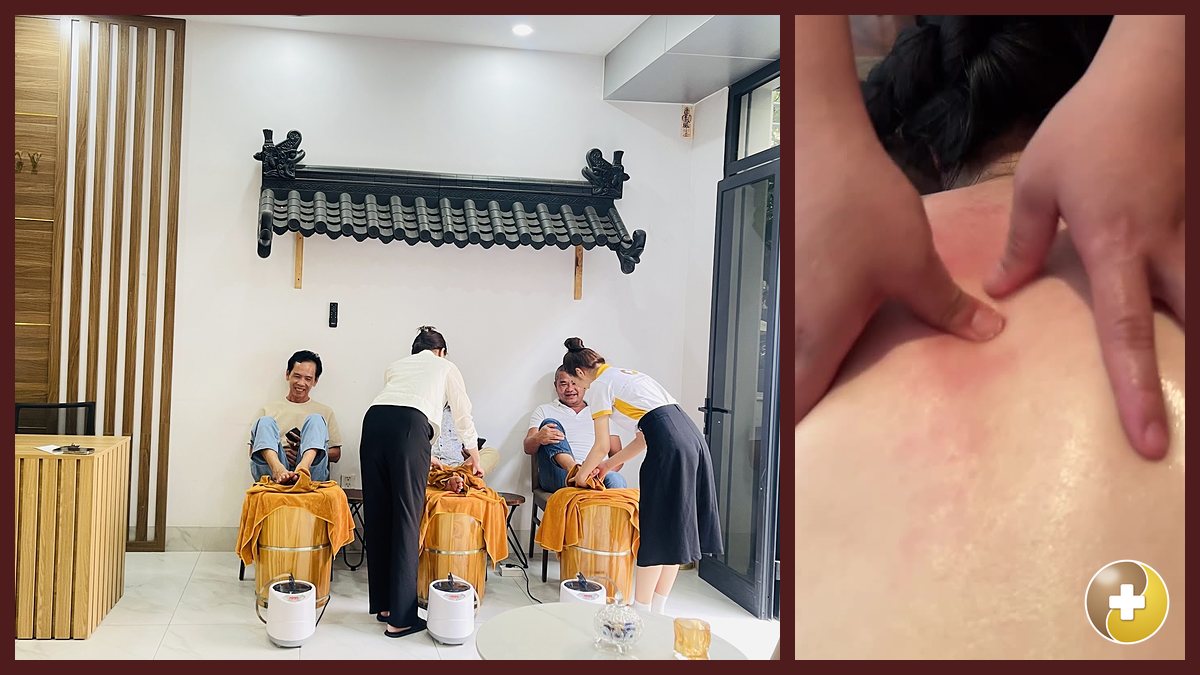
Quick answer: With osteoporosis, massage is usually possible if the pressure is light, there is no cracking, twisting or firm pressure on the spine and ribs, and you mention your bone condition when booking. Tong Gia Acupoint Wellness in District 12 and Vinhomes Grand Park, Ho Chi Minh City, works this way and makes no promise to strengthen bone.
Want Lương Y Tống Văn Huynh’s team to read your spine and posture in person?
Massage with osteoporosis: is it safe?
Is massage safe if you have osteoporosis? The short answer: usually yes, as long as the session is designed for fragile bones. That means light pressure, no cracking or manipulation of the spine, no twisting, no pressing down on the vertebrae or ribs, no walking on the back, and lying positions chosen so the skeleton carries no load. Deep-pressure work, elbow pressure, neck or back "cracking", sudden pulls on the arms and legs, or a practitioner leaning their whole weight onto your back are not for bones that have thinned, wherever you are in the world.
In Western medical terms, osteoporosis means bone mass has dropped and the inner lattice of the bone has become sparse, so bones break more easily than they should. It is usually silent: no pain, no swelling, and many people only find out from a bone density scan (DXA) or after a fracture from a minor fall. Typical fracture sites are the vertebrae of the back (compression fractures, sometimes after nothing more than bending or lifting), the hip at the top of the thigh bone, the wrist after a fall onto an outstretched hand, and the ribs. So the real question is not "can massage make my bones stronger" (it cannot), but "how can massage relax tired, tight muscles without putting stress on the bones".
This guide is written for women of 55 and over from the Vietnamese communities of the United States, Australia and Canada, in Houston, San Jose and Orange County, Sydney and Melbourne, Toronto, Calgary and Vancouver, who fly home for Tet, and for international visitors on long-haul trips to Ho Chi Minh City. Many have been told after menopause that they have osteoporosis or low bone density and take calcium, vitamin D or other prescriptions. At year's end North America turns cold and dark while Saigon enters its dry season at 32–34°C; the journey from North America almost always involves a connection and can take close to a full day, while Sydney and Melbourne have direct flights of around 8–9 hours.
After landing, the back is stiff from the seat, the neck and shoulders are tight from hauling suitcases and the legs feel heavy from jet lag. Family in the city want to take mum for a massage before the busy Tet days, and everyone worries about the same thing: the bones are weak, could pressure break something? This article answers in the right order: safety first, comfort second. For the wider picture of the spine after long hours in the air, see our pillar guide spine care after a long-haul flight; if you are bringing your parents back, read taking elderly parents back to Vietnam: health prep.
Why women over 55 flying home for Tet ache more and are more at risk
After menopause, falling oestrogen speeds up bone loss for several years. Add age, a small frame, little weight-bearing exercise, low vitamin D, long-term corticosteroids for another condition, smoking, or a mother who broke a hip. A Tet trip then piles extra load onto the spine and legs:
- Long hours seated: the back curves into the seat, you rarely change position, and the back and buttock muscles brace for hours.
- Lifting and bending: hoisting a case into the overhead bin, dragging it off the carousel, bending to pick up bags. Bending forward while lifting and twisting is the everyday movement most often linked to spinal compression fractures. Ask someone else to lift.
- A dark northern winter: months indoors, little walking outside and little sun on the skin mean less vitamin D and weaker, less steady legs.
- Jet lag and a new climate: broken sleep and night-time trips to the bathroom in an unfamiliar house are a classic setting for falls.
- Vietnamese homes and streets: steep, narrow stairs in tube houses, wet bathroom floors, uneven steps, low plastic stools, and motorbike rides over potholes and speed bumps that jolt the spine.
- Tet chores: cleaning, polishing the altar, carrying apricot-blossom pots, lifting grandchildren, standing at the stove, bowing many times a day. With osteoporosis, even a fall onto your bottom can break a bone.
- Massage places that do not ask first: deep elbow work, walking on the back, neck and back cracking and sudden pulls are forces thin bone cannot take. That is why you should mention osteoporosis as soon as you book.
If high blood pressure is also part of the picture, see massage with high blood pressure: safety.
Signs worth noting
Not every backache in someone with osteoporosis is a worry, but some kinds of pain need sorting out before anyone thinks about massage:
| Sign | Common, gentle wellness care is fine | Ask the team monitoring your bones first | Get checked now, no massage |
|---|---|---|---|
| Back pain | General dull ache after the flight, easing as you move or rest | Pain lasting weeks and slowly getting worse | Sudden, severe pain after bending, lifting, coughing, sneezing or a fall |
| Posture | Rounded shoulders when tired, can still stand tall | Feeling shorter or more stooped than last year | Rapidly increasing stoop with pain |
| Ribs, chest | Tight upper back muscles from suitcases | One sore spot on a rib after a lot of coughing | Rib pain after a knock; crushing chest pain, breathlessness, cold sweat: call 115 |
| Hip, wrist | Stiff hips after sitting | Hip pain when walking for a few days | Hip pain after a fall, cannot stand, leg turned out; swollen, misshapen wrist after a fall |
| Nerves | Brief tingling when sitting long, gone when you move | Persistent numbness in a leg | Weak legs, numb saddle area, trouble passing urine or loss of control |
Other things women with osteoporosis often notice on the trip: neck and shoulder tension (our guide neck and shoulder massage for elderly parents covers pressure and positions for older people), night-time calf cramps on hot days, hot flushes and night sweats, heavy legs with mild ankle swelling after the flight, and feeling unsteady on stairs.
When to see a doctor
If you have been told you have osteoporosis or low bone density, any of the following means no massage: please see a doctor at a medical facility.
- Sudden, severe back pain after bending, lifting a suitcase, a strong cough or sneeze, dropping hard into a chair or any fall, even a small one. This can be a vertebral compression fracture. Do not rub or heat the area before it has been checked.
- A fall followed by hip pain and being unable to stand, or a leg that looks shorter or turned outwards: think of a hip fracture. Call for help; do not try to walk.
- A swollen, painful or misshapen wrist after falling onto your hand.
- Clear height loss or a fast-growing stoop over a few months, or back pain with unexplained weight loss, fever, pain that is worse at night or does not ease when lying down.
- Weakness or numbness in both legs, numbness around the buttocks, or bladder or bowel changes with back pain.
- Crushing chest pain, shortness of breath, cold sweats or fainting: call 115 (Vietnam's ambulance number) at once. One calf swollen, warm, red and painful after a long flight may be a deep vein clot: get checked the same day.
When booking, tell reception that you have osteoporosis or low bone density, whether you have ever had a fracture and where, any past vertebral fracture, what you take to protect your bones, and any other conditions such as high blood pressure or diabetes. At Tong Gia, practitioners go through these signs again before touching you and stop if any are present. Tong Gia does not read X-rays, MRI scans or bone density reports and does not draw up medical plans; how strong your bones are and what you need to protect them is for the team that monitors you.
This is a wellness service, not medical care.
The Y Tướng Học view: the Kidney governs bone and produces marrow
The Tong Gia curriculum looks at the Kidney (Thận) from two sides. In Western terms the kidneys activate vitamin D and balance calcium and phosphate, helping to "keep bones strong". In Eastern terms the curriculum states "the Kidney governs bone and produces marrow": essence makes marrow, marrow nourishes bone, and when this function declines the curriculum lists aching bones and osteoporosis. The Kidney is a functional system tied to essence, bone and marrow, water, the ears, hair, teeth and the lower back and knees; it belongs to Water and to winter. The curriculum is clear that the two views complement each other and neither replaces the other.
Signs of a weakening Kidney function in the curriculum include an aching lower back, weak knees, tiring quickly when standing, dry or falling hair, loose teeth, ringing ears, waking at night to urinate, poor sleep, and either feeling cold or having hot palms and soles with night sweats. Women around menopause often recognise the Kidney yin deficiency pattern: hot palms and soles, afternoon flushes, night sweats, dry mouth, poor sleep, aching back and knees. Others lean towards Kidney yang deficiency: feeling cold, cold hands and feet, a cold, aching lower back, night-time urination. A single sign proves nothing on its own.
The curriculum also says the Liver governs the sinews (stiff muscles and cramps when it is weak) and the Spleen governs the muscles and limbs. For someone with osteoporosis, the muscles around the spine and in the legs are the "jacket" that keeps you steady and less likely to fall, so they deserve careful care.
Y Tướng Học (Vietnamese medical physiognomy) says "the sign is outside, the organ is inside". Lương Y Tống Văn Huynh, founder of Tong Gia Acupoint Wellness, systematised it so practitioners read the person first and then decide how light or deep to work and where to bring warmth. Signs the curriculum notes in older people with fragile bones: thin, soft ear rims with a flat bone behind the ear, linked to a declining Kidney with aching back and knees, cold limbs and early ageing of bones and joints; the Mục (目) face, long, narrow and bony, with thin, slack back muscles, for which the curriculum prescribes the gentle "tonifying" techniques of vibration and light kneading; and the Vương (王) face, bony with high cheekbones, where the curriculum uses deeper techniques for healthy people, but never for someone with osteoporosis. These signs only guide care; they say nothing about your bone density, which only a scan can measure.
Spine segments and nerve-reflex zones involved
The Tong Gia spinal nerve-reflex curriculum describes 7 cervical, 12 thoracic (D1–D12) and 5 lumbar (L1–L5) vertebrae plus the sacrum and coccyx, and places the muscle, bone and joint group in zones C5–C7, L1–L5 and S1–S5. Osteoporotic compression fractures are most common in the mid-thoracic spine and around the thoracolumbar junction (D11–L1), so these are areas where the practitioner never presses on the spinous processes or vertebral bodies, only strokes the muscles on either side.
| Segment | Nerves / function (Western anatomy) | Common after a flight with osteoporosis | Organ system | Outer sign (Y Tướng Học) |
|---|---|---|---|---|
| C5–C7 | Roots of the brachial plexus; shoulder, arm, wrist | Tight neck from suitcases; the wrist breaks easily in a fall | Liver (sinews) | Tense neck and shoulders, cramps |
| D1–D8 | Thoracic and intercostal nerves; upper back, rib cage; Lung shu (BL13), Heart shu (BL15) | Rounded upper back, rib pain on coughing; common compression-fracture zone | Lung, Heart | Shallow breathing, sighing; poor sleep, palpitations |
| D9–D12 | Lower thoracic roots; mid and lower back; Liver shu (BL18), Spleen shu (BL20) | Bracing mid-back, tight legs, poor appetite after travel | Liver, Spleen | Dry tired eyes; pale lips, slack muscles |
| L1–L4 | Lumbar roots feeding the femoral nerve; Kidney shu (BL23), Mingmen (GV4) at L2 | Cold, aching lower back; tiring quickly when standing | Kidney (bone, marrow) | Thin soft ear rims, dry falling hair, cold lower back |
| L5–S1, sacrum | Roots of the sciatic nerve; buttocks, back of thigh, calf, near the hip | Tight buttocks after sitting; night calf cramps | Kidney – Bladder | Cold skin over the low back, hard calves |
The table only guides care and is not a medical conclusion. With osteoporosis, "reading the spine" at Tong Gia means feeling with a flat palm, never probing deeply for points.
How Tong Gia helps rebalance: light pressure, no cracking, safe positions
This is a traditional Vietnamese Eastern wellness method built by Lương Y Tống Văn Huynh over more than 13 years of practice in traditional wellness, Y Tướng Học and spinal nerve-reflex balancing, and you are welcome to experience it while you are in Ho Chi Minh City. Its rule is that this knowledge supports relaxation and well-being and never replaces a medical check. The curriculum even notes: no back-tapping in severe osteoporosis. A session for someone with osteoporosis runs like this:
- Safety screening: when osteoporosis was found, any fractures and where, any new back pain, blood pressure, diabetes, blood thinners. Any warning sign from the section above and the session stops there.
- Observation: complexion, ears, hair, lips, posture, the curve of the back, the way you walk; questions about sleep, flushes and feeling cold.
- A safe position: no lying face down on a hard table if that hurts the ribs or breathing; side-lying with a pillow between the knees and one to hug, lying on your back with a bolster under the knees, or sitting supported. You are helped on and off the table slowly with a step, never left to push yourself up.
- Reading the spine with very light hands: resting and stroking to feel skin temperature, muscle tone and your response, comparing both sides, with no deep probing on the spine.
- Muscle release at the lowest levels: the curriculum has five levels of force, from one finger and the whole hand up to the bent arm, straight arm and full body weight; with osteoporosis only the first two are used. Gentle "tonifying" vibration, kneading, stroking and rubbing of the muscles beside the spine, the neck, arms, thighs and calves. No manipulation, no twisting, no pulling the neck or limbs, no pressure on the ribs, no elbows, no walking on the back.
- Acupoints, held gently: Kidney shu (BL23) and Mingmen (GV4) on the back are touched lightly with a fingertip, never pressing into the spine; on the legs Taixi (KI3), Yongquan (KI1) and Zusanli (ST36). Cold skin is warmed and hot skin cooled; work at a point stops when the skin turns from dry to slightly moist.
- Self-care coaching: standing up, sitting down and lifting without bending the back, and simple ways to make a Vietnamese home safer against falls.
What a typical session looks like: family usually message ahead to say mum has osteoporosis and whether she has broken a wrist before. At the branch the practitioner repeats the safety questions and arranges pillows until you are comfortable. The neck and shoulders are usually done first while you sit or lie on your back, then you lie on one side while the back muscles on that side are stroked and gently vibrated, then the other side, then the legs and soles. You are asked about pressure throughout, and any sharp or uncomfortable feeling ends that move. At the end you are helped up from side-lying and sit for a moment before standing.
Three services that suit osteoporosis (prices in VND; approximate conversions at a reference rate of USD ≈ 26,000đ, AUD ≈ 17,000đ, CAD ≈ 19,000đ, payment in VND; see prices):
- Đông y (traditional Vietnamese) massage, 60 min: 450,000₫ (about 17 USD, 26 AUD or 24 CAD). Gentle whole-body work in safe positions; good for exhaustion and jet-lagged sleep. Mention osteoporosis so only light pressure is used.
- Heavy, tired legs care, 60 min: 500,000₫ (about 19 USD, 29 AUD or 26 CAD). Legs, calves and soles, with no load on the spine; good for heavy legs and night cramps.
- Herbal hair wash with neck and shoulder massage, 60 min: 250,000₫ (about 10 USD, 15 AUD or 13 CAD). Lying on your back, head, neck and shoulders only; a gentle first visit.
From the airport: the District 12 branch is in the north of the city on the same side as Tân Sơn Nhất airport, not a long drive, depending on traffic. The Vinhomes Grand Park branch in Thu Duc City is further, a longer drive especially at rush hour, and suits families in the east of the city. With osteoporosis, take a car rather than riding pillion on a motorbike, and rest on landing day.
What you will feel: warmth spreading through the neck and lower back, bracing muscles letting go, a steady rhythm that calms you, and many women drift off in the second half. Pressure is meant to feel pleasant, never sharp or crushing. Afterwards people often report a lighter back, less heavy legs and easier sleep, varying by person. Tong Gia does not promise stronger bones or an end to pain.
Want Lương Y Tống Văn Huynh’s team to read your spine and posture in person?
A suggested plan for the trip, plus self-care
| When | What to do | Notes |
|---|---|---|
| Before flying | Ask the team monitoring your bones whether massage is fine and which positions to avoid; pack enough of your prescriptions | Use a wheeled case and ask someone to lift it into the bin |
| On the plane | Aisle seat, walk every 1–2 hours, small cushion behind the low back | Drink water; do not bend down to the floor for bags |
| Landing day | Rest, warm shower, early night on Vietnam time | No massage yet; night light and non-slip slippers by the bed |
| Days 2–3 | Hair wash with neck massage, or leg care, light pressure | Remind the practitioner about your bones |
| Weeks 1–2 | Short walks in the early morning sun; small fish, greens, tofu, milk as advised | Avoid motorbikes on rough roads, low stools, squatting |
| Tet days | A gentle Đông y massage if the back still aches | No carrying flower pots or climbing chairs to clean the altar |
| 1–2 days before leaving | A light session for neck and legs; sleep and drink well | Pack early and have someone carry the case |
- Lift safely: stand close, bend your knees, keep the back straight, hold the load close; never bend and twist at once.
- Fall-proof the house: non-slip mat in the bathroom, a light on at night, use the handrail, wear grippy slippers.
- Gentle self-massage from the Tong Gia curriculum: rub your palms warm and stroke both sides of the lower back until warm (no thumping on the spine); rub the soles 3–5 minutes each in the evening; press Taixi lightly 1–2 minutes each side.
- Warm foot soak 15–20 minutes at about 38–42°C before bed, sitting on a stable chair; people with diabetes should test the water carefully.
- Skip deep forward bends: ask the team monitoring you which movement suits you, such as walking and balance work.
For a family trip, the knee guide massage after knee replacement may also help.
Booking from abroad before you fly
- District 12: 225 Dương Thị Mười, Phường Tân Chánh Hiệp (Tan Chanh Hiep ward, District 12), 8:00–19:00 daily.
- Vinhomes Grand Park: Căn T16-21 khu Manhattan, Phường Long Bình, TP. Thủ Đức (unit T16-21, Manhattan area, Long Binh ward, Thu Duc City, formerly District 9), 9:00–20:00 daily.
You can book from Houston, San Jose, Sydney, Melbourne or Toronto before you travel: WhatsApp or Zalo +84 888 264 559 (0888 264 559 in Vietnam), or use online booking. Send your landing date and time, that you have osteoporosis or low bone density, any past fractures, where you ache and your preferred branch. Reception notes it so the practitioner can prepare pillows, positions and light pressure. Family in Ho Chi Minh City can book for you; slots fill quickly before Tet.
Visit us
- Đông Y Huyệt Đạo Tống Gia Quận 12 (District 12)
225 Dương Thị Mười, Phường Tân Chánh Hiệp, Quận 12, HCMC · 8:00–19:00 daily · 0888 264 559 · Directions on Google Maps - Đông Y Huyệt Đạo Tống Gia Quận 9 (Vinhomes Grand Park, District 9)
Căn T16-21 khu Manhattan, Vinhomes Grand Park, Phường Long Bình, TP. Thủ Đức, HCMC · 9:00–20:00 daily · 0888 264 559 · Directions on Google Maps
Map of our two branches
Want Lương Y Tống Văn Huynh’s team to read your spine and posture in person?
What guests say on Google Maps
“The staff advise warmly, help out and serve guests wholeheartedly.” (translated from a Vietnamese review)
— Bảo Ngân N., Google Maps review · Vinhomes Grand Park branch (District 9) · 2024 · See on Google Maps
“I really love the space, and the ladies here are very skilled.” (translated from a Vietnamese review)
— Tâm Đ., Google Maps review · Vinhomes Grand Park branch (District 9) · 2025 · See on Google Maps
Quoted from public reviews, shortened where marked (…). Experiences vary from person to person; reviews are not a substitute for seeing a doctor when something feels wrong.
Related guides for your trip
- Massage while breastfeeding: what nursing mothers flying to Vietnam for Tet should know about neck care
- Can you get a massage after a heart stent? Who to ask first, how gentle it should be and when to call 115
- Midlife hot flashes in Vietnam's heat: why sleep and energy dip on a Tết visit, and how to stay comfortable
FAQ
Is massage safe with osteoporosis? Usually, if the pressure is light, there is no cracking, twisting or firm pressure on the spine and ribs, and the lying position is safe. Mention your bone condition when booking. Tong Gia works this way and makes no promise to strengthen bone; sudden back pain means a medical check first.
Can a massage break a bone if I have osteoporosis? Strong pressure, deep elbow work, spinal cracking and walking on the back can harm thin bone, so avoid them. At Tong Gia only fingertip and flat-hand pressure is used, never on the vertebrae or ribs, and any sharp feeling stops the move.
Will massage make my bones stronger? No. Massage does not raise bone density. A gentle session helps tight muscles relax and can make sleep easier. Protecting bone is for the team monitoring you, together with diet and suitable exercise.
My mum flew in from Houston, lifted her suitcase and now has severe back pain. Should she get a massage? No. In someone with osteoporosis, sudden severe back pain after bending, lifting, coughing or a fall can be a vertebral compression fracture. Take her to get checked straight away, and do not rub or heat the area first.
What position is safest for massage with osteoporosis? Usually side-lying with a pillow between the knees, lying on your back with a bolster under the knees, or sitting supported. Avoid long face-down lying if your ribs hurt. Tong Gia practitioners help you on and off the table slowly.
I live in Toronto and have osteoporosis. What should I tell Tong Gia when booking? Message +84 888 264 559 on WhatsApp or Zalo with your landing time, that you have osteoporosis or low bone density, any fractures, other conditions, where you ache and the branch you prefer (District 12 or Vinhomes Grand Park).
Author: Lương Y Tống Văn Huynh – founder of Huyệt Đạo Tống Gia, a master of traditional Vietnamese wellness with over 13 years in Eastern wellness care, Y Tướng Học (face reading) and spinal nerve-reflex balancing massage.
Updated: 2026-11-17
Related guides
- Booking a massage for a group during Tet: how to plan sessions for family, relatives and friends in Saigon
- Booking a massage together as a couple in Ho Chi Minh City: same time slot, a different focus for each person
- Vietnamese cupping vs cupping abroad: the marks, who should skip it, and how a Tong Gia session works
- Massage with osteoporosis: is it safe on a trip to Vietnam, what pressure is right and what to avoid
- Is a strong massage better? How to choose the right pressure, how to ask for it, and when to keep it gentle
- Massage after slipping on ice: is it safe, what has to wait, and when to get checked first
This is a wellness service, not medical care.