
First massage in Vietnam: booking, what to wear, asking for pressure, tipping and a Tong Gia session
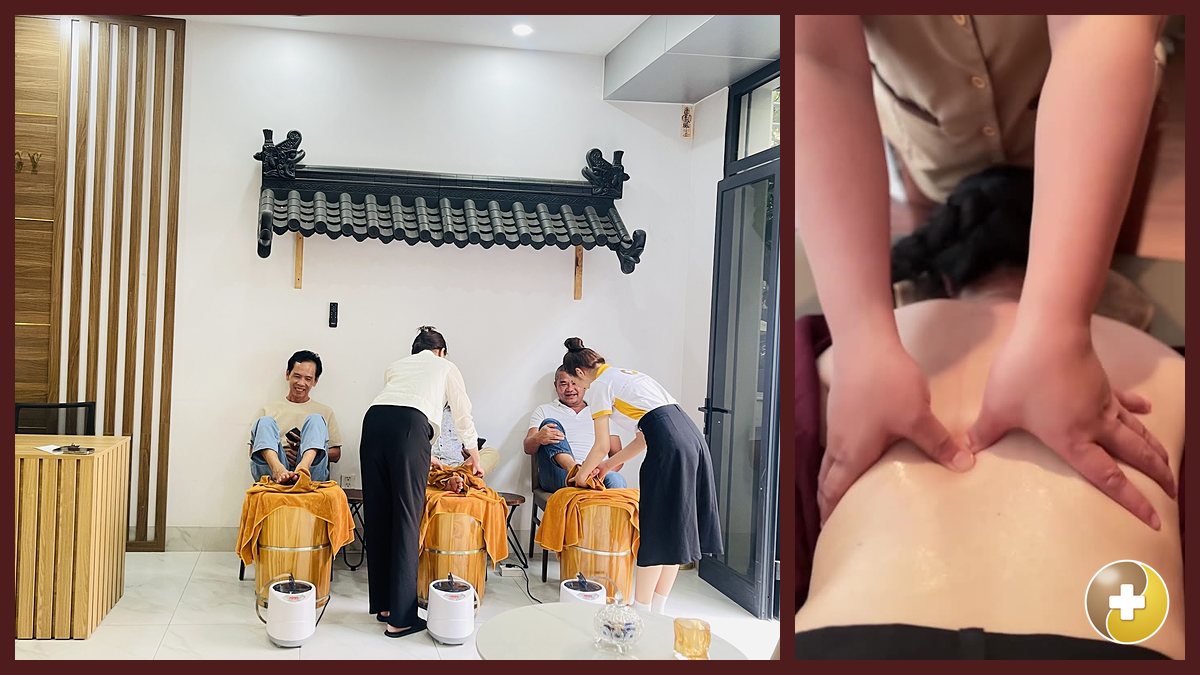
Quick answer: For your first massage in Vietnam, book ahead, wear loose clothes, shower first, agree on pressure, ask reception about tipping and pay in VND. Skip it with a fever or one swollen leg after the flight. At Tong Gia Acupoint Wellness in Ho Chi Minh City, sessions start with observation and reading the spine by hand.
Want Lương Y Tống Văn Huynh’s team to read your spine and posture in person?
First massage in Vietnam: the short answer
Between November and February, a lot of Vietnamese families from the US, Australia and Canada fly home for Tết, weddings and long-overdue visits to grandparents. Back in Orange County, San Jose or Houston the evenings are getting cold; Toronto, Montreal and Calgary may already have snow; Sydney and Melbourne are heading into summer. Then comes the flight: roughly 15–16 hours direct from the US West Coast, usually more than 20 hours with a connection from Canada, about 8–9 hours from Sydney or Melbourne. You land at Tân Sơn Nhất in the middle of Saigon's dry season, above 30°C, with a stiff neck, a tired lower back and heavy legs. Your aunt suggests a massage, and if you grew up abroad, or you are the American, Australian or Canadian partner who married into the family, the questions start: what do I need to know before my first massage in Vietnam? Do I undress? Will it hurt? How do I say "softer" if I don't speak Vietnamese? Am I supposed to tip?
The short version: book ahead; wear loose, soft clothes; shower before you go; eat something light about an hour before; arrive a few minutes early to mention sore spots and any health conditions; agree on pressure at the start (there is a table of Vietnamese phrases below); ask reception about tipping and how to pay; pay in Vietnamese dong (VND). If you have a fever that day, have been drinking, have one swollen leg after the flight, or notice any of the warning signs listed further down, reschedule.
From a Western anatomy point of view, massage is mechanical work on skin, fascia, muscle, tendon and ligament. Pressure and gliding strokes stimulate mechanoreceptors in the skin and muscle, and those signals travel along nerves to the spinal cord and brain. When the input is steady and comfortable, the autonomic nervous system shifts towards its rest mode (the parasympathetic side): breathing slows, muscles let go, local circulation improves and you get sleepy. When pressure is too strong, or you are still on edge in an unfamiliar room with a stranger, the body does the opposite and braces, so you get more pain and less relaxation. For a first-timer, then, the goal is not "as hard as possible". It is being asked the right questions, having things explained, and having the right areas worked.
This guide is for second-generation Vietnamese Americans, Australians and Canadians, their non-Vietnamese partners, and the relatives in Ho Chi Minh City who end up making the booking. If you already know Thai massage and want a style-by-style comparison, read Vietnamese vs Thai massage. Here we stay practical: what to prepare, what to say, who should skip it that day, and what a session at Tong Gia Acupoint Wellness (Huyệt Đạo Tống Gia) actually looks like.
Practical etiquette: booking, clothes, showering, tipping and paying
- Book ahead. Tết week, weekends and late afternoons get busy. Messaging in advance lets you pick a time that fits the family schedule and lets the practitioner know you have just come off a long-haul flight. Walking in may work, but you may wait.
- What to wear. A loose T-shirt, soft trousers, a neckline that is not tight so the back of the neck can be reached; long hair tied up; necklaces, watches and contact lenses off if you will be lying down for a while. Whether you change clothes and how towels or garments are provided depends on the service, so simply ask reception when you book.
- Shower first. Shower at home or at the hotel before you leave. Your back, neck and feet will be touched; clean, dry skin is more comfortable for you and polite to the practitioner. If you plan to come straight from the airport, ask about it when booking.
- Food and drink. Eat lightly about an hour before; avoid going on a very full or very empty stomach; skip alcohol beforehand; drink enough water through the day, because Saigon is far hotter than where you just came from.
- Arrive 10–15 minutes early. Use the time to mention your flight, your arrival date, sore areas, health conditions, past surgery and pregnancy.
- Speak up about pressure. Vietnamese culture can make people reluctant to say something hurts, and visitors often don't know how to say it. Don't grit your teeth: pressure you can relax into is what lets muscles release.
- Tipping. Practice varies from place to place in Vietnam: some include it, some leave it to the guest. Rather than guessing or applying US, Australian or Canadian habits, ask reception when you book or when you arrive. We don't quote a figure here because it differs between venues.
- Paying. Prices are listed and paid in VND. The USD, AUD and CAD figures in this article are reference conversions only. Ask reception which payment methods are available (cash, bank transfer) when you book.
- During the session. Phone on silent, breathe evenly, and say so at once if you feel cold, dizzy, uncomfortable or want to stop.
Here are some Vietnamese phrases you can screenshot and show, or say yourself:
| Vietnamese | Meaning | When to use it |
|---|---|---|
| Nhẹ thôi ạ. | Lighter, please. | Pressure is too strong and you are tensing up |
| Mạnh hơn một chút ạ. | A little firmer, please. | You want deeper pressure |
| Vừa rồi ạ. | That's just right. | Pressure is comfortable, keep it there |
| Chỗ này mỏi lắm. | This spot is really tired. | You want more attention on one area |
| Đừng bấm chỗ này ạ. | Please don't press here. | An old surgery or injury, or a spot that feels oddly painful |
| Cho tôi dừng một chút. | Can we pause for a moment? | Dizziness, discomfort, need to shift position |
| Tôi hơi lạnh. | I'm a bit cold. | The air conditioner or fan is blowing on you |
| Tôi mới bay về hôm qua. | I just flew in yesterday. | So the practitioner knows your body is tired from travel |
The little "ạ" at the end is a polite particle. Using it with an older practitioner or receptionist will usually earn you a smile.
Why you arrive sore: the flight, a short trip and a sudden climate change
Visitors from North America and Australia usually bring several reasons for being tired at once, and knowing which ones apply helps you choose the right session:
- Hours sitting with the hips bent. A 15–20 hour journey with little walking keeps the lower back and buttock muscles in one position for too long and loads the spinal discs continuously. Blood returns from the legs more slowly, so calves feel heavy and ankles puff up. See swollen legs after a long flight.
- Sleeping slumped in the seat. With the head tilted for hours, the suboccipital muscles and trapezius tighten and turning the neck catches the next morning.
- Time difference. At this time of year Vietnam is 15 hours ahead of California, 12 hours ahead of Toronto and Montreal, and 4 hours behind Sydney and Melbourne. The first nights are broken, and muscles find it hard to let go when sleep is shallow. Our guide to jet lag and sleep after flying to Vietnam covers resetting your clock.
- A sudden climate switch. From cold, dry air to heat and humidity, with constant moves in and out of air conditioning blowing on the neck and waist.
- A short trip with a packed schedule. Two or three weeks of weddings, death anniversaries, long drives to the home province, carrying nieces and nephews, hauling suitcases, standing to cook for the family, riding on the back of a motorbike in rush hour.
- Different food. Feast after feast, fried dishes, iced drinks, beer, late dinners; a full, heavy stomach.
- The stress of the new. For a non-Vietnamese partner, everything is unfamiliar, from language and traffic to greetings, and that low-level stress keeps the shoulders raised without you noticing.
Your spine absorbs most of this. For the full picture of what flying does to it, read our main guide on spine care after a long-haul flight.
Signs worth noting before you go
Have each family member tick what applies. It helps the practitioner choose areas, length and pressure, and it helps you notice when massage should wait:
- A stiff neck that catches on one side; a heavy head after the flight.
- An ache between the shoulder blades, shallow breathing, a constant urge to stretch.
- A stiff lower back in the morning; bending to tie shoes feels tight.
- Heavy calves and mildly puffy ankles on both sides by evening, still soft when pressed.
- Broken sleep, waking at your home-time morning.
- Dry skin and nose, cold hands and feet despite the heat.
- Bloating and low appetite after days of feasting.
- Tiredness and irritability even after enough hours in bed.
Muscle tiredness from flying and a climate change usually eases with sleep, water, gentle walking and well-placed muscle release. If things get worse instead, or a sign from the next section appears, put every kind of massage on hold.
When to see a doctor, and who should skip massage that day
Please see a doctor at a medical facility, and skip massage and acupressure, if you have:
- Chest pain or tightness, shortness of breath, cold sweats, or pain spreading to the neck, jaw or left arm: call 115 in Vietnam immediately.
- A drooping mouth, slurred speech, numbness or weakness on one side, or sudden blurred vision: call 115 immediately.
- Swelling in one leg only, or a painful, tight, warm or red calf after a long flight: this may be a deep vein clot. Get checked straight away and do not have the leg massaged; with breathlessness or chest pain, call 115.
- Back pain with numbness running down a leg, leg weakness, or trouble controlling bladder or bowels.
- A recent fall, knock or traffic accident involving the neck, back or shoulder.
- Fever, pain that gets worse at night, unexplained weight loss or pale skin: get checked alongside any wellness care.
And postpone your massage that day if you:
- Have a fever, a cold or chills.
- Have just been drinking, have just eaten a huge meal, or are very hungry.
- Are sunburnt, blistered, or have an open wound or spreading rash where you want to be worked on.
- Have blood pressure that is not under control, a severe headache or dizziness; see massage with high blood pressure.
- Are pregnant, have had recent surgery, take blood thinners, have severe osteoporosis, heart disease or diabetes: ask your doctor first and mention it when booking.
This is a wellness service, not medical care. Tong Gia does not read X-rays, MRI scans or lab results to draw conclusions, and does not draw up care plans in place of a medical facility. If you were told at home to keep pressure off a certain area, say so when booking so the practitioner works around it, and keep following the advice you were given.
The Y Tướng Học view: what the practitioner looks at before touching you
Y Tướng Học is the Vietnamese art of reading face and body for wellness. Its roots go back more than 2,000 years, and Lương Y (master of traditional Vietnamese wellness) Tống Văn Huynh has organised it into a practical way to plan care for each person. Its core saying is "the signs show outside, the organs lie inside": how the organ systems are doing shows up in shape and complexion. It is observation for wellness, not fortune-telling and not a way of telling anyone they are ill. For a first-timer, it explains why at Tong Gia you are asked questions and looked at for a while before anything starts. According to the Tong Gia curriculum, after a long flight and a climate change, five organ systems tend to speak up:
- Liver (Can): governs the sinews, opens into the eyes, linked to emotions. A hectic family schedule and the stress of the unfamiliar leave sinews tight. Signs: knitted brows, a crease between the eyebrows, shoulder muscle hard as wood; people with a "Thân" (申) face shape often hold tension around D7–D9.
- Kidney (Thận): governs the bones, opens into the ears; the lower back is its "home". Coming from a Canadian or East Coast winter, many people bring a cold lower back, tired knees and sensitivity to wind. Signs: thin, dull ears, dry hair; round "Viên" (圓) faces often have a cool, soft lower back; "Giáp" (甲) faces are "full above, empty below", with a warm C1–C2 area and a sunken, cool lower back.
- Spleen and Stomach (Tỳ Vị): govern the flesh and limbs and the processing of food and fluids. Tết feasts, iced drinks and late meals make you heavy and leave arms and legs tired. Signs: pale lips, a puffy tongue with tooth marks; square "Điền" (田) faces have thick back muscles that tighten in broad patches around D11–D12.
- Lung (Phế): governs qi and the skin, opens into the nose. Dry cabin air followed by humid heat and air conditioning mean dry skin, a blocked nose and shallow breathing. Signs: dry skin, a dry red nose; "Đồng" (同) faces often tighten around D3 (the Lung point).
- Heart (Tâm): governs the blood vessels, linked to sleep and spirit. Jet lag brings restlessness and trouble falling asleep. Signs: a pale or flushed face, eyes lacking spark.
The Tong Gia curriculum uses vibration for "soft, thick tissue and nervous exhaustion", and pushing and rotating for thick, hard, immobile tissue. So within the same massage, someone with thick, hard muscle is worked differently from someone soft and worn out. That is why the practitioner reads your face first, feels the muscle layer by hand, and only then picks a technique. More in face reading for wellness.
Spine segments and nerve-reflex zones involved
The Tong Gia spinal reflex curriculum describes 33 vertebrae: 7 cervical (C1–C7) serving the head, face, neck and arms; 12 thoracic (D1–D12) linked to circulation, breathing and digestion; 5 lumbar (L1–L5) linked to digestion, kidneys, urinary and reproductive function and the legs; and the sacrum and coccyx linked to elimination and the pelvis. Nerve roots leave on both sides through the gaps between vertebrae, which is exactly where the practitioner's fingertips search. After a long flight and your first days in Saigon, these zones are often warm and tight, or sunken and cool:
| Vertebrae | Nerves and function (Western anatomy) | Common signs | Organ system | Outer signs (Y Tướng Học) |
|---|---|---|---|---|
| C1–C2, base of the skull | Upper cervical roots; suboccipital muscles holding the head, sensation at the back of the head | Heavy head, sore nape after sleeping slumped on the plane, poor sleep from jet lag | Heart, Liver, Kidney | Giáp face; eyes lacking spark; knitted brows |
| C3–C7 | Cervical and brachial plexus; neck, shoulders, arms, hands | Stiff neck, raised shoulders, tired arms after hauling luggage or carrying children | Liver (sinews) | Uneven shoulders, hard shoulder muscle, pale nails |
| D1–D4 (D3: Lung point) | Upper thoracic nerves; heart, lungs, muscles between the shoulder blades | Ache between the shoulder blades, shallow breathing, dry nose after the flight | Lung, Heart | Đồng face; dry skin, dry red nose |
| D7–D9 | Mid thoracic nerves; liver, gallbladder, stomach area | Fullness under the ribs, burping after feasts, irritability when tired | Liver – Spleen/Stomach | Thân face; crease between the eyebrows |
| D11–D12 (Spleen and Stomach points) | Lower thoracic nerves; upper abdominal digestion | Bloating, heaviness, tired limbs | Spleen/Stomach | Điền face; pale lips; puffy tongue |
| L1–L3 (Kidney point, Mệnh môn at L2) | Upper lumbar roots; kidneys, urinary tract, hip flexors | Cold lower back, ache across the waist after hours sitting with hips bent | Kidney | Thin, dull ears; Viên face |
| L4–S1 | Roots forming the sciatic nerve; buttocks, thighs, lower legs | Stiff low back, tired buttocks, heavy calves after the flight | Kidney – Liver; Bladder meridian | Do and Viên faces: thick or soft muscle at the lower back and hips |
The table only says "linked to", to help choose where to work; it is never used to name an illness. According to the Tong Gia curriculum, face shape suggests which part of the back to check first, and then the hands decide, moving from survey zone to key zone to key point.
Want Lương Y Tống Văn Huynh’s team to read your spine and posture in person?
How Tong Gia differs from a tourist spa: the session, services, prices and getting there from the airport
Many spas in tourist areas work from set packages: you choose a length and an oil, and the practitioner moves evenly over the whole body for the time booked. That is pleasant and suits anyone who simply wants to unwind. Tong Gia Acupoint Wellness, founded by Lương Y Tống Văn Huynh, who has more than 13 years of practice in Vietnamese Đông y wellness and Y Tướng Học, works in a different order: observe first, read the spine by hand, and only then choose the zones and the pressure. The method is called spinal nerve-reflex balancing massage, and its motto is "the human spine is the human life". The curriculum also sets out three no's: no needles, nothing to swallow or inject, and no rough force, so a first-timer is not cracked or twisted. A session has five steps, aimed at helping each spinal zone and the related organ function come back into balance and supporting the body's own regulation:
- Questions and observation: your flight, arrival date, sore areas, health conditions, the massage styles you know and the pressure you like; then a look at complexion, lips, ears, posture and shoulder level.
- Reading the spine by hand: using the soft pads of the fingertips (the curriculum calls this Cảm thủ, "feeling hands"), with laying, stroking, pressing and rolling from C1 down to S1, to read four signs: skin temperature, the muscle layer, the shape of each vertebra (raised, raised and shifted, shifted, sunken and shifted, sunken) and how you feel; left is compared with right, upper with lower.
- Muscle release: softening the neck, trapezius, spinal erectors, quadratus lumborum, glutes and calves. Pressure rises through five levels, from one finger, the whole hand, a bent arm and a straight arm up to whole-body weight, and is held at "tender but pleasant". Work focuses on "excited" zones (warm skin, contracted muscle, rising tenderness) and avoids pressing directly on "inhibited" ones.
- Acupressure on the right zones: the nape for a heavy head, around D3 for an ache between the shoulder blades, the Kidney point and Mệnh môn for a cold lower back; cooling what is hot, warming what is cold, and stopping when the skin over the key point turns from dry to slightly moist.
- Self-care advice: simple neck stretches, keeping the lower back warm, raising the legs, and sleep timing for your first days.
For a first visit, these services cover most needs. Prices are in VND; conversions use a reference rate (1 USD ≈ 26,000 VND, 1 AUD ≈ 17,000 VND, 1 CAD ≈ 19,000 VND) and payment is in VND:
| Service | Length | Price (VND) | ≈ USD / AUD / CAD (reference) | Good for |
|---|---|---|---|---|
| Đông y (Eastern) massage | 60 min | 450,000 | ≈ 17 USD / ≈ 26 AUD / ≈ 24 CAD | A gentle first try, moderate all-over tiredness |
| Đông y (Eastern) massage | 90 min | 550,000 | ≈ 21 USD / ≈ 32 AUD / ≈ 29 CAD | Just off the plane, wanting a slower, more thorough session |
| Neck and shoulder / lower back care | 60 min | 550,000 (first visit 399,000) | ≈ 21 USD / ≈ 32 AUD / ≈ 29 CAD (first visit ≈ 15 USD / ≈ 23 AUD / ≈ 21 CAD) | A neck stiff from sleeping slumped, a lower back tired from the flight |
| Hair wash with neck and shoulder massage | 60 min | 250,000 | ≈ 10 USD / ≈ 15 AUD / ≈ 13 CAD | A hesitant partner who wants an easy introduction first |
Other services are on the price list. If one leg is swollen or a calf hurts after your flight, you will be asked to get checked first, and the legs will not be worked on.
From Tân Sơn Nhất airport: the District 12 branch (225 Dương Thị Mười, Tân Chánh Hiệp ward) is north of the airport and usually the shorter ride, handy if family lives in Gò Vấp or District 12 or you want to stop by soon after landing. The Vinhomes Grand Park branch (Unit T16-21, Manhattan block, Long Bình ward, Thủ Đức City) is in the east of the city and takes longer, suiting families based in Thủ Đức or District 9. Travel time depends heavily on the hour and rush-hour traffic, so leave a generous gap between landing and your appointment. Our guide to massage near Tân Sơn Nhất airport covers going straight from the airport.
A typical first session for a Canadian husband coming along with his Vietnamese wife: through a family member, the practitioner asks whether he prefers light or firm pressure and whether he has any old injuries. Observation shows both shoulders sitting high, slightly knitted brows and dry skin. Reading the spine finds C5–C7 tight and warm, a thick muscle layer around D3 and L2 a little cool. The practitioner releases the nape and trapezius first, building to whole-hand pressure and checking "nhẹ hay mạnh?" (lighter or firmer?) a few times, then warms the lower back and presses points at the nape, around D3 and at the Kidney point. At the end he is shown a morning neck stretch and reminded not to sleep with the air conditioner blowing on his neck.
What you may feel during and after. Over tight spots there is a tender but pleasant ache, which the Tong Gia curriculum calls "creating a sensation wave" so the body can regulate itself, and the back usually warms up. Afterwards the neck may turn more easily, the shoulders feel less bound and sleep comes more easily; some people feel mildly sore the next day, like after light exercise. Everyone responds differently depending on constitution, age and accumulated tiredness. Tong Gia supports and helps rebalance; it does not promise that every ache will go after one session. See also our page on traditional Vietnamese massage.
A suggested plan for your trip home, and self-care
There is no need to cram sessions into one week. Adjust this to your energy and the family calendar:
| When | What to do | Tong Gia session (if booked) |
|---|---|---|
| Landing day | Drink water, eat light, walk slowly, sleep on Vietnam time | Rest; if you have energy, a 60-min hair wash with neck and shoulder massage (250,000 VND) as a gentle introduction |
| Days 2–3 | Early morning sun, avoid midday heat, fewer iced drinks | Main session: 90-min Đông y massage (550,000 VND) or 60-min neck and shoulder / lower back care (550,000, first visit 399,000) |
| Mid-trip, after the wedding or family gatherings | Catch up on sleep, keep the lower back warm, go easy on beer | 60-min Đông y massage (450,000 VND) if you still feel heavy |
| A few days before flying back to the US, Australia or Canada | Sleep well, pack early, avoid heavy lifting | A light session so you board feeling looser |
For the flight home, see preparing your body before a long flight home. Daily self-care:
- Morning neck stretch: sit tall, tilt the head to each side for 20–30 seconds, roll the shoulders back 10 times; never crack the neck forcefully.
- Warm the lower back: rub your palms until hot, place them on either side of the lower back and rub up and down 50–100 times before bed.
- Raise your legs for 15 minutes in the evening after a big day out; flex and point the ankles 20 times.
- Keep air conditioning off your neck and waist; dry your hair before lying down.
- Sleep on Vietnam time from the first night and keep naps under 30 minutes. As the Tong Gia curriculum puts it, don't wait for pain before caring for yourself.
Booking from abroad: what to send, when to message, which branch
You can book for the whole family before you leave, or have a relative in Saigon book for you. Message +84 888 264 559 on Zalo or WhatsApp (0888 264 559 within Vietnam), or use the online booking page. Include:
- Landing date and time at Tân Sơn Nhất (Vietnam time) and your departure date.
- Sore areas for each person, health conditions, who is pregnant or recently had surgery, who doesn't speak Vietnamese, who prefers light pressure.
- Preferred branch: District 12 or Vinhomes Grand Park, depending on where you are staying.
- Preferred date and time in Vietnam time, and how many people are coming.
Opening hours: the District 12 branch is open 8:00–19:00 every day and Vinhomes Grand Park 9:00–20:00 every day, Vietnam time. At this time of year Vietnam is 15 hours ahead of California, 12 hours ahead of Toronto and 4 hours behind Sydney, so an evening message from California arrives on a Saigon morning. Always write appointment times in Vietnam time. Step-by-step details are in booking a massage in Saigon from abroad.
Tong Gia Acupoint Wellness has two branches in Ho Chi Minh City, open every day, with genuine guest reviews on Google Maps:
- District 12 branch: 225 Dương Thị Mười, Tân Chánh Hiệp ward. Open 8:00–19:00 daily.
- Vinhomes Grand Park branch, District 9: Unit T16-21, Manhattan block, Long Bình ward, Thủ Đức City. Open 9:00–20:00 daily.
This is a Vietnamese Đông y method built by Lương Y Tống Văn Huynh, and you are welcome to experience it while you are in Ho Chi Minh City. A good first massage is rarely about strong or soft pressure. It is about being asked, being able to say what you want, and having the tired places found. If your kids or your partner have never tried one, let this be their introduction to how Vietnamese people look after the body: slowly, warmly, with observation and an explanation.
Visit us
- Đông Y Huyệt Đạo Tống Gia Quận 12 (District 12)
225 Dương Thị Mười, Phường Tân Chánh Hiệp, Quận 12, HCMC · 8:00–19:00 daily · 0888 264 559 · Directions on Google Maps - Đông Y Huyệt Đạo Tống Gia Quận 9 (Vinhomes Grand Park, District 9)
Căn T16-21 khu Manhattan, Vinhomes Grand Park, Phường Long Bình, TP. Thủ Đức, HCMC · 9:00–20:00 daily · 0888 264 559 · Directions on Google Maps
Map of our two branches
Want Lương Y Tống Văn Huynh’s team to read your spine and posture in person?
Related guides for your trip
- Health check in Vietnam, then a massage: how to plan the week if you fly in from the US, Australia or Canada
- Getting a massage in Saigon without speaking Vietnamese: phrases, messaging ahead and a Tong Gia session
- Massage with osteoporosis: is it safe on a trip to Vietnam, what pressure is right and what to avoid
FAQ
What should I know before my first massage in Vietnam? Book ahead, wear loose clothes, shower before you go, eat lightly about an hour before, arrive 10–15 minutes early to mention sore spots and health conditions, agree on pressure at the start, ask reception about tipping and payment, and pay in VND. If you have a fever, have been drinking or have one swollen leg after the flight, reschedule.
Do you tip for a massage in Vietnam, and how much? It varies by venue: some include it in the price, some leave it to the guest. Rather than applying US, Australian or Canadian habits, ask reception when you book or arrive. We don't quote a figure because it differs from place to place.
I grew up in San Jose and my Vietnamese is basic. How do I ask for lighter pressure? Screenshot a few phrases: "Nhẹ thôi ạ" (lighter, please), "Mạnh hơn một chút ạ" (a little firmer), "Vừa rồi ạ" (just right), "Đừng bấm chỗ này ạ" (please don't press here). At Tong Gia the practitioner also checks pressure several times during the session, and a relative can help explain on the first visit.
I just landed at Tân Sơn Nhất from Sydney. Can I get a massage straight away? Yes, if it is ordinary muscle tiredness, but choose something gentle and allow for traffic. If one leg is swollen, a calf is painful, warm or red, or you have chest pain or breathlessness, get checked first and skip massage; for chest pain or breathlessness call 115.
What should I wear, and should I shower before a massage? Wear a loose T-shirt and soft trousers with a neckline that isn't tight, tie up long hair and remove jewellery. Shower at home or at the hotel before you go, for your own comfort and out of courtesy to the practitioner. Whether you change clothes depends on the service, so ask when you book.
How much is a first massage at Tong Gia, and can I pay in US dollars? Đông y massage is 450,000 VND for 60 min (≈ 17 USD) and 550,000 VND for 90 min (≈ 21 USD); neck and shoulder / lower back care is 550,000 VND for 60 min, 399,000 on a first visit (≈ 15 USD). Prices and payment are in VND; conversions are a reference only. Ask reception about payment methods.
Will a Vietnamese massage hurt, or will they crack my back? At Tong Gia, pressure rises through five levels and is held at "tender but pleasant". The school uses no rough force, so there is no cracking or twisting. You can ask for lighter pressure at any time during the session.
Author: Lương Y Tống Văn Huynh – founder of Huyệt Đạo Tống Gia, a master of traditional Vietnamese wellness with over 13 years in Eastern wellness care, Y Tướng Học (face reading) and spinal nerve-reflex balancing massage.
Updated: 2026-11-16
Related guides
- Weekly wellness routine for long stays in HCMC: one session a week, rotating neck, back, legs and sleep
- First massage in Vietnam: booking, what to wear, asking for pressure, tipping and a Tong Gia session
- What Vietnamese massage feels like and why people choose it: an honest guide for long-haul visitors to Saigon
- How to book a massage in Saigon from abroad: a guide for Viet Kieu in Taiwan, Korea and Japan
- Taking elderly parents back to Vietnam for the first time: health prep for the flight and first week in Saigon
- A 7-day wellness plan for a Tết visit to Saigon: from Canadian winter to Ho Chi Minh City heat
This is a wellness service, not medical care.