
Wrist and shoulder pain from restaurant kitchen work: what pho cooks and chefs need on a trip to Saigon
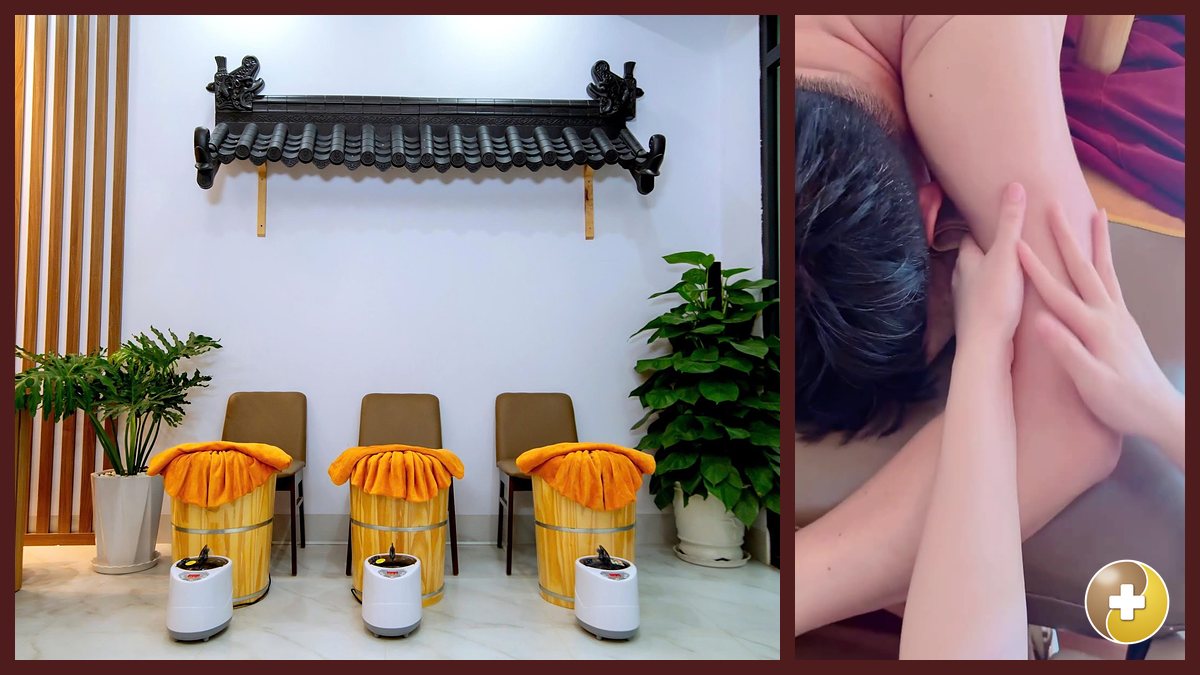
Quick answer: Wrist and shoulder pain from restaurant kitchen work usually comes from gripping knives, ladles and noodle baskets and lifting stockpots all shift, which overloads wrist and shoulder tendons and tightens the neck muscles around the C5–D1 nerve roots. Rest, better grip and stretching help. Tong Gia Acupoint Wellness in Ho Chi Minh City releases neck, shoulder and forearm muscles.
Want Lương Y Tống Văn Huynh’s team to read your spine and posture in person?
Why kitchen work wears out wrists and shoulders, from Houston and Dallas to Sydney
In Houston, Dallas and Atlanta the summers are long, hot and humid, and inside a pho kitchen it is summer all year: the broth pot starts simmering before dawn, the gas range throws heat at your face, and the extractor fan never stops. When winter cold fronts sweep across Texas and Georgia, wrists and shoulder blades feel stiff every morning at opening time. In Sydney, Melbourne and Brisbane the seasons flip, and Tết lands in the Australian summer, right when Vietnamese restaurants in Cabramatta, Bankstown, Footscray and Richmond are busy. On either side of the Pacific, the hands of a kitchen worker repeat the same jobs: chopping bones, slicing rare beef paper-thin, dipping noodles in a wire basket, ladling broth, carrying bowls, scrubbing pots, hauling boxes from the delivery van.
From a Western anatomy point of view, wrist and shoulder pain in cooks is mostly overload of tendons, tendon sheaths and muscles from repetition, hard gripping and working with the arms raised. The common patterns are:
- Pain on the thumb side of the wrist: two thumb tendons share one narrow sheath at the wrist. Wringing cloths, gripping a noodle basket and flicking the wrist thickens that sheath, so it hurts when the wrist bends toward the little finger.
- Pain on the palm side with night tingling in three and a half fingers: the median nerve runs through the carpal tunnel with nine finger tendons. A bent wrist and a tight knife grip all day narrow the tunnel, so the thumb, index and middle fingers tingle at night and on waking.
- Pain on the outer elbow: the wrist extensor muscles attach to a small bony point on the outside of the elbow. Every firm knife grip, wok lift and jar twist pulls on it, and over time the ache spreads into the forearm.
- Shoulder pain when lifting the arm: the rotator cuff tendons work every time you reach a pot on a high shelf, ladle from a deep pot or pass bowls over the counter. They rub under the bony roof of the shoulder, so it hurts above shoulder height and when you lie on that side.
- Stiff or catching fingers: finger flexor tendons thicken from holding knife and ladle handles, so fingers are hard to straighten in the morning.
This is common among pho shop owners and cooks, chefs in Asian restaurants, butchers, dishwashers on long shifts, and anyone over 45 still working the line six or seven days a week. This article focuses on wrists, elbows and shoulders. If your main problem is a sore back and tired legs from standing, read standing all day at a shop: back and leg fatigue. The main guide of this series is spine care after a long-haul flight.
Common causes: knives, baskets, stockpots and years without a break
- Thousands of repetitions: slicing beef, chopping herbs, dipping noodles, ladling broth. A busy Sunday lunch can mean hundreds of bowls, and every bowl means several wrist bends, twists and squeezes.
- Gripping too hard: a dull knife needs more pressure, thin handles and wet, hot basket handles make you squeeze harder, and that force lands on the finger flexors and the elbow attachment.
- Lifting heavy loads far from the body: big stockpots, frozen meat boxes, stacks of ceramic bowls. When the weight is away from your trunk, wrists and shoulders do the work your legs and back should do.
- Arms raised for long periods: high shelves, deep pots at chest height, passing bowls over the counter.
- Constant hot and cold: hands in boiling water and steam, then into the walk-in cooler and cold rinse water. Small blood vessels in the hands keep tightening and relaxing, and tendons stiffen faster.
- Long shifts and few replacements: many family restaurants run on a couple and one or two helpers, open 10–12 hours, closed one day a week or not at all.
- Rushed meals and short sleep: eating after the rush, eating standing up, going to bed late after closing.
- A trip home that is not a rest: back in Vietnam you help wrap bánh tét and cook for the whole family, and carry heavy suitcases of gifts. Flights from Houston, Dallas or Atlanta to Tân Sơn Nhất usually take more than 20 hours with connections; Sydney and Melbourne have direct flights of roughly 8–9 hours. Sitting that long with an already tight neck stiffens it further.
Some health conditions also make wrist tendons more sensitive, such as diabetes, thyroid problems, arthritis, pregnancy, the months after giving birth, and menopause. These need a check by medical staff, not only massage.
Related signs worth noticing
- Sharp pain on the thumb side when wringing a cloth or lifting a pan: the thumb tendon sheath is overloaded.
- Night tingling in the thumb, index and middle fingers, eased by shaking the hand: the median nerve is compressed in the carpal tunnel. Our article on hand numbness from assembly line work explains this pattern in detail.
- Wrist pain when you lean on your hands, for example on the prep counter: see wrist pain when putting weight on your hands.
- Dropping bowls, weak grip, trouble opening jars: grip strength is going down and needs attention early.
- Shoulder pain when reaching up, or at night lying on that side: the rotator cuff is being pinched. Read right shoulder pain when raising the arm.
- Heaviness between the shoulder blades and a stiff neck at the end of the shift: trapezius and shoulder blade muscles are tight from bending over the chopping board.
- Restless sleep and stiff hands in the morning: the body has not recovered from the shift.
According to the Tong Gia curriculum, pain shows up in one place but its source is often somewhere else. A sore wrist may be compensating for an elbow and shoulder that have been stiff for years, so the whole chain from neck to fingers needs attention.
When to see a doctor
Kitchen-related wrist and shoulder pain often eases with rest, a better grip, warmth and stretching. The following signs need a visit to a medical facility, and massage is not a substitute:
- Tingling that wakes you up almost every night, or numbness all day.
- Clear loss of grip, repeatedly dropping bowls or knives, or a hollow at the base of the thumb.
- You cannot lift your arm after lifting a heavy pot, a fall or a sudden jerk.
- A red, hot, swollen wrist or finger joint with fever, or a deformed wrist after a blow.
- A deep knife cut, a bad burn, or loss of feeling in a fingertip after a cut.
- Sudden numbness or weakness in one arm or one side of the face, a drooping mouth or slurred speech: call 911 in the US, 000 in Australia, 115 in Vietnam immediately.
- Pain in the left shoulder or left arm with chest tightness, shortness of breath, cold sweat or jaw pain: call emergency services right away (911, 000, or 115 in Vietnam). No massage.
- After a long flight, one calf that is swollen, painful, warm and red, or sudden breathlessness and chest pain: get checked at once, as it may be a blood clot.
- Pain lasting more than 2–3 weeks despite rest, or if you have diabetes, a thyroid condition, are pregnant, or follow instructions from medical staff: ask them before any massage.
If you already have results from a check-up in the US or Australia, bring a photo so the practitioner knows which areas to work gently or avoid. Tong Gia does not read X-rays or MRI scans, does not give medical conclusions and does not make medical plans.
This is a wellness service, not medical care.
The Y Tướng Học view: kitchen hands and the Liver, Heart and Spleen
Y Tướng Học, the traditional Vietnamese study of facial and body signs, rests on the saying "the signs are outside, the organs are inside". Lương Y (traditional healer) Tống Văn Huynh organised this knowledge so practitioners read the face and hands before touching the spine. For a cook's wrists and shoulders, three organ systems in the Eastern sense are usually compared.
The Liver governs the tendons, stores blood and shows in the nails. In the Tong Gia curriculum, the Liver nourishes tendons and ligaments and supports movement; when it is strong, tendons are supple and joints move freely; when it is weak, muscles cramp, tremble and stiffen. At rest the blood returns to the Liver to be replenished, and during work the Liver sends it to muscles and tendons. A cook who has worked for over a decade with few days off uses the tendons constantly with little time to restore them. The sign shows in the nails: pink, firm nails suggest enough Liver blood; thin, brittle, ridged or dry nails are a sign of Liver blood weakness. Dry eyes, a short temper when the shop is full and a tense neck also point to the Liver.
The Heart governs blood circulation, and sweat is the fluid of the Heart. The Heart belongs to Fire and to summer. Standing next to a hot range all day, sweating constantly, cooks often feel thirsty, restless and unable to sleep after work. The Heart shows on the tongue and in the complexion: a rosy face and deep sleep mean the Heart is settled; a flushed or pale face, palpitations and poor sleep are signs to look after it. The curriculum uses wrist points such as Nội quan and Thần môn with light pressure to support relaxation and sleep.
The Spleen governs the muscles and the four limbs. The Spleen and Stomach turn food into the energy and blood that feed the muscles of the arms and legs, and they show at the mouth and lips. Rosy lips, a good appetite and firm arm muscles are good signs; pale lips, bloating and weak, quickly tiring hands suggest the Spleen is drained. Late meals, eating on the run and iced drinks in a hot kitchen all take their toll.
Cheekbones and back muscles. In the curriculum, people with high, prominent cheekbones tend to carry heavy loads and are linked with the Liver, which governs tendons; deep tendons and the trapezius in these people tend to tighten into knots and cramp easily. People with a bony "Vương" face often have fibrous muscle stuck between the joints and need deep tendon release, while a long, thin "Mục" face suggests thin back muscles that need a lighter touch and good sleep. These are observations for wellness care, not fortune telling and not a way to decide anyone has a disease.
Vertebrae and nerve-reflex areas linked to wrists and shoulders
In the Tong Gia method of balancing the spinal nerve-reflex system, the neck (C1–C7) relates to the head, face, neck and arms, and the muscle–bone–joint group, which includes neck stiffness and numb hands and feet, is worked through C5–C7, L1–L5 and S1–S5. Nerve roots leave the spine between the vertebrae, join into the brachial plexus and branch into the shoulder, arm and hand.
| Vertebrae | Nerve / function (Western anatomy) | Typical signs in kitchen workers | Organ (Eastern view) | Visible signs (Y Tướng Học) |
|---|---|---|---|---|
| C4–C5 | C5 root: deltoid, rotator cuff, skin of the outer upper arm | Shoulder pain reaching for pots on high shelves, ladling from deep pots | Liver (tendons) | Raised shoulders, tight trapezius, prominent cheekbones |
| C5–C6 | C6 root: biceps, wrist extensors, skin of thumb and index finger | Outer elbow pain, thumb-side wrist pain when holding a knife or noodle basket | Liver – Lung (the Lung channel runs along the thumb side of the forearm) | Dry, ridged nails, dry cracked skin on the hands |
| C6–C7 | C7 root: triceps, wrist flexors, skin of the middle finger | Fatigue when chopping bones, pushing stacks of bowls, carrying trays | Heart (circulation) | Flushed or pale face, heavy sweating, poor sleep |
| C7–D1 | C8 root: finger flexors, small hand muscles, skin of ring and little fingers | Weak knife grip, stiff fingers in the morning, dropping bowls | Spleen (muscles, limbs) | Pale lips, soft arm muscles, heavy body |
| D1–D4 | D1 root to small hand muscles; neck–upper back junction, muscles around the shoulder blades | Heaviness between the shoulder blades, stiff neck after bending over the board | Lung – Heart | Shallow breathing, frequent sighing |
| Peripheral: carpal tunnel, thumb tendon sheath | Median nerve (from C6–D1) through the carpal tunnel; two thumb tendons in one sheath | Night tingling in three and a half fingers; sharp thumb-side pain when wringing | Liver (stores blood) | Thin, brittle nails, finger cramps |
The table lists related areas so the practitioner knows where to read carefully by hand. It is not a statement of cause, and it is why Tong Gia does not only rub the wrist but starts at the neck, shoulders and upper back before moving to the elbow, forearm and hand.
How Tong Gia helps rebalance the neck, shoulders and arms
Every session follows the spinal nerve-reflex balancing massage developed by Lương Y Tống Văn Huynh, founder of Huyệt Đạo Tống Gia (Tong Gia Acupoint Wellness), with over 13 years in Vietnamese traditional wellness, Y Tướng Học and spinal nerve-reflex balancing. It is a Vietnamese Eastern method done entirely by hand, aimed at helping the neck and upper back regain balance and supporting the related organ functions.
Steps in one session
- Questions and observation: how many years in the kitchen, hours per day, which hand holds the knife, which task hurts, any check-ups, diabetes, thyroid issues or pregnancy. Then the practitioner looks at complexion, lips, nails, shoulder height and neck posture.
- Reading the spine by hand: skin temperature, the muscle layer, the shape of each vertebra and sensation at each point, comparing left with right and top with bottom, then narrowing from the survey area to the key zone and key point. For cooks the focus is C4–D4, both shoulder blades and the knife arm.
- Muscle release: trapezius, levator scapulae, muscles around the shoulder blade and deltoid, then the inner and outer forearm, the wrist and palm. Pressure builds from light to firm over five levels, always checking how you feel. Only areas that are warm, tight and tender are worked directly, and a joint that is freshly swollen after a knock is left alone.
- Acupressure on the right points: points from the curriculum such as Định suyễn beside C7, Xích trạch at the elbow crease, Liệt khuyết and Thái uyên at the wrist, Nội quan, Thần môn, and Hợp cốc on the back of the hand (Hợp cốc is not used during pregnancy). Work on a point stops when the skin turns from dry to slightly moist.
- Self-care guidance: stretches after a shift, a looser grip on knife and basket, lifting pots close to the body, short hand breaks back at the restaurant.
A typical session for a long-time cook goes like this: the shoulder on the knife side sits higher, the trapezius on both sides feels like rope, and the area around C6–C7 is warmer than its surroundings. During neck and shoulder release you may feel tender spots along the inner edge of the shoulder blade and where the neck meets the shoulder; the outer forearm near the elbow is often tender too. As the muscles let go, the tenderness eases, the hands warm up and the neck turns more easily. Afterwards some people feel lighter shoulders and wake less at night; others feel slightly sore for a day first. Everyone responds differently, and Tong Gia does not promise the pain will be gone after one session.
Suitable services and prices
- Neck–shoulder / lower back care, 60 minutes: 550,000 VND (about 21 USD), first visit 399,000 VND (about 15 USD); 90 minutes: 750,000 VND (about 29 USD). Focuses on the neck, shoulders and upper back where the arm nerves begin.
- Extra 30 minutes on one area: 199,000 VND (about 8 USD). Added to the neck–shoulder session for the elbow, forearm, wrist and knife hand.
- Herbal compress: 130,000 VND (about 5 USD). Warms the shoulders and forearms after release, good for hands chilled by the walk-in cooler.
Conversions use a reference rate of 1 USD ≈ 26,000 VND (1 AUD ≈ 17,000 VND); payment is in VND. Full list on the price page.
From Tân Sơn Nhất airport to a branch
The District 12 branch (225 Dương Thị Mười, Phường Tân Chánh Hiệp, District 12) is north of the airport and usually a fairly short drive outside rush hour. The Vinhomes Grand Park branch (Căn T16-21 khu Manhattan, Phường Long Bình, TP. Thủ Đức – Manhattan area, Long Bình Ward, Thủ Đức City) is farther and takes longer, especially in the evening rush. If you continue to the Mekong Delta or Central Vietnam, you can stop for a session first; see massage near Tân Sơn Nhất airport.
Want Lương Y Tống Văn Huynh’s team to read your spine and posture in person?
A suggested plan for your Tết trip and hand care after each shift
Restaurant owners can usually close for only a week or two, so plan the trip so your hands truly rest instead of moving from the shop kitchen to a relative's kitchen.
| When | What wrists and shoulders need | What to do |
|---|---|---|
| Last week before flying | Less load | Let someone else chop bones and haul deliveries; sharpen knives; note where and when it hurts |
| Flight day | No heavy one-handed carrying | Use wheeled luggage, split gifts into two bags; circle wrists and open and close hands on the plane, walk every 1–2 hours, drink water |
| Arrival day | Let go | Warm shower, soak hands in warm water for 10 minutes, sleep early on Vietnam time (about 12–13 hours ahead of Texas and Atlanta, 3–4 hours behind Sydney and Melbourne depending on season) |
| Days 2–3 | Release neck, shoulders, forearms | A 60–90 minute neck–shoulder session, plus 30 minutes on the arm if the wrist or elbow is sore |
| Cooking days for Tết | Do not take on the whole kitchen | Share chopping, slicing and pot lifting; sit while wrapping bánh tét; rest your hands 5 minutes every hour |
| Mid-trip | Avoid fatigue building up | Another session if still sore; get checked if any warning sign above appears |
| 2–3 days before flying back | Prepare for the new season | A gentle session, practise the stretches; read preparing your body before a long flight |
- Two-way wrist stretch: arm straight, palm out, gently pull the fingers back for 15–20 seconds; then palm down, gently pull the back of the hand toward you for 15–20 seconds. Both sides, three times.
- Shoulder release: shrug both shoulders to the ears, hold 3 seconds, drop; 10 times, then 10 slow backward rolls.
- Warm soak: 10 minutes after a shift, opening and closing the hands in the water. Skip heat on a joint that is freshly swollen after a knock and get it checked.
- Change how you work: keep knives sharp, wrap handles to make them thicker and less slippery, lift pots with both hands close to your belly with knees bent, store heavy items at chest height, alternate hands where you can.
- Slow breathing and Thần môn before sleep: the Tong Gia curriculum suggests belly breathing, about 4 seconds in through the nose and 6 seconds out, for 5–10 minutes, and gently pressing Thần môn on the wrist crease for 1–2 minutes each side.
Book from abroad before you fly
From Houston, Dallas, Atlanta, Sydney or Melbourne you can book before you leave. Call, Zalo or WhatsApp +84 888 264 559 (0888 264 559 inside Vietnam) and send three things: your landing date and time at Tân Sơn Nhất, where it hurts (which wrist, elbow, shoulder, neck), and the branch you prefer. Staff will suggest a suitable day and hold a time, including for family members. You can also book online; how to message from overseas is explained in booking a massage in Saigon from abroad.
- District 12 branch: 225 Dương Thị Mười, Phường Tân Chánh Hiệp, District 12, Ho Chi Minh City. Open 8:00–19:00 daily.
- Vinhomes Grand Park branch (District 9): Căn T16-21 khu Manhattan, Vinhomes Grand Park, Phường Long Bình, TP. Thủ Đức. Open 9:00–20:00 daily.
Days close to Tết fill up quickly, so message early. Real customer reviews are on each branch's Google Maps page. Family in Ho Chi Minh City can book and bring you along.
Visit us
- Đông Y Huyệt Đạo Tống Gia Quận 12 (District 12)
225 Dương Thị Mười, Phường Tân Chánh Hiệp, Quận 12, HCMC · 8:00–19:00 daily · 0888 264 559 · Directions on Google Maps - Đông Y Huyệt Đạo Tống Gia Quận 9 (Vinhomes Grand Park, District 9)
Căn T16-21 khu Manhattan, Vinhomes Grand Park, Phường Long Bình, TP. Thủ Đức, HCMC · 9:00–20:00 daily · 0888 264 559 · Directions on Google Maps
Map of our two branches
Want Lương Y Tống Văn Huynh’s team to read your spine and posture in person?
Related guides for your trip
- Can you get a massage after a heart stent? Who to ask first, how gentle it should be and when to call 115
- Massage after knee replacement: is it safe on a trip to Vietnam, which areas can be worked and what to avoid
- Sonographers abroad with shoulder and wrist pain: shoulder, forearm and neck care in Ho Chi Minh City
FAQ
Is wrist and shoulder pain from restaurant kitchen work serious? Usually it is overloaded wrist and shoulder tendons and tight neck muscles from gripping knives, dipping noodles and lifting pots all shift. Rest, a looser grip, stretching and warmth often help. Weak grip, dropping things, frequent night tingling, an arm you cannot lift, or left shoulder pain with chest pain or breathlessness need a medical check or emergency call right away.
I run a pho shop in Houston and my fingers tingle every night until I shake my hand. Why? Night tingling in the thumb, index and middle fingers that eases when you shake the hand is the typical pattern of the median nerve being squeezed in the carpal tunnel, from a bent wrist and tight knife grip all day. Get it checked at a medical facility, avoid sleeping with the wrist bent, keep knives sharp and stretch every evening.
My shoulder hurts when I reach for pots on a high shelf in my Sydney kitchen. What should I do? Pain above shoulder height and when lying on that side usually means the rotator cuff tendons are being pinched. Move pots and heavy items to chest height, lift with both hands close to the body and do gentle shoulder rolls after work. If you cannot raise the arm after a heavy lift or a fall, see a doctor first, before any massage.
How long does wrist pain from years of knife work take to ease? With real rest, a better grip and regular stretching, many people feel easier within days to a few weeks. Going straight back to the same chopping routine often brings it back. Pain beyond 2–3 weeks, weakening grip or a hollow at the base of the thumb need a medical check.
Can acupressure massage help sore wrists and shoulders? Massage helps tight neck, shoulder and forearm muscles relax and often leaves the hands warmer and lighter; many people sleep better. At Tong Gia the practitioner reads the neck and upper back by hand before releasing muscles and pressing points. This is a wellness service, not medical care, and it does not replace a check-up when warning signs appear.
Which Tong Gia service suits a Dallas restaurant owner visiting for Tết? For shoulder and wrist pain with a stiff neck: neck–shoulder care 60 minutes 550,000 VND (about 21 USD; first visit 399,000 VND) or 90 minutes 750,000 VND, plus an extra 30 minutes on the arm for 199,000 VND, and optionally a herbal compress for 130,000 VND. Message +84 888 264 559 to hold a time.
Can I book in advance from Atlanta? Yes. Message Zalo or WhatsApp +84 888 264 559 with your landing time at Tân Sơn Nhất, where it hurts and your preferred branch: District 12 (8:00–19:00) or Vinhomes Grand Park, Thủ Đức (9:00–20:00). Family in Ho Chi Minh City can also book for you, or use the online booking page.
Author: Lương Y Tống Văn Huynh – founder of Huyệt Đạo Tống Gia, a master of traditional Vietnamese wellness with over 13 years in Eastern wellness care, Y Tướng Học (face reading) and spinal nerve-reflex balancing massage.
Updated: 2026-11-16
Related guides
- Wrist and shoulder pain from restaurant kitchen work: what pho cooks and chefs need on a trip to Saigon
- Hand numbness and tired hands from assembly line work in Taiwan: wrist, neck and what helps on your trip home
This is a wellness service, not medical care.