
Standing all day at a market stall or nail salon: caring for the lower back and heavy legs on your trip home
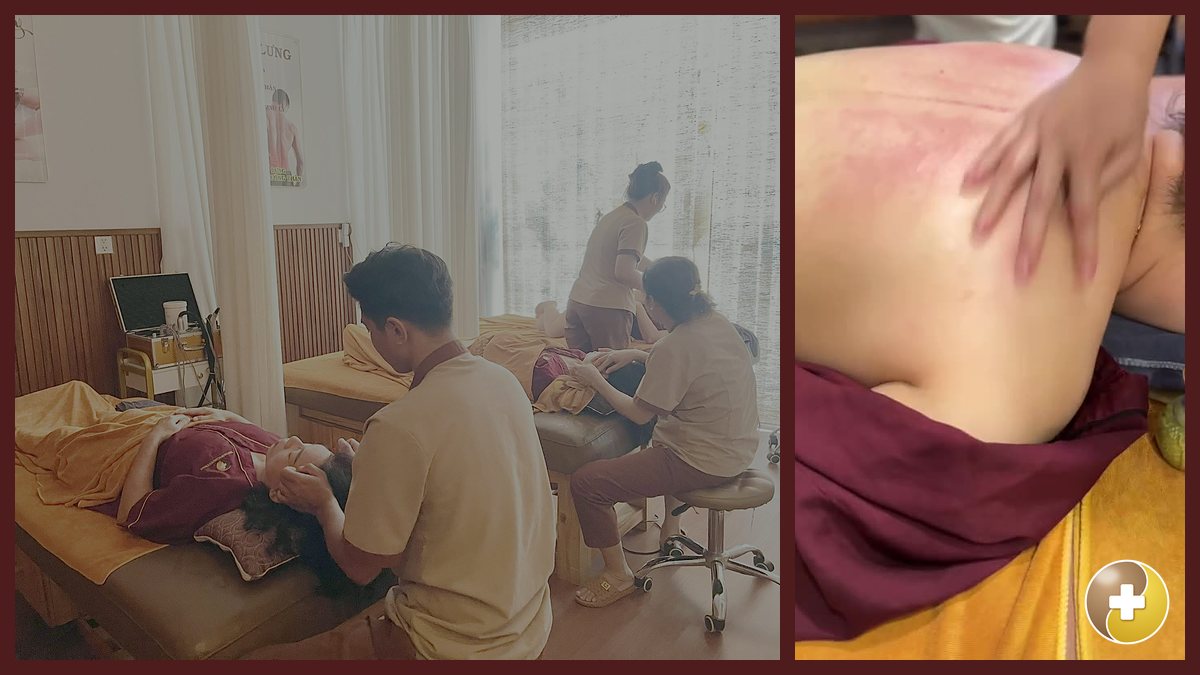
Quick answer: Lower back pain and heavy legs after standing all day usually come from muscles around L4–S1 holding you upright for 10–12 hours while blood pools in still calves. Shifting weight, raising the legs and keeping warm help. In Ho Chi Minh City, Tong Gia Acupoint Wellness (Huyệt Đạo Tống Gia) works the lower back and legs by hand.
Want Lương Y Tống Văn Huynh’s team to read your spine and posture in person?
Why standing all day makes the lower back and legs ache
December in central Europe means dark afternoons and cold halls. In Prague, stallholders at the SAPA market open before sunrise while a draught comes through the warehouse doors. In Berlin, traders at the Dong Xuan Center stand behind the same counter from opening to closing. Around Warsaw, many Vietnamese families still run wholesale stalls. In Paris and London, nail technicians spend the holiday season bent over hands and feet, with twice the usual bookings. A shift easily runs 10–12 hours. By evening, the shoes come off and the calves feel like lead, the sock line is pressed into the ankles, and the lower back feels as if a plank were strapped across it.
From a Western anatomy point of view, this is mostly muscle fatigue and mechanical back pain from prolonged standing, plus blood pooling in the leg veins. Two areas carry most of the load:
- The lower back. Standing puts the weight of the upper body on the five lumbar vertebrae (L1–L5), especially the L4–L5 and L5–S1 segments where the spine meets the sacrum. Standing still, people tend to push the belly forward, arch the lower back and lean on one leg. The spinal erectors and the quadratus lumborum work for hours to hold the trunk, and the small facet joints at the back of the spine take extra pressure. The result is a dull, stiff ache across the waist.
- The calves and feet. Blood from the legs has to travel upwards against gravity. When you walk, the calf muscles squeeze the deep veins and act as a pump. Standing still at a counter, that pump is mostly idle, so blood and fluid collect in the lower legs. The legs feel heavy and tight, ankles swell slightly by late afternoon, and night cramps become common. Heels and soles carry the full body weight on a hard floor and start to throb as well.
This pattern is common among market traders, nail technicians, restaurant and kitchen staff, middle-aged women after pregnancies, people carrying a little extra weight, and anyone with varicose veins in the family. It is also typical for people who work all year and save their holidays for the Lunar New Year trip back to Vietnam.
This article focuses on the back and legs of people who stand at work, not on general flight fatigue. For a full guide to the neck, back and lower back after the flight home, read our main article on spine care after a long-haul flight.
Common causes: long shifts, European winter, tense shoulders and a busy trip home
- Standing in one place: standing at a till or a stall is not the same as walking. The calf pump does not run and the lower back muscles never get a break.
- Leaning on one leg: everyone "rests" on one hip after a few hours. Over years, one side of the lower back and hip becomes tighter than the other, and some people feel the ache mainly on one side.
- Bending and tense shoulders: nail technicians lean towards the client's hand with raised shoulders and a forward head; traders bend under the counter and lift boxes onto shelves. Tension travels from the shoulders to the upper back and then to the lower back. See also neck and shoulder pain in nail technicians.
- Cold: stalls and storerooms are often chilly, and the trip home is in the dark below zero. Muscles contract to keep heat and small blood vessels narrow, so the back feels stiffer and the feet colder.
- Shoes and floors: thin soles or salon slippers on concrete all day mean constant impact for the heels and soles.
- Too little water, hurried meals: on busy days people drink less to avoid breaks and eat standing up. Dehydrated muscles cramp more easily.
- The trip home: Paris and London have direct flights to Ho Chi Minh City of roughly 12–13 hours; from Prague, Berlin or Warsaw most routes connect via Frankfurt, Paris, Doha, Dubai or Istanbul, often 15–20 hours door to gate. Legs that were already heavy sit still again, then the Tet visits begin. See exhaustion after Tet family visits.
Vietnam is 6 hours ahead of Central European Time and 7 hours ahead of London in winter. Poor sleep in the first nights keeps the back and leg muscles from fully letting go.
Other signs to notice
- An ache across the waist that grows through the afternoon and eases when you sit or lie down.
- Morning stiffness, difficulty bending to put on shoes; see what causes lower back pain.
- Tight, heavy calves and mild ankle swelling in the evening that settles overnight; see swollen legs after a long flight.
- Night cramps and tight calves; see calf tightness after walking.
- Visible blue, twisting veins on the calf or inner shin with burning or itching along them: possible varicose veins, which should be checked.
- Sore heels, soles and knees from hours on a hard floor.
- Heavy shoulders, stiff neck and an end-of-shift headache, especially in nail work.
- Cold lower back, cold feet, tired knees and getting up at night to urinate, which Vietnamese traditional wellness links to the Kidney.
Tong Gia's training material puts it simply: pain shows up in one place, but its source is often somewhere else. Lower back pain may come from years of leaning on one hip; heavy calves may come from the lower back and from a day without walking.
When to see a doctor
Most standing-related aches ease with rest, raised legs, sleep and warmth. Do not wait, and do not use massage instead of a check-up, if you notice any of the following:
- One calf is swollen, painful, warm or red, especially after a long flight: this can be a deep vein clot. See a doctor straight away and do not have the leg massaged.
- Back pain with chest pain or pressure, shortness of breath, sweating, or pain spreading to the jaw or left arm: call 115 (Vietnam emergency).
- Sudden breathlessness, chest pain on breathing in, coughing blood or fainting: call 115.
- Back pain with numbness or weakness in one or both legs, a foot that drops or knees that give way.
- Numbness around the buttocks or groin, or new trouble controlling the bladder or bowel.
- Pain in one flank with fever, burning urination or blood in the urine.
- Back pain with fever, unexplained weight loss, ongoing tiredness, or pain that worsens at night at rest.
- Both legs swollen for a long time, pitting when pressed, with breathlessness lying down, little urine or fast weight gain.
- A bulging vein that turns hard, red, hot and painful; brown, thickened skin around the ankle; an ulcer or bleeding from a vein.
About varicose veins: years of standing often bring twisting blue veins on the calves with a heavy, burning feeling in the evening. Have them assessed by a medical professional, who may suggest an ultrasound and a plan for follow-up. At Tong Gia, technicians never rub, press or stroke over bulging veins; they work gently on normal skin around them, focus on the lower back and feet, and suggest raising the legs. If you have been advised to wear compression stockings, keep to that advice.
Tong Gia does not read X-rays or MRIs and does not make medical plans; if you have results from a hospital, simply tell the technician which areas need a lighter touch. This is a wellness service, not medical care.
The Y Tướng Học view: the lower back and the Kidney, the calves and the Spleen and Liver
Y Tướng Học, Vietnamese face and body reading, is rooted in a tradition more than 2,000 years old and built on the idea that "the outer appearance reflects the inner organs". Lương Y (traditional practitioner) Tống Văn Huynh systematised it so that technicians look first and then place their hands. For people who stand all day, three organs are usually considered.
Kidney and the lower back. In this tradition the Kidney shows in the ears, hair, bones and lower back: warm, full ears, glossy hair and a strong back are a good base. Tong Gia's course material lists, among signs of weakened Kidney function in the back and knees, "aching lower back; tired, weak knees; tiring quickly when standing for long". Winter is the Kidney's season, so the advice is to keep the lower back, belly and feet warm, soak the feet and sleep early. A round face is linked to a lower back that needs warmth; a face wide at the forehead and narrow at the chin, to a lower back that needs support.
Spleen and the calves. The Spleen governs the muscles and the four limbs. When it is strong, lips are rosy, appetite is good and muscles are firm; when it is drained, lips are pale, the body feels heavy and the limbs tire. Eating on your feet in a rush is a classic drain. According to the course, healthy calf muscle feels soft, warm and springy, bouncing back at once when pressed, unlike the hard or slack, cold calves of long-term fatigue.
Liver and the tendons. The Liver governs the tendons and shows in the eyes and nails. When it is not at ease, tendons tighten, cramps come easily, shoulders tense and eyes feel dry. A nail technician who stares at small details for hours and wakes with calf cramps fits this picture. The bridge of the nose is also read as a small map of the spine: a crooked bridge often goes with a shifted spinal axis around L4–L5–S1 and the pelvis. These are wellness observations, not fortune-telling and not a medical judgement.
Vertebrae and related nerve reflex areas
Tong Gia's training on balancing the spinal nerve reflex system links L1–L5 with digestion, kidneys, urinary function and the legs, and S1–S5 with the pelvic area. Muscle and joint complaints are linked with C5–C7, L1–L5 and S1–S5.
| Vertebrae | Nerves / function (anatomy) | Typical in people who stand all day | Organ (Eastern view) | Outer signs (Y Tướng Học) |
|---|---|---|---|---|
| C5–C7 | Nerve roots to shoulder, arm and hand; trapezius and levator scapulae attach here | Raised, tense shoulders and tired arms in nail work | Liver (tendons) | Hard shoulders, dry tired eyes, frowning brows |
| T10–T12 | Nerves to the lower abdominal wall and digestion | Heavy mid-back, bloating after hurried meals | Spleen–Stomach | Pale lips, heavy body; square face |
| L1–L3 | Roots to groin, hip and front of thigh; Kidney point level with L2 | Tired, cold, stiff lower back after hours standing | Kidney | Thin dull ears, dry hair, cold back; round face |
| L4–L5 | Roots to outer shin and top of foot; part of the sciatic nerve | Ache across the lower back spreading to buttock and shin | Kidney–Bladder | Hollow cold lower back, crooked nose bridge |
| S1–S2 | S1 root to calf, heel and sole; ankle reflex | Heavy tight calves, sore heels and soles | Kidney, Spleen (muscles, limbs) | Hard or slack, cold calves; wide hips |
The table shows related areas to read by hand, not a cause.
How Tong Gia helps the lower back and legs regain balance
Every session follows the massage method for balancing the spinal nerve reflex system created by Lương Y Tống Văn Huynh, founder of Tong Gia, with over 13 years in Vietnamese traditional wellness, Y Tướng Học and spinal reflex work. It is a Vietnamese method worth trying when you are in Ho Chi Minh City.
- Questions and observation: your job, hours on your feet, floor and shoes, where you flew from, any bulging veins or one-sided leg swelling, blood pressure, pregnancy, existing conditions. Then complexion, ears, lips, nose bridge, shoulder and hip level.
- Reading the spine by hand: skin temperature, the muscle layer, the shape of each vertebra and sensitivity at each point, comparing left with right from the base of the neck to the sacrum. People who lean on one hip often show one side of the lower back tighter and warmer.
- Releasing muscles: spinal erectors, quadratus lumborum, glutes, hamstrings and calves (avoiding any bulging veins), plus trapezius for nail technicians. Pressure builds through five levels and you are asked how it feels.
- Acupressure on the right points: Kidney point, Mệnh môn and Chí thất on the lower back; Ủy trung behind the knee ("for back pain, look to Ủy trung"); Thái khê between the inner ankle and Achilles tendon; Dũng tuyền on the sole; Túc tam lý below the knee. Tam âm giao is not used in pregnancy or over veins. Each point is held until the skin turns from dry to slightly moist.
- Home care: how to switch legs at work, raise the legs after a shift, stretch calves and back, warm the lower back and soak the feet safely.
During the session a few tender spots along the waist and calves are normal and usually fade as the muscles relax; the legs often feel warmer. Afterwards many people describe lighter legs, easier bending and deeper sleep; some feel mildly sore for a day. Everyone responds differently, and Tong Gia makes no promise that pain will be gone after one visit.
Suitable services (reference rates: 1 USD ≈ 26,000 VND, 1 EUR ≈ 30,000 VND; payment in VND; full list on our prices page):
- Neck–shoulder / lower back care, 60 min: 550,000 VND (about 21 USD / 18 EUR), first visit 399,000 VND (about 15 USD / 13 EUR); 90 min: 750,000 VND (about 29 USD / 25 EUR).
- Heavy, tired legs care, 60 min: 500,000 VND (about 19 USD / 17 EUR), feet to thighs, with bulging veins avoided.
- Cold-releasing cupping, 30 min: 85,000 VND (about 3 USD / 3 EUR), an add-on for a cold, heavy lower back, never on the legs over veins.
From Tan Son Nhat airport: the District 12 branch lies north of the airport, usually about 30–45 minutes by car depending on traffic; the Vinhomes Grand Park branch in Thu Duc City is further, especially in the evening rush. After a long flight it is usually wiser to walk, drink water and sleep one night, then book for day two or three. To stop on the way from the airport, see massage near Tan Son Nhat airport.
Want Lương Y Tống Văn Huynh’s team to read your spine and posture in person?
A plan for your trip home and care after each shift
| When | What the back and legs need | What to do |
|---|---|---|
| Last week before flying | Less built-up fatigue | Legs up 15–20 minutes each evening, warm the lower back; get help lifting suitcases |
| On board and at connections | Keep the calf pump working | Stand and walk every 1–2 hours, heel raises, ankle circles, sip water, walk the terminal |
| Arrival day | Relax, sleep on Vietnam time | Warm shower, short walk, legs up, light meal |
| Days 2–3 | Release the lower back | Lower back session 60–90 minutes, cupping if the back feels cold |
| Days 4–6 | Lighter legs | Heavy legs session 60 minutes; warm foot soak at night |
| Tet visits and markets | No single posture for too long | Soft shoes; when cooking for the family, switch legs and sit each hour; less alcohol |
| 2–3 days before flying back | Prepare for the flight and the new season | A gentle session and good sleep; booking tips in booking a massage in Saigon from abroad |
After every shift: lie on your back with legs up the wall for 15–20 minutes and pump the ankles 20 times; stretch each calf against a wall for 20–30 seconds and hug both knees to the chest; rub your palms warm and rub both sides of the lower back 50–100 times, as Tong Gia's course suggests; soak the feet in water of about 38–42°C for 15–20 minutes before bed (test carefully if you have diabetes, ask a medical professional first if you have bulging veins) and rub the soles for 3–5 minutes each; at work, keep a low step under the counter to rest one foot at a time, rise on your toes 20 times each hour and wear cushioned shoes. A warm herbal soak is described in herbal foot soak benefits.
Book from abroad before you fly
You can book while still in Prague, Berlin, Warsaw, Paris or London. Message WhatsApp or Zalo +84 888 264 559 (0888 264 559 inside Vietnam) with three details: your landing date and time at Tan Son Nhat, where it aches (lower back, calves, heels, shoulders) and which branch suits you. Mention any bulging veins in advance. You can also book online.
- District 12 branch: 225 Dương Thị Mười, Phường Tân Chánh Hiệp (Tan Chanh Hiep ward, District 12), open 8:00–19:00 daily.
- Vinhomes Grand Park branch: Căn T16-21 khu Manhattan, Vinhomes Grand Park, Phường Long Bình, TP. Thủ Đức (Long Binh ward, Thu Duc City, former District 9), open 9:00–20:00 daily.
The weeks before Tet fill up fast, so message early. Genuine guest reviews are on each branch's Google Maps page. Staff mainly speak Vietnamese and use a translator app when needed.
Visit us
- Đông Y Huyệt Đạo Tống Gia Quận 12 (District 12)
225 Dương Thị Mười, Phường Tân Chánh Hiệp, Quận 12, HCMC · 8:00–19:00 daily · 0888 264 559 · Directions on Google Maps - Đông Y Huyệt Đạo Tống Gia Quận 9 (Vinhomes Grand Park, District 9)
Căn T16-21 khu Manhattan, Vinhomes Grand Park, Phường Long Bình, TP. Thủ Đức, HCMC · 9:00–20:00 daily · 0888 264 559 · Directions on Google Maps
Map of our two branches
Want Lương Y Tống Văn Huynh’s team to read your spine and posture in person?
What guests say on Google Maps
“The hair wash was comfortable and relaxing, and the staff are warm and lovely.” (translated from a Vietnamese review)
— Thanh Tâm B., Google Maps review · Vinhomes Grand Park branch (District 9) · 2025 · See on Google Maps
Quoted from public reviews, shortened where marked (…). Experiences vary from person to person; reviews are not a substitute for seeing a doctor when something feels wrong.
Related guides for your trip
- Parents' back pain after a long flight with young kids: lower back, shoulders and wrists
- Preparing your body before the long flight home after Tet: a 3–5 day plan for Viet Kieu returning to Australia
- Back pain from wrapping banh tet and cooking for Tet: care for the lower back, neck, shoulders and wrists
FAQ
Is it serious if my lower back and legs ache after standing all day? Usually it is muscle fatigue and mechanical back pain: the muscles around L4–S1 hold you upright for hours and blood pools in still calves. Rest, raised legs, warmth and sleep normally help. If one calf is swollen, hot and painful, your legs feel weak or numb, or you have chest pain or breathlessness, see a doctor at once or call 115.
I run a stall at SAPA in Prague. Why does my lower back hurt every evening? Hours of standing in one spot, leaning on one hip and bending under the counter keep the lower back muscles working without a break, and a cold hall makes them tighter. Rest one foot on a low step, walk a few steps each hour, keep the waist warm, and after work hug your knees to your chest and raise your legs.
I do nails in London or Paris. Is my back and shoulder pain from posture? Mostly yes. Leaning towards the client with raised shoulders and a forward head for hours loads the neck, upper back and lower back together. Adjust chair and table height, stand up and stretch every hour, and roll the shoulders. On your trip home, a neck–shoulder / lower back session helps the muscles let go.
Can I have a massage if I have varicose veins? Have the veins assessed by a medical professional first. At Tong Gia technicians do not rub or press over bulging veins; they work gently on the surrounding normal skin and focus on the lower back and feet. If a vein turns hard, red, hot and painful, or one leg swells, see a doctor straight away instead of having a massage.
How long does lower back pain from standing take to ease? Many people feel better after a few days of rest, sleep, warmth and gentle stretching. Those who have stood for years may need longer and feel it return when shifts restart. If it does not ease after about a week, keeps getting worse, worsens at night or spreads down the leg with weakness, see a doctor.
How much is lower back or leg care at Tong Gia in Ho Chi Minh City? Lower back care is 550,000 VND for 60 minutes (about 21 USD, first visit 399,000 VND) or 750,000 VND for 90 minutes; heavy legs care is 500,000 VND for 60 minutes (about 19 USD). Payment is in VND. This is a wellness service, not medical care.
Author: Lương Y Tống Văn Huynh – founder of Huyệt Đạo Tống Gia, a master of traditional Vietnamese wellness with over 13 years in Eastern wellness care, Y Tướng Học (face reading) and spinal nerve-reflex balancing massage.
Updated: 2026-11-15
Related guides
- Preparing your body before the long flight home after Tet: a 3–5 day plan for Viet Kieu returning to Australia
- Back pain from factory work in Korea: lifting, bending, machine shifts and caring for your back on home leave
- Back pain after a long flight from the US to Vietnam: upper back, lower back and what helps
- Standing all day at a market stall or nail salon: caring for the lower back and heavy legs on your trip home
- Self-acupressure at home when your family is far away: lower back, numb feet, poor sleep, and when to stop
This is a wellness service, not medical care.