
Morning or evening massage on your trip home to Vietnam: choosing by jet lag, sleep and the Saigon heat
Quick answer: Morning or evening massage on your trip home depends on your goal. Mornings suit jet-lagged early wakers, stiff backs and anyone avoiding the midday sun; late afternoons suit people who need deeper sleep. Go about 1–2 hours after eating. Tong Gia Acupoint Wellness in Saigon opens 8:00–19:00 (District 12) and 9:00–20:00 (Vinhomes Grand Park).
Want Lương Y Tống Văn Huynh’s team to read your spine and posture in person?
Should you book a massage in the morning or the evening?
The short answer: there is no single right hour. A morning slot suits you if jet lag wakes you at 3 or 4 am, if your back feels stiff after a night on an unfamiliar mattress, or if you want to travel across town while it is still cool. A late-afternoon or early-evening slot suits you if you need to unwind and sleep deeply, if you have spent the day visiting relatives, or if you flew in from Europe and lie awake past midnight. More important than the clock are four things: not too full and not too hungry, not straight in from the midday sun, not after drinks, and enough time to rest afterwards.
The setting is familiar to anyone flying home for Tết. In January and February Toronto and Montreal can sit at minus 10 to 20, Paris and Berlin are grey and cold, Seoul and Tokyo are deep in winter, while Sydney and Melbourne are at the end of summer. Direct flights from the US West Coast take about 15–16 hours; from Houston or Toronto you usually connect through Asia and the whole trip can pass 20 hours; from Europe it is roughly 12–15 hours depending on the airline; from Sydney or Melbourne about 8–9 hours; from Taipei, Seoul or Tokyo only a few. Then you land at Tân Sơn Nhất in the dry season: cool early mornings, a hard midday sun above 30 degrees, and a softer evening.
From a Western physiology point of view, "morning or evening" is really a question about your circadian rhythm. A roughly 24-hour clock in the brain's suprachiasmatic nucleus is reset each day by light. In the morning cortisol rises to wake you, and body temperature and blood pressure climb; after dark the brain releases melatonin, temperature drops and you get sleepy. A calm, rhythmic massage switches on the parasympathetic branch of the nervous system, the "rest and digest" side: heart rate slows, breathing deepens, muscles let go. That is why evening sessions often make people drowsy, while morning sessions warm up muscles and joints that stiffened overnight. After crossing many time zones your inner clock no longer matches Saigon's, so the city's evening may be your body's morning. Choosing well means letting the session push your rhythm in the right direction instead of pulling it further off.
This guide is for overseas Vietnamese coming home from the US, Canada, Australia, Europe, Japan, Korea or Taiwan, for long-haul travellers visiting Ho Chi Minh City, and for family members in the city booking for them. For the full picture of neck, back and lower back after a long flight, read our main guide on spine care after a long-haul flight.
Why timing matters more on a Tết visit
At home you can book any time because your body knows its routine. A Tết trip changes several things at once:
- Different jet lag for different cities: in winter Vietnam is 12 hours ahead of Toronto and New York, 13 ahead of Houston and 15 ahead of California, so day and night are nearly reversed: you wake at 2–4 am and fade by mid-afternoon. Vietnam is 6 hours ahead of Paris, Berlin and Prague and 4 ahead of Moscow, so people from there stay awake late and struggle to get up. Sydney and Melbourne in summer are 4 hours ahead of Vietnam, so people from Australia get sleepy early and wake very early. Tokyo and Seoul are 2 hours ahead, Taipei 1, barely any lag. US details are in US–Vietnam time difference and jet lag.
- A short, packed stay: two or three weeks of flower markets, cleaning, family visits, year-end weddings and taking parents to appointments. A session squeezed between two plans turns rushed.
- Dry-season midday heat: arriving hot and sweaty with a fast pulse makes it hard to relax on the table. See heat fatigue when visiting Vietnam in the dry season.
- Tết food: bánh chưng, braised pork, hotpot, one feast after another. Lying face down on a full stomach feels tight and uncomfortable. The Tong Gia manual says to choose a time about 1–2 hours after a meal, never right after a big one. If bloating follows you through Tết, read bloating after Tết feasting.
- Drinks: coming straight from a party with a buzz is not the moment; see massage after drinking during Tết.
- Busy days before Tết: good slots fill early, especially when the whole family wants to go together. Ask the front desk which hours are busy and which are open; for groups see booking a massage for a group during Tết.
- Still working: some people keep overseas office hours during the visit; fitting sessions around night calls is covered in working US hours remotely from Vietnam.
Body signals that point to morning or evening
- Awake at 2–4 am, nodding off at 3–5 pm: common after flying from North America or Australia. A morning slot fits, giving you something pleasant to do while you are alert and helping you stay up until evening.
- Wide awake at midnight, heavy in the morning: common after flying from Europe or Russia. A late-afternoon slot fits, so the muscles relax before bedtime.
- Stiff back on waking, hard to bend, neck clicking: from a strange mattress or pillow and long hours in a plane seat. Morning or late morning warms the muscles before a day on the move.
- Heavy shoulders and legs after visiting a dozen homes: late afternoon, then a warm shower and an early night. See exhausted after Tết family visits.
- Racing mind, fluttering heart, tired but unable to sleep: evening, with a gentle pace and no heavy pressure.
- Drowsy and bloated after a meal: wait. Walk slowly and book for 1–2 hours later.
- Flushed, thirsty, headachy from the sun: cool down and sip water first; move the session to early next morning or late afternoon.
The Tong Gia manual notes that pain shows up in one place while its source often sits somewhere else. The same tired shoulders may come from reversed sleep, from a feast, or from the noon sun. Knowing which one helps you pick the hour.
When to see a doctor
Most post-flight and holiday tiredness eases with sleep, regular meals and shade. With the signs below, do not wait and do not book a massage instead of medical care:
- Chest pain or tightness, shortness of breath, sweating, pain spreading to the jaw or left arm: call 115 in Vietnam right away.
- Facial droop, slurred speech, weakness or numbness on one side, double vision, unsteady walking: call 115.
- After the flight, one calf swollen, hot, red and painful, or sudden breathlessness and chest pain: a possible blood clot. Get checked at once and do not have the legs massaged.
- Dizziness, fainting, confusion, high fever or repeated vomiting after time in the sun: possible heat stroke that needs medical staff.
- Severe abdominal pain after a feast, persistent vomiting, blood in the stool or black stool.
- A sudden, severe headache with a stiff neck and fever.
- Uncontrolled high blood pressure, heart disease, pregnancy or recent surgery: ask your health provider first and tell the front desk when booking.
- Insomnia lasting weeks after you are back in rhythm, ongoing fatigue or unexplained weight loss: get a medical check alongside wellness care.
If these signs appear, please see a doctor or go to a medical facility first. Tong Gia does not read X-rays or MRIs and does not give medical opinions or plans. If you already have results from home, tell the staff so they know which areas to work gently or avoid.
This is a wellness service, not medical care. Huyệt Đạo Tống Gia is a traditional Vietnamese wellness service using the hands.
The Y Tướng Học view: Heart, Liver, Spleen–Stomach and Kidney through the day
Y Tướng Học (face reading for wellness) rests on the saying "the signs are outside, the organs are inside." Lương Y (traditional healer) Tống Văn Huynh organised this knowledge so Tong Gia staff read complexion and posture before they touch you. For someone just home, four organ systems guide the choice of time.
Heart: spirit and sleep. In the Tong Gia manual the Heart in Eastern wellness covers both the blood vessels and the mind: mood, sleep, emotion; poor sleep "from the Heart" does not mean heart disease. The manual names 11:00–13:00 as the Heart meridian's peak and suggests a short 15–30 minute nap. A calm Heart shows as a rosy complexion and deep sleep; jet lag and short nights show as a pale or flushed face and palpitations. Such guests do well with a gentle, slow evening session rather than strong pressure.
Liver: stored blood. At rest, the manual says, blood returns to the Liver to be restored; in activity the Liver sends it to muscles and tendons. Days on the go with broken sleep leave less of that rest, so shoulders tighten, calves cramp, eyes dry out. Knitted brows, a creased forehead and raised shoulders are signs staff notice. People with high, thinly padded cheekbones are described as having tight trapezius and back muscles that cramp easily.
Spleen–Stomach and meals. The Stomach receives food and the Spleen turns it into energy and blood; the Spleen governs muscle and limbs and shows at the mouth and lips. The manual lists tiredness and sleepiness after meals, heavy limbs and a sallow complexion as signs of an overworked Spleen–Stomach; puffy, darkened eyelids are read as slow fluid metabolism. During feast season this is why the manual advises waiting 1–2 hours after eating.
Kidney needs the night. The Kidney governs bone and marrow and is seen as the root of the spine. The manual recommends sleeping before 11 pm to nourish yin and let the Kidney rest. A "Giáp" face (wide forehead, pointed chin) is described with a warm upper neck at C1–C2 and a cool, hollow lower back; short sleep brings a heavy head and tired back and knees. These guests suit a late-afternoon session followed by an early night.
These are wellness observations, not fortune telling, and never used to tell anyone they are ill.
Vertebrae and nerve-reflex areas involved
In Tong Gia's spinal nerve-reflex balancing method, the neck (C1–C7) relates to head, face, neck and arms; the thoracic spine (D1–D12) to circulation, breathing and digestion; the lumbar spine (L1–L5) to digestion, kidneys, urinary function and legs. Nerve roots exit between the vertebrae, which is where the practitioner's fingers search when reading the spine.
| Vertebrae | Nerves / function (anatomy) | What you notice with jet lag, heat, feasting | Organ (Eastern view) | Outer sign (Y Tướng Học) |
|---|---|---|---|---|
| C1–C2 | Atlas–axis joint for turning the head; suboccipital muscles; greater occipital nerve from C2 | Heavy back of the head, trouble falling asleep | Heart (spirit), Kidney | "Giáp" face: warm C1–C2 |
| C3–C5 | Cervical plexus; phrenic nerve (C3–C5) to the diaphragm | Shallow breathing, raised shoulders, hard to unwind at night | Lung, Liver | Creased forehead, knitted brows |
| C5–C7 | Roots to shoulder and arm (brachial plexus C5–D1) | Sore shoulders from suitcases, gifts, sleeping upright on the plane | Liver governs tendons | Uneven shoulders; high cheekbones, tight trapezius |
| D1–D5 (Heart Shu area below D5) | Upper thoracic sympathetic ganglia linked to heart rate; rhomboids | Palpitations, ache between the shoulder blades | Heart | Pale or flushed face when short of sleep |
| D11–D12 (Spleen and Stomach Shu) | Splanchnic nerves to stomach and gut; abdominal wall nerves | Bloating after feasts, drowsiness after meals | Spleen–Stomach | Puffy eyelids, pale dry lips, sallow skin |
| L1–L3 (Kidney Shu below L2) and sacrum | Lumbosacral plexus to hips and legs | Lower back ache after hours in a seat, stiff mornings | Kidney | Hollow, cool lower back |
The table marks related areas for the practitioner to examine; it is not a statement of cause. The Tong Gia manual groups sleep problems and headaches as nervous-system work on C1–C7, D1–D3 and the sacrum, and digestive complaints as internal work on D1–D12 and L1–L3. So an evening session for poor sleep focuses on neck, upper back and sacrum, while a session after a feast reads the mid-back closely.
How Tong Gia helps you rebalance, morning or evening
Every session follows the spinal nerve-reflex balancing massage developed by Lương Y Tống Văn Huynh, founder of Tong Gia, with over 13 years in Eastern wellness, Y Tướng Học and spinal nerve-reflex balancing. It is a Vietnamese traditional method, done by hand, aimed at helping each spinal area and the related organ function find balance again.
Steps in one session
- Questions and observation: where you flew from, when you landed, how you slept, when you last ate, whether you came from the sun or a party, pregnancy, blood pressure, heart conditions, any calf swelling after the flight. Then complexion, eyelids, lips, brows, neck and shoulders.
- Reading the spine by hand: four factors from the Tong Gia manual: skin temperature, the muscle layer, the shape of each vertebra and sensation. Left is compared with right, upper with lower; overactive zones (warmer skin, tight muscle, more pain) get the focus, underactive zones are not worked directly.
- Muscle release: neck, shoulders, upper and lower back, calves if there is no sign of a clot, with pressure building through five levels from light to firm.
- Acupressure on the right points: Fengchi and Tianzhu at the nape, Jianjing on the shoulder, Heart Shu, Spleen and Stomach Shu when bloated, Kidney Shu, and Shenmen at the wrist and Baihui on the crown, which the manual uses to calm the mind and support sleep. Work stops when the skin at the key point turns from dry to slightly moist.
- Self-care advice: two or three things that fit your time of day.
A morning session spends more time warming a stiff back and neck at a moderate pace so you leave alert. An evening session runs slower, with more attention to the neck, upper back, sacrum and calming points; many guests doze off on the table and sleep longer that night. You may feel tender spots at the nape, shoulder tops or lower back; as muscles release, the tenderness usually fades and you feel warmer. Everyone responds differently, and Tong Gia does not promise that all tiredness goes after one visit.
Services and prices
- Vietnamese herbal-tradition massage (Massage Đông y) 60 min: 450,000 VND (about 17 USD); 90 min: 550,000 VND (about 21 USD). Works morning or evening for whole-body fatigue.
- Neck–shoulder or lower-back care 60 min: 550,000 VND (about 21 USD), first visit 399,000 VND (about 15 USD). A morning pick for a stiff back, an evening pick when a tight neck keeps you awake.
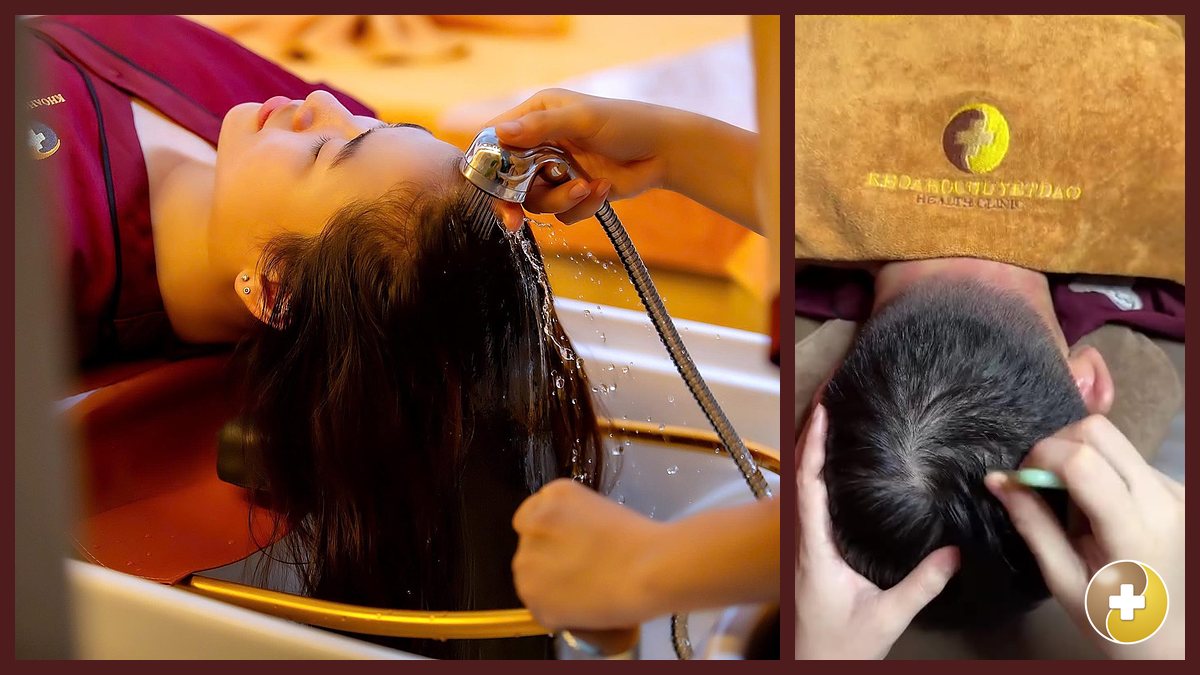
- Hair wash with neck–shoulder massage 60 min: 250,000 VND (about 10 USD). Gentle, good for late afternoon after a hot day.
Reference rates: 1 USD ≈ 26,000 VND (about 17,000 VND per AUD, 19,000 per CAD, 30,000 per EUR); payment is in VND. Full list on the prices page and the sleep acupressure page.
Opening hours and Tết days
District 12 opens 8:00–19:00 and Vinhomes Grand Park 9:00–20:00, every day. For the earliest slot, District 12 opens first; for a session after dinner, Vinhomes Grand Park closes later. Book 90-minute sessions well before closing. For the days around Tết, ask the front desk about busy hours, open slots and the exact holiday schedule before you go.
From Tân Sơn Nhất airport
The District 12 branch (225 Dương Thị Mười, Tân Chánh Hiệp Ward) is north of the airport and usually a short drive, depending on traffic. The Vinhomes Grand Park branch (Unit T16-21, Manhattan area, Long Bình Ward, Thủ Đức City) is farther and takes longer, especially in the evening rush. Land early and you can stop at District 12 once it opens; land in the afternoon and it is kinder to go home, shower, eat lightly and book for the next morning. See massage near Tân Sơn Nhất airport.
Want Lương Y Tống Văn Huynh’s team to read your spine and posture in person?
Picking a time by goal, and a plan for your stay
| Goal | Suggested time | Handy branch | Note |
|---|---|---|---|
| Deeper sleep after flying from Europe or Russia | 16:00–19:00 | Vinhomes Grand Park, open to 20:00 | Light dinner 1–2 hours before, bed before 23:00 |
| Awake at 3–4 am after North America or Australia | At opening: 8:00 (D12), 9:00 (Vinhomes) | District 12 opens earlier | Morning light afterwards, nap no longer than 30 min |
| Stiff back after a strange bed | Morning or late morning | Nearest branch | Avoid lifting heavy things right after waking |
| Recovering from a day of visits | Late afternoon, early evening | The one on your way home | Water and a light snack first; never after drinks |
| Avoiding the dry-season sun | Before 10:00 or after 16:00 | Shortest sunny ride | Cool down 15–20 min before starting |
| Day | What your body needs | What to do |
|---|---|---|
| 1–2 weeks before flying | A good slot before Tết | Message on Zalo/WhatsApp and say morning or evening |
| Arrival day | Rest, water, adjusting to heat | Morning landing: a light session; evening landing: warm shower, light meal, sleep on Vietnam time |
| Days 2–3 | Release after the flight, reset sleep | Massage Đông y or back care at the hour that fits your jet lag |
| Visiting days | No piling-up fatigue | Travel in the cool hours, eat moderately, warm foot soak at night |
| Mid-stay | Recovery after feasts | A gentle evening session or hair wash with neck massage |
| 2–3 days before flying back | Ready for the long flight | A light session |
A day-by-day week is in our 7-day wellness plan for a Tết visit, and sleep after landing is covered in jet lag and sleep after flying to Vietnam.
How long after eating, and self-care before and after
- The Tong Gia manual: wait about 1–2 hours after a meal; never right after a big meal, and no firm pressure on the belly when full.
- Do not come hungry either; a light snack 1–2 hours ahead keeps you from feeling faint.
- After meals the manual suggests a slow 10–15 minute walk instead of lying down, and a light dinner 2–3 hours before bed.
- Before the session: arrive a few minutes early, use the restroom, sip warm water; if you came through the sun, cool down until you stop sweating.
- After a morning session, step out while the sun is still soft; morning light helps reset your body clock.
- After an evening session, go home early, take a warm shower and keep the phone off the pillow.
- From the manual: slow breathing (in through the nose for 4 seconds, out for 6, for 5–10 minutes); gentle pressure on Shenmen at the wrist crease for 1–2 minutes each side before sleep; a warm foot soak at about 38–42°C for 15–20 minutes (people with diabetes should test the water carefully); rubbing the lower back warm 50–100 times; sleep before 11 pm.
Booking from abroad before you fly
You can book while still in Houston, Toronto, Sydney, Paris or Seoul. Call, Zalo or WhatsApp 0888 264 559 (from abroad: +84 888 264 559) and send your landing date and time at Tân Sơn Nhất, where you feel tired or stiff, which branch you prefer, and whether you want morning or evening. Mention where you are flying from so staff can suggest a slot that fits your jet lag. Family in Ho Chi Minh City can book for you, or use online booking. More tips in booking a massage in Saigon from abroad and your first massage in Vietnam.
- District 12 branch: 225 Dương Thị Mười, Tân Chánh Hiệp Ward, Ho Chi Minh City. Open 8:00–19:00 daily.
- District 9 branch: Unit T16-21, Manhattan area, Vinhomes Grand Park, Long Bình Ward, Thủ Đức City. Open 9:00–20:00 daily.
The days before Tết fill quickly, so message early and ask the front desk about holiday hours. Genuine guest reviews are on Google Maps for each branch.
Visit us
- Đông Y Huyệt Đạo Tống Gia Quận 12 (District 12)
225 Dương Thị Mười, Phường Tân Chánh Hiệp, Quận 12, HCMC · 8:00–19:00 daily · 0888 264 559 · Directions on Google Maps - Đông Y Huyệt Đạo Tống Gia Quận 9 (Vinhomes Grand Park, District 9)
Căn T16-21 khu Manhattan, Vinhomes Grand Park, Phường Long Bình, TP. Thủ Đức, HCMC · 9:00–20:00 daily · 0888 264 559 · Directions on Google Maps
Map of our two branches
Want Lương Y Tống Văn Huynh’s team to read your spine and posture in person?
What guests say on Google Maps
“My first visit – the service was good and the staff were warm.” (translated from a Vietnamese review)
— Hiền P., Google Maps review · District 12 branch · 2024 · See on Google Maps
“A very good place. Very caring. I felt so light when I left.” (translated from a Vietnamese review)
— Hồng P., Google Maps review · District 12 branch · 2023 · See on Google Maps
Quoted from public reviews, shortened where marked (…). Experiences vary from person to person; reviews are not a substitute for seeing a doctor when something feels wrong.
Related guides for your trip
- Massage with osteoporosis: is it safe on a trip to Vietnam, what pressure is right and what to avoid
- Booking a massage for a group during Tet: how to plan sessions for family, relatives and friends in Saigon
- A 7-day wellness plan for a Tết visit to Saigon: from Canadian winter to Ho Chi Minh City heat
FAQ
Is it better to get a massage in the morning or the evening on a trip home to Vietnam? It depends on your goal. Mornings suit early wakers with jet lag (often after flying from North America or Australia), stiff backs and anyone avoiding the midday sun. Late afternoons suit people who need deeper sleep or flew in from Europe. Go about 1–2 hours after eating, never after drinks or straight from the heat.
How long should I wait after eating before a massage? The Tong Gia manual suggests about 1–2 hours after a meal, never right after a big one, because lying face down on a full stomach feels tight. Do not come hungry either; have a light snack 1–2 hours before. After a Tết party with alcohol, wait until you are fully sober and book the next day.
I flew in from Toronto and wake at 3 am. What time should I book? A morning slot fits this jet lag: District 12 opens at 8:00 and Vinhomes Grand Park at 9:00. Afterwards get some morning light, walk a little, stay up until evening and keep naps under 30 minutes. A late-afternoon session also works but may send you to sleep too early.
Will an evening massage help me sleep? Many guests sleep more easily, since a calm massage relaxes muscles and slows breathing. Everyone responds differently. At home, take a warm shower, soak your feet, put the phone away and go to bed before 11 pm. If insomnia lasts several weeks, see a doctor.
Is Tong Gia open during Tết, and when is it busy? On normal days District 12 opens 8:00–19:00 and Vinhomes Grand Park 9:00–20:00. For the Tết schedule, busy hours and open slots, message +84 888 264 559 on Zalo or WhatsApp and ask the front desk. Slots before Tết fill early, especially for groups.
Is it fine to go for a massage in the Saigon midday heat? Yes, but do not start straight from the sun: rest in the cool for 15–20 minutes and sip water until you stop sweating. If you can, book before 10:00 or after 16:00. Dizziness, high fever or vomiting after sun exposure needs medical care, not massage.
Author: Lương Y Tống Văn Huynh – founder of Huyệt Đạo Tống Gia, a master of traditional Vietnamese wellness with over 13 years in Eastern wellness care, Y Tướng Học (face reading) and spinal nerve-reflex balancing massage.
Updated: 2026-11-17
Related guides
- Should you get a massage with a cold or fever? When to postpone and when a gentle session is fine
- Can you get a massage during your period? Which areas are fine and which to skip on a trip to Vietnam
- Booking a massage for a group during Tet: how to plan sessions for family, relatives and friends in Saigon
- Booking a massage together as a couple in Ho Chi Minh City: same time slot, a different focus for each person
- Vietnamese cupping vs cupping abroad: the marks, who should skip it, and how a Tong Gia session works
- Health check in Vietnam, then a massage: how to plan the week if you fly in from the US, Australia or Canada
This is a wellness service, not medical care.