
Deep tissue massage in Thu Duc: spine-guided muscle release for desk, factory and sports bodies
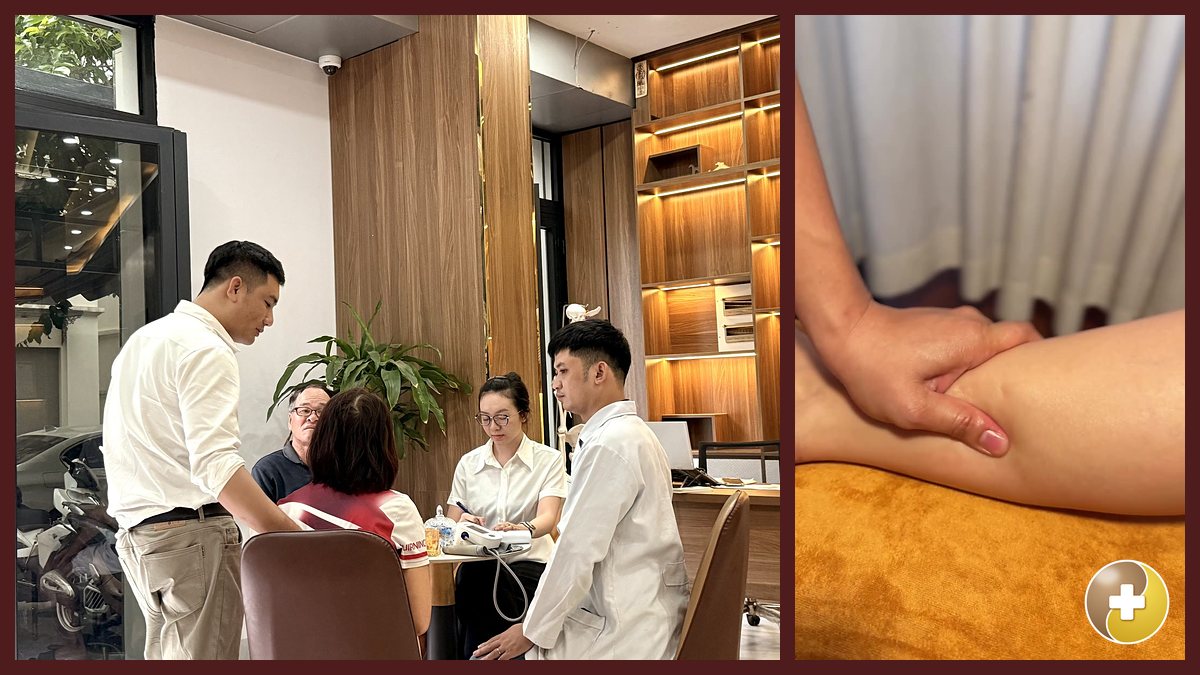
Quick answer: For deep tissue massage in Thu Duc, Ho Chi Minh City, Tong Gia reads your spine by hand first, then releases deep muscle layers in 5 pressure levels. From the University village go to the Vinhomes Grand Park branch; from Linh Xuan go to District 12, both roughly 10–15 km. First visit 399,000 VND (about 15 USD).
Want Lương Y Tống Văn Huynh’s team to read your spine and posture in person?
Deep tissue massage in Thu Duc: what it is and how it differs from a relaxing massage
In Western terms, deep tissue massage uses slow, firm pressure to reach the deeper muscle layers and the fascia that wraps them, instead of only gliding over the surface. The aim is to soften bands of muscle that have stayed contracted for a long time, and the "knots" (small, tender spots inside a muscle) that build up from poor posture, repetitive movement or hard training. A relaxing massage is mostly gentle stroking for comfort; a deep tissue session is sometimes sore exactly where the muscle is tight, and some people feel mildly achy for a day or two afterwards, much like after a workout. Deep tissue does not mean "the harder the better": too much pressure in the wrong place can make a muscle guard and tighten further, bruise, or hurt more.
In Thu Duc (the former Thu Duc District, now part of Thu Duc City), people who search for deep tissue massage usually have genuinely knotted muscles rather than a bit of tiredness. Lecturers, PhD candidates and students around the National University village write and run data for hours. Workers at the Linh Trung Export Processing Zone stand on assembly lines and repeat the same hand movement all shift. Office staff and online sellers along Vo Van Ngan and Kha Van Can streets hunch over screens. Daily riders cover Pham Van Dong, National Road 1A or the Hanoi Highway. And many runners, footballers and badminton players train in the evenings. A good number of foreign students, researchers and engineers in the area search in English too.
Tong Gia Acupoint Wellness (Huyệt Đạo Tống Gia) has no branch inside the old Thu Duc core. Our two branches are District 9 – Vinhomes Grand Park and District 12 – 225 Dương Thị Mười, both roughly 10–15 km from central Thu Duc depending on your ward. This guide explains when muscles need deeper pressure and when they do not, both in Western terms and according to the Tong Gia curriculum, and tells you honestly which ward is closer to which branch.
| Group in Thu Duc | Where deep muscles knot up | Why (Western view) |
|---|---|---|
| Lecturers and students, University village | Muscles under the skull, upper trapezius, between the shoulder blades | Hours bent over books and low laptops, rarely standing |
| Linh Trung EPZ workers | One shoulder, forearms, lower back extensors | Repetitive hand work all shift, long hours standing |
| Office staff and online sellers | Tight chest muscles, rounded shoulders, mid-back | Slouching at screens, phone wedged on the shoulder |
| Long-distance riders on Pham Van Dong, Road 1A | Trapezius, lower back, glutes | Long motorbike rides, vibration, gripping in traffic |
| Runners, footballers, badminton players | Calves, hamstrings, hips, right shoulder (badminton) | Frequent training, little stretching, fast increases in load |
Common causes of deep, stubborn muscle tightness
- Holding one posture for hours: postural muscles contract non-stop, blood flow drops and waste products build up; over months the deep layer becomes fibrous and feels like a cord under the fingers.
- Repetitive shift work: assembly, packing and inspection jobs in the Linh Trung zone overload one muscle group all day while the opposite group weakens, so the two sides of the body drift out of balance.
- Long rides and traffic: rush hour around Thu Duc intersection, Pham Van Dong and the Hanoi Highway makes riders brace their shoulders, sit crooked on the hips and absorb vibration for long periods.
- Training load rising too fast: jumping from 5 km to 10 km runs, badminton several nights in a row, or football on artificial turf with little warm-up and stretching.
- Long-term stress: exam season, thesis defences and production targets make people clench their jaw, raise their shoulders and breathe shallowly, so muscles stay braced all day.
- Too little or poor sleep: shift work, late nights, napping face-down on a desk or sleeping upright on a shuttle bus leave muscles no time to recover.
When these factors stack up for months, a gentle massage often feels good only while it lasts. The deep layer needs to be found precisely and worked with the right pressure and direction, and, just as important, the spinal segment that governs that muscle group needs attention too.
Signs that muscles need deeper work, and signs to avoid deep pressure
- You can feel a band of muscle as hard as a cord; pressing it sends pain somewhere else.
- The ache does not ease after a weekend of rest, and you are stiffer in the morning than at night.
- One shoulder or one hip sits higher; turning your neck or bending forward is limited.
- After a long run, your calves or hamstrings stay hard for days.
- A relaxing massage feels nice, but by the next day everything is back as before.
On the other hand, deep pressure is not suitable where an area is swollen, hot or red, freshly sprained or bruised, where the skin is broken, or in very thin, frail people with cold skin and soft muscle. Those areas need light pressure or no direct work at all.
When to see a doctor before a deep tissue massage
Please see a doctor at a medical facility first, and do not have deep tissue work yet, if you have:
- Chest pain or tightness, shortness of breath, cold sweats, or pain spreading to the jaw or left arm: call 115 immediately.
- One calf that is swollen, warm, red and painful to walk on without a clear reason, especially after a long flight or lying down for a long time: get checked straight away and never have that area massaged.
- Pain after a fall or hard impact, or a suspected fracture, muscle tear or ruptured tendon (a "pop", fast swelling, unable to bear weight).
- Numbness or weakness in the arms or legs that keeps getting worse, unsteady walking, or changes in bladder control.
- Pain with fever, pain that is worse at night, unexplained weight loss, or long-lasting fatigue and pallor: get checked at a medical facility in parallel.
- Blood-thinning medication, severe osteoporosis, pregnancy, or heart and blood pressure problems that are not yet stable: tell us beforehand so pressure can be adjusted or deep work skipped.
This is a wellness service, not medical care.
The Y Tướng Học view: the Liver governs the sinews, and muscles hard as wood
Y Tướng Học (face reading for wellness) works on the principle "the signs show outside, the organs lie inside": outward body shape and complexion guide which inner areas to examine. According to the Tong Gia curriculum, deep muscle tightness relates first to the Liver, Spleen and Kidney systems of Eastern medicine (functional concepts, not statements about your actual organs):
- The Liver governs the sinews: it nourishes tendons and ligaments and supports movement. When it is strong, sinews are supple and joints move freely; when weak, muscles stiffen, cramp, twitch and lose flexibility. The Liver also stores blood: during activity it sends blood to muscles and tendons, and during rest the blood returns to it. People who train hard but sleep little miss exactly this "return".
- Muscles hard as wood: the curriculum describes muscle that feels dry, bound and tender as qi and blood stagnation with Liver qi constraint. Heavy mental pressure blocks circulation and creates chronic deep contractions, especially in the trapezius and along the Bladder meridian on the back, with aching all over, tension headaches and a high risk of the band becoming fibrous if it is not released deeply in time. These are the people who genuinely need deep, precise work.
- High, bony cheekbones: the curriculum notes that because the Liver governs the sinews, people with prominent cheekbones often have contracted, fibrous deep tendons and muscles; the trapezius and back muscles feel braided, tense and cramp easily.
- The Spleen governs the flesh: soft, cold muscle that stays dented when pressed is placed under Spleen–Stomach cold and weak yang. This group does not suit deep pressure; it needs warmth and light-to-moderate work.
- More bone than flesh: very thin people with prominent cheekbones and nose bridge are placed under Liver–Kidney yin deficiency: deep layers are poorly nourished, tendons shorten and discs dry out. Pressure has to build very slowly.
So two people who both search for "deep tissue" may need opposite approaches. Reading the signs lets the practitioner anticipate this, then confirm by hand on the spine before choosing the pressure.
Spine segments and nerve-reflex zones involved
According to the Tong Gia curriculum, the muscle, bone and joint group (neck and shoulder ache, sciatica, tingling and numbness in the limbs) is worked by combining C5–C7, L1–L5 and S1–S5. The cervical spine C1–C7 governs the head, face, neck and arms; the thoracic spine D1–D12 governs circulation, breathing and digestion; the lumbar spine L1–L5 governs digestion, kidneys, urinary system and legs.
| Segment | Nerves / functions | Typical deep tightness | Related organ system (curriculum) |
|---|---|---|---|
| C1–C3 | Head, base of the skull | Stiff nape, headache at the back of the head from looking down | Liver, Kidney (marrow) |
| C5–C7 | Shoulders, arms, hands | Hard trapezius and forearms, tingling hands from repetitive work | Liver (governs the sinews) |
| D1–D3 | Upper back; nervous system group | Tight between the shoulder blades, shallow breathing under stress | Lung, Heart |
| D11–D12 | Digestion (Spleen Shu, Stomach Shu) | Thick back muscle, large stiff patches | Spleen–Stomach (governs the flesh) |
| L1–L5 | Lower back, legs | Hard spinal erectors, glutes and hamstrings after standing shifts or runs | Kidney (governs the bones), Liver |
| S1–S5 | Sacrum, hips, legs | Tight hips, pain spreading from buttock to leg | Kidney |
What makes the Tong Gia approach different is that it does not only press where it hurts; it looks for the spinal segment that governs that muscle group. A calf that never softens may need work around L4–S1 as well; a shoulder that stays hard in an assembly-line worker may have its root at C5–C7.
The Tong Gia method: deep muscle release within spinal nerve-reflex balancing
The method was developed by Lương Y (master of traditional Vietnamese wellness) Tống Văn Huynh, who has over 13 years of practice in Eastern wellness, Y Tướng Học and spinal nerve-reflex balancing. It takes the head and spine as its foundation and follows three "no" rules: no medication, no needles, no rough force. "Deep" here means the right layer in the right spot, not uniformly heavy hands. In the curriculum, pressure is standardised in 5 pressure levels from light to strong: one finger, the whole hand, a bent arm, a straight arm and whole-body strength. A typical session:
- Observation: the practitioner looks at how you stand, how your shoulders and hips sit, your muscle tone and face shape, to decide where to examine first.
- Reading the spine by hand: pressing, stroking and rolling to feel skin temperature, the muscle layer (knotted, hard, soft or fibrous), the shape of each vertebra (raised, shifted, sunken) and tender points, comparing left and right.
- Deep muscle release: pushing and rotating for thick, hard, immobile muscle; the plucking technique to cut across fibrous, cord-like fibres; pressure raised step by step through the 5 levels, only in excited zones (warm, contracted, increasingly tender).
- Acupressure on the right zones: a "wave of sensation" that is sore but pleasant so the body can rebalance itself, with a steady rhythm and close attention to your feedback; work stops once the skin over the key point turns from dry to slightly moist.
- Self-care advice: stretching, hydration, rest, and changes to your training plan or work posture.
| Suggested service | Length | Price |
|---|---|---|
| Neck and shoulder or back and waist care | 60 / 90 min | 550,000 VND (about 21 USD), first visit 399,000 VND (about 15 USD) / 750,000 VND (about 29 USD) |
| Eastern medicine massage | 90 min | 550,000 VND (about 21 USD) |
| Full-body care | 120 min | 950,000 VND (about 37 USD) |
Full prices are on our price page. If one area is clearly the problem (neck and shoulders or low back), a 60–90 minute regional session usually fits; if you play several sports and feel tight from back to legs, the 120-minute full-body session is more suitable. See also our full-body massage page and questions about the 120-minute session.
What you feel during and after
During the session, fibrous areas feel sore and achy and the sensation may spread nearby; the practitioner checks in constantly to keep it at "good pain", never something you have to endure. As a band softens, many people feel warmth, lightness and deeper breathing. Afterwards, movement is usually easier and turning or bending feels freer; some people are mildly achy for a day or two, as after training, and it fades. Everyone responds differently; we help the body relax and rebalance and do not promise that pain will disappear.
A typical case: a PhD candidate in the University village who runs every afternoon complains of a stiff nape and a left calf that never loosens; when booking he had mentioned that he wanted both the neck and the lower back cared for. The practitioner finds the right shoulder raised, the right trapezius bound into a cord, C6–C7 warmer than the surrounding area and the left side of L4–L5 knotted. The session focuses on the neck and upper back and the left lower back and glutes, with plucking along the trapezius band and push-and-rotate work on the glutes. At the end he is shown how to raise his laptop and stretch his calves after every run.
Want Lương Y Tống Văn Huynh’s team to read your spine and posture in person?
Sports massage in Thu Duc: what runners, footballers and badminton players need
People who play sport in Thu Duc often look for sports massage after stepping up their training. Compared with a session for desk workers, a session for active people follows the chain of muscles that carry the load: calves, Achilles area, hamstrings, hips and glutes for runners; shoulders, forearms and mid-back for badminton players; groin, inner thighs and knees for footballers. General Western guidance applies: no deep pressure right before a competition, deep work a few hours to a day after a hard session, and no massage on a fresh acute injury. Runners will find more in massage after running in Thu Duc: questions and what a post-run session feels like; our sports recovery massage page has the overview.
Which branch suits which part of Thu Duc?
Thu Duc is large, so it does not help to lump it together. The distances below are rough estimates along main roads; please check Google Maps at the time you plan to travel.
- Linh Xuan, Linh Trung, Linh Tay, Tam Binh, Tam Phu (Road 1A side): follow National Road 1A into District 12 to the branch at 225 Dương Thị Mười, roughly 10–15 km. It is open 8:00–19:00, convenient for Linh Trung zone workers finishing an afternoon shift.
- Hiep Binh Chanh, Hiep Binh Phuoc (along Pham Van Dong): both branches are roughly 10–15 km; Road 1A is often congested at rush hour, so compare both routes before choosing.
- University village, Binh Tho, Linh Chieu, Truong Tho (Hanoi Highway and Vo Van Ngan side): take the Hanoi Highway towards Suoi Tien and turn into Vinhomes Grand Park, roughly 10–15 km. The District 9 branch is open 9:00–20:00, convenient for lecturers and students who finish late and for afternoon runners.
It is not "right next door", but people who need deep work often make the trip because each session is guided by reading the spine and targets the right areas rather than rubbing everything evenly. For more on the area, see massage in Thu Duc City: questions and massage for Hi-Tech Park workers.
Self-care at home and prevention
- Drink enough water and rest after a session: avoid hard training on the same day as deep work.
- Stretch 5–10 minutes after every workout: calves, hamstrings and hips for runners; shoulders and forearms for badminton players.
- Raise training load gradually: do not increase distance or the number of sessions too quickly within one week.
- Screen at eye level, stand up every 45–60 minutes: roll your shoulders and gently tuck your chin back ten times.
- Sleep enough: in the curriculum, blood returns to the Liver during rest to be replenished; without sleep, muscles struggle to recover however often you are massaged.
Booking
- District 9 branch – Vinhomes Grand Park (for the University village, Vo Van Ngan and the Hanoi Highway side): Căn T16-21 khu Manhattan, Vinhomes Grand Park, Phường Long Bình, TP. Thủ Đức (unit T16-21, Manhattan block, Long Binh Ward, Thu Duc City). Open 9:00–20:00 daily.
- District 12 branch (for Linh Xuan, Tam Binh and the Road 1A side): 225 Dương Thị Mười, Phường Tân Chánh Hiệp (Tan Chanh Hiep Ward, District 12). Open 8:00–19:00 daily.
Book online or call, Zalo or WhatsApp +84 888 264 559. Tell us which area feels tight, which sport you play, any old injuries, and when you would like to come, and we will suggest a branch and a session length. You can read genuine reviews on Google Maps from each branch page. This is a Vietnamese Eastern wellness method developed by Lương Y Tống Văn Huynh, founder of Tong Gia; if you live in or visit Ho Chi Minh City, you are welcome to try it.
Visit us
- Đông Y Huyệt Đạo Tống Gia Quận 9 (Vinhomes Grand Park, District 9)
Căn T16-21 khu Manhattan, Vinhomes Grand Park, Phường Long Bình, TP. Thủ Đức, HCMC · 9:00–20:00 daily · 0888 264 559 · Directions on Google Maps
Want Lương Y Tống Văn Huynh’s team to read your spine and posture in person?
FAQ
Where can I get a deep tissue massage near Thu Duc? Tong Gia has no branch in the old Thu Duc core. From the University village or Vo Van Ngan, go to the Vinhomes Grand Park branch (District 9); from Linh Xuan or Tam Binh, go to 225 Dương Thị Mười (District 12). Both are roughly 10–15 km away.
Is there sports massage in Thu Duc, and how is it different? A session for active people follows the muscles your sport loads: calves, hamstrings and hips for runners, shoulders and forearms for badminton. Have it a few hours to a day after hard training, not deep work right before a match or on a fresh injury.
Does deep tissue massage hurt? Fibrous areas feel sore and achy, but the practitioner keeps it at a pleasant level and checks in often. Pressure builds through 5 levels and rough force is never used. If it is too much, say so and pressure is reduced immediately.
Is it normal to feel sore after deep tissue work? Mild aching for a day or two is common, much like after a workout, and it fades. If pain increases a lot, or you notice swelling, large bruises, numbness or weakness, see a doctor at a medical facility.
How often should I have deep tissue massage? For long-standing tightness, the first few sessions can be about a week apart, then spaced out as you feel better. Regular athletes often book after heavy training weeks. Stretch and sleep well between sessions.
How much does it cost? Neck and shoulder or back care: 60 minutes 550,000 VND (about 21 USD), first visit 399,000 VND (about 15 USD); 90 minutes 750,000 VND (about 29 USD). Eastern medicine massage 90 minutes 550,000 VND; full-body care 120 minutes 950,000 VND (about 37 USD).
Author: Lương Y Tống Văn Huynh – founder of Huyệt Đạo Tống Gia, a master of traditional Vietnamese wellness with over 13 years in Eastern wellness care, Y Tướng Học (face reading) and spinal nerve-reflex balancing massage.
Updated: 2026-11-16
Related guides
- What does acupressure do? Effects on muscles, nerves and the five organs, and how Tong Gia works in Ho Chi Minh City
- Acupressure in Thu Duc: pressure chosen by reading your spine, at the branch that suits your ward
- Sore after acupressure: is it normal? How to tell ordinary aching from warning signs, why it happens and how to look after yourself after a session in Ho Chi Minh City
- What are gua sha and cupping: two Vietnamese folk warming methods, the cupping points and when to skip them
- Unblocking the meridians (đả thông kinh lạc): what it really means, how a hands-on session works and what you will feel in Ho Chi Minh City
- Herbal compress: what the warmth really does, where it goes and who it suits
This is a wellness service, not medical care.