
Back pain and numb legs from long-haul trucking in Europe: why it happens and back care on a trip to Vietnam
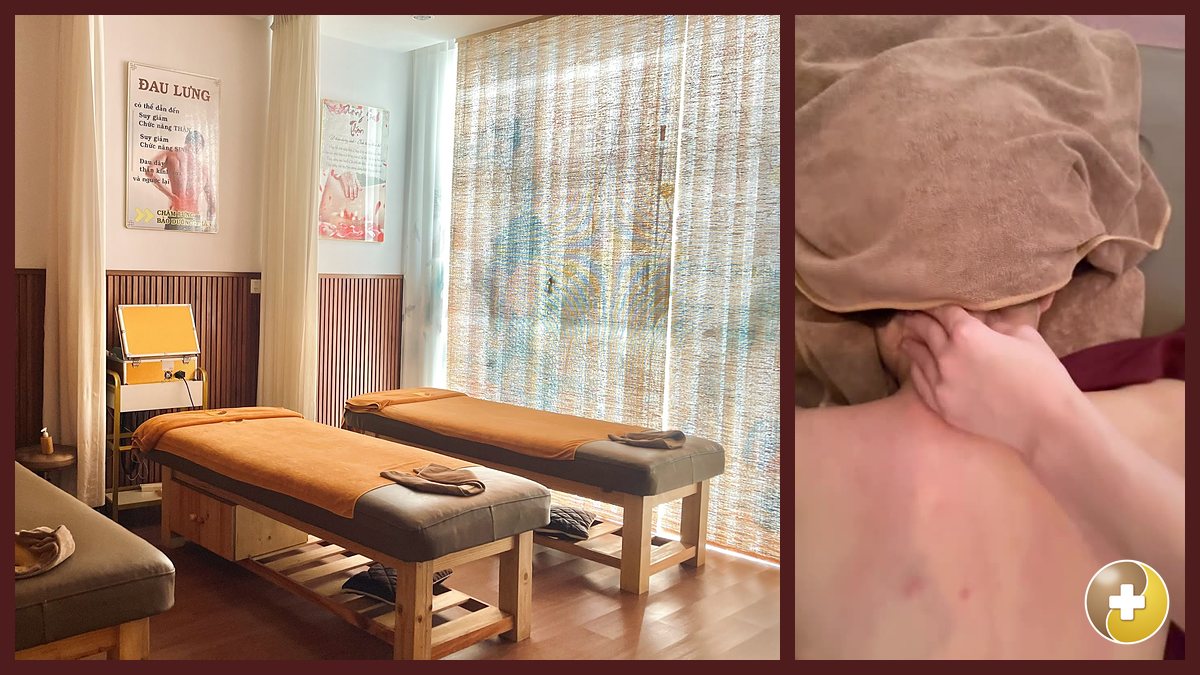
Quick answer: Back pain and numb legs from long-haul trucking in Europe usually come from 9–10 hours a day in the cab, vibration, nights in the sleeper and strapping loads. Breaks and stretching help; one numb or weak leg needs a check-up. In Ho Chi Minh City, Tong Gia Acupoint Wellness releases the back by hand.
Want Lương Y Tống Văn Huynh’s team to read your spine and posture in person?
Why long-haul trucking in Europe is so hard on your back and legs
In November across Germany, Poland and the Czech Republic it is dark by four in the afternoon and fog sits on the motorway. A run from Leipzig to Poznań and on to Warsaw, or Prague – Brno – Ostrava with a loop through Wrocław, means a full day in the cab, then a night in a lay-by with the curtains drawn on the narrow bunk behind the seat. Many Vietnamese in Europe do this work, alongside drivers from all over the continent: some drive for haulage firms around Berlin, Frankfurt or Hamburg, others supply wholesale markets around Prague, Plzeň, Cheb or the outskirts of Warsaw. The story is similar for most of them. In the first year it is only tiredness. By the second year the lower back is so stiff in the morning that they grab the bunk frame to sit up, and then one day on the road the right buttock goes numb and a tingling line runs down the back of the thigh into the calf.
From a Western anatomy point of view, most of this is mechanical lower back pain: the muscles, ligaments, discs and small joints of the lumbar spine hold one cramped sitting posture for far too long, while vibration from the road travels up through the seat. Numb legs come in a few different forms:
- Pressure numbness: hours of sitting press the edge of the seat into the back of the thigh and squash the buttock muscles, slowing blood return and briefly compressing peripheral nerves. It usually fades within minutes of standing and walking.
- Numbness along the sciatic nerve: irritated nerve roots in the lower lumbar spine (L4, L5) and sacrum (S1) send tingling and pain from the buttock down the back or outer side of the thigh and shin, sometimes into the foot. This kind needs closer attention because a disc may be involved.
- Cold, heavy legs from poor circulation: legs hanging still for hours, very little ankle movement, and a cab that swings between too hot and too cold.
This guide is written for long-haul truck drivers working in Germany, Poland, the Czech Republic and neighbouring countries, and for anyone else who spends their working life behind the wheel of a lorry and is planning a trip to Vietnam. To understand how the neck, mid back and lower back act as one axis, read our main guide on spine care after a long-haul flight.
Common causes: the cab, vibration, the sleeper bunk and strapping loads
A back rarely gives out because of one trip. Usually several things add up week after week:
- Nine to ten hours of sitting a day: EU driving-time rules broadly cap daily driving and require a break after each long stretch at the wheel, and the tachograph records it all. Yet many drivers spend those breaks still sitting in the cab, on the phone, eating or doing paperwork, so the back stays seated almost all day. Sitting loads the lumbar discs more than standing, shortens the hip flexors in front of the spine and squashes the glutes.
- Whole-body vibration: a lorry, especially a tractor unit pulling an empty trailer, vibrates non-stop. The vibration is mild but endless, so the spinal muscles keep bracing without a rest. An air seat set too soft or too firm adds to the load.
- Right foot on the pedal, left leg idle: the right leg holds one angle for hours with the hip turned slightly out. Drivers who keep a wallet or phone in a back pocket sit tilted on one buttock without noticing.
- Sleeping in the cab: a narrow bunk, a thin mattress, winter nights in Poland or the Czech Republic that get very cold, curled up all night; summer nights that are hot and restless. Shallow sleep means muscles never fully recover.
- Climbing and strapping: getting in and out of the cab many times a day, jumping down from the step, pulling curtains and tarps, ratcheting straps, hauling a pallet jack, swinging heavy trailer doors. Twisting to pull a strap with muscles still stiff from hours of sitting is a classic way to strain the lower back.
- Cold and wind: stepping from a warm cab into a sub-zero yard with a sweaty back makes the muscles clamp down.
- Rest-stop food and too little water: plenty of drivers drink less to avoid extra stops, live on coffee, fried food and late meals. Dehydrated muscles tire and cramp faster.
- Delivery-window pressure: traffic jams, missed unloading slots, waiting at warehouses and constant schedule changes keep the shoulders, neck and back tense without you realising.
Then the trip home adds another long sit: from Frankfurt there are direct flights to Tan Son Nhat Airport of well over ten hours, while from Prague, Warsaw or Berlin most routes need a connection and the whole journey can take close to a day. Many visitors then ride on by car to family in the Mekong Delta or central Vietnam. Our article on long car rides to hometowns during Tet covers that leg. If your eyes and neck suffer on night runs, see eye strain from night driving.
Related signs to notice
- Morning stiffness after a night in the sleeper that eases after a few steps: tight lumbar muscles after lying curled up.
- Pain in one buttock that grows the longer you sit and eases when you stand: squashed glute and deep hip muscles around the path of the sciatic nerve.
- Tingling in the back of the thigh and calf after a few hours of driving that disappears when you walk: pressure numbness, a sign to change position more often.
- Numbness running in a line from the buttock to the shin or foot, with sharp pain: suggests an irritated lower lumbar nerve root; watch it closely and get checked if it lasts. See also numb feet from sitting.
- Cold, heavy feet and tight calves at the end of the day: poor return of blood from the legs.
- A stiff neck, sore shoulders and tired eyes on night runs.
- A cold lower back, tired knees and getting up at night to pass urine in winter, which the Eastern wellness view links with Kidney yang (see below).
- Bloating and heaviness from rushed meals and sitting folded over the steering wheel.
Tong Gia's training material notes that pain shows up in one place while its source often sits elsewhere: leg numbness can start in the lower lumbar spine and the sacroiliac joint, and lower back pain can start in the buttock muscles or in sitting tilted to one side. That is why staff read the whole spine and pelvis by hand, not just the sore spot. For a general overview, see what causes lower back pain.
When to see a doctor
Most back pain and leg numbness from long hours at the wheel settles with rest, sleep, position changes and stretching. Please see a doctor, and do not use massage instead, if you notice any of the following:
- Numbness in one leg that does not go away after walking, or numbness that keeps spreading.
- A weak leg: you cannot lift the front of your foot, you trip, the brake pedal feels hard to push, or you cannot stand on your heels or toes.
- Numbness around the buttocks, groin or anus, difficulty passing urine, or loss of bladder or bowel control: go to emergency now.
- Back pain after slipping from the cab step or on a trailer floor, or after being struck by a load.
- One swollen, painful, warm or red calf after long hours of driving or a long flight may be a deep vein clot: get checked at once and do not rub the leg. Sudden breathlessness or chest pain with it means calling emergency services.
- Back pain with chest tightness, shortness of breath, cold sweat, or pain spreading to the jaw or left arm: call 112 in Europe or 115 in Vietnam. No massage.
- Pain with fever, unexplained weight loss, pain that worsens at night, or pain lasting more than 4–6 weeks despite rest.
- Numbness so strong behind the wheel that you can barely feel the pedals, dizziness or blurred vision: pull over somewhere safe and stop driving.
If you are hurt at work, tell your employer and get checked early so there is a record. Tong Gia does not read X-rays or MRI scans, does not give medical conclusions and does not make medical plans; if you have results, tell the staff so they know which areas to work gently or avoid.
This is a wellness service, not medical care.
The Y Tướng Học view: the lower back and the Kidney, tendons and the Liver
Y Tướng Học, the Vietnamese art of reading the face and body, rests on the idea that what happens inside shows on the outside. Lương Y Tống Văn Huynh organised this knowledge so practitioners look first and then confirm with their hands on the spine. For long-haul drivers three organ systems are usually compared:
- Kidney and the lower back. In Tong Gia's course, the Kidney governs bones and marrow, opens to the ears, shows in the hair and is tied to the lower back and knees. The Bladder channel, paired with the Kidney, runs along both sides of the spine where the Thận du (BL23) point sits and is commonly used for back aches. Full, rosy ears and glossy hair suggest a strong base; tired knees, a cold back, ringing ears and dry hair suggest you need warmth and proper rest. Weak Kidney yang shows as feeling cold, cold hands and feet, a cold aching back and knees, and night-time urination, which is common in drivers sleeping in the cab through winter.
- Liver and the tendons. The Liver nourishes tendons and ligaments and stores blood; at rest the blood returns to the Liver to be replenished. When the Liver is strained, muscles tighten, cramp and tingle. Night runs and broken sleep in lay-bys leave tendons working without recovery. Look at the nails and eyes: pink, firm nails are a good sign; thin, ridged nails, dry eyes and a short temper in traffic point to a strained Liver.
- Spleen and the muscles of the limbs. The Spleen turns food into the energy that feeds the muscles and limbs and shows on the lips; the course notes it likes dryness and dislikes damp. Pale lips, bloating and heavy, sluggish legs suggest a tired Spleen. Rushed rest-stop meals and lying down straight after a late dinner add to the load.
Face shapes also guide the hands. The course describes a pear-shaped face with a broad jaw that often comes with very thick lower back and hip muscles prone to congestion and sciatic pain; a round face with a back that chills easily and soft, dull-aching muscles; a wide forehead and pointed chin with a cold, hollow lower back. The nose bridge is read as a small map of the spine: according to the course, a crooked nose bridge often goes with a spine out of line, possibly around L4–L5–S1, and a tilted pelvis linked to long-standing sciatic pain. This is observation for wellness care, not fortune telling and not a medical finding.
Vertebrae and nerve-reflex areas involved
In the Tong Gia method of spinal nerve-reflex balancing, the lumbar spine (L1–L5) relates to digestion, kidneys, urinary and reproductive function and the legs; the sacrum (S1–S5) to the pelvis; the neck (C1–C7) to the head, face, neck and arms. Muscle and joint complaints such as disc problems, neck aches, sciatica and numb hands or feet are worked through C5–C7, L1–L5 and S1–S5 together.
| Vertebrae | Nerves / function (anatomy) | Typical signs in truck drivers | Organ (Eastern view) | Outer signs (Y Tướng Học) |
|---|---|---|---|---|
| C5–C7 | Roots to the shoulder, arm and hand; trapezius and shoulder-blade muscles | Stiff neck and shoulders from hours on the wheel, tingling hands on night runs | Liver (tendons) | Dry, ridged nails; dry red eyes |
| T10–T12 | Lower intercostal nerves; the junction of mid and lower back | Tired waist, bloating after quick rest-stop meals | Spleen – Stomach | Pale lips, heavy belly, sluggishness |
| L1–L3 | Roots to the groin and front thigh; the psoas attaches here; level of the Thận du and Mệnh môn points | Cold, stiff back when climbing down from the cab | Kidney | Thin, dull ears; dry hair; round face |
| L4–L5 | L4 and L5 roots help form the sciatic nerve; outer shin and top of the foot | Pain across the lower back, tingling in the outer shin after a long shift | Kidney – Bladder | Thick waist and hip muscles, crooked nose bridge |
| L5–S1 | S1 root: back of thigh, calf, heel and outer edge of the foot | Numb back of thigh and calf on the pedal leg, pain in one buttock | Kidney – Bladder | Crooked nose bridge, uneven hips |
| S1–S5 | Pelvic and buttock nerves; sacroiliac area | Sore buttocks and tailbone discomfort after a day of vibration | Kidney – Bladder | Cold, hollow lower back |
The table lists areas that are related, so staff know where to read carefully by hand. It is not a conclusion about the cause. That is why the work runs from the mid back down to the sacrum, buttocks, hamstrings and the back of the knee, where the Ủy trung (BL40) point is used, following the old saying "for back pain, look to Ủy trung".
How Tong Gia helps rebalance your lower back, buttocks and legs
Tong Gia Acupoint Wellness (Huyệt Đạo Tống Gia) follows a Vietnamese traditional method of spinal nerve-reflex balancing massage developed by Lương Y Tống Văn Huynh, who has over 13 years in Eastern wellness care, Y Tướng Học and spinal reflex work. The aim is to help each spinal area and the related organ functions come back into balance, by hand. If you are in Ho Chi Minh City for Tet or a family visit, it is a way to experience a Vietnamese approach to the back that differs from a hotel spa.
- Talk and observe: your routes, daily hours, how many nights a week in the cab, strapping and pallet work, which pocket holds your wallet, where it hurts, which leg goes numb and how far down, any weakness, falls or check-ups in Germany, Poland or the Czech Republic. Then face colour, lips, nails, ears, nose bridge, posture, shoulder and hip height.
- Read the spine by hand: skin temperature, the cushion of muscle, the shape of the spine and sensation at each point, left against right, top against bottom, from neck to sacrum, narrowing down to the key zones. Long-time drivers often have two hard ridges of lumbar muscle, a lower back cooler than the mid back, and a tighter buttock on the pedal side.
- Release the muscles: spinal erectors, the muscles at the sides of the waist, glutes, hamstrings and calves, then shoulders, shoulder blades and neck, with pressure rising through five levels and constant check-ins. Hot, swollen areas are left alone, and if a calf looks or feels abnormal the session stops and you are advised to see a doctor.
- Acupressure in the right zones: Thận du and Mệnh môn on the lower back, Ủy trung behind the knee, and points along the Bladder channel beside the spine, working until the skin at the point turns from dry to slightly moist, as the course describes.
- Self-care guidance: stretches for the back and buttocks at rest stops, seat set-up, how to climb down from the cab, how to strap loads without twisting, so you can keep it up when you return to the road.
A typical session after a busy end-of-year season goes like this: the staff feel thick, cool muscle on both sides of the lower back, one hip higher than the other and a firm knot deep in the right buttock. As the lumbar and glute muscles are released you feel a dull ache at the sides of the waist and in the middle of the buttock, sometimes spreading slightly into the thigh; lower down, the calf on the pedal side is the most tender. As the muscles let go, the ache softens, the back warms and bending and standing up feel easier, the legs lighter. Many people sleep deeply that night; some feel a little sore for a day before the lightness comes. Everyone responds differently, and Tong Gia does not promise that pain will be gone after one session.
Suitable services and prices
- Neck-shoulder / lower back care, 60 minutes: 550,000 VND (about 18 EUR / 21 USD), first visit 399,000 VND (about 13 EUR / 15 USD); 90 minutes: 750,000 VND (about 25 EUR / 29 USD). Focuses on the lower back, waist, buttocks, mid back and neck; choose 90 minutes if both the back and the shoulders ache from driving.
- Heavy, tired legs care, 60 minutes: 500,000 VND (about 17 EUR / 19 USD). For legs that feel heavy with tight calves after long hours at the wheel; not done if one calf is swollen and painful.
- Herbal compress: 130,000 VND (about 4 EUR / 5 USD). Warms the lower back after the muscle work, good for a back that feels cold after a winter of sleeping in the cab.
Reference exchange rates 1 EUR ≈ 30,000 VND, 1 USD ≈ 26,000 VND; payment is in VND. See the full price list.
From Tan Son Nhat Airport to a branch
The District 12 branch (225 Dương Thị Mười, Tân Chánh Hiệp Ward) lies north of the airport and is usually a short ride outside rush hour. The Vinhomes Grand Park branch (Unit T16-21, Manhattan zone, Long Bình Ward, Thủ Đức City) is further from the airport, so the ride takes longer; avoid the late-afternoon rush. If you are heading on to family outside the city, you can stop for a session before the next leg; see massage near Tan Son Nhat Airport.
Want Lương Y Tống Văn Huynh’s team to read your spine and posture in person?
Self-care at rest stops and a suggested plan for your trip
- Use your breaks to stand and walk: at every legal break, climb down and walk for 5–10 minutes, put your hands on your hips and lean back gently a few times, circle your hips and do 20 calf raises to pump blood up from the legs. Do not spend the whole break seated with your phone.
- Stretch the buttocks and hamstrings: put a heel on the cab step, keep your back straight and lean forward until the back of the thigh pulls, 20–30 seconds each side; seated, cross one ankle over the other knee and lean forward to stretch the glute. Stop if the numbness gets worse.
- Set up the seat and empty your back pockets: seat height so the thighs are roughly level, backrest slightly reclined with support for the lumbar curve (a rolled towel works), air suspension not too soft. Move your wallet and phone to a front pocket or the dashboard tray before you drive.
- Three points of contact, no twisting: climb down facing the cab, holding the grab handles, never jump from the step. When pulling straps or tarps, stand close, bend your knees and use your legs and hips; turn your feet instead of twisting your waist. See back pain after lifting something heavy.
- Drink steadily and keep the lower back warm at night: sip water through the day instead of holding off; on winter nights wear a warm layer over the lower back and use a thicker mattress topper. Tong Gia's course suggests rubbing your palms until warm, placing them on both sides of the lower back over Thận du and rubbing up and down 50–100 times before sleep.
| When | What your body needs | What to do |
|---|---|---|
| Last working week before the trip | No extra load | Keep to your breaks, sleep well before the flight, ask for help with heavy loading |
| The flight to Tan Son Nhat | Keep the lower back from stiffening | Rolled jacket behind the lower back, walk every hour, calf raises, water; see preparing your body before a long flight |
| Arrival day | Loosen up and sleep | Warm shower, a gentle walk, early night on Vietnam time (6 hours ahead of Germany, Poland and the Czech Republic in winter) |
| Days 2–3 | Release months of sitting | A 90-minute lower back session, or 60 minutes plus a herbal compress |
| Before a car ride to the hometown | Prepare for another long sit | Stop every 2 hours, walk, wallet in a front pocket, towel behind the lower back |
| During Tet | Moderate food, enough sleep | Get up from long family meals now and then; add a legs session if they feel heavy |
| 3–5 days before flying back to Europe | Get ready for the new season | A lighter session and a refresher of your stretches |
Short, grey European winter days leave many people drained; our piece on winter fatigue from short days in Europe has more ideas. Cycle couriers can read knee and back pain from bike food delivery in Europe, and carers in Germany back pain from elderly care work in Germany.
Book from Germany, Poland or the Czech Republic before you fly
You can message from a rest stop or from Berlin, Prague or Warsaw while you wait for your flight. Call, Zalo or WhatsApp +84 888 264 559 (0888 264 559 inside Vietnam) with three details: your landing date and time at Tan Son Nhat, where it aches (lower back, buttock, which leg is numb, neck and shoulders) and which branch you prefer. Staff will suggest a suitable day and hold the time, including for family members. You can also book online, and our guide to booking a massage in Saigon from abroad explains the steps.
- District 12 branch: 225 Dương Thị Mười, Tân Chánh Hiệp Ward, Ho Chi Minh City. Open 8:00–19:00 daily.
- Vinhomes Grand Park branch (District 9): Unit T16-21, Manhattan zone, Vinhomes Grand Park, Long Bình Ward, Thủ Đức City. Open 9:00–20:00 daily.
The days before Tet fill up quickly, so message early. Genuine customer reviews are on Google Maps on each branch page.
Visit us
- Đông Y Huyệt Đạo Tống Gia Quận 12 (District 12)
225 Dương Thị Mười, Phường Tân Chánh Hiệp, Quận 12, HCMC · 8:00–19:00 daily · 0888 264 559 · Directions on Google Maps - Đông Y Huyệt Đạo Tống Gia Quận 9 (Vinhomes Grand Park, District 9)
Căn T16-21 khu Manhattan, Vinhomes Grand Park, Phường Long Bình, TP. Thủ Đức, HCMC · 9:00–20:00 daily · 0888 264 559 · Directions on Google Maps
Map of our two branches
Want Lương Y Tống Văn Huynh’s team to read your spine and posture in person?
What guests say on Google Maps
“A professional experience at Tong Gia, District 9.” (translated from a Vietnamese review)
— Duy P., Google Maps review · Vinhomes Grand Park branch (District 9) · 11/2026 · See on Google Maps
Quoted from public reviews, shortened where marked (…). Experiences vary from person to person; reviews are not a substitute for seeing a doctor when something feels wrong.
Related guides for your trip
- Getting a massage in Saigon without speaking Vietnamese: phrases, messaging ahead and a Tong Gia session
- Used to European thermal spas? How Vietnamese massage differs: session length, warmth, pressure and prices
- Aching finger joints and a stiff back from cold storage work: what happens and how to care for it in Vietnam
FAQ
Is back pain and leg numbness from long-haul trucking in Europe serious? Usually it is mechanical lower back pain from 9–10 hours in the cab, vibration, sleeping in the sleeper and strapping loads, and leg numbness from pressure that fades once you walk. If one leg stays numb, feels weak, the groin or buttocks go numb, you cannot pass urine, or one calf swells and hurts, see a doctor straight away.
I drive a truck in Germany and my buttock goes numb down to the leg. What should I do? At each legal break, get out and walk 5–10 minutes, stretch the glutes and hamstrings, move your wallet out of the back pocket and set the seat to support your lower back. If the numbness runs down to the shin or foot, lasts for days or comes with weakness, see a doctor in Germany before driving on.
Why does my back hurt every morning after sleeping in the cab on Poland and Czech routes? A narrow, cold bunk keeps you curled up all night and the lumbar muscles stiffen; it usually eases after a few minutes of walking. Use a thicker topper, keep the lower back warm and rub it warm before sleep. Pain that worsens at night, comes with fever or weight loss, or lasts beyond 4–6 weeks needs a check-up.
How long does leg numbness from long-distance driving take to go away? Pressure numbness usually goes within minutes of standing and walking. Back fatigue built up over months often needs a few weeks of proper breaks, stretching and sleep, and it varies from person to person. Numbness that does not fade with walking, keeps spreading or comes with a weak leg should be checked without waiting.
I just flew from Frankfurt to Ho Chi Minh City for Tet. Should I get a back massage right away? Most people sleep one night first and book for the second or third day after landing. Before the session, Tong Gia staff ask about your routes, where it hurts, which leg is numb, any weakness, falls or calf swelling after the flight; if anything looks unusual they advise a check-up first.
Can massage help a trucker's back pain, and what does it cost at Tong Gia? Massage helps the lumbar and glute muscles relax, supports circulation and often makes sleep easier; it is wellness care and does not replace seeing a doctor. Lower back care is 550,000 VND for 60 minutes (399,000 VND first visit) or 750,000 VND for 90 minutes; heavy legs care 500,000 VND; herbal compress 130,000 VND. Payment is in VND.
Author: Lương Y Tống Văn Huynh – founder of Huyệt Đạo Tống Gia, a master of traditional Vietnamese wellness with over 13 years in Eastern wellness care, Y Tướng Học (face reading) and spinal nerve-reflex balancing massage.
Updated: 2026-11-18
Related guides
- Back pain and numb legs from long-haul trucking in Europe: why it happens and back care on a trip to Vietnam
- Knee and back pain from tiling and building work in Australia: causes and care when you fly home
- Back pain and heat fatigue after working in the Gulf: site work at 45°C and caring for your back on home leave
- Back pain from packing up before moving back to Vietnam: boxes, garage sales, the container and a long flight
- Back and shoulder pain from landscaping work in the US: vibration, digging, heat and care on a trip home
- Back pain from elderly care work in Germany: causes, when to get checked and back care on home leave
This is a wellness service, not medical care.