
Aching finger joints and a stiff back from cold storage work: what happens and how to care for it in Vietnam
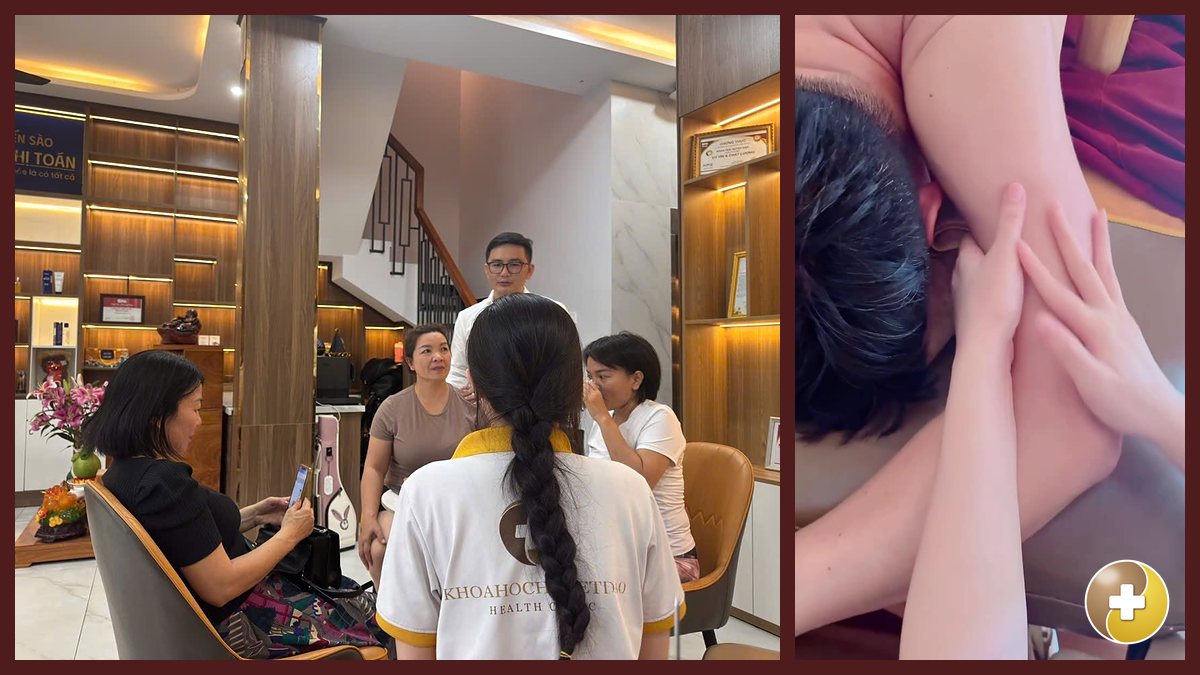
Quick answer: Aching finger joints and a stiff back after cold storage work usually come from cold narrowing the blood vessels in the fingers, tendons gliding less freely, and hours of lifting crates and gripping knives. Eastern health theory calls this Cold. Tong Gia Acupoint Wellness in District 12 and Thu Duc, Ho Chi Minh City, offers hand and back care.
Want Lương Y Tống Văn Huynh’s team to read your spine and posture in person?
Aching hands and a stiff back from cold storage work: what is going on
Across Germany, Czechia, Poland and the UK, many Vietnamese and other workers spend their shifts in supermarket freezer warehouses, fish filleting halls, poultry packing plants, sushi kitchens and ready-meal factories. Think of the cold stores around Hamburg and Berlin, the warehouses near Prague and Cheb, the trade centre at Wólka Kosowska outside Warsaw, or the food plants of Birmingham and Manchester. A freezer room typically runs at minus 18 to minus 25 °C, a chill room at 0 to 4 °C, and fish halls are wet and icy. After the shift comes the European winter: dark by four or five in the afternoon, damp wind, sometimes sleet. For a cold storage worker, the whole day is cold followed by more cold.
After a few seasons, many people notice the same pattern. Fingers are stiff in the morning and need dozens of fist clenches before they can hold chopsticks. Finger joints and wrists ache when the weather turns. Fingertips go numb, sometimes white and then blue. The lower back feels like a plank, and bending to tie a shoe takes care. This article is about the job itself; for the weather side, see cold hands and feet after long Canadian winters.
From a Western anatomy point of view, three things happen at once:
- Finger blood vessels narrow in the cold. The sympathetic nervous system squeezes the small vessels in the skin of the hands and feet to keep heat for the heart, lungs and brain. Fingers get less blood, so they turn cold, numb and clumsy; if the reflex is very strong, they go white or blue.
- Tendons, tendon sheaths and joints glide less freely. Joint fluid thickens, finger flexor tendons slide less easily in their sheaths, and nerves conduct more slowly. The same grip, squeeze or twist done in the cold makes the finger joints and wrist work harder.
- Cold back muscles lose elasticity. The spinal erectors, the quadratus lumborum and the buttock muscles stiffen in the cold. Bending again and again to lift crates from a low pallet stretches the muscle fibres and ligaments around the lumbar spine, causing stiffness, a dull ache at the end of the shift, and a worse back in the morning.
It is common among order pickers in freezer stores, fish filleters and meat cutters whose hands sit in cold water, packers in chill rooms, refrigerated-truck drivers who also load and unload, and anyone over forty with years in the trade. The pillar article of this series is spine care after a long-haul flight; this one looks closely at the hands, wrists and lower back of people who work in the cold.
Common causes: hours below zero, hot-cold switching and heavy crates
- Long hours below zero: even with protective clothing, hands and wrists cool first. Thick gloves make fine work hard, so many people take them off to label, count or scan, and the hands cool further.
- Constant switching between cold and warm: from a minus 20 °C freezer to the loading dock, into a heated break room, then back in. Each switch makes finger vessels clamp and open again, which is why chilblains, itching and burning fingertips are common.
- Lifting, pulling and pushing crates all shift: boxes of fish, meat or ice of 10 to 25 kg, lifted from floor level to high shelves, often with a twist. Bending plus twisting is the posture that loads the lower back most. See back pain after lifting something heavy.
- Gripping knives, hooks and scissors in cold water: hundreds of filleting or deboning cuts a shift with wet gloves and slippery handles, so the grip gets harder and the tendons around the wrist are overloaded.
- Standing on cold concrete: cold feet, tight calves and a tense lower back.
- Night and early shifts: broken sleep leaves muscles little time to relax.
- Little winter sun and rushed meals: cold food and iced drinks on breaks, months without daylight.
- The trip home: a direct flight from Frankfurt or London to Tân Sơn Nhất takes about 12 to 13 hours; from Prague or Warsaw you usually connect in Doha, Dubai or Istanbul, 16 to 20 hours door to door. Long sitting, heavy suitcases and then a bedroom air conditioner set too cold in Saigon give the back and hands no rest.
Some conditions also make joint pain or cold hands more likely, such as rheumatoid arthritis, gout, thyroid problems, diabetes and anaemia. These need checking by medical staff, not only massage.
Signs worth noting
- Stiff fingers in the morning that loosen after a few minutes: overloaded tendons and finger joints after cold shifts. Read stiff fingers in the morning.
- Fingertips that go numb, white and then blue in the freezer: strong narrowing of finger vessels. See numb fingers in cold weather.
- Wrist pain when twisting, holding a knife or squeezing: overloaded wrist tendons.
- Numb thumb, index and middle finger at night: the median nerve in the carpal tunnel may be compressed.
- Red, swollen, itchy fingers after coming in from the cold: chilblains from damp cold.
- A stiff back in the morning and a dull lower-back ache at the end of the shift: tight spinal erectors and lumbar muscles.
- A cold lower back, tired knees, feeling chilly, getting up at night to urinate: in Eastern health theory, a sign to look after Kidney yang (see below).
The Tong Gia curriculum says pain shows up in one place while its source often sits somewhere else: stiff fingers may start at the wrist, the forearm or shoulders hunched against the cold.
When to see a doctor
If you notice any of the following, please see a doctor at a medical facility rather than relying on massage:
- Fingers that turn white then blue, hurt and take a long time to pink up again; sores, dark spots or blisters on the fingertips after long cold exposure or touching frozen metal.
- Finger joints or wrists that are hot, red and swollen, morning stiffness lasting more than 30 minutes, pain in both hands symmetrically, or sudden severe pain in one joint at night.
- A hand getting weaker, dropping things, or the muscle at the base of the thumb wasting.
- Back pain running down the leg with numbness or weakness, problems passing urine or numbness in the groin: go to emergency.
- Back pain after a fall or slip in the cold store, or with fever or unexplained weight loss.
- One calf swollen, warm, red and more painful on walking in the days after a long flight: this can be deep vein thrombosis; get checked straight away and do not massage that leg.
- Crushing chest pain, shortness of breath, cold sweats, pain spreading to the left arm or jaw: call 112 in Europe (999 in the UK) or 115 in Vietnam immediately.
- Cold hands with pale skin, dizziness, breathlessness and lasting tiredness, or with weight gain, constipation and hair loss: this may relate to anaemia or the thyroid, so have a check-up as well.
Tong Gia does not read X-rays or MRI scans and does not draw up medical plans. If you already have results from Germany, Czechia, Poland or the UK, bring them so the practitioner knows which areas to work gently or avoid.
This is a wellness service, not medical care.
The Y Tướng Học view: Cold, Kidney yang, the Liver and the tendons
Đông y, Vietnam's traditional Eastern health theory, calls cold that enters the body from outside "Cold" (Hàn). Someone in a freezer store meets it for hours every day. According to the Tong Gia curriculum, three functional systems come up again and again:
- Kidney yang, the body's "warming fire". The curriculum describes Kidney yang deficiency as "not enough fire to keep warm", with feeling cold, cold hands and feet, a cold and tired lower back and knees, frequent clear urine, night urination and fatigue. The Kidney governs the bones, and when the body's defences are low it becomes sensitive to weather, prone to wind-cold and wind-damp, with deep aches in the bones as the season changes. The care direction is to warm Kidney yang: keep the lower back, belly and feet warm and soak the feet in warm water.
- The Liver governs the tendons. A well-nourished Liver keeps tendons supple and joints flexible; when it is weak, tendons tighten, cramp and lose flexibility. Gripping a knife or a hook in the cold all shift uses the hand tendons heavily with little time to replenish them.
- The Spleen governs the muscles and the four limbs. The curriculum describes Spleen and Stomach deficiency-cold as feeling cold, very cold hands and feet and easy bloating, and notes that raw and cold food weakens Spleen yang, which is relevant to cold sandwiches and iced drinks on break.
These are functional terms from traditional theory, not Western disease names; they do not mean your kidneys or liver are ill.
Y Tướng Học, the Vietnamese art of reading the body's outer signs, rests on the line "the outer form reflects the inner organs". Lương Y Tống Văn Huynh systematised it so practitioners can see which part of the spine to examine closely. For long-time cold workers the curriculum lists these signs: thin, soft ear rims and a flat bone behind the ear, linked to weak Kidney qi and yang; a round face (the "Viên" type, Water element) with a lower back that easily takes in cold, cold skin over the lumbar area and soft muscles; a bony face with high cheekbones (the "Vương" type) in people who carry heavy loads, prone to fibrous muscle stuck around joint gaps; muscles that feel soft, cool and slow to spring back when pressed, linked to Spleen and Stomach deficiency-cold; and thin, ridged nails, a sign the Liver blood needs support. These observations guide wellness care only; they are not fortune-telling and not a judgement of anyone.
Spine segments and nerve-reflex zones involved
According to the Tong Gia spinal nerve-reflex balancing curriculum, the cervical spine (C1 to C7) relates to the head, face, neck and arms; the thoracic spine (D1 to D12) to circulation, breathing and digestion; and the lumbar spine (L1 to L5) to digestion, the kidneys, the urinary system and the legs. The muscle, bone and joint group, which includes numbness and aching in the limbs, is worked through C5 to C7, L1 to L5 and S1 to S5.
| Vertebrae | Nerve / function (Western anatomy) | Common signs | Organ (Eastern view) | Outer sign (Y Tướng Học) |
|---|---|---|---|---|
| C5–C6 | C6 root: sensation of thumb and index finger; wrist extensors | Cold, numb thumb and index finger; tired wrist holding a knife | Liver governs tendons | Dry, ridged nails; tight hand tendons |
| C6–C7 | C7 root: middle finger; triceps, wrist flexors | Pain pushing crates, pressing, gripping hard | Heart governs blood vessels | Pale face, cold palms |
| C7–D1 | C8 and D1 roots: little and ring fingers, small hand muscles for grip | Stiff finger joints, weak grip | Spleen governs the limbs | Pale lips, soft cool hand muscles |
| D1–D5 | Upper thoracic cord, where sympathetic fibres controlling hand blood vessels leave | Cold fingers turning white or blue in the freezer | Heart and Lung | Hunched shoulders, shallow breathing |
| L1–L3 | Upper lumbar roots; psoas and spinal erectors; Thận du and Mệnh môn points at L2 | Morning back stiffness, pain bending to lift | Kidney governs bones (yang deficiency breeds cold) | Thin ear rims, cold lumbar skin; round face |
| L4–S1 | L4, L5, S1 roots forming the sciatic nerve; sacroiliac joints | Ache into buttocks and thighs; cold legs from cold floors | Kidney and Bladder | Hollow, cold lower back; tired knees |
The table shows related zones for the practitioner's hands to examine, not a conclusion about cause. That is why a Tong Gia session starts at the neck, upper back and lower back before moving to the forearms, hands and feet.
How Tong Gia helps rebalance the hands and lower back
Every session follows the spinal nerve-reflex balancing massage method developed by Lương Y Tống Văn Huynh, founder of Huyệt Đạo Tống Gia (Tong Gia Acupoint Wellness), with over 13 years in Eastern wellness care, Y Tướng Học and spinal reflex balancing. It is a Vietnamese Eastern method done by hand, aiming to help rebalance the neck and lumbar spine and support the related organ functions. If you are visiting Ho Chi Minh City, it is a good way to experience Vietnamese traditional care.
- Questions and observation: freezer or chill room, shift length, lifting, which hand holds the knife, which fingers stiffen, when the back is worst, any medical check, diabetes, thyroid, pregnancy. Then the face, ears, nails, shoulders and lumbar curve.
- Reading the spine by hand: the hands read four things, namely skin temperature, the muscle cushion, the shape of each vertebra and sensation at each point, comparing left with right and top with bottom. Cold workers often have a lower back cooler than the upper back and uneven muscles from lifting to one side.
- Releasing the muscles: warming and loosening the spinal erectors, lumbar and buttock muscles, then the neck and shoulders, forearms, wrists and each finger. Pressure builds through five levels; following the curriculum's temperature rule, cold areas are warmed up.
- Pressing the right points: Thận du and Mệnh môn at L2, Ủy trung behind the knee ("for back pain, look to Ủy trung"), Hợp cốc on the back of the hand (not used in pregnancy), Dũng tuyền on the sole. Work on a point stops when the skin turns from dry to slightly moist.
- Home care: warming the fingers before a shift, lifting with a straight back, rubbing the lower back and foot soaks to take back to Europe.
Suitable services (prices in VND; EUR and USD are approximate reference rates, 1 EUR ≈ 30,000₫ and 1 USD ≈ 26,000₫; payment is in VND; see the price list):
- Neck-shoulder / lower back care, 60 minutes: 550,000₫ (about 18 EUR or 21 USD), first visit 399,000₫ (about 13 EUR or 15 USD); 90 minutes: 750,000₫ (about 25 EUR or 29 USD).
- Extra 30 minutes on one area: 199,000₫ (about 7 EUR or 8 USD), added for the forearms, wrists, hands and fingers.
- Cold-dispelling cupping, 30 minutes: 85,000₫ (about 3 EUR or 3 USD) for a cold, chilly lower back; not done over broken skin or open chilblains.
From Tân Sơn Nhất airport: the District 12 branch is on the same northern side of the city as the airport, a short drive depending on traffic. The Vinhomes Grand Park branch in Thu Duc is further and takes longer, especially at rush hour, and suits families staying in the east. After a 12 to 20 hour journey, shower, sleep and then come. See massage near Tân Sơn Nhất airport.
What you may feel: the lower back is usually cooler and stiffer at first; as it is warmed and released, warmth spreads into the buttocks and thighs. Tight points give a mild, pleasant ache the curriculum calls a "sensation wave". When the forearms and fingers are worked, many people find their fingers warmer and softer by the end. Afterwards bending often feels easier and sleep deeper that night; some feel a little sore for a day first. Everyone responds differently, and Tong Gia does not promise pain will be gone after one session.
Want Lương Y Tống Văn Huynh’s team to read your spine and posture in person?
A suggested plan for your trip home, plus self-care
| When | What the hands and back need | What to do |
|---|---|---|
| Last week before flying | Less overload | Drop night shifts if you can; note which fingers stiffen; read preparing your body before a long flight |
| Flight day | No long bent sitting | Wheeled luggage; stand and walk every 1 to 2 hours; open and close your hands, roll your wrists |
| Arrival day | Warm up and let go | Warm shower, sleep on Vietnam time; set the air conditioner around 26 to 28 °C, not blowing on your back |
| Days 2 to 4 | Release the lower back and hands | One 60 to 90 minute lower-back session, plus 30 minutes on the hands if fingers are very stiff |
| Family visits and parties | Spare the back | Do not carry tables or beer crates alone; sit with back support; fewer iced drinks |
| Mid-trip | Warmth from inside | Morning sun and walks; evening foot soak; another session if the back is still stiff |
| 2 to 3 days before flying back | Prepare for cold shifts | A gentle session; practise the exercises below; pack glove liners and a lumbar warmer |
- Warm up the hands before each shift: rub your palms until warm, clench and open 20 times, roll the wrists and gently pull each finger; repeat on every break out of the freezer.
- Two layers of gloves, dry hands: thin liners inside, protective gloves outside; change wet gloves, because wet hands lose heat far faster.
- Lift with your legs: stand close, drop your hips, keep your back straight, hug the crate close and turn by stepping rather than twisting.
- Rub the lower back: warm your palms, place them either side of the lower back and rub up and down 50 to 100 times until warm, as the curriculum teaches.
- Warm foot soak: 15 to 20 minutes at about 38 to 42 °C before bed, then rub the sole of each foot for 3 to 5 minutes; with diabetes, test the water carefully. See herbal foot soak benefits.
If joints become hot and swollen or a hand grows weaker, see a doctor rather than relying on self-care.
Booking from abroad
From Berlin, Leipzig, Prague, Warsaw, London or Birmingham, call, Zalo or WhatsApp +84 888 264 559 (0888 264 559 inside Vietnam) with three details: your landing date and time at Tân Sơn Nhất, where it aches (fingers, wrists, lower back) and which branch you prefer. You can also book online; tips are in booking a massage in Saigon from abroad.
- District 12 branch: 225 Dương Thị Mười, Phường Tân Chánh Hiệp (Tan Chanh Hiep ward, District 12), Ho Chi Minh City. Open 8:00 to 19:00 daily.
- Vinhomes Grand Park branch: Căn T16-21 khu Manhattan, Vinhomes Grand Park, Phường Long Bình, TP. Thủ Đức (unit T16-21, Manhattan block, Long Binh ward, Thu Duc City). Open 9:00 to 20:00 daily.
Central Europe is 6 hours behind Vietnam in winter and the UK 7 hours, so a message in your morning reaches us while the branches are open. Dates around Tết fill up early. Genuine guest reviews are on Google Maps for each branch.
Visit us
- Đông Y Huyệt Đạo Tống Gia Quận 12 (District 12)
225 Dương Thị Mười, Phường Tân Chánh Hiệp, Quận 12, HCMC · 8:00–19:00 daily · 0888 264 559 · Directions on Google Maps - Đông Y Huyệt Đạo Tống Gia Quận 9 (Vinhomes Grand Park, District 9)
Căn T16-21 khu Manhattan, Vinhomes Grand Park, Phường Long Bình, TP. Thủ Đức, HCMC · 9:00–20:00 daily · 0888 264 559 · Directions on Google Maps
Map of our two branches
Want Lương Y Tống Văn Huynh’s team to read your spine and posture in person?
What guests say on Google Maps
“The staff explained everything carefully and answered all my questions – I felt completely at ease.” (translated from a Vietnamese review)
— Nam P., Google Maps review · Vinhomes Grand Park branch (District 9) · 2025 · See on Google Maps
“Service 10/10, the staff are warm and lovely.” (translated from a Vietnamese review)
— Trí B., Google Maps review · Vinhomes Grand Park branch (District 9) · 04/2026 · See on Google Maps
Quoted from public reviews, shortened where marked (…). Experiences vary from person to person; reviews are not a substitute for seeing a doctor when something feels wrong.
Related guides for your trip
- Getting a massage in Saigon without speaking Vietnamese: phrases, messaging ahead and a Tong Gia session
- Back pain and numb legs from long-haul trucking in Europe: why it happens and back care on a trip to Vietnam
- Used to European thermal spas? How Vietnamese massage differs: session length, warmth, pressure and prices
FAQ
Is it normal to get aching finger joints and a stiff back from cold storage work? It is common. Cold narrows finger blood vessels and makes tendons and joints glide less freely, while lifting crates and gripping knives all shift overloads the hand tendons and lower back. Warmth, rest and stretching usually help. Hot swollen joints, white or blue fingers with sores, or back pain with leg weakness need a medical check.
I work in a freezer warehouse in Germany and my fingers are stiff every morning. Why? Morning stiffness that eases after a few minutes of opening and closing the hand usually means overloaded finger tendons and joints after cold shifts. If stiffness lasts more than 30 minutes, both hands swell symmetrically or joints are hot and red, have it checked for arthritis at a medical facility.
My fingers go white and then blue in the cold room. Is that dangerous? It is a strong narrowing of finger blood vessels in the cold. If it happens often, hurts, takes long to recover, or leaves sores or dark spots, get it checked rather than relying on massage. Dry, warm hands and two layers of gloves reduce how often it happens.
Can massage and acupressure help stiff hands and a tired back? Massage warms and loosens tight lower-back, forearm and hand muscles; many people find bending easier, fingers softer and sleep deeper. At Tong Gia Acupoint Wellness the practitioner reads the spine by hand before releasing muscles and pressing points. It is wellness care and does not replace a medical check.
Flying home from Prague or London, which Tong Gia service suits me? Neck-shoulder / lower back care: 60 minutes 550,000₫ (first visit 399,000₫) or 90 minutes 750,000₫; add 30 minutes on the hands for 199,000₫, and cold-dispelling cupping for 85,000₫ if your lower back feels cold. Message +84 888 264 559 on Zalo or WhatsApp to hold a time.
How much is a lower back session in euros? At the reference rate of about 30,000₫ per euro, 60 minutes at 550,000₫ is about 18 EUR (first visit 399,000₫, about 13 EUR) and 90 minutes at 750,000₫ is about 25 EUR. Payment is in VND at the branch in District 12 or Vinhomes Grand Park.
Author: Lương Y Tống Văn Huynh – founder of Huyệt Đạo Tống Gia, a master of traditional Vietnamese wellness with over 13 years in Eastern wellness care, Y Tướng Học (face reading) and spinal nerve-reflex balancing massage.
Updated: 2026-11-17
Related guides
- Aching finger joints and a stiff back from cold storage work: what happens and how to care for it in Vietnam
- Numb legs and knee pain from sitting seiza in Japan: why it happens, how to sit and when to get checked
- Wrist and shoulder pain from restaurant kitchen work: what pho cooks and chefs need on a trip to Saigon
- Hand numbness and tired hands from assembly line work in Taiwan: wrist, neck and what helps on your trip home
This is a wellness service, not medical care.