
Back pain from packing up before moving back to Vietnam: boxes, garage sales, the container and a long flight
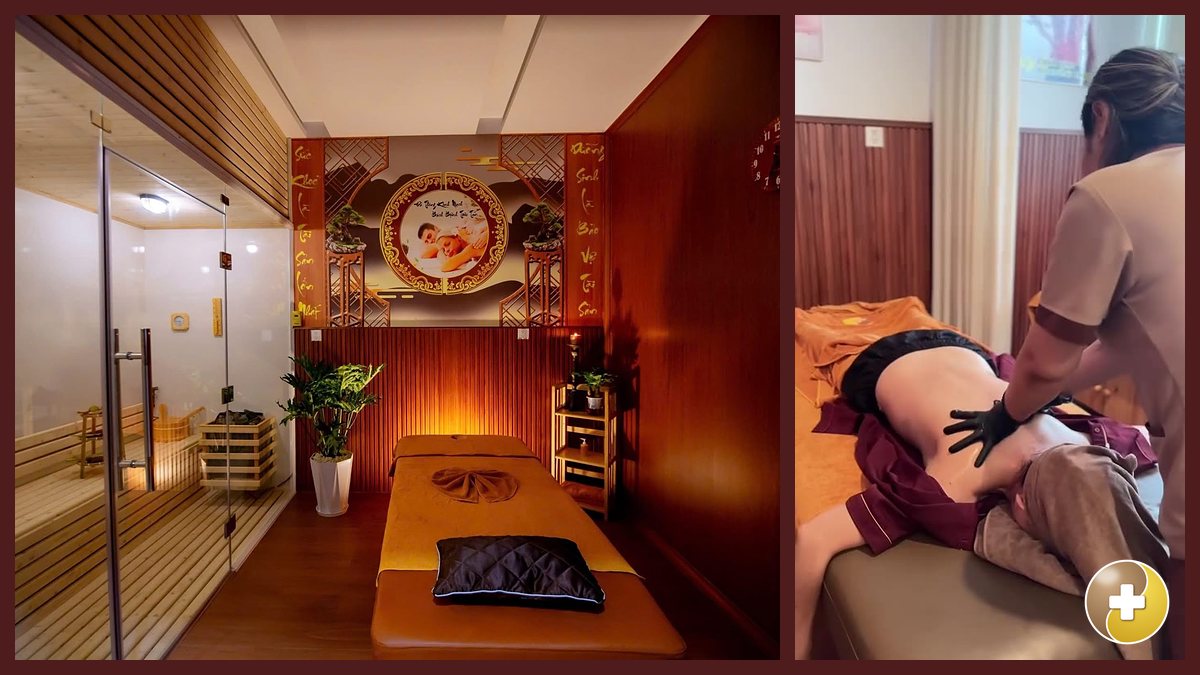
Quick answer: Back pain from packing up before moving back to Vietnam usually comes from weeks of lifting boxes, bending over garage shelves, twisting while carrying and then a long flight. Lifting close to the body and bending the knees help. Huyet Dao Tong Gia in District 12 and Vinhomes Grand Park, Ho Chi Minh City, offers hands-on spine care.
Want Lương Y Tống Văn Huynh’s team to read your spine and posture in person?
Why packing up a whole house hurts your back
Deciding to move back to Vietnam for good usually takes years. Once the flight is booked, though, the household enters a few very physical weeks: sorting through twenty or thirty years of belongings, taping boxes, clearing the garage, selling the car, holding a garage sale, loading a shipping container and cleaning the house before handing over the keys. In San Jose, Houston or Orange County this often happens as the weather cools. In Toronto, Calgary or Vancouver you may be carrying furniture across an icy driveway. In Sydney, Melbourne or Adelaide it is the opposite: December is summer, and you are lifting boxes in strong sun. Then comes the flight to Tan Son Nhat airport, and that is when many people notice their back for the first time.
In Western terms, most of this is mechanical low back pain from overload. Muscles, tendons and ligaments around the spine have worked beyond their usual capacity for days in a row, with a few awkward movements on top. Three patterns are common:
- Lumbar muscle strain: the erector spinae and quadratus lumborum are overstretched when you bend at the waist to lift and then twist to put the box down. One or both sides of the lower back feel stiff and sore, and bending or straightening up is hard.
- Load on the lower discs: the L4–L5 and L5–S1 levels take much of the load when lifting. The farther the box is from your body, the greater the force on the lower back, so holding a box out in front is far harder on the spine than hugging it close.
- Shoulder and upper back fatigue: lifting boxes onto high garage shelves, pulling things down from the attic and carrying a mattress up and down stairs keep the trapezius, supraspinatus and rhomboids working nonstop.
It is especially common in office workers whose backs are not used to carrying, people who have worked years in nail salons or factories, older adults preparing to retire, and anyone doing the whole move alone while still working and handling paperwork. This article focuses on the packing weeks and the first weeks after you land in Ho Chi Minh City. For a long-term routine once you have settled, see a wellness routine for retiring in Vietnam. For the full picture of neck, back and lower back after flying, read the main guide on spine care after a long-haul flight.
Common causes: boxes, garage clean-outs, garage sales, the container and weeks of stress
Back pain during a move rarely comes from one bad lift. It is usually the sum of many heavy days with no recovery, and then one last movement that makes the back "go":
- Lifting with a rounded back: straight legs, bent waist, then a twist. A box of books or dishes is often heavier than it looks.
- Garage and storage clean-outs: hours of bending, reaching overhead, pulling boxes off high shelves, moving tools and old furniture. A cold garage in a Canadian or northern US winter makes muscles stiffer and easier to strain.
- Garage sales: carrying tables and cabinets to the driveway early in the morning, standing all day, carrying the unsold items back in, and helping buyers load big pieces into their cars.
- Beds, wardrobes and mattresses: large, awkward objects that force you to lean and walk backwards on stairs.
- Loading the shipping container: hours of stacking on a fixed pick-up day, with little chance to rest.
- End-of-lease or pre-sale cleaning: kneeling to scrub floors, bending over ovens and bathtubs. Renters in Australia are often expected to leave the property very clean, which makes the last days heavy.
- Weather: winter cold stiffens muscles; summer heat in Sydney or Adelaide means sweating, drinking too little and cramping.
- Weeks of stress: selling the house, closing accounts, moving children between schools, saying goodbye. Short nights and a busy mind keep the shoulders and back tense even in bed.
- The long flight: from the US or Canada a connecting trip often takes 18–24 hours door to door; from Sydney or Melbourne a direct flight is roughly 8–9 hours. A tired back then sits folded for hours and lifts suitcases into overhead bins.
- Arrival is not the end: unpacking, receiving the container, buying furniture and setting up the new home.
The overload is similar to clearing snow every winter, covered in back strain from shoveling snow. For general lifting advice, see back pain after lifting something heavy.
Related signs to notice
- Morning stiffness in the lower back, difficulty bending over the sink, needing to push up with your hands to stand.
- Pain on one side, often from always lifting and turning toward the same side.
- Sore top of the shoulder and a catch when raising the arm, from shelf work; see stiff neck after a long flight.
- Burning between the shoulder blades and shallow breathing from carrying boxes against the chest.
- Buttock ache or mild tingling down the back of the thigh, where nerve roots from the low back travel to the leg.
- Sore wrists and fingers from boxes without handles and days of taping.
- Poor sleep from stress plus jet lag; see jet lag and sleep after flying to Vietnam.
- Low appetite, bloating, constant worry: signs Eastern wellness links to the Spleen, explained below.
The Tong Gia method notes that pain shows up in one place while its source often sits somewhere else: lower back pain after a move may come from how you bent and twisted, and shoulder pain from a week of holding boxes away from the body.
When to see a doctor
Most lifting-related back pain eases over several days with sensible rest, gentle walking and warmth. Do not wait, and do not use massage instead of medical care, if you notice any of the following:
- Weakness or numbness in one or both legs, a foot that drags, or trouble walking on heels or toes.
- Numbness in the groin, buttocks or around the anus, or loss of bladder or bowel control: go to emergency care immediately.
- Severe pain right after a fall on stairs or ice, or after something heavy fell on you; sudden back pain while lifting if you have osteoporosis.
- Back pain with fever, unexplained weight loss, ongoing fatigue, or pain that gets worse at night despite rest.
- Flank pain with burning urination or blood in the urine.
- Back or left shoulder pain with chest tightness, shortness of breath, sweating, or pain spreading to the jaw or arm: call 115 in Vietnam. Heavy lifting can strain the heart; do not assume it is just a muscle.
- Shortness of breath, chest pain on breathing in or fainting after the flight: call 115.
- One calf swollen, painful, warm or red after the flight: possible deep vein thrombosis. Seek care at once and do not massage the leg.
- Pain that has not eased after about a week, or keeps getting worse.
If you are pregnant, have had spine surgery or have been told you have a disc herniation, ask your doctor before any massage. Tong Gia does not read X-rays or MRI scans and does not make medical plans; if you have results from a hospital, tell the practitioner so they know which areas to keep light or avoid. This is a wellness service, not medical care.
The Y Tướng Học view: Kidney and the lower back, Liver and the tendons, Spleen and worry
Y Tướng Học, the Vietnamese face-and-body reading tradition systematized at Tong Gia by Lương Y Tống Văn Huynh, rests on the idea "tướng tại ngoại, tạng tại nội": what is inside shows on the outside. For back pain after a move, practitioners usually look at three organ systems in the Eastern sense.
Kidney and the lower back. Eastern wellness says the Kidney governs the bones, and the lower back is its "house". It shows in the ears, hair, bones and lower back: full, rosy ears and a steady back are good signs; weak knees, a cold lower back, ringing ears and thinning hair suggest the area needs warmth and rest. Weeks of lifting, short sleep and a cold winter garage make the lower back feel colder and heavier. The Tong Gia curriculum notes that a round face (Viên shape) often comes with a cool lower back and softer muscles, while a face with a wide forehead and narrow chin (Giáp shape) often has a hollow, cool low back. The bridge of the nose is read as a small picture of the spine, so a crooked bridge may go with a shifted spinal line, which the practitioner then checks by hand.
Liver and the tendons. The Liver nourishes tendons and ligaments. Liver qi stagnation is linked with tightness under the ribs, tiredness, tension and irritability. After weeks of lifting plus paperwork, tight shoulders, dry red eyes and pale nails are common signs. People with a wide-cheekbone (Thân) face are noted for tension around T7 and T9.
Spleen and worry. The curriculum says worry harms the Spleen: poor appetite, bloating, tiredness after meals, and over time palpitations and poor sleep. Because the Spleen governs the flesh, worried, irregular eaters in a moving season often feel their muscles tire quickly. Western science also recognizes that stress affects digestion.
These observations guide wellness care only; they are not fortune-telling and not a way to label anyone as ill.
Vertebrae and nerve-reflex areas involved
In the Tong Gia approach to spinal nerve-reflex balance, the thoracic spine (T1–T12) relates to circulation, breathing and digestion; the lumbar spine (L1–L5) to digestion, kidneys, urinary function and the legs; and the sacrum to the pelvis and back of the legs.
| Vertebrae | Nerves / function (anatomy) | Common sign after a move | Organ (Eastern view) | Outer sign (Y Tướng Học) |
|---|---|---|---|---|
| C5–C7, T1 (base of neck, top of shoulder) | Nerve roots to shoulder and arm; levator scapulae and trapezius attach here | Sore shoulder top after shelf lifting, tired arms | Liver (tendons) | Tight shoulders, dry red eyes, furrowed brows |
| T3–T5 (between the shoulder blades) | Upper intercostal nerves; Lung point (T3), Heart point (T5) | Burning between the blades from carrying boxes at the chest | Lung – Heart | Dry skin, sighing; pale face, light sleep |
| T7–T9 (below the blades) | Mid intercostal nerves, upper abdominal wall; Liver point area | Tight muscle bands, tension under the ribs | Liver | Wide cheekbones, irritability, tired eyes |
| T10–T12 (mid to low back) | Nerves to lower abdominal wall and digestion; Spleen (T11), Stomach (T12) points | Heavy mid back, poor appetite, bloating | Spleen – Stomach | Pale lips, puffy tongue, quickly tired muscles |
| L1–L3 (upper lumbar) | Roots to groin, hip, front of thigh; psoas attaches here; Kidney point and Mệnh môn at L2 | Stiff when straightening up, cold lower back | Kidney | Thin dull ears, dry hair, cold low back; round face |
| L4–L5, S1 (low lumbar, sacrum) | Roots forming the sciatic nerve to buttock, back of thigh and calf; high load when lifting | Low back pain when bending to lift, buttock ache | Kidney – Bladder | Hollow cool low back (Giáp face), crooked nose bridge |
The table shows areas to read carefully by hand, not causes. If pain runs down the leg with numbness or weakness, go back to the warning signs above first.
How Tong Gia helps rebalance your back after a move
Every session follows the spinal nerve-reflex balancing massage developed by Lương Y Tống Văn Huynh, founder of Huyet Dao Tong Gia, with over 13 years in Vietnamese Eastern wellness, Y Tướng Học and spinal reflex balancing. It is a Vietnamese hands-only method that aims to help each spinal area and its related organ system return to balance.
- Questions and observation: what heavy work you did, whether a lift ever caused a sharp twinge, where it hurts, whether it travels down the leg, where you flew from, how you sleep, blood pressure and health history. Then the practitioner looks at complexion, ears, nose bridge, posture and shoulder and hip level.
- Reading the spine by hand: the hands check four things, skin temperature, the muscle layer, the shape of each vertebra and sensation at each point, comparing left and right from the neck to the sacrum, then narrowing down to the key zone.
- Releasing muscles: trapezius and supraspinatus, rhomboids, the long muscles on both sides of the spine, quadratus lumborum and glutes. Pressure rises gradually through five levels, always with your feedback; a freshly strained area is worked gently.
- Acupressure on the right points: Liver and Spleen points in the mid back; Kidney point, Mệnh môn and Chí thất in the lower back; Ủy trung behind the knee ("for back pain, look to Ủy trung"); Thái xung on the top of the foot, used in the curriculum to ease Liver tension. Work at a point stops once the skin turns from dry to slightly moist.
- Self-care coaching: safe lifting while you are still unpacking, a few stretches and how to warm the lower back at night.
During the session you may feel tender spots on both sides of the lower back and on top of the shoulders, where muscles are tight; as they release, the tenderness usually fades and the body warms. Afterwards some people bend more easily and sleep better that night; others feel a little sore for a day before feeling lighter. Everyone responds differently, and Tong Gia does not promise that pain will be gone after one session.
Suitable services and prices
- Neck-shoulder / back-waist care, 60 min: 550,000 VND (about 21 USD / 32 AUD / 29 CAD); first visit 399,000 VND (about 15 USD / 23 AUD / 21 CAD); 90 min: 750,000 VND (about 29 USD / 44 AUD / 39 CAD). Focus on shoulders, upper back and lower back.
- Full-body care, 120 min: 950,000 VND (about 37 USD / 56 AUD / 50 CAD). Head to feet, for when the whole moving season plus the flight have left you sore everywhere and sleeping badly.
- Herbal compress: 130,000 VND (about 5 USD / 8 AUD / 7 CAD). An add-on for a cold, heavy lower back.
Conversions use reference rates (1 USD ≈ 26,000 VND, 1 AUD ≈ 17,000 VND, 1 CAD ≈ 19,000 VND); payment is in VND. Full list on the price page.
From Tan Son Nhat airport
The District 12 branch (225 Dương Thị Mười, Phường Tân Chánh Hiệp, District 12) lies north of the airport, usually a fairly short ride depending on traffic. The Vinhomes Grand Park branch (Căn T16-21 khu Manhattan, Phường Long Bình, TP. Thủ Đức, in Thu Duc City) is farther from the airport and takes longer, especially in the evening rush. Many families moving back settle in Thu Duc or near District 12 and Go Vap, so choose the branch closest to your new home. If you want to stop on the way from the airport, see massage near Tan Son Nhat airport. More about the branches: District 12 and District 9 / Thu Duc.
Want Lương Y Tống Văn Huynh’s team to read your spine and posture in person?
A suggested plan for the moving season, and safe lifting
| When | What your back needs | What to do |
|---|---|---|
| 4–6 weeks before the flight | Spread out the heavy work | Sort 1–2 hours a day instead of marathon weekends; use small boxes for books; hire help for big items |
| Garage sale and container week | No nonstop strain | Short break every 30–45 minutes, drink water; two people for large pieces; never lift and twist |
| Final cleaning days | Less bending and kneeling | Long-handled mops, a cushion under the knees; alternate standing and bending tasks |
| Flight day | Change position often | Ask for help with overhead bins; walk every 1–2 hours; small cushion behind the lower back |
| Days 1–3 in Ho Chi Minh City | Rest and sleep on local time | Warm shower, easy walks, no heavy unpacking; back-waist care on day 2 or 3 |
| Container arrival week | Avoid stacking fatigue | Hire movers for furniture; open only light boxes yourself; another back session, with a herbal compress if your back feels cold |
| From the second month | New routine | Morning walks and regular care; see a weekly wellness routine in HCMC |
Safe lifting: test the weight first; stand close with feet shoulder-width apart; bend knees and hips instead of your back; hug the box against your belly and stand up with your legs; turn with your feet, not your spine; keep heavy items between knee and chest height and avoid lifting heavy things overhead. In the evening, rub your palms warm and stroke both sides of the lower back 50–100 times, breathe slowly into the belly for 5–10 minutes before bed, and keep fans and air conditioning from blowing straight on your back. For flight-related back pain specifically, read back pain after a long flight from the US to Vietnam.
Book from abroad before your moving flight
You can book while still in the US, Canada or Australia. Call, Zalo or WhatsApp +84 888 264 559 (0888 264 559 inside Vietnam) with three details: your landing date and time at Tan Son Nhat, where it hurts (lower back, shoulders or everywhere), and the branch you prefer or the area of your new home. The team will suggest a suitable day and hold times for the family. You can also book online; tips are in booking a massage in Saigon from abroad.
- District 12 branch: 225 Dương Thị Mười, Phường Tân Chánh Hiệp, Ho Chi Minh City. Open 8:00–19:00 daily.
- Vinhomes Grand Park branch: Căn T16-21 khu Manhattan, Vinhomes Grand Park, Phường Long Bình, TP. Thủ Đức. Open 9:00–20:00 daily.
Relatives already in Ho Chi Minh City can book on your behalf. Genuine reviews are on each branch's Google Maps page. More for returning families: overseas Vietnamese.
Visit us
- Đông Y Huyệt Đạo Tống Gia Quận 12 (District 12)
225 Dương Thị Mười, Phường Tân Chánh Hiệp, Quận 12, HCMC · 8:00–19:00 daily · 0888 264 559 · Directions on Google Maps - Đông Y Huyệt Đạo Tống Gia Quận 9 (Vinhomes Grand Park, District 9)
Căn T16-21 khu Manhattan, Vinhomes Grand Park, Phường Long Bình, TP. Thủ Đức, HCMC · 9:00–20:00 daily · 0888 264 559 · Directions on Google Maps
Map of our two branches
Want Lương Y Tống Văn Huynh’s team to read your spine and posture in person?
What guests say on Google Maps
“Careful care, warm advice, professional.” (translated from a Vietnamese review)
— Nhã Tịnh H., Google Maps review · Vinhomes Grand Park branch (District 9) · 04/2026 · See on Google Maps
“Friendly staff. A good experience. I will recommend it to my friends to try too.” (translated from a Vietnamese review)
— Phượng H., Google Maps review · Vinhomes Grand Park branch (District 9) · 01/2026 · See on Google Maps
Quoted from public reviews, shortened where marked (…). Experiences vary from person to person; reviews are not a substitute for seeing a doctor when something feels wrong.
Related guides for your trip
- Quick 4–5 day trip to Vietnam: two long-haul flights in one week and how to look after your body
- Can you get a massage after a heart stent? Who to ask first, how gentle it should be and when to call 115
- Massage after knee replacement: is it safe on a trip to Vietnam, which areas can be worked and what to avoid
FAQ
Is back pain from packing up before moving back to Vietnam serious? Usually it is mechanical overload: weeks of lifting boxes, bending over garage shelves, twisting while carrying, short sleep and then a long flight. It tends to ease over several days with sensible rest, gentle walking and warmth. Leg weakness or numbness, groin numbness, bladder problems, fever or pain after a fall need prompt medical care.
How should I lift moving boxes in Toronto or Sydney without hurting my back? Test the weight, stand close, bend your knees and hips rather than your back, hug the box against your belly and stand up with your legs. Turn with your feet instead of twisting. Use small boxes for books, share big items with a second person, and rest for a few minutes every 30–45 minutes.
How long does a lower back strain from heavy lifting take to settle? A mild strain often settles within several days to about a week if you rest sensibly and keep walking gently instead of lying still. Older adults, people with existing back problems or those still lifting may take longer. If it is not easing after about a week, keeps worsening or spreads down the leg, see a doctor.
I just loaded our container in Houston. Should I get a back massage the day I land in Saigon? Rest one night, take a warm shower and walk a little, then book for day two or three. Before the session the Tong Gia practitioner asks what heavy work you did, where it hurts and whether it spreads down the leg, and checks for a swollen, painful calf after the flight; any warning sign means seeing a doctor first.
Can massage help my back after the moving season, and what does it cost at Tong Gia? Massage helps the muscles around the spine relax, supports circulation and often makes sleep easier; it is wellness care, not a replacement for medical care. Back-waist care is 550,000 VND for 60 minutes (399,000 VND first visit), 750,000 VND for 90 minutes; full-body care is 950,000 VND for 120 minutes, paid in VND.
We are settling in Thu Duc. Which branch is more convenient? For Thu Duc, Vinhomes Grand Park or the former District 9, the Vinhomes Grand Park branch (Căn T16-21 khu Manhattan, Phường Long Bình) is closer and opens 9:00–20:00. For Go Vap, District 12 or Hoc Mon, the District 12 branch (225 Dương Thị Mười) opens 8:00–19:00. Message +84 888 264 559 to hold a time.
Author: Lương Y Tống Văn Huynh – founder of Huyệt Đạo Tống Gia, a master of traditional Vietnamese wellness with over 13 years in Eastern wellness care, Y Tướng Học (face reading) and spinal nerve-reflex balancing massage.
Updated: 2026-11-17
Related guides
- Back pain from packing up before moving back to Vietnam: boxes, garage sales, the container and a long flight
- Fatigue from cleanroom suits on long shifts: heat, heavy shoulders and back, dry skin in chip plants
- Parents' back pain after a long flight with young kids: lower back, shoulders and wrists
- How to describe back pain in Japanese, Korean and Chinese: hospital phrases, warning signs and care in Saigon
- Long car rides home during Tet: lower back pain, numb buttocks and heavy legs, and how to care for them
- Back and wrist pain from fruit picking and farm work in Australia: causes and care between seasons
This is a wellness service, not medical care.