
Knee and back pain from tiling and building work in Australia: causes and care when you fly home
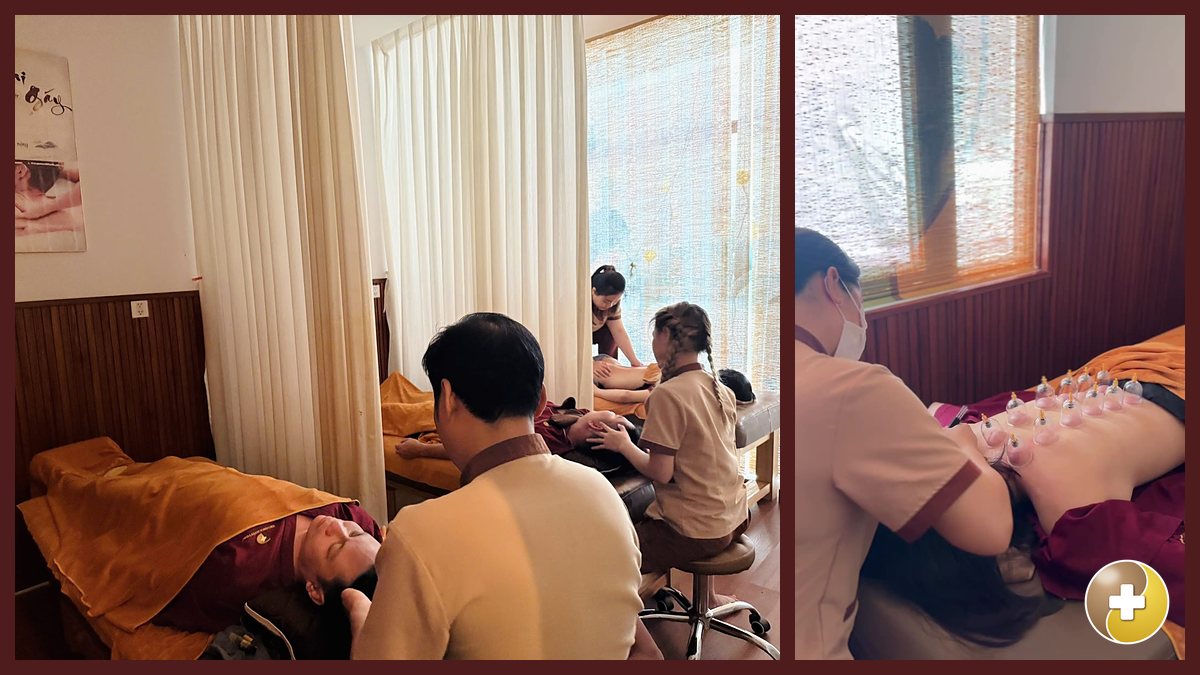
Quick answer: Knee and back pain from tiling and bricklaying in Australia usually comes from long hours kneeling on hard floors, lifting cement bags with a twist and harsh summer sun. Good knee pads, task rotation and stretching help. When you fly home, Tong Gia Acupoint Wellness in Ho Chi Minh City reads the spine by hand, releases the muscles and applies acupressure.
Want Lương Y Tống Văn Huynh’s team to read your spine and posture in person?
Why tiling, bricklaying and building work in Australia wear down your knees and lower back
Seven in the morning on a new estate around Blacktown, Marsden Park or Liverpool in Western Sydney, the slab is still cool under your knees. By eleven the sun is brutal and tiles stacked outside are too hot to hold. Around Werribee, Tarneit and Craigieburn on Melbourne's fringe, a hot northerly can blow cement dust across the site in the morning and the temperature can drop sharply by evening. In Logan, Ipswich or on the Gold Coast it is hot and sticky, and your shirt is soaked before smoko. Tilers, bricklayers, renderers and labourers, many of them Vietnamese Australians who have been on the tools for years, describe the same pattern: at first it is just tiredness, then the knees are stiff every morning, kneeling sends a sharp ache through the kneecap, a few minutes of bending to spread adhesive makes the lower back feel clamped, and at night the trowel wrist throbs.
From a Western anatomy point of view, most of this is mechanical overload of muscles, tendons, ligaments, bursae and joint cartilage, caused by holding cramped positions for hours or repeating heavy movements for years. It is rarely a sign of internal disease. Three areas take most of the strain:
- Knees: kneeling on concrete or tiles puts your whole body weight on the front of the kneecap. Just in front of it sits a small fluid sac, the prepatellar bursa; compressed day after day it can become irritated and swell like a soft water balloon, which is why people call it "tiler's knee". Deep squatting and standing up again loads the joint between the kneecap and thigh bone, and twisting to reach for the next tile while kneeling wrings the meniscus.
- Lower back (L4–L5, L5–S1): bending to comb adhesive, levelling tiles, carrying 20 kg bags of cement, tile adhesive or premixed mortar, and lifting large-format tiles. The spinal erector muscles brace the trunk, the lower discs are compressed when you lift a load held away from your body, and the quadratus lumborum on one side strains when you lift and twist.
- Wrists and forearms: notched trowel, rubber mallet, tile cutter, laying brick after brick by hand. The wrist extensor tendons anchored at the outer elbow and the two thumb tendons running through a narrow sheath at the outer wrist never get a break.
This guide is about the knees, back and wrists of people in the building trades in Australia, and how to look after them when you fly home to Vietnam for Tet or during the Christmas shutdown. To understand how the neck, back and legs work as one axis, read our main guide on spine care after a long-haul flight.
Common causes: kneeling on slabs, cement bags and the Australian summer sun
- Long hours kneeling on hard floors: bathrooms, kitchens, balconies and alfresco areas mean kneeling most of the day. Without knee pads, or with flattened pads and loose straps that let the pad slide sideways, the kneecap presses straight onto concrete. A bit of grit or broken tile under the knee focuses the pressure on one small point.
- Squatting and standing up hundreds of times: setting spacers, tapping tiles level, wiping grout. A deeply bent knee carrying body weight is under heavy load.
- Lifting with a twist: pulling bags off the ute tray, carrying tiles upstairs, tipping mortar into the mixer. The further the load is from your body, the harder your lower back works; add a twist and the muscle strains. Large-format tiles are now common in new Australian homes, heavy and awkward to hold.
- Bent over combing adhesive: rounding the back for hours stretches the muscles and ligaments behind the spine, so you push on your thighs to straighten up.
- Heat and dehydration: summer sun in Australia is harsh and some days in Western Sydney pass 40°C. Sweating without drinking enough drains water and salts, muscles tire faster and calves and thighs cramp at night.
- Price work and the pre-Christmas rush: paid by the square metre, many tilers stay on their knees without a pause. In the weeks before the shutdown, builders and owners want handovers done and days get longer.
- No task rotation: kneeling in the morning, kneeling in the afternoon, the same posture all week.
- Long drives and long flights: an hour each way to sites on the fringe, then roughly 8–9 hours from Sydney, Melbourne or Brisbane to Tan Son Nhat Airport, plus any connection.
Other manual work in Australia causes similar strain: see back and wrist pain from fruit picking in Australia and wrist and shoulder pain from meatworks in Australia. For lifting strain in general, read back pain after lifting something heavy.
Related signs to notice
- A soft, fluid-filled swelling right on the front of the kneecap that hurts when you kneel: typical of an irritated prepatellar bursa.
- Pain around or behind the kneecap when squatting, using stairs or standing up after sitting.
- Pain along the inner joint line, clicking, or a knee that sometimes catches: worth having the meniscus checked if it persists.
- Morning back stiffness that eases after a few steps.
- One-sided waist pain when twisting or carrying a bucket in one hand.
- Outer elbow and outer wrist pain when holding the trowel or swinging the mallet.
- Night cramps, headaches and dark urine after a hot day.
- Tired knees, a cold lower back, getting worn out from standing, light sleep: the Eastern wellness view links these with the Kidney (see below).
Tong Gia's training material notes that pain shows up in one place while its source often sits elsewhere: a sore knee may start with tight front thigh muscles, a hip that is always loaded on the same kneeling leg, or the upper lumbar area where nerves to the thigh exit. That is why the Tong Gia method reads the whole spine and both legs by hand. For kneeling pain specifically, see knee pain when kneeling; for the wrist, wrist pain when putting weight on your hands.
When to see a doctor
Most knee and back pain from kneeling and lifting settles with rest, sleep, fluids and stretching. Please see a doctor, and do not use massage instead, if you notice any of the following:
- A knee that is very swollen, hot and red, getting worse quickly, especially with fever or a cut or graze on the knee: an infected bursa needs prompt care.
- A knee that locks and will not straighten, gives way when you walk, or swells right after a twist or fall.
- A fall from scaffolding, a ladder or a roof, or being hit by a heavy object; severe pain and you cannot stand or walk.
- Back pain spreading below the knee, numbness in the calf or foot, leg weakness, or difficulty lifting the front of the foot.
- Numbness in the buttocks, groin or around the anus, or loss of bladder or bowel control: go to emergency immediately.
- Constant hand numbness, weakness, dropping tools, or wasting at the base of the thumb.
- Confusion, hot dry skin, no sweating, nausea or fainting after working in the heat: possible heatstroke, move to shade and call 000. Severe muscle pain with tea-coloured urine after a heavy day also needs urgent care.
- A lingering cough or breathlessness if you often cut tiles or stone dry: get your lungs checked, as that dust is harmful to the lungs.
- Back pain with chest tightness, shortness of breath, sweating, or pain spreading to the jaw or left arm: call 000 in Australia or 115 in Vietnam, no massage.
- A swollen, painful, warm calf on one side after a long flight or drive: possible deep vein thrombosis, seek care at once and do not massage the leg.
- Pain with fever, unexplained weight loss, pain that worsens at night, or pain lasting more than 4–6 weeks despite rest and self-care.
If you are injured on site, tell your builder or supervisor and get it checked early so there is a record. Tong Gia does not read X-rays or MRI scans and does not make medical judgements or plans. If you already have results from a hospital or GP, tell the technician so they know which areas to keep light or avoid.
Tong Gia Acupoint Wellness (Huyệt Đạo Tống Gia) is a traditional wellness service. This is a wellness service, not medical care.
The Y Tướng Học view: back and knees with the Kidney, tendons with the Liver, muscle with the Spleen
Y Tướng Học, the Vietnamese art of reading the body's outer signs, rests on one idea: "the signs are outside, the organs are inside." Lương Y Tống Văn Huynh, a Vietnamese traditional wellness master, organised this knowledge so technicians read the outer signs before placing their hands on the spine. For tradespeople, three organ systems in Eastern wellness theory are checked most often. These are functional ideas, not Western organ findings.
Kidney, the lower back and knees. In Tong Gia's training material, the Kidney system relates to essence, bones and marrow, water balance, ears, hair, teeth and the lower back and knees. Its listed signs of a weakened Kidney in the back-and-knee area are aching lower back, tired weak knees and getting worn out quickly from standing. Weak Kidney yang shows as feeling the cold, cold hands and feet, a cold aching lower back and knees, and night-time urination: a familiar picture for anyone who kneels on cold concrete in the morning, sweats through the afternoon and then sits in the ute with the air-con blasting.
The ears as the root of the Kidney. The material describes the ear rim and the bone behind the ear as the Kidney's root. Thin, soft ear rims, a flat bone behind the ear and tight muscles around it tend to go with aching back and knees, sensitivity to cold, early wear of joints and dry, creaky knees.
Liver governs the tendons. The Liver nourishes tendons and ligaments; when it is strong, tendons are supple and joints move freely, when it is weak muscles cramp and stiffen. The patellar tendon, the ligaments around the knee and the trowel-wrist tendons all belong here. The sign shows in the nails: pink, firm nails are good; thin, ridged, brittle nails suggest you need more rest, because in rest the blood returns to the Liver to be replenished.
Spleen governs muscle and the limbs. The Spleen and Stomach turn food into the energy that feeds the muscles, and its sign shows on the lips. Pale lips, bloating, heavy legs and soft thigh muscles mean the knee has to carry more because the muscle is not supporting the joint.
Bone and flesh in balance. The material describes health as Liver, Spleen and Kidney in balance: the Kidney feeds bone, the Spleen feeds flesh, the Liver keeps tendons flexible. A very lean, bony build leans towards dry discs, shortened tendons and early joint wear; a heavy, soft build feels sluggish and loads the knees. A crooked nasal bridge often goes with an uneven spinal axis, so the technician checks the spine by hand to compare. This is observation for wellness care, not fortune-telling and not a judgement of illness.
Vertebrae and nerve-reflex areas involved
According to Tong Gia's material on spinal nerve-reflex balancing, the neck (C1–C7) relates to the head, face, neck and arms; the lumbar spine (L1–L5) to digestion, kidneys, urinary and reproductive function and the legs; the sacrum (S1–S5) to elimination and the pelvis. Muscle, bone and joint complaints are grouped under C5–C7, L1–L5 and S1–S5 working together.
| Vertebrae | Nerve / function (Western anatomy) | Common signs in tilers and bricklayers | Organ (Eastern view) | Outer sign (Y Tướng Học) |
|---|---|---|---|---|
| C5–C6 | C6 root: biceps, wrist extensors, sensation of thumb and index finger | Outer wrist and outer elbow pain from trowel and mallet work | Liver (tendons) | Dry, ridged, brittle nails |
| C7–T1 | C8 and T1 roots: finger flexors, small hand muscles | Stiff grip in the morning, tingling fingers at night | Spleen (muscle, limbs) | Pale lips, soft forearm muscles |
| L1–L2 | Nerves to groin and upper front thigh; psoas attaches here; level with the Shenshu and Mingmen points | Cold, stiff lower back after hours of kneeling and bending | Kidney | Thin, soft ear rims, flat bone behind the ear |
| L2–L4 | Femoral nerve: quadriceps (straightens the knee), sensation of front thigh and inner knee | Aching around the kneecap when squatting, kneeling or on stairs | Kidney (bone), Liver (tendons) | Lean, bony build; dry, creaky knees |
| L4–L5 | Contributes to the sciatic nerve; lifts the front of the foot; disc level loaded most when bending to lift | Low back pain after carrying cement or adhesive bags with a twist | Kidney – Bladder | Thick lower back and hip muscles, crooked nasal bridge |
| S1–S2 | S1 root: calf, back of thigh; pelvic nerves | Tight hamstrings and back of knee, calf cramps after hot days | Kidney – Bladder | Cold, hollow low back; heavy legs |
The table shows "related" areas so the technician knows where to read carefully by hand; it is not a statement of cause. That is why Tong Gia does not just rub the knee but starts at the lower back and hips, then works down the thighs, the back of the knee and calves.
How Tong Gia helps your knees and back regain balance when you fly home
Each session follows spinal nerve-reflex balancing massage, a Vietnamese traditional method developed by Lương Y Tống Văn Huynh, founder of Tong Gia Acupoint Wellness, with over 13 years in Eastern wellness, Y Tướng Học and spinal reflex work. The aim is to help each spinal area regain balance and support the related organ functions, by hand.
- Questions and observation: tiling, bricklaying or rendering, how many years, hours kneeling per day, knee pads or not, which knee is worse, any swelling, catching, leg numbness, falls on site, any check-ups in Australia. Then face colour, lips, nails, ears, nasal bridge, posture, shoulder and hip levels, and how you get down and up.
- Reading the spine by hand: skin temperature, the muscle layer, the shape of the spine and sensitivity at each point, left against right, from neck to sacrum. Long-time tilers often have two hard ridges of lower back muscle, tight front thighs, and a stiffer hip on the kneeling leg.
- Releasing the muscles: spinal erectors, the sides of the waist, glutes, then front and back of the thighs, the back of the knee and calves; around the knee only gentle work on muscle and tendon, never pressing on a swollen bursa. Pressure builds through five levels and the technician checks with you. The method focuses on tense, warm, tender zones and avoids working directly on underactive ones. A compression technique the material lists for the knee and hip area is used only when the knee is not hot or swollen and it feels comfortable.
- Acupressure: Shenshu and Mingmen on the lower back, Weizhong behind the knee, Zusanli below the knee, and Taixi at the inner ankle, which the material lists for tired knees in Eastern wellness.
- Self-care coaching: choosing and fitting knee pads, changing kneeling positions, thigh and back stretches after work, and warming the lower back at night.
A typical session after the end-of-year rush goes like this: the lower back feels thick and cooler than the mid back, the front thighs are tight, and the skin over the kneecaps is a little thickened from kneeling. As the lower back releases you feel tenderness at the waist and glutes; on the front thighs and behind the knee it is more tender. As the muscles let go, the legs feel lighter, getting up and down is smoother and bending is easier. Many people sleep deeply that night; some feel mildly sore for a day first. Everyone responds differently, and Tong Gia does not promise the pain will be gone after one visit.
Suitable services and prices
- Neck-shoulder / lower back care, 60 min: 550,000 VND (about 21 USD / 32 AUD), first visit 399,000 VND (about 15 USD / 23 AUD); 90 min: 750,000 VND (about 29 USD / 44 AUD). Choose 90 minutes if both your back and knees ache.
- Extra 30-minute area massage: 199,000 VND (about 8 USD / 12 AUD). Added time for thighs, knees and calves, or the trowel forearm and wrist.
- Herbal compress: 130,000 VND (about 5 USD / 8 AUD). Warms the lower back or the area around the knees after the release.
Conversions use reference rates of 1 USD ≈ 26,000 VND and 1 AUD ≈ 17,000 VND; payment is in VND. Full list: prices.
From Tan Son Nhat Airport
The District 12 branch (225 Dương Thị Mười, Tân Chánh Hiệp Ward) is north of the airport and usually a short drive outside rush hour. The Vinhomes Grand Park branch (Unit T16-21, Manhattan zone, Long Bình Ward, Thủ Đức City) is further, so avoid the evening peak. See massage near Tan Son Nhat Airport.
Want Lương Y Tống Văn Huynh’s team to read your spine and posture in person?
Self-care after work and a plan for your trip home
- Use knee pads properly: thick foam with a hard shell, straps snug so the pad sits right under the kneecap. Replace flattened pads, sweep away grit, and add a kneeling mat for long stints.
- Rotate tasks: alternate kneeling with standing jobs such as cutting on the bench, mixing and moving materials; in a crew, swap roles every few hours. Every 20–30 minutes stand up, straighten your knees and gently arch your back.
- Lift with your legs: get close to the bag, bend knees and hips, hug it to your belly, stand with your legs and turn by stepping, not twisting. Two people or a suction lifter for large tiles.
- Rest your wrists: once an hour gently stretch the fingers back and forward for 15–20 seconds each way.
- Drink steadily: sips every 15–20 minutes, hat, light long sleeves, shade at midday, and replace salts on heavy sweating days.
- Warm and stretch at night: rub your palms warm and rub both sides of the lower back 50–100 times, stretch the front thigh 20–30 seconds each side, soak your feet in warm water, sleep before 11 pm.
| When | What your body needs | What to do |
|---|---|---|
| Last week of work | No extra load on the knees | Keep rotating tasks, do not kneel all day to finish a handover, sleep well before the flight |
| Flight to Tan Son Nhat | Keep knees and back from stiffening | Aisle seat if possible, walk every hour, straighten the knees, rise onto your toes, a rolled jacket behind the lower back |
| Arrival day | Unwind and sleep | Warm shower, easy walk, early night on Vietnam time |
| Day 2–3 | Release months of kneeling and lifting | A 90-minute back session, or 60 minutes plus 30 for thighs and knees |
| Tet preparations | Do not turn the holiday into another job | Limit ladder cleaning, furniture moving and long squats; relatives will ask you to fix things, take on only what is reasonable |
| 3–5 days before flying back | Ready for the new season | A gentle session and your stretches again |
If cold-to-heat changes bother your knees, read knee pain from cold winters to tropical heat; for the trip back, see the red-eye flight from Vietnam to Australia.
Book from Australia before you fly
Message us from Sydney, Melbourne, Brisbane, Perth or Adelaide. Call, Zalo or WhatsApp +84 888 264 559 (0888 264 559 in Vietnam) with your landing date and time at Tan Son Nhat, where it aches (which knee, lower back, one side of the waist, wrist) and which branch you prefer. Staff suggest a suitable day and hold the time, including for family travelling with you. You can also book online, or read how to book a massage in Saigon from abroad.
- District 12 branch: 225 Dương Thị Mười, Tân Chánh Hiệp Ward, Ho Chi Minh City. Open 8:00–19:00 daily.
- District 9 branch: Unit T16-21, Manhattan zone, Vinhomes Grand Park, Long Bình Ward, Thủ Đức City. Open 9:00–20:00 daily.
Days before Tet fill up fast, so message early. Genuine customer reviews are on Google Maps for each branch.
Visit us
- Đông Y Huyệt Đạo Tống Gia Quận 12 (District 12)
225 Dương Thị Mười, Phường Tân Chánh Hiệp, Quận 12, HCMC · 8:00–19:00 daily · 0888 264 559 · Directions on Google Maps - Đông Y Huyệt Đạo Tống Gia Quận 9 (Vinhomes Grand Park, District 9)
Căn T16-21 khu Manhattan, Vinhomes Grand Park, Phường Long Bình, TP. Thủ Đức, HCMC · 9:00–20:00 daily · 0888 264 559 · Directions on Google Maps
Map of our two branches
Want Lương Y Tống Văn Huynh’s team to read your spine and posture in person?
What guests say on Google Maps
“My first visit – the service was good and the staff were warm.” (translated from a Vietnamese review)
— Hiền P., Google Maps review · District 12 branch · 2024 · See on Google Maps
“Attentive advisor, very good service.” (translated from a Vietnamese review)
— Hà T., Google Maps review · District 12 branch · 2024 · See on Google Maps
Quoted from public reviews, shortened where marked (…). Experiences vary from person to person; reviews are not a substitute for seeing a doctor when something feels wrong.
Related guides for your trip
FAQ
Is knee and back pain from tiling and bricklaying in Australia serious? Usually it is overload: kneeling on hard floors compresses the front of the kneecap and its bursa, and bending to spread adhesive or carry cement bags tightens the lower back. It tends to settle with rest, knee pads, task rotation and stretching. See a doctor if the knee is hot, red and swollen, locks, or if pain spreads down the leg with numbness or bladder problems.
I'm a tiler in Sydney and my knee swells like a water balloon, what is it? A soft swelling right on the front of the kneecap in people who kneel a lot often comes from an irritated prepatellar bursa. Cut down on kneeling, use thick, well-fitted knee pads and get it checked. If it is hot, red, rapidly worse, with fever or a graze on the knee, seek care promptly as it may be infected, and do not massage the swelling.
What knee pads should I use for laying tiles? Thick foam with a hard outer shell and snug straps so the pad stays right under the kneecap and does not slide sideways. Replace pads once flattened, sweep away grit before kneeling, add a kneeling mat for long stints, and stand up to straighten your knees every 20–30 minutes.
My lower back hurts after carrying cement bags on a Melbourne site, what should I do? Ease off heavy lifting for a few days but keep moving gently, use warmth and light stretches. When you lift again, get close, bend knees and hips, hug the bag and turn by stepping rather than twisting. Pain below the knee, numb or weak legs, bladder changes or pain beyond 4–6 weeks need a doctor.
How often should a tradie get a massage during a Tet trip to Vietnam? Most people book on day two or three after landing, add one mid-trip if the back or knees still ache, and a gentle one a few days before flying back. Tong Gia technicians first ask about your work, any knee swelling, locking, leg numbness or calf swelling after the flight, and advise seeing a doctor first if something looks unusual.
Does massage help knee and back pain from kneeling, and how much is it at Tong Gia? Massage helps the lower back, thigh muscles and tendons around the knee relax, supports circulation and better sleep; it is wellness care, not a replacement for a check-up. Lower back care is 550,000 VND for 60 minutes (first visit 399,000 VND), 750,000 VND for 90 minutes; an extra 30 minutes for thighs and knees is 199,000 VND. Payment in VND.
Author: Lương Y Tống Văn Huynh – founder of Huyệt Đạo Tống Gia, a master of traditional Vietnamese wellness with over 13 years in Eastern wellness care, Y Tướng Học (face reading) and spinal nerve-reflex balancing massage.
Updated: 2026-11-18
Related guides
- Back pain and numb legs from long-haul trucking in Europe: why it happens and back care on a trip to Vietnam
- Knee and back pain from tiling and building work in Australia: causes and care when you fly home
- Back pain and heat fatigue after working in the Gulf: site work at 45°C and caring for your back on home leave
- Back pain from packing up before moving back to Vietnam: boxes, garage sales, the container and a long flight
- Back and shoulder pain from landscaping work in the US: vibration, digging, heat and care on a trip home
- Back pain from elderly care work in Germany: causes, when to get checked and back care on home leave
This is a wellness service, not medical care.