
Back pain from elderly care work in Germany: causes, when to get checked and back care on home leave
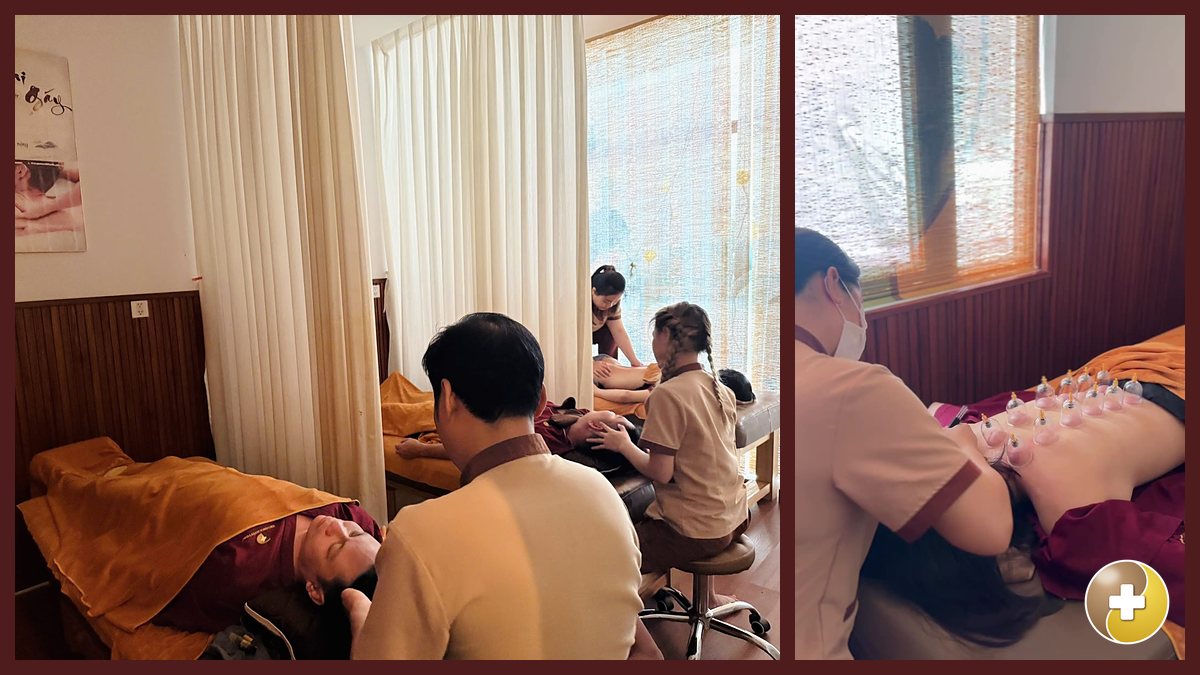
Quick answer: Back pain from elderly care work in Germany is usually mechanical: bending over low beds, turning and transferring residents, rotating shifts and cold winters keep the lower back tight. Raising the bed, lifting with your legs and recovery sleep help. On home leave, Tong Gia Acupoint Wellness in Ho Chi Minh City releases the muscles and applies acupressure.
Want Lương Y Tống Văn Huynh’s team to read your spine and posture in person?
Why elderly care work in Germany is so hard on your back
In Berlin, Leipzig, Dresden, Frankfurt, Stuttgart or Munich, the early shift (Frühdienst) in a care home usually starts around 6 a.m. From November to February it is dark before 5 p.m., the air hovers around freezing and a damp wind gets through your coat. Vienna, Graz and Linz in Austria, or Zurich, Basel and Bern in Switzerland, feel much the same: you wait for the tram or cycle in the cold, walk into a warm ward, and then spend the shift bending over beds, helping residents sit up, turning them, pulling them up the bed, changing sheets, helping with washing and dressing, and moving them from bed to wheelchair. Thousands of young Vietnamese have come to Germany for the three-year nursing apprenticeship (Ausbildung as Pflegefachfrau or Pflegefachmann), learning in class and working on the wards; qualified carers (Pflegefachkraft) work in care homes, hospitals or drive from house to house for home care services (ambulanter Pflegedienst). Many colleagues from the Philippines, India, Eastern Europe and elsewhere do the same job. After a year or two, the same sentence comes up again and again: my lower back is stiff, it aches when I bend over the sink in the morning, and after a late shift I cannot find a comfortable way to lie down.
From a Western medical point of view, most of this is mechanical back pain: muscles, tendons, ligaments, the small joints of the spine and the discs are loaded again and again, or once too heavily. It does not usually point to an internal organ problem. Care work has one feature that factory lifting does not: the load is not a box that stays still but a person who may weigh 60 to 90 kg and who can suddenly lean, slip or lose balance while you hold them. The force arrives without warning, often while your back is already bent and twisted, which is exactly when muscles and ligaments in the low back get overstretched. The areas that complain most are:
- The low back (L4–L5, L5–S1): leaning over a low bed, turning someone onto their side (Umlagern), pulling them up toward the headboard. This segment takes the most force when you bend with your arms holding weight away from your body.
- The sides of the waist: the quadratus lumborum links the lowest ribs to the pelvis. Supporting from one side, standing on one leg and pulling in one direction keep one side working all the time, so the ache is often one-sided.
- Shoulders and mid back: holding someone steady in the shower, lifting arms and legs while dressing, pushing wheelchairs and laundry or meal trolleys tire the trapezius, rhomboids and lats, sometimes up into the neck.
This article is about the carer's own back and shoulders, not about how to care for residents. To see how the neck, mid back and low back work together as one spine, start with the main guide on spine care after a long-haul flight.
Common causes: lifting people, turning people, shifts and long winters
- Transfers in a bent posture: the bed is not raised to hip height, you stand too far away and bend from the waist to lift. The more you bend and the further the load is from your body, the more pressure on the low back. Add a twist while turning someone into a wheelchair and the back can lock. The rule of keeping the load close and using your legs, explained in back pain after lifting something heavy, applies to people as well as boxes.
- Sudden loads: a resident slips or leans and you catch them by reflex. The back muscles are stretched in a split second before they can brace properly, and the pain often shows up a few hours later.
- Short staffing and rushing: a busy shift, no colleague free to help, skipping the slide sheet or the hoist to save time. It is a common story that few people mention.
- On your feet all shift: eight hours walking corridors, standing by beds, bending at sinks, pushing trolleys; home care staff add driving between houses and climbing stairs.
- Rotating shifts: early, late and night (Frühdienst, Spätdienst, Nachtdienst), sometimes a late shift ending near 10 p.m. followed by an early shift the next morning. Short sleep means the muscles never fully recover, and tiredness carries over from week to week.
- Cold and little daylight: long winters, early shifts in the cold, stiff muscles, and less time outdoors. Our article on winter fatigue from short days in Europe covers this side.
- Language, exams and homesickness: moving up to B1 and B2 German, mid-course and final exams, and end-of-shift documentation (Dokumentation) in a language that is still new. Stress makes the shoulders and back brace without you noticing, sleep gets lighter and pain feels stronger.
Then comes home leave (Urlaub). From Frankfurt there is a direct flight to Tan Son Nhat of roughly 12 hours; from Berlin, Munich, Vienna or Zurich you usually connect via Frankfurt, Doha, Dubai, Istanbul, Bangkok or Singapore, often 15 to 20 hours in total. Sitting cramped after months of bending over beds, then hauling gift-filled suitcases, long car rides to the family hometown and sitting on the floor for family meals all add to the load.
Other signs to notice
- Morning stiffness that eases after a few steps: tight low-back muscles after the shift.
- Pain on one side of the waist that gets worse when you twist or stand on one leg.
- Pain spreading into the buttock or back of the thigh: the low back and sacrum are where the nerve roots form the sciatic nerve. If it goes below the knee into the calf or foot with numbness, get it checked.
- Heavy shoulders, stiff neck, ache between the shoulder blades from holding and pushing.
- Heavy calves and sore heels at the end of the shift from hard floors and worn-out shoes.
- A cold low back, dislike of wind, more ache in cold weather, getting up at night to urinate: in Eastern wellness this is linked with weak Kidney yang (see the face reading section below).
- Broken sleep after night shifts, waking up tired and irritable: pain makes it hard to lie comfortably, and poor sleep slows muscle recovery.
The Tong Gia training notes stress that pain shows up in one place while the source is often elsewhere: low-back pain may come from the hips, from always standing on one leg, or from shoulders that tilt because you always support from the same side. That is why the practitioner reads the whole spine, not only the sore spot.
When to see a doctor
Most care-work back pain settles with rest, sleep, warmth and stretching. Please see a doctor at a medical facility, and do not rely on massage, if you have any of the following:
- Pain that started the moment you were supporting someone, with a "snap" feeling, and you cannot stand up straight; or pain after a fall or a slip on a wet floor.
- Pain that spreads below the knee, numbness in the calf or foot, leg weakness, or difficulty lifting the front of the foot.
- Numbness in the buttocks, groin or around the anus, or loss of bladder or bowel control: go to emergency immediately.
- Flank pain on one side with fever, chills, burning or blood in the urine.
- Back pain with fever, unexplained weight loss, ongoing exhaustion, or pain that gets worse at night even at rest.
- Pain in the middle of the back with chest pain, shortness of breath, cold sweats, or pain spreading to the jaw or left arm: call 112 in Germany, 144 or 112 in Austria and Switzerland, 115 in Vietnam. No massage.
- A swollen, painful, warm calf on one side after the flight or after days of little walking: this can be a deep vein clot. Get checked right away and do not have the leg massaged.
- Pain lasting more than 4 to 6 weeks despite rest and self-care, or pain that keeps getting worse.
- Pregnancy, recent surgery, osteoporosis, or specific instructions from your care team: ask them before any massage.
If the pain started at work, tell your shift lead so it can be recorded as a workplace accident (Arbeitsunfall), and get checked early; in Germany this record matters if you need time off or support later. Tong Gia does not read X-rays or MRI scans and does not make medical judgments or medical plans. If you have results from Germany, simply tell the practitioner so they know which areas to work gently or avoid.
This is a wellness service, not medical care. Huyệt Đạo Tống Gia is a traditional Vietnamese wellness practice working with the hands.
Describing back pain in German
Apprentices learn plenty of ward vocabulary, yet when it is your own back the words can vanish. A few short sentences for appointments, phone calls or your shift lead:
| German | Meaning | When to use it |
|---|---|---|
| Ich habe Rückenschmerzen. | I have back pain. | Opening sentence |
| Es tut hier weh. | It hurts here. | While pointing |
| Seit drei Tagen. | For three days. | When it started |
| Ich habe mich beim Heben verletzt. | I hurt myself while lifting. | Pain started at work |
| Der Schmerz strahlt ins Bein aus. | The pain spreads into my leg. | Buttock or thigh pain |
| Mein Bein ist taub. / Es kribbelt. | My leg is numb. / It tingles. | Numbness |
| Es war ein Arbeitsunfall. | It was a workplace accident. | Injury on shift |
| Hexenschuss | Sudden acute low-back pain | The everyday German word for a locked back |
Eastern face reading: the low back and the Kidney, tendons and the Liver
Vietnamese face reading (Y Tướng Học) rests on the idea that what is inside shows on the outside. Lương Y Tống Văn Huynh organized this knowledge so practitioners can read signs on the face and body before their hands touch the spine. For people who have bent over beds and rotated shifts for years, three organ systems are usually compared.
Kidney and the low back. In the Tong Gia training, the Kidney governs the bones and marrow, opens into the ears, shows in the hair, relates to the low back and knees and corresponds to winter. Full, rosy ears, healthy hair and a steady back are a good base; tired knees, a cold low back, ringing ears, hair loss and forgetfulness are signals to keep the waist warm and rest properly. Weak Kidney yang shows as feeling cold, cold hands and feet, a cold aching back and knees, and night-time urination, very common in people who walk to early shifts through several winters. The notes also say that sleeping before 11 p.m. nourishes yin and lets the Kidney rest. That is hard on night shifts, so recovery sleep after a night shift matters even more.
Liver and the tendons. The Liver governs the tendons and ligaments; when it is strong they stay supple, when it is depleted muscles cramp and stiffen. The Liver also stores blood: at rest, blood returns to the Liver to be replenished; in activity it is sent out to the muscles and tendons. Constant shift changes and little real rest leave the long back muscles tight, the eyes dry and the temper short. People with a "Thân" face shape (wide in the middle, narrower at forehead and chin, broad cheekbones) are noted to carry tension around T7–T9.
Spleen and the muscles. The Spleen nourishes muscle and limbs. Rushed meals between tasks, late dinners after the late shift and worry about exams and paperwork tire it out, and the notes link heavy worry with palpitations, poor sleep and poor appetite. People with a square, fleshy "Điền" face often have thick back muscles that tighten in large patches around T11–T12.
Signs that call for a closer look at the low back. Faces wider at the jaw than the forehead ("Do") and round faces ("Viên") are checked first at the low back and hips; round faces often have a cool lower back with soft muscle tone. A very lean frame with prominent cheekbones and nose bridge is linked in the notes with Liver and Kidney yin deficiency, tight tendons and dry discs. A crooked nose bridge often goes with an uneven spinal axis and uneven load at L4–L5–S1, which the practitioner then checks by hand. This is observation for wellness care, not fortune telling and not a judgment about illness.
Spinal segments and reflex areas linked to care-work back pain
| Segment | Nerves / function (anatomy) | Typical complaint in care work | Organ (Eastern view) | Signs (face reading) |
|---|---|---|---|---|
| C5–C7 | Roots of the brachial plexus to shoulder, arm and hand | Heavy shoulders, tired arms after holding residents in the shower or pushing wheelchairs | Liver governs tendons | Tight shoulder muscles, dry eyes, knitted brows |
| T7–T9 | Middle intercostal nerves, upper abdominal wall; Liver Shu area | Tight long back muscles after pulling people up the bed | Liver | Broad cheekbones ("Thân" face), irritability, tired eyes after nights |
| T11–T12 | Nerves to the lower abdominal wall; Spleen Shu, Stomach Shu | Heavy mid back, bloating after rushed meals | Spleen–Stomach | Pale lips; thick back muscles ("Điền" face) |
| L1–L3 | Roots to groin and front of thigh; psoas attachment; kidneys lie at T12–L3; Kidney Shu and Mingmen at L2 | Stiff when standing up, cold aching back on early winter shifts | Kidney | Thin dull ears, dry hair, cold waist; round face |
| L4–L5 | Roots contributing to the sciatic nerve; discs under the most load when bending | Band of pain across the low back after turning or transferring someone | Kidney–Bladder | Thick waist and hips ("Do" face), crooked nose bridge |
| S1–S5 | Roots to buttock, back of thigh and lower leg; pelvic and bladder nerves | Buttock ache, tight hamstrings, heavy calves after long shifts | Kidney–Bladder | Cold hollow lower back ("Giáp" face) |
The table shows "related" areas so the practitioner knows where to read carefully by hand; it does not state a cause. For a general overview of low-back causes, see what causes lower back pain.
Want Lương Y Tống Văn Huynh’s team to read your spine and posture in person?
How Tong Gia helps rebalance your back on home leave
Each session follows the spinal nerve reflex balancing massage method developed by Lương Y Tống Văn Huynh, founder of Huyệt Đạo Tống Gia (Tong Gia Acupoint Wellness), with over 13 years in Vietnamese traditional wellness, face reading and spinal reflex work. It is a Vietnamese method done with the hands, and the goal is to help rebalance each spinal area and support the related organ functions. You spend the year looking after other people; this hour is someone looking after you.
- Talk and observe: care home or home care, how many years, how you usually transfer people, which shifts, where it hurts, whether it spreads into the leg, any locked-back episodes at work, any results from Germany. Then complexion, ears, nose bridge, posture and the tilt of shoulders and hips.
- Reading the spine by hand: four things are read (skin temperature, the muscle layer, the shape of the spine and sensation at each point), left against right, top against bottom, from neck to sacrum, narrowing down from survey area to key zone and key point. Carers who always support from one side usually have one side of the waist and one shoulder thicker and tighter.
- Muscle release: the erector spinae along the spine, quadratus lumborum, glutes and hamstrings, then shoulders, neck and the area between the shoulder blades. Pressure builds from light to firm across five levels, and you are asked how it feels.
- Acupressure in the right places: Kidney Shu, Mingmen and Zhishi on the low back; Liver Shu and Spleen Shu on the mid back; Weizhong behind the knee. Each point is worked until the skin turns from dry to slightly moist, then the practitioner stops.
- Self-care to take back: a five-minute back stretch before and after shifts, warming the low back before bed, and how to sleep after a night shift.
You may feel tenderness at a few points beside the low back, in the buttocks and behind the knees, usually where muscle is tight; as it softens the tenderness fades and the back feels warm. Many people fall asleep halfway through, simply because it has been a long time since they could lie still without watching over someone else. Afterwards many find bending easier and sleep deeper that night; some feel a little sore for a day before it eases. Everyone responds differently, and there is no promise of being pain-free after one session.
Suitable services and prices:
- Neck–shoulder / back–waist care, 60 min: 550,000 VND (about 18 EUR / 21 USD), first visit 399,000 VND (about 13 EUR / 15 USD); 90 min: 750,000 VND (about 25 EUR / 29 USD). The 90-minute option suits people tired in both shoulders and back.
- Kidney wellness, 75 min: 750,000 VND (about 25 EUR / 29 USD), for a cold, dull aching back, tired knees and night-time urination.
- Tired, heavy legs care, 60 min: 500,000 VND (about 17 EUR / 19 USD), for heavy calves and sore heels; book from day two onward, never with a swollen painful calf.
Reference rates: 1 EUR ≈ 30,000 VND, 1 USD ≈ 26,000 VND; payment is in VND. Full list on the price page.
From Tan Son Nhat airport: the District 12 branch (225 Dương Thị Mười, Tân Chánh Hiệp Ward) lies north of the airport and the drive is usually short, depending on traffic. The Vinhomes Grand Park branch (Căn T16-21 khu Manhattan, Long Bình Ward, Thủ Đức City) is further and takes longer, especially in the evening rush. If you want to stop on the way from the airport, see massage near Tan Son Nhat airport.
Suggested plan for your home leave and self-care
| When | What your back needs | What to do |
|---|---|---|
| Last week in Germany | No extra load | Ask colleagues to help with heavy transfers, use the hoist and slide sheets, pack reasonable suitcases, avoid a night shift right before the flight |
| On the 12–20 hour journey | Change position | Rolled jacket behind the low back, stand and walk every 1–2 hours, calf raises, sip water, walk during connections |
| Arrival day | Loosen up, sleep on local time | Let family lift the bags, warm shower, easy walk; Vietnam is 6 hours ahead of Germany in winter, 5 in summer |
| Days 2–3 | Release months of bending | A 90-minute back–waist session or 75-minute Kidney wellness; warm the low back at night |
| Family visits | No long floor sitting | Chairs with back support, breaks on long car rides, no carrying heavy offerings alone |
| Mid-trip | Keep fatigue from piling up | One more back session, or legs care if calves still feel heavy |
| 2–3 days before flying back | Prepare for new shifts | A gentle session, practise the stretches; read preparing your body before a long flight |
- Bring the work to hip height: raise the bed, stand close, feet shoulder-width, bend knees and hips rather than the back, turn with your feet instead of twisting. For heavier residents, wait for a colleague or use the equipment provided.
- Warm up before the shift: 3–5 minutes of hip circles, side bends, gentle back extension and marching on the spot, especially on cold early shifts.
- Sleep properly after nights: blackout curtains and one long sleep instead of several short naps. See acupressure points for sleep on rotating shifts.
- Warm the Kidney Shu area: rub your palms until warm, place them on both sides of the low back and rub up and down 50–100 times. A 15–20 minute warm foot soak also helps sleep.
- Warm layers and good shoes: thermal layers covering the waist, a dry shirt if you sweat, cushioned work shoes with fresh insoles. More easy moves in back pain exercises at home.
Book from Germany, Austria or Switzerland before you fly
You can book while still in Berlin, Munich, Vienna or Zurich. Call, Zalo or WhatsApp +84 888 264 559 (0888 264 559 inside Vietnam) and send three things: your landing date and time at Tan Son Nhat, where it aches (low back, one side of the waist, into the buttock, or shoulders too) and which branch you prefer. Messages sent during Vietnamese daytime get faster replies. Family in Ho Chi Minh City can also book ahead for you. Or use online booking; tips for booking from overseas are in booking a massage in Saigon from abroad.
- District 12 branch: 225 Dương Thị Mười, Phường Tân Chánh Hiệp (Tân Chánh Hiệp Ward), Ho Chi Minh City. Open 8:00–19:00 daily.
- District 9 branch: Căn T16-21 khu Manhattan, Vinhomes Grand Park, Phường Long Bình (Long Bình Ward), TP. Thủ Đức (Thủ Đức City). Open 9:00–20:00 daily.
The weeks before Tet fill up quickly, so message early. Genuine customer reviews are on Google Maps for each branch. If you work in cold storage in Germany, see also stiff hands and back from cold storage work.
Visit us
- Đông Y Huyệt Đạo Tống Gia Quận 12 (District 12)
225 Dương Thị Mười, Phường Tân Chánh Hiệp, Quận 12, HCMC · 8:00–19:00 daily · 0888 264 559 · Directions on Google Maps - Đông Y Huyệt Đạo Tống Gia Quận 9 (Vinhomes Grand Park, District 9)
Căn T16-21 khu Manhattan, Vinhomes Grand Park, Phường Long Bình, TP. Thủ Đức, HCMC · 9:00–20:00 daily · 0888 264 559 · Directions on Google Maps
Map of our two branches
Want Lương Y Tống Văn Huynh’s team to read your spine and posture in person?
What guests say on Google Maps
“They look after guests attentively and warmly; I will come back often.” (translated from a Vietnamese review)
— Thông P., Google Maps review · District 12 branch · 08/2026 · See on Google Maps
“The team here are lovely, attentive and thoughtful; a cosy space and good skills.” (translated from a Vietnamese review)
— Phi H., Google Maps review · District 12 branch · 2025 · See on Google Maps
Quoted from public reviews, shortened where marked (…). Experiences vary from person to person; reviews are not a substitute for seeing a doctor when something feels wrong.
Related guides for your trip
- Back pain and numb legs from long-haul trucking in Europe: why it happens and back care on a trip to Vietnam
- Childcare work in Australia, lifting toddlers: back and knee pain, and what to do on a trip to Vietnam
- Which Tong Gia branch to visit on a Ho Chi Minh City trip: District 12 or Vinhomes Grand Park
FAQ
I do elderly care work in Germany and my back hurts. How should I look after it when I go home? Rest on arrival day, sleep on Vietnam time and walk gently. From day two, a 60–90 minute back–waist session or 75-minute Kidney wellness can help the muscles let go; warm the low back at night and avoid heavy lifting. If pain spreads below the knee with numbness, or comes with fever or trouble urinating, get checked first.
Is back pain from working in a German care home serious? Usually it is mechanical strain from bending, transfers, walking all shift and rotating shifts, and it eases with rest, sleep, warmth and stretching. If it began with a sudden lock while supporting someone, keeps getting worse after 4–6 weeks, or comes with leg numbness, get checked and tell your shift lead.
I'm a Pflege apprentice in Berlin. What should I do after hurting my back lifting a resident? Pause heavy tasks, use warmth and keep moving gently rather than lying still all day. Report it to your shift lead so it is recorded as an Arbeitsunfall, and get checked early. On later shifts raise the bed to hip height, use the hoist or a colleague, and turn with your feet.
Why does my lower back feel cold and achy in winter in Vienna or Zurich? Cold muscles are less elastic and strain more easily when you bend before warming up. In the Eastern view the Kidney corresponds to winter, and weak Kidney yang shows as a cold aching back and knees. Thermal layers over the waist, a warm-up before shifts and rubbing the low back warm at night help.
Can I get a back massage right after flying in from Frankfurt? If you slept on the plane, a gentle session on landing day is fine. Most people rest one night and come the next day. If one calf is swollen and painful after the flight, get checked first and skip leg massage.
How much does back care cost at Tong Gia? Neck–shoulder / back–waist care is 550,000 VND for 60 minutes (399,000 VND first visit) and 750,000 VND for 90 minutes; Kidney wellness 75 minutes 750,000 VND; tired legs care 60 minutes 500,000 VND. Payment is in VND; 1 EUR is roughly 30,000 VND.
Author: Lương Y Tống Văn Huynh – founder of Huyệt Đạo Tống Gia, a master of traditional Vietnamese wellness with over 13 years in Eastern wellness care, Y Tướng Học (face reading) and spinal nerve-reflex balancing massage.
Updated: 2026-11-17
Related guides
- Back pain from packing up before moving back to Vietnam: boxes, garage sales, the container and a long flight
- Back and shoulder pain from landscaping work in the US: vibration, digging, heat and care on a trip home
- Back pain from elderly care work in Germany: causes, when to get checked and back care on home leave
- Back and wrist pain from greenhouse farm work in Korea: lower back, knees, wrists and care on home leave
- Fatigue from cleanroom suits on long shifts: heat, heavy shoulders and back, dry skin in chip plants
- Parents' back pain after a long flight with young kids: lower back, shoulders and wrists
This is a wellness service, not medical care.