
Knee and back pain from bike food delivery in Europe: saddle, delivery box or cold rain, and care in Saigon
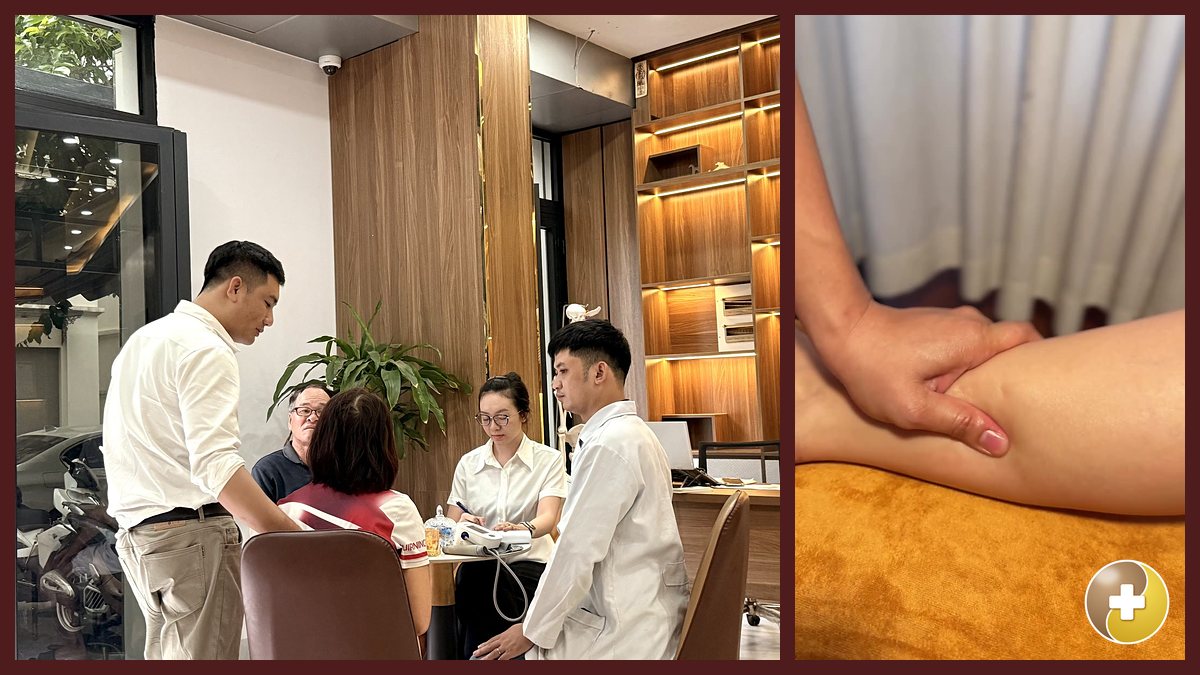
Quick answer: Knee and back pain from bike food delivery in Europe usually comes from 6–10 hours of pedalling a day, a saddle that does not fit, hills, sudden braking and a delivery box on your back in cold rain. A knee that swells after a fall, locks, or a weak, numb leg needs a medical check. Tong Gia Acupoint Wellness in District 12 and Thu Duc, Ho Chi Minh City, cares for knees, back and neck when you visit.
Want Lương Y Tống Văn Huynh’s team to read your spine and posture in person?
Knee and back pain from bike food delivery in Europe: what is going on
If you have ridden for a delivery app in Berlin, Paris, London or Amsterdam, you probably know the pattern. You log in, collect an order, race to the customer, ride back to the waiting spot and repeat, often for six to ten hours. Berlin gives you long straight roads and side winds; Paris has cobblestones and the climb to Montmartre; London means heavy traffic and a red light every few hundred metres; Amsterdam is flat, but the headwind off the sea and the tram tracks make up for it. After a few months the body starts to complain: the front of the knee aches on climbs, the stairs feel sore in the morning, the lower back is so tired that you keep rising off the saddle, and the neck is stiff from looking up at the road while your back is bent over the handlebars.
In Western anatomy the knee is formed by the lower end of the thigh bone, the top of the shin bone and the kneecap in front. On a bike, the quadriceps at the front of the thigh do most of the work, pushing the pedal down through the patellar tendon, and with every turn the kneecap slides up and down its groove on the thigh bone. A long shift can mean tens of thousands of pedal strokes. That is why delivery riders' knee pain is mostly repetitive overload: of the joint between kneecap and thigh bone, the patellar tendon, the tendons on the inner side of the knee and the iliotibial band on the outer side, rather than a knee that has suddenly "worn out".
The lower back carries a different load. A rider sits folded forward for hours, so the long back muscles hold that position all shift, while cobbles, potholes and hard braking jolt the spine. The neck tilts back to watch the road, the shoulders round forward to hold the bars, and the insulated delivery box pulls the shoulders down and back. Knees, lower back and neck therefore tend to tire together; the only difference is which one complains first.
Who notices it most:
- students riding evenings and weekends, including exam season, on too little sleep;
- young newcomers working two apps at once to make ends meet, with few days off;
- riders on second-hand bikes whose saddle and handlebars were never adjusted;
- riders on heavy e-bikes, pushing off again after every red light;
- anyone who has slipped on a wet road or tram track, twisted a knee and kept working.
Then comes a trip home or a holiday in Vietnam. From Paris, Frankfurt or London there are often direct flights to Ho Chi Minh City of roughly 12–13 hours; from Berlin or Amsterdam most people connect, so the journey is longer. Knees used to bending all day are now locked in an airline seat. You land at Tan Son Nhat (Tân Sơn Nhất) airport into Saigon's dry-season heat, ride pillion on a motorbike, sit on low plastic stools and help clean the house before Tet. This article is part of the Tong Gia Acupoint Wellness (Huyệt Đạo Tống Gia) programme for overseas Vietnamese and long-haul visitors. The overview of neck and back care after hours in a plane seat is in the main guide, spine care after a long-haul flight. For cycling knee pain in general (sport or commuting), see knee pain when cycling.
Common causes: saddle, delivery box, hills, hard braking and cold rain
- Too many hours in the saddle. Six to ten hours a day, sometimes six or seven days a week in winter when orders peak. Tendons get too little rest between shifts to adapt to the load.
- A saddle that does not fit. Too low, and the knee bends deeply on every stroke, pressing the kneecap into the thigh bone: pain at the front of the knee. Too high, and you reach for the pedals with your hips rocking, which strains the back of the knee and the lower back. A saddle set too far forward or back also shifts the load to the wrong place.
- Feet and knees falling inward. A foot placed crooked on the pedal, or a knee that drops towards the frame when you push hard, strains the tendons on the inner knee; a knee that flares outward makes the iliotibial band rub more on the outer side.
- Hills in a heavy gear. Climbing in a hard gear, or standing on the pedals to make the delivery window, multiplies the force on the patellar tendon. Paris and London have plenty of slopes; in Amsterdam a long headwind feels much the same.
- Stop, brake, push off, repeat. Every red light, pedestrian or bus means braking, putting a foot down and then a hard push from standstill. Sudden braking also throws your weight forward, jerking the shoulders, wrists and lower back.
- The delivery box. A full insulated box can weigh several kilos. The straps press on the upper trapezius and pull the shoulders back, while the riding posture pulls them forward, so the neck and shoulder-blade muscles hold two opposing forces all shift.
- Bent back, extended neck. Low handlebars mean a deeply bent back; to see the road, the neck tilts up. The lower neck and upper back stay loaded for hours.
- Cold rain and wet clothes. European winters bring early darkness, drizzle and temperatures around 0–8°C. Cold narrows the blood vessels in the limbs, so the tissues around the knee get less warm blood and lose elasticity; wet trousers stuck to the knee make it colder still. More in knee pain in cold weather.
- Irregular meals and sleep. Quick bites between orders, too little water because toilets are hard to find, short nights when you study and work. Thigh and calf muscles cramp more easily and recover slowly.
- No warm-up, no stretching. Straight onto the bike, straight into bed afterwards: the front and back of the thighs and the buttocks slowly shorten.
On a trip to Vietnam, add the long flight that shortens the hamstrings, long motorbike rides with bent knees, squatting to clean the family altar and a lot of walking with friends. The knees have left the saddle but have not yet truly rested.
Signs worth noting
Where the knee hurts often hints at where the load is going wrong. Use this table to observe yourself, not to label a condition:
| Where it hurts | Typical feeling | Often linked to | Watch for |
|---|---|---|---|
| Front of the knee, around the kneecap | Aches on climbs, down stairs, standing up after sitting | Low saddle, heavy gears, standing on the pedals | Swelling, or grinding with steadily rising pain |
| Just below the kneecap | Hurts when you start riding, eases once warm, returns after the shift | Patellar tendon under repeated push-offs | Pain lasting several weeks: get it checked |
| Inner knee | Sore when pushing hard or turning | Knee dropping inward, crooked foot position | Locking or giving way when you twist: get checked |
| Outer knee | Burning or sharp pain after a long ride | Iliotibial band rubbing, knee flaring out, saddle off-centre | Pain running up the outer thigh to the hip |
| Back of the knee | Pulling behind the knee, tight calves | Saddle too high, short hamstrings, a long flight | One calf swollen, warm and red: get checked at once |
Along with the knees, delivery riders often notice: a tired lower back that is stiff when you bend to tie your shoes; a stiff neck and shoulder blade, worse on the side where the strap is tighter, sometimes spreading into a headache (see stiff neck after a long flight); tingling fingers and tired wrists from leaning on the bars over cobbles; numb buttocks or back of the thighs after sitting still on the saddle; night cramps in the calves; and weak knees on descents, covered in weak knees walking downhill.
When to see a doctor
If knee or back pain from delivery riding comes with any of the following, please see a doctor at a medical facility rather than relying on massage:
- A fall from the bike followed by a knee that swells within hours, a "pop" inside the knee, or a blow to the head (even with a helmet) followed by headache, nausea or dizziness.
- A locking knee that will not straighten, or one that suddenly gives way.
- You cannot bear weight on the leg, or the knee looks visibly deformed.
- A swollen, hot, red knee that hurts at rest, with fever or chills.
- Clear weakness or numbness in the leg, pain from the lower back into the leg with muscle weakness, numbness around the groin or bladder changes.
- Persistent numb or weak hands, dropping things, not easing after several days off the bike.
- One calf swollen, warm and red, more painful when walking, especially in the weeks after a long flight: this can be deep vein thrombosis. Get checked straight away and do not massage that leg.
- Sudden breathlessness, chest pain, coughing blood or a racing heart after the flight, or crushing chest pain, shortness of breath and cold sweats: call 115 (Vietnam's ambulance number) immediately; do not ride a motorbike to hospital.
- Night pain, weight loss or lasting tiredness without a clear reason: have a check-up at a medical facility as well.
At Tong Gia, practitioners ask about these signs before touching the knee or back; if any are present, they stop and recommend a medical check. Tong Gia does not read X-rays or MRI scans and does not draw up medical plans; if a specialist is following your knee or spine, wellness work is only done with their agreement.
This is a wellness service, not medical care.
The Y Tướng Học view: Liver governs the sinews, Kidney holds the back and knees, Spleen feeds the thighs
In the Tong Gia course, the Liver (Can) in Vietnamese Eastern wellness is a system of functions summed up as "the Liver governs the sinews": it nourishes tendons and ligaments and supports movement. When it is strong, tendons are supple and joints move freely; when it is weak, muscles tighten, cramp, tremble and lose flexibility. The course also says the Liver "stores blood": at rest, blood returns to the Liver to be replenished, and in movement the Liver sends it to the muscles and tendons. A rider who pedals all day and sleeps little is working the tendons hard while giving them little time to be replenished.
The Kidney (Thận) is linked to the bones and marrow and to the lower back and knees; when it is weak, the back and knees tire and standing quickly becomes tiring. Kidney Yang weakness is described as feeling the cold, cold hands and feet, a cold and achy lower back and knees, and the course advises keeping the lower back, belly and feet warm. Hours in cold European rain with wet clothes stuck to your back and knees put exactly this kind of strain on the body's ability to keep the back and knees warm and steady.
The Spleen (Tỳ) "governs the flesh and the four limbs": a strong Spleen means firm muscles and strong limbs, a weak one means slack muscles and tired arms and legs. Rushed, cold meals between orders tend to tax the digestive system, so the thighs tire sooner even when you ride at the same pace. The course also describes the Gallbladder meridian as helping with pain in the head, neck and shoulders, so a neck stiffened by the delivery box is seen within the Liver–Gallbladder pair.
To be clear, this is the functional language of Eastern wellness. It does not mean your liver, kidneys or spleen are diseased. In Western terms the sore knee is still overloaded tendons and joint; the Eastern view adds a picture of whether the body is being replenished enough.
Y Tướng Học, the Vietnamese art of reading outer signs, says: "the signs are outside, the organs are inside". Lương Y Tống Văn Huynh, founder of Tong Gia, systematised it so practitioners can look first and know which part of the spine to read most carefully. Signs worth noting in delivery riders:
- Liver signs: tired, dry eyes, thin or ridged nails that break easily, frequent cramps, a tight neck, irritability when tired.
- Kidney signs: tired knees, a cold lower back, hair loss, dark circles after late nights; the course notes that thin, soft ear rims often go with an achy back and knees and sensitivity to weather changes.
- Spleen signs: pale lips, soft muscles, a heavy body, tired limbs despite a young age.
- Posture: rounded shoulders, the head pushed forward, one shoulder lower from the strap, knees drifting together when standing.
These are only hints to guide where to read; they are not conclusions about illness and are never used to judge anyone.
Spine segments and nerve-reflex zones linked to the knees, back and neck
In the Tong Gia course on spinal nerve-reflex balancing, the muscle–bone–joint group is worked through the C5–C7, L1–L5 and S1–S5 zones. In Western anatomy, the L2, L3 and L4 nerve roots form the femoral nerve, which drives the quadriceps, the main pedalling muscle; L4 takes part in the knee-jerk reflex. Roots L4–S3 join the sciatic nerve, supplying the hamstrings and calves. In the neck, C5–C7 roots run to the shoulders, arms and forearms, the very areas that hold the bars and carry the box straps.
| Segment | Nerves / function (Western anatomy) | Typical complaints in delivery riders | Organ | Outer signs (Y Tướng Học) |
|---|---|---|---|---|
| C5–C7 | Lower neck roots to shoulder, arm, forearm and fingers; neck and trapezius muscles holding the head up | Stiff neck, tired shoulder blade on the strap side, tingling fingers on the bars | Liver–Gallbladder (neck and shoulders) | Rounded shoulders, one shoulder lower, tired eyes |
| D9–D10 | Mid-to-lower thoracic roots; mid-back muscles; Can du (BL18) area | Tight tendons around the knee, night cramps | Liver (sinews) | Ridged, thin nails, frequent cramps |
| D11–D12, L1 | Lower thoracic and upper lumbar roots; lower back and abdominal wall; Tỳ du (BL20) area | Thighs tire quickly, heavy legs after a shift | Spleen (flesh, limbs) | Pale lips, soft thighs, heavy body |
| L2–L3 | Roots of the femoral nerve; sensation of the front and inner thigh down to the knee; Thận du (BL23), Mệnh môn (GV4) | Cold, tired lower back after rainy shifts; tired front thighs | Kidney (back and knees) | Thin ear rims, lower back cool to the touch |
| L3–L4 | Femoral nerve to the quadriceps; L4 in the knee-jerk reflex | Pain around and below the kneecap on climbs and push-offs, down stairs | Kidney and Liver | Uneven lower-back muscles, knees drifting together |
| L5–S1 | Roots of the sciatic nerve; buttocks, hamstrings, calves; Bladder meridian behind the knee (Ủy trung) | Tight back of the knee, numb buttocks, hard calves | Kidney–Bladder, Liver | Cool lower-back skin, tight calves |
The table shows related zones to guide care, not a way to label disease. Cycling knee pain is mainly about overloaded tendons and posture; the spine is read because the nerves to the thighs, buttocks and shoulders leave from there, and once the lower back, buttocks, thighs and shoulders relax, the knee and shoulder are pulled from fewer directions.
How Tong Gia helps rebalance the knees, lower back and shoulders
The method was developed by Lương Y Tống Văn Huynh over more than 13 years of Vietnamese Eastern wellness, Y Tướng Học and spinal nerve-reflex balancing. It is a Vietnamese traditional approach worth experiencing while you are in Ho Chi Minh City. Three core steps: read outer signs to see which organ is signalling, read the spine by hand to find the zone, then care for each spinal zone and organ function. The aim is to help the body rebalance so the knees, back and neck feel lighter, never to replace a medical check. A session for a rider just back from months on the bike:
- Safety questions: hours per day, months of riding, any falls, one knee or both and which side of the knee, swelling or locking, lasting numbness in the hands, flight date, health conditions. Any warning sign ends the session here.
- Observation by Y Tướng Học: complexion, ear rims, lips, nails, shoulder height, how far the head sits forward; how you sit down, stand up and step down, and whether the knees drift together.
- Reading the spine by hand: pressing, stroking, pushing and rolling to sense the course's four objective factors: skin temperature, the muscle layer, the shape of the spine and your own sensations, from the neck to the sacrum, comparing left and right and separating "excited" areas (warmer, knotted, tender) from "suppressed" ones (cooler, slack). Long-time riders often have knotted lower-back muscles, and C5–C7 and the shoulder blade on the strap side feel tighter.
- Releasing the muscles: neck, trapezius and shoulder blades; then lower back and buttocks; then the quadriceps, inner and outer thigh, hamstrings and calves. Around the knee the pressure is moderate along the edges of the kneecap, the patellar tendon and the side tendons; the course includes a slow "screw compression" technique for the knee and hip, guided by your feedback. Swollen spots are left alone.
- Acupressure on the right points: on the back Can du (BL18), Tỳ du (BL20), Thận du (BL23), Mệnh môn (GV4); on the legs Túc tam lý (ST36), Âm lăng tuyền (SP9), Khúc tuyền (LR8) for weak tendons and cramps, Thái khê (KI3), Thái xung (LR3) and Ủy trung (BL40) behind the knee, following the course's saying "for back pain, look to Ủy trung". Cool skin is warmed and hot skin cooled, and work on a point stops once the skin turns from dry to slightly moist.
- Self-care tips: post-shift stretches for the front and back of the thighs and the buttocks, self-pressing Túc tam lý, warming the lower back, and how to balance the box straps.
What a typical session looks like: riders usually come on day two or three after landing, once they have slept off the flight. After the safety questions, the practitioner checks your shoulders standing, then asks you to sit and stand a few times. Lying face down, the practitioner's hands travel along the spine: the lower back is often knotted, the muscles at L3–L4 uneven, one shoulder blade as stiff as a board. The neck and shoulders are warmed and released first, then the lower back, buttocks, hamstrings and calves; you then turn over for the front of the thighs and the area around the knees. Points on the back and legs come last, followed by two or three stretches to take back to Europe.
Suitable services (prices in VND, approximate conversions at a reference rate, payment in VND; see prices):
- Heavy, tired legs care, 60 min: 500,000₫ (about 19 USD or 17 EUR). Lower back, buttocks, thighs, around the knees, calves and feet; when sore knees and heavy thighs are the main issue.
- Neck and shoulder or lower back care, 60 min: 550,000₫, first visit 399,000₫ (about 21 USD or 18 EUR; first visit about 15 USD or 13 EUR). Choose neck and shoulders when the strap side is stiff and aches into the head, lower back when it is tired and cold after rainy shifts.
- Cold-dispelling cupping, 30 min: 85,000₫ (about 3 USD or 3 EUR), added to a session for a cold lower back after a winter of riding in the rain.
From the airport: the District 12 branch is in the same northern part of the city as Tan Son Nhat airport, not a long drive, though timing depends on traffic. The Vinhomes Grand Park branch in Thu Duc City is further away and takes longer by car, especially at rush hour; it suits families staying in Thu Duc or the east of the city.
What you will feel: the neck, shoulders and lower back warm up gradually; at tight points around the kneecap, the inner knee and the shoulder blade there is a mild, pleasant ache, which the course calls "creating a sensation wave": an even rhythm of pressure lets the muscle tighten and release so the body can readjust. Many young riders fall asleep in the second half after months of short nights. Afterwards, standing up and turning the head often feel easier, though results vary, and Tong Gia does not promise the pain will be gone after one session. Back at work, bike fit, stretching and rest still do the main job.
Want Lương Y Tống Văn Huynh’s team to read your spine and posture in person?
A suggested plan for your Tet trip, plus after-shift self-care
A plan for a two-to-three-week visit; adjust it to your family schedule. A full week plan is in a 7-day wellness plan for a Tet visit, and before flying back read how to prepare your body before a long flight.
| When | For knees, back and neck | Note |
|---|---|---|
| 1–2 weeks before flying | Fewer long shifts, add rest days; stretch thighs and buttocks every evening | Swollen knee after a fall: get checked before you fly |
| On the flight | Walk the aisle every 1–2 hours; straighten the knees and flex the ankles in your seat | Keep your backpack out of the legroom |
| Landing day | Easy walking, steady water, warm shower, sleep on Vietnam time | No squatting or heavy lifting yet |
| Days 2–3 | One legs session or neck-and-shoulder / lower back session | Tell us where the knee hurts and which shoulder carries the strap |
| Week 1 | Walks in the cool morning or evening; 10 minutes of stretching daily | Limit low stools and long motorbike rides |
| Tet days | Clean the house standing or on a chair with a backrest; drink enough | Go easy on beer and late nights |
| 2–3 days before flying back | A gentle session for legs and back; sleep well | Write down the stretches for after your shifts in Europe |
- Saddle height, in general terms: with the pedal at its lowest point the knee should still be slightly bent, not locked straight, and your hips should not rock on the saddle. A low saddle tends to hurt the front of the knee, a high one the back. If unsure, ask a bike shop to set the saddle and handlebars.
- Light gears, quick cadence: shift down before a climb rather than standing on a heavy gear, and start from a red light in a light gear.
- Balance the box: tighten both straps evenly so the box sits close and does not sway; use a rear rack if your platform allows.
- After every shift: change out of wet clothes, keep the knees and lower back warm, stretch the front and back of the thighs and the buttocks for 30 seconds each side, soak the feet in warm water for 10–15 minutes, press Túc tam lý below the knee and rub the lower back warm.
- Food and rest: carry a water bottle, eat a warm meal instead of cold snacks, and keep at least one full day off a week.
A knee that is hot, red and swollen should not be soaked in hot water or massaged; get it checked first.
Booking from abroad before you fly
- District 12: 225 Dương Thị Mười, Phường Tân Chánh Hiệp (Tan Chanh Hiep ward, District 12), 8:00–19:00 daily.
- Vinhomes Grand Park: Căn T16-21 khu Manhattan, Phường Long Bình, TP. Thủ Đức (unit T16-21, Manhattan area, Long Binh ward, Thu Duc City, formerly District 9), 9:00–20:00 daily, handy after an afternoon landing.
From Berlin, Paris, London or Amsterdam you can book before you travel: WhatsApp or Zalo +84 888 264 559 (0888 264 559 in Vietnam), or use online booking. Send your landing date and time, where it aches (which knee and which side of it, lower back, which shoulder), how many hours you usually ride, any falls, and your preferred branch. More tips in how to book a massage in Saigon from abroad. Family in Ho Chi Minh City can book for you. Slots fill quickly before Tet, so message early.
Visit us
- Đông Y Huyệt Đạo Tống Gia Quận 12 (District 12)
225 Dương Thị Mười, Phường Tân Chánh Hiệp, Quận 12, HCMC · 8:00–19:00 daily · 0888 264 559 · Directions on Google Maps - Đông Y Huyệt Đạo Tống Gia Quận 9 (Vinhomes Grand Park, District 9)
Căn T16-21 khu Manhattan, Vinhomes Grand Park, Phường Long Bình, TP. Thủ Đức, HCMC · 9:00–20:00 daily · 0888 264 559 · Directions on Google Maps
Map of our two branches
Want Lương Y Tống Văn Huynh’s team to read your spine and posture in person?
What guests say on Google Maps
“Careful care, warm advice, professional.” (translated from a Vietnamese review)
— Nhã Tịnh H., Google Maps review · Vinhomes Grand Park branch (District 9) · 04/2026 · See on Google Maps
“Friendly staff. A good experience. I will recommend it to my friends to try too.” (translated from a Vietnamese review)
— Phượng H., Google Maps review · Vinhomes Grand Park branch (District 9) · 01/2026 · See on Google Maps
Quoted from public reviews, shortened where marked (…). Experiences vary from person to person; reviews are not a substitute for seeing a doctor when something feels wrong.
Related guides for your trip
- Getting a massage in Saigon without speaking Vietnamese: phrases, messaging ahead and a Tong Gia session
- Back pain and numb legs from long-haul trucking in Europe: why it happens and back care on a trip to Vietnam
- Used to European thermal spas? How Vietnamese massage differs: session length, warmth, pressure and prices
FAQ
Is knee and back pain from bike food delivery in Europe something to worry about? Usually it is overloaded tendons around the knee and tired back muscles from 6–10 hours of riding, a poorly fitted saddle, hills, hard braking and a box on your back in cold rain. Rest, bike fit and stretching often help it settle. A knee that swells after a fall, locks, or a weak, numb leg needs a medical check.
I deliver by bike in Berlin all winter. Why does the front of my knee hurt? Front-of-knee pain is common with a saddle that is too low, heavy gears, standing on the pedals and constant push-offs at red lights; cold and wet trousers make tendons less elastic. Try raising the saddle to fit, using lighter gears and keeping the knee warm. If it lasts for weeks, get it checked.
Can I keep cycling with knee pain? If the knee is only tired and not swollen, you can usually keep riding with shorter shifts, lighter gears and a saddle that fits. If it is swollen, hot, locking, giving way or worse after every shift, take a break and get checked at a medical facility before riding again.
Can carrying a delivery box all day cause neck and shoulder pain? It can. The straps press on the shoulders and pull them back, while the riding position pulls them forward and the neck tilts up to watch the road, so the neck and shoulder blades stiffen, sometimes into a headache. Even straps, a box that sits close and post-shift neck stretches help.
Does massage help knee and back pain from cycling? For tired knees and back without swelling, releasing the thighs, buttocks, lower back and shoulders and pressing the right points can help the body feel lighter. Tong Gia asks safety questions first, only speaks of helping the body rebalance and never promises the pain will be gone; any warning sign means a medical check first.
Flying home from Paris or London for Tet: when should I book knee care? Rest on landing day with easy walking and water. Days two or three suit a heavy-legs session, 60 min for 500,000₫ (about 19 USD), or neck-and-shoulder or lower back care, first visit 399,000₫ (about 15 USD). Message +84 888 264 559 on WhatsApp or Zalo before you fly.
Author: Lương Y Tống Văn Huynh – founder of Huyệt Đạo Tống Gia, a master of traditional Vietnamese wellness with over 13 years in Eastern wellness care, Y Tướng Học (face reading) and spinal nerve-reflex balancing massage.
Updated: 2026-11-17
Related guides
- Knee and back pain from bike food delivery in Europe: saddle, delivery box or cold rain, and care in Saigon
- Knee pain from weekend hiking in Korea: why rocky descents hurt and how to care for your legs in Vietnam
- Massage after knee replacement: is it safe on a trip to Vietnam, which areas can be worked and what to avoid
- Knee pain from cold winters to tropical heat: why stiff knees still ache in Saigon and how to care for them
- Back of knee pain after a long flight from Australia or the US: causes, warning signs and care in Saigon
This is a wellness service, not medical care.