
Exhausted after Tet family visits in Ho Chi Minh City: why the holiday wears you out, and how Tong Gia helps
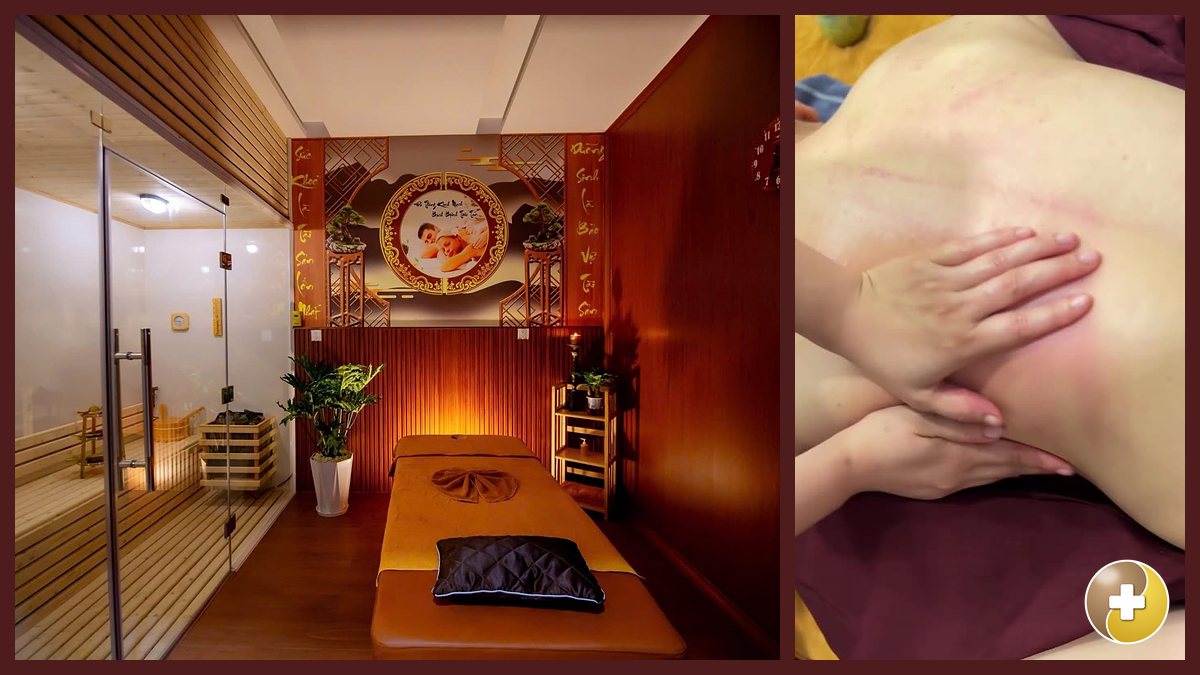
Quick answer: Feeling exhausted after Tet family visits usually comes from hours on motorbikes and in cars, back-to-back meals, short nights, jet lag and Saigon heat straight after a European winter; Eastern theory calls it a drained Heart and Spleen. Tong Gia Acupoint Wellness (Huyệt Đạo Tống Gia) in District 12 and Vinhomes Grand Park, Ho Chi Minh City, offers hands-on upper and mid-back care.
Want Lương Y Tống Văn Huynh’s team to read your spine and posture in person?
What Tet-visit exhaustion is, and why visitors from Europe feel it so strongly
In January, Paris, Berlin, Prague, Warsaw and London sit somewhere around 0–5°C, dark by late afternoon, with life lived indoors under central heating. Then comes the flight: roughly 12–13 hours direct, or close to a full day with a connection through Doha, Dubai, Istanbul, Bangkok or Singapore. You walk out of Tan Son Nhat airport (Tân Sơn Nhất) into dry-season heat above 30°C. Your body clock is still on European time, six hours behind Vietnam for Paris, Berlin, Prague and Warsaw, seven for London, and the Tet calendar is already full: Dad's side of the family one day, Mum's side the next, a ride out to Củ Chi on the second day of the new year, down to Long An on the third, a feast and a few beers every evening.
By the third or fourth day of Tet many people feel drained: heavy legs, a foggy head, no energy to talk, sleepy the moment they sit down and yet restless once they lie down. Overseas Vietnamese families in Ho Chi Minh City know this picture well.
In Western terms, fatigue is a sense of low energy and sluggishness, a drop in the ability to get things done and a need for more rest than usual. Most holiday fatigue is lifestyle fatigue: too little sleep, too little fluid, long hours sitting, an overloaded digestive system and a body that has not yet adjusted to heat. In hot weather the heart pushes more blood to the skin to release heat (the Tong Gia course material lists this among the heart's nine physiological roles), while you sweat out water and salt. Add long rides, many meals and short nights, and the body never gets a real chance to recover.
It is common among:
- Overseas Vietnamese flying in from Europe for Tet: a short stay and a long list of relatives, teachers and old friends to see within a week.
- Family members in Saigon: cleaning, cooking, and driving everyone around at the same time.
- Older parents: long rides, drinking little to avoid toilet stops, staying up late with the grandchildren.
- Office workers: a year at the desk, then a holiday spent in the car and at the table.
If your back and neck are still stiff from the flight, start with our main guide on spine care after a long-haul flight; the holiday fatigue often begins on the plane.
Common causes: the flight, a short trip and a packed Tet calendar
Holiday exhaustion rarely has a single cause. It is the sum of several things squeezed into a few days:
- A long flight and jet lag: twelve or more hours in a tight seat, broken sleep, dry cabin air. On arrival, 9–10 pm in Saigon is still mid-afternoon in Paris, so nights are restless and mornings heavy. See jet lag and sleep after flying to Vietnam.
- A sudden climate switch: from a European winter into the Saigon dry season. The body usually needs one to two weeks to adapt to heat; sweating a lot while drinking little makes it worse. Read tired in hot weather.
- Hours on a motorbike or in a car: District 12 to the Mekong Delta, Thu Duc to Binh Chanh, holiday traffic jams. Sitting still for long lets blood pool in the legs while the back and neck stay tense. Riding pillion under the midday sun also dehydrates you fast.
- Back-to-back meals, late eating, alcohol: every house offers a bowl and a glass. Digestion never rests, blood is drawn to the gut, so you feel heavy and drowsy after eating. Alcohol adds dehydration and shallow sleep. See bloating after Tet feasting.
- Short nights: late talks, New Year's Eve, early pagoda visits. The course material notes that little movement, stress and late nights stop the body from recovering; in Eastern terms they drain Heart blood and unsettle the spirit. See tired from staying up late.
- Joy, chatter and worry: seeing family after years apart, talking all day, while also juggling gifts, lucky money and travel plans. In Eastern theory the Heart's emotion is joy, and too much of it also tires the Heart; heavy worry strains both Heart and Spleen.
One more factor: people living in Europe are used to small, early, fairly plain meals. Back home they meet bánh tét, braised pork, Chinese sausage, candied fruit and soft drinks for days in a row, and the digestion has no time to adapt.
Signs worth noticing
Holiday fatigue usually eases after one to three days of proper sleep, fluids and lighter food. These signs tell you what the body is saying:
- Drowsy and heavy after meals, limbs weak: the course material reads tiredness and sleepiness after eating as an overloaded Spleen–Stomach.
- Mild palpitations, breathless on stairs, sweating while sitting still: common with heat, short sleep and lots of coffee; in Eastern terms close to Heart qi deficiency. See heart racing when stressed.
- Exhausted but unable to sleep, vivid dreams, easily startled: jet lag plus an unsettled spirit.
- Heavy head, stiff neck, an ache between the shoulder blades: long rides, looking down at the phone, carrying a passenger.
- Dry mouth, thirst, little and dark urine: you are short of fluid.
- Heavy legs, slightly puffy ankles by evening: long sitting on the plane and in the car; see swollen legs after a long flight.
A single sign proves nothing. Tiredness that lingers after the holiday, even with rest and catch-up sleep, should be checked.
When to see a doctor
If holiday fatigue comes with any of the following, see a doctor straight away; massage is not a substitute:
- Chest pain or pressure lasting more than 5–10 minutes that does not ease with rest; pain spreading to the left arm, shoulder, neck or jaw.
- Sudden shortness of breath, or breathlessness lying down that forces you to prop up on pillows.
- Fainting or nearly fainting; a pounding heartbeat with dizziness.
- Cold sweat and nausea together with chest pain.
- A drooping face, weakness on one side, slurred speech, blurred vision or loss of balance (stroke signs, remember BE-FAST).
- After the long flight: one calf swollen, painful, warm or red; or sudden breathlessness and chest pain on breathing in. This may be a blood clot after flying; get checked at once and do not have that leg massaged.
- Hot red skin, high temperature, confusion or no sweating after time in the sun: possible heat stroke.
- Fatigue lasting more than two weeks, unexplained weight loss, pale skin and lips, dizziness as with anaemia, or a lingering fever: get checked in parallel rather than blaming the holiday food.
Chest pain, breathlessness, cold sweat or any stroke sign: call 115 (Vietnam's emergency number) immediately; no massage, no acupressure. If you are followed for a heart condition or high blood pressure, have a stent or pacemaker, or are pregnant, ask your doctor before booking a massage. Tong Gia does not read X-ray or MRI images and does not draw up medical plans; please take those questions to a medical facility.
This is a wellness service, not medical care.
The Y Tướng Học view: Heart–Spleen tiredness on the face, tongue and lips
Y Tướng Học (face reading for wellness), as taught by Lương Y Tống Văn Huynh, rests on one line: the signs show outside, the organs lie inside. Holiday exhaustion mainly concerns two organ systems:
- The Heart: according to the Tong Gia course material, the Heart governs blood and vessels, houses the spirit (mind and sleep), opens into the tongue, shows on the face, and sweat is its fluid. It belongs to Fire and corresponds to summer. Moving from a European winter into Saigon heat, sweating a lot, sleeping little, laughing and talking all day, the Heart is often the first to feel drained.
- The Spleen (Spleen–Stomach): the root of what we build after birth, turning food into qi and blood; the Spleen governs muscles and limbs. Many rich meals overload it: a heavy body, weak limbs, tiredness after eating. In Eastern theory "Spleen" means the digestion-and-absorption function, not the anatomical spleen.
The two are linked: the Spleen makes blood and the Heart moves it. The course material notes that heavy worry harms Heart and Spleen together, bringing poor appetite, poor sleep, palpitations and forgetfulness; a deeper pattern is called Heart–Spleen deficiency, with pale or sallow skin, dizziness, shortness of breath, palpitations and insomnia. These are Eastern concepts, not medical labels.
When a Tong Gia practitioner looks at someone worn out by family visits, they observe:
- Complexion: a healthy Heart shows as a rosy, bright face; Heart qi deficiency looks pale and dull; heat and short sleep can bring flushing.
- Tongue: the "sprout" of the Heart. A pale tongue hints at thin blood; a red tip often follows late nights and inner heat; a swollen tongue with tooth marks points to a tired Spleen.
- Lips and mouth: the Spleen shows on the lips; pale, dry lips and a bland taste mean the Spleen–Stomach is tired.
- Sweat and presence: sweating while sitting still, dull eyes and reluctance to talk are typical of Heart qi deficiency.
- Face shape: in Tong Gia's Y Tướng Học, the "Giáp" face (wide forehead, narrow pointed chin) tends towards Heart fire and poor sleep, with a warm, tense upper neck at C1–C2; the square, full "Điền" face is tied to the Spleen, heaviness and bloating, with a tight mid-back at T11–T12.
When the organs inside work well, the face is bright and the eyes have life. Everyone wants to look well when they meet grandparents and relatives at Tet, and that glow comes from a settled Heart and a strong Spleen, not from make-up.
Spine segments and nerve-reflex zones involved
The Tong Gia course material describes a spine of 33 vertebrae: the neck (C1–C7) serves the head, face, neck and arms; the thoracic spine (T1–T12) relates to circulation, breathing and digestion; and the "nerves and mind" group (poor sleep, exhaustion) is cared for through the neck, the upper back T1–T3 and the sacral area. In Western anatomy, the sympathetic fibres to the heart and lungs leave the upper thoracic segments, while the vagus nerve (parasympathetic) runs from the brainstem down through the neck, slowing the heart and supporting digestion when the body relaxes. Heat, fatigue and stress tip the balance towards the sympathetic side: a faster heartbeat, tense muscles, lighter sleep.
| Vertebrae / zone | Nerves / function (anatomy) | Typical post-Tet signs | Organ (Eastern theory) | Outer signs (Y Tướng Học) |
|---|---|---|---|---|
| Neck C1–C7 | Head, face, neck, arms; path of the vagus nerve | Heavy head, stiff neck after long rides, light sleep | Heart (houses the spirit), Liver | "Giáp" face: warm C1–C2; furrowed brow |
| Upper back T1–T3 (Lung Shu below T3) | Sympathetic branches to heart and lungs; breathing rhythm | Short of breath, heavy chest when tired, shallow breathing | Lung, Heart (qi leads the blood) | "Đồng" face: tight T3; dry skin, frequent sighing |
| T4–T5 (Jueyin Shu below T4, Heart Shu below T5) | Sympathetic branches to the heart: rate and force | Mild palpitations, weight between the shoulder blades, poor sleep | Heart, Pericardium | Pale or flushed face, red tongue tip, spontaneous sweating |
| T11–T12 (Spleen Shu below T11, Stomach Shu below T12) | Sympathetic branches to pancreas and small intestine: digestion, absorption | Drowsy after meals, heavy body, weak limbs | Spleen–Stomach | "Điền" face: broad tight band at T11–T12; pale lips, swollen tongue |
| Lower back L1–L5 | Legs, urinary tract; postural muscles for sitting | Aching lower back, heavy legs after the car and the plane | Kidney (Heart and Kidney in balance) | Ears, lower back; "Viên" face: cool lower back, soft muscles |
The table shows related zones, not causes. In practice, people worn out by days of rides and feasts usually have a tight neck, a hard band between the shoulder blades and a stiff mid-back that feels warmer or cooler than the surrounding area. Softening these zones helps the nervous system settle and the parasympathetic side take over, so the body relaxes and sleep comes more easily.
The Tong Gia method: spinal nerve-reflex balancing for holiday fatigue
Tong Gia Acupoint Wellness (Huyệt Đạo Tống Gia) is a Vietnamese Eastern wellness method built by Lương Y Tống Văn Huynh, a traditional Vietnamese wellness master with more than 13 years in Eastern wellness, Y Tướng Học and spinal nerve-reflex balancing. A session supports relaxation and helps rebalance the spine zones linked to the Heart and Spleen; it does not replace a medical check and does not promise the fatigue will disappear.
- Questions and observation: where you flew from, how many days you have been back, how you sleep, how much you travel and eat; any heart condition, stent, pacemaker or pregnancy. The practitioner reads complexion, tongue, lips, sweat and posture through Y Tướng Học. If any sign from the section above appears, the session does not go ahead and you are advised to see a doctor first.
- Slow 4–6 breathing for a few minutes: in through the nose for 4 seconds, out slowly for 6.
- Reading the spine by hand: from C1 down to the lower back, checking the four factors in the Tong Gia material (skin temperature, muscle layer, spinal shape, sensation) and comparing both sides.
- Muscle release of the neck, shoulder blades, upper back T1–T5, mid-back T11–T12 and lower back, slow rhythm and moderate pressure, lighter for people fresh off the plane.
- Acupressure on the right zones: Heart Shu (BL15) and Jueyin Shu (BL14) on the upper back, Spleen Shu (BL20) and Stomach Shu (BL21) on the mid-back; Neiguan (PC6) and Shenmen (HT7) at the wrist; Zusanli (ST36) on the shin; finishing at Baihui (GV20) on the crown. The chest only receives light pressure.
- Self-care advice: pressing PC6 and HT7 before bed, and pacing the rest of your visits.
Suitable services (see prices; approximate rates for reference, payment in VND, 1 EUR ≈ 30,000 VND, 1 USD ≈ 26,000 VND):
- Heart care 75 minutes: 750,000 VND (≈ 25 EUR, ≈ 29 USD): fatigue with mild palpitations, poor sleep, heavy sweating.
- Spleen–Stomach care 75 minutes: 750,000 VND (≈ 25 EUR, ≈ 29 USD): tired after eating, heavy, bloated after days of feasting.
- Traditional Eastern massage 60 minutes: 450,000 VND (≈ 15 EUR, ≈ 17 USD), 90 minutes: 550,000 VND (≈ 18 EUR, ≈ 21 USD): whole-body relaxation for the family after the holiday rush.
What you may feel during the session: a quiet room and a slow hand rhythm; as the band between the shoulder blades softens, many people notice warmth spreading through the back and deeper breathing, and some drift off to sleep. Afterwards the body often feels lighter, the head clearer, and sleep comes more easily that night. Everyone responds differently; enough sleep, enough water and a gentler schedule still matter most.
From the airport to a branch: the District 12 branch (225 Dương Thị Mười, Phường Tân Chánh Hiệp) lies north of Tan Son Nhat airport and is usually the quicker drive; the Vinhomes Grand Park branch (Căn T16-21 khu Manhattan, Phường Long Bình, TP. Thủ Đức) is further east and takes longer. Travel time depends on the hour and traffic, especially in the days before Tet, so send your landing time in advance and we will hold a suitable slot.
Want Lương Y Tống Văn Huynh’s team to read your spine and posture in person?
A suggested plan for your Tet trip, plus self-care
The table below is a starting point so the visit does not turn into a race. Adjust it to your family; a fuller plan is in a 7-day wellness plan for a Tet visit to Saigon, and for the trip back see preparing your body before the long flight home.
| Day | What to do | Care suggestion |
|---|---|---|
| Landing day | Go home, rest, eat lightly, no visits yet | Sip warm water, walk gently, sleep on Vietnam time |
| Days 2–3 | Grandparents and nearby relatives first | One traditional Eastern massage or neck-and-shoulder session to loosen up after the flight |
| Before New Year's Eve | Cleaning and early-morning market runs, avoid the midday sun | 15–30 minute nap, hat and water bottle |
| Days 1–3 of Tet | New Year visits, two or three houses a day at most | Breaks between stops, less alcohol, small portions everywhere |
| Days 4–5 of Tet | A rest day, no long trips | Heart care or Spleen–Stomach care, depending on how you feel |
| 2–3 days before flying back | Pack early, go to bed earlier | Back and neck release before the long flight |
Daily self-care, from the Heart practice section of the Tong Gia course material:
- Drink enough, little and often: carry water on every ride; go easy on iced beer and soft drinks.
- Short nap of 15–30 minutes: in Eastern theory 11:00–13:00 is the Heart meridian's hour; avoid travelling at midday.
- Slow 4–6 breathing for 5–10 minutes when you feel jittery or before sleep.
- Press PC6 and HT7: 1–2 minutes each side, light pressure, when tense or at bedtime.
- A little at each house, a light dinner: as the course material puts it, what counts is not how much you eat but how much your Spleen–Stomach can absorb.
Bringing older parents along? See our page for overseas Vietnamese.
Booking from abroad before you fly
- District 12: 225 Dương Thị Mười, Phường Tân Chánh Hiệp, Quận 12 (District 12). Daily 8:00–19:00.
- Vinhomes Grand Park: Căn T16-21 khu Manhattan, Phường Long Bình, TP. Thủ Đức (Unit T16-21, The Manhattan, Thu Duc City, formerly District 9). Daily 9:00–20:00.
Both branches have genuine client reviews on Google Maps. From Paris, Berlin, Prague, Warsaw or London, message us on WhatsApp or Zalo at +84 888 264 559 (0888 264 559 inside Vietnam), or book online. Please include your landing date and time at Tan Son Nhat, where you feel tired or stiff (after meals, poor sleep, palpitations, neck or back), how many people are coming and which branch you prefer. Vietnam is six to seven hours ahead of Europe, so a message sent in your evening will usually be answered the next morning Saigon time.
Visit us
- Đông Y Huyệt Đạo Tống Gia Quận 12 (District 12)
225 Dương Thị Mười, Phường Tân Chánh Hiệp, Quận 12, HCMC · 8:00–19:00 daily · 0888 264 559 · Directions on Google Maps - Đông Y Huyệt Đạo Tống Gia Quận 9 (Vinhomes Grand Park, District 9)
Căn T16-21 khu Manhattan, Vinhomes Grand Park, Phường Long Bình, TP. Thủ Đức, HCMC · 9:00–20:00 daily · 0888 264 559 · Directions on Google Maps
Map of our two branches
Want Lương Y Tống Văn Huynh’s team to read your spine and posture in person?
What guests say on Google Maps
“I had been achy and tired for a long time. After the session I felt very comfortable.” (translated from a Vietnamese review)
— Nghĩa H., Google Maps review · District 12 branch · 2025 · See on Google Maps
“The Truy Phong Thang herbal foot steam leaves the whole body at ease after a tiring workday.” (translated from a Vietnamese review)
— Linh T., Google Maps review · District 12 branch · 2025 · See on Google Maps
Quoted from public reviews, shortened where marked (…). Experiences vary from person to person; reviews are not a substitute for seeing a doctor when something feels wrong.
Related guides for your trip
- Can you get a massage after a heart stent? Who to ask first, how gentle it should be and when to call 115
- Parents' back pain after a long flight with young kids: lower back, shoulders and wrists
- Midlife hot flashes in Vietnam's heat: why sleep and energy dip on a Tết visit, and how to stay comfortable
FAQ
Why am I so exhausted after Tet family visits? Usually several things at once: a long flight and jet lag, hours on motorbikes and in cars, many rich meals and drinks, short nights, and Saigon heat right after a European winter. Rest days, enough water, small portions and Vietnam-time sleep usually help within one to three days. Chest pain or breathlessness means calling 115.
Is feeling tired and sweaty with shortness of breath during Tet dangerous? It can be. Fatigue with breathlessness, cold sweat, chest pressure or pain spreading to the left arm or jaw needs an ambulance on 115 straight away, not a massage. Sudden breathlessness or one swollen, painful calf after a long flight should also be checked at once, as it may be a blood clot.
How long does it take to get used to Saigon heat after winter in Paris or Berlin? Most bodies need around one to two weeks to adapt to hot, humid weather after a European winter, on top of the six-to-seven-hour time difference. For the first days, stay in the shade at midday, drink regularly, wear light clothing and save the long trips to the provinces for later in your stay.
What helps with tiredness after drinking at Tet parties? Sip warm water, eat light warm food such as rice porridge or soup, catch up on sleep and skip alcohol for a few days. Do not ride or drive while dizzy. The Tong Gia course material notes alcohol tires the heart and raises blood pressure; heavy vomiting, chest pain or breathlessness means you should see a doctor.
Can massage or acupressure help with fatigue after the holiday? Massage does not replace a medical check, but it can support relaxation and soften the neck, upper back T1–T5 and mid-back T11–T12, so many people feel lighter and sleep more easily. At Tong Gia, Heart care for 75 minutes is 750,000 VND (about 29 USD) and traditional Eastern massage for 60 minutes is 450,000 VND.
Can I book a session in Saigon while I am still in London or Prague? Yes. Message +84 888 264 559 on WhatsApp or Zalo, or use the online booking page, with your landing time, how you feel and the branch you prefer: District 12 or Vinhomes Grand Park. Vietnam is six to seven hours ahead of Europe, so replies may arrive the next morning.
Author: Lương Y Tống Văn Huynh – founder of Huyệt Đạo Tống Gia, a master of traditional Vietnamese wellness with over 13 years in Eastern wellness care, Y Tướng Học (face reading) and spinal nerve-reflex balancing massage.
Updated: 2026-11-15
Related guides
This is a wellness service, not medical care.