
Midlife hot flashes in Vietnam's heat: why sleep and energy dip on a Tết visit, and how to stay comfortable
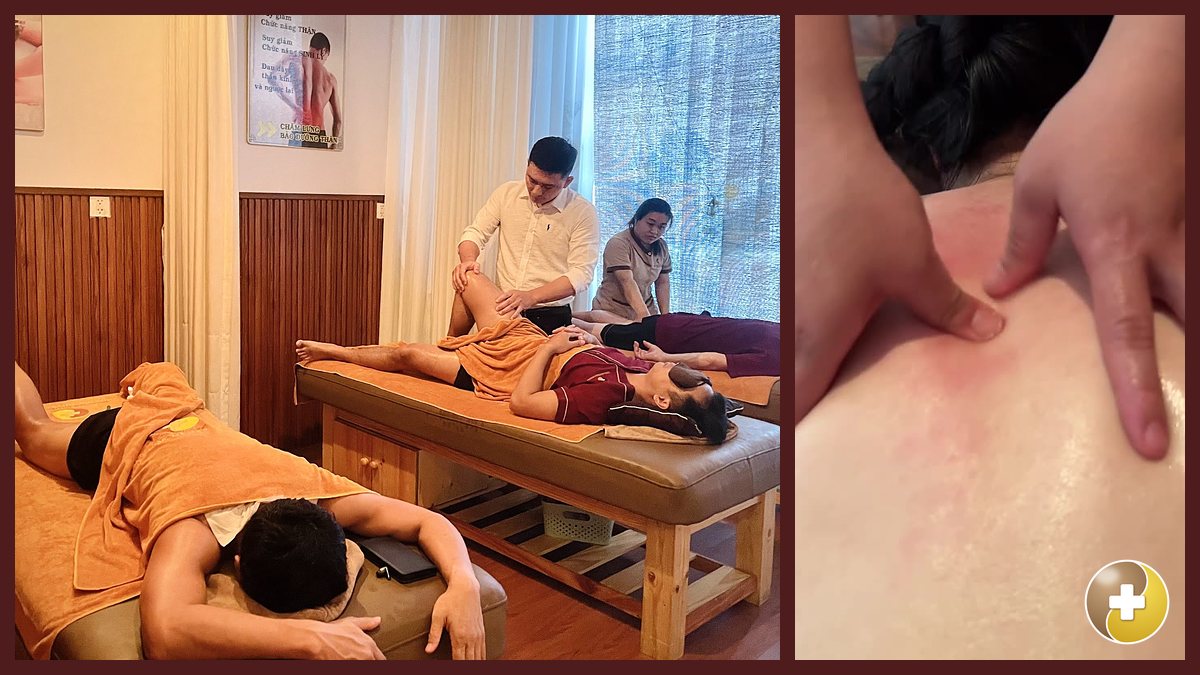
Quick answer: Midlife hot flashes often flare in Saigon's 33°C heat because a shifting hormonal thermostat meets jet lag, short sleep, spicy food and alcohol. The Eastern tradition links this to Kidney yin deficiency and Heart heat. With chest pain or breathlessness, call 115. Tong Gia in Ho Chi Minh City offers gentle, cool morning sessions.
Want Lương Y Tống Văn Huynh’s team to read your spine and posture in person?
Why midlife hot flashes flare up when you fly into Vietnam's heat
You land at Tân Sơn Nhất after a long trip, step out into 33°C sunshine, and within a day the familiar wave arrives more often than it ever did at home: heat rising from the chest to the neck and face, sweat on the forehead and the back of the neck, a racing heartbeat, then a chill a few minutes later. At night you wake with a damp shirt, kick off the sheet, switch on the fan and lie awake until dawn. The next day, visiting relatives or walking through a Tết market, you feel drained, foggy and short-tempered.
This is a common story among Vietnamese women aged roughly 45–55 who live in Houston, San Jose, Orange County or Seattle, in Toronto, Montreal, Vancouver or Calgary, or in Sydney, Melbourne and Brisbane, and fly home for the Lunar New Year. It is just as familiar to other women who arrive in Ho Chi Minh City on a long-haul trip for work, a wedding or a holiday. From North America the journey usually takes 17–24 hours with a connection in Taipei, Seoul, Tokyo or Hong Kong, and the clock shifts by 12–15 hours. From Australia the flight is shorter, around 8–9 hours with a 3–4 hour shift, but you still go from a dry summer into Saigon's humid heat. In January and February, the middle of the dry season, midday temperatures in the city typically sit around 32–34°C.
In Western terms, a hot flash is a "vasomotor" symptom of the menopause transition. As reproductive hormones fall and fluctuate, the temperature-control centre in the hypothalamus becomes more sensitive. The comfortable range narrows, so a small rise in core temperature triggers a full cooling response: blood vessels in the face, neck and chest widen, the skin flushes, sweat glands switch on and the heart speeds up. An episode usually lasts from one to a few minutes. When it happens in sleep it is called a night sweat, and it is one of the most frequent reasons women in midlife sleep poorly. The average age of menopause is about 51, but the transition can begin several years earlier and flashes can continue for years.
Heat and humidity make it harder for sweat to evaporate, so the body struggles to shed heat. Add jet lag, short sleep, spicy and fried festive food, beer, wine, iced coffee and hot tea, and rooms crowded with family, and you have most of the usual triggers in one week. This guide is part of the overseas Vietnamese and wellness travel series by Tong Gia Acupoint Wellness (Huyệt Đạo Tống Gia). For the spine after many hours in an aircraft seat, see the main guide on spine care after a long-haul flight. One thing this article does not cover: whether to use hormone replacement. That is a personal decision to discuss with your own health team, so please ask your doctor at home or a qualified health professional in Vietnam.
Common causes: hormones, a sudden climate change and a packed Tết schedule
- The hormonal shift itself: this is the root of the flash. In a cold climate many women barely notice; in tropical heat the threshold is crossed many more times a day.
- A jump of 30–40 degrees: from below freezing in Toronto or Calgary to 33°C within a day. The skin's blood vessels keep widening to release heat, the heart works harder, and you tire and dehydrate quickly.
- The long flight and jet lag: 15–20 hours in a cramped seat, broken sleep, dry cabin air. Your body clock stays on American or Canadian time, so you are wide awake at 2–3 am in Saigon and sleepy right after lunch. See jet lag and sleep after flying to Vietnam.
- A bedroom that does not suit you: a relative's house may have only a fan, or air conditioning set too cold and then switched off at midnight, heavy bedding and a shared room. Hot nights are when many women get their worst sweats, and waking mid-sleep makes it hard to drift off again.
- Festive food and drink: braised pork, sticky rice cakes, fried dishes, chilli, alcohol, iced milk coffee and endless cups of hot tea. Alcohol and spice widen blood vessels, caffeine disturbs sleep, and a late, heavy dinner leaves you hot and bloated in bed.
- A crowded calendar: two or three weeks to see everyone, attend weddings, visit pagodas and the countryside, often in midday sun or standing in a hot kitchen.
- Stress and emotion: ageing parents, family matters, children left behind abroad. Stress puts the sympathetic nervous system on alert, another well-known trigger.
- Not drinking enough: you sweat a lot but forget to drink while chatting. Dehydration brings fatigue, headache and dizziness that are easy to mistake for "just the flashes". The companion article on heat fatigue when visiting Vietnam in the dry season covers this in detail, and tired in hot weather gives the Eastern view.
The Tong Gia curriculum notes that, in Western terms, the heart and circulation help regulate temperature by sending more blood to the skin; in the Eastern tradition, "sweat is the fluid of the Heart", and the Heart belongs to Fire, so unusual sweating is grouped with Heart signs. Both views describe the same moment: flushing, sweating, a racing pulse.
Signs that often come along
- A wave of heat rising from chest to face, a red face, sweat on the brow, neck and chest, followed by a chill.
- Night sweats that dampen the pillow and shirt; waking at 2–4 am and staying awake.
- Hot palms and soles in the evening, wanting to put your feet outside the sheet.
- A dry mouth and throat, thirst at night, drier skin despite the humidity.
- Palpitations, restlessness, irritability, low tolerance for noise.
- Daytime exhaustion, a heavy head, poor focus, forgetfulness.
- Tired lower back and knees after the flight, mild ringing in the ears when tired.
- Periods becoming irregular or further apart if you have not fully reached menopause.
If these are mild and settle after a few days of sleep, a cool room and light meals, they are usually the reaction of a body in transition meeting heat and a long flight. More on sleep at this stage is in midlife insomnia and insomnia in women.
When to see a doctor
Not every hot, sweaty spell is a hot flash. Please see a doctor, or go to a medical facility, if any of the following apply:
- Chest pain or pressure spreading to the arm, jaw or back, shortness of breath, cold sweat, nausea or faintness: call 115 in Vietnam straight away. In women a heart attack can be atypical, just sweating, sudden exhaustion and palpitations, so do not dismiss it as a flash. No massage, and do not drive yourself.
- A drooping face, slurred speech, weakness on one side, sudden vision loss or a sudden severe headache: call 115.
- Heat stroke: high temperature, hot dry skin, confusion, fainting or seizures after time in the sun. Move to a cool place and call 115.
- After the long flight: one calf swollen, painful, warm or red, or sudden breathlessness and chest pain, can signal a blood clot. Go to emergency care and do not rub the leg.
- Night sweats with fever, a lasting cough, unexplained weight loss or swollen glands.
- A racing or irregular heartbeat, tremor, weight loss and heat intolerance all year round, or pale skin with dizziness on standing: get checked in parallel, as thyroid problems or anaemia can look similar.
- Vaginal bleeding after menopause (12 months or more without a period), or unusually heavy or prolonged bleeding.
- Very high blood pressure, headache or dizziness if you already live with high blood pressure or diabetes.
- Weeks of poor sleep with low mood, loss of interest or feeling you are a burden: tell your family and see a doctor soon.
This is a wellness service, not medical care. Tong Gia does not read X-rays or MRI scans, does not make medical plans and does not advise on hormones. If you follow a plan from your own health team for blood pressure, sleep or hormones, keep following it; a wellness session sits alongside that, never in place of it.
The Y Tướng Học view: Kidney yin, Heart and Liver
Y Tướng Học (face reading for wellness) rests on one line: the signs show outside, the organs lie inside. Lương Y (traditional healer) Tống Văn Huynh organised this knowledge so practitioners look first and then know which part of the spine to read closely. For midlife flashes, night sweats and poor sleep, the Tong Gia curriculum points to three organ systems: Kidney, Heart and Liver. These are functional terms from the Eastern tradition and do not mean your kidneys, heart or liver are diseased.
Kidney yin deficiency, "not enough cooling water". In the Eastern view the Kidney governs essence, bones, water, ears, hair, the lower back and knees, and holds the body's root yin and yang. The curriculum describes Kidney yin deficiency as a shortage of cooling water that creates internal heat: hot palms and soles, afternoon flushes, night sweats, a dry mouth and throat, dream-filled sleep, tired lower back and knees, ringing ears, a red tongue with little coating. Many women in the menopause transition describe exactly this. The suggested direction is to nourish yin and clear heat: sleep early, avoid late nights, limit spicy and heating food, which is the opposite of a typical Tết week.
Heart yin deficiency and Heart and Kidney out of contact. The Heart houses the spirit and governs circulation, sleep and complexion. The curriculum lists Heart yin deficiency as palpitations, restlessness, poor sleep, night sweats, hot palms and soles. Normally Fire and Water balance each other: Heart fire descends to warm the Kidney, Kidney water rises to cool the Heart. When they lose contact, the curriculum notes poor sleep, palpitations and tired back and knees. Picture fire rising at the top while the water below cannot climb to hold it.
The Liver and mood. The Liver stores blood and keeps energy moving. The curriculum notes that Liver fire easily stirs Heart fire, giving irritability and trouble sleeping, and pairs Kidney yin deficiency with rising Liver yang. That is why many women feel more short-tempered, with tired eyes and a tight neck, during a run of flashes.
What shows outside. The Kidney shows in the ears, hair, bones and lower back: full rosy ears, glossy hair and a strong back are a good root; tired knees, a cold lower back, ringing ears and thinning hair are signals. The Heart shows in the tongue and complexion: a red flushed or a pale face, poor sleep and palpitations are signals. The Liver shows in the eyes, nails and tendons. The curriculum also describes the "Giáp" face shape, with a broad forehead and narrow chin, as "full above, weak below": a tendency to heat in the head, poor sleep and flushes above, tired knees and night-time urination below, often with a warm upper neck and a cool, hollow lower back. These are observations for wellness care, not fortune-telling and not a medical judgement.
Spine segments and nerve-reflex zones involved
In the Tong Gia curriculum on spinal nerve-reflex balancing, the neck C1–C7 relates to the head, face, neck and arms; the thoracic spine to circulation, breathing and digestion; the lumbar spine to digestion, kidneys, bladder, reproductive organs and legs.
| Segment | Nerves / function (Western anatomy) | What you may feel in the heat | Organ (Eastern view) | Outer sign (Y Tướng Học) |
|---|---|---|---|---|
| C1–C2 (top of the neck) | Suboccipital muscles, upper cervical nerves to the back of the head; Fengchi area | Heat rushing to the head, tight neck, hard to fall asleep | Heart (spirit), Liver | Giáp face, warm nape, face reddening with each wave |
| C3–C7 (lower neck, shoulders) | Nerve roots to shoulders and arms; next to the cervical sympathetic ganglia that control facial blood flow and sweating | Stiff neck after the flight, sweat at the nape | Liver (tendons) | Bunched shoulder muscles, dry tired eyes |
| D4–D5 (upper back) | Upper thoracic nerves; Jueyin Shu below D4, Heart Shu below D5 | Palpitations during a flash, heat in the chest, restlessness | Heart, Pericardium | Flushed or pale complexion, red tongue |
| D6–D12 (mid back) | Thoracic sympathetic chain along the spine, linked to "brace or rest"; nerves to the upper abdomen | Inner heat, bloating after festive meals | Liver, Spleen–Stomach | Dry lips, heavy body |
| L1–L3 (upper lumbar) | Upper lumbar roots; Kidney Shu, Zhishi and Mingmen at L2 | Tired lower back after the flight, waking to pass urine | Kidney | Thin dull ears, dry or thinning hair |
| L4–S1 and sacrum | Roots to the legs and pelvis; buttock, thigh and calf muscles | Heavy legs, tired knees, hot soles at night | Kidney–Bladder | Cool, hollow lower back |
The table guides care; it is not a statement of cause. In Western terms the root of a hot flash is hormonal change acting on the brain's thermostat, not a vertebra "out of place". The spine is read because nerve roots to the neck and back leave there, and the sympathetic chain, part of the autonomic nervous system that controls skin blood flow, sweating and heart rate, runs alongside it. When the neck and back muscles let go, many people find it easier to shift into rest.
How Tong Gia helps rebalance: a gentle, cool, morning session
Every session follows the method of Lương Y Tống Văn Huynh, founder of Tong Gia, with over 13 years in traditional Eastern wellness, Y Tướng Học and spinal nerve-reflex balancing. This is a Vietnamese traditional Eastern wellness method. The aim is to help rebalance each spinal zone and support the Kidney, Heart and Liver by hand: cool the head and neck, support the lower back after the flight and help the body settle. Tong Gia does not promise an end to flashes; they are tied to hormones, and a session can only help you feel more comfortable and sleep more easily during your visit.
- Safety questions: when you landed, when the waves come, how often you wake, any prescriptions, blood pressure, heart or thyroid issues. Any warning sign above means we stop and suggest a medical check.
- Observation: complexion, tongue colour, ears, hair, eyes, neck and shoulder posture, the curve of the lower back.
- Reading the spine by hand: left against right, top against bottom, focusing only on "excited" zones that are warm, tight or tender.
- Gentle muscle release: suboccipitals, trapezius, the muscles along the spine, lower back and calves, using only the lighter of the five pressure levels and a slow rhythm.
- Acupressure on the right points: Fengchi at the nape; Heart Shu and Jueyin Shu on the upper back; Kidney Shu and Zhishi on the lower back. At the wrist, Shenmen (HT7), which the curriculum describes as calming and supportive for sleep and palpitations, and Yinxi (HT6), noted for palpitations and night sweats. At the ankle, Taixi (KI3), the source point of the Kidney channel, and Fuliu (KI7), noted for balancing sweating. The session ends with Baihui on the crown and Yongquan on the sole, described as "drawing fire downward, calming the spirit, easing sleep". Warm skin is cooled, cool skin is warmed, and work on a point stops once the skin turns from dry to slightly moist.
- Self-care coaching to take home to the US, Canada or Australia.
What a session usually feels like
Book a morning slot, before the day heats up. You can ask for the room to be cool but not cold; wear light clothes and bring a thin layer, since some people feel slightly chilly once the muscles relax. Many women doze off midway as the neck softens and breathing slows. Afterwards some feel a lighter head and fall asleep more easily that night; others still have waves but find them easier to ride. Results vary, so no outcome is promised. On heavy-flash days you can ask to skip steam or hot compresses.
Suitable services and prices
Prices are paid in VND; conversions are approximate reference rates only (USD ≈ 26,000 VND, AUD ≈ 17,000, CAD ≈ 19,000):
- Kidney wellness care, 75 minutes: 750,000 VND (about 29 USD, 44 AUD, 39 CAD), for hot palms and soles, night sweats, tired back and knees. If palpitations and poor sleep dominate, Heart wellness care, 75 minutes costs the same.
- Hair wash with neck and shoulder massage, 60 minutes: 250,000 VND (about 10 USD), light and cooling after a day of family visits.
- Neck–shoulder or lower-back care, 60 minutes: 550,000 VND (about 21 USD; first visit 399,000 VND, about 15 USD), for a stiff neck and back after the flight.
Full list on the price page.
From Tân Sơn Nhất airport
The District 12 branch (225 Dương Thị Mười, Tân Chánh Hiệp Ward) is closer to Tân Sơn Nhất airport, a fairly short ride outside rush hour. The Vinhomes Grand Park branch (Unit T16-21, Manhattan area, Long Bình Ward, Thủ Đức City) is further, a longer ride with heavier traffic at peak times. Do not book for the afternoon you land: sleep one night, drink well and eat lightly first.
Want Lương Y Tống Văn Huynh’s team to read your spine and posture in person?
A suggested plan for your visit, and self-care at home
| When | Focus | Suggestion |
|---|---|---|
| Before you fly | Pack for heat | Cotton and linen, a hand fan, a water bottle; dress in thin layers on the plane. |
| Arrival day | Rest on local time | Sip water, eat lightly, take a cool shower, sleep in a room around 26–28°C with a gentle fan. |
| Days 2–3 | First session | Morning neck–shoulder or hair-wash session; stay indoors 11 am–3 pm. |
| Days 4–7 | Protect sleep | Bed before 11 pm, 15–30 minute naps, less coffee after lunch, less alcohol and chilli. |
| Days 8–10 | Wellness session | Kidney or Heart wellness care in the morning. |
| Tết days | Stay cool | Visit early morning or late afternoon, sit somewhere airy, alternate tea with water. |
| 3–4 days before flying back | Prepare | A light back session and shift sleep toward home time. See preparing your body before the long flight. |
The full family plan is in a 7-day wellness plan for a Tết visit. Five habits to keep, in Saigon and back in Houston, Toronto or Melbourne:
- Plan to stay cool: thin layers, a fan, a damp cloth; when a wave starts, sit, loosen your collar, cool your face and nape and sip cool water.
- Slow breathing: the Tong Gia curriculum suggests breathing in through the nose for about 4 seconds and out for about 6, for 5–10 minutes a day, and a few slow breaths the moment a flash begins.
- Press Shenmen and Taixi before bed: 1–2 minutes each side, gentle pressure. More points are in self-acupressure at home.
- Rub Yongquan on the soles for 3–5 minutes each evening; on heavy-flash days keep any foot soak only lukewarm and short. With diabetes test the water carefully; never rub a swollen, painful calf.
- Sleep early and eat light at night: dinner by 7–8 pm, more vegetables, soups and fruit, less alcohol and fried food, no strong coffee after 3 pm.
Note: the curriculum says the Sanyinjiao point is not used in pregnancy, so a pregnant daughter travelling with you should not press it.
Booking from abroad
The weeks around Tết are busy, so book early to get a morning slot. How to book from overseas is explained in booking a massage in Saigon from abroad.
- District 12 branch: 225 Dương Thị Mười, Tân Chánh Hiệp Ward, Ho Chi Minh City. Open 8:00–19:00 daily.
- District 9 branch, Vinhomes Grand Park: Unit T16-21, Manhattan area, Long Bình Ward, Thủ Đức City. Open 9:00–20:00 daily.
Message Zalo or WhatsApp +84 888 264 559 (0888 264 559 in Vietnam), or book online. Include your landing date and time, where you feel tight, when the waves usually come, how you are sleeping, any health conditions, whether you prefer morning or afternoon, and which branch suits you, so the team can choose the right service and prepare a cool room.
Visit us
- Đông Y Huyệt Đạo Tống Gia Quận 12 (District 12)
225 Dương Thị Mười, Phường Tân Chánh Hiệp, Quận 12, HCMC · 8:00–19:00 daily · 0888 264 559 · Directions on Google Maps - Đông Y Huyệt Đạo Tống Gia Quận 9 (Vinhomes Grand Park, District 9)
Căn T16-21 khu Manhattan, Vinhomes Grand Park, Phường Long Bình, TP. Thủ Đức, HCMC · 9:00–20:00 daily · 0888 264 559 · Directions on Google Maps
Map of our two branches
Want Lương Y Tống Văn Huynh’s team to read your spine and posture in person?
What guests say on Google Maps
“Clean space, thoughtful staff – the Kidney wellness care is well worth trying.” (translated from a Vietnamese review)
— Triệu A., Google Maps review · Vinhomes Grand Park branch (District 9) · 2025 · See on Google Maps
“Wonderful – the staff were warm and cheerful, and the technician was really good.” (translated from a Vietnamese review)
— Hoàng N., Google Maps review · Vinhomes Grand Park branch (District 9) · 11/2026 · See on Google Maps
Quoted from public reviews, shortened where marked (…). Experiences vary from person to person; reviews are not a substitute for seeing a doctor when something feels wrong.
Related guides for your trip
FAQ
Are hot flashes worse in hot weather like Ho Chi Minh City? For many women, yes. Heat and humidity make it harder to shed heat, so the narrowed comfort range of the menopause transition is crossed more often. Jet lag, short sleep, alcohol, spicy food and caffeine add to it. Cool rooms, light clothes, water and early nights usually help.
I flew from Toronto to Saigon for Tết and wake up soaked at 3 am every night. What should I do? Going from sub-zero winter to 33°C with a 12-hour time shift often makes night sweats more frequent. Sleep at around 26–28°C in cotton, keep water and a towel by the bed, go to bed before 11 pm and cut back on afternoon coffee and alcohol. If it lasts weeks or comes with fever or weight loss, see a doctor.
What does the Eastern tradition say about hot flashes and night sweats? The Tong Gia curriculum describes Kidney yin deficiency as "not enough cooling water": hot palms and soles, afternoon flushes, night sweats, dry mouth, poor sleep, tired back and knees. Heart yin deficiency adds palpitations and restlessness. These are functional terms, not a medical finding.
Can I get a massage while I am having hot flashes? Yes, if none of the warning signs apply. Choose a morning slot, a cool room and light pressure, and skip steam or hot compresses. Tong Gia asks safety questions first and does not advise on hormones; for that, ask your doctor.
Which acupressure points can I press at home for flashes and poor sleep? The Tong Gia curriculum suggests gently pressing Shenmen (HT7) at the wrist crease on the little-finger side and Taixi (KI3) between the inner ankle and the Achilles tendon, 1–2 minutes each side before bed, with slow 4-in, 6-out breathing, and rubbing Yongquan on the sole for 3–5 minutes.
Which session suits hot flashes during a visit to Saigon, and what does it cost? Kidney wellness care, 75 minutes, 750,000 VND (about 29 USD) suits hot palms and soles, night sweats and a tired back; Heart wellness care costs the same if palpitations and poor sleep dominate. A 60-minute hair wash with neck massage is 250,000 VND (about 10 USD). Message WhatsApp +84 888 264 559.
Author: Lương Y Tống Văn Huynh – founder of Huyệt Đạo Tống Gia, a master of traditional Vietnamese wellness with over 13 years in Eastern wellness care, Y Tướng Học (face reading) and spinal nerve-reflex balancing massage.
Updated: 2026-11-16
Related guides
This is a wellness service, not medical care.