
Retiring in Vietnam from the US: a regular wellness routine for joints, back and sleep in Thu Duc
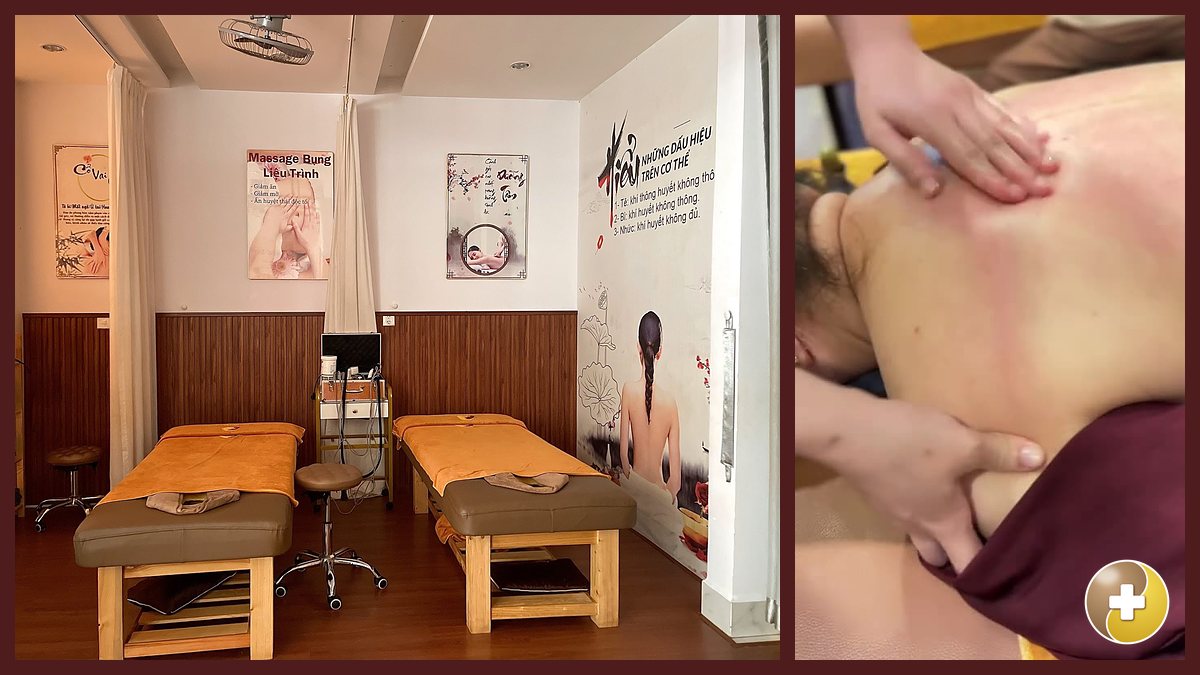
Quick answer: If you are retiring in Vietnam, a steady wellness routine helps: one Eastern massage or lower-back session a week and one Kidney session a month for joints, back and sleep, alongside regular medical check-ups. Huyệt Đạo Tống Gia (Tong Gia Acupoint Wellness) at Vinhomes Grand Park, Thu Duc City, Ho Chi Minh City, opens 9:00–20:00 daily.
Want Lương Y Tống Văn Huynh’s team to read your spine and posture in person?
Retiring in Vietnam: how the body changes after 55
Many Viet Kieu who spent thirty or forty years in San Jose, Orange County, Houston, Seattle or Northern Virginia decide, at retirement, to move back for good. They settle near children and grandchildren in Vinhomes Grand Park or the neighbourhoods around Long Binh, Long Thanh My and Phuoc Long in Thu Duc City. This flight home is different from the usual two-week Tết visit: you leave an American winter of snow or cold rain, cross the Pacific for well over half a day, usually with a connection in Taipei, Seoul, Tokyo or Hong Kong, and land at Tân Sơn Nhất airport in Saigon's year-round humid heat. From then on, your body has to settle into a new rhythm for years, not days. International retirees from Europe, Australia or elsewhere who choose Ho Chi Minh City go through much the same adjustment.
In Western medical terms, the body after 55 changes slowly but steadily. Muscle mass and strength decline when activity drops, a process called age-related muscle loss or sarcopenia. Cartilage in the knees, hips and the small joints of the spine wears gradually, so mornings bring stiffness that eases only after you move around. Spinal discs lose water and thin, so the back tires when you stand for long. Bone density tends to fall, more noticeably in women after menopause. Circulation in the legs slows, so long sitting leaves heavy legs and puffy ankles. Sleep shifts too: deep sleep shortens with age and the body clock tends to move earlier, so many people feel sleepy early, wake several times a night and are up before dawn.
None of this is a disease in itself; it is part of ageing. Without a regular care routine, though, these changes add up to a feeling of "ageing fast": tired knees on the stairs, a sore back when you bend to pick something up, waking at 3 a.m. and not getting back to sleep. This guide is for Viet Kieu retiring in Vietnam or staying long term, for international retirees in Ho Chi Minh City, and for family members in the city looking after parents who have just moved back. If your spine still feels the long flight, start with our pillar guide on spine care after a long-haul flight.
Why health often wobbles in the first year back
Retirees who move back are usually in reasonable health, with time and means. Yet in the first year many feel out of sorts: joints ache more, the back tires sooner and sleep is worse than when they were still working in the US. Usually several changes arrive at once:
- A permanent change of climate: from cold, dry winters to heat and humidity all year, with a long damp rainy season. You sweat more, drink too little, then sit in air conditioning all day. Cold air blowing on the neck and lower back during an afternoon nap leaves a stiff back and aching knees the next morning.
- A different activity pattern: in the US you walked the neighbourhood, gardened, went to the gym and drove to the store. Here many people avoid the sun and the motorbike traffic, walk less and sit more. When thigh and buttock muscles weaken, the knees and lower back carry the load.
- A new bed and a new sleep schedule: a different mattress, neighbourhood noise, and jet lag in the first weeks. Vietnam is 14–15 hours ahead of the US West Coast and 11–12 hours ahead of the East Coast, depending on daylight saving time. Older sleepers already sleep lightly, so they wake even more easily. Our guide to jet lag and sleep after flying to Vietnam explains the body clock.
- Richer meals: reunion dinners with old friends, rice, sticky rice, fried dishes, sweet tropical fruit and late snacks with the grandchildren. The stomach feels full, the body heavy, and sleep suffers.
- A broken check-up habit: in the US you had an annual physical. Back here, many people have not yet chosen a medical facility or brought their full records, so blood pressure, blood sugar and bone density go unmonitored.
- Emotional change: joy at being home, but also missing children and grandchildren overseas, worrying about housing and paperwork and adjusting to a new pace of life. Long-running worry makes sleep and appetite worse.
- Carrying grandchildren and doing housework: one of the pleasures of retirement, and a common reason for a sore back, tired shoulders and aching wrists.
Almost all of these can be adjusted. That is why a regular care routine, combined with steady movement and sleep, is far more useful than waiting for pain and only then looking for a massage.
Signs worth watching
After 55, these signs often appear together. They are early signals that it is time to start regular care:
- Morning stiffness in the knees, wrists or fingers that eases after a few minutes of movement.
- Tired knees on the stairs, or needing your hands to push up from a low chair. See knee pain when standing up from a chair.
- A tired, cool lower back, needing to sit down after standing to cook or queue.
- Heavy, weak legs: wanting a rest after a short walk, calf cramps at night.
- A stiff neck and shoulders, clicking when you turn your head, mild tingling in the fingertips after long phone use.
- Light sleep and night urination two or three times, waking at 3–4 a.m. for good.
- Ringing ears, forgetfulness, dry or thinning hair more than before.
- Cold hands and feet despite the heat, or the opposite: warm palms and soles in the late afternoon.
- Bloating and poor appetite, feeling sluggish after meals.
Noting these week by week, which ones grow and which ones fade, helps the medical staff when you get checked, and helps the Tong Gia practitioner decide which zone to care for first.
When to see a doctor
Wellness care does not replace regular check-ups. Retirees should choose a medical facility near home early, have a general check-up and bring their health records and a list of everything they currently take on prescription from the US. Beyond routine check-ups, please see a doctor straight away, and skip massage or acupressure, if you notice any of these:
- Chest tightness, breathlessness or cold sweats, pain spreading to the neck, jaw or left arm: call 115 immediately.
- A drooping mouth, slurred speech, numbness or weakness on one side, sudden blurred vision, or a tongue that deviates to one side: call 115 immediately.
- Swelling, warmth and redness in one calf, especially after a long flight: this may be a deep vein clot. Get checked straight away and do not have the leg massaged.
- A joint that suddenly becomes swollen, hot and red, very painful, or comes with fever.
- Back or hip pain after a fall, or being unable to stand or walk normally: older bones break more easily, so an imaging check is needed.
- Back pain with fever or unexplained weight loss, pain that worsens at night while lying still, painful urination or blood in the urine.
- Numbness or weakness in both legs, or loss of bladder or bowel control.
- Dizziness, fainting or an unusually fast heartbeat; long-running insomnia with low mood, fatigue or weight loss: get checked alongside any wellness care.
- Existing conditions such as heart disease, blood pressure or blood sugar problems, severe osteoporosis, a recent joint replacement or surgery, or blood thinners: ask your doctor before booking and tell the practitioner.
This is a wellness service, not medical care. Tong Gia does not read X-ray or MRI images and does not draw up care plans in place of a medical facility. If you are already following medical advice, Tong Gia only offers supportive hands-on care alongside it.
The Y Tướng Học view: Kidney, Liver, Heart and Spleen in retirement
Y Tướng Học (face reading for wellness) has a core saying: "the signs show outside, the organs lie inside." Its roots go back more than 2,000 years, and Lương Y (master of traditional Vietnamese wellness) Tống Văn Huynh, founder of Huyệt Đạo Tống Gia, has organised it into a practical way to plan care for each person. It is observation for wellness, not fortune-telling and not a statement that something is wrong with you. In retirement, according to the Tong Gia curriculum, four organ systems come up most often:
- Kidney, the root of ageing: in Eastern wellness tradition the Kidney stores essence, governs the bones and marrow, opens into the ears and shows in the hair; the lower back and knees are its territory. When it weakens, the curriculum lists a tired lower back and knees, loose teeth, forgetfulness, ringing ears, dry falling hair and night urination. Kidney yang weakness brings cold hands, feet, back and knees; Kidney yin weakness brings warm palms and soles, late-afternoon flushes and dream-filled sleep. Outward signs: thin, soft, dull ears and a flat bone behind the ear; people with a round "Viên" face, more flesh than bone, often have a cool, soft lower back.
- Liver, the sinews and joints: the Liver nourishes tendons and ligaments. When it is strong, tendons are supple and joints move freely; when it weakens, muscles tighten, cramp and lose flexibility. It also stores blood and opens into the eyes, so dry eyes and blurred vision often come along. Signs: thin, brittle, ridged nails; knitted brows; shoulders hard as wood. Lean people whose cheekbones and nose bridge show sharply tend, in the curriculum, toward Liver–Kidney yin weakness: tendons that shorten and joints that feel dry.
- Heart, sleep and spirit: the Heart governs circulation and houses the spirit. The curriculum describes the Heart–Kidney pair: Heart fire descends to warm the Kidney and Kidney water rises to cool the Heart; when they lose contact, sleep breaks, the heart flutters and the back and knees tire. This is a common pattern in older people who sleep lightly and wake at night. Signs: a pale face, or one that flushes in the afternoon; eyes lacking brightness.
- Spleen, muscle and appetite: the Spleen governs the flesh and the four limbs and transforms food; it likes dryness and dislikes damp. Humid heat plus little exercise brings tired limbs, soft muscles, heaviness and bloating. Signs: pale lips, soft flesh, a puffy tongue with tooth marks; a square "Điền" face often shows a broad tight band at D11–D12.
The curriculum also describes signs worth knowing at this age: a rounded, firm bone at the back of the skull and thick, rosy ears point to steady Kidney energy, and when Kidney and Spleen are both strong, bones and joints stay firm. It also warns that in older people or those with existing conditions, a tongue that deviates to one side is a danger sign that needs a medical check at once. That is why at Tong Gia the practitioner reads the face to understand the organs, then reads the spine by hand to find the zone, always putting safety first. As the curriculum puts it: "Do not wait for pain before caring for yourself; start when the signs first appear." For a retiree, that is the whole case for a regular routine.
Spine segments and nerve-reflex zones involved
In the Tong Gia curriculum on spinal nerve-reflex balancing, the spine has 33 vertebrae: 7 cervical (C1–C7), 12 thoracic (D1–D12), 5 lumbar (L1–L5), and the sacrum and coccyx (S1–S5). Nerve roots leave the spinal canal through the gaps between vertebrae. With age, discs thin, the gaps narrow and the muscles beside the spine tighten to "hold" the axis; those are the places the practitioner's fingers search. After 55, these zones often need care:
| Segment | Nerves and function (Western anatomy) | Common feeling in retirement | Organ system | Outward sign (Y Tướng Học) |
|---|---|---|---|---|
| C1–C3, base of the skull | Upper cervical roots; small muscles holding the head | Heavy head, light dizziness when turning quickly, shallow sleep | Liver, Kidney (marrow), Heart | Flat back of the skull, knitted brows, pale face |
| C5–D1 | Brachial plexus; shoulders, arms, hands | Stiff neck, tired shoulders from carrying grandchildren, tingling fingertips | Liver (sinews) | Uneven shoulders, hard shoulder muscles, ridged nails |
| D4–D5 | Upper thoracic nerves; heart area, muscles between the shoulder blades | Fluttering heart, trouble falling asleep, ache between the shoulder blades | Heart | Pale face or afternoon flush, dull eyes |
| D11–D12 (Spleen and Stomach points) | Lower thoracic nerves; upper digestion | Bloating, poor appetite, tired limbs | Spleen–Stomach | "Điền" face, pale lips, soft flesh |
| L2 (Shenshu, Mingmen, Zhishi) | Upper lumbar roots; kidney and urinary area | Cool, tired lower back, night urination, ringing ears | Kidney | Thin, dull ears; "Viên" face; cool waist |
| L2–L4 | Roots of the femoral nerve; quadriceps, skin of the front thigh and knee | Tired knees on stairs, hard to rise from a low chair | Liver (sinews), Kidney (bones) | Cool knees, soft thigh muscles, thin nails |
| L4–S1 | Roots of the sciatic nerve; buttocks, back of the legs | Low-back ache spreading to the buttocks, heavy legs, calf cramps | Kidney–Liver; Bladder meridian | Crooked nose bridge alongside a tilted spinal axis; leaning stance |
| S1–S5, coccyx | Pelvis, elimination | Night urination, constipation, heavy tailbone after sitting | Kidney–Bladder | Slumped sitting, rounded back |
The table shows "related" zones for planning care, not a way to name a condition. In the curriculum, a crooked nose bridge often goes with a misaligned spinal axis and soft thin ears with tired back and knees; reading the face suggests where to look first, and the hands decide. If a medical facility has already found joint wear, a slipped disc or osteoporosis, the practitioner keeps the pressure light, avoids acutely painful areas and stays within the limits your medical team has set.
The Tong Gia method and a regular routine at Vinhomes Grand Park
This Vietnamese traditional wellness method was built by Lương Y Tống Văn Huynh over more than 13 years of work in traditional Eastern wellness, Y Tướng Học and spinal nerve-reflex balancing. The aim is to help rebalance each spinal zone and the related organ function and to support the body's own regulation, never to replace a check-up. Each session follows five steps:
- Observe and ask: age, existing conditions, current prescriptions, any joint replacement or back surgery, sleep and night urination; then a look at complexion, lips, ears, nails, posture and gait.
- Read the spine by hand: pressing, stroking and rolling from C1 down to S1 to read skin temperature, muscle padding, vertebra shape and your own response, comparing left and right (the Symmetry principle).
- Release the muscles: softening the neck, trapezius, spinal erectors, quadratus lumborum, buttocks and thighs. The curriculum has five pressure levels, from one finger up to whole-body weight; for older guests the practitioner chooses light levels and increases slowly according to your response, working only on active zones (warm skin, tight muscle, more tenderness) and not pressing directly on inhibited zones.
- Press the right points: Shenshu, Mingmen and Zhishi at the level of L2 for a cool back and tired knees; Weizhong behind the knee for the lower back ("for back pain, look to Weizhong"); Taixi and Yongquan on the foot for poor sleep and ringing ears; Zusanli for poor appetite and weak legs. The Temperature principle: cool a warm area, warm a cool one; the Dosage principle: stop when the skin at the key point turns from dry to slightly moist.
- Self-care guidance: gentle knee and back exercises, sleep timing, warming the lower back, pressing Shenmen and Yongquan before bed.
Three services fit a regular routine well (full list on the price list; US dollar figures use a reference rate of about 26,000 VND per USD, and payment is in VND):
| Service | Duration | Price | Approx. USD | Good for |
|---|---|---|---|---|
| Eastern (Đông y) massage | 60 min (90 min: 550,000 VND) | 450,000 VND | about US$17 | A weekly session to keep muscles soft, relax the whole body and support sleep |
| Neck–shoulder or lower-back care | 60 min (90 min: 750,000 VND) | 550,000 VND (first visit 399,000 VND) | about US$21 (first visit about US$15; 90 min about US$29) | When the back, knees or neck feel clearly tired |
| Kidney wellness care | 75 min | 750,000 VND | about US$29 | A monthly session for a cool, tired back and knees, night urination, light sleep |
Suggested rhythm: in the first month, one session a week, alternating Eastern massage and lower-back care; from the second month, one session every one or two weeks depending on how you feel, plus one Kidney session a month. For example, three 60-minute Eastern massages and one Kidney session come to 2,100,000 VND a month, about US$81. This is only a suggestion; the practitioner adjusts it to your body and to the guidance of the medical facility where you have check-ups.
What a typical session looks like. For someone who has just moved back, the first session is often 60 minutes of lower-back care. The practitioner asks carefully about existing conditions, looks at your ears, lips and nails and watches how you walk from the door to the bed. When reading the spine, the base of the skull at C1–C3 is often tight, the skin around L2 cool and slightly hollow, and the front thigh softer than the calf. The practitioner releases the neck, shoulders and both sides of the spine with light pressure, warms the lower back, presses Shenshu and Mingmen, then moves to Weizhong and the thighs. The session ends with a few knee exercises to do at home and a way to warm the lower back before bed.
How it may feel. During the session, tight spots feel tender but pleasant, what the curriculum calls "creating a sensation wave" so the body can adjust itself; the back usually warms gradually. Afterwards, every body responds differently depending on constitution, age and fatigue; some people feel mild muscle soreness the next day, like after light exercise. Tong Gia supports and helps rebalance; it does not promise that joint pain or insomnia will go away. The value of a regular routine is that you and the practitioner can follow your body week by week and notice early which zone is starting to "signal".
Getting there. From Tân Sơn Nhất airport to the Vinhomes Grand Park branch (Căn T16-21 khu Manhattan, Phường Long Bình, TP. Thủ Đức) you cross the city, so the drive is fairly long and depends heavily on traffic; the District 12 branch (225 Dương Thị Mười, Phường Tân Chánh Hiệp) is closer to the airport. If you have just landed, go home and rest first, and book your first session for the next day or the day after. If you are bringing elderly parents, read neck and shoulder massage for elderly parents, and for a feel of the branch see massage at Vinhomes Grand Park.
Want Lương Y Tống Văn Huynh’s team to read your spine and posture in person?
A suggested first month after moving, and self-care at home
The table below suggests how to arrange the first four weeks after settling in Thu Duc or Vinhomes Grand Park. Move the days around your family plans:
| When | What to do | Session at Tong Gia (suggested) |
|---|---|---|
| Days 1–3 | Rest, 15–20 minutes of morning sunlight, sleep at local bedtime, naps under 30 minutes, drink steadily | Not needed yet; if your neck or back aches after the flight, one gentle 60-minute Eastern massage |
| Week 1 | Book a general check-up at a medical facility near home and bring your US health records; find a walking route nearby | Lower-back care, 60 min (first visit 399,000 VND) |
| Week 2 | Walk 20–30 minutes early in the morning or in the cool evening; practise standing up from a chair with armrests 10 times | Eastern massage, 60 min |
| Week 3 | Attend your follow-up, collect results and ask medical staff what level of exercise suits you | Lower-back or neck–shoulder care, 60 min |
| Week 4 | Settle meal and sleep times; keep a simple diary of sleep and night urination | Kidney wellness care, 75 min |
| From month 2 | Regular check-ups as your medical facility advises; keep walking | One session every one or two weeks, plus one Kidney session a month |
- Keep the back, belly and feet warm in air conditioning; do not let the airflow hit your neck and lower back, and set a moderate temperature.
- Warm the lower back: rub your palms until warm, place them on both sides of the lower back (the Shenshu area) and rub up and down 50–100 times.
- Soak your feet in warm water for 15 minutes in the evening (if you have blood sugar problems or reduced feeling in the feet, ask a family member to test the water first), then press Yongquan on the sole and Shenmen at the wrist crease for 1–2 minutes each side, breathing slowly.
- Move for your knees: regular walks, a stationary bike, standing up from a chair with armrests; avoid long squatting and steep climbs when your knees feel tired. If sleep is the main worry, see acupressure for sleep.
- Eat simply: freshly cooked food, enough protein for muscle, steady water on hot days, fewer late snacks and less alcohol.
If you live here seasonally, a few winter months each year, see wintering in Vietnam: a long-stay health routine; for a shorter Tết visit, see the 7-day wellness plan for a Tết visit.
Booking from abroad before you move
You can book from the US before you fly by Zalo or WhatsApp on +84 888 264 559 (0888 264 559 inside Vietnam), or book online. Please send your landing date and time, where you feel tired (knees, back, neck, sleep), any existing conditions and current prescriptions, and which branch you prefer. Mind the time difference: a message sent at 8 p.m. in California arrives around 11 a.m. the next day in Vietnam. Booking from overseas is covered step by step in how to book a massage in Saigon from abroad.
- District 9 – Vinhomes Grand Park: Căn T16-21 khu Manhattan, Phường Long Bình, TP. Thủ Đức (unit T16-21, Manhattan zone, Long Binh Ward, Thu Duc City). Open 9:00–20:00 daily. Handy if you live in Vinhomes Grand Park or elsewhere in District 9 and Thu Duc.
- District 12: 225 Dương Thị Mười, Phường Tân Chánh Hiệp (Tan Chanh Hiep Ward, District 12). Open 8:00–19:00 daily.
Both branches have real guest reviews on Google Maps. Family members in Ho Chi Minh City can also book for their parents and come along to the first session to share health details. If you are new to Ho Chi Minh City, this is a good chance to experience a Vietnamese traditional wellness method as part of your new routine.
Visit us
- Đông Y Huyệt Đạo Tống Gia Quận 9 (Vinhomes Grand Park, District 9)
Căn T16-21 khu Manhattan, Vinhomes Grand Park, Phường Long Bình, TP. Thủ Đức, HCMC · 9:00–20:00 daily · 0888 264 559 · Directions on Google Maps
Map of our two branches
Want Lương Y Tống Văn Huynh’s team to read your spine and posture in person?
What guests say on Google Maps
“…they explained the close link between the organs inside and the signs the body shows outside; I understood it and saw there is a way to actively and sustainably look after my own health and my family's.” (translated from a Vietnamese review)
— Thục D., Google Maps review · Vinhomes Grand Park branch (District 9) · 2024 · See on Google Maps
“I brought my father here for his neck and shoulder pain… the facilities are clean and the service is caring. Thank you.” (translated from a Vietnamese review)
— Phú Quý T., Google Maps review · Vinhomes Grand Park branch (District 9) · 2025 · See on Google Maps
Quoted from public reviews, shortened where marked (…). Experiences vary from person to person; reviews are not a substitute for seeing a doctor when something feels wrong.
Related guides for your trip
- Fibromyalgia: can I get a massage in Vietnam? Short sessions, very light pressure, no flare days
- Herbal steam with asthma: is it safe, when to skip it, what to choose instead and when to call 115
- Health check in Vietnam, then a massage: how to plan the week if you fly in from the US, Australia or Canada
FAQ
I am retiring in Vietnam from the US. How do I start a regular wellness routine? Start with a general check-up at a medical facility near home, then set a wellness rhythm: in the first month, one 60-minute Eastern massage (450,000 VND, about US$17) or lower-back session (first visit 399,000 VND) a week, plus one 75-minute Kidney session (750,000 VND) a month at Tong Gia, Vinhomes Grand Park.
My parents moved from San Jose to Thu Duc. How often should they get a massage? For people over 55, one session every one or two weeks is usually enough, depending on strength and existing conditions. The first month can be a little more regular while the body adapts to the climate, then spaced out. The practitioner adjusts the rhythm after reading the spine a few times.
Can older people with knee pain get a massage? Yes, as long as the knee is not swollen, hot or red and the pain is not sudden and severe. The practitioner uses light pressure on the thighs, the L2–L4 zone and points around the back of the knee, without pressing hard on the joint. After a knee replacement or with severe wear, ask your doctor first.
I just moved from Houston and keep waking at night. Is that normal? In the first weeks it is usually jet lag (Vietnam is 12–13 hours ahead of Houston, depending on the season) on top of the lighter sleep that comes with age. Morning sunlight, short naps and pressing Shenmen before bed help reset the clock. If insomnia lasts weeks with low mood or weight loss, get checked.
Can regular massage replace medical check-ups? No. Tong Gia is a wellness service, not medical care, and does not read X-ray or MRI images. Keep your regular check-ups for blood pressure, blood sugar and bone density at a medical facility; wellness sessions only support you alongside them.
How much does a month of regular wellness care cost? For example, three 60-minute Eastern massages (450,000 VND each) and one 75-minute Kidney session (750,000 VND) total 2,100,000 VND, about US$81 at a reference rate; payment is in VND. You can space sessions out or switch services as needed.
Author: Lương Y Tống Văn Huynh – founder of Huyệt Đạo Tống Gia, a master of traditional Vietnamese wellness with over 13 years in Eastern wellness care, Y Tướng Học (face reading) and spinal nerve-reflex balancing massage.
Updated: 2026-11-15
Related guides
- How to book a massage in Saigon from abroad: a guide for Viet Kieu in Taiwan, Korea and Japan
- A 7-day wellness plan for a Tết visit to Saigon: from Canadian winter to Ho Chi Minh City heat
- Massage near Tan Son Nhat Airport: how to loosen up after a long flight from the US East Coast
- Retiring in Vietnam from the US: a regular wellness routine for joints, back and sleep in Thu Duc
This is a wellness service, not medical care.