
Shoulder and back pain from dairy farm work in New Zealand: causes and care when you fly home for Tết
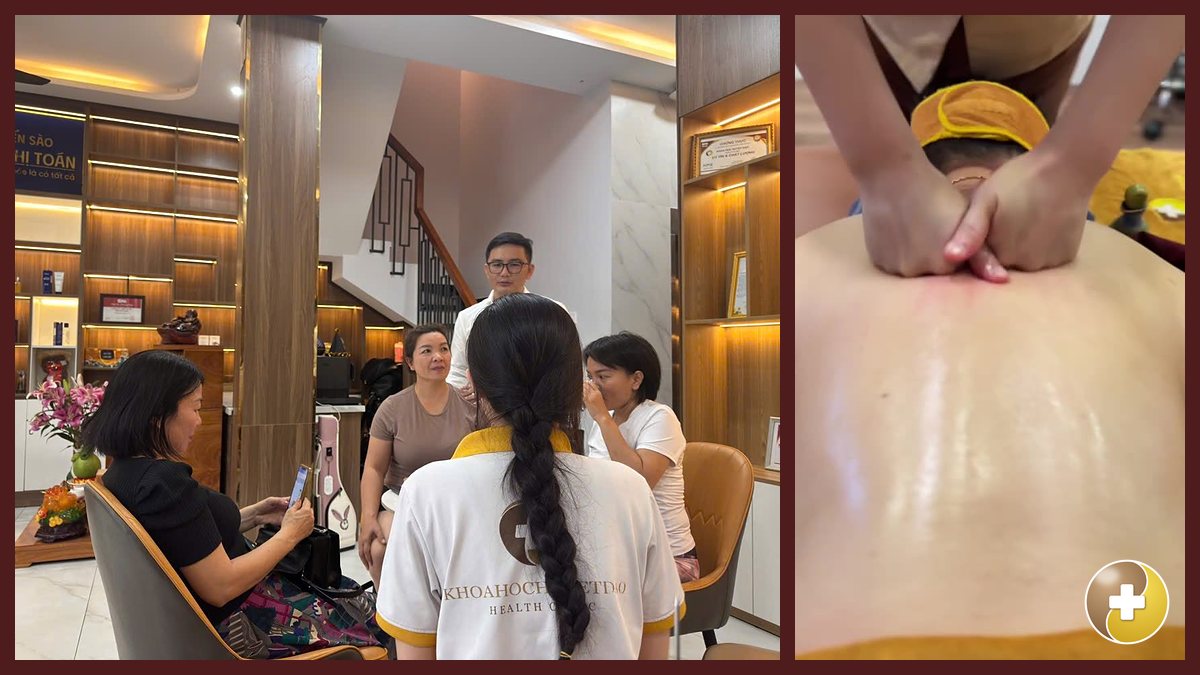
Quick answer: Shoulder and back pain from dairy farm work in New Zealand usually comes from hundreds of cups-on reaches per milking, lifting calves and 4 a.m. starts in cold rain. Warming up, swapping arms and enough sleep help. When you fly home, Tong Gia Acupoint Wellness in Ho Chi Minh City reads the spine by hand, releases the muscles and applies acupressure.
Want Lương Y Tống Văn Huynh’s team to read your spine and posture in person?
Why dairy farm work in New Zealand is so hard on your shoulders and back
It is 4 a.m. on a farm outside Morrinsville, Matamata or Te Awamutu in the Waikato, still dark, with fog lying thick over the paddocks. Further south, around Ashburton, Timaru or the plains near Christchurch, a southerly cuts through the milking shed. In Southland, around Invercargill and Gore, rain can set in for most of the week and winter brings frosty mornings. Many Vietnamese and other overseas workers on New Zealand dairy farms describe the same pattern: aches everywhere in the first month, then the shoulder on the working side starts to hurt, reaching up to a coat hook gives a sharp pain on the outside of the shoulder, the lower back is stiff every morning and the wrists feel tight.
The core of the job is milking. In a rotary shed the cows step onto a slowly turning platform while you stay in one spot; as each cow arrives you prep the teats, reach forward and put the cups on. A herd of several hundred means several hundred reaches, forward leans and wrist twists per milking, usually twice a day. In a herringbone shed the cows stand at an angle above the pit and the cups sit at or above your shoulder height, so your arms stay raised for most of the session.
From a Western medical point of view this is mostly mechanical overload: tendons, muscles and joints repeat the same movement far too often with too little rest. It is rarely a sign of disease in an internal organ. Three areas take most of the load:
- The shoulder and rotator cuff: the rotator cuff tendons wrap the head of the upper arm bone. The supraspinatus tendon runs through a narrow space under the bony tip of the shoulder; hundreds of reaches at or above shoulder height can irritate it, giving pain on the outer shoulder, pain when lifting the arm and pain lying on that side. The upper trapezius and levator scapulae hold the arm up all session, so the top of the shoulder and the neck feel like rope.
- Forearm and wrist: twisting the cluster, squeezing hoses, gripping the high-pressure washdown hose, opening gates and latches all load the wrist extensors at the outer elbow and the flexor tendons through the carpal tunnel.
- Lower back: reaching under the cow, lifting newborn calves, carrying calf-feeding buckets, dragging heavy hoses and hours on a quad bike over rough tracks.
Our guide to back and wrist pain from fruit picking in Australia covers stooping work; on a dairy farm the shoulder takes the heavier share because of all that reaching. To see how the neck, shoulders and back work as one axis, read the main guide on spine care after a long-haul flight.
Common causes: repetitive reaching, early starts, wind and rain
- Hundreds of cups-on per milking: the arm goes forward and up with the shoulder turned in, again and again. The rotator cuff never gets a break and small strains add up.
- One side doing more: right-handed milkers reach more with the right arm, so that shoulder becomes thicker and higher and the neck and upper back are pulled off line.
- 3:30 to 4 a.m. starts and split shifts: morning milking before dawn, a break, then afternoon milking into the evening. Broken sleep leaves muscles little time to recover.
- Cold, wind and rain: cold muscles are less elastic; wet hands, heavy wet-weather gear and gumboots restrict movement. Reaching hard straight away on a cold body is an easy way to get hurt.
- Calving season: most farms calve from late winter into spring (roughly July to September). Long runs of days, night checks, lifting calves, bucket feeding and cleaning pens pile load onto the back and shoulders.
- Quad bikes and paddocks: shifting electric fences and bringing cows in on rough farm tracks sends vibration up through the lower back.
- Not used to physical work: many newcomers were students or office workers whose shoulders and forearms had never carried this load.
The trip home is long too: from Southland or Canterbury you often fly from Invercargill or Christchurch to Auckland first, then on to Tan Son Nhat, often via Australia or Southeast Asia, so the whole journey can take most of a day. Sitting cramped after months of reaching is enough to stiffen the neck and shoulders further. Tết falls in January or February, mid-summer in New Zealand, while the herd is still milking, so many workers only get a short break; some go home during the dry-off period (around June and July) instead. Landing in Saigon's hot dry season also means adjusting from cool, damp air to heat.
Related signs to notice
- Outer shoulder pain when the arm is between shoulder height and overhead, easing as it comes down: common when a rotator cuff tendon is irritated under the tip of the shoulder.
- Night pain and trouble lying on that side: lying on an irritated tendon increases pressure on it.
- A hard ridge on top of the shoulder, tired neck, headache at the base of the skull after a shift: the upper trapezius and levator scapulae have been working nonstop.
- Heaviness between the shoulder blades and shallow breathing: the upper back tightens when the arms stay forward all session.
- Tired forearm, outer elbow pain when gripping the hose or twisting the cluster: overloaded wrist extensors.
- Numb fingers in the morning that ease after shaking the hand: may come from the median nerve in the carpal tunnel, sometimes from the lower neck. See numb fingers in cold weather.
- A stiff lower back on standing and pain when lifting calves.
- Cold hands and feet, stiff fingers on wet mornings, light sleep: in the Eastern view these are often linked with Kidney yang and Liver blood, explained below.
In Tong Gia's course, pain shows up in one place but often starts somewhere else: a sore shoulder can begin in the lower neck and upper back, numb fingers around C6–C7. That is why the staff read the whole spine, not just the sore spot. If the shoulder also hurts at night, see shoulder pain when sleeping on your side.
When to see a doctor
Most shoulder and back pain from milking settles with rest, enough sleep and proper stretching. Please see a doctor, rather than relying on massage, if you have any of the following:
- You were kicked, pinned against a rail, slipped on the shed floor or rolled a quad bike, and the shoulder is swollen, bruised, misshapen or you cannot lift the arm.
- The shoulder suddenly becomes weak, you cannot raise the arm even though it is not very painful, or you felt a "snap": a tendon may be torn and needs checking soon.
- Pain running from the neck down the arm with numbness, weakness or dropping the cups.
- Back pain spreading below the knee, numbness or weakness in the leg; numbness in the groin or buttocks, or loss of bladder or bowel control: go to emergency now.
- A hot, red, swollen joint with fever, or a scratch on the hand that becomes swollen and weeps after working with stock and effluent.
- Fever, headache and aching muscles after farm work: people who work with cattle can catch some infections from animals, so get checked and say you work on a dairy farm.
- Left shoulder or central chest pain with chest tightness, shortness of breath, cold sweat, or pain spreading to the jaw or left arm: call 111 in New Zealand or 115 in Vietnam. No massage. Right shoulder pain with discomfort under the right ribs and nausea after a fatty meal also needs a check, since Tong Gia's course notes liver and gallbladder problems can refer pain to the right shoulder.
- One swollen, painful, warm calf after a long flight may be a deep vein clot: get checked at once and do not rub the leg.
- Pain with unexplained weight loss, pain that worsens at night, or pain lasting more than 4–6 weeks.
If you are hurt at work, tell the farm owner or manager and get checked early so there is a record; in New Zealand, accident injuries may be covered through ACC. Tong Gia does not read X-rays or MRI scans and does not make medical plans; if you have results, tell the staff so they know which areas to work gently or avoid.
This is a wellness service, not medical care.
The Y Tướng Học view: shoulders, the Liver and tendons, the Kidney and cold
Y Tướng Học, the Vietnamese art of reading the face and body, rests on the idea that what happens inside shows on the outside. Lương Y Tống Văn Huynh organised this knowledge so practitioners can look first and then confirm with their hands on the spine. For dairy workers four organ systems are usually compared:
- Liver and the tendons. In Tong Gia's course, the Liver nourishes tendons and ligaments and stores blood; at rest blood returns to the Liver. When it is balanced, tendons are supple; when it is weak, muscles cramp and stiffen. A 4 a.m. start and broken sleep between milkings leave shoulder tendons working without being restored. Look at the nails: pink and firm is good; thin, ridged, brittle nails suggest you need more rest. The course also notes that the Gallbladder channel, paired with the Liver, helps ease the head, neck and shoulders, and when out of balance brings headaches and shoulder pain.
- Kidney and the cold. The Kidney governs bones and marrow, is tied to the lower back and knees and belongs to winter. The course advises keeping warm and sleeping early in winter, which a Southland morning milking does not allow. Thin, soft ears and a flat bone behind the ear are read as weak Kidney yang: an aching back and knees, feeling cold, icy hands and feet, sensitivity to the weather and deep aches when seasons change. A flat back of the skull is read as weak Kidney essence, with deep muscles at the top of the neck that tighten easily around C1–C3.
- Spleen and the limbs. The Spleen turns food into the energy that feeds muscles and limbs and shows on the lips. The course notes it likes dryness and dislikes damp: a wet shed, Southland rain and rushed meals between milkings tire it. Pale lips, bloating and weak arms suggest eating warm, regular meals.
- Lung and the chest, shoulders and upper back. Relaxing the shoulders, upper back and chest helps the ribcage move and breathing feel easier. Long sessions with raised arms in cold wind often bring shallow breathing and rounded shoulders.
Faces guide the hands too: high cheekbones with little padding often go with a tight, corded trapezius that cramps easily; a forehead with many scattered lines with tight scalp and shoulder-lifting muscles and neck ache rising to the head; a thin, bony nose with Liver–Kidney yin depletion and long-standing neck and shoulder tension. Uneven shoulders and a thicker working-side shoulder show one-sided work. This is observation for wellness care, not fortune telling and not a medical finding.
Vertebrae and nerve-reflex areas involved
In the Tong Gia method of spinal nerve-reflex balancing, the neck (C1–C7) relates to the head, face, neck, shoulders and arms, and the lumbar spine (L1–L5) to digestion, kidneys, urinary function and the legs. Muscle and joint aches are worked through the C5–C7, L1–L5 and S1–S5 areas together. For milkers the staff usually compare these areas:
| Vertebrae | Nerves / function (Western anatomy) | Common in dairy workers | Organ system (Eastern view) | Outer signs (Y Tướng Học) |
|---|---|---|---|---|
| C1–C3 | Atlas–axis joint for turning the head; suboccipital muscles; greater occipital nerve from C2 | Heavy head at the base of the skull after morning milking | Kidney, Liver | Flat back of the skull; many forehead lines |
| C3–C5 | Cervical plexus; phrenic nerve (C3–C5); upper trapezius, levator scapulae | Hard ridge on top of the shoulder, shoulder hitched up during cups-on | Liver (tendons) | High cheekbones with little padding |
| C5–C6 | Suprascapular nerve to supraspinatus and infraspinatus; axillary nerve to the deltoid | Outer shoulder pain on lifting, night pain on that side | Liver – Gallbladder | Uneven shoulders, thicker working-side shoulder |
| C6–C7 | C6–C7 roots: wrist extensors, triceps; sensation to thumb, index and middle finger | Tired forearm, outer elbow pain gripping the hose | Liver | Dry ridged nails; thin bony nose |
| C7–T1 | Neck–chest junction; C8–T1 roots to the small hand muscles and little finger | Hard bump at the base of the neck, stiff cold fingers in the morning | Kidney – Bladder | Head carried forward, rounded upper back |
| T3–T6 | Rhomboids, spinal erectors; upper thoracic sympathetic chain; Lung shu area at T3 | Heaviness between the shoulder blades, shallow breathing in cold wind | Lung, Heart | Rounded shoulders, dry skin |
| L3–L5 | Femoral nerve roots (L2–L4); L4–L5 help form the sciatic nerve | Lower back pain lifting calves or after long quad bike rides | Kidney | Thin ears, flat bone behind the ear; cold back and knees |
The table lists related areas so the hands know where to read carefully; it is not a statement of cause. That is why Tong Gia does not just rub the sore shoulder but starts at the neck, the base of the neck and between the shoulder blades before moving to the shoulder, arm and forearm.
How Tong Gia helps your shoulders and back rebalance when you fly home
Each session follows the spinal nerve-reflex balancing massage developed by Lương Y Tống Văn Huynh, a Vietnamese method rooted in traditional Eastern practice. He founded Tong Gia Acupoint Wellness (Huyệt Đạo Tống Gia) and has over 13 years in Eastern wellness care, Y Tướng Học and spinal nerve-reflex balancing. The aim is to help each spinal area and the related organ functions come back into balance, by hand.
- Talk and observe: rotary or herringbone, which arm puts the cups on, how many seasons, whether you have just finished calving, where it hurts, any numbness or pain down the leg, any kicks or falls, whether you have already been checked in New Zealand. Then the face, lips, nails, ears, nose bridge, posture and shoulder levels are observed.
- Read the spine by hand: skin temperature, the muscle layer, the shape of the spine and the feeling at each point, left against right, top against bottom, from the neck to the sacrum, narrowing down to the key zones and points. Long-time milkers often have a much harder ridge on top of the working shoulder and along the inner edge of that shoulder blade.
- Release the muscles: trapezius, levator scapulae, the muscles around the shoulder blade, the back and outside of the shoulder, then the arm, forearm and wrist; then the spinal erectors, quadratus lumborum and glutes. Pressure builds through five levels and you are asked how it feels. Only active, tight, warm zones are worked; swollen, hot areas after a knock are left alone.
- Acupressure on the right points: Phong trì and Thiên trụ at the back of the neck, Kiên tỉnh on top of the shoulder, Đại chùy at the base of the neck, Thiên tông on the shoulder blade and Thận du at the lower back, working each point until the skin turns from dry to slightly moist.
- Self-care advice: a few moves to warm the shoulder before milking, standing closer to cut down reaching, wrist and back stretches between milkings, to take back to the farm.
A typical session after a long milking season goes like this: you lie face down and the practitioner works down from the neck, pausing at the top and inner edge of the shoulder blade on your cups-on side, where the muscle feels like rope, and at the outer shoulder, which feels deeply tender. As the muscles let go, the soreness eases, the shoulder warms and lifting the arm feels freer. Many people sleep deeply that night; some feel a little sore for a day before it lightens. Everyone responds differently and Tong Gia does not promise the pain will be gone after one session.
Want Lương Y Tống Văn Huynh’s team to read your spine and posture in person?
Suitable services and prices
- Neck–shoulder / back care, 60 minutes: 550,000₫ (about 21 USD), first visit 399,000₫ (about 15 USD); 90 minutes: 750,000₫ (about 29 USD). Focus on the neck, shoulders, shoulder blades and upper back; choose 90 minutes if the lower back hurts as well. See neck and shoulder massage.
- Extra 30 minutes on one area: 199,000₫ (about 8 USD). Added time for the arm, elbow, forearm and wrist.
- Cold-dispelling cupping, 30 minutes: 85,000₫ (about 3 USD). For a back and shoulders that feel chilled after a wet winter, done after the muscle work when skin and health allow.
Prices use a reference rate of 1 USD ≈ 26,000₫; payment is in VND. Full list: prices.
From Tan Son Nhat Airport to a branch
The District 12 branch (225 Dương Thị Mười, Phường Tân Chánh Hiệp, District 12) is north of the airport and usually a short drive outside rush hour. The Vinhomes Grand Park branch (Căn T16-21 khu Manhattan, Vinhomes Grand Park, Phường Long Bình, TP. Thủ Đức – Thu Duc City) is further away, so avoid the late-afternoon rush. If your family lives in Go Vap, Hoc Mon or District 12, choose District 12; for Thu Duc, Binh Duong or Dong Nai, Vinhomes Grand Park is closer. See massage near Tan Son Nhat Airport.
Self-care on the farm and a plan for your trip home
- Warm the shoulders before milking: 3–5 minutes of shoulder rolls, pendulum swings, opening and closing the hands and wrist circles; add a warm layer under your wet-weather gear.
- Reach less: stand closer to the cow, keep the elbow near your body, use both hands on the cluster where you can and swap arms if possible; in a herringbone, check whether the pit floor can be raised.
- Short breaks for the shoulders: let the arms hang, squeeze the shoulder blades back ten times, tilt the head to stretch each side of the neck for 15–20 seconds, and gently stretch the fingers back to ease the forearm.
- Protect the back when lifting calves: get close, bend knees and hips, hold the calf against you and stand up with your legs; turn with your feet, not your waist. See back pain after lifting something heavy.
- Warm up and catch up on sleep: rub your palms warm and rub both sides of the lower back 50–100 times, take a warm shower and a nap between milkings if you can.
| When | What your body needs | What to do |
|---|---|---|
| Last week on the farm | No extra load | Ask to swap a few shifts if the shoulder already hurts, sleep well before you fly, pack a bag you can lift |
| Domestic and international flights | Keep the neck and shoulders from stiffening | Stand up hourly, roll the shoulders, rise onto your toes, use a neck pillow, sip water |
| Arrival day | Unwind and sleep | Warm shower, easy walk, early night on Vietnam time (about 6 hours behind New Zealand in its summer) |
| Days 2–3 | Release months of reaching | A 90-minute neck–shoulder session, or 60 minutes plus 30 for the arm and wrist |
| Tết days | Real rest for the shoulder | Avoid heavy lifting, one-handed carrying and long phone sessions |
| 3–5 days before flying back | Prepare for the rest of the season | A lighter session and practise your warm-up and wrist stretches |
For a fuller holiday routine, see the 7-day wellness plan for a Tết visit. Workers in cold environments may also like stiff hands and back from cold storage work.
Book from New Zealand before you fly
You can book from the farm in the Waikato, Canterbury or Southland, or once you reach Auckland. Call, Zalo or WhatsApp +84 888 264 559 (0888 264 559 in Vietnam) and send three things: your landing date and time at Tan Son Nhat, where it hurts (top of the shoulder, outer shoulder, shoulder blade, wrist or lower back) and which branch you prefer. Vietnam is several hours behind New Zealand, so a message after afternoon milking arrives during Saigon working hours. You can also book online; tips are in booking a massage in Saigon from abroad.
- District 12 branch: 225 Dương Thị Mười, Phường Tân Chánh Hiệp, Ho Chi Minh City. Open 8:00–19:00 daily.
- District 9 branch: Căn T16-21 khu Manhattan, Vinhomes Grand Park, Phường Long Bình, TP. Thủ Đức. Open 9:00–20:00 daily.
Slots fill up before Tết, so message early. Real customer reviews are on Google Maps on each branch page.
Visit us
- Đông Y Huyệt Đạo Tống Gia Quận 12 (District 12)
225 Dương Thị Mười, Phường Tân Chánh Hiệp, Quận 12, HCMC · 8:00–19:00 daily · 0888 264 559 · Directions on Google Maps - Đông Y Huyệt Đạo Tống Gia Quận 9 (Vinhomes Grand Park, District 9)
Căn T16-21 khu Manhattan, Vinhomes Grand Park, Phường Long Bình, TP. Thủ Đức, HCMC · 9:00–20:00 daily · 0888 264 559 · Directions on Google Maps
Map of our two branches
Want Lương Y Tống Văn Huynh’s team to read your spine and posture in person?
What guests say on Google Maps
“Solid service, attentive advice.” (translated from a Vietnamese review)
— Danh T., Google Maps review · District 12 branch · 2024 · See on Google Maps
“Good service, and the receptionist is lovely!” (translated from a Vietnamese review)
— Minh T. L., Google Maps review · District 12 branch · 2025 · See on Google Maps
Quoted from public reviews, shortened where marked (…). Experiences vary from person to person; reviews are not a substitute for seeing a doctor when something feels wrong.
Related guides for your trip
- Forestry work in Japan and New Zealand: back pain and numb hands from the chainsaw, and care on home leave
- Frequent-Flying Parcel Couriers With Heavy Suitcases: Sore Shoulders, Aching Back and Poor Sleep
- Crane operators abroad: neck and back pain from looking down all shift, and care on a visit to Vietnam
FAQ
Is shoulder and back pain from dairy farm work in New Zealand serious? Usually it is overload: hundreds of cups-on per milking tire the rotator cuff and trapezius, and lifting calves or reaching under cows stiffens the lower back. It tends to settle with rest, sleep and warming up before milking. See a doctor at once after a kick or fall, if the shoulder turns weak, or with constant numbness or pain below the knee.
I milk in a rotary shed in the Waikato and the outside of my shoulder hurts. What is it? Outer shoulder pain when the arm is between shoulder height and overhead, plus night pain lying on that side, often comes from an irritated rotator cuff tendon under the tip of the shoulder. Get it checked, especially if the arm is weak or after a knock. Standing closer, keeping the elbow in and swapping arms reduce the load.
Milking in cold Southland rain leaves my neck stiff and hands numb. What helps? Wear a warm layer under your wet-weather gear, warm up shoulders and wrists for 3–5 minutes before milking and dry your hands at breaks. In the evening take a warm shower and rub the lower back warm. If numbness lasts all day, the hand turns weak or fingers change colour in the cold, see a doctor.
Can I get a massage for lower back pain during calving season in Canterbury? Back pain from lifting calves and carrying buckets is often tight muscle, and massage helps it relax and improves sleep. First rule out warning signs: pain down the leg, numbness, weak legs, bladder changes or fever need a medical check. Back in Ho Chi Minh City, a 90-minute neck–shoulder / back session covers both areas.
Should I get a shoulder massage right after flying home from Auckland? Most people sleep one night first and book for day two or three. Before the session Tong Gia staff ask about your farm work, where it hurts, any falls, numbness or a swollen calf after the flight; if something looks unusual they suggest a medical check first.
How much is a shoulder and back session at Tong Gia in Ho Chi Minh City? Neck–shoulder / back care is 550,000₫ for 60 minutes (about 21 USD; first visit 399,000₫), 750,000₫ for 90 minutes (about 29 USD); an extra 30 minutes for the arm and wrist is 199,000₫ and cold-dispelling cupping is 85,000₫. Payment is in VND. This is wellness care, not a replacement for medical advice.
Author: Lương Y Tống Văn Huynh – founder of Huyệt Đạo Tống Gia, a master of traditional Vietnamese wellness with over 13 years in Eastern wellness care, Y Tướng Học (face reading) and spinal nerve-reflex balancing massage.
Updated: 2026-11-18
Related guides
- Shoulder and back strain from welding work in Korea: overhead and squatting welds, heavy gear, care on leave
- Shoulder and back pain from dairy farm work in New Zealand: causes and care when you fly home for Tết
- Working in Singapore and flying home for Tết: neck and shoulder pain, and how to look after it on a short trip
- Neck, shoulder and wrist pain from garment factory work in Japan: causes and recovery on your trip home
- Shoulder pain from heavy gym training: why it stiffens on a trip to Vietnam and how to care for it in Saigon
- Neck, shoulder and lower back pain for US nail technicians visiting Vietnam: causes and care on your Tết trip
This is a wellness service, not medical care.