
Working in Singapore and flying home for Tết: neck and shoulder pain, and how to look after it on a short trip
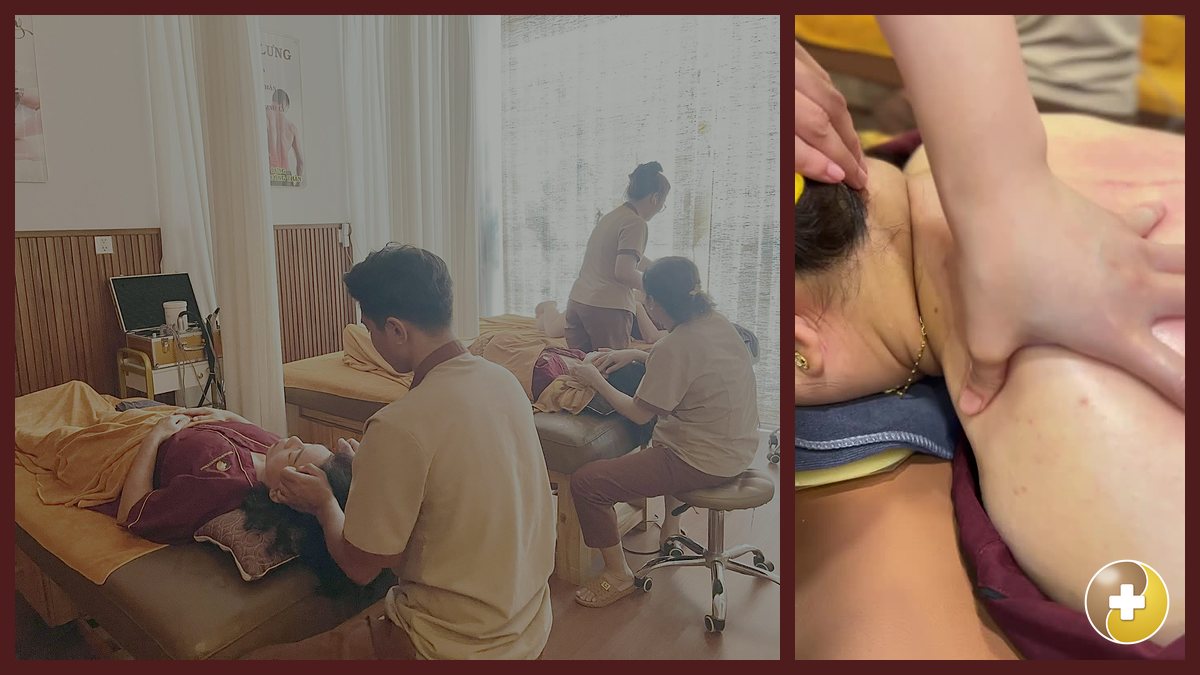
Quick answer: People working in Singapore or Malaysia often fly home for Tết with neck and shoulder pain: long desk hours under cold air-con, short sleep, then two hours into tropical heat. Keep your neck warm, stand every hour and book one session early in the trip at Tong Gia Acupoint Wellness in Ho Chi Minh City.
Want Lương Y Tống Văn Huynh’s team to read your spine and posture in person?
Why a desk job in Singapore shows up in your neck when you fly home
Singapore and Kuala Lumpur are hot and humid all year, and at the end of the year the northeast monsoon adds a heavy shower most afternoons. Outside, your shirt sticks to your back; inside, the office air-con is cold enough that many people keep a jacket on their chair. Vietnamese professionals in banking, tech, logistics and audit around Raffles Place, One-North and Changi Business Park, or in the towers of KL Sentral, Bangsar South and Penang, often work from morning until late evening, grab lunch at a food court and go straight back to the screen. Students in Singapore, Kuala Lumpur and Johor Bahru sit in chilly libraries until late and ride the MRT or LRT with a laptop backpack every day.
What sets this group apart from Vietnamese living in the US or Australia is how close home is. A flight from Singapore or Kuala Lumpur to Tân Sơn Nhất takes about two hours, and Vietnam is only one hour behind, so there is practically no jet lag. Because it is so close, many people fly home several times a year: a long weekend, a public holiday and Tết, which falls on Lunar New Year, a public holiday in both Singapore and Malaysia. And because it is close, everyone squeezes the trip: straight from the office to the airport on Friday night, back at the desk on Monday morning. The neck has been tight all year, and at home there is the Tết market, shopping with parents, visiting relatives, then another flight.
The complaints sound familiar: a back of the neck that feels like a steel rod, heavy shoulders, a pull when you turn your head, an ache across the shoulder blade on the mouse side, a heavy head by evening, sleep that never goes deep. In Western terms this is mostly mechanical neck pain from posture and sustained muscle tension. An adult head weighs about 4.5–5.5 kg; when you look down at a laptop or phone it drifts forward, and the upper trapezius, levator scapulae, splenius capitis and small suboccipital muscles under the skull have to brace nonstop to hold it. Muscles held in one position for hours get less blood flow, waste products build up and you feel heaviness, heat and tender knots. Cold air on the neck makes muscles contract to keep warm, while short sleep and work stress lower your pain threshold, so the same tension simply hurts more.
It shows up most in:
- Office staff, finance professionals and software engineers in Singapore working 9–10 hours a day with back-to-back regional calls.
- People in Kuala Lumpur, Penang or Cyberjaya on two monitors, head turned to one side all day.
- Johor Bahru residents who cross into Singapore for work every day, with long waits and long rides.
- Students revising in air-conditioned libraries, dozing on the desk, carrying a heavy bag on one shoulder.
- Anyone who flies home "red-eye style" and answers email on their parents' sofa.
This guide is for you, and for family in Saigon who hear the same complaint every visit. For the wider picture of neck, back and lower back after flying, read our main guide on spine care after a long-haul flight. If you work US hours remotely instead, the situation is very different (12–15 hours of time difference, night calls); see working US hours remotely from Vietnam.
Common causes: cold air-con, long hours, short trips
- Cold office air-con all day. Sitting still under a vent for 8–10 hours keeps the back of the neck and the top of the shoulders cold. Muscles contract to hold heat and slowly stiffen. Stepping out into 32°C humidity and back into the cold keeps your body adjusting all day.
- Long hours and stacked meetings. In finance and tech hubs the day often runs well past office hours. Three or four hours without standing keeps the back of the neck stretched and braced.
- Two screens, mouse on one side. A second monitor off to the side keeps your head turned; a mouse placed far away lifts that shoulder. See right shoulder pain from mouse use.
- Phone on the MRT. Thirty to sixty minutes standing, one hand on the rail, the other on the phone, head down over work messages. A laptop backpack on one shoulder tilts you sideways.
- Short, late sleep. Late finish, late dinner, messages until midnight. Short nights leave little time for muscles to truly let go.
- Trips that are too short. A two-hour flight in a tight seat after a full workday, dozing with your head tipped against the window, arriving near midnight and running errands from the next morning.
- Unfamiliar beds and pillows in your old room at your parents' place. See stiff neck from unfamiliar beds on trips home.
- Tết chores. Carrying market bags and potted apricot trees, cleaning the house, riding parents around on a motorbike, driving to the hometown.
- Year-end pressure. Closing the books, performance reviews, sending money home, visa or contract worries. Stress lifts the shoulders and clenches the jaw without you noticing.
Related signs to watch for
- Heaviness at the base of the skull, ache at the temples late in the day or after long hours in a cold room.
- A cold neck and shoulders, sometimes spreading down the arm, so you reach for a jacket even when it is hot outside.
- Blocked nose, dry throat, sneezing when moving between cold rooms and humid heat; Saigon's dry season dries the nose further. See blocked nose in hot weather and air-con.
- Burning between the shoulder blades when you slouch: rhomboids and upper back muscles under strain.
- Brief tingling in the fingers after long typing or sleeping on your arm: the C5–C7 area and brachial plexus are tense.
- Dry, tired eyes and irritability after a day of screens, which Đông y (traditional Eastern health theory) links to the Liver.
- Light sleep and bloating from rushed lunches and late dinners.
As the Tong Gia training manual puts it, pain shows up in one place, but its source often sits somewhere else: the vent above your desk, a badly placed second screen, or a run of five-hour nights.
When to see a doctor
Most desk-related neck stiffness eases with rest, sleep, warmth and stretching. Do not wait, and do not use massage instead of medical care, if you notice:
- Neck, shoulder or upper back pain with chest tightness, shortness of breath, sweating, or pain spreading to the jaw or left arm: in Vietnam call 115 right away.
- Facial droop, slurred speech, weakness or numbness on one side, double vision, unsteady walking: call 115.
- A sudden, severe headache with high fever and a neck too stiff to bring your chin to your chest.
- Arm weakness or numbness that keeps getting worse, dropping things, weakness in both arms or legs.
- Pain after a fall, a blow to the head or neck, or a motorbike accident during your visit.
- Pain that grows at night despite rest, with fever, unexplained weight loss or lasting exhaustion.
- After flying, one calf swollen, hot and painful, or sudden breathlessness and chest pain: a possible blood clot. A two-hour flight carries less risk than a long haul, but several flights in a row still count.
- Neck pain that has lasted months and keeps getting worse.
If these signs appear, please see a doctor or go to a medical facility first, in Singapore, Malaysia or Ho Chi Minh City. Tong Gia does not read X-rays or MRIs and does not give medical opinions or plans. If you already have results from a provider, tell the staff so they know which areas to work gently or avoid.
This is a wellness service, not medical care. Huyệt Đạo Tống Gia is a traditional Vietnamese wellness service using the hands.
The Y Tướng Học view: Liver, Lung, Heart and Spleen
Y Tướng Học, the Vietnamese art of reading the body's outward signs, rests on the saying "the signs are outside, the organs are inside." Lương Y (traditional practitioner) Tống Văn Huynh organised this knowledge so Tong Gia staff read the face and posture before they touch the neck. For people working in cold offices in Singapore and Malaysia, four organ systems come up most.
Liver: tendons and stored blood. In the Tong Gia manual, the Liver nourishes tendons and ligaments and supports movement; when it is weak, muscles stiffen, cramp and lose flexibility. At rest, blood returns to the Liver to be restored; in activity, the Liver sends it out to muscles and tendons. Sitting in one posture all day with short nights means less of that restoring rest. The Liver opens into the eyes, so a day of screens leaves them dry and red, and it is tied to frustration: year-end deadlines make Liver qi stagnate and the shoulders bind. Knitted brows and a creased forehead show face and neck muscles bracing; high cheekbones with little padding are associated in the manual with a ropy, cramp-prone trapezius.
Lung: skin and protective qi. The manual describes the Lung as governing qi, nourishing skin and hair and holding the protective qi that keeps out external influences; when weak, people catch colds easily, sweat easily and have dry skin. The Lung opens into the nose. Sitting under cold air all day and moving in and out of humid heat means, in Đông y terms, that this outer "shield" is working overtime, and wind-cold settles easily in the neck, shoulders and upper back. The manual describes the Đồng face (long but square, firm bone and muscle) as a Metal type ruled by the Lung, with the upper back at T3 (the Phế du point) prone to tightness and a raised vertebra that affects breathing.
Heart and Spleen: sleep and muscle. In Đông y the Heart covers blood vessels and also the mind: mood, emotion, sleep. Sleeping poorly "from the Heart" does not mean heart disease. The Spleen governs muscle and the limbs and turns food into qi and blood; the manual notes that heavy worrying harms the Spleen and drains Heart blood, bringing palpitations, poor sleep and poor appetite. Rushed lunches at the desk, late dinners and worrying about work in Singapore and family in Vietnam fit that picture.
A forehead full of irregular lines is read as long-term mental pressure that tightens the forehead and upper shoulder muscles. These are wellness observations, not fortune-telling or a medical label.
Vertebrae and nerve-reflex areas involved
In Tong Gia's spinal nerve-reflex balancing method, the cervical spine C1–C7 relates to the head, face, neck and arms, and the thoracic spine D1–D12 (T1–T12) to circulation, breathing and digestion. Nerve roots leave between the vertebrae, which is where the hands read the spine.
| Vertebrae | Nerves / function (anatomy) | What you notice in a cold office | Organ (Đông y) | Outer sign (Y Tướng Học) |
|---|---|---|---|---|
| C1–C2 | Atlas–axis joint for turning the head; suboccipital muscles; greater occipital nerve from C2 | Heavy head at the base of the skull by evening, worse under a cold vent | Liver, Kidney | Giáp face (wide forehead, pointed chin): C1–C2 runs warm |
| C3–C4 | Cervical plexus; phrenic nerve (C3–C5) to the diaphragm; upper trapezius, levator scapulae | Tight sides of the neck, raised shoulders while typing, shallow breathing in tense meetings | Liver (tendons), Lung (breath) | Creased forehead, knitted brows |
| C5–C7 | Roots to shoulder, arm and fingers (brachial plexus C5–T1) | Ache on the mouse side, brief finger tingling after typing | Liver | Uneven shoulders, high cheekbones |
| C7–T1 | Neck–chest junction, loaded when the head juts forward | A firm, cold hump at the base of the neck after hours under a vent | Lung (protective qi), Kidney–Bladder line | Forward head, rounded upper back |
| T1–T4 (T3 = Phế du) | Upper thoracic sympathetic chain (heart rate, airways); rhomboids | Ache between the shoulder blades, shallow breathing, blocked nose in cold rooms | Lung, Heart | Đồng face: T3 tight or raised; dry skin |
| T11–T12 | Lower intercostal nerves, abdominal wall; thoracolumbar junction | Mid-back ache after long sitting, bloating from rushed meals | Spleen–Stomach | Điền face: thick back muscles, broad tightness at T11–T12 |
The table shows related areas to examine, not causes. The manual groups neck stiffness with muscle and joint issues (working C5–C7, L1–L5, S1–S5 together) and headache and poor sleep with the nervous system group (C1–C7, T1–T3 and the sacrum), so someone with both a stiff neck and poor sleep is read from neck to sacrum, not just squeezed at the shoulders.
How Tong Gia helps rebalance your neck on a short trip
Every session follows the spinal nerve-reflex balancing massage of Lương Y Tống Văn Huynh, founder of Huyệt Đạo Tống Gia, with over 13 years in traditional Vietnamese wellness, Y Tướng Học and this method. It is an Eastern, hands-only approach built in Vietnam, and worth trying while you are in Ho Chi Minh City. On a two- or three-day trip, one thorough session at the start usually does more than several rushed ones.
- Talk and observe: how many hours you work, how many screens, which hand uses the mouse, whether you sit under a vent, how you commute, how long you sleep, any tingling, dizziness, blocked nose or bloating. Then posture, shoulder height, complexion, brows, forehead lines, cheekbones, dry or moist skin.
- Read the spine by hand: along C1–C7 and T1–T12 down to the sacrum, checking four things from the manual: skin temperature, muscle padding, vertebral shape and sensation, comparing left and right. Overactive zones (warmer skin, tight muscle, more pain) get the focus. People from cold offices often have a base of the neck and upper back that feels cooler than the surrounding skin.
- Release the muscles: suboccipitals, trapezius, levator scapulae, the shoulder blade on your mouse side, upper and lower back, from light to firm pressure on the manual's five levels, checking in with you.
- Acupressure on the right points: Fengchi (Phong Trì) and Tianzhu (Thiên Trụ) at the back of the neck, Jianjing (Kiên Tỉnh) on top of the shoulder, Dazhui (Đại Chùy) at the base of the neck, used in the manual for colds, Feishu (Phế du) on the upper back, Tianzong (Thiên Tông) on the shoulder blade and Taichong (Thái Xung) on the foot for stress. Pressure stops when the skin over the key point turns from dry to slightly moist.
- Self-care to take back: two or three moves you can do at your desk in Singapore or Malaysia.
During the session you may feel tender spots at the back of the neck, on top of the shoulders and between the blades, stronger on the mouse side. As the muscles let go, that usually fades, you warm up, the back of the neck feels less cold and turning your head gets easier. Some people doze off on the table, some sleep longer that night, some feel a little sore for a day before the lightness comes. Everyone responds differently, and Tong Gia does not promise the pain will be gone after one visit.
Services and prices
- Neck and shoulder care, 60 min: 550,000 VND (about US$21); first visit 399,000 VND (about US$15). For a stiff neck and heavy head after a year at the desk, when the trip has room for one session.
- Neck and shoulder care, 90 min: 750,000 VND (about US$29). For years of office work with upper and lower back tension and light sleep.
- Cold-release cupping (giác hơi bài hàn), 30 min: 85,000 VND (about US$3). An add-on after neck care for people whose neck and upper back feel cold from air-con; staff check your skin first. See Vietnamese cupping vs cupping abroad.
Reference rate 1 USD ≈ 26,000 VND; payment is in VND. Full list on the price page and the neck and shoulder massage page.
From Tân Sơn Nhất airport
Flights from Singapore and Kuala Lumpur usually arrive at the international terminal of Tân Sơn Nhất. The District 12 branch lies north of the airport and is usually a short drive, depending on the hour and traffic. Vinhomes Grand Park in Thu Duc City is farther and takes longer, especially in evening rush hour and the days before Tết. If your parents live in Gò Vấp, Hóc Môn or District 12, the District 12 branch is handy; for Thu Duc, old District 9 or Bình Dương, Vinhomes Grand Park is closer. On an early flight you can stop on the way home; see massage near Tân Sơn Nhất airport.
Want Lương Y Tống Văn Huynh’s team to read your spine and posture in person?
Self-care in Singapore, Malaysia and during your visit
In a cold office
- Ask to move or turn your chair so the vent does not blow on your neck; keep a light scarf or collared layer on your chair.
- Put the main screen straight ahead with the top at eye level and the second screen right beside it. Raise the laptop and use a separate keyboard and mouse.
- Keep a water bottle on the desk; cold, dry rooms make you forget to drink.
- Stand every 45–60 minutes; take listen-only calls standing up.
Five moves in five minutes
- Chin tucks: sit tall, draw the chin straight back, hold 5 seconds, 8–10 times.
- Shoulder rolls: up, back, down, 10 slow circles.
- Chest opener: stand, clasp hands behind you, draw shoulders back, hold 10–15 seconds, 5 times.
- Side neck stretch: ear toward shoulder, same-side hand pulling very lightly, 15 seconds each side, no jerking.
- Warm the neck: rub your palms warm, place them on the base of the neck and stroke down to the shoulders 20–30 times after long spells under a vent.
On the commute and at home
- Wear your backpack on both shoulders, close to the back; lift the phone to eye level on the MRT.
- On the two-hour flight, sit upright and use a neck pillow if you plan to sleep.
- Try the pillow at your parents' place; if it is too high, use a folded towel.
- Split heavy Tết chores, bend your knees to lift and do not lift with your shoulders.
- From the Tong Gia manual: slow belly breathing before bed (in through the nose for about 4 seconds, out for about 6, for 5–10 minutes), gentle pressing on Shenmen (Thần môn) at the wrist crease for 1–2 minutes each side, and aiming to sleep before 11 pm at least during the visit.
Students in exam season can read stiff neck and headaches from late-night studying; if your neck locked up right after landing, see stiff neck after a flight.
A suggested plan for a weekend home and for Tết
People working in Singapore and Malaysia usually come home in two ways: a weekend (Friday night to Sunday night or Monday morning) and a longer Tết break. Adjust to your flight times and family plans.
| When | What your neck needs | What to do |
|---|---|---|
| 3–7 days before flying | A slot waiting for you | Message on Zalo or WhatsApp with your landing time; book early before Tết |
| Friday night flight | No dozing with a bent neck | Light meal before boarding, neck pillow, water; warm shower and early night at home |
| Saturday morning | Release after a year at the desk and the flight | Neck and shoulder care, 60 or 90 min, plus cold-release cupping if your neck runs cold; District 12 opens at 8:00 |
| Saturday afternoon – Sunday | Do not tighten up again | Market and family visits, but share the heavy lifting; short nap; no laptop on the sofa |
| Sunday before flying | Loosen up before the new week | Five moves, warm the neck; pack a scarf for the cabin |
| Tết break (4–6 days) | Some real rest days | One session on day one or two; a lighter one mid-trip if you drive to the hometown or carry a lot |
| First week back in Singapore or Malaysia | Keep the new habits | Move away from the vent, fix the screens, stand every hour |
Because home is close, many people come back three or four times a year. One session on the first day of each visit helps stop tension carrying over from trip to trip. Families flying home together can book several people at once.
Book from Singapore or Malaysia before you fly
You can book while still in Singapore, Kuala Lumpur, Penang or Johor Bahru, even during your lunch break. Call, Zalo or WhatsApp +84 888 264 559 (0888 264 559 inside Vietnam) with your landing date and time at Tân Sơn Nhất, where it aches (back of the neck, top of the shoulders, between the blades, any tingling, a cold neck) and which branch you prefer. Family in Saigon can book for you too. You can also book online or read how to book a massage in Saigon from abroad.
- District 12 branch: 225 Dương Thị Mười, Phường Tân Chánh Hiệp (Tan Chanh Hiep Ward), Ho Chi Minh City. Open 8:00–19:00 daily (9:00–20:00 Singapore and Malaysia time).
- Vinhomes Grand Park branch: Căn T16-21 khu Manhattan, Vinhomes Grand Park, Phường Long Bình, TP. Thủ Đức (Thu Duc City). Open 9:00–20:00 daily (10:00–21:00 Singapore and Malaysia time).
Slots fill up before Tết, so message early and ask about availability over the holiday. Real customer reviews are on Google Maps on each branch page.
Visit us
- Đông Y Huyệt Đạo Tống Gia Quận 12 (District 12)
225 Dương Thị Mười, Phường Tân Chánh Hiệp, Quận 12, HCMC · 8:00–19:00 daily · 0888 264 559 · Directions on Google Maps - Đông Y Huyệt Đạo Tống Gia Quận 9 (Vinhomes Grand Park, District 9)
Căn T16-21 khu Manhattan, Vinhomes Grand Park, Phường Long Bình, TP. Thủ Đức, HCMC · 9:00–20:00 daily · 0888 264 559 · Directions on Google Maps
Map of our two branches
Want Lương Y Tống Văn Huynh’s team to read your spine and posture in person?
What guests say on Google Maps
“Very good quality service! Warm staff.” (translated from a Vietnamese review)
— Tài T., Google Maps review · District 12 branch · 2025 · See on Google Maps
Quoted from public reviews, shortened where marked (…). Experiences vary from person to person; reviews are not a substitute for seeing a doctor when something feels wrong.
Related guides for your trip
- Crane operators abroad: neck and back pain from looking down all shift, and care on a visit to Vietnam
- Lion Dance at Tet Overseas: Sore Shoulders, Tired Knees and an Aching Back After the Season
- Neck, shoulder and lower back pain for US nail technicians visiting Vietnam: causes and care on your Tết trip
FAQ
I work in Singapore and fly home for Tết with neck and shoulder pain. What should I do? It is usually muscle strain from long desk hours in cold air-con and short sleep, plus the flight and Tết chores. Keep your neck warm, stand every hour, do a few neck stretches, sleep before 11 pm during the visit and book one neck session early in the trip. Chest pain, breathlessness or worsening arm weakness means getting checked at once.
Is a stiff neck from sitting in cold office air-con all day serious? Usually not: cold air makes neck muscles contract to keep warm, and long sitting keeps them braced, so they stiffen and the head feels heavy. Move away from the vent, wear a light scarf and stand every 45–60 minutes. A stiff neck with high fever or a sudden severe headache needs medical attention right away.
Is a massage worth it if I'm only home for two or three days? Yes, if it is muscle tension. Book the morning of your first full day so you have time to rest afterwards; one thorough 60- or 90-minute neck session usually does more than several rushed ones. District 12 opens at 8:00 and Vinhomes Grand Park at 9:00.
How long is the flight from Kuala Lumpur to Saigon, and will I get jet lag? Flights from Kuala Lumpur or Singapore to Tân Sơn Nhất take about two hours, and Vietnam is one hour behind, so there is practically no jet lag. Tiredness comes mainly from flying after work in a tight seat; an early night is usually enough.
My neck always feels cold from air-con. Should I try cupping? Cold-release cupping (30 min, 85,000 VND, about US$3) is often added after neck care for people whose neck and upper back feel cold. Staff check your skin and health first; it is skipped on broken skin or if you have a fever.
How much is neck and shoulder care at Tong Gia? Neck and shoulder care is 550,000 VND for 60 minutes (about US$21; first visit 399,000 VND, about US$15) and 750,000 VND for 90 minutes (about US$29). Cold-release cupping is 85,000 VND for 30 minutes. Reference rate 1 USD ≈ 26,000 VND; payment in VND.
Can I book from Singapore before I fly? Yes. Message +84 888 264 559 on Zalo or WhatsApp with your landing time at Tân Sơn Nhất, where it aches and your preferred branch. Opening hours are 9:00–20:00 (District 12) and 10:00–21:00 (Vinhomes Grand Park) Singapore time. Book early before Tết.
Author: Lương Y Tống Văn Huynh – founder of Huyệt Đạo Tống Gia, a master of traditional Vietnamese wellness with over 13 years in Eastern wellness care, Y Tướng Học (face reading) and spinal nerve-reflex balancing massage.
Updated: 2026-11-18
Related guides
- Shoulder and back strain from welding work in Korea: overhead and squatting welds, heavy gear, care on leave
- Working in Singapore and flying home for Tết: neck and shoulder pain, and how to look after it on a short trip
- Neck, shoulder and wrist pain from garment factory work in Japan: causes and recovery on your trip home
- Shoulder pain and a stiff neck from swimming and surfing in Australia: why it builds and how to care for it
- Elbow and shoulder pain from golf and pickleball: why it builds after 55 and how to care for it in Vietnam
- Stiff neck and headaches from studying late for exams: why low desks and laptops strain the neck
This is a wellness service, not medical care.