
Shoulder pain from heavy gym training: why it stiffens on a trip to Vietnam and how to care for it in Saigon
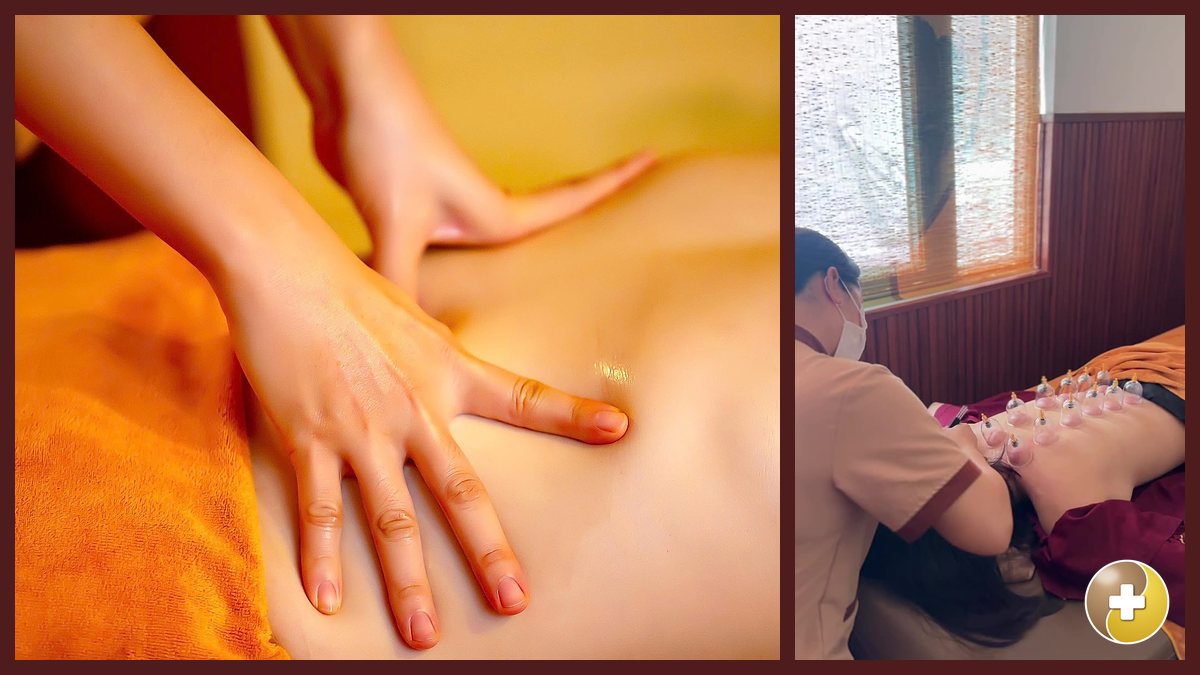
Quick answer: Shoulder pain from heavy gym training usually comes from overloaded bench, overhead press and weighted pull-ups. On a trip to Vietnam, keep moving lightly, choose moderate massage pressure and avoid fresh injuries. Sharp pain or a weak arm needs checking. Tong Gia Acupoint Wellness in Ho Chi Minh City releases the neck and shoulders by hand.
Want Lương Y Tống Văn Huynh’s team to read your spine and posture in person?
Why heavy gym training leaves your shoulder sore, and why it flares on a trip home
In Houston, San Jose or Orange County the gym is open almost around the clock, and plenty of second-generation Vietnamese Americans train at 5 a.m. before work or late after a shift. In Canada, November in Toronto, Montreal and Calgary is already cold, sometimes with early snow, and Vancouver is in its rainy stretch, so the gym becomes the winter routine. The week is split into push, pull and legs: bench press, overhead press and dips on push day; weighted pull-ups, cable rows and barbell rows on pull day. Then one day the bar touches your chest and the front of the shoulder stabs, a dumbbell press pinches at the top, or you wake up unable to turn your head fully. And that is exactly when the flight to Vietnam for a cousin’s wedding, the grandparents or Tết is coming up. The same thing happens to many international travellers who fly long-haul into Ho Chi Minh City straight after a heavy training block.
In Western anatomy the shoulder is a ball-and-socket joint with a very shallow socket: a large head of the upper-arm bone sits on a small cup on the shoulder blade. That gives a huge range of motion but leaves stability to the muscles. The four rotator cuff muscles hug the ball and keep it centred while you push, pull and rotate. At the front of the shoulder, the long head of the biceps tendon runs in a groove of bone, next to the front deltoid and the chest muscle where they attach to the arm. Above the joint sits a narrow space under the acromion through which the supraspinatus tendon passes; it narrows further when the arm is raised and turned inward.
When the weight goes up faster than the shoulder blade and upper back can keep pace, the load lands on the front of the shoulder, the top of the shoulder, the neck and the strip between the shoulder blades. Two patterns are worth separating. Delayed onset muscle soreness (DOMS) appears 24–72 hours after training, aches across the whole muscle and fades within days. Tendon or joint-capsule overload hurts at one spot, returns with the same movement every time and can last for weeks. Our article on stiff shoulders after the gym explains the difference.
This guide is for people in the US and Canada who lift heavy, and for family in Ho Chi Minh City waiting for them. It is different from our piece on elbow and shoulder pain from golf and pickleball, which is about repeated swings in older players; here the issue is heavy pressing and pulling. For the whole spine after a long flight, read our main guide to spine care after a long-haul flight.
Common causes: pressing, pulling, then stopping all at once
- Benching with flared elbows: with the elbows near shoulder height and the bar lowered deep to the chest, the front of the shoulder and the biceps tendon are stretched at the bottom of every rep. If the shoulder blades are not pinched and set down, the front of the shoulder does the chest’s job.
- Heavy overhead pressing: repeated loaded reps overhead narrow the space under the acromion; arching the lower back to compensate makes the neck tense as well. A tight chest and rounded upper back make it harder to press straight up.
- Deep dips: sinking too low pushes the shoulder to the end of its backward range and loads the front capsule and biceps tendon.
- Weighted or kipping pull-ups: your full bodyweight plus extra load hangs on a shallow joint, and swinging up jerks the shoulder in an overhead position. A very tight grip also tenses the forearm and neck.
- Heavy deadlifts and shrugs: the upper trapezius and levator scapulae lock up; holding your breath and clenching your jaw makes the neck stiffer and can bring on a headache after training.
- More pushing than pulling: chest and front delts grow quickly while the rear delts, rhomboids and middle and lower trapezius fall behind, so the shoulders roll forward.
- Fast progression, short sleep: tendons adapt more slowly than muscle. Five or six hours of sleep because of work or exams leaves them less time to recover.
- Cramming sessions before the trip: knowing you will miss two or three weeks, you squeeze in extra heavy days, then lift heavy suitcases full of gifts.
- The long flight: from the US West Coast or Vancouver to Tân Sơn Nhất usually takes 15–20 hours including a connection in Taipei, Seoul, Tokyo or Hong Kong; from Houston, Toronto or Montreal it is longer. You sit cramped, sleep with your head tilted and the air vent blowing on your neck. See stiff neck after a long flight.
- Two or three weeks with no training: muscles used to daily load suddenly rest, while jet lag, family feasts and long car rides add up. Many lifters say the shoulder feels “thick”, stiffer than when they were training.
- Heat, humidity and air conditioning: Ho Chi Minh City in November and December is still above 30°C and humid. You sweat outside, then step into an icy restaurant or mall, and the neck and shoulders tighten. Riding pillion on a motorbike and sleeping on unfamiliar pillows play a part too; see stiff neck from unfamiliar beds on trips home.
Related signs to watch for
- Pain at the front of the shoulder when lowering the bench bar, doing push-ups, or reaching behind you for a sleeve or seatbelt.
- Pain at the top or outside of the shoulder through the middle part of raising the arm, easing once the arm is fully overhead.
- Clicking when you rotate the arm: without pain it is usually not a worry; with sharp pain or a feeling that the shoulder slips, get it checked.
- A stiff neck, pain at the base of the skull or a headache after deadlifts, shrugs or overhead work; see neck and shoulder muscle strain.
- Burning or aching between the shoulder blades and shoulders that roll forward.
- Tingling in the little and ring fingers after pull-ups or long grip work; with neck pain spreading down the arm, read arm numbness when raised overhead.
- Waking up whenever you roll onto the painful side.
- Cramps, dry eyes, ridged nails and irritability when training is interrupted are linked in Eastern wellness to the Liver; poor appetite and heavy limbs after days of feasting to the Spleen.
The Tong Gia curriculum puts it simply: pain shows up in one place, but its source is often somewhere else. The front of the shoulder hurts, yet the root may be a rounded upper back, shoulder blades that do not sit flat, or a neck that has braced through every heavy rep for years.
When to see a doctor
Most gym shoulder pain eases with lighter loads, different exercises, enough sleep and gentle stretching. With any of the following, please see a doctor at a medical facility first and do not rely on massage. Emergency number: 911 in the US and Canada, 115 in Vietnam.
- A sharp, stabbing pain during a press or pull, a “pop”, then a clearly weaker arm.
- Real weakness: you cannot lift the arm to shoulder height, a glass or phone shakes in your hand, a familiar weight suddenly will not go up.
- Lost range of motion: you cannot raise the arm overhead or reach behind your back even after a few days of rest.
- A shoulder that feels loose, slips out and back, or looks deformed after a fall or a jerk.
- Bruising running down the arm or a biceps that bunches into a lump low on the arm.
- Numbness spreading down the arm, numbness in both hands, or a weakening grip.
- A swollen, hot, red shoulder with fever, or severe night pain despite rest.
- Chest pain or tightness, shortness of breath, cold sweats, or pain spreading to the jaw or left arm during training: call emergency services right away.
- Severe muscle pain and swelling after an extreme session with urine as dark as strong tea: get checked immediately.
- After the flight, one calf swollen, painful, warm or red, or sudden breathlessness: this can be a clot; get checked now and do not have your legs massaged.
For the first 48–72 hours after a fresh injury (sharp pain, swelling, heat), do not have that area massaged: rest, use a cold pack wrapped in a towel and get it checked if it does not settle. Tong Gia does not read X-rays, MRI or ultrasound results and does not make medical plans. If you have been checked in the US or Canada, bring the results or tell staff so they know which areas to keep gentle or avoid. This is a wellness service, not medical care.
The Y Tướng Học view: Liver, Spleen and the “firm muscle” build
Y Tướng Học (face and body reading for wellness) rests on one idea: what is inside shows on the outside. Lương Y (traditional healer) Tống Văn Huynh organised this knowledge so Tong Gia staff read the person before they place their hands. For heavy lifters, two organ systems are usually compared.
The Liver governs the sinews. In the Tong Gia curriculum the Liver nourishes tendons and ligaments and supports movement; when it is strong, tendons are supple and joints move freely; when it is weak, muscles tighten, cramp, tremble and lose flexibility. The rotator cuff and biceps tendons belong, in this view, to the “sinews” the Liver feeds. The Liver also stores blood: at rest, blood returns to the Liver to be replenished; in movement, the Liver sends it to muscles and tendons. Training hard, sleeping little and then living through days of jet lag means, in this theory, tendons used a lot and fed little. The Liver shows in the nails (thin, brittle, ridged when Liver blood is low), opens into the eyes and is tied to anger: the lifter who gets restless when a session is cancelled and pushes one more set on an aching shoulder usually braces the neck too. The Gallbladder channel, paired with the Liver, is described as easing head and neck-shoulder pain, and shoulder pain is one of its imbalance signs.
The Spleen governs muscle and the limbs. The Spleen and Stomach turn food into the essence that builds qi, blood and muscle. A lifter who eats on a strict plan at home and then switches to banquets, iced drinks and beer, with naps at odd hours, often finds the muscles tire faster and the limbs feel heavy.
The curriculum describes a build called Nhục Thực Bất Phù (firm flesh without puffiness): a compact frame, square, full muscle hugging the bones, very firm and dense to the touch, springing back strongly under pressure. Many long-time lifters look like this, and it reflects strong digestion and plenty of energy. When this build goes off balance, the muscle turns hard as wood, dry or tender to the touch. The curriculum links that to stagnant qi and blood and constrained Liver qi: chronic deep muscle spasm, especially in the trapezius and the long muscles beside the spine, aches all over, tension headaches, and a risk of fibrous bands forming if the muscle is not released in time. That is why a big, strong lifter can have stiffer shoulders than a slim person.
Face shapes help too: a broad forehead with a wide jaw is described with back muscles that tighten unevenly and pain that moves; an asymmetric face with uneven muscle on the two sides of the body, which calls for balancing both sides; a long, square face with a stiff or raised upper back around D3. These are wellness observations, not fortune telling, and never a verdict that someone is ill.
Vertebrae and nerve-reflex areas involved
In the Tong Gia curriculum on spinal nerve-reflex balancing, the neck (C1–C7) relates to the head, face, neck and arms; the thoracic spine (D1–D12) to circulation, breathing and digestion; the lumbar spine (L1–L5) to the legs. The nerves to the shoulder and arm come from the brachial plexus (C5 to T1), so a lifter’s shoulder is always read up into the neck and down into the upper back.
| Vertebrae | Nerves / function (Western anatomy) | Typical signs in heavy lifters | Organ (Eastern wellness) | Outer sign (Y Tướng Học) |
|---|---|---|---|---|
| C1–C3 | Suboccipital muscles, upper attachment of the levator scapulae | Pain at the base of the skull, headache after deadlifts and shrugs, jaw clenching | Liver (constrained qi), Gallbladder channel | Wide jaw, tense jaw muscles |
| C4–C5 | Suprascapular and axillary nerves (C5–C6) to supraspinatus, deltoid, rotator cuff | Pinching at the top of the shoulder on overhead press and pull-ups | Liver governs sinews | One shoulder higher, dominant side raised |
| C5–C6 | Lateral pectoral nerve to the chest muscle; musculocutaneous nerve to the biceps | Front-of-shoulder pain at the bottom of the bench and on dips | Liver; Lung (chest and front shoulder) | Tight chest, shoulders rolled forward |
| C6–C8 | C7 to the triceps (radial nerve); C8 to the finger flexors and little finger (ulnar nerve) | Tired forearms, little-finger tingling after pull-ups | Spleen governs muscle and limbs | Forearm muscles hard and tender |
| C7–D1 (base of neck) | Upper trapezius, levator scapulae, rhomboids (dorsal scapular nerve, C5) | Top of the shoulder hard as wood, heavy neck after weeks off | Constrained Liver qi, stagnant qi and blood | Firm-muscle build gone off balance |
| D1–D4 (upper back) | Upper thoracic sympathetic ganglia; rhomboids and serratus anterior (long thoracic nerve) hold the shoulder blade flat | Burning between the shoulder blades, winging on push-ups | Lung (D3 area), Heart | Long, square face: raised or stiff D3 |
| D5–D9 (mid back) | Intercostal nerves; latissimus dorsi (thoracodorsal nerve) running from the mid back to the arm | Tightness under the armpit and mid back after heavy pull day | Liver (D9 area), Spleen | Wide cheekbones: D7–D9 area |
The table lists related areas so staff know where to examine by touch; it is not a statement of cause. The curriculum groups neck and shoulder aches and arm numbness under muscles, bones and joints, working C5–C7, L1–L5 and S1–S5 together, so lifters who deadlift and squat also have the lower back read.
How Tong Gia helps rebalance your neck, shoulders and upper back
Every session follows the spinal nerve-reflex balancing massage developed by Lương Y Tống Văn Huynh, founder of Huyệt Đạo Tống Gia, with over 13 years in traditional Vietnamese wellness, Y Tướng Học and this method. It is a Vietnamese Eastern wellness approach done entirely by hand, aimed at helping each spinal area regain balance and supporting the related organ functions.
- Questions and observation: how often you train, which lift hurts (bench, overhead press, dips, pull-ups), front or top of the shoulder, any tingling, your last heavy session, any “pop” or slipping, whether you have been checked at home, any calf swelling after the flight. Then shoulder height and roll, muscle firmness, complexion, nails and jaw.
- Reading the spine by hand: pressing, stroking and rolling along C1–C7 and D1–D12 down to the sacrum to read skin temperature, the muscle layer, the shape of each vertebra and sensation, comparing left with right. Over-active zones (warmer skin, tight muscle, more tenderness) get the focus; under-active zones are not worked directly.
- Muscle release at moderate pressure: neck, trapezius, levator scapulae, the shoulder-blade muscles, the chest at the front of the shoulder, the back of the shoulder where the rotator cuff attaches, deltoid, upper arm and the lats under the armpit. Lifters often ask for “as hard as possible”, but pressure builds through five levels while staff check how you feel; thick muscle does not need crushing force, and too much makes it guard. A hot, swollen or freshly injured spot is never worked. Read is strong massage better: choosing the right pressure.
- Acupressure: Kiên Tỉnh on top of the shoulder, Kiên Ngung at the front tip of the shoulder, Thiên Tông on the shoulder blade, and the Liver back point when tendons are tight and sleep is poor. Work on a point stops when the skin turns from dry to slightly moist.
- Self-care: two or three chest-opening, rear-shoulder and shoulder-blade drills you can do at your relatives’ home with no equipment.
A typical session for a heavy lifter spends a lot of time at the base of the neck, the top of the shoulder and the inner edge of the shoulder blade, where muscle tends to form hard bands. You may feel tender points there and at the front of the chest near the shoulder. As the muscle lets go, the tenderness usually fades, the shoulder feels warmer and lighter and the neck turns more easily. Some people sleep deeply that night; others feel a little sore for a day, like after a light workout. Results vary with build, muscle mass and years of training, and no one can promise the pain will be gone after one session.
- Neck and shoulder care, 60 minutes: 550,000 VND (about 21 USD or 29 CAD), first visit 399,000 VND (about 15 USD or 21 CAD) for an aching front shoulder and stiff neck after the flight and a few weeks off.
- Neck and shoulder care, 90 minutes: 750,000 VND (about 29 USD or 39 CAD) for years of lifting, dense muscle, and neck, shoulders and upper back all stiff.
- Extra 30-minute area massage: 199,000 VND (about 8 USD or 10 CAD) added for the lats, upper arm and forearm after heavy pulling.
Approximate rates 1 USD ≈ 26,000 VND and 1 CAD ≈ 19,000 VND; payment in VND. See prices, sports recovery massage and neck and shoulder massage.
From Tân Sơn Nhất airport, the District 12 branch (225 Dương Thị Mười, Phường Tân Chánh Hiệp) lies to the north and is usually not a long ride, depending on traffic. The Vinhomes Grand Park branch (Căn T16-21 khu Manhattan, Phường Long Bình, TP. Thủ Đức) is farther, especially at evening rush hour. To stop on the way, read massage near Tan Son Nhat airport, though after nearly a day of travel a night’s sleep first is usually kinder.
Want Lương Y Tống Văn Huynh’s team to read your spine and posture in person?
Keeping your shoulders moving while you are away from your gym
- 15–20 minutes of light movement a day: slow wall or table push-ups, chest openers, backward shoulder rolls, an easy hang if there is a bar, an early-morning walk. Pack a light resistance band for band pull-aparts and face pulls for the rear shoulders and shoulder blades.
- Swap heavy pressing for light, higher-rep work: if you visit a gym in Saigon, use about half your usual load, skip overhead pressing and deep dips until the pinch is gone, and pull more than you push.
- Drink enough and replace salts: heat and humidity mean heavy sweating, cramps and quicker fatigue. Go easy on iced drinks and beer at every meal; see heat fatigue when visiting Vietnam in the dry season.
- Sleep on Vietnam time: the curriculum says the Liver stores blood at rest, so sleep is part of feeding the tendons. Slow belly breathing (in for about 4 seconds, out for about 6, for 5–10 minutes) before bed helps the neck and shoulders relax.
- Use heat or cold at the right time: cold wrapped in a towel for 10–15 minutes on a new, warm ache; warmth for long-standing stiffness and air-conditioning chill. Keep the AC from blowing straight onto your neck at night.
Back home, rebuild the load over one to two weeks and add pulling and rear-shoulder work; do not walk in on day one and press your old numbers.
A suggested plan for your trip to Vietnam
From early November, Vietnam is 15 hours ahead of California, Seattle and Vancouver, 13 hours ahead of Houston and 12 hours ahead of New York, Toronto and Montreal. See the US–Vietnam time difference and jet lag.
| When | What the shoulder needs | What to do |
|---|---|---|
| 2 weeks before | No pile-up before a long flight | A lighter week, no catch-up sessions; message to book |
| Packing day | No heavy lifting with a sore shoulder | Wheeled cases, lift with the legs and both hands, close to the body |
| Flight day | No hours of sitting still with the head tilted | Neck pillow, walk the aisle every few hours, shoulder rolls, sip water; see preparing your body before a long flight home |
| Landing day | Rest and adjust to the heat | Warm shower, light meal, early night on local time |
| Days 2–3 | Release after the flight and the training block | A 60- or 90-minute neck and shoulder session, plus 30 minutes for lats and arms if needed |
| First week | Keep moving, no heavy pressing | 15–20 minutes of band work, wall push-ups, morning walks |
| Staying 3 weeks or more | Do not let the muscle set hard again | Another session after one or two weeks |
| 2–3 days before flying back | Ready for the flight and the new training block | A gentle session; plan a gradual return to your usual loads |
If this is your first massage in Vietnam, read your first massage in Vietnam: what to know.
Book before you fly
Call, Zalo or WhatsApp +84 888 264 559 (0888 264 559 in Vietnam) from Houston, San Jose or Toronto with your landing date and time at Tân Sơn Nhất, where it aches (front or top of the shoulder, neck, between the shoulder blades, which side, any tingling) and which branch you prefer. Mention how often you train and which lift hurts so staff can suggest 60 or 90 minutes. Family in Ho Chi Minh City can book for you. You can also book online or read how to book a massage in Saigon from abroad.
- District 12 branch: 225 Dương Thị Mười, Phường Tân Chánh Hiệp (Tan Chanh Hiep Ward), Ho Chi Minh City. Open 8:00–19:00 daily (about 17:00 the previous day to 4:00 California and Vancouver time; 20:00 the previous day to 7:00 New York and Toronto time).
- Vinhomes Grand Park branch: Căn T16-21 khu Manhattan, Vinhomes Grand Park, Phường Long Bình, TP. Thủ Đức (Thu Duc City). Open 9:00–20:00 daily (about 18:00 to 5:00 California and Vancouver time; 21:00 to 8:00 New York and Toronto time).
Message ahead and staff reply when the branch opens. Slots fill up before Tết, so book early. Real customer reviews are on Google Maps on each branch page.
Visit us
- Đông Y Huyệt Đạo Tống Gia Quận 12 (District 12)
225 Dương Thị Mười, Phường Tân Chánh Hiệp, Quận 12, HCMC · 8:00–19:00 daily · 0888 264 559 · Directions on Google Maps - Đông Y Huyệt Đạo Tống Gia Quận 9 (Vinhomes Grand Park, District 9)
Căn T16-21 khu Manhattan, Vinhomes Grand Park, Phường Long Bình, TP. Thủ Đức, HCMC · 9:00–20:00 daily · 0888 264 559 · Directions on Google Maps
Map of our two branches
Want Lương Y Tống Văn Huynh’s team to read your spine and posture in person?
What guests say on Google Maps
“Caring service!” (translated from a Vietnamese review)
— Thúy Nga N., Google Maps review · District 12 branch · 2025 · See on Google Maps
“Comfortable and relaxing.” (translated from a Vietnamese review)
— Thanh Trúc V., Google Maps review · District 12 branch · 2024 · See on Google Maps
Quoted from public reviews, shortened where marked (…). Experiences vary from person to person; reviews are not a substitute for seeing a doctor when something feels wrong.
Related guides for your trip
FAQ
I lift heavy in the US and my shoulder hurts. How should I look after it on a trip to Vietnam? Rest on landing day to adjust to the time and heat, then keep moving lightly for 15–20 minutes a day with a band and wall push-ups rather than stopping completely. On day 2 or 3 a neck and shoulder session at moderate pressure can help, avoiding any freshly injured spot. Sharp pain, weakness or lost range of motion needs a medical check first.
Is pain at the front of the shoulder when benching serious? It is usually the front of the shoulder and the biceps tendon taking too much load from a deep bar path, flared elbows and loose shoulder blades. Lighter weight, tucked elbows, skipping deep dips and more pulling often help it settle. A pop, weakness, bruising, or pain that has not eased after 2–3 weeks of lighter training needs checking.
I hurt my shoulder training in Toronto last week. Can I get a massage in Saigon? For the first 48–72 hours after a fresh, sharp injury with swelling or heat, do not have that area massaged; rest, use cold and get it checked if it does not settle. Once there are no warning signs, gentle work on the neck, shoulder blades and upper back around it can help the muscles relax.
Will my shoulders get stiffer if I skip the gym for three weeks in Vietnam? Many lifters feel stiffer and heavier when they stop completely, especially with the long flight, jet lag, feasting and air conditioning on top. A few light drills a day, sleep on local time and enough water keep the muscles from setting hard. When you get back, rebuild the load over one to two weeks.
How long does gym shoulder pain take to ease? Delayed muscle soreness usually fades in 2–4 days. Tendon or joint-capsule overload can take several weeks, easing as load drops and exercises change. Everyone is different; if it has not improved after 2–3 weeks of lighter training, or there is weakness, spreading numbness or night pain, see a doctor.
Do big, muscular lifters need very strong massage? No. Dense muscle does not need crushing force; too much pressure makes it guard, bruise and stay sore. At Tong Gia pressure builds through five levels while staff keep asking how it feels, so the muscle can let go on its own.
Author: Lương Y Tống Văn Huynh – founder of Huyệt Đạo Tống Gia, a master of traditional Vietnamese wellness with over 13 years in Eastern wellness care, Y Tướng Học (face reading) and spinal nerve-reflex balancing massage.
Updated: 2026-11-18
Related guides
- Shoulder and back strain from welding work in Korea: overhead and squatting welds, heavy gear, care on leave
- Shoulder and back pain from dairy farm work in New Zealand: causes and care when you fly home for Tết
- Working in Singapore and flying home for Tết: neck and shoulder pain, and how to look after it on a short trip
- Neck, shoulder and wrist pain from garment factory work in Japan: causes and recovery on your trip home
- Shoulder pain from heavy gym training: why it stiffens on a trip to Vietnam and how to care for it in Saigon
- Neck, shoulder and lower back pain for US nail technicians visiting Vietnam: causes and care on your Tết trip
This is a wellness service, not medical care.