
Neck, shoulder and wrist pain from garment factory work in Japan: causes and recovery on your trip home
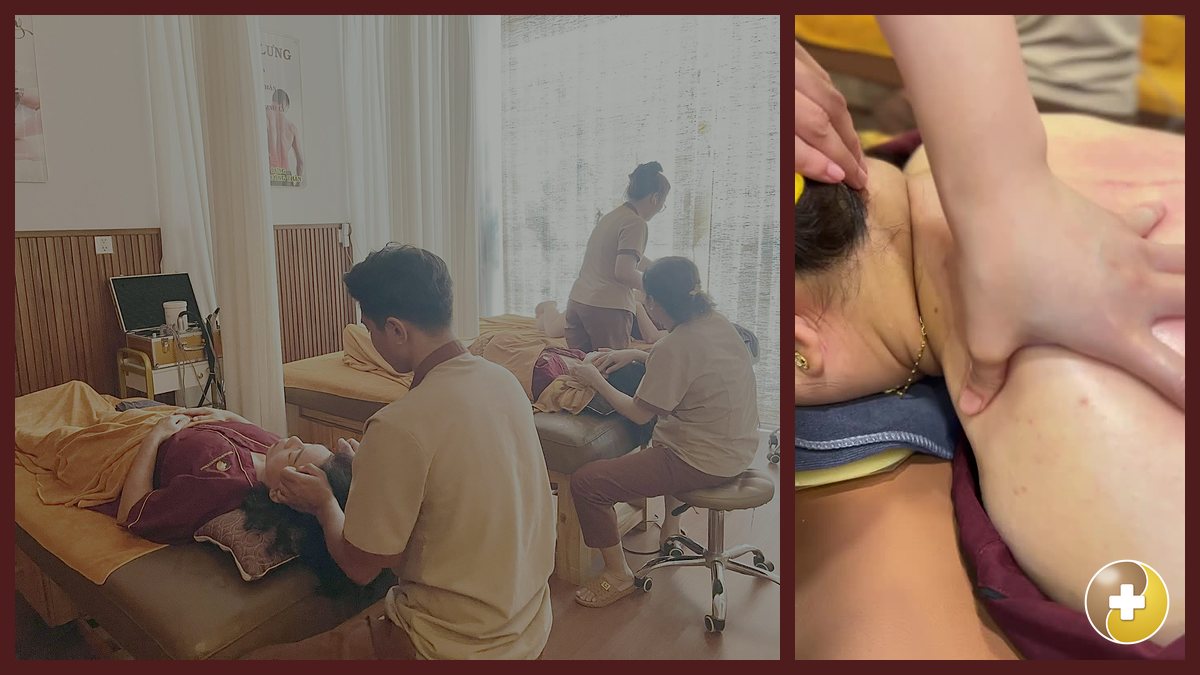
Quick answer: Neck, shoulder and wrist pain in Japanese garment factories usually comes from 8–10 hours of looking down at the needle, pinching and feeding fabric with the thumb, cutting thread and pressing the pedal. Huyệt Đạo Tống Gia in District 12 and Vinhomes Grand Park, Ho Chi Minh City, helps release them when you fly home.
Want Lương Y Tống Văn Huynh’s team to read your spine and posture in person?
Why garment factory work in Japan leaves your neck, shoulders and wrists aching
Gifu, Aichi and Okayama are home to many small and mid-sized sewing factories that take Vietnamese technical intern trainees: shirts, school uniforms, denim, workwear, bags. A typical day starts early and means 8 to 10 hours at an industrial sewing machine, sometimes with Saturday overtime. Winters in Gifu and Aichi are cold and dry with strong northern winds, and the mountains of northern Gifu get snow; Okayama is milder and sunnier, but early mornings still leave fingers stiff. Because your hands touch fabric, needles and scissors all day, gloves are rarely an option. By the end of the shift the neck feels like wood, both shoulders are heavy, the wrist aches, the base of the thumb hurts when you hold chopsticks at dinner, and the lower back is sore from a stool with no backrest.
From a Western anatomy point of view this is not one disease. It is a group of overload signs caused by repeating the same small movements and holding one posture for too long. Japanese people call the stiff neck-and-shoulder feeling 肩こり (kata kori). At a sewing machine, three areas carry most of the load:
- Neck and shoulders: an adult head weighs about 4–5 kg. When you lean in to watch the needle, the head moves forward and the muscles at the back of the neck (trapezius, levator scapulae, splenius) hold it up for the whole shift. Muscles that stay contracted get less blood flow, waste builds up, and you feel stiffness and aching that spread to the head and shoulder blades.
- Wrist and thumb: on the thumb side of the wrist, two thumb tendons share one narrow tunnel. Sewing means pinching, pushing and guiding fabric under the presser foot and squeezing thread scissors hundreds of times a day, with the wrist tilting side to side. Tendons that rub that much make the base of the thumb sore, especially when wringing a towel, lifting a child or opening a bottle. On the palm side, the carpal tunnel holds the median nerve and nine finger tendons; when the tendons thicken, the nerve is squeezed and the thumb, index and middle fingers tingle at night.
- Lower back and the pedal leg: industrial machines run on a foot pedal, and the knee often pushes a lever to lift the presser foot. Sitting forward on a stool with one leg working all day loads the L4–L5–S1 segment and tightens the lower back and buttock on one side more than the other.
This pattern is common in garment trainees aged 20 to 35, in women who sewed for years in Vietnam before going to Japan, and in pressing, cutting, inspection and packing staff who stand all day. It is also familiar to anyone else who spends long hours at a sewing machine or craft table and then sits through a long-haul flight into Ho Chi Minh City. The pillar guide of this series is spine care after a long-haul flight; this page goes deeper into the neck, wrists and lower back of people who sew for a living.
Common causes: head down, fabric feeding, the pedal and the daily quota
- Looking down at the needle: to keep a seam straight your eyes stay close to the needle, especially on collars, pockets and hems. The neck stays bent for most of the shift.
- Hourly quotas: many factories count pieces per hour or per day, called ノルマ (noruma). To hit the number, people rarely stand up and eat lunch quickly before returning to the machine, so the muscles never fully relax.
- Repeated thumb and wrist work: pinching fabric, turning corners, snipping thread, untangling, changing bobbins, pushing through thick layers. Each move is small, but thousands of repetitions give tendons no time to settle.
- A workstation that does not fit you: a table that is too high lifts the shoulders, one that is too low rounds the back; a stool without backrest or height adjustment; a pedal placed too far away twists the hips.
- Cold: uneven heating in winter, drafts from the loading door, and dormitories (寮, ryō) where people save on electricity. Cold muscles tighten faster and hands are stiff in the morning.
- Sleep and food: shared dorm rooms, futons on the floor, the wrong pillow, instant noodles and boxed meals with few vegetables. Long-term tiredness makes aches feel stronger.
- Short leave and the flight: a direct flight from Chubu (Nagoya) or Kansai (Osaka) to Tân Sơn Nhất takes about six hours in a narrow seat, often asleep with the head dropped forward. Then come heavy gift bags, driving relatives around and family parties. Vietnam is two hours behind Japan, so jet lag is mild, but the first night can still be restless.
Some health conditions, such as diabetes, thyroid problems, anaemia, pregnancy or the months after giving birth, make wrist pain and tingling more likely. In those cases you need a medical check, not only massage.
Related signs to watch for
- A stiff neck in the morning, with a pulling feeling down into the shoulder blade when you turn your head.
- Headache at the back of the skull, tired eyes or blurred vision at the end of the shift.
- Pain at the base of the thumb or on the thumb side of the wrist, worse when wringing, lifting or cutting.
- Tingling in the thumb, index and middle fingers at night that eases when you shake your hand. The page on hand numbness on an assembly line in Taiwan explains this pattern in detail.
- A weaker grip on scissors or chopsticks, dropping small objects.
- Stiff fingers in the morning or a clicking feeling when bending them.
- A sore lower back and one-sided buttock ache, a heavy calf on the pedal leg, sometimes light tingling.
- Light sleep, irritability, homesickness and tiredness that does not go away.
The Tong Gia method starts from a simple idea: pain shows up in one place, but its source often sits somewhere else. A sore wrist often travels with a tight neck and shoulders; an aching lower back often starts with how you sit and which leg drives the pedal. That is why the whole chain from neck to fingertips and from lower back to foot gets checked.
When to see a doctor
Work-related aches usually ease with rest, posture changes, warmth and gentle stretching. Please see a doctor or call emergency services instead of booking a massage if you notice:
- Chest pain or tightness, shortness of breath, cold sweat, or pain spreading to the jaw or left arm: call 119 in Japan or 115 in Vietnam at once.
- Sudden weakness or numbness on one side of the face or body, a drooping mouth, slurred speech or blurred vision.
- After the flight, one calf that is swollen, painful, warm or red, or sudden breathlessness and chest pain: this can be a blood clot after long sitting; call 115.
- A wrist that is badly swollen, misshapen or very painful after a fall, a machine accident or a deep needle injury.
- Hand weakness that keeps getting worse, or a flattened muscle at the base of the thumb.
- Numbness in both hands and both feet, unsteady walking, bladder changes, or back pain shooting down the leg with numbness in the groin.
- Pain lasting more than two to three weeks despite rest, or pain that wakes you at night.
- Pain with fever, unexplained weight loss, ongoing fatigue or pale skin: get a medical check alongside any wellness care.
In Japan, trainees are covered by health insurance and can visit an orthopaedic department (整形外科, seikei geka) near the factory. If the pain is work-related, ask your supervising organisation about workers' accident insurance (労災, rōsai). Bring any results with you when you come home so the technician knows which areas to keep gentle. Tong Gia does not read X-rays or MRI scans and does not make medical plans.
This is a wellness service, not medical care. Huyệt Đạo Tống Gia offers traditional Vietnamese wellness massage, not medical services.
Short Japanese phrases for a medical visit
| Japanese | Reading | Meaning |
|---|---|---|
| 首と肩がこっています。 | Kubi to kata ga kotte imasu. | My neck and shoulders are stiff. |
| 手首が痛いです。 | Tekubi ga itai desu. | My wrist hurts. |
| 親指の付け根が痛いです。 | Oyayubi no tsukene ga itai desu. | The base of my thumb hurts. |
| 夜、指がしびれます。 | Yoru, yubi ga shibiremasu. | My fingers go numb at night. |
| 腰が痛いです。 | Koshi ga itai desu. | My lower back hurts. |
| ミシンの仕事を一日十時間しています。 | Mishin no shigoto o ichinichi jū-jikan shite imasu. | I work at a sewing machine ten hours a day. |
| ベトナム語の通訳をお願いします。 | Betonamu-go no tsūyaku o onegai shimasu. | I would like a Vietnamese interpreter. |
More phrases for shift-related neck pain are on the page about neck and shoulder pain from factory shifts in Japan.
The Y Tướng Học view: Liver, Spleen and Kidney
Y Tướng Học, the Vietnamese art of reading the body, rests on one line: "what is inside shows on the outside". Lương Y Tống Văn Huynh, founder of Huyệt Đạo Tống Gia, organised this knowledge so that technicians read the face, nails and posture before they touch the spine. For people who sew for years, three organ systems in Eastern thinking come up often.
Liver governs the sinews and stores blood. In the Tong Gia course material the Liver nourishes tendons and ligaments; at rest blood returns to it, in action it sends blood to the tendons. Thumbs and wrists that work all day with little rest tend to feel dry and stiff. The sign shows in the nails: pink, firm nails suggest enough Liver blood; thin, brittle, ridged nails suggest it is running low. Dry eyes from watching the needle, a furrowed brow and a short temper are read as Liver signals too.
Spleen governs the muscles and the four limbs. It turns food into the energy that feeds arm and hand muscles, and it shows on the lips. Pink lips and good appetite are a good sign; pale lips, bloating and limbs that feel limp after the shift suggest the Spleen is tired. Rushed meals, skipped breakfasts and cold food make this worse.
Kidney governs the bones and the lower back. The course lists lower-back ache, weak knees and tiring quickly when standing as Kidney signs. A face that is wide on top with a pointed chin (the Giáp shape) often comes with a hollow, cool lower back; a round face (the Viên shape) often comes with cool skin and soft muscles over the lumbar area. A long, narrow, thin face (Mục) means thin back muscles and a gentle touch; a bony face with high cheekbones (Vương) means fibrous muscle that needs deeper work. This is observation for wellness care, never fortune-telling or a medical label.
Vertebrae and nerve-reflex areas involved
In the Tong Gia approach to rebalancing the spinal nerve-reflex system, the neck (C1–C7) relates to the head, face, neck and arms, and the lumbar spine (L1–L5) relates to digestion, kidneys, urinary and reproductive function and the legs. Muscle, bone and joint complaints are worked through C5–C7, L1–L5 and S1–S5 together.
| Vertebrae | Nerves / function (anatomy) | Common sign at the machine | Organ (Eastern view) | Outer sign (Y Tướng Học) |
|---|---|---|---|---|
| C3–C4 | C3, C4 roots; back of the neck, trapezius, levator scapulae | Stiff neck, heavy shoulders from looking down | Liver (sinews) | Forward head, raised shoulders, furrowed brow |
| C5–C6 | C6 root: thumb and index sensation, wrist extensors | Forearm ache, sore thumb base when cutting | Liver – Lung | Dry, ridged nails |
| C6–C7 | C7 root: middle finger, triceps, wrist flexors | Tiredness when pushing fabric through thick seams | Heart (blood vessels) | Pale complexion, light sleep |
| C7–T1 | C8, T1 roots: ring and little fingers, small hand muscles | Weak grip on scissors at the end of the shift | Spleen (limbs) | Pale lips, heavy limbs |
| L4–L5–S1 | L4, L5, S1 roots to buttock, thigh, calf, foot; lumbar muscles | Lower-back ache, heavy pedal leg | Kidney (bones) | Hollow, cool lower back (Giáp) or soft muscles (Viên) |
| Wrist (periphery) | Thumb tendon sheath; carpal tunnel with median nerve | Sore thumb base; night tingling in three and a half fingers | Liver stores blood | Thin, brittle nails, finger cramps |
The table shows related areas for the technician's hands to check, not a cause. More on post-flight neck tension is in stiff neck after a long flight.
Want Lương Y Tống Văn Huynh’s team to read your spine and posture in person?
How Tong Gia helps rebalance neck, wrists and lower back on your trip home
Every session follows the spinal nerve-reflex balancing massage developed by Lương Y Tống Văn Huynh, who has over 13 years in Vietnamese Eastern wellness care, Y Tướng Học and spinal reflex balancing. It is a Vietnamese Đông y method done with the hands, and the aim is to help the neck, upper back and lumbar area find balance again.
- Ask and observe: which sewing step you do, shift length, working hand, pedal leg, where it hurts and since when, any medical checks in Japan, diabetes, thyroid, pregnancy. Then the face, nails, neck line and shoulder level are read.
- Read the spine by hand: skin temperature, the muscle layer, the shape of each vertebra and the feeling at each point, left against right, upper against lower, narrowing to the key area. For sewing work: C3–T3, both shoulder blades and L4–S1.
- Release the muscles: base of the skull, trapezius, levator scapulae, shoulder blades, both sides of the forearm, the thumb pad and hand, then the lower back and the buttock on the pedal side, with pressure built up in five levels while checking how you feel.
- Press the right points: wrist points such as Liệt khuyết, Nội quan and Thần môn with light pressure, Hợp cốc on the back of the hand (never during pregnancy), and Thận du and Ủy trung for the lower back, stopping when the skin turns from dry to slightly moist.
- Self-care coaching: wrist stretches, micro-breaks, how to set your stool and pedal, keeping your back and hands warm back in Japan.
During the session some points on the shoulders, along the forearm and on the thumb pad may feel tender; that is where muscle is tight, and it usually eases as the muscle lets go. Afterwards many people turn their head more easily and sleep more deeply that night; some feel a little sore for a day first. Results differ from person to person, and no session promises the pain will be gone.
Suitable services and prices:
- Neck-shoulder / back-waist care, 60 min: 550,000 VND (about 21 USD), first visit 399,000 VND (about 15 USD); 90 min: 750,000 VND (about 29 USD).
- Extra 30 min on one area: 199,000 VND (about 8 USD), ideal for forearms, wrists and hands.
- Full-body care, 120 min: 950,000 VND (about 37 USD), for the end of a contract or months of overtime.
Reference rate 1 USD ≈ 26,000 VND; payment in VND. Full list on the price page and the neck and shoulder massage page.
From Tân Sơn Nhất airport: the District 12 branch (225 Dương Thị Mười, Tân Chánh Hiệp Ward) lies north of the airport, usually half an hour to 45 minutes by car depending on traffic. The Vinhomes Grand Park branch (Unit T16-21, Manhattan zone, Long Bình Ward, Thủ Đức City) is farther and takes longer, especially in the evening rush. See massage near Tân Sơn Nhất airport if you land and travel on to your home province.
Self-care between shifts and in the dormitory
- Micro-breaks every hour: one or two minutes to look far away, roll the shoulders back five times, open and close the hands ten times and circle the wrists slowly.
- Gentle wrist stretch: arm straight, palm facing out, use the other hand to ease the fingers back for 15–20 seconds; then palm down and ease the back of the hand for 15–20 seconds. No forcing, no pain.
- Set up the station: a thin cushion on the stool, elbows level with the table, wrists close to straight, the pedal close, scissors within reach.
- Evening in the dorm: soak hands in warm water for ten minutes; rub warm palms up and down over the lower back 50–100 times until warm; use a pillow that keeps the neck level on the futon.
- Slow breathing before sleep: breathe in through the nose for about four seconds, out slowly for about six seconds, for five to ten minutes.
If pain keeps building, the hand weakens or any warning sign above appears, get checked rather than relying on self-massage.
A suggested plan for your home leave
| When | Focus | What to do |
|---|---|---|
| Last week in Japan | Reduce overload | Hourly micro-breaks; note where and when it hurts; book ahead |
| Flight day | Protect the neck | Neck pillow, wheeled luggage, walk the aisle, circle ankles and wrists |
| Arrival day | Unwind | Warm shower, hand soak, early night on Vietnam time (two hours behind Japan) |
| Day 2–3 | Release neck and arms | One 60–90 min neck-shoulder session, plus 30 min on the hands if the wrist is sore |
| Family visits | Share the lifting | Let relatives carry and wash up; sit in chairs with a backrest; sleep enough |
| 2–3 days before flying back | Prepare for long shifts | A lighter session, practise the stretches, pack warm gloves |
Book from Japan before you fly
Whether you live in Gifu, Nagoya, Ichinomiya, Okayama or Kurashiki, you can book from Japan. Call, Zalo or WhatsApp +84 888 264 559 (0888 264 559 inside Vietnam) with three details: your landing date and time at Tân Sơn Nhất, where it aches (neck, wrist, thumb, lower back) and which branch you prefer. You can also book online or read how to book a massage in Saigon from abroad.
- District 12 branch: 225 Dương Thị Mười, Phường Tân Chánh Hiệp (Tân Chánh Hiệp Ward), Ho Chi Minh City. Open 8:00–19:00 daily.
- District 9 branch: Căn T16-21 khu Manhattan, Vinhomes Grand Park, Phường Long Bình, TP. Thủ Đức (Unit T16-21, Manhattan zone, Long Bình Ward, Thủ Đức City). Open 9:00–20:00 daily.
Slots before Tết fill quickly, so message early. Genuine customer reviews are on each branch's Google Maps listing, and family members in Ho Chi Minh City can book on your behalf.
Visit us
- Đông Y Huyệt Đạo Tống Gia Quận 12 (District 12)
225 Dương Thị Mười, Phường Tân Chánh Hiệp, Quận 12, HCMC · 8:00–19:00 daily · 0888 264 559 · Directions on Google Maps - Đông Y Huyệt Đạo Tống Gia Quận 9 (Vinhomes Grand Park, District 9)
Căn T16-21 khu Manhattan, Vinhomes Grand Park, Phường Long Bình, TP. Thủ Đức, HCMC · 9:00–20:00 daily · 0888 264 559 · Directions on Google Maps
Map of our two branches
Want Lương Y Tống Văn Huynh’s team to read your spine and posture in person?
What guests say on Google Maps
“I felt comfortable after the session; the technician was very good.” (translated from a Vietnamese review)
— Minh T., Google Maps review · District 12 branch · 09/2026 · See on Google Maps
“Friendly, warm staff who always help carefully with whatever guests ask for.” (translated from a Vietnamese review)
— Công Đ., Google Maps review · District 12 branch · 2025 · See on Google Maps
Quoted from public reviews, shortened where marked (…). Experiences vary from person to person; reviews are not a substitute for seeing a doctor when something feels wrong.
Related guides for your trip
FAQ
Is neck and wrist pain from sewing work in Japan serious? Usually it is overload: hours of looking down at the needle plus repeated pinching, pushing and cutting tighten the neck muscles and irritate the thumb tendons. Rest, stretching and warmth often help it settle. If the hand keeps getting weaker, the wrist is swollen or misshapen, or you have chest pain or breathlessness, call 119 in Japan or 115 in Vietnam.
Why does the base of my thumb hurt when I use thread scissors? Two thumb tendons run through a narrow tunnel on the thumb side of the wrist, and constant squeezing and fabric feeding make them rub. Keep scissors close, keep the wrist straighter and take hourly breaks. If it lasts more than two to three weeks or swells, see a doctor at an orthopaedic department (整形外科).
How do I say my wrist hurts in Japanese at a hospital in Aichi? Say 手首が痛いです (Tekubi ga itai desu). For the thumb base, 親指の付け根が痛いです (Oyayubi no tsukene ga itai desu). For a stiff neck and shoulders, 首と肩がこっています (Kubi to kata ga kotte imasu). To ask for an interpreter, ベトナム語の通訳をお願いします.
Can massage help my neck and wrists after months at a sewing machine? Massage helps tight neck, shoulder and forearm muscles relax, and many people turn their head more easily and sleep better afterwards. At Huyệt Đạo Tống Gia the technician reads your neck, upper back and lumbar spine by hand before releasing and pressing points. It is wellness care and does not replace a medical check when warning signs appear.
I only have one week home from Okayama. When should I book and which service? Book for day two or three after landing, once you have slept. Neck-shoulder / back-waist care is 550,000 VND for 60 minutes (399,000 VND first visit) or 750,000 VND for 90 minutes; add 30 minutes on the hands for 199,000 VND if your wrist is sore. Full-body care is 950,000 VND for 120 minutes.
Can I book from Japan before I fly to Ho Chi Minh City? Yes. Send a Zalo or WhatsApp message to +84 888 264 559 with your landing time at Tân Sơn Nhất, where it aches and your preferred branch: District 12 (8:00–19:00) or Vinhomes Grand Park, Thủ Đức (9:00–20:00). Family in Ho Chi Minh City can also book for you, or use the online booking page.
Author: Lương Y Tống Văn Huynh – founder of Huyệt Đạo Tống Gia, a master of traditional Vietnamese wellness with over 13 years in Eastern wellness care, Y Tướng Học (face reading) and spinal nerve-reflex balancing massage.
Updated: 2026-11-18
Related guides
- Shoulder and back strain from welding work in Korea: overhead and squatting welds, heavy gear, care on leave
- Working in Singapore and flying home for Tết: neck and shoulder pain, and how to look after it on a short trip
- Neck, shoulder and wrist pain from garment factory work in Japan: causes and recovery on your trip home
- Shoulder pain and a stiff neck from swimming and surfing in Australia: why it builds and how to care for it
- Elbow and shoulder pain from golf and pickleball: why it builds after 55 and how to care for it in Vietnam
- Stiff neck and headaches from studying late for exams: why low desks and laptops strain the neck
This is a wellness service, not medical care.