
Shoulder and back strain from welding work in Korea: overhead and squatting welds, heavy gear, care on leave
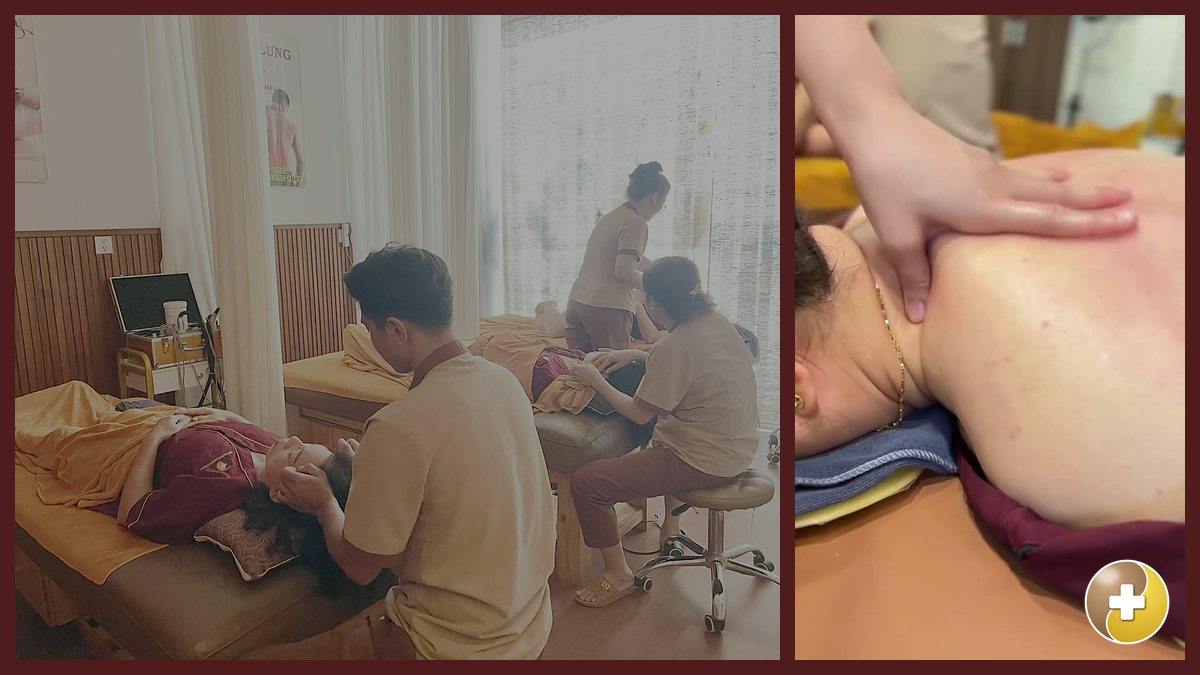
Quick answer: Shoulder and back strain from welding in Korea is mostly muscle overload: overhead welding with raised arms, squatting welds, a helmet and heavy protective gear in hot shipyards. Breaks, posture changes and stretching help. On home leave, Tong Gia Acupoint Wellness in Ho Chi Minh City reads the spine by hand, releases the muscles and applies acupressure.
Want Lương Y Tống Văn Huynh’s team to read your spine and posture in person?
Why welding work in Korea is so hard on shoulders and back
In Ulsan, Changwon, Gimhae and the shipbuilding towns along Korea's southern coast, many Vietnamese welders, along with workers from many other countries, spend their days inside steel blocks that will one day become a ship's hull. A shift starts with gear: a leather jacket against spatter, thick gloves, steel-toe boots, a hard hat with a welding helmet, a safety harness. In summer the inside of a sun-heated block is hotter than the open yard and sweat soaks through every layer. In winter the sea wind blows cold through the yard while your hand still has to hold the torch perfectly still. By the end of the week many welders feel as if they are carrying sandbags on both shoulders, the neck will not turn, and standing up after a squatting weld means grabbing the hull for support.
In Western medical terms this is usually a work-related musculoskeletal strain: muscles, tendons, ligaments and small spinal joints held in an awkward position for too long, or repeating the same motion hundreds of times a shift. It is rarely a sign of disease in an internal organ. The areas that suffer most:
- Neck and upper shoulders: the upper trapezius and levator scapulae carry the weight of the helmet hanging in front of the face, plus the head flick that drops the visor before each weld. Overhead work keeps the neck tilted back for long stretches.
- The shoulder joint: holding the arms at or above shoulder height for minutes at a time can pinch the rotator cuff tendons, especially the supraspinatus, under the bony roof of the shoulder. People describe it as a deep ache inside the shoulder that catches when combing their hair.
- Mid back and shoulder blades: keeping the torch steady means the muscles around the shoulder blades contract without rest. This static effort starves the muscle of blood flow and leaves it heavy and burning at the end of the shift.
- Lower back and knees: squatting, kneeling or lying on your side in double-bottom tanks and tight compartments keeps the back rounded and the knees deeply bent for hours.
This article is about welders and welding positions. If your pain comes mostly from lifting and carrying in a factory, read back pain from factory work in Korea. To see how the neck, mid back and lower back connect along one spine, the pillar article spine care after a long-haul flight explains it.
Common causes: heavy gear, overhead welds, squatting and heat
- A helmet that pulls the head forward: weight in front of the forehead moves the head's centre of gravity forward, so the muscles at the back of the neck work all shift. Every head flick to drop the visor is a small jolt to the neck.
- Thick, heavy protective gear: leather jacket, apron, gloves and harness straps add a constant load across the shoulders. Stiff steel-toe boots make the feet, knees and lower back compensate on steel decks.
- Overhead welding: arms up, neck back, eyes on the joint above, shoulders locked steady. Few positions load the neck and shoulder joint more. See neck pain from looking up for why a tilted-back neck tires so quickly.
- Squatting, kneeling and cramped spaces: the back bends forward, knees fold deeply, hips twist to reach the joint, and low ceilings mean you never fully straighten up.
- Torch, cables and grinders: a tight grip, tense forearms, vibration from grinders travelling up to the shoulder, and dragging long cables through bulkheads.
- Heat and dehydration: heavy sweating drains water and salts, muscles tire faster and calves or forearms cramp.
- Winter sea wind: a sweat-soaked back meets cold wind, muscles contract and lose elasticity, and the neck is stiff at the start of the morning shift.
- Arc light and squinting: staring into a bright weld pool all day tires the eyes; the muscles around the eyes and forehead tighten and pull on the back of the head.
- Overtime and short sleep: dormitory life and extra shifts leave little recovery time between shifts.
The flight from Gimhae or Incheon to Tan Son Nhat is only about five hours, but a narrow seat after months of overhead work is enough to stiffen the neck further, and then come heavy suitcases, long drives to the family home and housework.
Related signs to notice
- Stiff neck in the morning, hard to turn the head, heavy feeling at the back of the skull: suboccipital muscles and upper trapezius tight after helmet shifts.
- Deep shoulder ache, catching when you raise the arm, hard to sleep on that side: the rotator cuff area is irritated; if it keeps worsening or the arm weakens, get it checked.
- Burning between the shoulder blades at the end of a shift: rhomboids and shoulder-blade muscles working statically.
- Tingling fingers, weak grip, cold hands: tight neck and shoulder muscles or grinder vibration; persistent numbness needs a medical check.
- Low back ache, tired knees, hard to stand up after squatting.
- Dry, gritty, red, watering eyes, glare sensitivity: eyes exposed to arc light, see the next section.
- Ringing ears, shallow sleep, tired on waking: yard noise, long shifts, short sleep.
The Tong Gia curriculum notes that pain shows up in one place while its source often sits elsewhere: a sore shoulder may start in the neck, the shoulder blade or a lopsided squat. That is why the practitioner reads the whole spine, not only the painful spot.
Eye strain from arc light: what welders should know
A welding arc gives off intense light, including ultraviolet and infrared. Without proper filtering, even a few seconds of exposure while standing next to someone else's weld can injure the surface of the cornea, a condition known as arc eye or welder's flash. Symptoms usually appear hours later, often at night: a gritty, sandy feeling, redness, watering, light sensitivity and difficulty opening the eyes. Years of strong light exposure are also thought to affect the lens and retina.
- Use a helmet with a filter shade matched to your current and process; replace scratched or cracked lenses.
- Wear safety glasses when assisting, grinding or standing near others who are welding; use arc screens where available.
- Do not rub gritty eyes and do not try to remove foreign bodies yourself.
- Painful or very red eyes, blurred vision, or metal fragments in the eye: see an eye specialist at a medical facility right away.
- Rest your eyes briefly every hour, look into the distance, blink often, drink enough water.
Tong Gia does not put anything into the eyes and does not massage the eyeballs. What the practitioner does is release the forehead, temples and back of the neck that tighten from squinting, so the head feels lighter.
When to see a doctor
Most welding-related shoulder and back strain eases with rest, sleep, fluids and stretching. Please see a doctor or go to a medical facility, and do not rely on massage, if you have any of the following:
- A fall from scaffolding, a heavy object hitting you, being caught in equipment, or sharp pain right after a sudden jerk.
- Shoulder pain that keeps getting worse, inability to raise the arm, clear weakness, or a hot, swollen, red shoulder.
- Lasting numbness or weakness in the hands, or fingers turning white or blue in the cold after years of using vibrating grinders.
- Back pain shooting below the knee with numbness or leg weakness; numbness in the buttocks or groin, or loss of bladder or bowel control: go to emergency now.
- Painful, red eyes, blurred vision or light sensitivity after welding, or metal in the eye.
- A lasting cough, shortness of breath, wheezing, or fever and chills after shifts in smoky enclosed spaces; also tell your supervisor about ventilation and fume masks.
- Headache, dizziness, nausea, confusion or hot dry skin after working in a hot compartment: possible heat illness, move to a cool place and call emergency services.
- Mid-back, upper-back or left-shoulder pain with chest tightness, shortness of breath, sweating, or pain spreading to the jaw or left arm: call 119 in Korea or 115 in Vietnam, no massage.
- A swollen, painful, warm calf on one side after a flight or days of little movement: this can be a deep vein clot. Get checked now and do not have the leg massaged.
- Pain with fever, unexplained weight loss, lasting fatigue, pain worse at night at rest, or pain lasting more than 4–6 weeks.
If you are hurt at work in Korea, tell your supervisor and get checked early so there is a record. Tong Gia does not read X-rays or MRI scans and does not make medical plans. If you have results from a medical facility, simply tell the practitioner which areas to keep gentle or avoid. This is a wellness service, not medical care. More on warning signs: how to describe back pain in Japanese, Korean and Chinese.
The Y Tướng Học view: Liver for tendons and eyes, Kidney for back and knees
Y Tướng Học (Vietnamese face and body reading for wellness) rests on the idea that what happens inside shows on the outside. Lương Y Tống Văn Huynh organised this knowledge so Tong Gia practitioners observe before they touch. For welders, three organ systems in Eastern wellness theory are usually compared: Liver, Spleen and Kidney.
The Liver governs the tendons and opens into the eyes. According to the Tong Gia curriculum, the Liver nourishes tendons and ligaments and supports movement; when it weakens, muscles tighten, cramp and lose flexibility. The Liver stores blood: at rest blood returns to it, in movement it sends blood to muscles and tendons. The eyes reflect the Liver: Liver-blood deficiency shows as dry eyes and blurred vision, Liver fire as red eyes. A welder staring at the arc all shift, working overtime on little sleep, with shoulders locked around the torch, is in this theory spending a lot of the Liver's "tendons" and "blood". Eyebrows are seen as the outer extension of the tendons; knitted brows and a creased forehead show the face and neck holding tension. People with high, thinly padded cheekbones are noted for a tight, ropy trapezius and back muscles that cramp easily.
The Spleen governs muscle and the limbs. Hurried meals between shifts, salty food and too little water in summer leave muscles tiring quickly. The curriculum describes a firm, compact muscle type common in strong manual workers with great endurance. When this type goes out of balance, muscles turn hard as wood, dry or tender to the touch, linked in the curriculum to stagnant qi and blood and constrained Liver qi: deep, long-standing spasm especially in the trapezius and the muscles along the Bladder meridian of the back, with whole-body aches and tension headaches. Many long-time welders fit this picture: thick shoulders that look strong but feel like wood.
The Kidney governs bone, the lower back, knees and ears. Kidney-yang weakness shows as feeling cold, cold hands and feet, a cold aching back and knees, and night urination. Welders who squat and kneel through several sea-wind winters often mention tired knees, a cold back and ringing ears after noisy shifts. Persistent ringing or reduced hearing deserves a hearing test, and earplugs belong in every yard. The nose bridge is read as a miniature of the spine: a crooked bridge often goes with a spinal axis that loads unevenly. These are wellness observations, not fortune-telling and not a medical judgement.
Vertebrae and nerve-reflex areas involved
| Vertebrae | Nerves / function (anatomy) | Common signs in welders | Organ (Eastern view) | Outer signs (Y Tướng Học) |
|---|---|---|---|---|
| C1–C2 | Atlas–axis joint for head rotation; suboccipital muscles; greater occipital nerve from C2 | Heavy back of head after helmet shifts, ache to the temples when squinting | Liver, Kidney | Knitted brows, creased forehead |
| C3–C5 | Cervical plexus; phrenic nerve (C3–C5); upper trapezius, levator scapulae | Stiff sides of the neck, raised shoulders, sharp twinge on the visor flick | Liver (tendons) | High cheekbones, ropy trapezius |
| C5–C7 | Roots to shoulder, arm and fingers (brachial plexus C5–T1); suprascapular nerve (C5–C6) to the rotator cuff | Deep shoulder ache in overhead welds, tired torch arm, tingling fingers | Liver | Uneven shoulders, thicker working-side shoulder |
| C7–T1 | Neck–chest junction loaded by a forward head; C8–T1 roots to forearm and little finger | Hard bump at the base of the neck when bending over a weld | Kidney–Bladder line | Forward head, rounded upper back |
| T3–T6 | Rhomboids, erector spinae; upper thoracic sympathetic links to heart and airways | Burning between the shoulder blades, shallow breathing in hot spaces | Lung, Heart | Tight upper back, prominent T3, dry skin |
| T7–T9 | Mid intercostal nerves, upper abdominal wall | Aching along the spine when dragging cables, tight ribs under stress | Liver | Wide cheekbones; firm muscle turned wood-hard |
| L3–L5 | Femoral nerve (L2–L4) to the front of the thigh and knee; L4–L5 roots feed the sciatic nerve | Low back ache after squatting, tired knees, hard to stand up | Kidney | Cold back and knees, dull ears, crooked nose bridge |
The table lists related areas for the practitioner to read by hand, not causes or conclusions.
Want Lương Y Tống Văn Huynh’s team to read your spine and posture in person?
How Tong Gia helps rebalance shoulders and back on home leave
Tong Gia Acupoint Wellness (Huyệt Đạo Tống Gia) follows the spinal nerve-reflex balancing method built by Lương Y Tống Văn Huynh, a Vietnamese traditional wellness practitioner with over 13 years of experience in Eastern wellness, Y Tướng Học and spinal reflex balancing. The aim is to help each spinal area and related organ function come back into balance, by hand.
- Questions and observation: which positions you weld in (overhead, vertical, squatting, inside tanks), your working hand, years in the trade, shift length, where it hurts, any tingling, eye pain, ringing ears, falls or injuries, results from Korea. Then complexion, eyes, brows, cheekbones, ears, nose bridge, shoulder and hip levels.
- Reading the spine by hand: skin temperature, muscle layer, vertebral shape and sensation, left against right, top to bottom, narrowing to key areas. Long-time welders often have a thicker, harder working-side shoulder and a raised bump at the base of the neck.
- Muscle release: suboccipitals, trapezius, levator scapulae, shoulder-blade muscles and the long muscles beside the spine; low back, hips, thighs and around the knees if you squat a lot. Pressure rises in five levels, gentler on the neck, and you are asked how it feels.
- Acupressure on the right points: Phong trì (GB20) and Thiên trụ (BL10) at the back of the neck, Kiên tỉnh (GB21) on top of the shoulder, Đại chùy (GV14) at the base of the neck, Thiên tông (SI11) on the shoulder blade, Can du (BL18), Thận du (BL23), and Thái xung (LR3) on the foot for tension. Each point is worked until the skin turns from dry to slightly moist.
- Self-care coaching: two or three moves for the areas found, simple enough for breaks back at the yard.
Lying face down, you may feel tender points at the base of the neck and on top of the torch-side shoulder, where the muscle feels like rope. As it lets go, tenderness softens, the shoulders drop and warmth spreads. Afterward many people turn their head and lift their arm more easily and sleep deeply that night; some feel a little sore for a day first. Responses vary, and Tong Gia does not promise the pain will be gone after one session.
- Neck-shoulder / lower back care, 60 min: 550,000 VND (about 21 USD), first visit 399,000 VND (about 15 USD); 90 min: 750,000 VND (about 29 USD). The 90-minute session suits welders sore from neck to lower back.
- Extra 30-minute area massage: 199,000 VND (about 8 USD) for knees and lower back after squatting welds.
- Liver wellness session, 75 min: 750,000 VND (about 29 USD) for dry, tired eyes, cramping tendons, tension and poor sleep after long overtime.
USD figures use a reference rate of 1 USD ≈ 26,000 VND; payment is in VND. Full list: prices.
From Tan Son Nhat airport: the District 12 branch (225 Dương Thị Mười, Phường Tân Chánh Hiệp) lies north of the airport and is usually a short drive, depending on traffic. The Vinhomes Grand Park branch (Căn T16-21 khu Manhattan, Phường Long Bình, TP. Thủ Đức) is farther and takes longer, especially at evening rush hour. Flights from Korea often land in the evening, so most people book for the next morning; to stop on the way, see massage near Tan Son Nhat airport.
A suggested plan for home leave, and self-care
| When | What your shoulders and back need | What to do |
|---|---|---|
| Last week in Korea | No extra load | Avoid long overhead jobs right before the flight if possible; sleep enough; pack light |
| On the 5-hour flight | Changing position | Neck pillow; walk and roll the shoulders every hour; sip water |
| Landing day | Rest | Let family lift the bags; warm shower; Vietnam is 2 hours behind Korea, sleep early |
| Days 2–3 | Release after months of welding | A 90-minute neck-shoulder / back session, plus 30 minutes for the knees if you squat a lot |
| Mid-leave | Keep tension from building up | Another session, or the Liver wellness session if your eyes are dry and sleep is poor |
| 2–3 days before flying back | Prepare for the next contract | A light session and your stretches; see preparing your body before a long flight |
- Drop your arms between overhead welds: every few minutes, lower the arms, relax and roll the shoulders back ten times; use a platform so the joint sits nearer shoulder height.
- Chin tucks and side bends: draw the chin back, hold 5 seconds, 8–10 times; tilt ear to shoulder 20 seconds each side. Lower the visor by hand or use an auto-darkening helmet instead of flicking your head.
- Stand and extend after every squatting weld: hands on hips, gently arch back a few times; use knee pads or a low stool.
- Drink steadily, stay warm: sip water through summer shifts; change into a dry shirt after winter shifts and cover the neck in the sea wind.
- Warm the neck and lower back at night: rub your palms warm and stroke the back of the neck and both sides of the lower back; soak your feet in warm water for 15–20 minutes. For feet sore from steel-toe boots, read sore feet from safety boots on long shifts.
Book from Ulsan, Changwon or Gimhae before you fly home
Message us on WhatsApp or Zalo at +84 888 264 559 (0888 264 559 inside Vietnam) with three details: your landing date and time at Tan Son Nhat, where it aches (neck, one shoulder, between the shoulder blades, lower back or knees), and which branch you prefer. You can also book online; tips are in booking a massage in Saigon from abroad.
- District 12 branch: 225 Dương Thị Mười, Phường Tân Chánh Hiệp (Tan Chanh Hiep Ward, District 12). Daily 8:00–19:00.
- Vinhomes Grand Park branch: Căn T16-21 khu Manhattan, Vinhomes Grand Park, Phường Long Bình, TP. Thủ Đức (Unit T16-21, The Manhattan, Thu Duc City). Daily 9:00–20:00.
Slots before Tet fill quickly, so write early. Genuine guest reviews are on each branch's Google Maps listing. More on neck and shoulder care: neck and shoulder massage.
Visit us
- Đông Y Huyệt Đạo Tống Gia Quận 12 (District 12)
225 Dương Thị Mười, Phường Tân Chánh Hiệp, Quận 12, HCMC · 8:00–19:00 daily · 0888 264 559 · Directions on Google Maps - Đông Y Huyệt Đạo Tống Gia Quận 9 (Vinhomes Grand Park, District 9)
Căn T16-21 khu Manhattan, Vinhomes Grand Park, Phường Long Bình, TP. Thủ Đức, HCMC · 9:00–20:00 daily · 0888 264 559 · Directions on Google Maps
Map of our two branches
Want Lương Y Tống Văn Huynh’s team to read your spine and posture in person?
What guests say on Google Maps
“They look after guests attentively and warmly; I will come back often.” (translated from a Vietnamese review)
— Thông P., Google Maps review · District 12 branch · 08/2026 · See on Google Maps
“Good service; the staff massage thoroughly and are highly skilled.” (translated from a Vietnamese review)
— Nu L., Google Maps review · District 12 branch · 03/2026 · See on Google Maps
Quoted from public reviews, shortened where marked (…). Experiences vary from person to person; reviews are not a substitute for seeing a doctor when something feels wrong.
Related guides for your trip
FAQ
Is shoulder and back strain from welding work in Korea serious? Usually it is muscle overload from overhead welds, squatting, a helmet and heavy gear for long hours in hot yards, and it eases with rest, sleep, fluids and stretching. Get checked right away after a fall, if the arm becomes weak, numbness lasts, pain spreads down the leg, or there is chest pain or shortness of breath.
What helps a sore neck and shoulders from overhead welding? Lower your arms and roll your shoulders every few minutes, do chin tucks and side bends in breaks, use a platform so the joint is nearer shoulder height, and lower the visor by hand instead of flicking your head. If shoulder pain keeps worsening or you cannot raise the arm, see a doctor.
My eyes feel gritty and sore hours after welding. Should I get them checked? Yes. A gritty, red, watering, light-sensitive feeling hours after welding can mean UV light from the arc has injured the cornea. Do not rub your eyes, and see an eye specialist promptly, immediately if vision blurs or metal entered the eye. Next time use the right filter shade and wear safety glasses even when assisting.
I weld in Ulsan. How many massage sessions make sense on a two-week home leave? Many people book a 90-minute neck-shoulder and back session on day 2 or 3 after landing, another mid-leave, and a light one before flying back. The right number depends on how tight you are and your family schedule; the Tong Gia practitioner suggests a plan after reading your spine.
Does massage help welders' shoulder and back strain? Wellness massage helps release a tight trapezius, shoulder-blade muscles and the long back muscles, and many people feel lighter shoulders, easier neck turns and deeper sleep. Tong Gia releases muscles and applies acupressure by spinal area; it is wellness care, not a replacement for a medical check when warning signs appear.
Can I get a massage for knee and lower back pain from squatting welds? Yes, if the knee is not hot, swollen or red, there is no injury and no unusual lump. The practitioner works the lower back, hips, thighs and around the knee, and you can add a 30-minute area massage. A very swollen or locked knee, or pain after a fall, needs a medical check first.
Author: Lương Y Tống Văn Huynh – founder of Huyệt Đạo Tống Gia, a master of traditional Vietnamese wellness with over 13 years in Eastern wellness care, Y Tướng Học (face reading) and spinal nerve-reflex balancing massage.
Updated: 2026-11-18
Related guides
- Shoulder and back strain from welding work in Korea: overhead and squatting welds, heavy gear, care on leave
- Working in Singapore and flying home for Tết: neck and shoulder pain, and how to look after it on a short trip
- Neck, shoulder and wrist pain from garment factory work in Japan: causes and recovery on your trip home
- Shoulder pain and a stiff neck from swimming and surfing in Australia: why it builds and how to care for it
- Elbow and shoulder pain from golf and pickleball: why it builds after 55 and how to care for it in Vietnam
- Stiff neck and headaches from studying late for exams: why low desks and laptops strain the neck
This is a wellness service, not medical care.