
Back pain after pickleball: six common causes, warning signs, and how Tong Gia can help
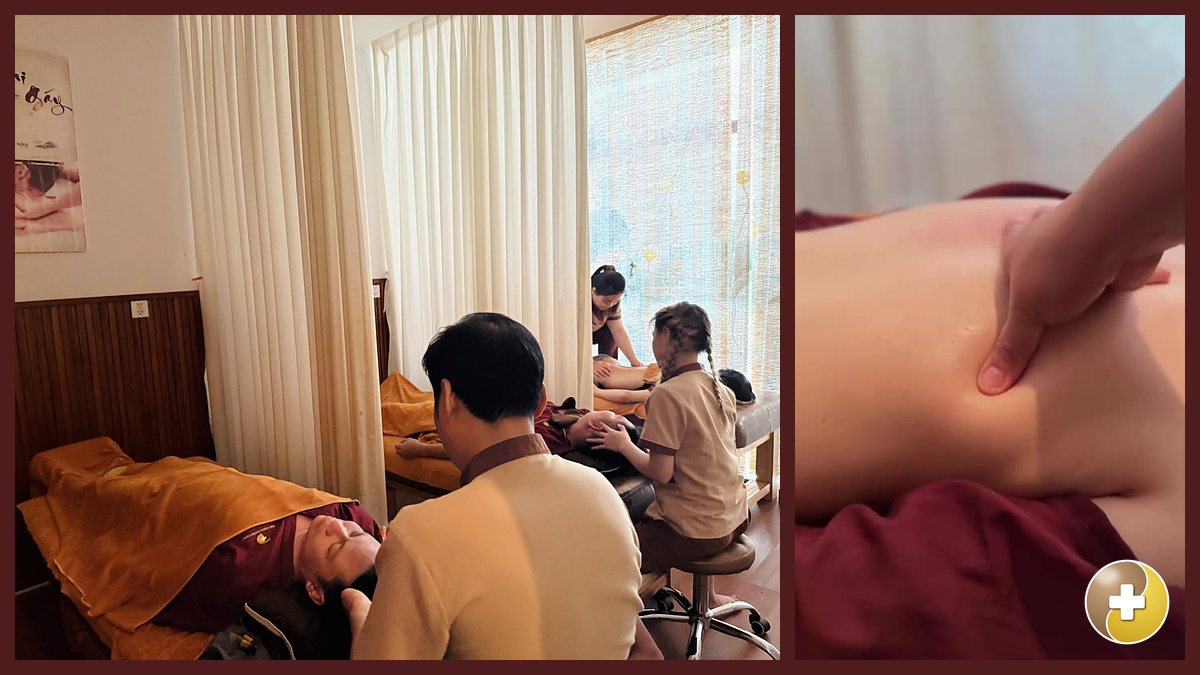
Quick answer: Back pain after pickleball usually comes from overloaded lumbar muscles: bending at the waist instead of the knees, sudden twists, picking up balls and long sessions. Pain down the leg with numbness or weakness needs a medical check. Tong Gia Acupoint Wellness (Huyệt Đạo Tống Gia) in District 12 and Vinhomes Grand Park, Ho Chi Minh City, cares for tired lower backs by hand.
Want Lương Y Tống Văn Huynh’s team to read your spine and posture in person?
What is back pain after pickleball?
Pickleball is played on a small court with a solid paddle and a holed plastic ball. Rallies are quick but there is little long running, so many people see it as a "gentle" sport. In reality players keep crouching low near the net to handle short dinks, rotate the trunk for forehands and backhands, shuffle sideways, step in and back, and bend to pick up balls dozens of times a match. In Western medicine, repeated bending combined with twisting is exactly the kind of load the lumbar spine handles poorly, especially the discs and small joints at L4–L5 and L5–S1 and the muscles alongside the spine.
That is why back pain after pickleball is common, particularly in middle-aged newcomers. Some just feel a tired, tight band across the lower back that evening and stiffness brushing their teeth the next morning; some feel a sharp catch on one side mid-forehand and cannot stand straight; some have low back pain that spreads into the buttock and the back of the thigh. Most cases are strained, overloaded muscles and tendons around the lower back; a smaller share involves a disc or nerve root and needs medical assessment.
So back pain is a symptom, not the name of a condition. This guide groups the usual causes, explains when to see a doctor first, and shows how Tong Gia Acupoint Wellness (Huyệt Đạo Tống Gia) looks at the lower back through Eastern wellness, Y Tướng Học (Vietnamese face and body reading) and spinal nerve-reflex balancing.
Pickleball courts have spread across Ho Chi Minh City since 2024: courts inside residential compounds, hourly rentals in Thu Duc, Vinhomes Grand Park, District 12 and Go Vap, and many converted tennis courts. Many expats play in the evening after work or early on weekends, sometimes three or four hours straight. We often see people who sit all day, backs already tired, then spend the evening crouching on court.
Common causes: why lower back pain follows sports like pickleball
These groups follow Western medicine and what is seen on court. They help you describe the problem to medical staff; several can overlap.
- Bending the back instead of the knees. Near the net you must reach low balls. The safer way is to bend the knees and hips with the back fairly straight; many players keep their legs almost straight and fold at the waist. Done a hundred times a match, the lumbar muscles hold you up constantly, tire and tighten.
- Sudden twists and long reaches. A hard forehand, a reach across the body, a quick crossover step. When the lower back bends and twists without support from the abdominal and buttock muscles, the load lands on one side. This is the typical sudden, one-sided muscle strain that makes standing straight hard.
- Picking up balls with your back. Bending straight-legged to collect balls adds dozens more loads to the lower back each match.
- No warm-up, long sessions, hot courts. Straight into a match, game after game because it is fun, outdoor courts at midday, heavy sweating and little water. Cold, tired or dehydrated muscles strain and cramp easily.
- A desk-tired back with tight hips and hamstrings. Sitting all day shortens the hip flexors, weakens the glutes and tightens the hamstrings, so the lower back has to compensate.
- Discs and nerve roots. People with existing disc wear or bulges can irritate a nerve root with bend-and-twist sports: pain into the buttock, thigh and calf, numb feet.
Other signs to watch
- A tired, tight band across the lower back that evening and morning stiffness that eases as you move: usually overload.
- Sharp one-sided pain on twisting or bending, a clear tender spot, difficulty standing straight: typical of a strain.
- Pain spreading to the buttock, back of the thigh or calf, tingling feet: possibly a nerve root.
- Pain that increases with coughing, sneezing or straining.
- Knee or heel pain on the same side: your stance is uneven.
- A cold back, tired knees, tiring from standing, light sleep.
When to see a doctor
Please see a doctor first, and do not rely on massage alone, if any of these apply:
- A fall on court with severe pain, or you cannot get up or walk.
- Numbness in the groin or saddle area, bladder or bowel changes, or clear leg weakness: get checked at once.
- Pain down the leg with numbness or weakness that keeps getting worse.
- Upper back pain with chest pain, breathlessness or cold sweats during play: stop and call 115 (Vietnam's emergency number).
- One-sided flank pain with fever, burning urination or blood in the urine.
- Pain that grows at night at rest, with unexplained weight loss or ongoing tiredness.
- No improvement after one to two weeks of rest and self-care.
If a doctor is already following you, keep to that advice and tell the practitioner before the session. This is a wellness service, not medical care.
The Y Tướng Học view: Kidney bones, Liver sinews, Spleen muscles
Y Tướng Học rests on one idea: what is inside shows outside. In the Tong Gia curriculum, a lower back that hurts with sport relates to three Eastern organ systems:
- The Kidney governs the bones and is linked with the lower back. The curriculum lists an aching lower back, tired weak knees and tiring from standing under Kidney weakness.
- The Liver governs the sinews: supple tendons and flexible joints when balanced; stiffness, cramps and lost flexibility when weak. Long-term stress makes muscles tighten.
- The Spleen governs the muscles and limbs: the back and abdominal muscles that hold the spine need to be well fed.
On the body, the Kidney shows in the ears, hair, bones and lower back: thick pink ears, glossy hair and a strong back are good signs; tired knees, a cold back, ringing ears and hair loss are signals. Among the ten face shapes, the curriculum notes that the "Do" shape (narrow top, broad jaw) carries thick lower-back and hip muscles prone to congestion; the round "Viên" shape tends toward a cold lower back with soft muscles and dull aching; and the "Giáp" shape (wide forehead, pointed chin) often has a sunken, cold lower back. The curriculum uses these to choose which part of the back to examine first. This is a traditional reference, not a medical conclusion. More on face reading for wellness.
Spine segments and nerve-reflex areas involved
In the Tong Gia curriculum, the lumbar spine (L1–L5) serves digestion, kidneys, urinary and reproductive function and the legs; the sacrum (S1–S5) serves elimination and the lower pelvis. The muscle–bone–joint group (disc problems, sciatica, spurs, tingling limbs) is worked through C5–C7, L1–L5 and S1–S5. In Western medicine, L4–L5 and L5–S1 take much of the bend-and-twist load, and their roots join the sciatic nerve.
| Segment / area | Nerves / function | Common signs | Eastern organ |
|---|---|---|---|
| T10–T12 | Thoracolumbar junction, muscles beside the spine | Tight band at the waist when twisting | Spleen, Kidney |
| L1–L3 (Kidney point and Mingmen at L2) | Kidneys, lumbar muscles, front of thigh | Tired, cold back, tired knees | Kidney (bones) |
| L4–L5 | Lower lumbar roots: front of shin, big toe | Low back pain, outer shin pain | Kidney, Liver |
| L5–S1 | Sciatic nerve: buttock, back of thigh, calf | Pain into the buttock and thigh, numb foot | Kidney, Liver |
| S1–S5 | Sacral area, elimination | Buttock pain, hard to sit long after play | Kidney |
How Tong Gia works: spinal nerve-reflex balancing massage
The method was developed by Lương Y Tống Văn Huynh, founder of Tong Gia and a master of traditional Vietnamese wellness with over 13 years in Eastern wellness, Y Tướng Học and spinal nerve-reflex balancing. A session for a pickleball player with back pain follows these steps:
- Observe and ask: which side, since which match, bending or twisting, any pain down the leg, numbness, weakness or fall, any medical check. Warning signs mean you will be asked to get checked first. Ears, hair, complexion, posture and lower-back warmth are observed.
- Read the spine by hand: skin temperature, muscle layer, vertebra shape and your sensations, comparing left with right.
- Locate the key area and point: usually T10–L5, the sacrum and the hip on the painful side; only overactive (warm, tight, more painful) areas are worked directly.
- Release the muscles: the muscles beside the lumbar spine, quadratus lumborum, buttocks, hips and hamstrings, with a "sensation wave" building from one finger; thick, hard muscle blocks are pushed and rotated, while a cold back with soft muscle gets gentle vibration.
- Press the right points: the Kidney point (1.5 cun beside the spine below L2), Mingmen (in the hollow below L2) and Zhishi (3 cun beside the spine below L2) from the curriculum; the point in the middle of the knee crease ("for back pain, look to the knee crease"); and lower-back points.
- Stop at the right time: when the skin over the key point turns from dry to slightly moist and its temperature normalises.
- Home guidance: lowering with your knees for low balls, picking up balls, and a hip-and-back warm-up.
Suitable services (same price at both branches; see the full price list):
- Lower back care, 60 min: 550,000 VND (about 21 USD); first visit 399,000 VND (about 15 USD).
- Lower back care, 90 min: 750,000 VND (about 29 USD), when the buttocks, hips and hamstrings are tight too.
- Cupping, 30 min: 85,000 VND (about 3 USD), added when the back feels cold and heavy from air conditioning.
See also sports recovery massage and the guides back massage in Saigon: Q&A, back massage in Saigon: what a session is like, cupping in Saigon: Q&A and massage after sport in Thu Duc.
A typical session
This is a composite of many sessions, not one guest's story. A man of about 48, a manager in Thu Duc, had played pickleball for five months, four evenings a week, about three hours each time. After a long doubles match he felt a sharp catch in his right lower back on a forehand; that night he could not bend and the next morning he had to push up with his hands to sit. He had been checked, told it was a lumbar muscle strain with no sign of nerve compression, and advised to rest a few days then move gently. Two weeks later he came to Tong Gia. The practitioner noticed a broad jaw; the right lumbar and hip area was thick, tight in a large block and warmer than the left; the right hamstring was tight. The session released the mid and lower back, pushed and rotated the thick muscle on the right, pressed the Kidney point, Mingmen and Zhishi, then the buttock, hip and hamstring with the knee-crease point. By the end he could bend forward more freely. He was advised to drop to two evenings a week for now, play no more than two hours, warm up hips and back, reach low balls by bending his knees, and pick up balls by squatting or with the paddle.
What guests feel during and after
The tender spots are usually the painful side of the lower back, the buttock and the hip; many are surprised their buttocks are tighter than their back. As these soften, the back feels warm, bending is easier and standing up feels lighter. Many sleep deeply afterwards; some feel mild soreness for about a day. Everyone is different. Tong Gia helps rebalance the related muscles and spine areas; it does not promise that pain will be gone after one session.
Want Lương Y Tống Văn Huynh’s team to read your spine and posture in person?
Home care and prevention
- Warm up 5–10 minutes: hip circles, knee bends, gentle trunk rotations, side shuffles and a few minutes of easy rallying.
- Lower with knees and hips: feet wider than shoulders, bend the knees for low balls; pick up balls by squatting or with the paddle.
- Break up playing time: rest and drink between games; while the back hurts, play less and stop if pain rises.
- Do not stay in bed all day: after the first days, gentle walking helps the back more than lying still; use warmth once it is only stiff.
- Look after your back at work: stand up about every hour, keep the lower back warm under air conditioning, sleep enough.
Book a session
- District 12: 225 Dương Thị Mười, Phường Tân Chánh Hiệp (Tan Chanh Hiep Ward, District 12). Open 8:00–19:00 daily.
- Vinhomes Grand Park, District 9: Căn T16-21 khu Manhattan, Phường Long Bình, TP. Thủ Đức (Unit T16-21, Manhattan zone, Long Binh Ward, Thu Duc City). Open 9:00–20:00 daily.
Book online or call, Zalo or WhatsApp +84 888 264 559. Tell us which side, since which match, any pain down the leg, numbness or weakness, and whether you have had a check. Real guest reviews are on each branch's Google Maps page. Living in or visiting Ho Chi Minh City? Come and try a Vietnamese Eastern wellness method built by Lương Y Tống Văn Huynh.
Visit us
- Đông Y Huyệt Đạo Tống Gia Quận 12 (District 12)
225 Dương Thị Mười, Phường Tân Chánh Hiệp, Quận 12, HCMC · 8:00–19:00 daily · 0888 264 559 · Directions on Google Maps - Đông Y Huyệt Đạo Tống Gia Quận 9 (Vinhomes Grand Park, District 9)
Căn T16-21 khu Manhattan, Vinhomes Grand Park, Phường Long Bình, TP. Thủ Đức, HCMC · 9:00–20:00 daily · 0888 264 559 · Directions on Google Maps
Want Lương Y Tống Văn Huynh’s team to read your spine and posture in person?
FAQ
Is back pain after pickleball serious? Most of the time it is tired, strained lumbar muscles from crouching, twisting and bending for balls, and it eases within days. See a doctor if pain spreads down the leg with numbness or weakness, if you have groin numbness or bladder changes, or after a fall.
What should I do for lower back pain after sport? Play less for a few days, walk gently rather than lying still, use warmth once it is only stiff, and stretch the hips and hamstrings lightly. Pain down the leg, numbness, weakness or no improvement after one to two weeks needs a check.
How long does a sports-related low back strain take to settle? A mild lumbar strain usually improves clearly within a few days to about two weeks with sensible rest and gentle movement. Longer pain, night pain, pain down the leg or fever need a medical check.
Is massage helpful for a strained lower back? In the first sharp days, rest and get checked if there are warning signs. Once injury is ruled out, acupressure massage on the lower back, buttocks, hips and hamstrings helps the muscles feel softer and warmer. After a fall or with leg numbness or weakness, see a doctor first.
Should I keep playing with back pain? Do not push on if pain rises during a match. Once it eases, return gradually with shorter sessions, a proper warm-up, bending your knees for low balls and squatting to pick up balls.
Is pickleball bad for your back? Not when played within your limits. Backs suffer when you bend at the waist instead of the knees, twist suddenly, play for hours, or arrive with a desk-tired back. If you have known disc problems, ask medical staff before playing a lot.
Author: Lương Y Tống Văn Huynh – founder of Huyệt Đạo Tống Gia, a master of traditional Vietnamese wellness with over 13 years in Eastern wellness care, Y Tướng Học (face reading) and spinal nerve-reflex balancing massage.
Updated: 2026-11-17
Related guides
- Hip and side cramps: six common causes, telling them from deeper pain, and how Tong Gia can help
- Pain in the middle of the back: four types to tell apart, warning signs, and how Tong Gia cares for it in Ho Chi Minh City
- Back pain and kidney failure: the signs that actually matter, the tests to ask for, and safe back care in Ho Chi Minh City
- Where is kidney back pain felt? Location, type of pain, warning signs, and how to tell it apart from a sore back muscle
- Swayback lower back pain: how an over-arched lower back causes aching, when to get checked, and how Tong Gia cares for it in Ho Chi Minh City
- Lower back pain with tired, weak knees: common causes, when to get checked, and how Tong Gia cares for the back and legs in Ho Chi Minh City
This is a wellness service, not medical care.