
Massage after spine surgery: is it safe on a trip to Vietnam, what to bring and which areas must be avoided
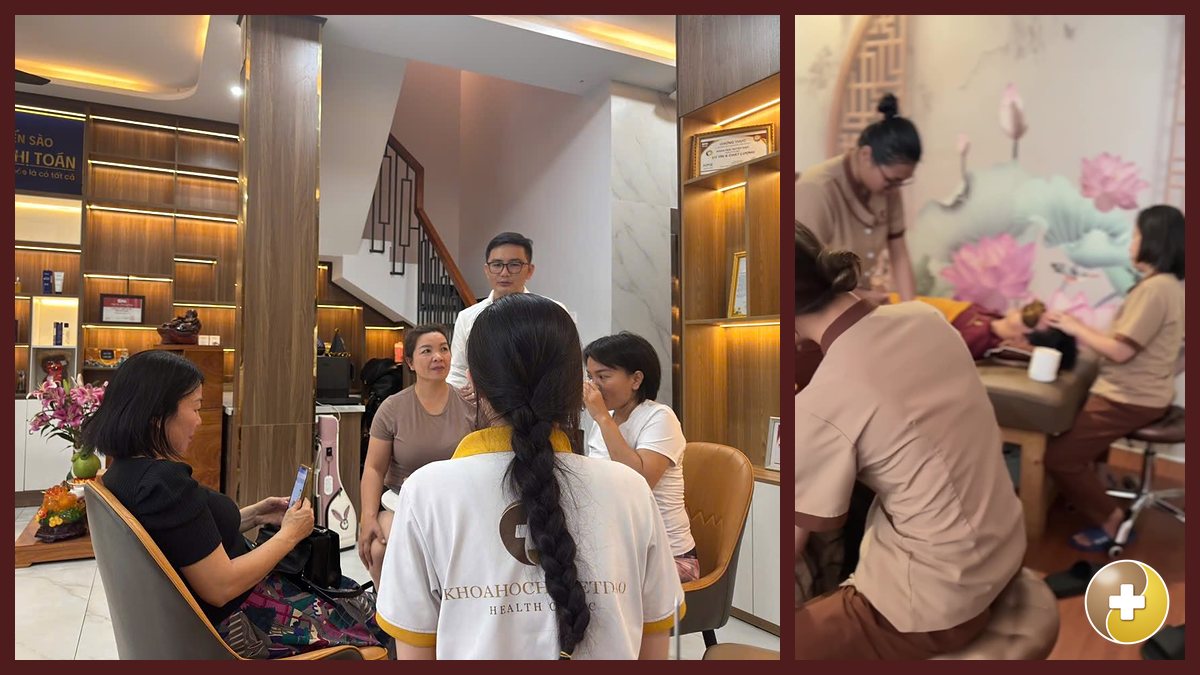
Quick answer: After spine surgery, massage on a trip to Vietnam can be possible, but only once the team following you after surgery agrees. Tong Gia Acupoint Wellness in District 12 and Vinhomes Grand Park, Ho Chi Minh City, never works on the scar or the fused section; it gently works the shoulders and legs only.
Want Lương Y Tống Văn Huynh’s team to read your spine and posture in person?
Massage after spine surgery: is it safe?
Is massage after spine surgery safe? The short answer: it can be, but never on the operated spine, and only after the people following you after surgery have said yes. By that we mean the surgical team that operated, or the nurse, physio or surgeon who sees you for follow-up where you live. They know which level was operated, how far the bone has fused and how the wound looks, so they are the ones who can answer "which areas may be massaged now". A safe wellness session only looks after the areas far from the operation that are tired from compensating: shoulders, arms, thighs, calves and feet, with light pressure.
In Western surgical terms, "spine surgery" covers several different operations. The common ones among overseas Vietnamese and long-haul visitors are removal of the part of a herniated disc pressing on a nerve root (open, microsurgical or endoscopic), decompression to widen a narrowed spinal canal, and fusion, where two or more vertebrae are joined with screws, rods and a bone graft so they become a single block; in the neck there is also artificial disc replacement. Each has its own time for the wound to close, for the bone to fuse and its own list of movements to avoid. A fusion usually needs many months to become solid, and bending, twisting and lifting are often restricted during that time. The fused section no longer moves, so the levels above and below, and the muscles around them, work harder.
This article is written for people who had disc or spine surgery abroad: in San Jose or Houston, Sydney or Melbourne, Toronto, Paris or Berlin, and who are now flying to Ho Chi Minh City for Tet, family visits or a longer winter stay, plus international visitors on long-haul routes. From North America the trip almost always involves a connection and can take close to a full day; from Europe it is around half a day in the air; from Sydney and Melbourne there are direct flights of about 8–9 hours. From November to February the northern winter meets Saigon's dry season, with sun and 32–34°C.
Family in Ho Chi Minh City often want to take you for a massage after the flight, while you may feel both keen and nervous: will anyone press on the screws, could something shift, what should you tell reception? This guide goes step by step, safety first, comfort second. It differs from our pieces on massage with osteoporosis and massage after knee replacement: here the area to avoid sits right on the spine itself. For a general overview of the neck and back after long flights, see the main guide on spine care after a long-haul flight.
Why shoulders and legs ache after spine surgery and a long trip
Surgery usually relieves the pressure on the nerve, but the body around it is still adapting. A trip home loads exactly the areas that are compensating:
- Long hours seated: after spine surgery people are usually told not to sit still for too long. On a multi-leg journey with a narrow seat and little legroom, the back is held stiff and straight, and the muscles beside the spine, the buttocks and the backs of the thighs stay tense.
- A fused section shifts the load: once two or three vertebrae are joined, bending and turning move to the levels above and below, to the hips and the shoulders. Many people, afraid to bend, walk stiffly with raised shoulders, and the neck and shoulders tire.
- Nerve roots recover slowly: after disc surgery, numbness or heaviness in the calf or foot can linger for a while, and long sitting, standing or heat makes it more noticeable.
- Muscles weakened by weeks of rest: core, back and thigh muscles are weaker than before; the post-operative exercise programme is what rebuilds them, and massage cannot replace it.
- Luggage and local life: lifting a case into the overhead bin, hauling it through the airport, carrying grandchildren, the steep stairs of a Saigon tube house, motorbike rides on bumpy streets and low plastic stools are exactly the movements you were told to avoid or do very carefully.
- Climate and jet lag: short sleep, heavy sweating without enough water and air conditioning blowing on your back make muscles tighten.
- Clot risk: major surgery and long flights both raise the risk of a deep vein clot in the legs. Some people are told to take blood thinners, wear compression stockings or walk often; this is why anyone touching your legs must ask first. If you take blood thinners, read massage while on blood thinners.
Signs worth noting
Before thinking about massage, check where your recovery stands. The table separates what is common from what needs your surgical team's view or an urgent check:
| Area / sign | Common: distant areas may be cared for | Ask your surgical team first | Get checked now |
|---|---|---|---|
| Wound | Closed, dry, not red; skin around the scar a little numb | Still dressed, stitches or staples in; slight redness | Oozing, pus, edges opening, spreading hot redness, fever |
| Operated back or neck | Stiff, sore after long sitting, easier when walking gently | Pain slowly rising compared with home, or a different kind of pain | Sudden severe pain, especially after a fall or a "crack" |
| Legs and feet | Mild numbness or heavy calves, no worse than before the flight | Numbness spreading, legs heavier than before on walks | Weakness getting worse, foot drop, tripping; one calf swollen, hot, red, painful |
| Bladder, bowel | Normal | Slightly harder to pass urine than usual | Cannot pass urine, leaking, loss of bowel control, numbness around the back passage or groin |
| Head, whole body | Tired after the flight, jet lag, poor sleep the first nights | On blood thinners, bruising easily | Severe headache on sitting up that eases lying down; breathlessness, chest pain |
Away from the operated area, people often notice tight shoulders from stiff walking and luggage, a tense mid-back, tight hamstrings and calves after hours of sitting, mild ankle swelling (see swollen legs after a long flight) and broken sleep in an unfamiliar bed.
When to see a doctor
After spine surgery, any of the following means no massage: see a doctor at a medical facility straight away and let your surgical team know.
- Numbness or weakness in the legs getting worse: a weaker leg, foot drop, tripping, unsteadiness, or numbness spreading well beyond what you had before the flight.
- Bladder or bowel changes: unable to pass urine, leaking urine, losing bowel control, with numbness around the back passage, groin or inner thighs. This is an emergency; go the same day, do not wait.
- A wound that is swollen, hot, red, oozing or discharging pus, edges opening, or fever and chills: possible infection, even weeks after surgery.
- A severe headache when sitting or standing that eases lying down, particularly with clear fluid leaking from the wound.
- Sudden severe back or neck pain after a fall or lifting, or pain clearly unlike your usual pain.
- One calf swollen, warm, red and painful, worse when walking, in the weeks after surgery and after a long flight: think of deep vein thrombosis, and do not massage that leg.
- Sudden breathlessness, chest pain, coughing blood or fainting, or crushing chest pain with shortness of breath and cold sweats: call 115 (Vietnam's ambulance number) at once.
- Unexplained weight loss, back pain worse at night, lasting tiredness: get checked at a medical facility in parallel rather than putting it down to "post-op aches".
At Tong Gia, practitioners go through these signs again before touching you and stop if any are present. Tong Gia does not read X-rays, MRI or CT scans, does not assess the result of your operation, does not draw up medical plans and makes no promises about your spine. Which areas may be massaged, and from when, is decided by the team following you after surgery.
This is a wellness service, not medical care.
What to bring and what to tell reception
Your papers are not for Tong Gia to "read" your operation. They simply tell reception and the practitioner exactly where to stay away from. Before you fly, prepare:
- Your surgical team's view: ask at your last follow-up before the trip, or by message or email: "May I have a light massage on the shoulders and legs? Are there positions I should avoid when lying down?" If the answer is in writing, keep a photo on your phone.
- Discharge papers or an operation summary showing the date, type of operation, level (for example L4–L5, L5–S1 or C5–C6) and whether screws or rods were placed. English, French or German is fine; just point reception to the date and the level.
- A list of what you take or wear: blood thinners, pain relief, compression stockings, a back brace or neck collar if still in use.
- An implant card, if your hospital issued one, useful at airport security.
When booking, tell reception: neck or lower back, which level, the date, fusion or not, which areas you have been cleared for, any banned positions (lying face down, twisting, bending), any leg numbness or weakness, blood thinners and conditions such as high blood pressure or diabetes. Reception notes this so the practitioner can prepare pillows, the right table and position. Without your surgical team's view, Tong Gia will suggest you ask first, or offer only a very light session on distant areas such as the feet or head.
The Y Tướng Học view: Kidney governs bone, Liver the sinews, Spleen the muscles
The operation, screws and rehab belong to your surgical team. The person carrying that spine still has their own constitution, and Eastern wellness reads bone, tendon and muscle through three organ systems. In the Tong Gia curriculum the Kidney (Thận) is a functional system linked to essence, bone and marrow, water, ears, hair, teeth and the lower back and knees; it belongs to Water and to winter. The curriculum says "the Kidney governs the bones and produces marrow"; reduced Kidney function shows as a tired lower back and knees, and the Kidney Yang pattern adds feeling the cold and a cold, achy back. It also describes "Heart and Kidney out of contact", with poor sleep, palpitations and a tired back, which sounds a lot like the first jet-lagged nights at home.
The Liver (Can) "governs the sinews": it nourishes tendons and ligaments, and when it is depleted muscles cramp and stiffen. People who are afraid to bend after surgery often tighten exactly the shoulders, mid-back and hamstrings. The Spleen (Tỳ) governs the muscles and limbs: weak core and thighs, heavy legs and low appetite after weeks of rest are signs the Spleen needs support.
To be clear: this is functional language from Eastern wellness. It does not mean your kidneys or liver are ill, and it is not an explanation of why you needed surgery.
Y Tướng Học, the Vietnamese art of reading face and body for wellness, says "signs show outside, organs live inside". Lương Y Tống Văn Huynh, a Vietnamese master of traditional wellness and founder of Tong Gia, systematised it so practitioners look first and then decide how gently to work and where to bring warmth. The curriculum notes several signs linked to the spine:
- The bridge of the nose: seen as a small picture of the spine, reflecting the Spleen and the lumbar spine; a crooked bridge often goes with a misaligned spinal axis and lumbar disc problems at L4–L5–S1.
- Thin, fan-like ears folding back: a Kidney Yin pattern; the curriculum links it with early wear of the neck and lower back, disc problems from lack of joint fluid, poor sleep and ringing ears.
- More bone than flesh (very lean, prominent cheekbones and nose): a Liver–Kidney Yin pattern with dry discs and tight tendons.
- A face narrow above and broad below (the "Do" shape): very thick lower-back and hip muscles, prone to sciatic pain or disc trouble of the "excess" type.
- A long, narrow, lean face (the "Mục" shape): thin, slack muscles along the spine; the curriculum calls for gentle tonifying techniques such as vibration and light kneading, exactly the light touch suited to someone after surgery.
These signs describe tendencies and guide how gently to work; they are not conclusions and say nothing about whether your operation went well.
Spine segments and nerve-reflex zones involved
In the Tong Gia curriculum on spinal nerve-reflex balancing, the spine has 7 cervical, 12 thoracic (D1–D12) and 5 lumbar vertebrae (L1–L5), plus the sacrum and coccyx. The muscle, bone and joint group, which includes disc problems, sciatica and numb limbs, is linked to C5–C7, L1–L5 and S1–S5, and the curriculum stresses this is supportive care, not a replacement for a medical check. After surgery these are often the very levels that were operated on, so the table shows what must be avoided and which distant areas may be cared for.
| Segment | Nerves / function (anatomy) | Typical after surgery and a flight | Organ system | Outer sign (Y Tướng Học) |
|---|---|---|---|---|
| C5–C7 | Lower neck roots feeding the brachial plexus; shoulder, arm, hand | Tired shoulders and arms from luggage; lingering hand numbness after neck surgery. Neck surgery: no work on the neck | Liver (sinews) | Tight neck and shoulders, cramping sinews; thin ears |
| D7–D10 | Mid-thoracic roots; mid-back muscles; Can du (BL18) | Tense mid-back from stiff walking and fear of bending | Liver | Tight points at D7, D9; tight bands along the spine |
| D11–L1 | Lower thoracic and upper lumbar roots; lower back, abdominal wall; Tỳ du (BL20) | Weak core and thighs after weeks of rest; low appetite | Spleen (muscles, limbs) | Soft, slack muscle tone, heaviness |
| L2–L4 | Roots forming the femoral nerve; Thận du (BL23), Mệnh môn (GV4) | Cold, tired lower back, front thighs. Often operated or fused: not touched | Kidney (bone, back and knees) | Cold lower back, slack lumbar muscles; more bone than flesh |
| L4–S1 | Roots feeding the sciatic nerve; buttock, back of thigh, calf, foot | Common disc level; lingering calf numbness after surgery. Care only from the calf down | Kidney–Bladder, Liver | Crooked nose bridge; "Do" face with thick back and hips |
| S2–S4 | Sacral nerves: bladder, bowel, sensation around the back passage and groin | Bladder changes or numbness here mean an urgent medical check, not massage | Kidney–Bladder | Not read from signs: this belongs to medical care |
The table is a guide for where to care, not for drawing conclusions. The operated or fused section is never a place to "read" or "adjust"; questions about screws or post-operative scans belong with your surgical team.
Want Lương Y Tống Văn Huynh’s team to read your spine and posture in person?
The Tong Gia method: distant areas, light pressure, hands off the operated spine
The method was developed by Lương Y Tống Văn Huynh over more than 13 years of Vietnamese Eastern wellness, Y Tướng Học and spinal nerve-reflex balancing, a Vietnamese traditional approach worth experiencing while you are in Ho Chi Minh City. A core rule of the curriculum: this knowledge is for care, relaxation and support, never a replacement for a medical check; at any warning sign, the practitioner stops and advises you to get checked. After spine surgery, a session runs like this:
- Safety check: a look at the papers you bring for the level, date and whether there is a fusion; which areas your surgical team has cleared; whether the wound has closed; any leg weakness or bladder changes; blood thinners, blood pressure, diabetes. If any sign from "When to see a doctor" appears, the session stops here.
- Observation: complexion, ears, nose bridge, lips, how you stand, walk and lower yourself onto a chair; which shoulder is raised, which side is carrying the load.
- A safe position: no lying face down unless cleared and comfortable. Side-lying with a pillow between the knees, lying on your back with a pillow under the knees, or sitting in a supported chair. Getting on and off the table, you are reminded to roll as one unit, as taught after surgery, never to jack-knife up.
- Hands off the operated spine: the scar and the operated or fused section are covered with a towel and left alone. No pressing along the spine, no twisting, pulling or cracking; the compression techniques the curriculum uses for stiff segments are not used on an operated section.
- Light work on distant areas: after lower-back surgery, the neck, shoulders, shoulder blades and arms; for both neck and lower-back surgery, the front of the thighs, calves, ankles and feet. After neck surgery, the neck itself is not worked. With blood thinners, the curriculum calls for light pressure only and avoiding bruises; thin, slack muscles get gentle vibration and kneading.
- Acupressure on the arms and legs: Túc tam lý (ST36) below the knee, Thái khê (KI3) at the inner ankle, Dũng tuyền (KI1) on the sole, and Nội quan (PC6) at the wrist for poor sleep. No acupressure on the back and no heat near the scar.
- Self-care advice: how to sit and stand from Vietnamese chairs, keeping the back warm under air conditioning, a few points to rub on the feet, and a reminder to keep up the exercises your surgical team gave you.
What a typical session looks like: a family member usually messages first with a photo of the date and level on the discharge papers. At the branch, the practitioner goes over safety again and lets you choose a position. After lower-back surgery, the session often starts with the neck and shoulders while you sit or lie on your side, then moves to the thighs, calves, ankles and soles with you on your back and a pillow under your knees. Your back stays covered the whole time. At the end you are helped to roll onto your side, push up slowly with your arms and stand without hurrying.
Suitable services (prices in VND; approximate conversions at a reference rate of 1 USD ≈ 26,000₫, 1 AUD ≈ 17,000₫, 1 CAD ≈ 19,000₫, 1 EUR ≈ 30,000₫; payment in VND; see prices):
- Heavy, tired legs care, 60 min: 500,000₫ (about 19 USD, 29 AUD, 26 CAD or 17 EUR). Suits both neck and lower-back surgery: thighs, calves, ankles and feet after the flight, with no work on the back.
- Neck and shoulder care, 60 min: 550,000₫, first visit 399,000₫ (about 21 USD, 32 AUD, 29 CAD or 18 EUR; first visit about 15 USD, 23 AUD, 21 CAD or 13 EUR). Only after lower-back surgery once you are cleared for shoulder massage; not for people who had neck surgery.
- Herbal hair wash with neck and shoulder massage, 60 min: 250,000₫ (about 10 USD, 15 AUD, 13 CAD or 8 EUR). Gentle; suits people after lower-back surgery who cannot lie face down yet. After neck surgery, ask your surgical team first because the head tilts back at the basin.
From the airport: the District 12 branch is in the same northern part of the city as Tan Son Nhat (Tân Sơn Nhất) airport, not a long drive, though timing depends on traffic. The Vinhomes Grand Park branch in Thu Duc City is further and takes longer, especially at rush hour; it suits families staying in Thu Duc or the east side. Take a car with a supportive seat rather than a motorbike, and rest on arrival day.
How it feels: shoulders and calves warm up and compensating muscles let go; at a few tight points you may feel a pleasant, dull pressure, which the curriculum calls a "sensation wave", an even rhythm that lets muscles contract and release so the body can settle itself. Many people doze off in the second half. Afterwards legs often feel lighter, shoulders less tight and sleep easier that night, depending on each person. Tong Gia does not promise an end to pain and does nothing to the operated spine; your post-operative exercises remain what matters.
A suggested plan for the trip, plus self-care
A plan for a 2–4 week stay after spine surgery. Anything touching the operated area follows your surgical team's advice. Before the flight, read preparing your body before a long flight.
| When | What to do | Notes |
|---|---|---|
| Before booking flights | Ask your surgical team: is long-haul travel fine, do you need compression stockings or blood thinners, which areas may be massaged and from when | Get discharge papers or a summary; keep the answer as a photo |
| At the airport | Ask airline staff to lift bags; book wheelchair assistance if long walks tire you | Do not lift cases into the bin or off the belt yourself |
| In flight | Aisle seat; stand and walk every 1–2 hours; small cushion behind the lower back | Drink water regularly; flex your ankles while seated |
| Arrival day | Rest, walk gently, warm shower, early night on Vietnam time | No massage yet; watch the wound, both calves, bladder |
| Days 2–3 | A legs session, or neck and shoulders if you had lower-back surgery and are cleared | Bring your papers; repeat the date and level |
| Weeks 1–2 | Daily post-op exercises; short walks early morning or late afternoon | No carrying grandchildren, no motorbikes on bumpy roads |
| Weeks 2–4 | One session a week if shoulders or legs still ache; choose the nearer branch | Less standing in the kitchen at Tet, fewer low stools |
| 1–2 days before flying back | A light legs session; good sleep and fluids | Re-check advice on stockings and blood thinners for the return |
- Keep up your exercises: the walking and core work your surgical team set matter more than any massage.
- Use a chair with a backrest and armrests instead of a low stool; push up with your arms and legs, back straight.
- Do not bend or twist to pick things up: bend your knees or ask family; no heavy lifting while restricted.
- Keep your back warm under air conditioning: around 26–27°C, airflow not on your back.
- Gentle self-acupressure: rub Dũng tuyền on the sole and Thái khê at the inner ankle for 1–2 minutes each; never press along the spine yourself.
Booking from abroad before you fly
- District 12: 225 Dương Thị Mười, Phường Tân Chánh Hiệp (Tan Chanh Hiep ward, District 12), 8:00–19:00 daily.
- Vinhomes Grand Park: Căn T16-21 khu Manhattan, Phường Long Bình, TP. Thủ Đức (unit T16-21, Manhattan zone, Long Binh ward, Thu Duc City), 9:00–20:00 daily.
Whether you are in Houston, Sydney, Toronto or Paris, you can book before you fly: message Zalo or WhatsApp +84 888 264 559 (0888 264 559), or book online. Please send your landing date and time, neck or lower back, the level and date of surgery, any screws or rods, which areas your surgical team has cleared, blood thinners, where you ache (shoulders, legs) and your preferred branch. Reception makes notes so the practitioner can prepare. Family in Ho Chi Minh City can book for you too. More on booking a massage in Saigon from abroad; slots before Tet fill quickly.
Visit us
- Đông Y Huyệt Đạo Tống Gia Quận 12 (District 12)
225 Dương Thị Mười, Phường Tân Chánh Hiệp, Quận 12, HCMC · 8:00–19:00 daily · 0888 264 559 · Directions on Google Maps - Đông Y Huyệt Đạo Tống Gia Quận 9 (Vinhomes Grand Park, District 9)
Căn T16-21 khu Manhattan, Vinhomes Grand Park, Phường Long Bình, TP. Thủ Đức, HCMC · 9:00–20:00 daily · 0888 264 559 · Directions on Google Maps
Map of our two branches
Want Lương Y Tống Văn Huynh’s team to read your spine and posture in person?
What guests say on Google Maps
“I had a wonderful experience.” (translated from a Vietnamese review)
— Trinh V., Google Maps review · Vinhomes Grand Park branch (District 9) · 03/2026 · See on Google Maps
“Flawless service.” (translated from a Vietnamese review)
— Đăng K., Google Maps review · Vinhomes Grand Park branch (District 9) · 11/2026 · See on Google Maps
Quoted from public reviews, shortened where marked (…). Experiences vary from person to person; reviews are not a substitute for seeing a doctor when something feels wrong.
Related guides for your trip
FAQ
Is massage after spine surgery safe when visiting Vietnam? It can be, but only once the team following you after surgery agrees, and never on the scar or the operated or fused section. Tong Gia works only the shoulders and legs with light pressure, after seeing your papers and checking the warning signs.
How long after disc surgery can I have a massage? There is no single number. It depends on the type of operation, whether the wound has closed and whether there is a fusion. Ask the hospital that operated which areas may be massaged and from when. Until then, a very light foot session may be possible if you are cleared.
I have screws and rods in my lower back. Could massage move them? At Tong Gia the fused section is never pressed, twisted or pulled; your back stays covered. Only shoulders and legs are worked. Questions about hardware or scans belong with your surgical team; Tong Gia does not read scans.
I had spine surgery in Toronto and my leg feels more numb since landing in Saigon. Is that a problem? Spreading numbness, a weaker leg or foot drop, especially with trouble passing urine or numbness around the back passage, needs an urgent medical check the same day, not a massage. Let your Toronto team know as well.
What papers should I bring to a massage after spine surgery? Your discharge papers or operation summary (date, level, screws or not), your surgical team's answer on which areas may be massaged, and a list of what you take, such as blood thinners. The papers only show reception what to avoid.
What should I tell you when booking for my mother, who had spine surgery in Sydney? Message +84 888 264 559 on Zalo or WhatsApp with her landing time, neck or lower back, level and date of surgery, banned positions, blood thinners, where she aches and the branch you prefer: District 12 or Vinhomes Grand Park.
Author: Lương Y Tống Văn Huynh – founder of Huyệt Đạo Tống Gia, a master of traditional Vietnamese wellness with over 13 years in Eastern wellness care, Y Tướng Học (face reading) and spinal nerve-reflex balancing massage.
Updated: 2026-11-18
Related guides
- Massage after spine surgery: is it safe on a trip to Vietnam, what to bring and which areas must be avoided
- Back pain from wrapping banh tet and cooking for Tet: care for the lower back, neck, shoulders and wrists
- Back pain and numb legs from long-haul trucking in Europe: why it happens and back care on a trip to Vietnam
- Back and knee pain from hotel housekeeping in Japan: what is going on and how to recover on your trip home
- Back pain and fatigue from FIFO mining in Western Australia: 12-hour shifts, vibration, camp sleep
- Knee and back pain from tiling and building work in Australia: causes and care when you fly home
This is a wellness service, not medical care.