
Can you get a massage while on blood thinners? How light it should be, what to avoid and when to get checked
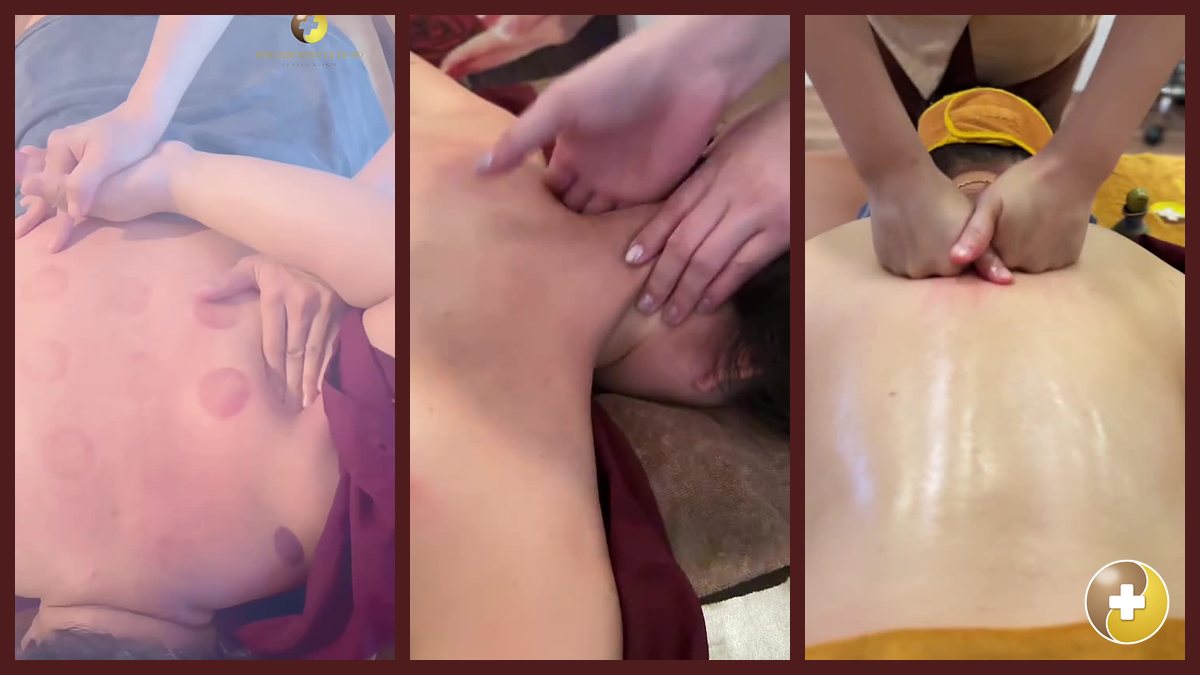
Quick answer: Usually yes, if the person who prescribes your anticoagulant has not advised otherwise and you have no unusual bleeding that day. Tell reception before the session. Huyệt Đạo Tống Gia in District 12 and Vinhomes Grand Park, Ho Chi Minh City, uses light pressure only, works around bruises and skips cupping and gua sha.
Want Lương Y Tống Văn Huynh’s team to read your spine and posture in person?
Can you get a massage while on blood thinners?
From late November, many Vietnamese families in San Jose, Houston and Orange County, in Sydney, Melbourne and Brisbane, or in Toronto, Calgary and Vancouver start packing for Tết in Saigon. North America is heading into winter; Australia is heading into summer. Among the travellers are plenty of older parents who take a prescribed blood thinner every day: some for atrial fibrillation, some after a clot in the leg or lung, some after a heart valve replacement, some for a few weeks after a joint replacement. Long-haul visitors from Europe or North America often share the same situation. After landing, someone in the family suggests a massage to shake off the flight, and the question typed into the phone is: is massage safe on blood thinners?
Our short answer: usually yes, if your prescriber has not said otherwise, you have no unusual bleeding that day, and the session is adjusted for someone who bruises easily. The Tong Gia manual lists "press hard to move the qi and blood" as unsafe advice, and states the correct rule plainly: people on anticoagulants bruise and bleed easily, so use light pressure only, avoid bruised areas and never press hard. This page is different from our page on massage after a heart stent: here the focus is slower clotting, bruising and bleeding, and the techniques that should be dropped completely, such as cupping and gua sha, rather than the heart itself.
In Western terms, clotting is the body's repair reflex. When a tiny blood vessel is damaged, platelets gather to plug the gap and a chain of clotting factors switches on, one after another, to build a fibrin mesh that holds the plug in place. The Tong Gia manual notes that the liver produces albumin, globulins and the clotting factors. A prescribed anticoagulant slows that chain down so that a clot does not form inside the heart or a vessel, where it could cause a stroke or a blockage in the lungs. Antiplatelet agents work on the first step, making platelets less sticky. The trade-off is that bleeding at a bump also takes longer to stop: knocking a table edge leaves a bruise, brushing too firmly makes the gums bleed.
Massage is, in the end, pressure on skin, fat, muscle and countless tiny vessels. Moderate pressure softens muscle, helps circulation and relaxes you. Deep elbow work, hard kneading, cupping that lifts the skin, and gua sha (cạo gió) that deliberately breaks small capillaries to raise red marks can leave marks on anyone; on someone taking an anticoagulant they can turn into large bruises or even bleeding inside a muscle. So the answer is not a flat yes or no. It is yes, with the right kind of session, the right pressure and the right timing. If your back is still stiff from the flight, read our main guide on spine care after a long-haul flight.
Why a trip to Vietnam calls for extra care on blood thinners
At home in the US, Australia or Canada, most people on anticoagulants have a routine: a fixed time to take them, steady meals, blood tests on schedule, a prescriber they know. A trip to Vietnam shakes up several of those at once:
- Long hours sitting still: from the US West Coast it is often 15–20 hours including a connection in Taipei, Seoul, Tokyo or Hong Kong; longer from Toronto or Calgary; about 8–9 hours nonstop from Sydney or Melbourne. Sitting for hours and drinking little slows blood flow in the legs and raises the risk of a clot, the very thing your prescription is meant to prevent. You still need to walk the aisle, and it is worth asking your prescriber about compression socks.
- Time zones: 11–15 hours from North America, 3–4 hours from Australia. It is easy to miss a dose or take two too close together. Our page on the US–Vietnam time difference helps you work out the clock; how to shift your dosing times is a question for your prescriber or pharmacist before you fly.
- Tết food: sticky rice cakes, braised pork, pickles, beer and rice wine, big meals followed by skipped ones. With some anticoagulants, prescribers ask you to keep leafy green intake steady and limit alcohol, because sudden diet changes can push the level up or down. Ask before the trip.
- Gifts from relatives: ginseng, herbal pastes, home-brewed tonics. Some herbs and supplements can affect clotting; check with your prescriber before taking anything new.
- More knocks and bumps: dragging suitcases, carrying gifts, steep old staircases, riding pillion on a motorbike, crowded Tết markets.
- Roadside massage: many places default to strong pressure, cupping or gua sha, and older guests often feel shy about mentioning their prescription. That is a common reason for big bruises after what was meant to be a relaxing session.
Put together, this is why taking your prescription on time, drinking enough, moving on the plane and eating steadily come first. Massage is the extra, and it should be a gentle one. If you are unsure what "gentle" means, see is strong massage better? choosing the right pressure.
Signs worth watching
Keep an eye on the following during the trip, note the date and time, and take a photo of any bruise so you can show a health professional if needed:
- Bruises that appear easily on the forearms, shins or thighs after small bumps; small bruises that fade over a few days are common on anticoagulants.
- Bleeding gums when brushing, nosebleeds that take longer to stop, small kitchen cuts that keep oozing.
- A stiff neck and upper back after sleeping upright on the plane, the usual reason people want a massage.
- Swollen ankles in the evening or after the flight; swelling on both sides that eases with your feet up is usually from sitting, swelling on one side needs attention (see below).
- Dizziness when standing up quickly and fatigue from not drinking enough in Saigon's 33–35°C heat.
- Palpitations and poor sleep on jet-lagged nights, especially if your blood thinner is for atrial fibrillation.
The Tong Gia manual lists "bleeding gums or easy bruising" among the signs that should be assessed by a health professional. On anticoagulants, mild bruising can be expected, but if bruising clearly increases or bleeding lasts much longer than usual, tell your prescriber rather than skipping doses on your own.
When to see a doctor, and when not to have a massage
If you take a blood thinner, please skip the massage and see a doctor promptly, or call 115 (Vietnam's emergency number), in any of these situations:
- Unusual bleeding: black, tar-like stools; vomiting blood or material that looks like coffee grounds; red or pink urine; coughing up blood; a nosebleed or gum bleeding that will not stop; large bruises with no clear cause.
- A fall with a knock to the head, even if you feel fine: get checked straight away, because bleeding inside the head can develop quietly; a sudden severe headache, vomiting or drowsiness means calling 115.
- One calf that is swollen, warm, red and painful in the days after a long flight: a possible clot. Get checked at once and do not have the leg massaged.
- Sudden chest pain or breathlessness, chest pain when breathing in, cold sweats or fainting: call 115, with no massage and no acupressure.
- Stroke signs (BE-FAST): loss of balance, sudden blurred vision, a drooping face, weakness in one arm or leg, slurred speech; call 115 and note when it began.
- A recent change of anticoagulant or dose, recent surgery, a tooth extraction or a hospital stay, or recent clotting tests that are not yet stable: do not book yet; ask your prescriber first.
One rule for the whole trip: never stop, skip or change your prescription yourself because you worry about bruising at a massage. Stopping an anticoagulant at the wrong time can raise the risk of a clot or a stroke. How long you take it and whether anything changes is your prescriber's decision. If the bruising bothers you, ask them.
This is a wellness service, not medical care. Tong Gia does not read X-ray or MRI images or clotting test results, does not draw up care plans in place of a medical facility and never suggests changing a prescription.
The Y Tướng Học view: Liver stores blood, Spleen keeps it in the vessels
Y Tướng Học (face reading for wellness) rests on one saying: "the signs show outside, the organs lie inside." Lương Y (master of traditional Vietnamese wellness) Tống Văn Huynh, founder of Huyệt Đạo Tống Gia, organised it into a way of observing every guest before a session. For someone on blood thinners the purpose is very practical: look first to know where not to touch and when not to work, and only then decide what to work on. It is an observation for wellness, never a way to say someone has a disease.
In the Tong Gia manual, two organ systems are tied to blood:
- Liver (Can) stores blood: Western physiology says the liver makes the clotting factors; Eastern tradition says the Liver stores blood, and when blood is ample the body does not bleed easily. When this function is weak, the manual lists easy swelling, easy bleeding and cuts that are slow to close. The Liver shows in the eyes, nails and tendons: bright eyes, pink nails and supple tendons when balanced; dry tired eyes, pale brittle nails, a tense neck, cramps and irritability when tired.
- Spleen (Tỳ) keeps blood in the vessels: in traditional terms, when it is weak you bruise easily and bleeding lasts longer. The manual adds clearly that there is no direct Western equivalent, since clotting depends on the liver and platelets. The Spleen shows in the lips, mouth and muscle tone: pink lips, good appetite and firm muscle when balanced; pale lips, sallow skin, easy bruising and heavy tired limbs when weak.
- Heart (Tâm) governs the blood vessels: for anyone on blood thinners because of atrial fibrillation, the Heart shows in the complexion and tongue; a pale or flushed face, poor sleep and palpitations are signs it is tired.
To be straightforward: on an anticoagulant, easy bruising mostly means the prescription is doing its job, not that an organ is "weak", and Tong Gia never uses face reading to suggest cutting down or stopping a prescription. The manual's communication rule is honesty, science and safety, and never advising anyone to stop a prescription. Observation helps the practitioner do three things: find existing bruises to avoid; notice pale nails or lips and ask whether you feel tired or dizzy; and spot signs that mean stopping and suggesting a check-up instead: unusually pale or bluish skin, bluish lips, active gum or nose bleeding, a large unexplained bruise, or one swollen leg.
Spine segments and nerve-reflex zones involved
According to the Tong Gia manual on spinal nerve-reflex balancing massage, the spine has 33 vertebrae: the neck (C1–C7) serves the head, face, neck and arms; the thoracic spine (D1–D12) serves circulation, breathing and digestion; the lumbar spine (L1–L5) serves digestion, kidneys, urinary system and legs; then the sacrum and coccyx. Nerve roots leave on both sides through the gaps between vertebrae, and that is where the fingers search. The table shows areas that are often tight in older travellers on blood thinners after a flight. It guides relaxation only; it does not name diseases, and no area "thins" or "thickens" the blood:
| Spine segment | Nerves / function (anatomy) | Common feeling | Related organ | Outer sign (Y Tướng Học) |
|---|---|---|---|---|
| C1–C3, base of the skull | Upper cervical nerve roots; small suboccipital muscles that hold the head | Heavy head, stiff neck after sleeping upright on the plane | Liver, Kidney | Dry tired eyes, creased forehead, tired face in the morning |
| C4–C7 | Lower cervical roots, brachial plexus; trapezius, shoulders, arms | Stiff shoulders, tired arms after hauling luggage | Liver (governs tendons) | Tight trapezius on both sides, raised shoulders |
| D4–D5 (Quyết âm du, Tâm du) | Upper thoracic nerves; heart area, muscles between the shoulder blades | Tightness between the shoulder blades, palpitations, trouble falling asleep with jet lag | Heart (governs vessels) | Pale or flushed face, red tongue tip |
| D7–D9 (Can du area) | Mid-thoracic nerves; liver, gallbladder, lower ribs | Tension under the ribs, fatigue, irritability after packed days | Liver (stores blood) | Pale brittle nails, dry eyes, tight tendons |
| D11–D12 (Tỳ du, Vị du) | Lower thoracic nerves; stomach, pancreas, spleen | Bloating after Tết meals, poor appetite, heavy limbs | Spleen (keeps blood in vessels) | Pale lips, sallow skin, easy bruising, soft muscle |
| L2 (Thận du) | Upper lumbar roots; kidneys, urinary system | Cold tired lower back, weak knees, waking at night to urinate | Kidney | Thin ears, cold waist, weak knees |
The manual's rule is to work only on "excited" zones (warmer skin, tight muscle, rising tenderness) and never directly on "inhibited" ones. For guests on blood thinners Tong Gia adds three cautions: skip every bruised area, even if it feels tight; no deep work on the calves or inner shins, where post-flight clots tend to form; and no neck twisting, cracking or hard back pounding.
A Tong Gia session on blood thinners: careful questions, light hands
This is a Vietnamese traditional method built by Lương Y Tống Văn Huynh over more than 13 years in Eastern wellness, Y Tướng Học and spinal nerve-reflex balancing. The manual describes its base as "three no's": no ingested or injected chemicals or herbs, no needles, no rough force. For guests on blood thinners, the third "no" is held even more firmly. A session follows five steps:
- Careful questions first: as the manual's screening requires, reception and the practitioner ask about heart conditions, blood pressure, stents, pacemakers, anticoagulants and pregnancy. For guests on blood thinners we also ask why you take it (atrial fibrillation, a past clot, a valve, recent surgery), whether the type or dose changed recently, what your prescriber said about massage, and whether you have had gum bleeding, nosebleeds, odd bruises or one swollen leg. Any warning sign means we stop, do not work, and suggest getting checked or calling 115.
- Observation and a bruise check: complexion, lips, nails, tongue and breathing; the practitioner looks over forearms, shoulders, back and shins to mark any existing bruises and tells you which areas will be skipped.
- Reading the spine by hand, very lightly: resting, stroking and pressing gently along the spine to read the four objective signs in the manual (skin temperature, the muscle layer, the shape of each vertebra, sensation), comparing left and right. The touch is enough to feel, not enough to compress.
- Light muscle release: the manual sets five pressure levels, from one finger, the whole hand, a bent arm and a straight arm up to full body weight. For guests on blood thinners only the first two are used, one finger and the whole hand, increased very slowly. No elbows, no cupping, no gua sha, no pounding, no hard squeezing of the calves, and every bruise is avoided. The main areas are the base of the skull, the trapezius and both sides of the upper spine.
- Light acupressure to relax: gentle circles on Tâm du and Quyết âm du on the back; Nội quan and Thần môn at the wrist for 1–2 minutes each side; Thái xung on top of the foot, a point the manual uses to ease Liver tension under stress; finishing at Bách hội on the crown to calm the mind. The manual's rules of dosage (stop when the skin over a point turns from dry to slightly moist) and temperature (cool what is hot, warm what is cold) keep the session from going too far.
Three services that suit guests on blood thinners (full list on the price list; reference rate 1 USD ≈ 26,000 VND, 1 AUD ≈ 17,000 VND, 1 CAD ≈ 19,000 VND; payment in VND):
| Service | Time | Price | Approx. | Good for |
|---|---|---|---|---|
| Energy-clearing hair wash (gội đầu trược khí) | 45 min | 150,000 VND | ~6 USD / ~9 AUD / ~8 CAD | A first visit lying face up, mainly the head, very light pressure |
| Hair wash with neck and shoulder massage | 60 min | 250,000 VND | ~10 USD / ~15 AUD / ~13 CAD | Stiff neck and shoulders after the flight, relaxing face up |
| Eastern-style massage (Massage Đông y) | 60 min | 450,000 VND | ~17 USD / ~26 AUD / ~24 CAD | Light full-body relaxation, support for sleep during jet lag |
For guests on blood thinners, Tong Gia does not add cupping, even though it is one of our regular services: it lifts the skin and easily leaves bruises. See who should not do cupping and Vietnamese cupping vs cupping abroad. Herbal steam and hot herbal packs are also left out of the first visit. Keep the first session to 45–60 minutes; later sessions can change if you felt comfortable and found no new bruises.
How a session usually goes. With older guests on blood thinners who have just arrived, practitioners often find a stiff neck, tight trapezius on both sides and a few small bruises on the forearms or shins from luggage. After hearing what you take and why, the practitioner has you lie face up on the hair-wash bed or on your side with pillows, breathe slowly for a few minutes, then softens the neck and shoulders with fingertips and the whole hand, moves slowly down both sides of the upper spine around any bruise, presses Nội quan and Thần môn lightly and finishes at Bách hội. No neck cracking, no deep pressure, no work on the calves.
What you may feel. Tight spots feel tender but pleasant, what the manual calls "a wave of sensation: a comfortable ache that lets the body adjust itself"; for blood-thinner guests that wave stays mild. Many people breathe more slowly, feel warmth spread through the neck, some doze off. Afterwards it differs from person to person: some notice a lighter head, softer shoulders and easier sleep that night. Check your neck and shoulders the next morning: if a new bruise appears, tell us so we can lighten the pressure or skip that area next time; if it spreads or hurts, get it checked. Tong Gia supports and helps rebalance; we do not promise the pain will go.
Getting there from the airport. From Tân Sơn Nhất airport, the District 12 branch (225 Dương Thị Mười, Phường Tân Chánh Hiệp) is in the north of the city, a relatively short drive; the Vinhomes Grand Park branch (Căn T16-21 khu Manhattan, Phường Long Bình, TP. Thủ Đức – Thủ Đức City) is in the east, across town, so it takes longer depending on traffic. Please do not come straight from the airport: rest, drink water, take your prescription on schedule and come a few days later. See also massage near Tân Sơn Nhất airport.
Want Lương Y Tống Văn Huynh’s team to read your spine and posture in person?
A suggested plan for the trip and self-care
This plan is a suggestion for someone stable on a blood thinner visiting for about 2–3 weeks. If your prescriber gives you different advice, follow it.
| When | What to do | Tong Gia session (suggested) |
|---|---|---|
| 4–6 weeks before flying | Ask your prescriber about the long flight, compression socks, shifting dose times to Vietnam time, a blood test before leaving, and whether light massage is fine | Not yet |
| 1 week before | Pack enough for the whole trip plus a few spare days in your carry-on, with a note of the name, dose and reason in English; book an aisle seat | Message your landing date and time on Zalo/WhatsApp and book ahead |
| Flight day | Walk every 1–2 hours, flex your ankles while seated, drink water regularly, go easy on alcohol | – |
| Days 1–2 (landing) | Rest at home, drink enough, keep your new dose times, watch both calves | Too early, the body is still tired |
| Days 3–5 | Short walks when it is cool; take care on stairs and motorbikes | Energy-clearing hair wash 45 min (150,000 VND) or hair wash with neck and shoulder massage 60 min (250,000 VND) |
| Tết days | Eat steadily, keep your greens as at home, limit alcohol; no new herbs without asking your prescriber | One light 60-minute Eastern-style massage if the last session left no bruises |
| 2–3 days before flying back | Sleep early, pack your prescription in your carry-on | One gentle hair wash and neck session before the return flight |
Everyday self-care during the trip:
- Take your prescription on time, with alarms set to Vietnam time; if you miss a dose, follow your prescriber's instructions and never double up on your own.
- Drink enough water in the heat and stand up slowly to avoid dizziness.
- Use a soft toothbrush and an electric shaver to cut down small bleeds.
- Slow 4–6 breathing: in through the nose for 4 seconds, out slowly for 6, for 5–10 minutes before bed on jet-lagged nights.
- Very light self-acupressure: Thần môn at the wrist before sleep, 1–2 minutes each side, with a touch no firmer than stroking; never press until red or bruised. See self-acupressure at home for overseas Vietnamese.
- Politely decline gua sha, cupping or hard rubbing from relatives when you feel achy or catch a chill, however familiar the habit is back home.
Travelling with elderly parents? See taking elderly parents back to Vietnam: health prep and swollen legs after a long flight.
Booking from abroad
You can book from the US, Australia, Canada or anywhere else before you fly, via Zalo or WhatsApp at +84 888 264 559 (0888 264 559 inside Vietnam), or on the booking page. Please send your landing date and time, age, which anticoagulant or antiplatelet agent you take and why, what your prescriber advised, where you feel tight (neck, shoulders, back, sleep) and which branch you prefer. We will schedule from day three after landing and go over the cautions before you come. Step by step: booking a massage in Saigon from abroad.
- District 12 branch: 225 Dương Thị Mười, Phường Tân Chánh Hiệp. Open daily 8:00–19:00. Closer to Tân Sơn Nhất airport.
- District 9 branch – Vinhomes Grand Park: Căn T16-21 khu Manhattan, Phường Long Bình, TP. Thủ Đức (Thủ Đức City). Open daily 9:00–20:00.
Both branches have genuine reviews on Google Maps. Family in Ho Chi Minh City can book for you and come along the first time to explain what you take. Coming home for Tết is about being together; one gentle, well-timed session that steers clear of the right places can help you enjoy those days more.
Visit us
- Đông Y Huyệt Đạo Tống Gia Quận 12 (District 12)
225 Dương Thị Mười, Phường Tân Chánh Hiệp, Quận 12, HCMC · 8:00–19:00 daily · 0888 264 559 · Directions on Google Maps - Đông Y Huyệt Đạo Tống Gia Quận 9 (Vinhomes Grand Park, District 9)
Căn T16-21 khu Manhattan, Vinhomes Grand Park, Phường Long Bình, TP. Thủ Đức, HCMC · 9:00–20:00 daily · 0888 264 559 · Directions on Google Maps
Map of our two branches
Want Lương Y Tống Văn Huynh’s team to read your spine and posture in person?
What guests say on Google Maps
“Good service. The staff look after you warmly and cheerfully.” (translated from a Vietnamese review)
— Lập N., Google Maps review · Vinhomes Grand Park branch (District 9) · 2025 · See on Google Maps
Quoted from public reviews, shortened where marked (…). Experiences vary from person to person; reviews are not a substitute for seeing a doctor when something feels wrong.
Related guides for your trip
- Health check in Vietnam, then a massage: how to plan the week if you fly in from the US, Australia or Canada
- Getting a massage in Saigon without speaking Vietnamese: phrases, messaging ahead and a Tong Gia session
- Massage with osteoporosis: is it safe on a trip to Vietnam, what pressure is right and what to avoid
FAQ
Can I get a massage while on blood thinners? Usually yes, if your prescriber has not advised otherwise and you have no unusual bleeding that day. Tell reception what you take and why before the session. At Tong Gia these sessions use light pressure only, avoid bruised areas, skip cupping and gua sha, and leave the calves alone.
Will massage cause bruising if I take an anticoagulant? It can, because slower clotting means firm pressure may break small vessels under the skin. Light fingertip and whole-hand pressure, and skipping existing bruises, lowers that chance. Check the area the next morning; a bruise that spreads or hurts should be checked by a health professional.
My mother in Houston takes a blood thinner for atrial fibrillation. Can she have cupping or gua sha in Saigon? It is wiser not to. Cupping lifts the skin and gua sha deliberately breaks capillaries to raise red marks; both easily become large bruises on blood thinners. A 60-minute hair wash with neck and shoulder massage (250,000 VND, about 10 USD) is a gentler choice.
Should I pause my blood thinner for a few days before a massage? No. Stopping, skipping or changing your prescription yourself can raise the risk of a clot or stroke; that decision belongs to your prescriber. If bruising bothers you, ask them. The massage is adjusted to suit you, not the other way round.
My father flew in from Toronto and one calf is swollen and sore. Can a massage help? Please do not massage it. One swollen, warm, red, painful calf after a long flight can be a clot; get checked straight away, and call 115 if there is also chest pain or sudden breathlessness. Tong Gia will not work on the leg in this situation.
How do I book for someone on blood thinners from the US, Australia or Canada? Message Zalo or WhatsApp +84 888 264 559 or use /dat-lich. Send the landing date and time, age, the name of the anticoagulant and why it is taken, the prescriber's advice, where it feels tight, and District 12 or Vinhomes Grand Park. We schedule a light session from day three after landing.
Author: Lương Y Tống Văn Huynh – founder of Huyệt Đạo Tống Gia, a master of traditional Vietnamese wellness with over 13 years in Eastern wellness care, Y Tướng Học (face reading) and spinal nerve-reflex balancing massage.
Updated: 2026-11-18
Related guides
- Can you get a massage with sensitive skin or an essential oil allergy? What to say and how to test safely
- Can you get a massage while on blood thinners? How light it should be, what to avoid and when to get checked
- Women getting a massage alone in Vietnam: choosing a safe, private place and a session at Tong Gia
- Used to the Russian banya: what Vietnamese massage offers in Saigon, and who should skip the heat
- Should you get a massage with a cold or fever? When to postpone and when a gentle session is fine
- Can you get a massage during your period? Which areas are fine and which to skip on a trip to Vietnam
This is a wellness service, not medical care.