
Back pain and fatigue from FIFO mining in Western Australia: 12-hour shifts, vibration, camp sleep
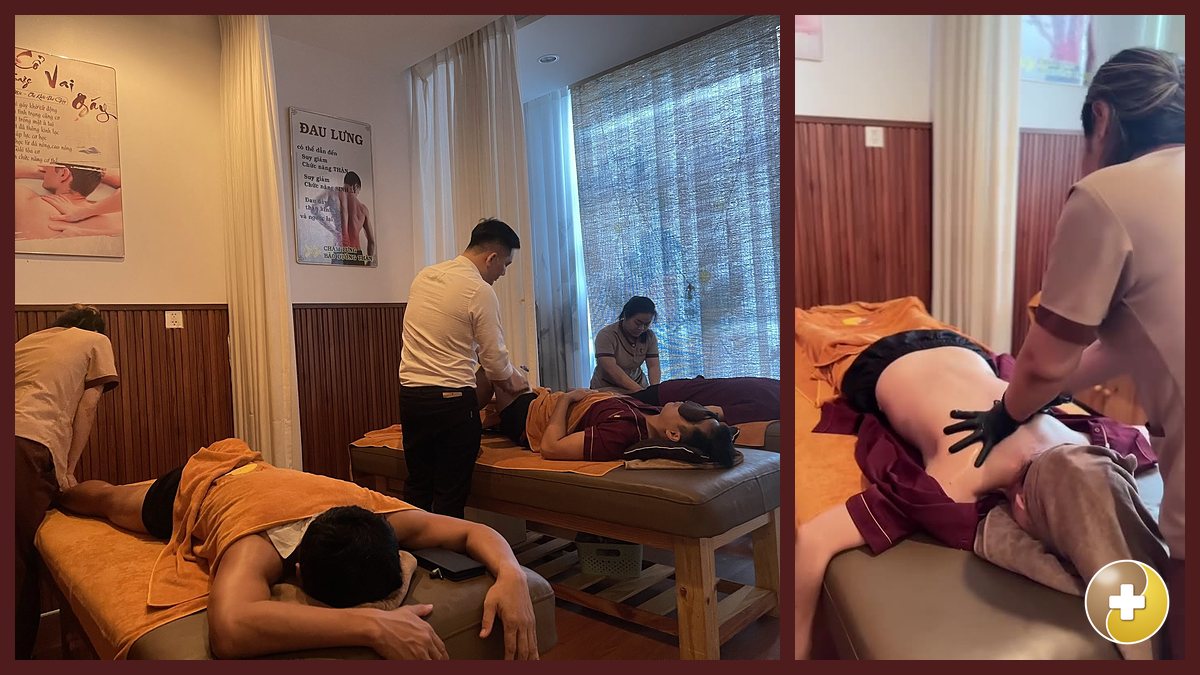
Quick answer: Back pain and fatigue on a FIFO mining roster usually come from 12 hours on a vibrating haul truck seat, climbing in and out of tall machines, bending over repairs, day–night shift swings and dehydration in the heat. Regular sleep, water and stretching help. On your week off in Ho Chi Minh City, Tong Gia Acupoint Wellness reads the spine by hand and applies acupressure.
Want Lương Y Tống Văn Huynh’s team to read your spine and posture in person?
Why FIFO mining work wears down your back and leaves you tired
If you fly in, fly out of Perth, you know the rhythm: an early charter to Newman, Tom Price, Paraburdoo, Karratha or Port Hedland, or a run out to the goldfields around Kalgoorlie, Leonora and Laverton. A common roster is two weeks on, one week off, with 12-hour shifts, and on many sites the hitch swings from days to nights halfway through. Pilbara summers are hot and dry, often above 40 °C, and the red dust gets into your clothes, hair and nose. Winter days are mild, but early mornings inland can be bitterly cold. Haul truck and loader operators, dozer and drill operators, heavy diesel fitters, electricians, underground crews in the gold mines, and the cooks and cleaners in camp all live by that clock. Many Vietnamese-Australian families know the scene well: he comes home for a week, sleeps through the first two days, and complains that his lower back and neck are stiff and he never feels rested.
From a Western medical point of view, back pain on a FIFO roster is mostly musculoskeletal strain from sustained posture and repetitive load. It is rarely one heavy lift. It is 12 hours on a vibrating seat, dozens of climbs up and down a tall ladder, twisting under a machine during maintenance, plus broken sleep. The tiredness that comes with it is usually shift-work sleep disruption, the body clock pulled out of line, added to dehydration from working in dry heat. Three areas complain the most:
- Lower back (L4–L5, L5–S1): every pothole on the haul road and every rough loading area travels up through the seat into your spine. The discs and the long muscles beside the spine take that vibration all shift, so stepping down from the cab at knock-off you may need a hand on your hip to straighten up.
- Neck and the base of the skull (C1–C3 down to C5–C7): looking into mirrors, turning your head to reverse to the dump or the crusher, wearing a hard hat and, underground, a cap lamp. The small muscles under the skull and the upper trapezius stay tense for hours, and by evening the ache climbs into the back of the head.
- Sleep and stamina: night shift straight after day shift, daytime sleep in a camp room with a noisy air conditioner and doors banging. You get the hours in bed, but wake up heavy-headed and short-tempered.
This article is specifically about the back, neck and fatigue of fly-in fly-out mine work. It is a different load from offshore work or long-haul trucking: truck drivers sit for days on highways, and offshore crews work on a moving deck, while miners repeat 14 straight 12-hour shifts with only seven days to recover. If that is closer to your job, see back pain from long-haul trucking in Europe. For the spine as a whole after flying, read the main guide spine care after a long-haul flight.
Common causes: 12-hour shifts, vibrating machines, camp sleep and red-dirt heat
- Twelve hours on a vibrating seat. This is called whole-body vibration. Suspension seats soften the jolts, but low-frequency vibration still reaches the spine, and the muscles around it keep contracting to hold you upright. Sitting without breaks also means the discs miss the gentle pumping they get from walking. Long-term vibration is considered one factor that makes lower back pain worse.
- Climbing in and out of tall machines. Three points of contact keeps you safe, but many climbs a shift, and jumping the last step on tired legs, load the knees and lower back.
- Heavy maintenance. Lying under machines, twisting inside engine bays, lifting large spanners, hydraulic hoses and filters. Twisting while holding weight is a classic way to strain the lower back.
- Underground work. Low backs, heavy gear, a cap lamp and battery on your belt, and drills and bolters sending vibration into the hands, shoulders and neck.
- Mid-hitch shift swings. A week of days then a week of nights, or the reverse. The body clock never fully adjusts, and daytime sleep in a cold room with the air conditioning blowing on your back is shallow. In the Tong Gia curriculum, the Liver stores the blood: at rest, blood returns to the Liver to be replenished, and during activity it is sent out to the muscles and tendons. Ongoing short sleep leaves the tendons and muscles poorly nourished and prone to cramping.
- Dry heat and dust. Heavy sweating outdoors leads to dehydration, cramps, early fatigue and headaches. Moving in and out of an air-conditioned cab keeps muscles tightening and loosening. Ongoing dehydration is also a risk factor for kidney stones, whose pain can feel like back pain (see the next sections).
- Camp food and energy drinks. Late, heavy meals, sweets and coffee in the second half of a night shift leave the stomach heavy and sleep even lighter.
- A short week off. Back in Perth there are family jobs and school runs; if you fly to Vietnam, a day or two goes on travel. The body barely recovers before the next flight to site.
Perth to Tân Sơn Nhất is served by direct and one-stop flights through Singapore or Kuala Lumpur, depending on airline and season; from the Pilbara or Kalgoorlie you first fly to Perth. Vietnam is one hour behind Perth, so jet lag is minor. The real problem is shift lag. Come off a night shift onto an overnight flight and you may have gone two nights without proper sleep; see red-eye flights between Vietnam and Australia.
Related signs to notice
- A stiff back at the end of shift that eases after a few minutes of walking.
- Lower back ache that builds toward the end of the hitch and feels worse on your first day off, once the muscles finally let go.
- A stiff neck and an ache rising into the back of the head; one side catches when you turn to reverse.
- Pain into the buttock or the back of the thigh after long sitting: the lower lumbar and sacral area, where the nerve roots of the sciatic nerve come from.
- Broken daytime sleep, waking mid-sleep, still tired after enough hours, and staying awake at home at night-shift times.
- Thirst, cracked lips, dark urine, night cramps in the calves and headaches after hot shifts: signs of dehydration.
- Dry, gritty eyes, irritability and poor concentration. On a haul truck this is a safety issue; tell your supervisor if you are nodding off.
- A cold lower back in an air-conditioned room, getting up at night to pass urine, tired knees: in Eastern wellness these are linked with the Kidney.
- Palpitations, feeling hot inside, lying down with a racing mind: linked with the Heart. Both are covered in the Y Tướng Học section.
The Tong Gia curriculum notes that pain shows up in one place while its source often sits somewhere else. A heavy head may start in the muscles under the skull; lower back pain may come from sitting tilted to one side all shift with one hand on the joystick. That is why the practitioner reads the whole spine, from neck to sacrum.
When to see a doctor
Most FIFO back pain and fatigue settle with sleep, fluids and stretching. Get checked at a medical facility, not a massage, if any of the following apply. On site, report to the site medic; call 000 in Australia or 115 in Vietnam in an emergency:
- Pain after an incident: a slip from the ladder, a hard jolt, a collision or a falling object; or a "crack" while lifting and you cannot stand straight.
- Pain below the knee, numbness in the calf or foot, leg weakness, or a foot that drags.
- Numbness in the buttocks, groin or around the anus, trouble passing urine, or loss of bladder or bowel control: go to emergency now.
- Waves of severe pain on one side of the lower back spreading to the lower belly or groin, burning or bloody urine, fever or chills: this can be a kidney stone or urinary infection.
- Signs of heat stroke: hot dry skin, confusion, slurred speech, dizziness, vomiting, fainting or almost no sweating. Move the person into the shade and call emergency services.
- Back pain with fever, unexplained weight loss, lasting fatigue, or pain that worsens at night even at rest.
- Back, left shoulder or chest pain with chest tightness, shortness of breath, sweating, or pain spreading to the jaw or left arm: call 000 in Australia or 115 in Vietnam, no massage.
- A swollen, painful, warm calf on one side after a flight or days of sitting: this can be a deep vein clot. Get checked now and do not have the leg massaged.
- Weeks of poor sleep, nodding off at the wheel, loud snoring with pauses in breathing, or low mood that will not lift: talk to a health professional and ask HR about any support programme your employer offers.
- Pain lasting more than 4–6 weeks despite rest, or getting worse; pregnancy, recent surgery or osteoporosis: ask your doctor before any massage.
If you are hurt on shift, report it to your supervisor and follow the site safety process so there is a record. Tong Gia does not read X-rays or MRI scans and does not make medical plans. If you have results from a medical facility, simply tell the practitioner which areas to keep gentle or avoid. This is a wellness service, not medical care.
The Y Tướng Học view: the back and the Kidney, sleep and the Heart, tendons and the Liver
Y Tướng Học (Vietnamese face and body reading for wellness) rests on one line: the signs show outside, the organs lie inside. Lương Y (traditional healer) Tống Văn Huynh organised this knowledge so practitioners read the face and body before placing their hands on the spine. For people who have worked mine rosters for years, three organ systems, in the Eastern sense, are usually compared.
The Kidney, the lower back and the base of the skull. In the Tong Gia curriculum the Kidney governs the bones and produces marrow, is linked with the lower back and knees, and corresponds to winter. It shows in the ears, hair, bones and lower back: thick rosy ears, glossy hair and a strong back are a good foundation; tired knees, a cold lower back, ringing ears and hair loss are signals to support the Kidney and keep the lower back warm. The curriculum also notes that a flat, hollow back of the skull is a sign of weak Kidney essence, often with deep tension under the skull and wear in the upper neck (C1–C3); when the "sea of marrow" is depleted, headaches, dizziness and very light sleep follow. The Kidney is your base capital: spend it early and you pay it back later with money and time.
The Heart, sleep and sweat. The curriculum says the Heart houses the spirit and governs the mind and sleep, sweat is the fluid of the Heart, and the Heart belongs to Fire and to summer, when you should avoid harsh sun, drink enough and keep a light mood. Heavy sweating outdoors in the Pilbara and constant shift changes both tire the Heart. It shows in the tongue and complexion: a rosy face and deep sleep are good signs; a pale or flushed face, trouble sleeping and palpitations are signals. Poor sleep and palpitations with a tired lower back and knees are described as the Heart and Kidney out of contact, which fits many miners at the end of a hitch: sore back, racing mind. In Eastern terms this does not mean heart disease.
The Liver and the tendons. The Liver governs the tendons and ligaments. When Liver energy is blocked, sleep is shallow and tempers run short; signs are dry tired eyes, irritability, tight neck and shoulders and cramps. Dust and glare make dry eyes worse. People with a wide-cheekbone face (the "Thân" shape) tend to tighten along the mid-back at T7–T9.
Faces worth reading closely. The bony face with high cheekbones (the "Vương" shape) is linked with the Kidney and Heart and a dry, fiery constitution; the curriculum advises keeping moist, releasing deep tendons and easing off the bracing, as this type often has misaligned vertebrae and fibrous muscle at the joints, worth noting after years in dry heat. The wide-forehead, narrow-chin face (the "Giáp" shape) is linked with the Heart, Liver and Kidney: cool the head and neck, protect sleep, support the lower back, with focus at C1–C2 and the low back. A round face (the "Viên" shape) catches cold in the lower back easily. Complexion counts too: a sun tan is part of the job, but a greyish face, dark circles and cracked lips that persist point to too little sleep and water. This is observation for wellness, not fortune-telling or a medical finding.
Vertebrae and nerve-reflex areas involved
In the Tong Gia curriculum on spinal nerve-reflex balancing, the neck (C1–C7) serves the head, face, neck and arms; the thoracic spine (T1–T12) relates to circulation, breathing and digestion; the lumbar spine (L1–L5) relates to digestion, kidneys, urinary and reproductive function and the legs; and the sacrum (S1–S5) to elimination and the pelvis. For mine workers, the practitioner usually checks these areas:
| Vertebrae | Nerves / function (Western anatomy) | Common in FIFO mine workers | Organ (Eastern view) | Outer signs (Y Tướng Học) |
|---|---|---|---|---|
| C1–C3 (upper neck) | Occipital nerve branches; deep muscles under the skull and the skin of the back of the head | Stiff neck, ache into the back of the head, heavy head after shift, light sleep | Kidney (marrow), Liver | Flat back of the skull; "Giáp" face |
| C5–C7 (lower neck) | Roots of the brachial plexus to shoulder, arm and hand | Heavy shoulder from a hand on the joystick all shift; tingling hands after drilling | Liver (tendons) | Bunched shoulder muscles, knitted brows |
| T4–T5 (between the shoulder blades) | Upper thoracic sympathetic chain with fibres to heart and lungs; Jueyin and Heart back points | Burning ache between the shoulder blades, palpitations, hard to fall asleep after a swing | Heart | Pale or flushed complexion |
| T7–T9 (mid-back) | Middle intercostal nerves; Liver back point | Tight muscle bands along the spine, irritability, dusty dry eyes | Liver | "Thân" face, red dry eyes |
| L1–L3 (upper lumbar) | Roots to the groin and front of the thigh; kidneys sit at T12–L3; Kidney back point at L2 | Cold aching lower back in air-conditioned rooms, night urination, tired knees | Kidney | Thin dull ears, dry hair; "Viên" or "Vương" face |
| L4–L5 (lower lumbar) | Roots contributing to the sciatic nerve; discs under heavy load when sitting with vibration | Lower back pain at knock-off, stiffness stepping down from the cab | Kidney – Bladder | Crooked nose bridge, uneven lumbar muscles |
| S1–S5 (sacrum) | Roots to the buttock, back of thigh and calf; pelvic nerves | Numb buttock and tired hamstrings after hours in the seat | Kidney – Bladder | Hollow cold lower back ("Giáp" face) |
The table lists related areas for hands-on reading, not causes. The bridge of the nose is seen as a small map of the spine: a crooked bridge often goes with a tilted spinal axis, which the practitioner then checks by hand.
How Tong Gia helps rebalance your back, neck and sleep on your week off
Every session follows the spinal nerve-reflex balancing method of Lương Y Tống Văn Huynh, founder of Tong Gia Acupoint Wellness (Huyệt Đạo Tống Gia), with over 13 years in Vietnamese Eastern wellness, Y Tướng Học and spinal nerve-reflex balancing. The aim is to help each spinal area rebalance and support the related organ function, by hand.
Steps in one session
- Ask and observe: your role on site (operator, fitter, underground, camp), your roster, whether you just finished days or nights, where it hurts, any numbness, falls or injuries, any results from Australia. Then a look at complexion, lips, ears, nose bridge, the back of the skull, how you sit and the level of your shoulders.
- Read the spine by hand: skin temperature, the muscle cushion, the shape of the spine and the sensation at each point, comparing left and right, top and bottom, from neck to sacrum, narrowing from the survey area to key zones and key points. Long-time operators often have a thick, hard lower back, a bunched base of the skull and one shoulder higher from the joystick hand.
- Release the muscles: the long muscles beside the spine, the quadratus lumborum at the waist and the glutes, then the trapezius, the muscles around the shoulder blades and under the skull. Pressure builds through five levels, and you are asked how it feels.
- Acupressure on the right points: Kidney and Mingmen points on the lower back; Heart and Jueyin back points between the shoulder blades for poor sleep and palpitations; the Liver back point for a tight mid-back; Weizhong behind the knee; finishing at Baihui on the crown to clear the head and settle the mind. Each point is worked until the skin turns from dry to slightly moist.
- Self-care guidance: a two-minute back stretch after stepping down from the cab, warming the lower back, pressing Shenmen at the wrist before sleep, and preparing for daytime sleep when the next hitch starts on nights.
A typical session with a mine worker: the lower back feels thick and slightly cool even on a hot day, the base of the skull is tight like rope, and there are tender points between the shoulder blades. The first part is slow so the muscles accept the pressure, then the work goes deeper into the lower back, hips and neck. Some tenderness is normal and fades as the muscles let go; many people fall asleep on the table. Afterwards bending often feels easier, the head lighter, and sleep that night deeper; some feel a little sore for a day first. Everyone responds differently, and Tong Gia does not promise the pain will be gone after one session.
Suitable services and prices
- Neck–shoulder / back–waist care, 60 min: 550,000 VND (about 32 AUD / 21 USD); first visit 399,000 VND (about 23 AUD / 15 USD); 90 min: 750,000 VND (about 44 AUD / 29 USD). Lower back, waist, mid-back and neck. Choose 90 minutes if both back and neck are sore.
- Head care, 60 min: 750,000 VND (about 44 AUD / 29 USD). For a heavy head, tight neck and trouble falling asleep after shift swings.
- Kidney wellness, 75 min: 750,000 VND (about 44 AUD / 29 USD). For a cold, aching lower back, tired knees and night urination.
Conversions use reference rates (1 AUD ≈ 17,000 VND; 1 USD ≈ 26,000 VND); payment is in VND. On a seven-day break, one or two sessions are plenty. Full list on the price page.
From Tân Sơn Nhất airport to a branch
The District 12 branch (225 Dương Thị Mười, Tân Chánh Hiệp Ward) is north of the airport, usually about 30–45 minutes by car depending on traffic. The Vinhomes Grand Park branch (Unit T16-21, Manhattan area, Long Bình Ward, Thủ Đức City) is further and takes longer, especially in the evening rush. If you have just come off nights, sleep first and book for the next day; for a stop on the way from the airport, see massage near Tân Sơn Nhất airport.
Want Lương Y Tống Văn Huynh’s team to read your spine and posture in person?
A suggested plan for your week off, and self-care
| When | What your body needs | What to do |
|---|---|---|
| Last 2–3 shifts of the hitch | No extra load | Drink on a schedule, sleep enough between shifts, ask for help with heavy lifts, pack a light bag |
| Travel day: site to Perth to Tân Sơn Nhất | Movement and fluids | Roll a jacket behind your lower back; stand and walk every hour; sip water, go easy on alcohol |
| Day 1 (landing) | Move sleep back to night | After nights, take a short midday nap and stay up until evening; morning sunlight; warm shower, easy walk |
| Day 2 | Release 14 days of sitting | A 90-minute back–waist session; warm the lower back at night, bed before 11 pm |
| Days 3–4 | Family time without strain | No heavy lifting alone; light meals; 20–30 minute morning walks |
| Day 5 | Deeper sleep | Head care if your head is still heavy, or Kidney wellness if your back feels cold |
| Days 6–7 (fly back to Perth) | Ready for the next hitch | Repeat the stretches; if the next hitch starts on nights, shift bedtime later gradually |
Saigon in the dry season is hot too, so keep drinking as you would on site; see heat fatigue when visiting Vietnam in the dry season. Five small daily habits on your week off: keep fixed sleep and wake times (the curriculum recommends bed before 11 pm); sip water through the day; rub your palms warm and stroke both sides of the lower back 50–100 times before bed; hug your knees to your chest and rock gently, then tilt each ear toward the shoulder for a few breaths; and press Shenmen, on the little-finger side of the wrist crease, gently for 1–2 minutes each side with slow breathing.
Self-care on site and in camp
- Set up your seat every shift: back against the rest, lumbar support in the curve, knees slightly below hips, mirrors set so you are not holding your neck tilted. Report a broken suspension seat.
- Stand up at every break: walk for 2–3 minutes, hands on hips and lean back gently, roll the shoulders and turn the neck slowly.
- Climb and lift smart: face the ladder, three points of contact, no jumping the last step; when lifting, get close, bend hips and knees, and turn with your feet rather than twisting. More in back pain after lifting something heavy.
- Hydrate on a plan: drink before you are thirsty, carry a bottle, wear long sleeves and a brim outdoors, rest in shade if dizzy.
- Camp room: blackout curtains, eye mask and earplugs for day sleep; angle the air conditioning away from your back and keep your waist covered.
- Light night-shift meals: small portions, fewer fried foods and sweets; coffee in the first half of the shift only.
- Do not push through drowsiness: tell your supervisor and follow the site fatigue process.
Headaches and eye strain after nights have their own guide: headache and eye strain from night shift work. For pressing points yourself in camp, see self-acupressure at home.
Book from Perth, the Pilbara or Kalgoorlie before your break
You can book from camp in Newman, Karratha or Kalgoorlie, or while waiting for the flight to Perth. Call, Zalo or WhatsApp +84 888 264 559 (0888 264 559 in Vietnam) with three details: your landing date and time at Tân Sơn Nhất, where it hurts (lower back, neck, heavy head and poor sleep, or all of them) and which branch you prefer. Mention whether you just finished days or nights so the team can suggest a time that suits your sleep; they can hold times for family members too. You can also book online; tips on messaging from abroad are in booking a massage in Saigon from abroad.
- District 12 branch: 225 Dương Thị Mười, Tân Chánh Hiệp Ward, Ho Chi Minh City. Open 8:00–19:00 daily.
- District 9 branch: Unit T16-21, Manhattan area, Vinhomes Grand Park, Long Bình Ward, Thủ Đức City. Open 9:00–20:00 daily.
This is a Vietnamese Eastern wellness method developed by Lương Y Tống Văn Huynh, and you are welcome to try it whenever you are in Ho Chi Minh City. With only a week off, message early to secure your day. Genuine customer reviews are on Google Maps on each branch page.
Visit us
- Đông Y Huyệt Đạo Tống Gia Quận 12 (District 12)
225 Dương Thị Mười, Phường Tân Chánh Hiệp, Quận 12, HCMC · 8:00–19:00 daily · 0888 264 559 · Directions on Google Maps - Đông Y Huyệt Đạo Tống Gia Quận 9 (Vinhomes Grand Park, District 9)
Căn T16-21 khu Manhattan, Vinhomes Grand Park, Phường Long Bình, TP. Thủ Đức, HCMC · 9:00–20:00 daily · 0888 264 559 · Directions on Google Maps
Map of our two branches
Want Lương Y Tống Văn Huynh’s team to read your spine and posture in person?
What guests say on Google Maps
“The experience here was just wonderful.” (translated from a Vietnamese review)
— Nhung P., Google Maps review · District 12 branch · 2025 · See on Google Maps
“Good service, attentive therapists.” (translated from a Vietnamese review)
— Trinh T., Google Maps review · District 12 branch · 2024 · See on Google Maps
Quoted from public reviews, shortened where marked (…). Experiences vary from person to person; reviews are not a substitute for seeing a doctor when something feels wrong.
Related guides for your trip
FAQ
Is back pain and fatigue from FIFO mining work serious? Usually it is muscle and joint strain from 12 hours on a vibrating seat, climbing machines and twisting during maintenance, plus short sleep from shift swings and dehydration. It tends to ease with sleep, fluids and stretching. Get checked right away after an incident, with numb or weak legs, fever, one-sided flank pain, or chest pain and breathlessness.
Why does my lower back hurt when I climb down from the haul truck after a 12-hour shift? The lower back muscles stiffen after hours of whole-body vibration and the lower discs carry load all shift. That stiffness usually eases after a few minutes of walking. Setting up the seat and lumbar support and standing to stretch at every break helps. Pain below the knee, numbness or weakness needs a medical check.
I swing from days to nights mid-hitch and still wake up tired. What is going on? That is typical shift-work sleep disruption: your body clock has not adjusted, and daytime sleep in a noisy, bright room is light. Blackout curtains, earplugs, fixed sleep times and no coffee late in the shift help. Weeks of poor sleep or nodding off while driving should be reported to your supervisor and checked.
Working in the Kalgoorlie goldfields in summer, I get cramps and headaches. What should I do? Cramps and headaches after hot shifts often mean dehydration. Drink before you feel thirsty, wear long sleeves and a brim, rest in shade and eat soups and fruit. Hot dry skin, confusion, vomiting, fainting or almost no sweating suggest heat stroke: move to shade and call emergency services.
With only a week off, how many massage sessions make sense in Saigon? Most people book one or two: a 90-minute back–waist session on day two after landing, and later in the week head care or Kidney wellness if sleep is still poor or the back feels cold. After nights, sleep first. Message +84 888 264 559 with your landing date to hold a time.
Does massage help back pain from FIFO mining, and what does it cost at Tong Gia? Massage helps the lower back and neck muscles relax, supports circulation and makes sleep easier; it is wellness care and does not replace a medical check. Back–waist care is 550,000 VND for 60 minutes (399,000 VND first visit) or 750,000 VND for 90 minutes; head care 60 minutes and Kidney wellness 75 minutes are 750,000 VND each, paid in VND.
Author: Lương Y Tống Văn Huynh – founder of Huyệt Đạo Tống Gia, a master of traditional Vietnamese wellness with over 13 years in Eastern wellness care, Y Tướng Học (face reading) and spinal nerve-reflex balancing massage.
Updated: 2026-11-18
Related guides
- Massage after spine surgery: is it safe on a trip to Vietnam, what to bring and which areas must be avoided
- Back pain from wrapping banh tet and cooking for Tet: care for the lower back, neck, shoulders and wrists
- Back pain and numb legs from long-haul trucking in Europe: why it happens and back care on a trip to Vietnam
- Back and knee pain from hotel housekeeping in Japan: what is going on and how to recover on your trip home
- Back pain and fatigue from FIFO mining in Western Australia: 12-hour shifts, vibration, camp sleep
- Knee and back pain from tiling and building work in Australia: causes and care when you fly home
This is a wellness service, not medical care.