
Numb legs and knee pain from sitting seiza in Japan: why it happens, how to sit and when to get checked
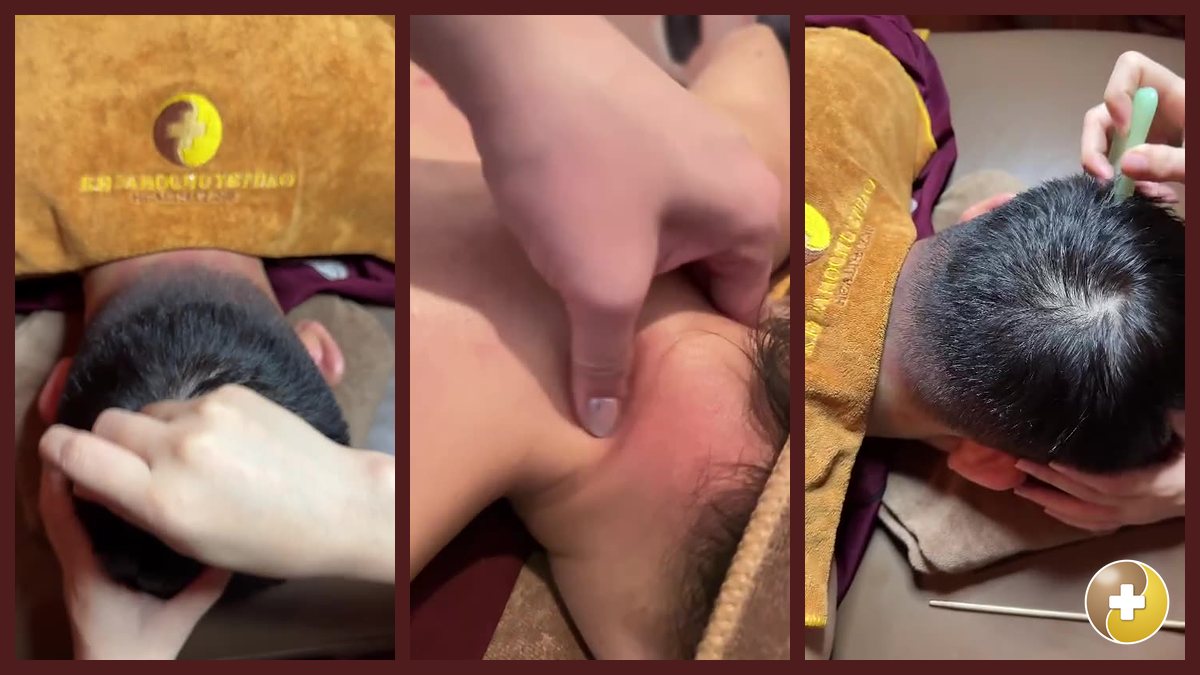
Quick answer: Numb legs and knee pain from sitting seiza or on the floor in Japan usually come from deep knee bending that presses on the tops of the feet and the nerve just below the knee. A higher cushion, switching feet and standing up slowly help; numbness that lingers or a foot you cannot lift needs a check-up. In Ho Chi Minh City, Tong Gia Acupoint Wellness cares for legs, knees and the lower back.
Want Lương Y Tống Văn Huynh’s team to read your spine and posture in person?
Why sitting seiza or on the floor in Japan leaves your legs numb
Life in Japan brings moments when sitting on your heels is simply expected. A Vietnamese bride in Aichi, Saitama or Fukuoka kneels through a memorial service (法事, hōji) at her in-laws' Buddhist altar. A student in Tokyo or Kyoto joins a tea ceremony class (茶道, sadō) on tatami mats. A worker in Osaka or Nagoya spends three hours on the floor of a 座敷 (zashiki) room at the company year-end party (忘年会, bōnenkai). Back in the dorm, dinner is at a low table, and in winter the evening is spent with legs tucked under the heated こたつ (kotatsu). Then you stand up: pins and needles across both feet, ankles that feel borrowed, knees stiff and sharp at the front or back. The same thing happens to many international visitors on their first night in a Japanese inn or tatami restaurant.
Japanese has a phrase for it: 足がしびれる (ashi ga shibireru), my legs have gone numb. Seiza (正座) means kneeling with the knees fully bent, the buttocks on the heels and the tops of the feet flat on the floor. In Western terms, this position bends the knee close to its limit, stretches the front of the ankle as far as it goes, and loads your upper body weight onto the shins and the tops of the feet. Blood vessels behind the knee and along the shin are squeezed, and small nerves lying just under the skin are pressed and briefly short of blood supply. First the feet go numb; when you move and blood rushes back, you feel tingling and prickling. In most people this passes within minutes.
One point is worth knowing. The common peroneal (fibular) nerve wraps around the outside of the leg just below the knee, close under the skin near the head of the fibula. Kneeling, crossing your legs or sitting sideways for long periods can press on it. Brief pressure means brief numbness; heavy pressure for a long time, day after day, can leave some people unable to lift the front of the foot properly, so the toes catch or drag. That is why this guide has a full section on when numbness is a reason to get checked.
Knee pain comes from the deep bend itself. Pressure rises in the joint between the kneecap and the thighbone, the back of the meniscus is pinched between the bones, and the quadriceps tendon above the kneecap is pulled tight. Healthy knees just feel tired; knees with an old injury, extra body weight or years of standing shifts can hurt after a few minutes.
It shows up most in:
- Vietnamese brides living with Japanese in-laws, kneeling at memorial services, temple visits and New Year (お正月, oshōgatsu) gatherings.
- Students in tea ceremony, flower arranging or martial arts classes, or working part-time in restaurants with tatami rooms.
- Technical interns and engineers in tatami dorms who eat, study and video-call home sitting on the floor.
- People who have stood on a factory line for years and whose knees and ankles are already tired.
- Anyone flying home to Vietnam for Tết or a death anniversary, where meals on floor mats and kneeling before the family altar are part of the visit.
For the bigger picture of the spine after the flight home, read our main guide on spine care after a long-haul flight.
Common causes: ceremonies, Japanese homes, tatami restaurants and dorms
- Long seiza without shifting: at a ceremony, a tea lesson or a first visit to your partner's family, you hold still so as not to seem rude. After 15 to 20 minutes many people are numb; after 40 to 60 minutes almost anyone who is not used to it is. See also knee pain when kneeling.
- Cross-legged sitting (あぐら, agura): common for men at zashiki parties. The hips rotate outward, the lower back rounds, and the buttock and piriformis muscles press on the sciatic nerve, so numbness spreads from the buttock down the back of the thigh. More in knee pain sitting cross-legged.
- Sitting with both legs to one side (横座り, yokozuwari): a common escape from seiza. The pelvis tilts, one hip and knee are twisted, and one side of the lower back works harder.
- W-sitting: shins splayed out on both sides, which twists the knees inward and strains the inner knee.
- Kotatsu evenings: legs warm under the blanket, back and shoulders cold, hours without standing, so circulation in the legs slows.
- Cold floors: older dorms in Hokkaido, Tohoku and even Tokyo have cold floors in winter, and cold knees and ankles stiffen faster.
- Already tight thighs and calves: line work, cycling to the plant and station stairs keep the quadriceps and calves tense, and kneeling stretches exactly those muscles.
- Weight and old injuries: a few kilos gained from convenience-store meals or a knee twisted playing sport make deep bending harder to tolerate.
- The flight home: about six hours with bent legs, then meals on floor mats with relatives. See swollen legs after a long flight.
Squatting to wash clothes or vegetables works the same way; read leg numbness from squatting.
Related signs to watch for
- Tingling across the top of the foot and toes when you stand, fading in a few minutes: small nerves on the top of the foot were pressed against the floor.
- Numbness on the outer shin and a heavy front of the foot right after standing: the peroneal nerve below the knee was pressed; wait before walking so you do not twist an ankle.
- Numbness in the buttock and the back of the thigh, down to the heel, after cross-legged sitting: linked to the piriformis and the L4 to S1 area. See numb feet from sitting.
- Pain at the front of the kneecap and difficulty straightening the knee for the first few minutes.
- Pain on the inner side or back of the knee, with clicking when you bend and straighten.
- Calf cramps and a tight Achilles tendon when you move from kneeling to straight legs.
- A cold, tired lower back and weak knees that tire quickly when standing: in Eastern thinking often linked to the Kidney.
- Thin, brittle nails, frequent cramps and dry eyes: often linked to the Liver.
The Tong Gia curriculum puts it simply: pain shows up in one place, but its source is often somewhere else. Numb feet may start below the knee, in the lower back, or in years of sitting tilted to one side.
When to see a doctor
Numbness from kneeling normally fades within minutes of straightening your legs. With any of the following, please see a doctor at a medical facility and do not rely on massage. In Japan the ambulance number is 119; in Vietnam it is 115.
- Numbness that has not gone about 30 minutes after changing position, or that is still there the next day.
- You cannot lift the front of your foot, the foot slaps or drags, or you have to lift your knee high to step: get checked soon and do not have the area below the knee pressed hard.
- Numbness in both legs, the groin or around the anus, or new trouble passing or holding urine: go to emergency care now.
- Sudden numbness or weakness on one side, a drooping face, slurred speech or blurred vision: call 119 in Japan or 115 in Vietnam.
- Chest pain or tightness, shortness of breath or cold sweats, even during a ceremony: call an ambulance.
- A swollen, hot or red knee, a knee that locks and will not straighten, or pain after a fall or twist.
- After the flight, one calf swollen, painful, warm or red, or sudden breathlessness: this can be a clot; get checked now and do not have your legs massaged.
- Numb feet that have nothing to do with sitting, a "sock-like" numbness in both feet, high blood sugar, weight loss or lasting fatigue: have a check-up at a medical facility alongside any wellness care.
- Pregnancy or recent surgery: ask your own care team before any leg massage.
In Japan, knee pain and numb legs are usually seen in orthopaedics, 整形外科 (seikei geka); bring your residence card and health insurance card. Tong Gia does not read X-rays or MRI scans and does not make medical plans; if you have results, bring them or tell us so the staff know which areas to keep gentle. This is a wellness service, not medical care.
How to shift position in seiza, with Japanese phrases
Older Japanese people get numb legs too, so asking to change position is far less rude than it feels. Hosts often say どうぞ足を崩してください (dōzo ashi o kuzushite kudasai), "please relax your legs". Some ways to stay comfortable:
- Sit higher: add a second 座布団 (zabuton) cushion, or use a small seiza stool (正座椅子, seiza isu) between your legs so the knees bend less.
- Swap your big toes: rest one big toe over the other and switch every few minutes, shifting weight gently left and right.
- Open the knees slightly: about a fist's width apart, back upright, not slumped onto the heels.
- Change to sideways or cross-legged sitting for a few minutes when allowed, and alternate sides.
- Before standing: lift your hips, curl your toes under, flex the ankles a few times and wait for the tingling to fade; stand slowly with a hand on the table or wall. Do not jump up and walk on a numb foot.
- In the dorm: use a low chair with a backrest (座椅子, zaisu) or a higher table, and get up every 30 to 40 minutes.
| English | Japanese | Romaji | When to use it |
|---|---|---|---|
| My legs have gone numb. | 足がしびれました。 | Ashi ga shibiremashita. | Right after kneeling |
| May I relax my legs? | 足を崩してもいいですか。 | Ashi o kuzushite mo ii desu ka. | Asking to change position |
| I am not used to sitting seiza. | 正座に慣れていません。 | Seiza ni narete imasen. | A polite word with in-laws or hosts |
| May I use a chair? | 椅子を使ってもいいですか。 | Isu o tsukatte mo ii desu ka. | When your knees hurt |
| Could I have one more cushion? | 座布団をもう一枚いただけますか。 | Zabuton o mō ichimai itadakemasu ka. | To sit higher |
| My knee hurts. | 膝が痛いです。 | Hiza ga itai desu. | At a hospital or with your host |
| The top of my foot is numb. | 足の甲がしびれます。 | Ashi no kō ga shibiremasu. | Saying where it is numb |
| The numbness will not go away. | しびれがなかなか取れません。 | Shibire ga nakanaka toremasen. | Lingering numbness |
| I cannot lift my toes. | つま先が上がりません。 | Tsumasaki ga agarimasen. | Warning sign: get checked |
| Please call an ambulance. | 救急車を呼んでください。 | Kyūkyūsha o yonde kudasai. | Asking someone to call 119 |
The marks in "ū" and "ō" mean a long vowel. If shift work also leaves your neck stiff, see neck and shoulder pain from factory shifts in Japan.
The Y Tướng Học view: Liver, Kidney and Spleen
Y Tướng Học (face reading for wellness) is a tradition over 2,000 years old built on one line: the signs show outside, the organs lie inside. Lương Y (traditional practitioner) Tống Văn Huynh organised this knowledge so staff read the face before they touch the legs. For numb legs and sore knees from kneeling, three organ systems are checked most.
Liver: tendons and blood. In the Tong Gia curriculum the Liver nourishes tendons and ligaments; when it is strong, tendons are supple and joints move freely; when it is weak, muscles stiffen, cramp and tremble. The Liver stores blood and sends it to muscles and tendons when you move. Long kneeling blocks that flow to the lower legs for a while, so Eastern thinking sees numbness as qi and blood not reaching the limbs. Weak Liver blood shows as dry eyes, brittle nails and cramps. High, thinly covered cheekbones are noted for deep tendon tension and cramp-prone muscles.
Kidney: bones, lower back and knees. The Kidney governs bone and marrow, the ears and hair, the lower back and knees, and corresponds to winter. Typical signs are an aching lower back, weak knees and tiring quickly when standing; with weak Kidney yang, cold hands and feet, a cold back and knees and night-time urination. After a Japanese winter on cold floors, staff look more closely at the Kidney. Thin, soft ears and a flat bone behind the ear are noted with aching back and knees, icy limbs, early joint wear and creaking joints when the season changes.
Spleen: muscles and limbs. The Spleen and Stomach turn food into the qi and blood that feed the muscles and limbs; when they are weak, the arms and legs feel tired and heavy, muscles are slack and the lips pale. The curriculum describes the nose bridge as a small image of the spine: a crooked bridge often goes with a shifted spinal axis around L4, L5 and S1, a tilted pelvis and sciatic pain. A "Do" face (narrow top, full jaw) is noted for thick lower-back and hip muscles prone to congestion; a round "Viên" face for a lower back that chills easily.
This is observation for wellness, not fortune-telling or a medical finding.
Vertebrae and nerve-reflex areas involved
In the Tong Gia curriculum on spinal nerve-reflex balancing, the lumbar spine L1 to L5 relates to digestion, the kidneys, urinary and reproductive function and the legs; the sacrum S1 to S5 to elimination and the pelvic floor. Nerve roots leave between the vertebrae and join into the femoral nerve at the front of the thigh and the sciatic nerve at the back.
| Vertebrae | Nerves / function (anatomy) | Typical sign after kneeling or floor sitting | Organ (Eastern view) | Outer sign (Y Tướng Học) |
|---|---|---|---|---|
| L1–L2 (Kidney back point at L2) | Roots to the groin and upper front thigh; iliopsoas holding the sitting posture | Tired lower back, stiff hips after floor sitting | Kidney | Thin, soft ears; flat bone behind the ear |
| L2–L4 | Femoral nerve: quadriceps straightening the knee, skin of the front thigh and inner shin; knee reflex | Tight front thigh, pain around the kneecap, hard to straighten when standing | Kidney, Liver | Round "Viên" face: lower back chills easily |
| L4–L5 | L5 root to the top of the foot, big toe and the muscles that lift the foot | Numb top of the foot and big toe, heavy forefoot | Spleen, Kidney | Crooked nose bridge with a shifted lower spine |
| L5–S1 | S1 root to the calf, heel, sole and little toe; Bladder channel down to the back of the knee | Numb heel and sole, tight calf after cross-legged sitting | Kidney, Bladder | "Do" face: thick lower-back and hip muscles |
| S1–S5 (sacrum) | Sacral plexus; sciatic nerve passing under the piriformis | Numb buttock and back of the thigh on hard floors | Kidney | Cold, slack flesh over the buttocks |
| L4–S2 to the periphery (below the knee) | Common peroneal nerve around the head of the fibula, just under the skin | Numb outer shin and top of foot, foot hard to lift after seiza | Liver (tendons) | High cheekbones, cramp-prone tendons |
The table lists related zones for hand reading, not a cause. The curriculum groups numb limbs and sciatic pain in its muscle-bone-joint group, working C5 to C7, L1 to L5 and S1 to S5 together, so staff read from the neck down to the sacrum even if you only mention your feet.
Want Lương Y Tống Văn Huynh’s team to read your spine and posture in person?
How Tong Gia helps rebalance your legs and knees
Every session follows the spinal nerve-reflex balancing massage of Lương Y Tống Văn Huynh, founder of Huyệt Đạo Tống Gia (Tong Gia Acupoint Wellness), with over 13 years in traditional Vietnamese wellness, Y Tướng Học and this method.
- Questions and observation: when and how long you kneel, where the numbness sits (top of the foot, outer shin, heel, buttock), how long it lasts, whether your foot has ever been hard to lift, front or back knee pain, pregnancy, blood sugar, calf swelling after the flight. Then posture, knees, ankles, gait, complexion, ears, nose bridge and cheekbones.
- Reading the spine by hand: four factors from the neck down to the sacrum, with focus on L1 to L5 and S1 to S5: skin temperature, the muscle layer, the shape of each vertebra and sensation, comparing left with right. Overactive zones are worked; underactive zones are not pressed directly.
- Muscle release: lower back, buttocks, piriformis, hamstrings, calves, the quadriceps above the knee, ankles and the tops of the feet, with the curriculum's screw-press technique around the knees and hips. Pressure builds gradually while staff check how you feel; the outer area just below the knee is kept light.
- Acupressure: Thận du on both sides at L2, Ủy trung behind the knee, Túc tam lý below the knee, Âm lăng tuyền on the inner knee, Khúc tuyền for cramps, Thái khê by the inner ankle, Dũng tuyền on the sole and Thái xung when stress is high. Tam âm giao is not used in pregnancy. Work on a point stops when the skin turns from dry to slightly moist.
- Self-care: two or three moves you can do on the tatami back in Japan.
You may feel tender spots beside the lower spine, in the buttocks, calves and around the knees; as the muscle lets go the tenderness usually fades, the legs warm up and the knees bend more easily. Some people walk out feeling light on their feet and sleep deeply that night; others feel a little sore for a day. Results vary and no one can promise the numbness will be gone after one session.
- Heavy, tired legs care, 60 minutes: 500,000 VND (about 19 USD) for numb feet, tight calves and stiff ankles after the flight and floor meals.
- Lower back care, 60 minutes: 550,000 VND (about 21 USD), first visit 399,000 VND (about 15 USD) when numbness spreads from the buttock and the lower back feels cold and tired.
- Herbal compress: 130,000 VND (about 5 USD) as an add-on for cold knees and lower back after a Japanese winter.
Approximate rate 1 USD ≈ 26,000 VND; payment in VND. See prices and foot and leg massage.
From Tân Sơn Nhất airport, the District 12 branch (225 Dương Thị Mười, Phường Tân Chánh Hiệp) lies to the north and is usually not a long ride, depending on traffic. The Vinhomes Grand Park branch (Căn T16-21 khu Manhattan, Phường Long Bình, TP. Thủ Đức) is farther, especially at evening rush hour. To stop on your way from the airport, read massage near Tan Son Nhat airport.
A suggested plan for your trip home, plus daily self-care
Direct flights from Narita, Haneda, Kansai or Chubu to Ho Chi Minh City take about six hours; from Fukuoka some routes connect. Vietnam is two hours behind Japan, so jet lag is mild, but a trip home often means death anniversaries, weddings and Tết meals on floor mats.
| When | What your legs need | What to do |
|---|---|---|
| 1–2 weeks before | No build-up | Message us to book; ask for a higher cushion or chair at long ceremonies |
| Flight day | Keep blood moving | Loose clothes, ankle circles every hour, walk once or twice, sip water |
| Landing day | Rest and adjust to the heat | Warm shower, a 10 to 15 minute warm foot soak, sleep on Vietnam time |
| Day 2–3 | Release legs, knees and lower back | A 60 minute leg or lower back session, with a herbal compress if you like |
| Family gatherings and Tết | Not too long in one position | Use a chair when you can; on mats switch legs every 15 to 20 minutes and stand slowly after kneeling |
| 2–3 days before flying back | Light legs for the flight | A lighter session; see knee pain from cold winters to tropical heat |
- Front thigh stretch: hold a wall, bend one knee and draw the heel gently toward the buttock for 15 to 20 seconds each side, less if the knee hurts.
- Ankle pumps: seated, pull the toes toward you and point them away 15 to 20 times, then draw circles.
- Calf stretch: hands on a wall, one leg back with the heel down, 20 seconds each side.
- Warm the lower back: the Tong Gia curriculum suggests rubbing the palms warm and stroking both sides of the lower back 50 to 100 times before bed.
- Warm foot soak: 10 to 15 minutes in the evening; if you have high blood sugar or reduced feeling in the feet, test the water by hand first. Onsen lovers can read herbal foot soak for people who miss onsen.
Keep knees and ankles warm on cold floors. Put カイロ (kairo) heat packs on clothing, never on bare skin, and not while sleeping.
Book from Japan before you fly
Call, Zalo or WhatsApp +84 888 264 559 (0888 264 559 in Vietnam) with your landing date and time at Tân Sơn Nhất, where it is numb or sore (top of the foot, shin, knee, buttock, lower back) and which branch you prefer. Tell us when you usually kneel or sit on the floor so staff can suggest leg care or lower back care. Family in Ho Chi Minh City can book for you. You can also book online or read how to book a massage in Saigon from abroad.
- District 12 branch: 225 Dương Thị Mười, Phường Tân Chánh Hiệp (Tan Chanh Hiep Ward), Ho Chi Minh City. Open 8:00–19:00 daily (10:00–21:00 Japan time).
- Vinhomes Grand Park branch: Căn T16-21 khu Manhattan, Vinhomes Grand Park, Phường Long Bình, TP. Thủ Đức (Thu Duc City). Open 9:00–20:00 daily (11:00–22:00 Japan time).
Slots fill up before Tết, so message early. Real customer reviews are on Google Maps on each branch page.
Visit us
- Đông Y Huyệt Đạo Tống Gia Quận 12 (District 12)
225 Dương Thị Mười, Phường Tân Chánh Hiệp, Quận 12, HCMC · 8:00–19:00 daily · 0888 264 559 · Directions on Google Maps - Đông Y Huyệt Đạo Tống Gia Quận 9 (Vinhomes Grand Park, District 9)
Căn T16-21 khu Manhattan, Vinhomes Grand Park, Phường Long Bình, TP. Thủ Đức, HCMC · 9:00–20:00 daily · 0888 264 559 · Directions on Google Maps
Map of our two branches
Want Lương Y Tống Văn Huynh’s team to read your spine and posture in person?
What guests say on Google Maps
“Service was good and they look after guests well. I will come regularly.” (translated from a Vietnamese review)
— Như N., Google Maps review · Vinhomes Grand Park branch (District 9) · 10/2026 · See on Google Maps
“Good service, very satisfied. The staff gave warm, careful advice.” (translated from a Vietnamese review)
— An P., Google Maps review · Vinhomes Grand Park branch (District 9) · 2025 · See on Google Maps
Quoted from public reviews, shortened where marked (…). Experiences vary from person to person; reviews are not a substitute for seeing a doctor when something feels wrong.
Related guides for your trip
- Oyster shucking in Japan in winter: why your hands get cold and your wrists ache, and how to care for them
- Frequent-Flying Parcel Couriers With Heavy Suitcases: Sore Shoulders, Aching Back and Poor Sleep
- Crane operators abroad: neck and back pain from looking down all shift, and care on a visit to Vietnam
FAQ
Are numb legs and knee pain from sitting seiza in Japan serious? Usually not. Deep knee bending presses on the tops of the feet and the nerve below the knee, and the numbness fades within minutes of straightening your legs. See a doctor if it lasts beyond about 30 minutes, you cannot lift your toes, the knee is swollen and hot, or one side of your body goes numb; in Japan call 119.
How do I get rid of pins and needles after kneeling? Do not jump up. Lift your hips, curl your toes under, flex your ankles a few times and wait for the tingling to fade, then stand slowly holding a table or wall. Next time add a cushion or a seiza stool, swap your big toes every few minutes and open the knees slightly.
How can I politely change position at my in-laws' in Nagoya or Osaka? Say 足を崩してもいいですか (ashi o kuzushite mo ii desu ka), may I relax my legs, or 正座に慣れていません (seiza ni narete imasen), I am not used to seiza. Older Japanese people get numb legs too, so hosts usually understand. Ask for another cushion or a chair if your knees hurt.
Why do my legs go numb sitting cross-legged on the dorm floor in Tokyo? Cross-legged sitting rounds the lower back and lets the buttock muscles press on the sciatic nerve, so numbness runs from the buttock down the back of the thigh, linked to the L4 to S1 area. Use a low backrest chair and stand every 30 to 40 minutes. Numbness in both legs with bladder changes needs emergency care.
When is leg numbness a reason to see a doctor? When it lingers after changing position, you cannot lift the front of the foot, both legs or the groin go numb, the numbness has nothing to do with sitting, or one calf swells after a flight. A drooping face, one-sided weakness or chest pain means calling 119 in Japan or 115 in Vietnam.
How much is leg care at Tong Gia? Heavy, tired legs care is 500,000 VND for 60 minutes; lower back care is 550,000 VND for 60 minutes (399,000 VND on a first visit); a herbal compress is 130,000 VND. That is roughly 19, 21, 15 and 5 USD at 1 USD ≈ 26,000 VND; payment is in VND.
Author: Lương Y Tống Văn Huynh – founder of Huyệt Đạo Tống Gia, a master of traditional Vietnamese wellness with over 13 years in Eastern wellness care, Y Tướng Học (face reading) and spinal nerve-reflex balancing massage.
Updated: 2026-11-17
Related guides
- Aching finger joints and a stiff back from cold storage work: what happens and how to care for it in Vietnam
- Numb legs and knee pain from sitting seiza in Japan: why it happens, how to sit and when to get checked
- Wrist and shoulder pain from restaurant kitchen work: what pho cooks and chefs need on a trip to Saigon
- Hand numbness and tired hands from assembly line work in Taiwan: wrist, neck and what helps on your trip home
This is a wellness service, not medical care.