
Self-acupressure at home when your family is far away: lower back, numb feet, poor sleep, and when to stop
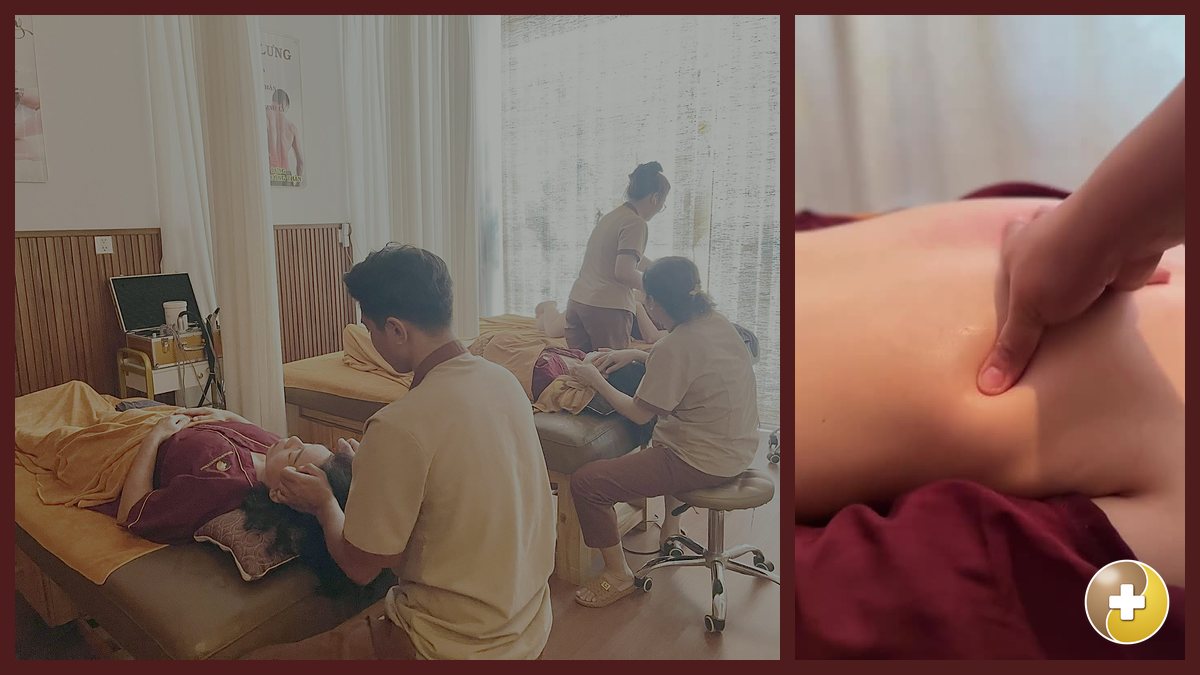
Quick answer: Self-acupressure at home for family abroad should be gentle, 1–2 minutes per point on each side: rub Shenshu warm for a tired lower back, press Zusanli for numb legs, press Shenmen before bed, and stop if dizzy. Back in Ho Chi Minh City, Huyệt Đạo Tống Gia in District 12 and District 9 reads the spine in person.
Quick answer: Safe self-acupressure at home means light pressure, 1–2 minutes per point: rub Shenshu for the lower back, press Zusanli for numb feet and Shenmen before bed. With warning signs, see a doctor. In Ho Chi Minh City, Huyệt Đạo Tống Gia (Tong Gia Acupoint Wellness) can read your spine by hand.
Want Lương Y Tống Văn Huynh’s team to read your spine and posture in person?
What self-acupressure at home is, and who it suits
By mid-November, Toronto, Montreal and Calgary have had their first snow and it is dark by four in the afternoon. In Houston, San Jose and Orange County the mornings turn foggy and cool and the days get short. In Sydney and Melbourne it is the other way round: summer is starting, afternoons are hot and the air conditioner runs all night. In all of these cities there are many Vietnamese parents and grandparents over 60 who live alone, or as a couple, while their children work in another state, another province, or have moved back to Vietnam. A trip home to Ho Chi Minh City takes about 8–9 hours nonstop from Australia, and usually 18–24 hours with connections from the US or Canada. Until that trip, a stiff lower back, tingling feet and broken sleep are things many older people have to manage on their own.
Acupressure means using a fingertip or the palm to press, circle or rub a small point or area of the body. In Western terms, these points usually sit over muscle, tendon, small surface nerves and small blood vessels. Moderate pressure stimulates sensory receptors in the skin and muscle, which helps tight muscle let go, improves local circulation, slows the breath and nudges the nervous system toward rest. That is why gentle self-acupressure can help an older person feel more comfortable, relax and fall asleep more easily. It does not replace a check-up, and it does not replace advice from the health professionals who already look after you.
Self-acupressure at home suits people who:
- Have a lower back that feels stiff after watching TV, driving or gardening, and eases with rest.
- Get pins and needles in the feet or calves after sitting a long time or in cold weather, which fade after walking around.
- Struggle to fall asleep or wake at 2–3 a.m., without any of the warning signs listed below.
- Have already been checked, were told nothing needs urgent attention, and want a simple daily routine.
This guide covers all three areas together. If you are about to fly home and worry about your neck and back after the long-haul flight, read our main guide on spine care after a long-haul flight.
Why lower back ache, numb feet and poor sleep tend to come together
They sound like three separate problems, but in older people living far from family they often feed each other:
- The lumbar spine changes with age. After 60, the discs between the vertebrae slowly lose water and thin out, the small joints at the back of the spine start to wear, and the trunk muscles shrink without regular use. The L4–L5 and L5–S1 levels carry the most load and usually complain first.
- More sitting in the cold months. In a Canadian or northern US winter many people stay indoors all day on the sofa, on video calls with the grandchildren, avoiding icy sidewalks. Glutes and thighs switch off, so the lower back muscles brace the trunk all day.
- Slower circulation in the legs. Long sitting, crossed legs and little walking let blood and fluid pool in the lower legs. Cold narrows the small surface vessels, so feet feel cold and numb.
- Irritated lumbar nerve roots. The nerve roots from L4, L5 and S1 help form the sciatic nerve, which runs through the buttock, the back of the thigh, the calf and the foot. Narrower spaces between vertebrae or tight muscles around the lower back can cause tingling along that path.
- Whole-body causes. Diabetes can damage the small nerves of the feet; low vitamin B12, thyroid problems and narrowed leg arteries can also cause numbness. These need proper medical checks; acupressure cannot replace them.
- Lighter sleep with age. Deep sleep gets shorter, and people wake more easily from noise, a trip to the bathroom, or an aching back when turning over. Short, dark Canadian winter days push the body clock off; Australian summer heat and air conditioning blowing on the body do the same.
- Living alone and worrying. Missing family, worrying about getting sick with no one around: the mind keeps running at night, and a busy mind keeps muscles tense.
The result is a loop: a sore back makes turning over hard and sleep shallow; shallow sleep leaves muscles unrested and stiffer by morning; a stiff back means less walking, so the feet go numb more easily. A short daily routine helps loosen that loop. For more background, read what causes lower back pain.
Signs worth noticing before you start
- A cold lower back, weak knees, getting up 2–3 times a night to urinate: common in older people in cold months; Vietnamese traditional wellness links this pattern to the Kidney.
- Pins and needles in the feet after sitting, gone after a few minutes of walking: usually posture and circulation; see numb feet from sitting.
- Tingling or pain running from the buttock down the back of the thigh or calf: suggests an irritated nerve root in the lower back.
- Both feet numb like wearing socks for weeks, with burning or loss of feeling: common with diabetes and worth a medical check; see common causes of numb feet.
- Night-time calf cramps: often linked with sitting a lot, drinking little water and cold legs.
- Trouble falling asleep, waking at night, a racing heart when lying down: often goes with worry.
- Ringing in the ears, forgetfulness, more hair loss: also counted as Kidney signals in the Tong Gia curriculum.
The Tong Gia curriculum puts it simply: pain shows up in one place, but its source is often somewhere else. Numb feet can start in the lower back; poor sleep can start in a tight neck and a tired lower back. That is why the routine below uses points on the back, the legs and the wrist.
When to see a doctor, and who should not self-press
For anyone living alone this boundary matters. With any of the following, please see a doctor or call emergency services, skip acupressure, and do not wait for family to arrive:
- Chest tightness, breathlessness, cold sweats, pain spreading to the jaw or left arm: call emergency services now (911 in the US and Canada, 000 in Australia, 115 in Vietnam).
- A drooping mouth, slurred speech, numbness or weakness on one side, sudden blurred vision: call emergency services now.
- One calf swollen, warm, red and painful, especially after a long flight or days of sitting or lying still: this may be a deep vein clot. Get checked straight away and do not have the leg massaged.
- Leg weakness that is getting worse, buckling knees, a dropping foot, repeated trips and falls.
- Numbness in the buttocks, groin or around the anus, inability to pass urine, or loss of bladder or bowel control.
- Back pain after a fall, or sudden severe back pain in someone with osteoporosis.
- Back pain with fever, unexplained weight loss, or pain that worsens at night while lying still.
- Foot sores or wounds that are slow to close, or toes turning blue or dark, especially with diabetes.
- Weeks of insomnia with low mood, poor appetite and weight loss, or loud snoring with pauses in breathing.
Who should not self-press, or should ask first:
- Pregnant women (including younger relatives reading this): the Tong Gia curriculum says do not use Hegu (Hợp cốc) or Sanyinjiao (Tam âm giao), and do not work on the abdomen.
- People on blood thinners: bruising comes easily, so only rub lightly with the palm, never press deep, and ask your doctor first.
- People with heart disease, a stent, a pacemaker, kidney disease or unstable blood pressure: the curriculum asks practitioners to check carefully and work lightly; at home, ask the health professional who follows you before starting.
- People with diabetes who already have numb feet: reduced feeling means you cannot judge pressure or water temperature, so rub gently and test footbath water with a thermometer or have someone else test it.
- Severe osteoporosis: no pressing on the bones of the spine, no pounding the back.
- Skin that is broken, inflamed, swollen, or has raised varicose veins: leave that spot alone.
- Fever, recent surgery, very hungry or just after a big meal, after drinking alcohol: wait.
This is a wellness service, not medical care. Tong Gia does not read X-rays or MRI scans, does not give medical conclusions and does not make medical plans; if you follow advice from a medical facility, keep doing so. More on safety: is acupressure safe.
The Y Tướng Học view: Kidney, Spleen, Liver and Heart
Y Tướng Học (face reading for wellness) has roots going back more than 2,000 years and rests on one idea: the signs show outside, the organs lie inside. Lương Y (traditional healer) Tống Văn Huynh systematised it so practitioners can see which organ needs attention before touching the body. At home, a mirror is enough to notice a few of these signs.
Kidney and the lower back. In the Tong Gia curriculum the Kidney shows in the ears, hair, bones and lower back. A strong Kidney means pink, full ears, glossy hair and a stable back; signals include weak knees, a cold lower back, ringing ears, hair loss and forgetfulness. A round face (fuller in flesh than bone) is advised to keep the lower back warm; a face that is wide at the forehead and narrow at the chin is advised to support the lower back. Very lean people whose cheekbones and nose bridge stand out are linked with dryness of joints and discs and tight tendons. The Kidney corresponds to winter, so people in Canada and the northern US should keep the lower back warm in these months.
Spleen, Liver and numb legs. The Spleen governs muscle and the four limbs and shows in the mouth, lips and flesh: pale lips, a heavy body and tired limbs are its signals. The Liver governs the tendons and shows in the eyes, nails and tendons: dry eyes, thin nails, cramps and stiff tendons are its signals. Numb feet with night cramps lead a practitioner to look at both.
Heart and sleep. The Heart shows in the tongue and complexion. A rosy face and deep sleep mean a settled Heart; a pale or flushed face, poor sleep and palpitations are signals. The curriculum describes Heart fire descending to warm the Kidney and Kidney water rising to cool the Heart; when the two lose contact, sleep breaks, the heart races and the lower back and knees ache. That is why this routine pairs Heart points with Kidney points.
This is observation for wellness, not fortune telling, and it is never used to say anyone has a disease.
Spine segments and nerve-reflex zones involved
In the Tong Gia curriculum on spinal nerve-reflex balancing, the lumbar spine L1–L5 relates to digestion, kidneys, urinary and reproductive function and the legs; the sacrum S1–S5 relates to elimination and the pelvis. Numbness of the hands and feet falls in the muscle-bone-joint group (C5–C7, L1–L5, S1–S5); long-running poor sleep falls in the nerve-and-mind group (C1–C7, D1–D3 and the sacrum).
| Spine segment | Nerves / function (Western anatomy) | Common signs | Organ (Eastern view) | Outer signs (Y Tướng Học) |
|---|---|---|---|---|
| C1–C3 (upper neck) | Occipital nerves, small muscles holding the head | Tight back of the neck, a busy head at bedtime | Liver, Heart | Dry tired eyes, knitted brows |
| T4–T5 (between the shoulder blades) | Intercostal nerves; Jueyinshu below T4, Xinshu below T5 | Palpitations, light broken sleep | Heart | Pale or flushed face, red tongue tip |
| T11–T12 (mid to lower back) | Nerves to the abdominal wall and digestion; Pishu, Weishu | Poor appetite, heavy tired limbs | Spleen–Stomach | Pale lips, soft flesh, square face |
| L1–L3 (upper lumbar) | Roots to the groin, hip, front of the thigh; Shenshu and Mingmen level with L2 | Cold, tired lower back, night urination | Kidney | Thin dull ears, dry hair, round face |
| L4–L5 (lower lumbar) | Roots that help form the sciatic nerve to buttock, back of thigh, calf, top of foot | Lower back ache on standing, numb calf or top of foot | Kidney, Liver | Hollow cold lower back, crooked nose bridge |
| S1–S5 (sacrum) | Roots to the back of the leg, heel, sole; bladder, pelvis | Numb heel or sole, calf cramps, night urination | Kidney–Bladder | Thick lumbar and hip muscles, darker ears |
The table shows areas a practitioner checks by hand, not causes. At home, do not press on the bones of the spine yourself.
How to self-press safely: three small routines
All the points below come from the Tong Gia curriculum, are easy to find, and can be done sitting in a chair or lying in bed. Five rules first: use only the lightest of the 5 pressure levels (one finger or the palm), aiming for a mild, pleasant ache, never sharp pain; 1–2 minutes per point per side, 3–5 minutes for rubbing; work both sides equally; sit securely, never balance on one leg to reach your feet; stop at once if you feel dizzy, sharp pain, more numbness, bruising or an unusual heartbeat.
Lower back: stiff and cold
- Rub Shenshu (BL23, Thận du): below the L2 spinous process, 1.5 cun (about two finger-widths) to each side. Warm your palms, place them on both sides of the lower back and rub up and down 50–100 times until warm. Your palms cover Shenshu, Mingmen in the middle and Zhishi further out.
- Circle Weizhong (BL40, Ủy trung): the midpoint of the crease behind the knee; the curriculum quotes the saying "for back pain, look to Weizhong". Sitting, circle very lightly with the middle fingers for about a minute. Large vessels and nerves run behind the knee, so never press deep; skip it if the area is swollen, has raised veins, or the calf hurts.
Numb feet, cold feet, cramps
- Press Zusanli (ST36, Túc tam lý): 3 cun (about four finger-widths) below the outer dimple under the kneecap, one finger-width outside the shinbone. Press gently 1–2 minutes each side.
- Press Taixi (KI3, Thái khê): the hollow between the inner ankle bone and the Achilles tendon, 1–2 minutes each side.
- Rub Yongquan (KI1, Dũng tuyền): the hollow in the front third of the sole when you curl your toes. In the evening, rub each sole with your palm for 3–5 minutes.
- Warm footbath: 15–20 minutes at about 38–42°C before bed. With diabetes or numb feet, check the water with a thermometer, never with the numb foot.
Poor sleep and palpitations
- Press Shenmen (HT7, Thần môn): on the wrist crease, in the hollow on the little-finger side. Press gently 1–2 minutes each side before bed, with slow breathing.
- Press Neiguan (PC6, Nội quan): 2 cun (about three finger-widths) above the wrist crease, between the two tendons on the inner forearm, 1–2 minutes each side when restless.
- 4–6 breathing: in through the nose for 4 seconds, out slowly for 6 seconds, for 5–10 minutes.
| Point | Location | At home | Skip if |
|---|---|---|---|
| Shenshu (BL23) | Below L2, 1.5 cun out | Rub warm, 50–100 strokes | Broken skin; severe osteoporosis (rub lightly only) |
| Weizhong (BL40) | Middle of the knee crease | Very light circles, about 1 minute | Swelling, raised veins, painful calf |
| Zusanli (ST36) | 3 cun below the knee, outside the shin | Gentle press, 1–2 minutes | Inflamed or scraped skin |
| Taixi (KI3) | Between inner ankle and Achilles tendon | Gentle press, 1–2 minutes | Hot swollen ankle, raised veins |
| Yongquan (KI1) | Front third of the sole | Rub 3–5 minutes at night | Foot sores or wounds |
| Shenmen (HT7), Neiguan (PC6) | Wrist crease; 2 cun above it | Gentle press before bed | Chest pain or breathlessness: call emergency services |
| Hegu, Sanyinjiao | Back of hand; above inner ankle | Not part of this routine | Never during pregnancy |
For a sleep-focused session in the city, see acupressure for sleep.
Want Lương Y Tống Văn Huynh’s team to read your spine and posture in person?
Back in Ho Chi Minh City: having your spine read by hand
Self-acupressure keeps you comfortable while you are away, but your own hands cannot read your own spine. Every session at Tong Gia follows the spinal nerve-reflex balancing method of Lương Y Tống Văn Huynh, founder of Huyệt Đạo Tống Gia, with over 13 years in Vietnamese traditional wellness, Y Tướng Học and spinal nerve-reflex balancing. It is a Vietnamese Eastern method you can try when you are in town.
- Questions and observation: where you flew from, which points you press at home, diabetes, blood pressure, heart conditions, blood thinners, any one-sided leg swelling; then face, ears, nose bridge, posture.
- Reading the spine by hand: skin temperature, the muscle layer, the shape of each vertebra and sensation at each point, compared left with right.
- Muscle release: along the spine, lower back, buttocks, hamstrings and calves, with lighter pressure for older guests.
- Acupressure on the right zones: Shenshu, Mingmen, Zhishi, Weizhong, Zusanli, Taixi, and Shenmen and Neiguan for sleep, stopping when the skin at the point turns from dry to slightly moist, as the curriculum teaches.
- Self-care coaching: the practitioner shows the points on your own body and corrects your pressure so you can keep going after you fly back.
A typical session for someone over 65 starts slowly with warm water and a chat. You may feel tender spots on both sides of the lower back and in the calves; as the muscle lets go, the tenderness usually fades and warmth spreads. Afterwards some people feel a lighter back, lighter legs and sleep better that night; others feel a little sore for a day first. Everyone responds differently; Tong Gia does not promise that pain or numbness will go away after one session.
Suitable services and prices
- Neck-shoulder / lower back care, 60 minutes: 550,000 VND (about US$21, A$32, C$29); first visit 399,000 VND (about US$15, A$23, C$21); 90 minutes: 750,000 VND (about US$29, A$44, C$39).
- Heavy, tired legs care, 60 minutes: 500,000 VND (about US$19, A$29, C$26), once you are sure there is no one-sided calf swelling.
- Kidney wellness, 75 minutes: 750,000 VND (about US$29, A$44, C$39) for a cold lower back, weak knees, night urination and poor sleep.
Conversions use reference rates (US$1 ≈ 26,000 VND; A$1 ≈ 17,000 VND; C$1 ≈ 19,000 VND); payment is in VND. Full list: prices.
From Tan Son Nhat airport
The District 12 branch (225 Dương Thị Mười, Phường Tân Chánh Hiệp, District 12) lies north of Tan Son Nhat (Tân Sơn Nhất) airport and is a fairly short drive depending on traffic. The Vinhomes Grand Park branch (Căn T16-21 khu Manhattan, Phường Long Bình, TP. Thủ Đức – Manhattan block, Vinhomes Grand Park, Thu Duc City) is further and takes longer, especially at evening rush hour. Older travellers should rest a night first; if you want to stop on the way, read massage near Tan Son Nhat airport.
A suggested routine: daily self-care abroad and a visit home
| When | What to do | Note |
|---|---|---|
| Every morning | Rub Shenshu warm, walk 15–20 minutes, get some daylight | In a Canadian or US winter, keep the lower back covered |
| Every afternoon | Get up every 30–45 minutes while watching TV; press Zusanli, Taixi | Avoid long leg-crossing |
| Every evening | Footbath, rub Yongquan, press Shenmen and Neiguan, 4–6 breathing | Diabetes: thermometer for the water |
| Every week | Video call family and tell them how your back, legs and sleep are | Warning signs: get checked, do not wait |
| Before flying home | Sleep well, pack light, bring socks and a warm layer | Read preparing your body before a long flight |
| Landing day | Warm shower, light meal, gentle walk, sleep on Vietnam time | Let family lift the suitcases |
| Days 2–3 in the city | A 60–90 minute lower back session or a 60 minute legs session | Ask the practitioner to check your points |
| Mid-visit | A 75 minute Kidney session if the back is cold and sleep is poor | Keep rubbing Shenshu and Yongquan at night |
| 2–3 days before flying back | A light session and a review of your home routine | Save the point locations on your phone |
Beyond acupressure: keep the lower back and feet warm and out of direct air conditioning or heater blasts, drink steadily during the day but less in the evening, sit in a chair with back support and a small cushion behind the lower back, and keep regular sleep and wake times. If you are thinking of moving back for good, read a wellness routine for retiring in Vietnam; for back pain mainly after the flight from the US, see back pain after a long flight from the US to Vietnam.
Booking from abroad
You can book while still in the US, Australia or Canada, or ask your children to message for you. Call, Zalo or WhatsApp 0888 264 559 (from abroad: +84 888 264 559) with three details: your landing date and time at Tan Son Nhat, where you feel stiff or numb (lower back, legs, sleep), and which branch you prefer. Add your age, existing conditions and whether you take blood thinners, so the practitioner can plan the pressure. Opening hours are Vietnam time, so allow for the time difference. You can also book online; step-by-step tips are in booking a massage in Saigon from abroad.
- District 12 branch: 225 Dương Thị Mười, Phường Tân Chánh Hiệp, District 12, Ho Chi Minh City. Open 8:00–19:00 daily.
- Vinhomes Grand Park branch (District 9 area): Căn T16-21 khu Manhattan, Vinhomes Grand Park, Phường Long Bình, TP. Thủ Đức. Open 9:00–20:00 daily.
Dates close to Tet fill up early, so message ahead. Bringing older parents along? Read neck and shoulder massage for elderly parents.
Visit us
- Đông Y Huyệt Đạo Tống Gia Quận 12 (District 12)
225 Dương Thị Mười, Phường Tân Chánh Hiệp, Quận 12, HCMC · 8:00–19:00 daily · 0888 264 559 · Directions on Google Maps - Đông Y Huyệt Đạo Tống Gia Quận 9 (Vinhomes Grand Park, District 9)
Căn T16-21 khu Manhattan, Vinhomes Grand Park, Phường Long Bình, TP. Thủ Đức, HCMC · 9:00–20:00 daily · 0888 264 559 · Directions on Google Maps
Map of our two branches
Want Lương Y Tống Văn Huynh’s team to read your spine and posture in person?
What guests say on Google Maps
“I do a lot of high-intensity exercise – running, hiking – and my leg muscles are often overloaded… After the session, following a day of overdoing it, my body felt light and comfortable.” (translated from a Vietnamese review)
— Lộc N., Google Maps review · Vinhomes Grand Park branch (District 9) · 10/2026 · See on Google Maps
Quoted from public reviews, shortened where marked (…). Experiences vary from person to person; reviews are not a substitute for seeing a doctor when something feels wrong.
Related guides for your trip
FAQ
Which points can I use for self-acupressure at home for my lower back, numb feet and poor sleep? Lower back: rub Shenshu (Thận du) on both sides 50–100 times and circle Weizhong (Ủy trung) behind the knee very lightly. Numb feet: press Zusanli and Taixi 1–2 minutes each side and rub the sole at Yongquan 3–5 minutes. Sleep: press Shenmen and Neiguan before bed with 4–6 breathing. Always light pressure.
My 72-year-old mum lives alone in Toronto. Is self-acupressure safe for her? Light pressure on easy-to-find points is generally fine for healthy older people if she sits securely and keeps to 1–2 minutes per point. If she has heart disease, unstable blood pressure, diabetes with numb feet, or takes blood thinners, she should ask the health professional who follows her first and only rub gently with the palm.
Who should not do acupressure on themselves? Pregnant women (no Hegu, no Sanyinjiao, no abdominal work), people on blood thinners, people with heart disease, a stent, a pacemaker, kidney disease or unstable blood pressure, severe osteoporosis, fever or recent surgery. Never press on broken, inflamed or swollen skin or over raised veins.
My dad in Melbourne gets numb feet at night. When should he get checked? When both feet stay numb for weeks, numbness comes with leg weakness, buckling or a dropping foot, there is numbness around the groin or trouble passing urine, or a foot sore is slow to close. A swollen, hot, red calf on one side needs checking straight away, with no massage. With diabetes, regular foot checks are wise.
How long does self-acupressure take to help? Many people feel warmer, looser and fall asleep more easily within the first week if they do it every day. It depends on age, constitution and the cause. If the back, feet or sleep are no better or worse after 2–3 weeks, get checked at a medical facility instead of pressing harder or longer.
Is massage a good idea for older parents visiting Ho Chi Minh City, and what does it cost at Tong Gia? Yes, if there are no warning signs. Practitioners read the spine by hand, use lighter pressure for older guests and show the home points again. Lower back care 60 minutes is 550,000 VND (first visit 399,000 VND), legs care 60 minutes 500,000 VND, Kidney wellness 75 minutes 750,000 VND, paid in VND.
Author: Lương Y Tống Văn Huynh – founder of Huyệt Đạo Tống Gia, a master of traditional Vietnamese wellness with over 13 years in Eastern wellness care, Y Tướng Học (face reading) and spinal nerve-reflex balancing massage.
Updated: 2026-11-15
Related guides
- Preparing your body before the long flight home after Tet: a 3–5 day plan for Viet Kieu returning to Australia
- Back pain from factory work in Korea: lifting, bending, machine shifts and caring for your back on home leave
- Back pain after a long flight from the US to Vietnam: upper back, lower back and what helps
- Standing all day at a market stall or nail salon: caring for the lower back and heavy legs on your trip home
- Self-acupressure at home when your family is far away: lower back, numb feet, poor sleep, and when to stop
This is a wellness service, not medical care.
Questions customers often ask
How firm should home acupressure be, and how long each day?
Firm enough to feel a mild, pleasant ache while breathing evenly: 1–2 minutes per point on each side, and 3–5 minutes of rubbing around the area. Following the symmetry rule of the Tống Gia curriculum, do the left side and then the right side equally. Doing it every day matters more than doing it for a long time; older or thin people should press more lightly.
Which signs mean I should stop pressing straight away?
Stop at once if you feel dizzy, sharp pain, increasing numbness, see bruising, or your heart races unusually. A drooping mouth, slurred speech, numbness or weakness on one side, or sudden blurred vision means calling emergency services immediately. Leg weakness that keeps getting worse, repeated falls, trouble passing urine or back pain after a fall also need a doctor.
Where is the Shenmen point used for sleep?
Shenmen (Thần môn) lies on the wrist crease, in the hollow on the little-finger side, just beside the tendon there. Before bed, press it gently for 1–2 minutes on each wrist while breathing slowly. Skip it if the wrist is swollen or painful. Weeks of poor sleep with low mood, weight loss, or loud snoring with pauses in breathing should be checked by a doctor.
Can someone with osteoporosis press points or pound their own back?
With severe osteoporosis, do not press hard on the spine and do not pound the back. For Shenshu on the lower back, simply warm both palms and rub gently up and down 50–100 times. Sudden severe back pain in someone with osteoporosis, or pain after a fall, needs a medical check first, not self-massage.
When I visit Ho Chi Minh City, how is a session at Tong Gia different from doing it at home?
At Huyệt Đạo Tống Gia the technician first observes posture and complexion using Y Tướng Học, reads the spine by hand to find tight areas, then releases muscles and presses the right points. For a cold lower back, tired knees and poor sleep, the 75-minute kidney wellness session costs 750,000 VND, and you leave with one self-care step suited to you.